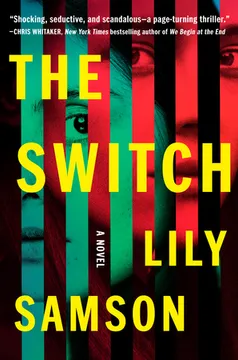


Plot Summary
The Café Bag Theft
The story opens on a May night when Elena is preparing to leave her sleeping partner, Adam, and secretly cross to another house. The reason lies three months earlier, when she and Adam move into his aunt’s Wimbledon home for an eight-month housesit. Lonely in their new neighborhood, Elena works from a café and meets Sophia MacInnes, a distressed artist whose handbag has been stolen.
Elena lends her phone so Sophia can cancel her cards, then discovers her new acquaintance online and is dazzled by her paintings, followers, and polished life. Adam encourages Elena to invite Sophia and her husband, Finn, to dinner. The invitation promises friendship, but it also opens the door to a household Elena will soon enter under cover of darkness.
The opening pairs a practical act of kindness with a secret departure, making Elena’s generosity both the start of a friendship and the first step toward danger. Her new surroundings matter: the Wimbledon housesit offers temporary comfort without belonging, while the café gives her a stage on which to feel visible. Sophia’s online image magnifies Elena’s longing for entry into a more assured, affluent world. The present-night frame signals that this is not simply a story about attraction. Elena is already doing something she believes she must conceal, and the ordinary setting makes that concealment feel disturbingly plausible.
Four Seats at Dinner
Sophia arrives at Elena and Adam’s dinner party with Finn, her handsome, self-possessed husband. Elena has expected an awkward older man and instead finds herself drawn to Finn’s quiet attention and measured charm.
Sophia’s lavish compliments and taste for expensive things make Elena conscious that she and Adam are only borrowing their comfortable home. Finn, however, treats Elena’s proof-reading work as interesting, and their private conversation leaves her feeling unusually seen.
Later, Sophia cancels plans and Elena begins measuring her worth against the artist’s social-media life. When she spots the couple on their grand street, Finn offers her a lift to the station. Their shared opera music and flirtatious ease deepen Elena’s crush, even as she tells herself the encounter means nothing.
The dinner establishes the novel’s central asymmetry: Elena reads intimacy as evidence of singular connection, while the other characters may be managing appearances or testing one another. Finn’s attention lands with force because Adam has already made Elena feel that her freelance work is less substantial than his banking career. Sophia’s admiration and social confidence are equally potent, offering Elena friendship while also sharpening her envy. The borrowed house turns class into a lived insecurity rather than an abstraction. Elena wants not merely to know these people, but to be recognized by them as someone who belongs.
A Marriage Under Strain
When Adam’s mother, Hilary, suffers a stroke and lies injured at the bottom of her stairs for hours, Elena rushes with Adam to the hospital. Hilary’s recovery leaves her dependent on carers, but she dismisses them and repeatedly makes Elena drop paid work to help.
Adam defends his difficult mother and minimizes Elena’s professional losses, while Hilary accuses Elena of mistreating her. Over drinks, Elena confides the history: Hilary has judged her accent, housekeeping, and cooking for years, and Adam becomes defensive whenever his mother is involved.
Sophia listens closely and shares that her marriage to Finn has also become sexually flat. She then proposes that the women secretly exchange beds with their husbands, using darkness and borrowed perfume to disguise the change.
Hilary’s illness does not create the couple’s conflict so much as expose its existing arrangement: Elena absorbs the practical and emotional labor, while Adam treats her flexibility as an unlimited resource. Sophia’s proposal arrives when Elena is already depleted and privately questioning her sexual life, which gives the scheme its persuasive force. The plan converts a serious ethical boundary into a solvable logistics problem. That conversion is psychologically important: lists, scents, and darkness promise control precisely where Elena feels least powerful, in her relationship, career, and negotiations with Adam’s family.
The Nighttime Blueprint
Elena initially refuses, frightened that Adam would experience the exchange as betrayal. A week later, after Hilary’s care again disrupts her schedule and a client demands a discount, Elena impulsively tells Sophia she will participate.
Sophia’s enthusiasm returns, and the two women begin rehearsing the deception: they exchange perfume and hair products, learn each other’s staircases, arrange matching nightclothes, and plan to use blackout blinds and loosened bulbs. They discuss contraception, although Sophia says Finn is unlikely to father a child because of fertility problems.
Their private conversations also expose Elena and Sophia’s concealed dissatisfaction with sex and the difference between safety and desire. On the appointed night, Elena prepares a rucksack and checklist, then waits beside Adam, unsure whether Sophia will still go through with it.
Elena’s consent is neither a simple surrender nor a fully deliberated choice. It emerges from accumulated frustration, then takes on the clean appearance of a decision through planning. The women’s checklists reflect Elena’s professional habit of catching small errors, but also their attempt to make non-consensual intimacy feel safe by engineering the conditions around it. Their discussion of fertility adds a motive neither woman fully understands at the time. The exchange is framed as mutual female control, yet it depends on keeping both men ignorant, a contradiction that the precise preparations cannot resolve.
The First Stolen Night
After a late message confirms that Finn has returned home, Elena leaves her own house near midnight and slips through Sophia’s unlocked back door. Finn has briefly gone to the bathroom, so Elena hides beneath the covers until he returns and mistakes her for Sophia.
Their encounter quickly overwhelms her rehearsed performance. She experiences pleasure unlike anything she has known with Adam, then panics when Finn falls asleep and she must flee in borrowed clothes.
Back in her own bed, she finds Adam asleep and later lets him believe they have had passionate makeup sex. He notices bruises on her neck but assumes he caused them. Finn then contacts Elena under the pretext of hiring a proof-reader, and the two meet professionally, leaving her to carry the secret alone.
The first exchange gives Elena what she thought she wanted, but the pleasure does not restore her relationship with Adam. Instead, it creates a private standard against which their intimacy will be judged. Her body registers the night as real while her mind tries to contain it as a game. The switch also reverses the usual logic of an affair: there are no secret messages between lovers, yet the deception is built directly into the shared domestic bed. Finn’s business contact afterward sustains Elena’s hope that their encounter has meaning, even though he appears to treat it as ordinary.
One Secret Becomes Two
Elena and Sophia agree to repeat the exchange, and this time Adam notices that his bedside bulb has been loosened. Elena waits until he is asleep, fixes the room again, and goes to Finn’s house. Finn recognizes that something feels different but continues the encounter, and Elena leaves convinced their secret remains intact.
The next morning, Adam thinks he has had unusually good sex with Elena, while Sophia admits she forgot the condoms and took emergency contraception. Elena grows more attached to Finn, yet Sophia insists that the women must never compare what happened in bed.
Meanwhile, Sophia persuades Adam to revive his abandoned film-making ambitions and introduces him to producer Jackson Green. Her new closeness with Adam gives Elena a practical reason to stay near Sophia, even as unease grows.
Repetition changes the moral and psychological conditions of the scheme. The first night could be dismissed as an isolated transgression; a second makes the deception a practice that must be maintained. Adam’s observation of the bulb shows that the women cannot control what their partners notice, despite their preparation. Sophia’s refusal to share details protects their friendship on the surface but also preserves her power over the story. Her support for Adam’s film career further entangles Elena’s loyalty, desire, and suspicion, making it harder to identify where generosity ends and manipulation begins.
The Missing Watch
As the couple’s move from Wimbledon approaches, Elena learns from Sophia that Hilary has offered Adam money for a home only if he leaves Elena. The revelation recasts Adam’s housing anxiety as a long-standing choice, and Elena’s anger at Hilary deepens.
Sophia then draws Adam into a film project, while a supposed hair appointment gives her private time with him. Suspicious, Elena searches Sophia’s bedroom and diary. She finds an old French newspaper clipping about fifteen-year-old Claudine Lambercier, reported dead in a house fire, and later discovers Adam’s missing inherited watch hidden among Sophia’s belongings.
The diary also describes the secret switches and a troubling reference to a fetish. Elena cannot tell whether Sophia is an unstable friend, a thief, or something far more dangerous.
The watch and the clipping turn domestic objects into competing forms of evidence. The watch carries Adam’s attachment to his dead father, while the newspaper gives an apparently settled death the instability of an unanswered question. Elena’s snooping is ethically compromised, but it is also a response to Sophia’s control of information. Meanwhile, Hilary’s conditional offer reveals how class and romantic legitimacy have been joined in Adam’s family for years. Elena is not simply discovering that people lie. She is realizing that each character’s version of security depends on someone else accepting an incomplete account.
Villefranche Turns Hostile
Elena and Adam join Sophia and Finn in Villefranche, where old tensions surface almost immediately. At the beach, Elena sees scars on Sophia’s body and recognizes how much her polished online image conceals. The next morning, Finn and Sophia arrive at breakfast bruised and furious after a violent fight in their hotel room.
They blame the heat, but Elena suspects a deeper history and remembers that Sophia once escaped an abusive partner. The couple’s argument in French includes a name Elena recognizes from the clipping. Sophia refuses to explain and instead asks Elena to follow Finn when he leaves the hotel. Elena agrees, partly from concern and partly because she wants to know what the MacInneses are hiding.
The holiday strips away the distance that made Sophia and Finn’s marriage look elegant. Physical injuries replace curated images, and the couple’s conflict forces Elena to confront the possibility that her attraction has blinded her to danger. Her response remains divided: she worries for Sophia, envies her intimacy with Finn, and sees the chance to investigate. Villefranche is not merely an exotic backdrop; it is the landscape of an earlier trauma that the characters have tried to bury. Their private language becomes a barrier Elena can only partially cross.
Annie’s Old Photographs
Elena follows Finn through Villefranche to a modest villa, where she sees him kneeling beside an elderly woman as she strokes his hair. Finn leaves in tears and tells Elena that they should never have returned to the town. Elena recognizes a name from the old clipping and later visits the woman herself.
Annie explains that she once cared for Finn as his nanny and shows photographs of him with Claudine, a girl who looks strangely familiar. The pictures identify Finn’s childhood name as Alain and connect Annie, Claudine, and the fire at Maison Aubert. Before Annie can clarify why she resents Sophia, Finn arrives and takes Elena away. The old woman’s words and his grief leave Elena with more questions than answers.
Elena’s surveillance yields not a scandalous rendezvous but a scene of grief, complicating the story she has built around Finn. His vulnerability makes him more compelling, yet it also deepens her dependence on fragments rather than direct explanation. Annie’s photographs act as a counterarchive to the identities Finn and Sophia present publicly. The shift from glamorous hotel to neglected villa makes the past materially visible, but not fully intelligible. Elena’s curiosity is now both an investigative instinct and an attachment strategy: she wants the truth, but she also wants a reason to remain close to Finn.
The Third Exchange
After Elena returns from Annie’s villa, she proposes one last switch, and Sophia readily agrees. Elena enters Finn’s hotel room expecting to repeat the old disguise, but Finn notices her voice and admits that he recognized her during the first exchange. He has knowingly welcomed her into his bed ever since, and their attraction is not an illusion created by darkness.
He also admits that he knew about the switched partners while Adam appears unaware. The revelation transforms Elena’s fantasy into a mutual affair, but Finn still withholds information about his past and his relationship with Sophia. They spend the night together, then return to breakfast beside their partners, carrying a more intimate secret than the original deception.
Finn’s confession gives Elena the recognition she has been craving, but it does not make the relationship trustworthy. He has known the truth while letting her believe she was deceiving him, so the apparent freedom of their affair rests on another asymmetry. Elena’s desire is validated and compromised at once. Her choice to propose the third exchange marks a change from being drawn into Sophia’s plan to actively wanting Finn, even when she understands the risks. The scene exposes the novel’s central trap: mutual desire can feel like honesty while still operating inside a structure built on concealment.
The Confession at Fortnum’s
After the holiday, Finn pursues Elena, and they reconnect at the opera, where a secret kiss in the stairwell renews their affair. He eventually takes her to tea and recounts his childhood in France: his mother died when he was young, his father Charles controlled Annie and confined Claudine, and Annie poisoned Charles after years of abuse.
Finn left for university, then learned Claudine had supposedly died in a fire. He changed his name from Alain to Finn afterward. He says he was drawn to Sophia because she had survived abuse, and he tells Elena their commitment is not a conventional marriage. His account explains his grief and protectiveness, but he still withholds the truth about Claudine’s fate and Sophia’s identity.
Finn’s confession invites Elena to interpret his secrecy through trauma, and she responds with compassion rather than skepticism. The narrative deliberately makes empathy double-edged: understanding the origins of someone’s behavior can clarify it, but can also excuse continued deception. Finn’s change of name suggests that identity can be a shelter from family history, while his account of Claudine makes absence feel more powerful than presence. His appeal for a future with Elena is emotionally persuasive precisely because it arrives alongside a story that remains incomplete.
A Pregnancy and a Breakup
Elena visits Sophia and learns she is six weeks pregnant. Sophia says Finn is the father and attributes the conception to renewed sex, while also admitting that Finn devised the switches and that she used them to help their marriage.
Elena realizes the first unprotected encounter with Adam may have caused the pregnancy. She confronts Finn, who cannot confirm whose child it is, then confesses the switches to Adam. He admits he kissed Sophia in Villefranche but rejects Elena’s account of the bed exchanges, especially after Sophia deletes their messages.
Adam leaves, believing Elena has invented the story to excuse an affair. Sophia denies the switches and threatens the shame of public exposure. Elena is left alone, heartbroken, and unable to prove what happened.
The pregnancy converts the switches from erotic experiment into a question of parentage, making the cost of secrecy bodily and permanent. Elena’s confession is an attempt to restore moral reality, but Adam’s refusal shows how humiliation can make evidence psychologically unusable. Sophia’s deletion of messages exploits precisely that vulnerability. The breakup also exposes the imbalance between guilt and accountability: Elena admits what she did, while Sophia controls the proof and Adam can acknowledge only the betrayal he understands. In this section, truth is not enough by itself. It needs a listener willing to risk his own self-image.
The Locked Attic
After Adam leaves, Elena drives to Cornwall to meet Finn and demand a fuller account. At MacInnes House, she sees the rooms of Finn’s childhood and notices that photographs have been removed. During a storm, she accuses him of hiding the truth about Claudine.
Finn begins a revelation, but Sophia arrives, drugs Elena, and cuts Finn when he tries to stop her. Elena wakes naked in an attic, then finds herself dressed and locked inside with old graffiti pleading for help.
Through blurred memories, she recalls Finn’s crucial disclosure: Claudine did not die in the fire, and she is Finn’s wife. The revelation recasts Sophia’s identity and the siblings’ public marriage, while Elena realizes she has been trapped in the very room that once held Claudine.
The attic makes a buried family history physically repeat itself. Elena’s captivity is not a metaphor detached from plot; it reenacts the confinement that shaped Sophia and Finn, turning their childhood trauma into a present danger. The false death announcement and the false marital identity reveal how performance has become a survival system for the siblings. Yet survival has curdled into coercion. Finn’s incomplete confession arrives too late to protect Elena, while Sophia’s violence shows that a person can be both a survivor of abuse and an agent of it.
Claudine’s Borrowed Name
Elena pieces together the truth: Sophia is Claudine, and Finn is her half-brother Alain. Their father hid Claudine after Annie fled, then staged her death in a fire; the siblings later invented adult identities and posed as spouses.
Sophia’s diaries reveal that she manipulated the switches to conceive, and that Adam fathered her baby during the third exchange. When Elena is discovered in the attic, Sophia persuades Meghan, Finn’s former switch partner, that Elena is unstable.
Finn and Sophia then plan to drug Elena again and dispose of her at the cliffs. Meghan’s unexpected visit gives Elena a chance to call for help, but Sophia intercepts her. Finn ultimately returns to the attic, helps Elena fake her death, and drives her to safety instead of killing her.
The final reversal does not simply expose a villain; it shows two people who built their adult selves from a shared fiction and now treat truth as an existential threat. Sophia’s invented identity helped her escape the father who confined her, but the same skill lets her manipulate friends and endanger Elena. Finn’s rescue is meaningful because it breaks the old pact of silence, though it cannot undo his complicity in the switches or his delay in protecting Elena. Meghan’s arrival briefly offers an external route to help, but the final escape depends on Finn choosing a life beyond the sibling bond.
Epilogue
Eighteen months later, Sophia is raising her son, Jean-Paul, in Cornwall with Finn, while the two keep Elena’s disappearance disguised as a death. The strain of guilt and motherhood destabilizes Sophia, but she eventually reunites with Annie and begins painting again. A week later, Elena is living in Wimbledon with Finn, who secretly rescued her and continues to travel between her and Sophia’s home.
Adam believes Elena has gone abroad. Elena loves Finn, but his son is biologically Adam’s, Sophia remains in his life, and their secret arrangement has no stable future. The story closes on a fragile domestic calm, with danger and deception still built into the household.
The ending refuses the comfort of a clean escape. Elena survives, but her safety depends on another concealment, and Finn’s attempt at ordinary life still binds him to the sister whose identity he helped invent. Sophia’s reunion with Annie offers a partial repair of the past, yet she continues to justify Elena’s supposed death as protection for her child. The baby makes the consequences of the switches impossible to keep abstract: Adam’s absence from his son’s life is itself part of the lie. Each character finds a version of happiness, but none can call it innocent or secure.
Analysis
The Switch treats intimacy as a problem of knowledge: who knows whose body, who controls the story, and what can count as evidence when everyone has rehearsed a role. The bedroom exchanges begin as an apparent revolt against stale monogamy, but the men’s ignorance means the women’s claimed freedom depends on violating another person’s ability to choose. The book does not let pleasure erase that violation. Elena’s desire is real, yet it grows inside an arrangement designed by Sophia and sustained by Finn’s concealment.
Class and domestic labor sharpen the emotional stakes. Elena’s freelance work is repeatedly treated as interruptible, while her borrowed Wimbledon home makes wealth feel both intimate and unavailable. Hilary’s conditional money turns partnership into a test of acceptability, and Sophia’s apparent generosity with Adam’s film project makes her influence harder to separate from care. Elena is therefore vulnerable not because she lacks intelligence, but because she wants recognition and belonging from people who control the terms of both.
The hidden family history makes identity itself a survival technology. Finn’s changed name and Sophia’s polished persona protect them from a violent father, but a disguise that once offered escape becomes a system that requires new victims. Their shared trauma explains their attachment without absolving their choices. Elena’s eventual escape depends on Finn breaking with that system, yet the resolution remains morally unstable: he saves her through another deception, and the final relationship still rests on secrecy. The novel’s unsettling conclusion is that escape from a false life does not guarantee an honest one. It only gives the characters a chance to choose what they will keep hiding.
Characters
Elena
Restless proof-readerElena is a thirty-seven-year-old freelance proof-reader who has built a careful life with Adam after growing up with little money and working hard to enter Cambridge. She is warm, observant, and prone to measuring herself against people who seem more assured or affluent. Lists and exact details give her a sense of control, while her curiosity repeatedly carries her beyond safe boundaries. She wants companionship and security, but also fears that these values have narrowed her life. Her attraction to Finn exposes how little she has examined her own needs, and her attention to class, desire, and domestic labor shapes the choices she makes.
Sophia
Glamorous artistSophia is a successful painter whose polished clothes, warm compliments, and social-media presence make her seem effortlessly confident. She is also theatrical, strategic, and intensely protective of the life she has constructed with Finn. Her charm invites intimacy, but she tends to turn vulnerable situations into games with rules she can control. She is drawn to danger and novelty, while her fear of abandonment and her complicated history make ordinary trust difficult. As Elena’s friend, she offers genuine moments of tenderness alongside a powerful capacity to manipulate, leaving others uncertain which version of her they are seeing.
Finn
Charismatic consultantFinn is a wealthy, elegant business consultant with a quiet intensity that makes people feel singled out by his attention. His reserve masks a painful childhood and a deep sense of responsibility for those he loves. He is attentive and capable of tenderness, yet he also withholds information and participates in schemes that harm others. His history has left him wary of becoming like the controlling father he despised, though protection can become another form of control. Finn’s attraction to Elena unsettles the structure he has built with Sophia and tests whether his loyalty to the past can coexist with the life he wants.
Adam
Banker with a filmmaker’s pastAdam is Elena’s long-term partner, a Scottish investment-bank programmer who once hoped to make films. He is sociable and funny at home, but his long hours and financial caution often place his ambitions ahead of Elena’s work. His difficult relationship with his mother makes him defensive and eager for reassurance, while an earlier betrayal has shaped the couple’s fragile trust. Adam wants a stable future and a chance to return to filmmaking, yet he can mistake Elena’s flexibility for endless availability. He is neither simply cruel nor reliably perceptive, which makes his tenderness and his blind spots equally consequential.
Hilary
Adam’s demanding motherHilary is Adam’s wealthy, socially ambitious mother, whose illness makes her increasingly dependent on her son and Elena. She is sharp-eyed and difficult to please, especially toward Elena, whom she judges by accent, manners, and domestic competence. Her past neglect has left Adam hungry for her approval, a vulnerability she can exploit even when he recognizes her cruelty. Hilary’s presence turns care into a test of loyalty and forces the couple to confront how much unpaid labor they expect Elena to provide.
Annie
Finn’s former nannyAnnie is an elderly French woman who once cared for Finn and lives quietly in Villefranche. She is gentle with visitors but carries grief and resentment connected to the Aubert household. Her old photographs preserve details that the polished present-day identities have obscured. Annie’s memories make her an important witness to Finn’s childhood, though she is not initially able to explain the full history to Elena.
Meghan
Former switch partnerMeghan is a woman from Finn and Sophia’s earlier life in Cornwall. Her attachment to Finn and her continuing contact with Sophia make her appear threatening to the couple, though her own messages reveal caution and hurt. She wants to be near Finn and fears the loss of her marriage, which leaves her susceptible to Sophia’s promises and warnings. Her presence connects the Wimbledon scheme to a pattern that began before Elena entered the story.
Anil
Elena’s candid friendAnil is Elena’s university friend, now a therapist and family man. He offers a steadier outside perspective when her relationship collapses, listening without dismissing her distress. His affection is frank rather than indulgent: he questions whether Adam’s relationship with Elena has allowed her to remain herself. Anil’s home and family life also give Elena a glimpse of a different kind of shared domesticity.
Claudine Lambercier
Girl in the old clippingClaudine first appears to Elena as the subject of a French newspaper report about a fatal house fire. Photographs and family memories give her a place in Finn’s childhood, where she was closely connected to his household. Her name becomes a thread leading Elena toward the past that Finn and Sophia rarely discuss.
Charles Aubert
Finn’s formidable fatherCharles Aubert is a wealthy French businessman whose public reputation differs sharply from the private life described by those who knew his household. He exercises authority over his family and staff, and his portrait remains a stark reminder of the past. Even after his death, his decisions shape the identities and loyalties of the people around him.
Séverine
Household helperSéverine works in Sophia and Finn’s home, handling meals and household tasks. Her presence gives Elena access to the house at key moments, though she remains largely outside the couple’s private conflict.
Lyra
Elena’s beloved catLyra is Elena’s cat and a familiar source of comfort at home. Her need for care becomes one of the ordinary responsibilities Elena must consider whenever she leaves.
Lorraine Parker
Adam’s former colleagueLorraine is Adam’s former colleague, whose past involvement with him left a lasting mark on Elena’s trust. Though she now lives abroad, Elena sometimes checks her public social-media account and compares her with Sophia.
Jackson Green
Film producerJackson Green is an established film producer whom Sophia introduces to Adam. His interest in Adam’s earlier short films gives the abandoned filmmaking ambition a credible path back into the present.
Plot Devices
The bedroom switch
Disguise becomes betrayalSophia and Elena use darkness, exchanged nightclothes, matching toiletries, perfume, and detailed knowledge of each other’s homes to enter the other woman’s bed without the men recognizing the substitution. Blackout blinds and loosened bulbs help conceal faces, while rehearsed routes and clothing keep the women from being noticed. The arrangement initially feels like a controlled experiment, but its secrecy allows desire, infidelity, and possible conception to coexist without informed consent. Each repetition raises the chance that someone will notice a misplaced object or hear a familiar voice.
The notebooks and diaries
Private records expose the gameThe women use notebooks to track practical preparations, including scents, clothes, contraception, doors, and household routines. Sophia’s concealed diary records motives and events that she withholds from Elena, while Elena’s own diary becomes a target of Sophia’s curiosity. These records turn private thought into evidence, but they are not neutral: each writer edits, hides, or misreads what the other has done. When Elena discovers the missing watch and the diary entries, personal suspicion gains physical support, though Sophia’s deleted messages later make proof harder to share.
The French newspaper clipping
A reported death conceals a lifeA fragile article describes the death of Claudine Lambercier in a fire at the Aubert home. Elena finds the clipping tucked inside Sophia’s diary and follows the name to Annie and Finn’s childhood photographs. The report seems to confirm that Claudine is dead, but details in the photographs, Annie’s memories, and Finn’s confession unsettle its official account. The clipping links the modern deception to an earlier manufactured identity and makes the question of who is telling the truth central to Elena’s investigation.
The missing watch
A family keepsake signals theftAdam’s inherited watch disappears after the first exchange, troubling him because it belonged to his father. Elena later finds it hidden among Sophia’s belongings and takes it back. Its presence confirms that Sophia has entered Adam’s private space and stolen something meaningful, but its value is emotional as well as evidentiary. The watch’s connection to Adam’s past also parallels the characters’ struggle to preserve or reinvent family histories.
The attic and false death
Old captivity repeats itselfThe attic contains a mattress, a hatch, and a skylight, along with a plea carved into the wood. It is where Elena is imprisoned after Sophia drugs her, and it is also bound to Claudine’s hidden history. The room makes the siblings’ childhood trauma a present physical threat. Later, Finn uses the secrecy surrounding Elena’s confinement to help her escape and make others believe she has disappeared. The false-death pattern that once protected the family becomes a means of controlling the truth again.
Download PDF
Download EPUB
.epub digital book format is ideal for reading ebooks on phones, tablets, and e-readers.








