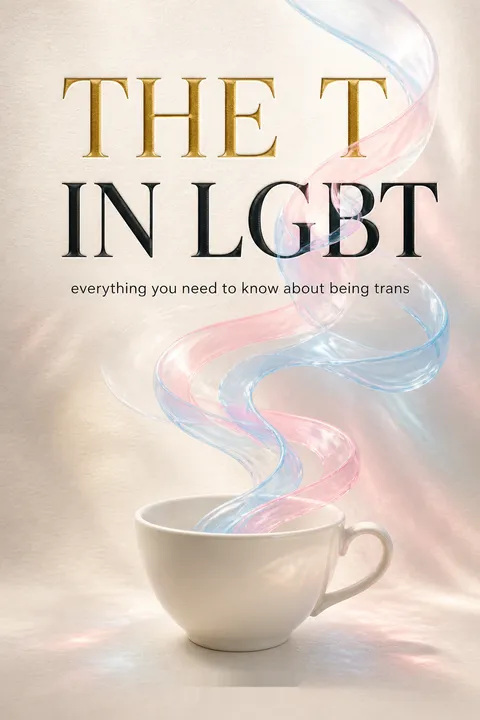


Key Takeaways
Use curiosity, not childhood stereotypes, to investigate your gender
There is no checklist. Jamie remembers wanting short hair, boys’ clothes, and a place among the boys. Those memories made more sense after he encountered a documentary about a trans boy at age 17. But childhood preferences are not a test: other contributors had mixed interests, conformed to expectations, or understood their gender only as adults. Gender identity means a person’s inner sense of their gender; gender expression is how they present themselves. They are related for some people, but one does not prove the other.
Let the answer take time. A person may recognize themselves in a story, feel uncertain, and explore for months or years. There is no required age for understanding, and no single sequence of clues that makes an identity legitimate.
What's useful here is the distinction between evidence that helps someone understand themselves and rules that claim to decide who they are. Retrospective memories can feel obvious once a person has new language, but they are not a universal diagnostic instrument. That nuance prevents the familiar trap of treating gender-nonconforming children as automatically trans, or treating gender-conforming behavior as proof that they are not. Stories can open a door; the person’s own understanding remains central.
Try names, pronouns, and presentation without demanding a permanent answer
Experimentation can clarify. After Jamie began questioning, he tried different clothes and hairstyles, and explored possible names and pronouns. Online groups gave him places to test how it felt to be addressed differently. He changed his mind about his first name before settling on Jamie. That was not failure; it was useful information. A name or pronoun can be changed again, and some trans people keep the name they were given.
Start with self-acceptance. Jamie describes this as recognizing that being trans is not something wrong with him. Supportive friends, other trans people, and seeing trans adults live fulfilling lives helped him imagine a future. Exploration may happen privately before anyone else knows, and no one needs to change their clothes, interests, or appearance to validate their gender.
This approach treats identity exploration as learning rather than a one-time declaration. That fits a broader principle of autonomy: people make better choices when they can try options, notice their responses, and revise without shame. Online spaces can offer that freedom, though they vary in safety and quality. A trusted person or qualified professional can be a useful companion, especially when exploration brings distress. Neither should turn an experiment into pressure to reach a predetermined answer.
Keep control of when, how, and to whom you come out
Coming out is personal. Jamie suggests thinking about who feels trustworthy, how to share the news, where to do it, and when. A person might choose a conversation, a message, or a social media post. They might tell one friend first, or ask someone they trust to help. Jamie told his mother before he felt fully ready because he needed support, and later told his friends together in a park where he could leave if uncomfortable.
Safety comes first. Coming out is not a one-time event. People may tell different relatives, colleagues, or healthcare professionals at different times, and may choose not to tell some people at all. Sharing someone’s trans identity without their consent is outing. It can violate their privacy, cause distress, or put them at risk, even when the person sharing believes they mean well.
The emphasis on control is more than etiquette: disclosure changes who has access to personal information and can alter someone’s safety, relationships, and work life. The book’s practical questions make that decision less abstract without pretending every context is predictable. One useful extension is to treat disclosure as ongoing consent: permission to tell one person is not permission to tell a whole circle. Allies can help by asking what may be shared, and keeping that answer private.
Treat rejection as a failure of acceptance, not proof about your identity
Disapproval takes many forms. It can be obvious, such as slurs and deliberate misgendering, or quieter, such as a relative who avoids acknowledging a trans person. Jamie and his partner Shaaba faced years of resistance from some of her family. Over time, some relatives became accepting, but the path included periods of exclusion and painful reversals. Jamie’s account shows that people’s views can change, not that anyone should have to wait for them to do so.
Protect your life meanwhile. Fear, misinformation, religious or cultural norms, and stigma may help explain why someone resists, but they do not excuse discrimination. A trans person can set boundaries, leave an unsafe conversation, seek affirming friends or support groups, and decide not to maintain a harmful relationship. Jamie and Shaaba chose not to put their future on hold while hoping for acceptance.
The distinction between explanation and excuse matters. Understanding the social pressures behind prejudice may make a conversation more productive, but it should not transfer responsibility for changing someone else onto the person being harmed. The story also avoids a simplistic promise that time heals every relationship. Patience can be freely chosen when it feels safe and worthwhile; it should not become a demand to tolerate ongoing disrespect. Community support offers belonging that a resistant family may not provide.
Notice what triggers dysphoria, then build relief around your own needs
Dysphoria is not uniform. Gender dysphoria is distress that can arise when a person’s gender and assigned sex at birth do not align. It may concern the body, voice, name, or how others perceive someone, and it varies in intensity. Jamie found his chest, voice, and being misgendered especially difficult. Another person may experience different triggers, or little dysphoria at all. Gender euphoria describes positive feelings of comfort or affirmation connected to one’s gender.
Small changes can matter. Before medical treatment, Jamie used clothing, a binder, supportive relationships, and social recognition to cope. He and Shaaba also used a codeword when he could not easily explain that dysphoria was affecting him. Such steps do not fix every source of distress, but can offer relief, clearer communication, or space to recover. No one else can decide what should feel affirming.
The book makes room for both distress and positive recognition, rather than defining trans experience only through suffering. That is a useful corrective to accounts that overlook the everyday value of being addressed correctly or feeling at ease in one’s body. Its coping suggestions are personal tools, not treatment guarantees. A strategy that helps one person may be uncomfortable or inaccessible to another, and severe or persistent distress can call for professional support. Individual variation is the rule, not an exception.
Build a transition around your needs, not a standard script
Social transition is one option. It means changing some aspects of everyday life to reflect one’s gender, such as a name, pronouns, clothing, or records. People may make these changes in selected settings or more widely. Jamie found everyday recognition affirming, but notes that changing appearance is not required. Some people use binders, packers, padding, or tucking; others do not. Safety and comfort matter, especially in gendered toilets and changing rooms.
Passing is not an obligation. Passing means being read by others as one’s gender. It may feel affirming or improve a person’s sense of safety, but pursuing it can also impose pressure to fit stereotypes. There is no single sequence of social, legal, or medical steps that every trans person must follow. A transition can be partial, extensive, or not wanted at all.
This model replaces a staircase with a set of choices. That is especially valuable because institutions often treat gender as a fixed binary and make ordinary tasks, such as using a restroom or updating a record, harder than they need to be. At the same time, choice is constrained by access, money, local rules, and personal safety. Calling a step optional should not obscure those barriers. A supportive system expands a person’s real options instead of rewarding conformity.
Do not make androgyny the admission price for non-binary identity
Identity is not a look. Non-binary people do not identify exclusively as men or women. Some feel between those categories, while others feel outside them. They may present androgynously, femininely, or masculinely; none of those styles determines whether their identity is genuine. They may also use hormones or have surgery, or choose neither. In the book, contributors describe medical choices made for their own comfort, not to prove they belong in a category.
Systems often offer too few options. Jamie describes UK limits on legal recognition for non-binary people, including the lack of an X gender marker on passports at the time of publication. Gendered facilities can also leave people deciding which space feels safest or least uncomfortable. Some contributors seek gender-neutral facilities, but these may be scarce or occupied. The burden is not evidence that non-binary identities are unclear; it reflects the narrow design of public systems.
The distinction between identity and presentation applies here with particular force: demanding androgyny simply replaces one gender rule with another. The discussion also shows how administrative categories shape daily life, from identification to access to facilities. Recognition alone, however, does not guarantee safety or inclusion; one contributor notes that a visible marker could expose them to prejudice. Good policy needs both accurate options and protections for people who choose not to use them.
Approach hormones and surgery as individual healthcare, not a universal transformation
Medical steps vary. Hormone replacement therapy, or HRT, uses testosterone or oestrogen to bring hormone levels in line with a person’s goals. Puberty blockers can pause puberty for some young people under specialist care. The book describes potential benefits and side effects, and stresses that hormone changes vary by person, take time, and cannot be selected like menu items. Some effects are permanent, while others may change if treatment stops. A clinician should guide decisions and monitoring.
Surgery needs preparation. Options include chest procedures, genital surgeries, and other procedures, but there is no single operation every trans person needs. Recovery can involve pain, swelling, complications, and emotional lows; Jamie describes an emergency procedure after a complication from metoidioplasty. He still valued the result. Researching procedures, discussing risks with the surgeon, and following recovery instructions are part of care, not obstacles to enthusiasm.
The account is strongest when it holds two truths together: gender-affirming care can be profoundly beneficial, and medical intervention deserves careful, individualized decision-making. The narrative helps readers understand why a procedure that appears elective to an outsider may be essential to a patient’s wellbeing. Still, this is a guide, not a substitute for current clinical advice. Access rules, treatment protocols, and waiting times differ by place and change over time, so practical guidance must be checked locally.
Date on your terms, with safety, consent, and boundaries intact
Being trans does not cancel love. Jamie worried that transition might exclude him from relationships, but he and Shaaba built a long-term partnership. Contributor Alex Woolhouse describes dating as a trans woman and deciding when she feels safe and comfortable sharing that information. Some people disclose early; others prefer to establish trust first. There is no universal timetable, though partners need relevant information before sex so everyone can give informed consent.
Respect works both ways. Trans people are not obligated to satisfy another person’s curiosity about their bodies, and no one should be treated as a fetish or as a secret. Dating safety advice includes meeting in public, telling a trusted person where one is going, and leaving when a situation feels wrong. Intimate partners can discuss terminology, boundaries, and dysphoria triggers, and revisit those conversations as needs change.
This section reframes disclosure as a negotiation between privacy and trust, not a confession that must happen on someone else’s schedule. Consent is central, but it should not be used to demand irrelevant personal history. The same principle supports better relationships generally: ask what information is necessary for shared decisions, and respect what remains private. Safety planning is practical rather than pessimistic, though it cannot eliminate risk or place the responsibility for another person’s violence on the person dating.
Check claims about trans people against evidence and trans voices
Common claims distort complexity. The book challenges myths that chromosomes alone determine gender, that children are routinely forced into irreversible medical treatment, or that trans rights threaten women’s rights. It stresses that gender identity, sex characteristics, and gender expression are distinct, and that trans people’s paths differ. It also cites a UK clinic report with a detransition rate below 1 percent and a study finding that 97.5 percent of a group of children still identified as trans five years after social transition.
Numbers need context. Detransition can mean different things, and the book notes that some people stop or reverse steps because social conditions make transition unsafe. The figures challenge claims that regret is common, but they do not predict any individual’s outcome. When evaluating a claim, check who produced the evidence, what was measured, and whether trans people’s own accounts are represented.
The book’s media literacy lesson is as important as any individual statistic: dramatic headlines often hide denominators, definitions, and study limits. A responsible reader asks what a study actually observed before generalizing from it. Lived experience and research answer different questions, and neither should be made to erase the other. Listening to trans people corrects a long-standing imbalance in who gets to describe their lives, while scrutiny of evidence helps keep advocacy credible.
Make room for a life that is not organized around transition
Transition is not the whole story. Jamie’s early years involved waiting lists, dysphoria, and repeated steps toward living as himself. He eventually felt his transition was complete after receiving a new birth certificate, though he still understood that other people might define completion differently. He also describes returning attention to his marriage, research, cats, books, and hobbies. Being trans remained part of his life, but no longer occupied every thought.
Joy can arrive along the way. Jamie recalls small affirmations, like hearing his chosen name, noticing his voice change, and feeling comfortable in his body after surgery. He calls the broader experience of celebrating trans identity trans joy. The book also argues that no one must become an activist all the time. Taking breaks from hostile media and protecting personal wellbeing are legitimate choices, not failures of solidarity.
The closing vision refuses the narrow public script in which a trans life is either a medical milestone or a tragedy. Ordinary interests, relationships, and pleasure are not side notes; they are evidence of a person’s full humanity. This is also a useful lesson about representation: visible stories can educate, but people should not have to make their identities educational for others. Joy does not cancel discrimination, and rest does not cancel commitment.
Analysis
This book is both an accessible guide and a memoir, and its structure follows a recognizable human sequence: uncertainty, self-recognition, disclosure, social response, practical decisions, and a more expansive life. Jamie’s story gives those stages continuity, while contributors prevent his experience from becoming a universal template. That balance is essential because the central claim is not that every trans person follows the same route, but that each person’s needs and decisions deserve respect.
The book’s most useful conceptual move is separating gender identity from gender expression, sexual orientation, and the many possible forms of transition. That distinction loosens the grip of stereotypes without requiring a reader to master clinical terminology first. Its concrete accounts of names, pronouns, healthcare, dating, and public facilities show how identity is lived through everyday interactions and institutions, not only through abstract debates.
The strongest narrative tension is between personal agency and structural constraint. Readers are told to choose their pace, but healthcare delays, legal rules, money, family power, and safety can sharply limit available choices. Jamie’s access to private treatment helped him avoid part of the UK public waiting system, a meaningful advantage that the book acknowledges. His story therefore illustrates both what support can make possible and why a memoir cannot stand in for every economic, cultural, racial, or geographic experience.
The book also makes a persuasive case for evidence without treating science as the source of someone’s identity. Its myth-busting is most durable when it teaches readers to inspect claims, definitions, and sources, rather than asking them to memorize a counter-statistic. Some clinical and legal details are specific to the UK and to the book’s 2023 publication. They should be understood as context, not timeless instructions. Overall, the guide succeeds because it combines practical information with a larger corrective: transition is not a single procedure, trans people are not defined by distress, and a fulfilling life need not wait until every institution or relative agrees.
Review Summary
The T in LGBT receives overwhelmingly positive reviews, praised for its informative, accessible, and personal approach to transgender experiences. Readers appreciate Jamie Raines' humor, honesty, and inclusion of diverse voices. Many find it an essential resource for both trans individuals and allies, particularly newcomers to the topic. The book is lauded for its casual tone, scientific references, and ability to educate while providing comfort. Some readers note that experienced trans individuals may find little new information, but overall, it's highly recommended for its comprehensive and supportive content.
People Also Read


Glossary
Gender identity
Inner sense of genderA person’s internal understanding of their own gender, such as being a man, a woman, both, neither, or another gender. It can differ from the sex assigned to a person at birth. Gender identity is not the same as gender expression, which describes how someone presents themselves.
Gender expression
How someone presentsThe ways a person presents themselves through appearance, clothing, hairstyle, behavior, or other outward choices. Society often labels these choices masculine, feminine, or androgynous, but they do not determine a person’s gender identity. A trans person does not need to change their expression to validate their gender.
Gender dysphoria
Distress linked to genderDistress or discomfort that can occur when a person’s gender identity and assigned sex at birth do not align. It can involve the body, social treatment, names, or pronouns, and varies greatly in form and intensity. Not all trans people experience it in the same way, and it is not a checklist for establishing identity.
Gender euphoria
Affirming gender-related comfortA positive feeling of comfort, recognition, or happiness connected to a person’s gender. It may arise when someone is addressed with a fitting name or pronouns, presents in a way that feels right, or experiences a desired change. The book uses it alongside dysphoria to describe affirmation, not only distress.
Socially transitioning
Living socially as oneselfChanging aspects of daily social life to reflect one’s gender. This may include using a different name or pronouns, changing clothing or hairstyle, updating public profiles or records, and deciding which people or settings to tell. It can happen in some contexts but not others, and does not require medical treatment.
Hormone Replacement Therapy (HRT)
Gender-affirming hormone treatmentThe use of hormones, commonly testosterone for trans masculine people or oestrogen for trans feminine people, to bring hormone levels in line with a person’s goals. Changes vary by individual and may take time. Some effects are permanent and others may reverse if treatment stops. Medical supervision is important.
Puberty blockers
Medication that pauses pubertyMedication that suppresses the hormones involved in puberty, temporarily pausing some pubertal development. The book describes their use for some trans young people under specialist care, as well as their use in other medical contexts. Treatment requires assessment and monitoring; the book characterizes the physical effects as reversible.
Passing
Being read as one’s genderBeing perceived by others as the gender a person knows themselves to be. Some people find this affirming or relevant to safety, while others reject the pressure to meet gender stereotypes. Passing is not a measure of whether someone is genuinely trans, and should not be treated as a required transition goal.
T4T
Trans people dating trans peopleAn abbreviation for trans for trans, referring to relationships or dating between trans people. Shared experience and mutual understanding may make such relationships appealing to some. The term does not mean trans people should only date one another, and it does not prescribe anyone’s dating choices.
Trans joy
Joy in trans identityThe happiness, pride, comfort, and connection trans people can experience in their identities and lives. It may come from affirming everyday moments or from larger milestones, and it can coexist with discrimination and hardship. The term counters portrayals that reduce trans life to suffering or medical transition.
Gender Recognition Certificate (GRC)
UK legal gender certificateA legal document in the United Kingdom that can allow a trans person to change the sex recorded on their birth certificate. The book describes obtaining one as a process with requirements beyond changing a name by deed poll. Its legal relevance and the application process are specific to UK law.
Download PDF
Download EPUB
.epub digital book format is ideal for reading ebooks on phones, tablets, and e-readers.








