

Key Takeaways
Treat body confidence as the starting point, not a prize for weight loss.
The order matters. Jessica Ortner’s story begins with a familiar bargain: life, romance, and confidence can start after the body changes. Years of dieting and self-criticism did not deliver that freedom. A hurtful comment at a conference finally pushed her to examine what weight had come to represent. Her central claim is that self-acceptance can make caring for the body easier, while weight loss, if it happens, becomes a side effect rather than the condition for feeling worthy.
Ortner describes tapping as the tool that helped her face stress and difficult beliefs without returning to crash diets or punishing exercise. The book is therefore less a diet plan than a guide to changing the emotional relationship with food, movement, and the body.
The reversal is valuable because it separates health behavior from body-based worth. Self-respect can motivate care without making affection conditional on a target size. That distinction also helps prevent a common trap: replacing one rigid project, weight loss, with another, perfect self-love. Confidence need not be complete before someone seeks support or changes habits. The author’s personal experience gives the argument emotional force, but it cannot establish that emotional work reliably produces weight loss for everyone. The most defensible promise is that a less punitive relationship with the body can improve the experience of pursuing health.
Use tapping to calm a specific feeling before choosing your next action.
A short practice. Emotional Freedom Techniques, or EFT, combines attention to a distressing thought or feeling with light tapping on a sequence of points on the face and upper body. Ortner’s method starts by choosing a clear target, such as anxiety about a photograph or an urge to eat. Rate its intensity from 0 to 10, tap while naming the feeling, then pause and rate it again. The scale is called SUDS, the Subjective Units of Distress Scale.
The key is to be concrete: identify what happened, what emotion it brings up, and where it registers physically. If another memory or feeling emerges, treat that as a new target rather than forcing a positive affirmation. The aim is less distress and more room to decide what to do.
This routine has a useful feature: it pairs emotional attention with a repeatable physical action, giving a person something specific to do during a craving or anxious moment. Naming sensations and rating intensity can also make vague distress easier to observe. The book presents tapping’s calming effects as a route to changed behavior, but the tapping points themselves should not be mistaken for a proven explanation of the effect. Slowing down, focusing attention, and allowing a feeling without immediately acting on it may all contribute. The practice is best treated as a self-regulation tool, not a guaranteed treatment.
Trace a visible habit toward the emotion, memory, or belief beneath it.
Follow the branches. Ortner uses the Tapping Tree to organize possible targets. Leaves are visible symptoms and behaviors, such as cravings or avoiding exercise. Branches are emotions, including shame, anger, or loneliness. The trunk represents past events that still carry emotional charge, while the roots are beliefs formed around those experiences. A craving may be a useful first target, even when it is not the deepest one.
For example, a woman who repeatedly snacked while working from home realized that conflict with a new boss was driving her to seek breaks and comfort. Tapping on the work stress helped her see the behavior in context. The framework is not a claim that every weight problem begins in childhood or in a belief. It is a map for asking what else might be connected.
The tree encourages a form of functional analysis: what happens before a behavior, what feeling accompanies it, and what history or assumption might shape it? That is more informative than labeling someone weak-willed. The framework also protects against an overly narrow search for one hidden cause. A snack can be a response to stress, habit, hunger, availability, or several things at once. Its best use is as a set of hypotheses to investigate, not a diagnostic instrument. If the behavior is severe or distressing, professional assessment can add context that a self-guided exercise cannot provide.
Stop letting panic, mirrors, and scales decide whether today is livable.
Urgency can trap you. Ortner calls the cycle of desperate dieting, regain, and renewed self-attack the pattern of panic. It can look like fighting harder through restriction or giving up while privately remaining consumed by weight. In both cases, the imagined payoff is the same: life will begin once the body changes. Her client Analisa feared an old friend would judge her weight; after tapping through that fear, she was able to enjoy their reunion rather than spending it rehearsing rejection.
The book also questions the authority given to mirrors and scales. Weight fluctuates with factors such as hydration, sleep, stress, and the menstrual cycle. A scale records one moment, not personal value or future progress. Ortner encourages readers to notice how clothes feel and how the body feels, rather than making a number permission to enjoy the day.
The strongest insight is not that measurements are useless, but that they become harmful when treated as verdicts. Self-monitoring can support health goals for some people, yet the same practice can intensify shame or compulsive checking for others. The relevant question is whether a measure helps guide care or governs self-worth. Likewise, the reunion story shows how imagined judgment can steal attention from a real relationship. Emotional regulation may loosen that projection, though it cannot ensure others will behave kindly. Present-focused living is not denial of health concerns; it is refusing to postpone all dignity until a metric changes.
Ask what a habit provides before demanding that it disappear.
Food may be doing a job. The book describes emotional eating as a fast route to comfort, distraction, reward, or relief from boredom and exhaustion. Ortner recounts a client who rushed home for crackers and cream cheese, then realized that what she wanted was to shed the tension of the workday. Tapping on the craving reduced its urgency and made another response possible. The goal is not to ban a favorite food, but to regain choice.
Ortner also explores secondary gain, a term for a perceived benefit that makes a problem or behavior difficult to release. She asked herself what might feel risky about losing weight and uncovered fears of restriction, judgment, and losing an excuse for setbacks. These answers did not mean she consciously wanted to struggle. They revealed competing needs worth addressing directly.
Asking what a behavior accomplishes is more humane and practical than treating it as sabotage. A habit can be costly and still solve a short-term problem, such as loneliness or depletion. Identifying that function suggests what support or alternative response may be needed. The concept of secondary gain should be handled gently: it can illuminate ambivalence, but it can also imply that people secretly choose illness or weight. That interpretation is unfair and unsupported. The useful question is not why someone wants a problem, but what needs remain unmet when the behavior is removed.
Process charged memories without mistaking their emotional force for present danger.
The past can stay active. Ortner describes Holly, whose binge eating began after family upheaval when she was eight. In tapping, Holly gave voice to the child’s anger and fear; afterward, she could remember the period with less overwhelm and more compassion. The book suggests that old events can shape present habits when their emotional charge remains strong, even if the person knows intellectually that the event is over.
For a specific memory, Ortner recommends naming the event, describing it while tapping, or imagining it as a short movie and pausing whenever distress rises. The point is not to force forgiveness or relive every detail. It is to work within a tolerable level of intensity, notice what changes, and stop when support beyond self-guided practice is needed.
The distinction between remembering an event and being emotionally flooded by it is clinically meaningful. Gradual, tolerable engagement with a memory can help people update how they respond to reminders. Still, tapping should not be presented as a substitute for trauma-focused care, particularly when memories involve abuse, violence, or severe symptoms. The author’s emphasis on going slowly is important, but readers may need a qualified therapist to judge what is safe to explore. Compassion for an earlier self can be powerful without requiring a neat lesson or a positive interpretation of what happened.
Build safety through boundaries, not by hiding your body.
Visibility is not consent. Ortner links some women’s discomfort with a changing or feminine body to early teasing, unwanted attention, and conflicting social expectations. A client, Claire, recalled gaining weight after a male friend touched her thigh when she had not invited the contact. She had not known how to object without fearing she would offend him. The book frames weight, at times, as an attempted shield, while emphasizing that a body cannot reliably create emotional safety.
The practical alternative is to notice discomfort, trust the signal, and act: leave, say no, or state a boundary without having to justify it. Compliments and attention can be interpreted differently from one situation to another. The aim is not to welcome every comment, but to feel able to choose a response rather than freeze or blame oneself.
This section usefully shifts the burden away from appearance and toward agency. A person’s body size neither invites nor prevents mistreatment, and responsibility for crossing a boundary belongs to the person who crosses it. The suggestion that weight can protect someone may help some readers explore a felt sense of safety, but it must remain a possibility, not a universal explanation. Boundaries also depend on material conditions and power, not confidence alone. A person who cannot safely confront someone may need practical support, allies, or professional help rather than a stronger affirmation.
Make movement a source of pleasure, not a penalty for your body.
Change the reason to move. Ortner recalls learning to associate running with punishment after being made to run laps at school. Other clients connected exercise with embarrassment, competition, or being watched. Those memories made movement feel threatening, so simply prescribing more exercise would not address the resistance. Tapping was used to reduce the emotional charge and question beliefs such as being bad at exercise or not belonging among active people.
Ortner describes discovering that walking, yoga, dancing, and kickboxing could offer pleasure, stress relief, or a sense of strength. She recommends experimenting with forms of movement, starting at an appropriate level, and seeking support. Clients with pain or illness may need adaptations. The point is to make movement a valued experience in itself, rather than a punishment imposed to earn food or deserve a smaller body.
This reframing matches a broader principle of sustainable behavior: activities are more likely to continue when they offer immediate rewards, not only distant outcomes. Enjoyment, social connection, and mastery can make movement meaningful even when body weight does not change. The author’s personal shift is persuasive as an account of one person, not proof that everyone will learn to love exercise. Some people face pain, disability, fatigue, unsafe environments, or limited time. Accessible choices and medical guidance matter more than insisting that resistance is merely emotional.
Choose nourishing food with curiosity, not a hunt for perfect rules.
Make eating less adversarial. Ortner argues that dieting can create deprivation and make food feel like a test of character. She also cites Michael Moss’s account of processed foods engineered around salt, sugar, and fat, and warns that health claims on packages do not guarantee nourishing food. Her practical advice is to eat more attentively, notice fullness, favor fresh foods when available, and make meals enjoyable instead of treating them as punishment.
The author shares examples of people discovering that particular foods seemed to coincide with symptoms such as congestion or bloating. These stories support paying attention to individual responses, not assuming one diet suits everyone. Ortner rejects the idea of perfect eating: a pleasurable treat can be enjoyed without shame, then followed by an ordinary next choice. Food is both nourishment and pleasure, not a moral scorecard.
The useful synthesis is to combine attention to food quality with freedom from all-or-nothing thinking. Eating slowly and noticing satiety can help reconnect choice with bodily cues, while less processed foods often make nutritional sense. But the book sometimes overstates what can be inferred from individual reactions or food-industry examples. Symptoms have many possible causes, and restrictive elimination diets can carry risks, especially for people with eating disorders or medical conditions. Food choices are also constrained by cost, time, access, and culture. Curiosity should include those realities, not turn each meal into another investigation to perfect.
Protect time for pleasure, help, and rest as part of health.
Care is not a reward. Ortner connects chronic overgiving with guilt, resentment, and using food as one of the few available comforts. Her client Ann feared disappointing coworkers by declining a shift on her day off. After tapping, she said no, kept the time for herself, and accepted an invitation to enjoy an evening cruise. The example turns self-care from an abstract ideal into a boundary that protects time and energy.
Ortner suggests asking for help, taking small restorative pauses, and choosing enjoyable activities that are not centered on food. She also argues that the process has no finish line: setbacks are information, not evidence of failure. Community matters because sharing struggles can reduce isolation and make support easier to seek. Progress includes living more fully now, not only reaching a future weight.
The section’s social dimension matters: self-care is not merely an individual mindset when unpaid labor and caretaking are unevenly distributed. Saying no and requesting help can change relationships and workloads, not just mood. Pleasure may also provide an immediate alternative to food used as the sole source of relief. Yet not everyone has equal control over schedules, money, or support networks. Advice to set boundaries should not imply that structural constraints disappear through confidence. A realistic practice starts small, recognizes obligations, and treats reciprocal support as a shared responsibility.
Analysis
The book’s most useful contribution is its refusal to treat weight as a simple referendum on discipline. It makes a compelling case that shame, restriction, and panic can turn ordinary choices into emotionally loaded contests. The reader is given a repeatable method for noticing distress, naming it, and creating a pause before reacting. The anecdotes make this approach concrete, especially when a craving turns out to be entangled with work stress, loneliness, or old humiliation. The larger message is humane: a person does not have to wait for bodily change before participating in life.
Its scientific claims require more caution than its emotional insights. The book reports a study of 89 women in which participants averaged 16 pounds of weight loss after eight weeks of tapping, and another study of 83 people reporting a larger cortisol decline after tapping than after comparison conditions. Those findings, as presented, are intriguing but do not by themselves establish that tapping causes durable weight loss, identify its active ingredient, or show that cortisol reduction explains the result. Small studies, follow-up limits, expectations, and concurrent behavior changes all matter. The book’s descriptions of stress, metabolism, and meridian points sometimes move from plausible association to confident causal storytelling.
A balanced reading keeps tapping in the category of a potentially helpful stress-management practice, not a stand-alone weight treatment or substitute for medical and psychological care. Weight is shaped by biology, medication, sleep, disability, food access, social pressures, and many other factors. Nor should every persistent behavior be interpreted as evidence of hidden trauma or a protective unconscious motive. The strongest practical model is simpler: reduce self-attack, investigate what a behavior does for you, make health-supporting choices more workable, and seek appropriate help when distress or symptoms warrant it. Self-acceptance is not a promise of weight loss. It is a better foundation for making choices without treating the body as an enemy.
Review Summary
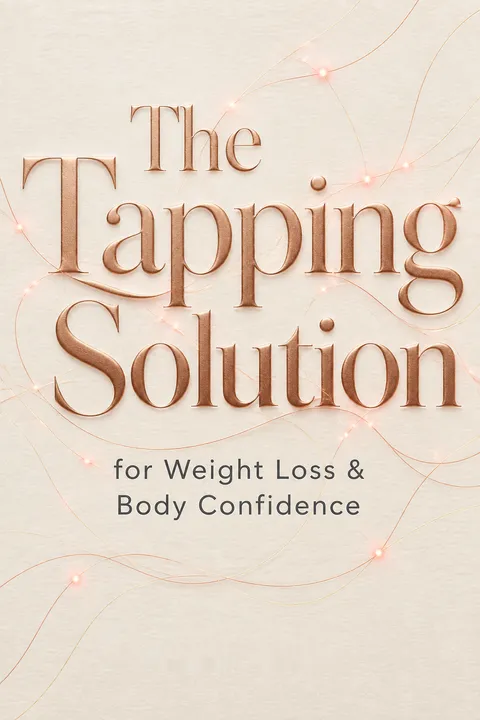
The Tapping Solution for Weight Loss & Body Confidence receives mostly positive reviews, with readers praising its empowering approach to self-love and body acceptance. Many find the tapping techniques helpful for addressing emotional eating, stress, and negative self-talk. Some criticize the book for being repetitive or lacking scientific depth. Readers appreciate Ortner's personal anecdotes and warm writing style. While some are skeptical of tapping's effectiveness, many report positive results in their lives. The book is seen as more than just a weight loss guide, focusing on overall well-being and self-empowerment.
People Also Read









Glossary
Emotional Freedom Techniques
Tapping-based stress techniqueA method that combines focused attention on a distressing thought, memory, or sensation with tapping on a sequence of points on the body. In Ortner’s version, the person names a specific target, tracks its distress, taps through the points, and checks whether the intensity changes. The book presents EFT as a self-guided tool for emotional regulation and behavior change.
SUDS
Distress rating scaleThe Subjective Units of Distress Scale is a self-rating from 0 to 10 used to estimate how intense an emotion, memory, craving, or discomfort feels. Zero means no distress and 10 means the strongest distress the person can imagine. Ortner uses the rating before and after tapping to help people notice changes, rather than to provide an objective clinical measurement.
Tapping Tree
Map of related tapping targetsA framework attributed in the book to EFT practitioner Lindsay Kenny. It organizes a problem into four linked levels: leaves are present symptoms or behaviors, branches are emotions, the trunk is past events, and roots are limiting beliefs. The model helps a person move from an obvious difficulty, such as a craving, toward related emotional material without assuming that every problem has the same origin.
Choices Method
Choice-based tapping statementA tapping approach associated in the book with psychologist Patricia Carrington. Instead of ending a setup statement with self-acceptance, the person acknowledges the current feeling and adds a choice about a desired state. For example, someone might name feeling overwhelmed and then choose calm or confidence. The book recommends using a positive choice only when it feels believable rather than forced.
Movie Technique
Tapping through a specific memoryA method developed by EFT founder Gary Craig for addressing a particular upsetting event. The person gives the event a title, imagines it as a short scene, rates the distress, and taps whenever intensity appears. The scene is revisited in manageable pieces until it can be recalled with less emotional activation. The book advises breaking complex memories into smaller segments.
secondary gain
Perceived benefit of a problemA psychological term for a benefit or protective function associated with a condition or behavior. In the book, asking about secondary gain means exploring what feels safer, easier, or less threatening about maintaining a pattern, and what might feel difficult about changing it. It is intended to uncover ambivalence, not to suggest that a person consciously wants distress or illness.
Peta Stapleton tapping study
Tapping and weight-loss trialThe book describes a controlled eight-week study led by clinical psychologist Peta Stapleton involving 89 women aged 31 to 56 with obesity. Participants completed about two hours of tapping weekly, without a prescribed diet or exercise program, and reportedly lost an average of 16 pounds. The book says the loss appeared to persist for six months or more, but the summary does not establish how broadly the result generalizes.
Dawson Church cortisol study
Tapping and cortisol comparisonThe book reports a randomized study of 83 participants comparing a one-hour tapping session, conventional talk therapy, and no treatment. It states that cortisol fell by an average of 24 percent in the tapping group, compared with 14 percent in the other groups, with some tapping participants showing larger declines. The reported result concerns cortisol change and does not alone demonstrate weight loss or explain the mechanism.
FAQ
What's The Tapping Solution for Weight Loss & Body Confidence about?
- Emotional Well-being Focus: The book emphasizes the link between emotions and weight loss, suggesting that emotional issues often underlie weight struggles.
- Tapping Introduction: It introduces tapping, or Emotional Freedom Techniques (EFT), as a method to address emotional barriers to weight loss.
- Holistic Approach: Combining personal stories, scientific research, and practical exercises, it serves as a comprehensive guide for women to improve their body relationship and achieve sustainable weight loss.
Why should I read The Tapping Solution for Weight Loss & Body Confidence?
- Unique Weight Loss Approach: The book offers a method that goes beyond traditional dieting, focusing on emotional eating and self-sabotage.
- Inspiring Success Stories: It includes testimonials from women who have transformed their lives using tapping, providing motivation and proof of effectiveness.
- Empowerment and Self-Acceptance: Readers can cultivate a positive self-image and learn to appreciate their bodies, fostering self-love and confidence.
What are the key takeaways of The Tapping Solution for Weight Loss & Body Confidence?
- Emotions Influence Behavior: Emotions significantly impact eating habits and body image, and addressing them through tapping can lead to healthier choices.
- Tapping as a Tool: Tapping is presented as a powerful method for reducing stress and negative beliefs, aiding in weight loss and body confidence.
- Self-Love Importance: Self-love and acceptance are crucial for lasting change, helping to create a healthier relationship with food and exercise.
What is tapping, and how does it work according to The Tapping Solution for Weight Loss & Body Confidence?
- Definition of Tapping: Tapping involves tapping on specific acupressure points while focusing on negative emotions, helping to release emotional blockages.
- Scientific Basis: Research shows tapping can lower cortisol levels, the stress hormone linked to weight gain, promoting optimal body function.
- Practical Application: The book provides step-by-step instructions, making tapping accessible for beginners to address various emotional issues.
How can I use tapping to overcome emotional eating as suggested in The Tapping Solution for Weight Loss & Body Confidence?
- Identify Triggers: Recognize what triggers emotional eating, such as stress or boredom, and tap on these triggers to reduce their intensity.
- Create a Tapping Script: Use provided scripts to address specific cravings and emotions, like guilt or anxiety associated with food.
- Practice Regularly: Consistency is key; make tapping a regular part of your routine to effectively manage emotional eating.
What are some common emotional triggers for overeating mentioned in The Tapping Solution for Weight Loss & Body Confidence?
- Stress and Anxiety: Many turn to food as a coping mechanism during stress, and tapping can help alleviate this stress.
- Boredom and Loneliness: Emotional eating can stem from boredom or loneliness, with food as comfort; healthier coping methods are encouraged.
- Past Events: Unresolved emotional pain from past events can trigger overeating, and tapping helps process these emotions.
How does The Tapping Solution for Weight Loss & Body Confidence address the relationship between stress and weight gain?
- Cortisol Connection: Stress increases cortisol levels, linked to weight gain, especially around the abdomen; tapping helps lower cortisol.
- Fight-or-Flight Response: Stress triggers this response, disrupting digestion and metabolism; tapping calms this response for better body function.
- Emotional Eating Response: Many cope with stress through food, leading to emotional eating; tapping addresses root stress causes to break this cycle.
What are some effective tapping scripts from The Tapping Solution for Weight Loss & Body Confidence?
- Basic Tapping Script: Starts with, “Even though I feel [emotion], I love and accept myself,” followed by tapping on various points.
- Craving Tapping Script: For cravings, tap on, “Even though I need this [food], I accept how I feel and it’s safe to relax now.”
- Self-Acceptance Script: Encourages self-love with, “I choose to appreciate my body for all it does for me,” fostering a positive mindset.
What are the best quotes from The Tapping Solution for Weight Loss & Body Confidence and what do they mean?
- “Self-sabotage is simply misguided self-love.”: Highlights that emotional eating stems from a desire to nurture oneself, encouraging healthier self-love forms.
- “The only thing we are ever dealing with is a thought, and a thought can be changed.”: Emphasizes the power of beliefs in shaping experiences, suggesting changing thoughts can change reality.
- “Calm and confident isn’t a number on the scale.”: Reinforces that self-worth and confidence should not be tied to weight, focusing on inner peace and self-acceptance.
How can I create a positive relationship with my body as suggested in The Tapping Solution for Weight Loss & Body Confidence?
- Practice Self-Love: Engage in daily affirmations and tapping exercises promoting self-appreciation and a positive body image.
- Focus on Nourishment: Shift from dieting to nourishing your body with healthy foods, making eating a pleasurable experience.
- Celebrate Small Wins: Acknowledge and celebrate progress, reinforcing positive behaviors and building a healthier body relationship.
How does The Tapping Solution for Weight Loss & Body Confidence address the relationship between food and emotions?
- Food as Comfort: Discusses how food is often used for comfort during stress, leading to unhealthy habits; recognizing this is the first step to change.
- Mindful Eating Practices: Encourages being present and aware during meals, helping reconnect with the body and make healthier choices.
- Emotional Triggers: Helps identify emotional triggers for overeating, using tapping to break the cycle of emotional eating.
How can I maintain my progress after reading The Tapping Solution for Weight Loss & Body Confidence?
- Regular Tapping: Continue practicing tapping to address new emotional challenges, staying connected to your body and emotions.
- Community Support: Engage with supportive communities or groups for motivation and encouragement on your journey.
- Celebrate Small Wins: Recognize and celebrate achievements, boosting confidence and reinforcing positive behaviors.
About the Author
Other books by Jessica Ortner
Download PDF
Download EPUB
.epub digital book format is ideal for reading ebooks on phones, tablets, and e-readers.








