

Key Takeaways
Turn tarot from a prediction tool into a prompt for deliberate action
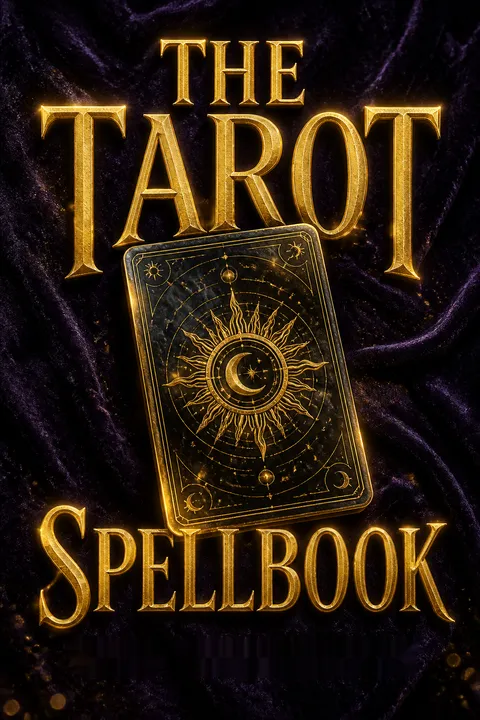
From spread to practice. Sam Magdaleno’s central move is to use tarot beyond readings. Each of the deck’s 78 cards becomes a starting point for a spell tied to an everyday concern or a major life transition. A card such as The Fool can stand for the courage to begin; a card such as the Nine of Swords can help someone engage with anxiety. The book is designed for beginners as well as experienced practitioners, and no specialist knowledge of tarot or Wicca is required.
Learn by doing. Spells pair a card’s imagery and meaning with objects, visualization, spoken intention, and journal prompts. The aim is both to work with a concern and to become more familiar with the card. Each spell explores one aspect of its card, not a definitive interpretation.
The book changes the card’s role from a symbol that describes a situation into a structure for responding to it. That shift gives beginners a concrete way to learn meanings that can otherwise feel abstract or slippery. It also makes tarot practice more participatory: the reader does not simply receive an interpretation but chooses what to do with it. The approach works as a reflective exercise even for someone who does not share its supernatural assumptions, provided the ritual is understood as a prompt for attention and action.
Read the suits as a map from life-scale change to daily friction
Two scales of experience. The 22 Major Arcana cards represent significant lessons, obstacles, and transitions. The 56 Minor Arcana cards address more ordinary situations. The book also uses the four suits as broad guides: Cups for emotions and relationships, Wands for drive and creativity, Swords for thought and conflict, and Pentacles for material and practical concerns.
Start with the problem. A relationship strain might lead to a Cups card, while a work goal might suggest Wands or Pentacles, depending on whether the challenge is motivation or resources. These groupings help a reader choose a relevant card without needing to memorize every meaning. Magdaleno bases the spells on the Rider-Waite-Smith deck’s illustrations, while encouraging readers to explore interpretations beyond the single lesson each spell emphasizes.
This map is useful because it connects card symbolism to recognizable parts of life: feelings, effort, thought, and material conditions. The distinction between major transitions and everyday problems also gives the deck a practical scale. Any map simplifies, however. A job change can involve fear, ambition, and money at once, so one suit should not be mistaken for the only valid lens. The author’s reminder that each card contains more than one lesson helps keep the categories open rather than turning them into rigid definitions.
Name one exact intention before asking a card to carry it
Precision gives ritual direction. The book recommends settling on a clear intention before spellwork begins. A wish for more money, for instance, can be made more specific by defining what financial improvement would mean. That clarity helps the practitioner understand what the ritual is meant to support, rather than leaving success vague enough to mean almost anything.
Make the intention tangible. One technique is sigil magick: creating a personal symbol from a word or phrase, often by removing vowels and repeated letters, then combining the remaining letters into a design. The book suggests using present or past tense when writing an intention and focusing on one aim per sigil. It also stresses preparation, including reading the spell first, gathering supplies, reducing distractions, and choosing a suitable space.
Specificity has a practical benefit independent of any magical claim: it makes an intention easier to remember and gives the person a clearer standard for deciding what action to take. A symbol can also condense a complicated goal into something visible and repeatable. The book describes sigils as a way to bypass conscious doubt, but that mechanism should be treated as a spiritual interpretation, not an established fact. The stronger, more defensible point is that deliberate attention can help keep a goal present in mind.
Give an inner problem a physical ritual you can remember
Symbol becomes action. Many spells turn an emotional or mental concern into a physical object or gesture. In the Devil card spell, self-sabotage is represented by a restraint that the practitioner later removes. In a spell for feeling trapped, the Eight of Swords’ imagery becomes a mirror exercise in which limiting beliefs are named and erased. These acts make an internal experience visible and give it a beginning, middle, and end.
Objects carry the card’s meaning. Herbs, candles, water, stones, and everyday items are chosen for their associations as well as their usefulness in the ritual. A plant spell for business growth connects tending a living plant with tending a business over time. The practitioner can use a copy or drawing of a card when a spell calls for altering or burying it.
Ritual’s strength here is its physicality. Naming a fear, tying a knot, or tending a plant can make an abstract intention easier to revisit than a private resolution alone. The object also acts as a reminder after the spell ends. Yet a satisfying symbolic act is not the same as resolving the underlying difficulty. Its value is greatest when it helps someone identify what needs attention, while leaving room for practical support, conversation, or other forms of care.
Let spells cue practical effort instead of promising outcomes
Work alongside the wish. The Magician represents resourcefulness: the book reads the card’s four suit symbols as a reminder that useful capacities and tools are already available. Its spells repeatedly pair intention with effort. A job-focused ritual uses a resume or listing as its centerpiece; a business-growth spell asks the practitioner to care for a plant over time; a goal-setting spell encourages a small daily step.
Ritual is not a substitute for action. The book explicitly frames some spells as support for confidence, focus, or motivation rather than as a way to acquire knowledge or make events happen without participation. A test spell, for example, is presented as a way to trust and communicate what has been learned, not as a way to magically know the answers. The practitioner is expected to meet the intention with real-world work.
This is the book’s most grounded practical principle: a ritual can help organize attention, but it cannot take the place of the task itself. The resume, plant, or daily step makes that boundary visible. Symbolic practice can also make effort feel personally meaningful, which may help sustain engagement. The caution is that an appealing ritual can create a false sense of progress if it replaces applications, study, budgeting, or direct communication. A useful test is whether the spell leaves the person better prepared to act.
Use card imagery to approach grief, doubt, and change without rushing them
A container for difficult feelings. Several cards offer ways to recognize emotional difficulty without pretending it should disappear immediately. The Five of Cups addresses grief by acknowledging loss while also asking the practitioner to notice what remains. The Three of Swords treats heartbreak as something to feel and work through. Death represents an ending that can make room for a changed identity, while the Tower speaks to upheaval and rebuilding.
Reflection belongs in the spell. The book’s journal prompts ask what has been lost, what the person is ready to release, and what support or strengths remain. Some rituals use a physical symbol of the past self or a written account of fear. These practices give emotional attention a place in the process instead of demanding instant optimism.
The cards help create a vocabulary for experiences that are often hard to describe directly. Their images can hold mixed feelings: grief alongside gratitude, disruption alongside the possibility of rebuilding. That permission to pause is a meaningful counterweight to the pressure to convert every painful experience into a lesson immediately. Still, ritual reflection is not a clinical treatment, and distress can require support beyond a spellbook. The book is most helpful when its practices complement, rather than replace, care from trusted people or professionals.
Use tarot to surface your reaction, not outsource a decision
Treat intuition as information. The High Priestess encourages listening inward rather than endlessly seeking outside answers. The Moon addresses confusion and fear, while the Two of Swords represents weighing competing choices. In its decision spell, the practitioner assigns options to two coins, draws one, and notices the immediate response. Relief or disappointment can reveal a preference that was difficult to admit.
Notice, then examine. The book also recommends attending to bodily sensations, dreams, and journaled reactions. These can help clarify what a person feels about a choice. But the method is not presented as a guarantee that a symbol supplies an objective answer. The prompts ask readers to consider fear, consequences, and possible blind spots, so intuition becomes one source of reflection rather than a replacement for judgment.
The coin exercise is revealing less because the draw decides anything than because the reaction to it can expose a preference. This turns divination into a mirror for the decision-maker, not just a source of instruction. The distinction matters most when choices have serious consequences: an intuitive response can be valuable, but it should be considered alongside evidence, constraints, and the effects on other people. The book’s emphasis on reflection supports this more careful use of symbolic guidance.
Personalize correspondences while keeping ritual focus and safety intact
Use the structure, adapt the details. Magdaleno presents spells as flexible guides, not fixed scripts. A practitioner can substitute an ingredient if its properties are researched, add personally meaningful objects, or use a printed or hand-drawn card instead of altering a deck. Timing is similarly optional: moon phases, weekdays, and times of day are offered as correspondences that may add meaning, not as conditions that must be met.
Prepare with care. The book advises reading the spell first, gathering supplies, clearing distractions, and cleansing tools or space. It describes casting a circle as creating a bounded setting for spellwork, while noting that not every practice requires one. Some rituals involve candles, fire, sharp objects, or essential oils, so adapting a spell should also include ordinary precautions and attention to the safety of people, animals, and surroundings.
Adaptability is central to the book’s welcoming approach: a practice is more likely to feel meaningful when it fits a person’s beliefs, resources, and comfort. Timing and correspondences can provide ritual structure without becoming gatekeeping rules. The same flexibility calls for discernment. Ingredient substitutions, flame use, and oils have practical consequences that symbolism cannot cancel. Treating safety as part of the ritual, rather than an interruption to it, preserves the book’s central aim of making spellwork personal and usable.
Analysis
The Tarot Spellbook is a practical guide organized around the full 78-card tarot deck, not a sustained argument or a single recipe for manifestation. Its structure does much of its explanatory work: each card supplies a theme, and each theme is translated into a ritual for a recognizable concern, from grief and social anxiety to work, money, and relationships. The result is an unusually broad catalogue that can be entered through a problem the reader already has.
Its most durable contribution is not any one ingredient or correspondence, but its method of translation. A card image becomes a prompt; a prompt becomes an intention; the intention is given a physical form; and reflection or action carries it into daily life. That sequence can help make tarot less intimidating, especially for beginners who struggle to retain meanings through reading alone. The author also makes room for personal practice, acknowledging that cards have multiple interpretations and that spells can be adapted.
The book’s magical language should be understood on its own terms. It presents correspondences, lunar timing, crystals, and intention as part of witchcraft, but does not establish that a spell can control external events. The practical value is clearest where rituals support a person’s own choices: studying for an exam, applying for a job, tending a business, or examining a relationship. The distinction between influencing one’s focus and controlling another person’s response is especially important in love and money spells. The book occasionally acknowledges consent and consequences, but readers should apply that caution consistently.
As a summary, the deck’s 78 individual spell recipes matter less than the reusable pattern behind them. Choose a card whose lesson fits the concern, make the intention clear, use symbols that feel meaningful, reflect on what emerges, and take the next real-world step. This makes the book both a spellbook and a guided exercise in learning tarot through practice.
Review Summary
The Tarot Spellbook receives mostly positive reviews, with readers praising its beautiful illustrations, accessible information, and unique approach to combining tarot with spellwork. Many find it helpful for beginners and experienced practitioners alike. Reviewers appreciate the journal prompts, spell suggestions, and detailed card explanations. Some criticize the simplified card meanings and lack of reversed card interpretations. Overall, readers find it a valuable resource for deepening their tarot practice and exploring magical applications of the cards.
People Also Read
Glossary
Major Arcana
Tarot’s major life lessonsThe first 22 cards of a standard tarot deck. In this book, they represent significant events, lessons, obstacles, and transitions, so their spells tend to address larger changes in a person’s life. Each spell focuses on one aspect of its card, while recognizing that the card may carry other meanings.
Minor Arcana
Tarot’s everyday situationsThe 56 cards divided among Cups, Wands, Swords, and Pentacles. Magdaleno connects them to everyday concerns, including relationships, creative effort, communication, work, and finances. Their spells use the suit and individual card imagery to focus on practical or recurring situations rather than only major life transitions.
Sigil
A symbol holding intentionA symbol assigned a specific magical meaning or purpose. The book describes making a word sigil by writing a focused intention, removing vowels and repeated letters, and reshaping the remaining letters into a design. A sigil can then be activated through a chosen practice, such as focused visualization or burning the paper safely.
Taglock
A link to a personAn object used in a spell to represent or connect it to a particular person. In one relationship spell, strands of each partner’s hair serve as taglocks. The term describes the item’s symbolic role within the spell, not a demonstrated means of influencing someone or overriding their consent.
Poppet
A figure used as a stand-inA constructed figure that represents a person, quality, or situation in spellwork. The book uses poppets in several ways, including a small figure representing imposter syndrome and a paper arrangement representing a desired partner. The practitioner assigns meaning to the figure and uses it as a focus for the ritual.
Scrying
Reading symbols in a mediumA form of divination in which a person observes a medium, such as water or smoke, for shapes, images, or messages. The book recommends recording what appears and considering what the symbols suggest. It treats interpretation as intuitive and personal, rather than presenting the images as objectively verifiable answers.
Moon water
Water charged in moonlightWater placed in moonlight as part of a magical practice. The book associates its intended properties with the lunar phase during which it is prepared, such as beginnings or release. It can be used in spells as a symbolic connection to lunar energy; these associations are presented as witchcraft correspondences.
Casting a circle
Creating a bounded spell spaceA witchcraft practice that marks a space as a protected or focused setting for spellwork. Magdaleno describes establishing its boundaries, calling on the elements, and closing the circle after the ritual. She recommends it for the book’s spells while noting that circles are not necessary for every form of magical practice.
Glamour magick
Ritual for confidence and presenceIn this book, a practice that uses a personal item, clothing, or an accessory as a focus for confidence and self-presentation. For example, a chosen beauty item can be associated with the Empress card and used as a reminder of self-assurance. The term describes symbolic practice, not a guaranteed change in physical appearance.
FAQ
1. What is "The Tarot Spellbook" by Sam Magdaleno about?
- Practical Tarot Spellwork: The Tarot Spellbook is a guide to using tarot cards as tools for spellwork, magick, and manifestation, rather than just for readings and spreads.
- 78 Tarot-Inspired Spells: It provides 78 spells—one for each card in the tarot deck—covering topics like self-empowerment, love, protection, money, and personal growth.
- Accessible Witchcraft: The book is designed for witches of all experience levels, offering beginner-friendly instructions and explanations.
- Integration of Tarot and Magick: It teaches readers how to deepen their connection to tarot by integrating the cards’ lessons into everyday magickal practice.
2. Why should I read "The Tarot Spellbook" by Sam Magdaleno?
- Expand Tarot Practice: It offers a unique approach to tarot, moving beyond traditional readings to practical, hands-on magick.
- Beginner-Friendly Guidance: The book is accessible to those new to both tarot and witchcraft, with clear instructions and supportive advice.
- Personal Empowerment: Readers learn to use tarot as a tool for self-discovery, manifestation, and overcoming life’s challenges.
- Versatile Spells: The spells address a wide range of real-life situations, making the book a useful resource for daily living and spiritual growth.
3. What are the key takeaways from "The Tarot Spellbook"?
- Tarot as a Magickal Tool: Tarot cards can be used for spellwork, not just divination, to bring about change and manifestation in your life.
- Personalization is Encouraged: Spells are meant to be adapted—ingredients and methods can be substituted to fit your practice and resources.
- Intention is Crucial: The most important ingredient in any spell is your mindset and belief in the magick you’re creating.
- Practical Witchcraft: The book demystifies witchcraft, making it approachable and relevant to everyday situations, from love and money to self-confidence and protection.
4. How does Sam Magdaleno recommend using tarot cards in spellwork, according to "The Tarot Spellbook"?
- Card-Specific Spells: Each spell is designed around the symbolism and lesson of a specific tarot card, using it as a focal point for magick.
- Physical Integration: Spells often involve physically interacting with the card—placing it on an altar, charging objects, or even writing on or burying a copy.
- Journaling and Reflection: Each spell includes journal questions to deepen your understanding and relationship with the card and the spell’s intention.
- Learning Through Practice: Working with the cards in spellwork helps reinforce their meanings and lessons in a tangible, memorable way.
5. What are the main concepts and methods introduced in "The Tarot Spellbook"?
- Spell Preparation: The book covers setting up for spellwork, including cleansing, casting circles, and establishing clear intentions.
- Magickal Timing: It explains how to align spells with moon phases, days of the week, and times of day for added potency.
- Sigil Magick: Readers learn how to create and activate personal sigils to encode intentions into symbols for spellwork.
- Elemental Correspondences: Many spells incorporate representations of the four elements (Air, Fire, Water, Earth) and Spirit, connecting tarot suits to elemental magick.
6. How are the spells in "The Tarot Spellbook" organized and what topics do they cover?
- By Tarot Card: Spells are organized by the 22 Major Arcana and the 56 Minor Arcana cards, with each card inspiring a unique spell.
- Life Themes: Topics include self-empowerment, love and relationships, protection, money and career, home, change, and guidance.
- List by Subject: The book provides a categorized list of spells by subject, making it easy to find spells for specific needs (e.g., self-love, financial stability, grief).
- Practical Focus: Each spell addresses a real-life situation or emotional state, offering actionable magick for everyday challenges.
7. What is the role of intention and mindset in spellwork, according to "The Tarot Spellbook"?
- Primary Ingredient: Magdaleno emphasizes that your mindset and belief are the most important factors in successful spellcasting.
- Clarity and Specificity: Clear, specific intentions help the Universe understand and fulfill your desires more effectively.
- Personal Empowerment: Believing in your own magick and abilities is essential; doubt or discomfort can weaken a spell’s effectiveness.
- Reflection and Growth: The book encourages ongoing self-reflection and adaptation, viewing magick as a personal and evolving practice.
8. How does "The Tarot Spellbook" explain magickal timing and its importance?
- Moon Phases: The book details the magickal properties of each moon phase (new, waxing, full, waning, dark) and suggests ideal timings for different types of spells.
- Days of the Week: Each day is associated with a planetary ruler and magickal focus (e.g., Friday for love and beauty, Thursday for abundance and luck).
- Times of Day: Spells can be timed to sunrise, noon, sunset, night, or midnight, each carrying specific energies for different intentions.
- Optional Enhancement: While timing can boost a spell’s power, Magdaleno encourages flexibility—spells can be cast whenever feels right for the practitioner.
9. What are some examples of spells from "The Tarot Spellbook" and their purposes?
- The Fool: A spell spray for courage to start something new, using rose and rosemary for bravery.
- The Magician: An elemental spell to manifest desires, working with representations of Air, Fire, Water, and Earth.
- The Lovers: An apple magick spell to ignite passion in a relationship, using spices and candle magick.
- Ace of Pentacles: A magnet magick spell to attract abundance and become a money magnet.
- Nine of Swords: A bracelet spell to ease anxiety, using crystal beads and affirmations for calm.
10. How does "The Tarot Spellbook" approach adapting and personalizing spells?
- Flexible Ingredients: Readers are encouraged to substitute ingredients based on availability, as long as the substitute has similar magickal properties.
- Personal Touch: Spells can be modified to better fit the practitioner’s beliefs, needs, and intuition.
- Creative Expression: The book supports adding extra elements (candles, crystals, music) to set the mood and enhance the magickal experience.
- Learning Opportunity: Adapting spells is seen as a way to deepen your understanding of both tarot and magick, fostering a more meaningful practice.
11. What are some key quotes from "The Tarot Spellbook" by Sam Magdaleno and what do they mean?
- “Your mind-set is the most important ingredient!” – Emphasizes that belief and intention are more powerful than any physical tool or ingredient in spellwork.
- “You do not have to be a tarot expert to use the cards in spellwork.” – Encourages beginners to dive in and learn through practice, not just study.
- “Each spell focuses on one main aspect or lesson of the card. It is by far not the only aspect or lesson of each card!” – Reminds readers that tarot is nuanced and invites further exploration beyond the book.
- “One of the great things about witchcraft is that you get to make your magick yours!” – Highlights the importance of personalizing your practice and trusting your intuition.
12. How does "The Tarot Spellbook" help readers deepen their connection to tarot and witchcraft?
- Experiential Learning: By using tarot cards in spellwork, readers gain a hands-on understanding of each card’s energy and meaning.
- Journaling Prompts: Each spell includes reflective questions to encourage introspection and personal growth.
- Everyday Application: The book demonstrates how tarot and magick can be integrated into daily life, making spiritual practice practical and relevant.
- Ongoing Growth: Magdaleno frames both tarot and witchcraft as lifelong journeys, encouraging readers to remain curious, adaptable, and open to new lessons.
Download PDF
Download EPUB
.epub digital book format is ideal for reading ebooks on phones, tablets, and e-readers.








