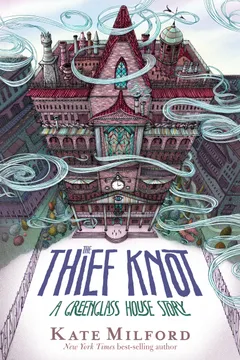


Plot Summary
Nothing in Gammerbund
Marzana Hakelbarend and her best friend, Nialla Giddis, spend an afternoon tailing a suspicious man near a jeweler, only to discover that his apparent robbery is a public proposal. Their disappointment fits the Liberty of Gammerbund, a crowded refuge where residents with dangerous pasts keep excitement at arm’s length.
Marzana longs for a caper like the one she once experienced at Greenglass House, where she met customs agent Emmett Syebuck. Then Emmett arrives for dinner with her parents, Barbara and Peter Hakelbarend, carrying a case that is anything but harmless. An eleven-year-old girl, Peony Hyde, has vanished. The adults agree to investigate, and Marzana realizes that the adventure she wanted has arrived as a child’s crisis.
The opening sets up a productive tension between adventure as fantasy and danger as lived consequence. Marzana’s failed stakeout is comic, but her hunger for something to happen is not merely a child’s whim: she has grown up beside adults whose pasts are vivid yet deliberately withheld. Emmett’s news converts that appetite into an ethical problem. The story begins by making Marzana’s desire understandable, then immediately complicates it with a missing child. Her eventual choices will depend on learning that a real investigation cannot be treated like a game whose risks disappear when the book closes.
A Child Goes Missing
Emmett explains that Peony disappeared after a camp welcome party, and that a ransom demand for an impossible sum has been sent to her father, mayoral candidate Winston Hyde. The police suspect three missing criminals, including Rob Gandreider, but have no proof that Peony is inside the Liberty.
Marzana notices the social clue the adults have not pursued: Peony’s former walking companion, Hank, had recently stopped spending time with her. If the kidnappers planned to take her on that particular day, they may have known she would be alone. Marzana’s parents refuse to involve her, citing the danger of investigating kidnappers. She turns to Nialla instead, and together they decide to search for Peony themselves.
The clue Marzana notices is modest, but it reveals how her mind works: she links ordinary routines to the conditions a crime would require. Her parents’ caution is not a failure of care; they understand that competence does not make a child safe. Yet excluding Marzana also repeats the secrecy that frustrates her at home. Her decision to investigate therefore has mixed motives. She wants to protect Peony, but she also wants entry into the adult world her parents have kept behind a locked door. The novel lets both impulses coexist rather than pretending that a good cause makes every choice wise.
Doors Beneath Marymead
Marzana follows bookseller Lucky’s suggestion and joins a strategy game at Surroyal Books, where she meets Emilia Cabot, a quiet Marymead classmate and one of the school’s resident boarders.
Emilia agrees to hear the case, then takes Marzana and Nialla through a locked garden shed, down beneath Marymead’s greenhouse, and along an abandoned canal. They emerge through a derelict building whose rooms contain an immaculate glass museum and a mysteriously prepared tea table.
The route gives the girls a hidden map of their supposedly uneventful town, while Emilia shows how much can be found by exploring rather than waiting for an invitation. Marzana asks Emilia to help investigate substitute teacher Brian Otterwill, who recently worked at Peony’s school.
The subterranean route does more than furnish the story with secret passages. It changes Marzana’s definition of what counts as an adventure. The Liberty has not been empty; she has simply mistaken familiarity for completeness. Emilia’s method, to explore and ask, also offers a practical counter to Marzana’s anxious habit of rehearsing every social exchange before acting. The scene makes discovery depend on movement, curiosity, and trust between girls who are not yet close. It also introduces a central pattern of the book: ordinary-looking doors conceal histories, but reaching them requires someone to try the handle.
A Crew Takes Shape
Nialla proposes recruiting Julian Mowbry, now known as J.J., her former childhood friend, whose skill is stage and close-up magic. Marzana approaches the idea warily, but J.J. demonstrates how preparation and misdirection can make an ordinary light switch seem impossible to control.
His friend Ciro del Olmo joins too, bringing expertise in codes, camouflage, and concealed information from a family of camoufleurs. Marzana establishes that she will lead and decide when to involve adults, while Ciro insists on knowing what the group is actually undertaking before he commits.
Once Marzana explains that they are looking for a kidnapped child, both boys agree to help. The five begin dividing possible leads, from Otterwill’s connection to Peony’s school to how a captive could enter the Liberty.
The crew forms through negotiation rather than instant fellowship. J.J.’s performance makes visible the power of attention, while Ciro’s insistence on informed consent checks Marzana’s impulse to recruit people into a cause before explaining its stakes. Their skills are useful, but their different temperaments matter just as much. Marzana accepts leadership because she cannot tolerate someone else deciding the group’s direction, even as authority frightens her. This is an early rehearsal for the harder choices ahead: the team will need a leader who listens, not merely someone who gives orders.
The Past Refuses Silence
The next morning, Moth and Christopher Fletchwood arrive at Hedgelock Court, hoping Marzana’s mother will tell them about their late father, Henrik, whom the crew called Tumbler. Barbara remembers his gentleness, poetry, and talent for locks, but refuses to share the crew’s history, insisting that old agreements protect those still living.
The brothers leave disappointed, while Marzana watches her mother weigh loyalty against the pain of families left without answers. Later, Marzana and Ciro use photographs from her parents’ case folder to study the ransom note and listen through a fireplace as Barbara and Peter question Rob Gandreider. Rob says a prison guard arranged his escape. The adults later learn the guard was bribed and that Rob’s release was meant to make him look guilty.
The Fletchwoods’ visit gives Marzana a mirror for her own resentment. They want stories from a past that their father could no longer explain, while she wants her living parents to explain the past they still protect. Barbara’s refusal is rooted in genuine danger, but its cost is visible in the sons’ frustration and in Marzana’s growing sense that silence can become a form of abandonment. The section also distinguishes inherited legend from actual people: Tumbler’s remembered tenderness matters more than the glamorous outline of a smuggling crew. That distinction will later reshape what the brothers believe they are owed.
A Ghost Arrives
A package from Marzana’s Greenglass House friend Milo Pine contains a small owl figure and a metal vial. The vial allows Meddy, a girl Marzana met at the inn, to travel beyond the house where she has been bound. Meddy appears outside Hedgelock Court and joins the investigation. At Marymead, Emilia uses the school’s concealed passages to inspect Otterwill’s employee file.
It confirms that he worked at Watermill Elementary, advised a comics club, and was recommended for his temporary job by his great-uncle, Victor Cormorant. Meddy also discovers that longtime teacher Mrs. Agravin has been absent without contacting the school. Someone falsely claimed to be her sister, then lured her away with a supposed sweepstakes cruise.
Meddy’s arrival expands the story’s supernatural possibilities without replacing investigation with magic. Her movement depends on a specific object, and her abilities have limits; she is a collaborator, not a shortcut. Meanwhile, the school records and the false message about Mrs. Agravin show how a crime can be assembled from small administrative deceptions. The clues are unsettling precisely because they fit ordinary routines: a substitute gets hired, a teacher leaves town, and nobody immediately sees the pattern. Marzana’s crew begins to understand that a mystery is not always hidden in a locked vault. It can be distributed across forms, absences, and people who trust familiar procedures.
The Girl at Number 72
Following Mrs. Agravin’s address to 72 Cop-Bone Way, Marzana, J.J., and Meddy find an old Belowground station beneath her home. Meddy slips upstairs and discovers a girl tied to a chair. When two intruders burst in, Marzana calls the police while J.J. hurls playing cards down the stairs to slow them.
The girl identifies herself as Peony, and Barbara and Peter arrive soon after. Barbara comforts her, while J.J. uses a shell trick to coax her out of shock. The real Mrs. Agravin returns from her supposed cruise, unaware that her absence was engineered. To the children, the police, and the adults, Peony has been found and the immediate emergency appears over.
The apparent rescue gives the group the emotional reward it has been pursuing, but the scene’s relief is deliberately unstable. Peony’s refusal to describe her captors can be read as trauma, and Marzana responds by trying to comfort rather than force testimony. The shell trick offers a moment of play that restores a measure of agency to the frightened girl. At the same time, the route to the apartment has been too convenient, and the story has taught readers to watch what people do not notice. The section’s emotional warmth is genuine, which makes the later correction more disturbing: compassion can be sincere even when the facts are wrong.
The Portrait Is Peony
At their Saturday meeting, Marzana connects the girl’s odd confusion about the Sidledywry Knot books with the fact that Peony should know the series well. She also remembers the rope around the girl: its easily worked knot suggested the captive could have tied herself.
In Marymead’s Library, the group compares the supposed Peony’s photograph with a portrait of Natasha, or Tasha, Cormorant, Victor’s granddaughter. Ciro recognizes the same face beneath different hair, clothing, and apparent age.
The girl they rescued was an adult accomplice in disguise. Tasha’s family connection explains how she could have arranged Otterwill’s temporary job and accessed Victor’s information network. Real Peony is still missing, and the apparent rescue was another act of misdirection.
The revelation depends on small inconsistencies that Marzana initially suppressed because they did not fit the expected story. The girl’s apparent distress encouraged belief, while her unfamiliarity with a favorite comic and the manipulable knot quietly contradicted it. The portrait comparison turns identity into a problem of performance: costume and posture can change, but a face carries stubborn evidence. Marzana’s mistake is not simply poor deduction. She wanted the search to be over and allowed relief to decide what she saw. Recognizing that vulnerability is essential to her growth as an investigator.
The Message Beneath
Emilia leads the team behind a curtained painting in Marymead’s Library, revealing Cotgrave Wall Station, a private stop on the abandoned Belowground Transit system. While matching the station map to the city, Nialla and Ciro revisit Peony’s ransom note. Nialla has cut matching words from the same comic and arranged them as Peony did; when the paper is backlit, the reverse sides reveal a second message.
Its clues point to darkness, teacups, animal cries, and the smell of treated water. The pattern suggests Peony is being held near an abandoned amusement park, not in the Liberty. A train arrives at the hidden station, driven by Brandon Levi, the Belowground conductor, who agrees to help the children reach the city.
Nialla’s theory succeeds only after it changes shape. She first searches the words’ positions in the comic, but Ciro helps her see that the message lies on the reverse of the cutouts. Their collaboration shows how expertise can become more powerful when it is corrected rather than defended. The note is a constrained act of communication: Peony could not choose the words, only where to cut them. Its ingenuity reflects a child making use of the narrowest opening available. The hidden station, meanwhile, literalizes the novel’s fascination with overlooked routes. A city can look sealed while still containing passages built into its walls.
Nialla Stays Behind
Once Brandon hears the group’s theory, he refuses to take children straight into a possible confrontation without adult backup. Nialla and Ciro volunteer to return through Marymead and contact Marzana’s parents, Emmett, and the people Brandon trusts.
Marzana hates leaving Nialla out of the dangerous part, but Nialla frames the choice as a necessary sacrifice: someone must get help while the others move toward the hidden station beneath the Hydes’ house. Brandon takes Marzana, Emilia, J.J., and Meddy through a maintenance tunnel.
As they travel, he explains that old iron has disrupted the Belowground lines, leaving the Mergenthaler hub isolated. The team’s destination is the empty Hyde house, where intruders may be opening a way into the station.
This separation tests whether Marzana can accept a teammate’s judgment when it conflicts with her wish to keep the group intact. Nialla’s choice is not lesser participation; she takes responsibility for getting help, while Marzana takes the risk of going forward. Their friendship becomes more mature because neither treats closeness as requiring identical roles. The train ride also changes the scale of the mystery. What began as a missing child’s case now involves a deliberately isolated transit hub and an intrusion planned around the Hydes’ absence. The setting’s strange infrastructure is no longer decorative. It determines what the criminals can do and where the team must go.
The Fletchwoods at Mergenthaler
At Mergenthaler Street Station, the team finds old iron twisting through the abandoned concourse and hears intruders breaking through the ceiling from the Hyde house above. Brandon positions the group among the station’s derelict shops and lockers. Two men enter and head for locker 152, carrying tools but no clear plan for the station’s altered layout.
Marzana hides nearby, then recognizes the older man when he speaks: he is Moth Fletchwood, Timothy, who visited her family with his brother Kit earlier in the week. Emilia works on the locker while the others create distractions. Moth catches Marzana before she can escape and holds a knife to her throat. He and Kit insist the locker contains something their father left behind.
The confrontation converts the Fletchwoods’ earlier grief into immediate danger without erasing its origin. Moth’s anger at Barbara’s silence is real, but it does not excuse making Marzana a hostage or Peony a tool. His younger brother’s visible hesitation exposes the fracture between a shared loss and the actions taken in its name. Marzana’s earlier visit with the brothers now has a second meaning: she had heard their longing before she understood its connection to the crime. The station itself amplifies the scene’s moral pressure. A hidden place built for passage has become a trap, and every attempt to force it open risks trapping someone else.
A Balloon Answers
Marzana keeps Moth talking by arguing that Tumbler Fletchwood would not have hidden a fortune behind an easy lock. J.J. and Meddy stage a false ghostly presence with a moving balloon, a burning envelope, and two cards that accuse the brothers of taking a child. Moth falters, Kit breaks down, and Brandon holds them until Emmett and the police arrive.
The real Peony is not at the station. Nialla’s reverse message has led investigators to an abandoned amusement park, where they find her in a tunnel among retired teacup ride cars, with foxes nearby. Tasha has already escaped, and the Hydes have left town after Winston withdrew from the mayoral race. The Fletchwoods are taken into custody.
The climax turns performance from a tool of deception into a means of interruption. J.J. and Meddy exploit the brothers’ expectations, making them see a supernatural witness where there is only a carefully managed trick. Yet the trick does not solve the case by itself; Nialla’s reading of Peony’s message and the adults’ response locate the actual child. The distinction matters. Misdirection can disarm a threat, but it cannot substitute for evidence or rescue. Tasha’s escape leaves the larger criminal network unresolved, while Peony’s recovery settles the urgent moral question. The story delivers relief without pretending every consequence has vanished.
Tumbler’s Hidden Verses
After the brothers are removed, Marzana notices that the locks on nearby lockers carry numbered verses. The sequence leads through sixteen locks to a final compartment containing two wrapped map kites, the Windrose and the Portolan.
Tumbler had hidden them as the end of a treasure hunt meant to share the places he loved with his sons. Moth and Kit had possessed the poem explaining the hunt, but grief and expectation kept them from recognizing its gift.
Barbara tells Marzana that understanding the brothers’ need for family history does not excuse what they did. Peony is safe, and Marzana’s parents accept the evidence she and her friends uncovered. Marzana returns to Nialla, celebrates the Thief Knot’s success, and asks her mother for more stories.
The final treasure is valuable because it cannot be converted into money. Tumbler’s kites embody memory as something meant to be used and shared, not locked away as an inheritance. Moth and Kit’s tragedy is partly interpretive: they possessed their father’s words but could not hear what those words offered. Marzana recognizes the likeness between their longing and her own, then learns to distinguish empathy from absolution. Her mother’s response preserves both truths: secrecy may have protected people, and it has also left children hungry for connection. The ending answers the opening’s desire for adventure with a more durable reward, a crew and a new willingness to ask for family stories.
Analysis
The Thief Knot builds its mystery around a distinction between seeing and understanding. Marzana’s first mistake is not that she lacks clues, but that she has already decided what a clue should mean. The girl in Mrs. Agravin’s apartment looks frightened, so Marzana accepts her as Peony; the comic mismatch and the easily undone restraint remain visible but unassimilated. J.J.’s magic gives the group a vocabulary for this failure. Attention can be directed, and a convincing surface can be engineered, but noticing the trick requires resisting the desire for a satisfying reveal.
The novel’s hidden passages and buried transit system extend that problem into the setting. Gammerbund is dense with histories and routes, yet its residents can live beside them without knowing they are there. Exploration becomes a form of knowledge production: Emilia opens doors, Ciro compares plans, Nialla tests a theory, and Marzana connects clues across family, school, and city. No single talent is sufficient. Their investigation works because the crew allows different minds to revise one another’s conclusions.
The emotional structure mirrors the mystery. Marzana’s parents withhold stories to protect their family, while Moth and Kit’s hunger for their father’s history helps turn a treasure hunt into a crime. The book does not equate secrecy with cruelty or curiosity with innocence. It shows that protection can leave a genuine wound, but that the wound does not dictate what someone does next. Marzana recognizes her own longing in the Fletchwoods’ without treating it as an excuse. That ethical distinction marks her growth from a child seeking adventure to a leader responsible for other people.
Tumbler’s final gift rejects the idea that family history is valuable only when it can be possessed as wealth. The kites are meant to be flown, and the poem points toward shared experience rather than inheritance. Marzana’s resolution is similarly relational. She does not win access to every secret or become an adult investigator overnight. She earns a crew, helps save Peony, and asks her mother for a story. The ending suggests that trust is not the absence of boundaries. It is the willingness to keep making room for one another across them.
Review Summary
The Thief Knot receives mostly positive reviews, praised for its engaging mystery, diverse characters, and immersive world-building. Readers appreciate the complex plot, character development, and connections to previous books in the series. Some find it lengthy and occasionally slow-paced. The book explores themes of friendship, social anxiety, and moral ambiguity. Many reviewers express a desire to visit the fictional city of Nagspeake. While it can be read as a standalone, familiarity with the Greenglass House series enhances the experience.
People Also Read
Characters
Marzana Hakelbarend
Restless young investigatorMarzana is an observant middle-schooler raised in the crowded, secretive Liberty of Gammerbund. She wants the kind of adventure her parents’ past seems to promise, but social uncertainty often makes even a simple introduction feel perilous. Strategy games and close attention to patterns give her a way to think when conversation overwhelms her. Her loyalty to Nialla is a source of security, while her frustration with her parents’ secrecy pushes her toward independent action. Marzana’s challenge is not becoming fearless. It is learning to act while afraid, accept other people’s judgments, and distinguish the excitement of a mystery from the responsibility of protecting someone caught inside it.
Nialla Giddis
Puzzle-minded best friendNialla is Marzana’s closest friend, a devoted reader of intricate interactive stories and a patient partner in their shared investigations. She is more comfortable than Marzana with direct conversation, but she is not merely the group’s social buffer. Her love of puzzles leads her to notice how the ransom note might carry information beyond its visible demand. Nialla is also willing to disagree, ask whether their investigation is real or only play, and accept a role that keeps her away from the most dangerous action. Her friendship with Marzana is built on honesty and reassurance, but the two must learn that trust also means allowing each other to make independent choices.
Emilia Cabot
Commorancy pathfinderEmilia is a Marymead boarder with a cool exterior, a strategic mind, and an intimate knowledge of the school’s hidden routes. She is skilled at opening locks, finding records, and moving through spaces without drawing attention. Her confidence can look like indifference, but she is attentive to whether others respect boundaries and share authority fairly. Emilia carries private knowledge connected to her family, which makes her careful about what she reveals. She joins Marzana’s investigation because the danger is real and because she recognizes that her skills can matter. Beneath her composure is a young person negotiating grief, inherited history, and a desire to be seen for herself.
Julian Mowbry, called J.J.
Misdirection specialistJ.J. is Nialla’s former childhood friend and a practiced magician who understands how attention can be guided and misread. His patter and confidence are part of his craft, but they also help him handle awkwardness and keep others at ease. He is eager to join Marzana’s crew, though his enthusiasm can sometimes arrive before careful judgment. His tricks become valuable because he knows the mechanics behind them, not because he relies on supernatural power. J.J. is playful, technically disciplined, and capable of offering comfort when a frightened child cannot yet talk. His old connection with Nialla remains complicated, but working together gives them a chance to relate in the present.
Ciro del Olmo
Keeper of hidden knowledgeCiro is J.J.’s thoughtful friend, descended from a family associated with camouflage, codes, and concealed information. He prefers evidence to excitement and asks to understand a mission before committing himself. That caution makes him a useful counterweight to Marzana’s haste, while his curiosity about hidden systems draws him deeper into the Belowground mystery. Ciro is comfortable with silence and does not expect Marzana to perform small talk for his benefit, a kindness she finds unexpectedly freeing. He contributes technical skill, access to his family’s archive, and a habit of questioning whether a pattern is genuinely there or merely desired.
Meddy Whitcher
Ghostly field partnerMeddy is an adventurous girl connected to Greenglass House and to Milo Pine. A reliquary lets her travel beyond the place where she is usually bound, though its presence affects how freely she can pass through solid objects. Meddy is quick to explore, physically playful, and frank about what she does not yet understand. Her presence gives the Thief Knot unusual access to locked or watched spaces, but she cannot simply solve every obstacle by walking through it. Meddy carries a strong connection to her father and understands how painful it can be to lose access to family stories. She brings both practical help and a perspective shaped by grief.
Barbara Hakelbarend
Mother with a guarded pastBarbara is Marzana’s mother, a former smuggler whose experience makes her formidable at reading people and managing risk. At home she can be warm and playful, yet she maintains strict boundaries around her past, believing that secrecy protects the people she loves. Her concern for Peony overrides the usual reluctance to work with outside authorities. Barbara is both a capable investigator and a parent who knows that competence cannot make danger harmless. Her relationship with Marzana is affectionate but strained by the stories she withholds. She must reckon with the fact that protection and silence can feel very different to the child on the other side.
Peter Hakelbarend
Steady investigative fatherPeter is Marzana’s father and a former customs agent. He brings patience, practical knowledge, and a steadying presence to the family’s work, often balancing Barbara’s more forceful instincts. Peter is affectionate with Marzana and offers her explanations when adult conversations leave her outside. He understands the risks of the investigation without losing sight of the missing child at its center. His support helps Marzana feel secure, even when he cannot promise that everything will turn out well.
Emmett Syebuck
Customs agent seeking helpEmmett is a customs agent with personal ties to the Hakelbarends and to the city’s investigators. He brings Peony’s case to Barbara and Peter because he trusts their connections and judgment. His position gives the family access to official information, though he is working outside his formal remit. Emmett is conscientious and alert to the limits of bureaucracy, especially when a child’s safety is at stake. He acts as a bridge between the Liberty and the city beyond its walls.
Peony Hyde
Missing young readerPeony is an eleven-year-old who loves the Sidledywry Knot comics and has recently lost the closeness of her friend Hank. Her loneliness matters to the case because it helps explain why she might be walking alone and why the world of a team of young heroes might appeal to her. Peony is resourceful under pressure and attentive to what she can control, even when others control her circumstances. Her comic book becomes a means of communication rather than only a source of comfort.
Milo Pine
Distant Greenglass allyMilo is Marzana’s friend from Greenglass House, where they met during her earlier adventure. Though away at camp, he responds to Marzana’s urgent request by sending the reliquary and figure that allow Meddy to travel. Milo is thoughtful and resourceful, willing to adapt the rules of a role-playing game to test what might be possible in the real world. His help connects Marzana’s previous adventure to the present investigation without taking over the work of her new crew.
Brandon Levi
Belowground conductorBrandon operates the still-functioning Belowground trains and knows their stations, tunnels, and hazards. He is a fighter by reputation, but his experience has made him wary of actual violence. Brandon agrees to help Marzana’s group reach Mergenthaler, while insisting that children should not be sent into a confrontation without support. He is practical, protective, and candid about the danger they face.
Honora Catharping
Sailor and family storytellerHonora is the Hakelbarends’ longtime housekeeper and a former member of Barbara’s crew. Her sailor’s habits, sharp opinions, and fierce loyalty shape the household’s daily rhythm. When Barbara refuses to answer letters from former crew members’ descendants, Honora tells Marzana stories from the old days. She teaches Marzana practical knowledge, including the difference between an ordinary reef knot and a deceptive thief knot. Beneath her gruffness, Honora understands how much history can matter to people left outside it.
Victor Cormorant
Powerful information brokerVictor is a respected carrier, a specialist in gathering and distributing information across Nagspeake’s underground networks. His reputation gives him access to facts that would be difficult for ordinary investigators to obtain. He is connected to Marymead through his family and is careful about what he reveals. Victor’s courteous manner does not make him easy to read; people around him must distinguish what he knows from what he chooses to say.
Tasha Cormorant
Ambitious carrier heirTasha is Victor Cormorant’s granddaughter and a young woman trying to establish her own name in the trade of information. She has access to a family network and to the older generation’s knowledge, but she is also working to build an independent reputation. Her position places her between inherited influence and personal ambition, a difficult balance in a profession where trust is currency.
Moth Fletchwood
Son searching for historyMoth, whose given name is Timothy, is the older Fletchwood brother. He is intense, proud, and protective of the family history he believes has been kept from him. His sharpness can conceal a deep need to understand the father he lost and the world his father once inhabited. Moth is driven by the hope that the past contains something concrete enough to restore what distance and silence have taken away.
Christopher Fletchwood
Younger brother seeking answersChristopher, often called Kit, is Moth’s younger brother. He is more openly emotional and more willing to ask for stories about their father. His gentleness contrasts with his brother’s forceful certainty, though he remains caught in the same family longing. Kit wants to know who his father was, not simply what he might have left behind.
Henrik Fletchwood, called Tumbler
Poet and puzzle loverTumbler was a member of Barbara’s old smuggling crew and the father of Moth and Kit. Remembered as a gentle man with a love of poetry, puzzles, and locks, he left traces of himself in stories and carefully prepared objects. His character is known through the memories of people who sailed with him and the fragments his family inherited. The gap between those accounts and what his sons understand becomes central to the value of his legacy.
Brian Otterwill
Substitute with a connectionBrian is a temporary Marymead math teacher who previously taught at Watermill Elementary, Peony’s school. He also advises a comics club, making him familiar with the series Peony reads. His sudden availability and connection to Victor Cormorant make him relevant to the investigation, although his reserve leaves the children unsure what he knows.
Eliza Agravin
Marzana’s missing teacherMrs. Agravin is Marzana’s beloved, elderly math teacher, known for her warmth and the students’ trust. Her unexplained absence creates the vacancy that allows Otterwill to arrive at Marymead. She is accustomed to entering sweepstakes and treats probability as a useful subject for her students, a habit that inadvertently makes a false opportunity seem plausible.
Lucky
Bookseller and quiet enablerLucky owns Surroyal Books and gives Marzana the low-pressure opportunity to join a game group. She provides the young investigators with a discreet place to meet, helping their work take shape without demanding explanations.
Nick Larven
Barbara’s capable allyNick is a former member of Barbara’s crew, now an older associate who combines a polished appearance with formidable practical skill. He helps Barbara investigate and brings an intimidating calm to encounters that might otherwise become physical.
Alexander Cabot
Emilia’s admired fatherAlexander Cabot was a researcher and carrier remembered for noticing details other people missed. His reputation connects Emilia to the underground world of information and gives her a private inheritance of stories and expectations. He is important to her sense of family history, though she does not easily share that history with others.
Plot Devices
The Reverse Ransom Message
A warning hidden in scrapsPeony’s kidnappers make her assemble a ransom note from words cut out of a comic book, ensuring that the visible message reveals little about them. Nialla notices that Peony chose particular instances of words and cut some pieces irregularly. When the cutouts are reassembled and backlit, the reverse sides spell a second message. Its references to darkness, teacups, animal sounds, and treated water point toward Peony’s hiding place at an abandoned amusement park. The device rewards close observation and gives Peony a way to communicate despite having no control over the note’s wording.
The Thief Knot
A trap disguised as a knotHonora teaches Marzana that a thief knot resembles an ordinary reef knot but is tied differently, so someone inspecting a bag may unknowingly reveal that it has been opened. The lesson gives Marzana a practical piece of seamanship, a metaphor for hidden evidence, and the name for her crew. The knot is not dependable as a binding, but it can expose whether someone has tampered with what matters. Marzana later uses the idea of a seemingly simple knot to question the supposed rescue and to understand the importance of trust among her shipmates.
The Belowground
A hidden route beneath townThe Belowground Transit system connects concealed stations beneath Nagspeake, including a private stop hidden inside Marymead. Its old iron infrastructure interferes with the lines and has left the Mergenthaler hub isolated from the rest of the system. The children use maps, family records, and knowledge from the conductor to reach it. The buried railway is both a physical route for moving between neighborhoods and the means by which the kidnappers can enter the abandoned station beneath the Hydes’ home. Old iron does not simply decorate the city; it changes how the characters can travel and what they can know.
The Reliquary
A ghost travels beyond homeMilo sends Marzana a small owl figure and a metal vial that together allow Meddy to leave Greenglass House. The vial acts as a reliquary, affecting how far Meddy can travel and whether she can pass through solid objects. When another person carries it, Meddy can move through walls but remains tethered to the object. When Meddy holds it, she can travel farther but loses some of that freedom. This device brings a supernatural ally into the investigation while preserving limits that require the crew to plan around her abilities.
Magic and Misdirection
Attention becomes a toolJ.J.’s magic demonstrates how an audience can be made to look in the wrong place, while Ciro’s knowledge of camouflage explains how something can be hidden in plain sight. The same principle runs through the investigation: the false rescue, the planted suspects, and the apparent pattern of clues all draw attention away from the real hostage and the purpose of the crime. During the station confrontation, J.J. and Meddy use a staged ghostly message and a moving balloon to unsettle the Fletchwoods long enough for Brandon to control the situation. The device links performance, criminal deception, and investigative skepticism.
Nagspeake Books Series

About the Author
Other books by Kate Milford

Download PDF
Download EPUB
.epub digital book format is ideal for reading ebooks on phones, tablets, and e-readers.








