

Key Takeaways
A thing becomes love-worthy when it carries meaning beyond being useful
More than admiration. Enjoying an object or recognizing its quality does not automatically mean loving it. A research quiz measures love through thirteen signals, including desire, enjoyment, emotional connection, time invested, identity, meaning, and anticipated loss. A score of 60 or more suggests love, though the author calls the cutoff approximate. People also tend to praise what they love: in one study, 94.5 percent described their loved thing's virtues.
Meaning makes the difference. Kathy loved extreme couponing not only for the thrill of finding bargains, but because she donated care packages to women in rehabilitation. By contrast, Sarah decided she did not love her practical, fashionable earmuffs. They served a purpose, but did not connect with what made her life meaningful. Love is more than a product review with extra enthusiasm.
The distinction between liking and loving is useful because it separates immediate pleasure from durable significance. In psychology, this resembles the difference between an attitude toward an object and an attachment that helps organize a person's priorities. The quiz makes an elusive experience discussable, though its score should be treated as a reflection prompt, not a clinical diagnosis. Meaning also varies: a plain object can become precious through memory or purpose, while an expensive, high-performing object can remain emotionally ordinary.
The things you love become part of your identity, not your consciousness
A wider sense of self. The book distinguishes consciousness, the inner stream of awareness, from the self-concept, the collection of beliefs, memories, and roles that make up a person's identity. A loved thing can enter that second domain without becoming a literal part of the mind or body. This helps explain why losing an object can feel like losing part of oneself, and why people sometimes say they could not live without a particular activity when they mean they would no longer be the same person.
Evidence in behavior. Jeffrey Toobin valued a notebook recording his reading because it connected him to his late father and his own life story. In experiments, people excuse mistakes by objects they love and show self-related patterns of thinking about loved objects. The attachment is psychological, but its consequences are real.
This account connects personal identity to what philosophers and cognitive scientists call an extended or distributed self: a person's practical identity can depend on tools, records, places, and relationships outside the body. The distinction between identity and consciousness prevents the claim from becoming mystical. It also invites a useful question: which possessions support a valued identity, and which merely occupy space? The model explains why loss hurts, but identity is not always stable or beneficial. A person can be deeply attached to an object that reinforces an unwanted self-image.
A human cue can turn a practical object into a social partner
Borrowed social attention. Anthropomorphic thinking means responding to something as if it had human qualities, while still knowing it is not a person. A name, face, voice, or apparent intention can make this happen. In one experiment, a plastic cat pleaded not to be switched off. Participants hesitated and tried to explain their decision to the toy, despite its crude human imitation. A study of 1,100 German consumers found that seeing a product as humanlike was strongly associated with loving it, even more strongly than perceived quality was in that comparison.
A double-edged design. A child reportedly walked a houseplant named Serena around the block to give it sunlight. Human cues can invite care, but can also invite misplaced blame. People ate more when cookies were personified, and users can become angrier when humanlike products fail.
Anthropomorphism shows how quickly social cognition can attach to thin evidence. That tendency gives designers a powerful tool, but it also creates obligations: an interface that presents itself as caring can invite trust it cannot truly reciprocate. Humanlike cues may help users engage, yet they can blur responsibility when a service fails or nudges a person toward an unwanted choice. The key question is not whether people know a device is artificial. It is whether the device's design exploits social expectations that users bring to human relationships.
Look through possessions for the people and communities they quietly carry
Objects as social links. A people connector is an object or activity that ties someone to other people. A violinist valued a historic instrument partly because it carried traces of the earlier musician who played it. In another example, three brothers bought their late mother's beloved yellow sofa set, even though it seemed wildly out of place in their modest home. The purchase was really a tribute to her. Gifts, heirlooms, photos, team jerseys, and phones can all carry relationships in this way.
Belonging changes taste. Things also connect people to groups. Fans can bond over a show, and the book describes adult fans of My Little Pony whose shared enthusiasm created friendships. A brand or hobby may become more loved as its community grows. Conversely, a gift can lose its appeal when the relationship with its giver sours.
This view corrects the assumption that possessions are private symbols of individual taste. Objects often function more like social infrastructure: they preserve memory, cue shared stories, and make recurring interaction easier. The idea also clarifies why the same object can matter intensely to one owner and little to another. Its emotional value depends partly on the relationships it carries. But social connection is not automatically benign. Group markers can create belonging while sharpening boundaries, so a shared passion can unite insiders and exclude outsiders at the same time.
Treat enjoyment as evidence of fit, not a complete map of self
Pleasure can reveal identity. The book calls enjoyment that arises from doing an activity or using something an intrinsic reward. It differs from an extrinsic payoff, such as money, praise, or a useful result. People tend to describe intrinsic rewards when explaining love: more than 80 percent of those interviewed mentioned them, while fewer than 10 percent mentioned extrinsic rewards. A musician who danced to win applause found the praise unsatisfying because it did not feel like recognition of his real self.
Tastes are culturally shaped. Modern ideas of an authentic inner self encourage people to treat attraction as a guide to identity. But identity can also be built around family and social obligations. One Singaporean woman loved a dress she did not particularly like because wearing it honored her parents. Enjoyment can reveal fit, but it is not the only valid source of meaning.
Intrinsic motivation is a strong clue to sustainable engagement: activities pursued for their own rewards are less dependent on applause or external incentives. Yet pleasure is not a pure signal from a fixed inner self. It is trained by family, culture, access, and repetition, and people can enjoy practices that conflict with other important values. The contrast between individual self-expression and family honor is especially helpful because it resists treating one cultural model of authenticity as universal. Attraction can inform a life choice without settling it.
Build taste by matching challenge to skill and staying curious
Enjoyment has a learning curve. Flow is an absorbed state that occurs when a task is challenging enough to demand attention but manageable given one's skills. Too much difficulty produces frustration; too little produces boredom. This applies beyond sport or music. Understanding a complex television plot, recognizing musical patterns, or learning to appreciate wine also requires skill. A baseball novice may see a game as slow, while a fan who understands the strategic choices can follow a contest of decisions.
Taste can change. Food, music, and entertainment preferences often begin in childhood, then expand through exposure and social exploration. The author cites research suggesting that openness to new tastes declines with age; for example, people older than 38 when sushi arrived in the United States were less likely to adopt it. Repeated exposure, background knowledge, and a well-matched level of difficulty can make unfamiliar things rewarding.
Flow provides a practical account of why challenge can make an experience more enjoyable, rather than simply making it harder. It also suggests how to approach unfamiliar art or hobbies: add context, learn the basic codes, and choose an entry point that is neither trivial nor overwhelming. Still, expertise is not the only route to pleasure, and difficult work is not automatically good work. The useful distinction is between effort that opens perception and effort that merely signals status. Curiosity is most productive when it remains free to say, after learning, that something is not for you.
Read taste as social language, not merely private preference
Taste signals position. The book uses economic capital for money and resources, and cultural capital for knowledge, credentials, and taste that earn social respect. What people love is shaped by what they can afford and by the groups whose approval matters to them. A visible designer logo may signal achievement to one person and poor taste to another. Among affluent fashion consumers, the competition can shift from owning a recognizable luxury label to finding unusual pieces that demonstrate expertise.
There is no neutral scoreboard. Cultural elites have historically influenced what counts as sophisticated, often rewarding complex, subtle, or unfamiliar art. These standards can make one group's tastes seem naturally superior when they are also products of training and status. Local communities develop their own forms of cultural capital, such as expertise in a subculture, even when outsiders do not recognize it.
Taste is both personal experience and social communication. Sociological work on distinction helps explain why judgments about quality often carry judgments about class, education, and belonging. This perspective is especially valuable when a preference is dismissed as vulgar or celebrated as refined: the label may reveal who has authority to set the standard. The account should not reduce every enjoyment to status competition, however. People also value art, food, and clothing in private, without an audience. Social meaning shapes taste, but it does not exhaust the sensory pleasure or personal history involved.
Love's social machinery explains objects without making them people
An old capacity finds new targets. The author's evolutionary account traces love from self-preservation to caregiving bonds with offspring and mates, and then to cooperation with friends and groups. Loving objects is a newer extension of those social capacities. A device can be humanized, linked to someone important, or absorbed into identity, allowing a brain built for social life to form an attachment to a nonperson.
Useful, but not evolution's assignment. A loved object may receive care far beyond its practical value. This can look like an evolutionary mistake, since a phone or musical instrument does not return affection or pass on genes. Yet the extra attachment enriches experience, preserves memories, and supports creativity and community. The account is an explanation of how such love becomes possible, not a claim that it is irrational or that objects have feelings.
The evolutionary story is strongest as a plausibility account: mechanisms that support caregiving and social cooperation can be recruited for new targets. It gives the book's psychological examples a coherent backdrop without requiring objects to possess minds. At the same time, evolutionary explanations can become too neat if every modern behavior is assigned a single adaptive origin. The author's distinction between practical value and emotional attachment helps avoid that trap. A behavior can have biological roots and still acquire meanings that are cultural, historical, and personally chosen.
Demand boundaries when technology imitates intimacy or enters the body
Devices may become closer. The book considers brain-computer interfaces that could let users control machines through neural signals, conversational software designed to respond like a person, and direct brain-to-brain communication. A paralyzed man once used a brain-controlled exoskeleton to make a ceremonial soccer kick. In a separate rat experiment, neural signals from one animal helped another choose the correct food container. These examples show early forms of technologies that could become deeply integrated with bodies or social life.
Closeness creates stakes. Humanlike machines may offer comfort and responsive conversation, but unlike people they can be designed to focus entirely on the user's needs. That convenience could make them appealing while also encouraging unrealistic expectations of human relationships. Brain-to-brain communication raises a different issue: intimacy without privacy could become coercive. Consent and control matter as much as technical capability.
The most consequential question about intimate technology is not whether a machine can convincingly imitate a person. It is who controls the relationship, the data, and the terms of access. A tool integrated into the body can expand agency, especially for people with disabilities, while also increasing dependence on vendors and systems. Companion software may ease loneliness, but its responsiveness is engineered and may not cultivate reciprocal social skills. The book's warning is best read as a design challenge: preserve choice, privacy, and human connection rather than treating emotional attachment as proof of social benefit.
Analysis
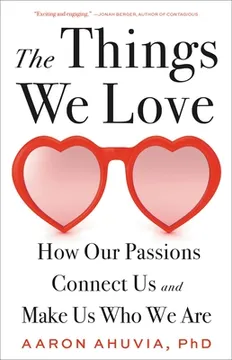
The book's central achievement is to take an experience often treated as embarrassing or metaphorical, loving a phone, a hobby, a car, or a piece of furniture, and make it psychologically legible without pretending that objects are literally people. Its key move is relational: love is not merely a feeling of approval but an enduring bond shaped by identity, history, social connection, and investment. This reframes consumer attachment as a window into human social life rather than as a minor marketing curiosity.
The argument moves across three scales. At the personal scale, loved things enter a person's self-concept and life narrative. At the interpersonal scale, an object often carries a relationship, a memory, or a community. At the societal scale, preferences reflect access, cultural training, and status competition. These levels reinforce one another. A guitar can be enjoyable in itself, mark a musician's identity, and connect that musician to a scene. Its meaning cannot be reduced to either its utility or its price.
The account is especially persuasive when grounded in ordinary examples and research that tests specific mechanisms. The distinction between identity and consciousness keeps the extended-self idea precise, while the separation of intrinsic enjoyment from external reward helps explain why usefulness alone rarely creates love. The framework also has practical value: it helps readers understand attachment, reconsider decluttering, and notice when taste reflects social belonging as much as private preference.
Some claims deserve careful boundaries. The language of love can invite anthropomorphic projection, and observed links between humanlike design and attachment do not prove that design causes durable love. The evolutionary narrative offers a coherent explanation, but it is necessarily more speculative than the experiments on product perception or memory. Likewise, taste is socially shaped without being wholly dictated by class or group identity. People can adopt tastes for sensory, playful, or idiosyncratic reasons.
The most useful conclusion is neither that loving things is shallow nor that every attachment is profound. Objects can help people care, remember, create, and belong. Their emotional value is real, even though it is produced by human minds and relationships. That makes the question of what someone loves a revealing question about the life surrounding that love.
Glossary
Love of Things Quiz
Thirteen signals of attachmentA questionnaire developed by Aaron Ahuvia and colleagues to assess whether someone loves an object or activity. Its thirteen statements cover positive evaluation, desire, involvement, enjoyment, emotional connection, identity, meaning, frequent thought, expected duration, and anticipated loss. The author offers approximate score bands, with 60 or more suggesting love, rather than presenting the cutoff as an absolute rule.
anthropomorphic thinking
Treating things as humanlikeA mental response in which a person treats an object as if it has human qualities, while consciously understanding that it is not a person. A face, name, voice, or apparent intention can prompt this response. It can encourage warmth and attachment, but can also lead people to blame objects for failures or feel responsible for their supposed feelings.
people connector
Object linking peopleAn object or activity that connects its owner to other people, directly or symbolically. A family heirloom can evoke a relative, a team shirt can signal group membership, and a phone can facilitate conversation. These connections can make an otherwise ordinary thing meaningful by embedding it in relationships, memories, and shared practices.
relationship warmer
Route to emotional attachmentAhuvia's term for a process that makes a normally practical, emotionally cool relationship with an object feel more socially warm. Humanlike cues, connections to other people, and incorporation into one's identity can each help an object become eligible for love. These processes enable attachment but do not guarantee it, since the object must also be appealing or meaningful.
self-concept
Beliefs forming personal identityThe set of beliefs, memories, roles, and self-descriptions through which a person understands who they are. In the book's account, loved people and things can become part of this identity without entering consciousness or becoming literal parts of the body. The self-concept also includes a personal life story and can expand or change through experience.
intrinsic rewards
Pleasure within an activityPositive experiences that arise from doing an activity or interacting with something, such as enjoyment, interest, or confidence. They differ from extrinsic rewards, which come from outside the activity, such as money or approval. The book argues that intrinsic rewards often help people experience an object or activity as a genuine fit with themselves rather than merely a useful means to an end.
flow state
Absorbed, well-matched challengeA state of focused involvement that occurs when the challenge of an activity is well matched to a person's skill. If difficulty greatly exceeds skill, frustration results; if skill greatly exceeds difficulty, boredom follows. Clear goals and understandable feedback also support flow. The concept applies to activities such as sports and music, as well as to understanding entertainment.
cultural capital
Status-bearing knowledge and tasteA social resource made up of knowledge, credentials, habits, and tastes that can earn respect within a society or group. Its value depends on which institutions and communities define what counts as sophisticated or admirable. The book contrasts it with economic capital and shows how cultural standards can distinguish social groups while appearing to be neutral judgments of quality.
carryover effect
Social responses transferred to thingsAhuvia's term for a process in which a response developed in one relational setting influences behavior in another. Because human minds are strongly shaped for relationships with people, patterns such as attachment, loyalty, or social insecurity can carry over into relationships with brands and objects. The transferred response may fit the new situation imperfectly.
atomic love
Love reconciling identity conflictsAhuvia's term for especially powerful attachment that can arise when a loved object helps someone reconcile identities they experience as conflicting. An object might connect a person's past and present, or express two sides of who they want to be at once. The resulting attachment can feel intense because the object resolves a tension in the person's self-understanding.
Download PDF
Download EPUB
.epub digital book format is ideal for reading ebooks on phones, tablets, and e-readers.








