

Key Takeaways
Read Xi's Third Revolution as reform that recenters the party, not liberalization.
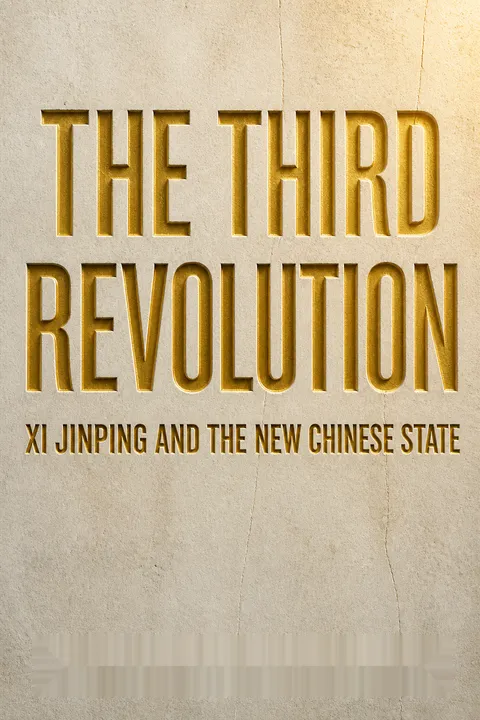
A different relay race. When Xi Jinping became Communist Party leader in 2012, China had spent decades opening its economy and allowing more room for markets and civil society. Xi kept the goal of national renewal but changed the method: authority moved toward the party and Xi himself, state influence deepened, and foreign ideas and competition faced new barriers. Economy calls this shift the Third Revolution, distinguishing it from Mao's revolution and Deng Xiaoping's market-oriented Second Revolution.
A national story with stakes. Xi's Chinese Dream links individual well-being to a strong nation and party. Its stated aims included doubling per-capita GDP from 2010 to 2020, improving social welfare, and building a military able to win wars. The vision draws on China's past greatness while emphasizing the humiliation of foreign occupation, offering national pride as a source of political legitimacy.
What's striking is that the change is not simply a turn toward conservatism. It is a theory of modernization in which political control is treated as a tool for economic and national strength, rather than an obstacle to it. That framing helps explain why market growth and tighter social controls can appear together. It also creates a test: if national renewal is the justification for concentrated power, citizens will judge that power by tangible improvements in security, income, and public services, not by slogans alone.
Centralize power to discipline the party, but budget for paralysis and fear.
Control from the center. Xi took charge of new leading groups overseeing reform, cybersecurity, and national security, while acquiring the status of the party's core leader. His anticorruption campaign reached senior officials, military leaders, and state-enterprise executives, as well as lower-ranking cadres. It was popular with citizens frustrated by graft, and rules also restricted officials' perks, travel, and spending.
The cost of caution. The campaign's reach and uncertain boundaries made some officials wary of approving projects or meeting businesspeople. The book reports that the drive contributed to slower decisions and estimates it reduced annual GDP growth by 1 to 1.5 percent in 2014 and 2015. Xi's concentration of responsibilities also created bottlenecks: policy decisions could stall when he was away. Discipline became stronger, but initiative and succession norms weakened.
The centralization dilemma resembles a familiar problem in large organizations: tighter oversight can curb local abuse, yet it can also make subordinates avoid decisions that might expose them to blame. In systems with limited independent review, a campaign's effectiveness is especially hard to separate from its political use. Popular support matters, but it is not equivalent to procedural fairness. The durability of an anticorruption effort depends on whether predictable rules replace personal discretion, rather than merely changing who is empowered to punish.
Online dissent becomes politically potent when posts turn into collective action.
A digital public square. Before Xi's tightening of controls, Chinese netizens used online posts to investigate abuses and pressure officials. After a prisoner died in Yunnan, public suspicion of the official account helped prompt an investigation and convictions. Following a 2011 high-speed train crash, images and criticism circulated despite restrictions on reporting, and the government eventually investigated officials and safety failures. Online networks also helped residents coordinate practical aid during Beijing's 2012 floods.
The boundary of tolerance. The state did not censor every criticism equally. Research described in the book found that posts were especially likely to be removed when they could help people organize collective action. Under Xi, authorities expanded content rules, targeted popular verified accounts, restricted virtual private networks, and increased monitoring. The aim was not to eliminate all online discussion, but to limit its capacity to become an independent political force.
The distinction between complaint and coordination is a useful model for understanding digital control. A government can learn from criticism while still fearing networks that let strangers act together. That creates a feedback paradox: online reporting can reveal local failures quickly, but suppressing it can deprive officials of information they need. The cases also show that digital tools do not automatically create democratic change. Their political effect depends on whether people can move from sharing evidence to organizing safely and sustaining common goals.
Judge economic reform by who controls firms, not by market-friendly language.
Promises meet ownership. At the 2013 Third Plenum, China's leaders said markets would play a decisive role in allocating resources. Yet the same plan affirmed the dominant position of public ownership. The difference matters most in the state-owned enterprise sector. The book describes roughly 150,000 SOEs controlling more than $21 trillion in assets, with privileged access to credit, land, and tax advantages, despite weaker returns than private companies.
Reform with the state in charge. Instead of broad privatization or allowing struggling firms to fail, policy favored mergers, partial private investment, and preserving the party's role in company decisions. Large firms also served state aims, from maintaining jobs to supporting overseas investment. This approach may help build powerful national champions, but it can preserve overcapacity and debt. The central question is whether competition can genuinely discipline firms when the state retains ultimate control.
Ownership is a more reliable guide to reform than the vocabulary of a policy statement. The broader economic principle is that incentives follow control: a firm protected from failure may pursue goals other than productivity, even when managers are urged to become more competitive. Yet the argument is not one-sided. State firms can mobilize capital for infrastructure or long-horizon projects that private investors avoid. The relevant test is whether those public purposes are explicit and measurable, or whether they become a standing excuse for inefficiency.
Use subsidies to build industries, but competition separates scaling from invention.
An electric-car test. China backed electric vehicles with research funding, consumer subsidies, public procurement, and local pilot programs. The effort helped create the world's largest market for electric cars, and BYD grew into a major producer of electric buses and vehicles. But the first city program produced only a small fraction of its target, while different cities adopted incompatible standards. Subsidies also invited false production claims and other fraud.
Innovation has several meanings. Chinese firms often excel at lowering costs, adapting products to local customers, and scaling production. Those strengths differ from invention: original research that creates a new technology or industry. The book links the gap to constraints on open research, weak intellectual-property protection, rote-heavy education, and a reward system that can favor output counts over quality. State support can buy time and market share, but it cannot guarantee breakthrough ideas.
Industrial policy is strongest when it helps firms cross an early financing or coordination barrier, then allows performance to determine what survives. The electric-car case shows the danger of confusing production targets with capability: reported output can rise even when useful products, shared standards, or consumer demand lag. At the same time, the distinction between invention and innovation should not become a hierarchy that dismisses process improvements. Cost reduction and rapid adaptation can transform industries. The real question is whether protected firms keep learning once protection becomes comfortable.
Make pollution rules enforceable locally, or national campaigns merely move the smog.
Public pressure forced disclosure. In 2008, the U.S. embassy in Beijing began publishing hourly air-quality readings that Chinese authorities did not provide. After the readings contradicted official descriptions of the air, online campaigns pressed the government to release fine-particle data. China began publishing PM2.5 measurements, then adopted pollution targets, revised environmental laws, and allowed daily fines for continuing violations.
Implementation is the bottleneck. Local officials often depended on local growth and had ties to polluting industries, weakening enforcement. Some officials tampered with air monitors; some factories violated rules or falsified records. Campaign closures improved air in targeted cities, but could shift production and pollution elsewhere. The book notes that poorer interior regions remained exposed to new coal projects even as wealthy coastal areas received stricter limits. Law, transparent data, and independent local enforcement must work together for clean air gains to last.
Pollution control is an institutional problem as much as a technical one. Monitoring makes harm visible, but enforcement fails when the same local authorities depend on the firms they regulate. This is why public access to data and routes for legal challenge matter: they create information and accountability beyond the administrative chain. Still, the book's contrast between coastal gains and interior burdens points to an environmental-justice question. Cleaner air in one region is not a complete success if costs are displaced onto poorer communities.
Treat Belt and Road as strategy, not proof of benevolent global leadership.
Infrastructure with geopolitical weight. Xi's Belt and Road Initiative began as plans for land and maritime routes linking China with Asia, Europe, Africa, and the Middle East. It grew to encompass infrastructure, trade, finance, digital connections, and cultural exchange. The initiative can open markets and address real infrastructure needs, while giving Chinese firms outlets for excess capacity and China greater influence in partner countries.
Reach creates resistance. The Asian Infrastructure Investment Bank and other regional proposals also expanded China's role in shaping institutions. Yet projects raised questions about debt, transparency, local employment, and environmental standards. In the South China Sea, land reclamation and military construction sharpened disputes with neighboring states, despite China's claims to peaceful development. The same country could champion global connectivity while restricting foreign access at home. That contradiction complicates the claim that economic reach alone makes China a trusted leader.
Infrastructure is never just concrete and steel. Routes determine whose firms win contracts, which governments acquire debt, and which standards become normal. The initiative's strategic character does not make its benefits fictitious: transport and energy links can meet genuine needs. But claims of mutual gain require evidence about project selection, repayment, and local consequences. A useful distinction is between influence, which follows from investment, and legitimacy, which depends on whether partners experience the relationship as fair and open to negotiation.
Demand reciprocity when China benefits from openness it denies foreign partners.
An uneven exchange. Chinese companies and institutions gained access to markets, universities, media, and investment opportunities abroad, while China tightened rules for foreign NGOs, publishers, and technology firms. Some businesses faced demands to store data locally or transfer sensitive technology. State-supported media and cultural institutions expanded overseas even as foreign voices encountered sharper limits inside China.
Set rules, not reflexes. Economy argues that the United States and other countries should preserve opportunities for cooperation but respond when access is one-sided or commitments are broken. Possible tools include coordinated standards with allies, scrutiny of sensitive acquisitions, publicizing efforts to pressure scholars or students abroad, and targeted reciprocal limits. Reciprocity is not cost-free: restrictions can reduce exchange and invite retaliation. Its purpose is to make openness sustainable by ensuring that access and obligations are not imposed on only one side.
Reciprocity can function as a bargaining instrument, but it can also become a self-defeating mirror. If every restriction is answered with another restriction, the result is less exchange and fewer channels for resolving disputes. The strongest case for reciprocity is therefore selective and rule-based: identify a concrete asymmetry, specify the remedy, and leave a path back to cooperation. Coordination among allies matters because inconsistent national responses invite governments and firms to shift activity to the least restrictive jurisdiction.
Use alliances, technical cooperation, and reciprocity to manage an ambitious China.
Cooperate where interests meet. The book points to U.S.-China cooperation on climate change and Ebola as examples of Xi's desire for international standing creating room for action. Technical work on areas such as cybercrime or clean energy can build habits of cooperation even when political differences remain. The same ambition can be tested by asking China to match its global commitments with practical contributions.
Prepare together. Economy recommends that the United States define its interests, coordinate with allies, maintain a credible regional presence, and invest in expertise on Chinese policy. Partners can work together on trade rules, technology protection, navigation, and development standards. Where diplomacy fails and interests are directly harmed, targeted sanctions or reciprocal limits may be necessary. The approach is neither automatic accommodation nor blanket confrontation. It treats China as a powerful, changing state whose domestic choices shape its conduct abroad.
This strategy avoids two common errors: assuming every Chinese initiative is hostile, and assuming economic integration will automatically produce political convergence. Alliances add leverage, while technical cooperation keeps practical channels open. Domestic expertise is not a luxury in this setting; it helps distinguish a deliberate policy shift from a local implementation failure or a temporary bargaining move. The approach also needs discipline: deterrence without diplomatic off-ramps can intensify insecurity, while cooperation without consequences can normalize unequal rules.
Analysis
Economy's central claim is that Xi Jinping's China is not simply a larger version of the reform-era state. It is a different political-economic bargain: the party accepts inefficiency, constrained information, and selective openness in exchange for greater control and strategic direction. The book's strength is to trace this bargain across apparently separate domains. Anticorruption, Internet regulation, state enterprise policy, electric vehicles, pollution control, and foreign investment all reveal the same tension between central command and the feedback that markets, civil society, and open exchange provide.
The strongest evidence comes from contrasts between stated goals and institutional incentives. A market is called decisive while state firms retain political primacy. Innovation is declared essential while research and information remain constrained. Global leadership is sought while foreign access narrows. These are not merely rhetorical inconsistencies; they expose competing priorities built into the governing model. The book also avoids reducing China to a monolith by documenting debate among scholars, officials, businesspeople, and activists, even as the space for public disagreement contracts.
Its core analytical insight is that short-term inefficiency can be rational from the leadership's perspective if control and strategic capacity are valued above immediate productivity. That logic deserves serious consideration, particularly in infrastructure and industrial policy. But it also carries a blind spot: weak feedback makes it harder to know whether a strategy is succeeding, and political loyalty can disguise failure as progress. The question is not whether state direction can produce results, but whether a system that suppresses corrective information can reliably identify when to change course.
The book's policy argument is most persuasive when it rejects both complacency and reflexive containment. Cooperation can address shared problems, while alliances and reciprocity protect against asymmetric rules. Its 2018 vantage point is important: particular leaders, forecasts, and policy conditions described here belong to that moment. The durable lesson is methodological. Assess China through the relationship between domestic institutions and external ambitions, not through celebratory speeches or isolated crises alone.
Review Summary
The Third Revolution receives mixed reviews. Many praise it as an informative overview of China under Xi Jinping, covering topics like centralization of power, economic policies, and foreign relations. Critics argue it presents a biased, pro-American perspective and lacks nuanced analysis. Some reviewers find the writing dry and repetitive, while others appreciate its comprehensive approach. The book is generally considered a good primer on contemporary China, though potentially less insightful for those already well-versed in Chinese politics.
Glossary
The Third Revolution
Xi-era party-centered transformationEconomy's label for the political and economic shift under Xi Jinping, following Mao's revolution and Deng Xiaoping's reform-era Second Revolution. It describes stronger central leadership, deeper party influence over society and the economy, tighter control of information and foreign influence, and a more assertive international role.
Chinese Dream
National rejuvenation visionXi Jinping's political vision of restoring China's strength and status while improving people's lives. Its stated aims included doubling per-capita GDP from 2010 to 2020, meeting social welfare needs, and building a military able to win wars. The vision emphasizes collective national achievement under Communist Party leadership.
Mass Line campaign
Party-cadre rectification driveA year-long campaign launched in 2013 to strengthen ties between Communist Party members and the public. Officials were expected to examine their conduct, reduce wasteful practices, and demonstrate responsiveness to ordinary people. The campaign used meetings, self-criticism, and oversight, rather than electoral accountability, to discipline cadres.
Document 9
Warning against liberal ideasA 2013 Communist Party communiqué identifying ideas associated with Western liberalism as threats to party authority. Its listed concerns included constitutionalism, civil society, press freedom, universal values, and judicial independence. It became a signal of the leadership's effort to restrict the influence of these ideas in universities, media, and public debate.
Internet sovereignty
State control of cyberspaceThe principle that each country should control Internet policy, content, and security within its own borders. Chinese officials used it to defend national authority over online information and oppose a governance model in which civil society, businesses, and individuals share influence with governments. The concept also supports China's push for greater state control internationally.
social credit system
Data-based trust and compliance ratingsA planned set of systems for collecting information about individuals and companies and using it to rate trustworthiness and compliance. The proposed design links good records to benefits and violations, such as unpaid debts, to possible restrictions. During the period covered by the book, pilots and separate sectoral databases existed, rather than one fully unified national score.
Made in China 2025
Strategic manufacturing upgrade planA government strategy to develop domestic capabilities in selected advanced industries, including robotics, aerospace, information technology, and electric vehicles. It aimed to increase domestic content, strengthen Chinese brands, and capture global market share. The book highlights the risk that subsidies and limits on foreign competition can weaken the market pressure needed to improve quality.
Belt and Road Initiative
China-led connectivity and investment programXi Jinping's international initiative, first presented as land and maritime routes connecting China with other regions. Its scope expanded to include infrastructure, trade, finance, telecommunications, and cultural exchange. It can create useful public infrastructure while also advancing China's economic and strategic influence, making transparency, debt, and local effects important measures of its success.
state-owned enterprises
Firms controlled by the stateBusinesses owned or controlled by central, provincial, or local governments. In China, they operate in strategic and capital-intensive sectors, receive advantages such as access to financing, and serve both commercial and political purposes, including employment and national development. Their importance makes reform difficult when efficiency conflicts with the party's desire to retain control.
Download PDF
Download EPUB
.epub digital book format is ideal for reading ebooks on phones, tablets, and e-readers.








