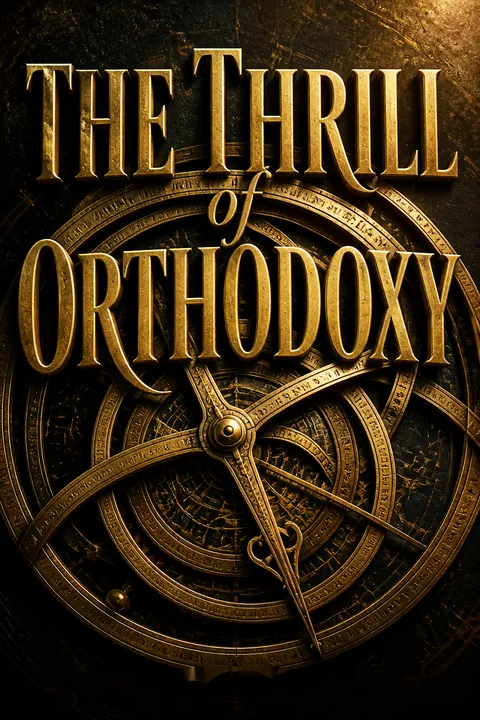


Key Takeaways
Make historic orthodoxy an adventure of discovery, not a stale inheritance
Wonder fades quietly. After living in Romania, where drinkable water required planning, Wax returned home and was astonished by cold water flowing from a refrigerator. Familiarity soon dulled that gratitude. He sees the same pattern in church: Christians can know the gospel so well that it stops moving them, leaving novelty to seem more exciting than truth they have stopped noticing.
Recover the treasure. Here, orthodoxy means the essential Christian faith, grounded in Scripture and affirmed across generations, especially in the ancient creeds. It is not meant to be a dry inventory of beliefs. Wax presents it as a vast inheritance whose truths invite renewed wonder, worship, and obedience. The church’s task is not merely to fend off new errors, but to rediscover the beauty of what it already confesses.
The water story makes spiritual familiarity tangible: a gift can become background scenery without becoming less valuable. That is a useful diagnosis because boredom is often mistaken for evidence that a belief has become irrelevant. Yet wonder cannot simply be ordered into existence. For a person wounded by hypocrisy or abuse in a church, renewed appreciation may depend on trustworthy care and accountability, not only on being reminded of doctrine. The book’s invitation is strongest when wonder is understood as a response to truth and life together, rather than a feeling that believers must manufacture.
Use doctrine as a map for faithful living, not a cage
A map enables movement. Wax compares doctrine to a map that names the destination, identifies dead ends, and helps travelers understand their surroundings. He also calls it a grammar: shared rules make it possible to speak the language of faith with greater depth and freedom. Learning Romanian required more than memorizing words; grammar helped him express increasingly complex thoughts. In the same way, Christian teaching equips believers to understand and communicate what they believe.
Receive, then explore. The book distinguishes discovering truth from inventing a personal religious identity. In its account, the creeds summarize foundational Christian beliefs, while more detailed confessions explain how particular traditions understand their implications. These guides do not answer every question or settle every disagreement. They provide a common foundation from which Christians can reason, worship, and act without making personal preference the measure of truth.
The map and grammar analogies clarify why constraints can enable rather than suppress agency. A language’s rules make complex expression possible; a map makes exploration safer and more purposeful. The analogies also point toward a practical question: who interprets the map when travelers disagree? Wax distinguishes shared essentials from denominational confessions, which helps, but the boundary between them still requires judgment. Treating doctrine as a guide rather than a cage therefore depends on teaching people how to interpret, discuss, and apply it, not merely asking them to accept labels.
Watch for the quiet drift hidden inside 'of course'
Drift begins unnoticed. Wax pictures a swimmer looking back at shore and discovering that the current has carried them far from their starting point. Doctrinal drift works similarly: inattention and cultural pressure can shift belief before anyone decides to abandon it.
Notice the telltale phrase. At a conference, four Christians reveal different vulnerabilities. Hannah attends church but feels spiritually numb. Michael values practical service and dismisses theological detail. Daniel believes difficult teachings but feels embarrassed to speak about them. Sarah is energized by community work but assumes the gospel will remain central without giving it much attention. Each reassures the others with some version of “of course” before moving on. Wax’s point is not that these Christians have already rejected the faith, but that treating its essentials as settled background can make them vulnerable to neglect, revision, or replacement.
The four characters make drift easier to recognize because each represents a respectable impulse: persistence, service, empathy, or social action. The warning is not that these impulses are bad, but that any can become detached from the beliefs meant to orient them. The phrase “of course” works as a prompt for self-examination, not as proof of unfaithfulness. Spiritual dryness, hard questions, and community service have many possible causes and meanings. A useful response is curiosity: what has become assumed, and what has quietly stopped shaping choices?
Study doctrine because it tells you whom to love and how
Belief shapes conduct. Wax rejects the idea that Christians must choose between creeds and deeds. The biblical confession that God is one is joined to the command to love God; beliefs about God inform what love means and how it should be practiced. Likewise, a church cannot define its mission without answering theological questions: What is the gospel? What are people saved from and for? Who is Jesus?
Details reach everyday life. Wax uses the doctrine of original sin to show how a seemingly abstract belief can have social consequences. If all people share a deep need for grace, neither wealth nor rank makes anyone morally superior. That view can encourage humility, patience, and suspicion of political schemes that promise a perfect society through human effort alone. For Wax, theology is not a substitute for service. It supplies the meaning and direction that keep service Christian rather than generic goodwill.
This argument exposes the hidden theology inside supposedly practical choices. A relief project, a sermon, or a decision about forgiveness already assumes something about human nature, responsibility, and the good. Naming those assumptions can make action more coherent and accountable. The original-sin example is especially useful when it challenges moral superiority and unrealistic expectations of reform. Its risks deserve attention too: a doctrine of universal failure can be misused to excuse harm or discourage reform. Its constructive force depends on applying the diagnosis equally to powerful institutions and ordinary individuals.
Heresy shrinks faith by making one truth erase another
One-sided truth distorts. Wax argues that heresy often begins not with a wholly false idea but with one Christian truth detached from others. Emphasizing Jesus’ welcome while denying his unique authority, for example, loses the combination of invitation and allegiance that the book sees in the gospel. Likewise, highlighting Jesus’ divinity while denying his real humanity changes the Christian account of who suffered and died.
The old debates matter. In the fourth century, Arius taught that the Son was not fully equal with the Father. Athanasius resisted, arguing that the church could not preserve its account of salvation while making Christ a created being. The Council of Chalcedon later used careful language to affirm that Jesus is fully divine and fully human, without dividing him into two persons or blending his natures. For Wax, orthodoxy keeps difficult truths together instead of simplifying them into either-or choices.
The both-and lens helps explain why arguments over fine theological distinctions can concern the shape of the whole faith rather than intellectual tidiness. It also warns that a sincere defense of one doctrine can become unbalanced when it silences complementary claims. Still, not every disagreement is a heresy, and the book itself recognizes distinctions between essential beliefs and other disputes. That distinction matters in practice: without it, the call to preserve a coherent whole can turn into treating every disagreement as equally dangerous.
Take Christianity into public life without diluting or hiding it
Avoid two false refuges. Wax describes accommodation, where Christians downplay unpopular beliefs to gain acceptance, and retreat, where they withdraw into protected religious enclaves. One risks losing Christianity’s distinctive message; the other risks losing its mission to people outside the church. He argues that the resurrection is not merely private inspiration or practical advice, but a public claim about what happened and what it means for the world.
Opposition should serve others. Wax’s model is to stand against aspects of a culture for the good of the people within it. Christian witness should include both words about Jesus and tangible service, while also challenging wrongdoing inside the church. In this account, faithful public engagement is not permission for culture-war aggression. Its measure is whether the church carries the gospel into society with courage, self-giving love, and a willingness to be corrected by the truth it proclaims.
The refusal of both bunker mentality and easy accommodation is a strong answer to the temptation to define faithfulness by safety or popularity. The phrase “for the good of the world” also demands more than opposition; it asks whether a church’s public stance contributes to the welfare of its neighbors. That test is important because Christians can mistake political victory for witness, or civility for truthfulness. The book’s own insistence that orthodoxy judges the church as well as society provides a needed check on those distortions.
Keep eternity in view before earthly causes become ultimate
Warnings name real danger. Wax takes seriously the New Testament’s warnings about false teaching, sin, and judgment. He compares them to signs beside a dangerous road: removing the sign does not remove the hazard. At the same time, he cautions against ringing alarms at every disagreement or treating doctrinal vigilance as a license to attack fellow Christians.
Perspective keeps battles proportionate. The book argues that when Christians downplay eternal judgment and the spiritual stakes of following Jesus, political and social conflicts can absorb that urgency. A cause that matters can become an all-consuming story in which opponents are treated as enemies and compromise seems impossible. Christian concern for justice remains important, Wax says, but it should be held within a larger account of God, human limits, grace, and final judgment, rather than being asked to provide salvation by itself.
The distinction between serious warnings and indiscriminate alarm is crucial. Warnings can protect people, but constant emergency language can also exhaust attention and turn disagreement into suspicion. Wax’s account of eternal perspective offers a way to care deeply about justice without making any political project carry the burden of ultimate redemption. The practical challenge is to preserve urgency without claiming certainty about every crisis or opponent. A community’s credibility depends partly on showing that its warnings are proportionate, consistent, and accompanied by care for those at risk.
Pursue demanding holiness through repentance, not self-salvation
Grace changes people. Wax argues that Christian mercy does not erase the moral demands of Jesus, including teachings on forgiveness, generosity, sexuality, and love of enemies. The aim is not moral mediocrity, but growth in Christlike character through the Spirit. He describes the church as both a hospital for the wounded and a school where people learn a different way to live.
Failure is not the end. In the Donatist controversy, some Christians refused to welcome back believers who had renounced their faith under Roman persecution. Augustine argued that the church must uphold holiness without excluding repentant, imperfect people. Wax draws the lesson that Christian progress is marked not by sinlessness but by returning to God after failure. The high moral vision and the possibility of forgiveness belong together: grace neither lowers the standard nor abandons the struggler.
The pairing of moral seriousness and forgiveness avoids two damaging extremes: treating grace as permission to remain unchanged, and treating virtue as proof that a person has earned acceptance. It also gives repentance a concrete role in community life, where people need both honest correction and the possibility of restoration. Yet high moral demands can be misapplied, especially when leaders police others while shielding themselves. The hospital and school images are most persuasive when discipline is paired with protection, accountability, and care for people harmed by sin.
Renew inherited faith by applying it, questioning honestly, and sharing it
Faithfulness needs movement. Wax contrasts two dead ends: churches that preserve old forms without active mission, and churches that revise core beliefs to suit current tastes. He favors applying ancient convictions to new situations while keeping their substance intact. He calls this reform rather than adaptation: returning to the faith and finding fresh ways to express it.
Keep learning together. The theologian Thomas Oden once favored novelty, then studied ancient Christian writers and rediscovered the depth of the tradition he had dismissed. Wax also argues that churches should welcome sincere questions rather than confusing every doubt with rebellion. New believers, honest inquiry, and contact with Christians across cultures and centuries can renew a congregation’s perspective. The goal is a living faith that can speak to a new moment without pretending each generation must invent Christianity again.
The distinction between changing a faith and applying it offers a productive model of continuity: inherited convictions can remain stable while their expression and implications receive fresh attention. The emphasis on honest questions matters because communities that suppress inquiry may protect appearances while driving people away. At the same time, no tradition can rely on age or global reach alone to settle every dispute. Renewal requires both memory and argument, with room to examine whether a claimed application genuinely follows from the beliefs it invokes.
Analysis
The book’s central move is to recast orthodoxy from a defensive catalogue into a lived adventure. Its narrative alternates between personal memories, imagined contemporary Christians, and episodes from church history. That range lets the same argument work on several levels: familiarity dulls belief, neglect allows drift, and careful doctrine keeps worship, ethics, and mission connected. Maps, grammar, architecture, and music make abstract claims memorable, while figures such as Athanasius, Augustine, and Thomas Oden show how convictions take shape under pressure.
Its strongest contribution is refusing a false choice between inherited truth and active engagement. The church should neither hide from its culture nor revise its faith simply to earn approval. The book also refuses to separate doctrinal precision from love, public action, or personal transformation. Orthodoxy matters because it describes the God Christians worship and gives shape to their account of salvation and human flourishing.
The argument’s main vulnerability follows from its strength. It treats historic consensus as a reliable guide, but consensus is not self-interpreting: Christians must still decide which voices count, which beliefs are essential, and how a creed applies to a new dispute. The book recognizes disagreement among traditions, yet its own evangelical commitments also shape where it draws boundaries. Readers can therefore appreciate its case for continuity while asking how those boundaries are discerned and how claims of orthodoxy are tested against the church’s failures.
That question does not undo the book’s thesis. It sharpens its demand that doctrine be lived, not merely defended. A tradition proves its vitality not only by preserving its language but by forming communities capable of truthful speech, repentance, service, and mission. Wax’s memorable challenge is to make old truths vivid enough to govern the present without remaking them in the present’s image.
Review Summary
The Thrill of Orthodoxy receives mostly positive reviews, praised for its compelling argument for rediscovering the beauty and adventure of orthodox Christian faith. Readers appreciate Wax's exploration of church history, creeds, and the importance of applying timeless truths to modern contexts. Some find the book repetitive or lacking in specific theological points, but many commend its accessibility and relevance. Critics note a potential bias towards Western Christianity and a lack of emphasis on orthopraxy. Overall, the book is seen as a valuable resource for those seeking to reinvigorate their faith.
People Also Read






Glossary
Orthodoxy
historic Christian essentialsIn this book, orthodoxy means the foundational truths of Christian faith and practice that are consistent with Scripture and affirmed across Christian history. The ancient creeds express its central commitments. Orthodoxy is not presented as a minimal checklist, but as a shared foundation that guides worship, ethics, teaching, and mission.
Heresy
a decisive doctrinal departureHeresy is the denial or distortion of an essential Christian doctrine in a way that substantially alters the gospel or departs from the historic Christian witness. The book distinguishes heresy from ordinary error and from disagreements that can exist within the boundaries of shared Christian belief.
Adiaphora
disputable mattersAdiaphora refers to matters that Christians may disagree about while remaining within the same congregation or broader Christian fellowship. In the book’s account, these are not essential doctrines that separate orthodoxy from heresy, nor are they necessarily the defining convictions of particular church traditions. The term helps distinguish unity from uniformity.
Creeds
brief shared faith statementsCreeds are concise statements of core Christian belief, centered especially on God as Father, Son, and Holy Spirit. Designed for common confession and often memorization, the ancient creeds summarize biblical teaching and establish a shared foundation for Christians across traditions. Wax treats them as a blueprint for orthodoxy, not an exhaustive account of every doctrine.
Confessions
tradition-specific doctrinal statementsConfessions are fuller statements of belief that develop the implications of Christian faith for particular church traditions or communities. Unlike the brief, widely shared creeds, confessions address additional teachings and disputes in greater detail. In the book’s architectural analogy, creeds provide the basic plan, while confessions elaborate parts of the structure.
the pragmatic drift
practice detached from doctrineThe pragmatic drift is the tendency to value Christian teaching only when its immediate practical benefit is obvious. It often appears as a preference for deeds over creeds, or for useful advice over doctrinal study. Wax argues that this separation is unstable because beliefs shape what Christian love, service, and mission mean.
missionary encounter
gospel engagement with cultureA missionary encounter is the church’s engagement with the surrounding world through both witness and service. The church communicates the Christian message without reshaping it solely to avoid disagreement, while seeking the good of its neighbors. Wax contrasts this active engagement with both retreat into isolated religious enclaves and accommodation that hides distinctive beliefs.
semper reformanda
continually return to faithA Latin phrase commonly rendered as always reforming. Wax distinguishes reformation from adapting Christianity to current preferences. Reformation means repeatedly bringing the church back into alignment with the faith it has received, correcting error and finding faithful ways to express enduring convictions in new circumstances.
FAQ
What's The Thrill of Orthodoxy about?
- Exploration of Doctrine: The book by Trevin K. Wax explores the significance of orthodox Christian beliefs and their impact on the faith journey of believers. It presents orthodoxy as a vibrant and essential aspect of Christian life.
- Adventure of Faith: Wax portrays the Christian faith as an exciting adventure, encouraging readers to rediscover the relevance and excitement of core doctrines. He argues that orthodoxy is a thrilling journey, not just a set of rules.
- Cultural Context: The book addresses the challenges faced by the church in a world filled with competing ideologies and moral relativism. Wax urges Christians to stand firm in their beliefs while engaging with contemporary culture.
Why should I read The Thrill of Orthodoxy?
- Rekindle Passion for Doctrine: The book is ideal for those feeling disillusioned with traditional teachings, aiming to reignite a sense of wonder about foundational Christian truths.
- Navigate Cultural Challenges: Readers will find guidance on maintaining their faith amidst societal pressures to conform or dilute beliefs, with a framework for understanding orthodoxy's relevance today.
- Encouragement for Believers: It serves as a motivational call for Christians to embrace their faith fully and share it, emphasizing the importance of being grounded in truth.
What are the key takeaways of The Thrill of Orthodoxy?
- Importance of Orthodoxy: Wax stresses that orthodoxy is crucial for a robust Christian faith, providing a foundation for understanding God and His purposes.
- Adventure Metaphor: The Christian life is likened to an adventure, suggesting that engaging with doctrine can lead to a more fulfilling faith journey.
- Cultural Engagement: The author emphasizes the need for Christians to engage with the world while holding firmly to their beliefs, advocating for a balance between orthodoxy and dialogue.
What are the best quotes from The Thrill of Orthodoxy and what do they mean?
- "Familiarity is the enemy of wonder.": This quote highlights how over-familiarity with Christian truths can lead to spiritual dullness, encouraging readers to approach faith with awe.
- "The thrill of orthodoxy is the invitation to do just that, to be a Knight of Faith not wish-fulfillment.": It emphasizes that embracing orthodox beliefs is about engaging in a dynamic faith journey, not just conforming to rules.
- "Assuming orthodoxy is the path to abandoning orthodoxy.": Wax warns that taking core beliefs for granted can lead to drifting away from them, stressing active engagement with faith.
How does Trevin K. Wax define orthodoxy in The Thrill of Orthodoxy?
- Foundational Truths: Orthodoxy is defined as foundational truths consistent with Scripture, vital for understanding the Christian faith.
- Historic Consensus: Wax describes it as the historic Christian consensus on essential elements of faith, believed "everywhere, always, and by all."
- Contrast with Heresy: Orthodoxy is contrasted with heresy, which is the denial or twisting of essential doctrines, leading to a departure from biblical truth.
What are the dangers of drifting from orthodoxy according to The Thrill of Orthodoxy?
- Spiritual Malaise: Drifting from orthodoxy can lead to spiritual dullness and a lack of commitment to the faith, making believers susceptible to errors.
- Cultural Confusion: Cultural chaos and moral relativism can pull Christians away from foundational beliefs, necessitating vigilance and anchoring in faith.
- Loss of Direction: Drifting results in a loss of direction in the Christian life, with core doctrines likened to a map providing guidance.
How does Wax suggest Christians can rediscover the adventure of orthodoxy?
- Engagement with Doctrine: Wax encourages active engagement with doctrines, believing that understanding these truths leads to a vibrant faith experience.
- Community and Tradition: Emphasizes the importance of community and historical tradition in rediscovering orthodoxy, connecting with fellow believers.
- Personal Reflection: Advocates for personal reflection and exploring Christian truth with curiosity, leading to a renewed sense of adventure.
How does The Thrill of Orthodoxy address cultural challenges?
- Cultural Engagement: Wax discusses navigating contemporary issues without compromising beliefs, encouraging understanding of the cultural landscape.
- Critique of Modern Ideologies: Critiques ideologies like relativism and individualism that conflict with Christian teachings, warning of spiritual stagnation.
- Call for Boldness: Urges Christians to be bold in their witness, advancing with confidence in the truth of the gospel despite opposition.
What specific methods does Trevin Wax suggest for living out orthodoxy?
- Embrace Community: Highlights the importance of being part of a community that upholds orthodox beliefs, providing strength and accountability.
- Engage with Scripture: Encourages immersion in the Bible as the foundation of faith, essential for discerning truth in a complex world.
- Practice Discernment: Advocates for discernment in evaluating contemporary teachings, emphasizing alignment with orthodox Christianity.
How does Trevin Wax connect orthodoxy to mission in The Thrill of Orthodoxy?
- Mission as Central: Argues that orthodoxy is intrinsically linked to the church's mission, empowering believers to share their faith effectively.
- Global Perspective: Highlights the global nature of the church, encouraging readers to see themselves as part of a larger mission.
- Living Out the Gospel: Emphasizes that living out orthodox beliefs in everyday life is a form of mission, calling Christians to embody Christ's teachings.
What is the significance of creeds and confessions in The Thrill of Orthodoxy?
- Historical Foundation: Creeds are highlighted as historical statements summarizing essential Christian beliefs, providing a foundation for understanding orthodoxy.
- Guardrails for Doctrine: Serve as guardrails preventing deviations from core truths, guiding the church today.
- Connection to Scripture: Creeds are rooted in Scripture, reflecting the biblical narrative and deepening understanding of faith.
What role does suffering play in The Thrill of Orthodoxy?
- Suffering as a Witness: Suffering serves as a powerful witness to the gospel's truth, with Christians called to endure hardship for Christ.
- Cruciform Living: Emphasizes a cruciform life involving sacrifice and self-giving love, helping believers understand their trials' purpose.
- Hope in Suffering: Reassures that suffering is part of the Christian journey leading to hope and redemption, viewing struggles through God's plan.
Download PDF
Download EPUB
.epub digital book format is ideal for reading ebooks on phones, tablets, and e-readers.








