Key Takeaways
1. Muhammad's Dual Nature: A Source of Contradictory Interpretations
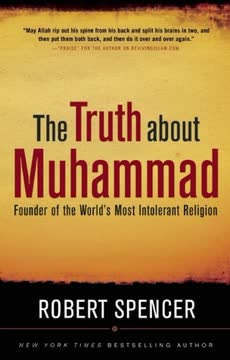
The question of which group is likely to prevail in the future, and which will guide an Islamic world that is in the grip of a religious revival and increasingly hostile toward America and the West, will largely be determined by Muhammad—by what he was really like according to Islamic texts.
Dueling Muhammads. The perception of Muhammad varies wildly, from a champion of peace and liberty to a figure invoked by jihadists to justify violence. This stark contrast is not merely academic; it profoundly influences Western policy and the trajectory of the Islamic world. While some portray him as meek and compassionate, others, including those committing acts of terror, cite his example for aggression and intolerance.
Policy implications. Western officials often distinguish between "Islam" (peaceful) and "Islamism" (violent political ideology), assuming a core peaceful Islam. However, if Muhammad's authentic teachings, as understood by jihadists, justify violence, then this distinction becomes a "polite fiction." Understanding the historical Muhammad, as presented in Islamic texts, is crucial for effective public policy and for empowering genuine reform within Islam.
Freedom of speech. The controversy surrounding depictions of Muhammad, such as the Danish cartoons, highlights a fundamental clash between Western values of free expression and certain Islamic interpretations that deem criticism or ridicule of the Prophet as blasphemy punishable by death. This underscores the urgent need for open inquiry into Muhammad's life, even if the conclusions are uncomfortable, to defend hard-won freedoms.
2. The Qur'an, Hadith, and Sira: Foundations of Muhammad's Image
For our purposes it is less important to know what really happened in Muhammad’s life than what Muslims have generally accepted as having happened, for the latter still forms the foundation of Muslim belief, practice, and law.
Primary sources. The image of Muhammad that shapes Muslim belief and practice is derived from three main Islamic sources: the Qur'an, the Hadith, and the Sira. The Qur'an, believed to be Allah's direct word, offers fragmented narratives. The Hadith, collections of Muhammad's sayings and deeds (like Sahih Bukhari and Sahih Muslim), provide extensive details and are second only to the Qur'an in authority. The Sira, Muhammad's earliest biography (Ibn Ishaq), offers a continuous, albeit hagiographical, narrative.
Historical challenges. While these sources are foundational for Muslims, historical scrutiny reveals complexities. The Qur'an's narrative is often opaque without external context, and early Muslims acknowledged the existence of forged Hadith, making definitive historical reconstruction challenging. Some modern scholars even question the Qur'an's direct authorship by Muhammad or the historical accuracy of its setting.
Enduring influence. Despite historical uncertainties, the Muhammad depicted in these accepted Islamic texts remains the "Perfect Man" (al-insan al-kamil) for millions of Muslims worldwide. This popular image, rather than purely academic historical findings, continues to inspire and guide Muslim actions, making familiarity with these traditional accounts essential for understanding contemporary Islamic movements.
3. Early Prophetic Struggles: Despair, External Influences, and "Convenient" Revelations
Without the care of Khadija (who remained Muhammad’s only wife until her death) and the affirmation of Waraqa, the world might never have known Islam.
Initial doubts. Muhammad's prophetic career began with profound personal struggle. His first encounter with what he believed was the angel Gabriel left him terrified, fearing demonic possession and even contemplating suicide. It was his older wife, Khadija, and her Christian cousin, Waraqa bin Naufal, who reassured him of his prophetic calling, suggesting external validation was crucial in his early self-perception.
Borrowings and accusations. The Qur'an contains numerous stories and details that echo Jewish Talmudic and Christian apocryphal texts, leading contemporaries to accuse Muhammad of borrowing "tales of the ancients." While Allah in the Qur'an denies these charges, the similarities suggest a cultural exchange in pre-Islamic Arabia, where various religious groups coexisted.
Revelations of convenience. Several Qur'anic revelations appear to address Muhammad's personal dilemmas, leading to accusations of "revelations of convenience."
- Zaynab bint Jahsh: A revelation (Qur'an 33:37) permitted Muhammad to marry his adopted son's divorced wife, Zaynab, after he was captivated by her beauty, overriding social norms against marrying a former daughter-in-law.
- Aisha's innocence: A revelation (Qur'an 24:11-20) exonerated his favorite wife, Aisha, from accusations of adultery, establishing a legal precedent requiring four male witnesses for such charges, which has had lasting negative implications for women's legal standing in Islamic law.
4. The Shift to Warlord: From Preacher to Military Leader in Medina
The flight or emigration (Hijra, or often in English Hegira) of Muhammad and the Muslims from Mecca to Medina was a major turning point for the community.
The Hijra's significance. In 622 AD, Muhammad's flight from Mecca to Medina (the Hijra) marked a pivotal moment, transforming him from a persecuted preacher into a political and military leader. This event is so central that it marks the beginning of the Islamic calendar, signifying the birth of Islam as a socio-political entity. In Medina, the nature of his revelations shifted from apocalyptic poetry to detailed legal and social directives for the nascent community.
Early conflicts and justifications. Muhammad's growing power led to confrontations, notably the Nakhla raid, where Muslims attacked a Quraysh caravan during a sacred month when fighting was forbidden. This act, initially condemned by Muhammad, was later justified by a divine revelation (Qur'an 2:214) that deemed the Quraysh's opposition to Islam a greater transgression. This established a precedent where expediency and the benefit of Islam could override existing moral or legal norms.
Break with the Jews. Muhammad initially sought the acceptance of Medina's powerful Jewish tribes, even having Muslims pray towards Jerusalem. However, their refusal to acknowledge his prophethood led to increasing animosity. This culminated in a revelation changing the prayer direction (qibla) to Mecca (Qur'an 2:143-144) and a hardening of his stance, portraying Jews as obstinate and untrustworthy, setting the stage for future conflicts.
5. The Doctrine of Jihad: Conquest, Booty, and the Subjugation of Unbelievers
The battle of Badr was the first practical example of what came to be known as the Islamic doctrine of jihad.
Badr: A defining victory. The Battle of Badr in 624 AD, where a small Muslim force defeated a larger Quraysh army, became a foundational event for Islam's military doctrine. Muhammad promised Paradise to those who fought steadfastly, and divine revelations (Qur'an 8:9, 12-13) asserted that angels fought alongside the Muslims, instilling terror in the enemy and commanding them to "smite above their necks."
Booty and divine sanction. The immense spoils of war (booty) from Badr became a point of contention, leading to a revelation (Qur'an 8:1, 41) that declared such spoils belonged to Allah and Muhammad, with a fifth reserved for the Prophet. While Muhammad initially allowed ransom for prisoners, a subsequent revelation (Qur'an 8:67-69) scolded him for desiring worldly gain over "slaughter," reinforcing the idea that killing enemies of Allah was paramount.
Terror as a weapon. The victory at Badr solidified the concept of jihad as armed struggle, with Allah promising to "strike terror into (the hearts of) the enemies" (Qur'an 8:60). This theological justification for terror, combined with the promise of heavenly rewards for martyrs, became a recurring theme in Islamic history, inspiring countless warriors to fight for the expansion of Islam.
6. The Massacre of the Banu Qurayzah: A Defining Act of Terror and Divine Sanction
The Prophet of Islam was pleased. “O Sa‘d! You have judged amongst them with (or similar to) the judgment of the King (Allah).”
Betrayal and siege. Following the Battle of the Trench, where the Jewish Banu Qurayzah tribe broke their covenant with Muhammad and collaborated with his enemies, Muhammad, spurred by a vision of the Angel Gabriel, immediately laid siege to their strongholds. He addressed them with harsh terms, calling them "brothers of monkeys," a derogatory reference found in the Qur'an for Sabbath-breaking Jews.
Divine judgment. After a 25-day siege, the Qurayzah surrendered unconditionally. Muhammad appointed Sa'd bin Mu'adh, a Muslim from a tribe formerly allied with the Jews, to pass judgment. Sa'd decreed that all the men should be killed, and the women and children enslaved. Muhammad enthusiastically endorsed this as "the judgment of Allah above the seven heavens."
Execution and legacy. The massacre was carried out in Medina's market, with 600 to 900 men beheaded in trenches. This event, amply attested in Islamic sources, is a stark example of Muhammad's ruthlessness towards perceived enemies and his divine sanction for such actions. It continues to be invoked by modern jihadists, as seen in calls for Israelis to face the "same fate as Banu Qurayzah," highlighting its enduring and violent legacy.
7. Treaties and Treachery: Expediency Over Absolutes in Islamic Expansion
The breaking of the treaty in this way, would reinforce the principle that nothing was good except what was advantageous to Islam, and nothing evil except what hindered Islam.
The Treaty of Hudaybiyya. In 628 AD, Muhammad signed a ten-year truce with the Quraysh, the Treaty of Hudaybiyya, which contained terms highly unfavorable to the Muslims, such as returning any Quraysh defector to Mecca while not receiving Muslim defectors. Despite his followers' dismay, Muhammad declared it a "manifest victory" (Qur'an 48:1) and received revelations promising "much booty" (Qur'an 48:19).
Breaking the covenant. Muhammad soon broke the treaty by refusing to return a Quraysh woman, Umm Kulthum, who had converted to Islam and fled to Medina. A new revelation (Qur'an 60:10) justified this, stating that believing women refugees should not be returned to unbelievers. This established a principle that treaties could be broken if it served the interests of Islam, particularly when Muslim forces were weakened and needed to gather strength.
The Khaybar raid. To fulfill the promise of "much booty," Muhammad led a raid on the Jewish oasis of Khaybar. The conquest was brutal: the Jewish leader Kinana bin al-Rabi was tortured and beheaded for refusing to reveal hidden treasure. The Jews were exiled, their property seized, and their women and children enslaved. Muhammad himself married Safiyya, Kinana's widow, on the same day. This event is still invoked by jihadists with the chant "Khaybar, Khaybar, O Jews, the army of Muhammad will return."
8. The Consolidation of Power: Mecca, Apostasy, and the Call to Global Islam
“Whoever changed his Islamic religion, then kill him.”
Conquest of Mecca. In 630 AD, Muhammad returned triumphantly to Mecca with an army of 10,000, conquering the city with little resistance. He ordered the destruction of all idols in the Ka'bah, except for an icon of Jesus and Mary, and declared Mecca a holy city where bloodshed was forbidden, except for a list of individuals he ordered killed, including apostates from Islam.
Punishment for apostasy. Muhammad's stance on apostasy was absolute: "Whoever changed his Islamic religion, then kill him." This directive was exemplified by his initial refusal to pardon Abdullah bin Sa'd, a former scribe who had renounced Islam. This severe penalty, rooted in Muhammad's teachings, continues to be a cornerstone of sharia law, making conversion from Islam a capital offense in many Islamic states.
Global ambitions. With Arabia largely unified under Islam, Muhammad began to envision a wider expansion. He sent letters to the Byzantine and Persian emperors, inviting them to convert to Islam and warning of consequences if they refused. This marked the beginning of Islam's imperialistic imperative, codified in revelations commanding Muslims to fight non-Muslims until they converted, submitted to Islamic rule, or paid a poll tax (jizya).
9. Draconian Laws and Social Inequality: Muhammad's Legacy for Women and Non-Muslims
You have rights over your wives and they have rights over you. You have the right that they should not defile your bed and that they should not behave with open unseemliness. If they do, God allows you to put them in separate rooms and to beat them but not with severity.
Women's subordinate status. Muhammad's teachings established a legal framework that placed women in a subordinate position within Islamic society. The Qur'an permits men to marry up to four wives and have sex with slave girls (4:3), dictates that a son's inheritance is twice a daughter's (4:11), and allows husbands to beat disobedient wives (4:34). Muhammad also stated that women would constitute the majority in hellfire due to their frequent cursing and ingratitude to husbands.
Child marriage. Muhammad's marriage to Aisha when she was six and its consummation when she was nine, though common in 7th-century Arabia, serves as a problematic "excellent model of conduct" for Muslims today. This example, coupled with Qur'anic verses (65:4) acknowledging prepubescent divorce, has contributed to the persistence of child marriage in some Islamic societies, with severe consequences for young girls.
Harsh legal penalties. Islamic law, or sharia, includes severe punishments directly derived from Muhammad's example and revelations.
- Stoning for adultery: Though not explicitly in the Qur'an, Umar's testimony in the Hadith asserts that a verse mandating stoning was inadvertently dropped, making it a binding punishment in traditional Islamic jurisprudence.
- Amputation for theft: The Qur'an explicitly commands, "As to the thief, male or female, cut off his or her hands" (5:38), a penalty still enforced in some Islamic states.
10. "Victorious with Terror": Muhammad's Self-Assessment and Enduring Inspiration for Jihad
I have been sent with the shortest expressions bearing the widest meanings, and I have been made victorious with terror (cast in the hearts of the enemy), and while I was sleeping, the keys of the treasures of the world were brought to me and put in my hand.
A legacy of conquest. Muhammad's own words encapsulate a key aspect of his prophetic career: he was "victorious with terror." His life was marked by numerous raids and battles—27 personal participations and 9 direct engagements—demonstrating a consistent pattern of military expansion and the use of force to establish Islamic dominance. This self-assessment highlights the integral role of warfare in his mission.
Jihad as a core duty. Muhammad's example established jihad as a paramount duty for Muslims, promising immense rewards in this world (booty) and the next (Paradise) for those who "fight in the way of Allah and shall slay and be slain" (Qur'an 9:111). He explicitly stated, "I have been commanded to fight against people, till they testify to the fact that there is no god but Allah," making conversion or subjugation the only alternatives to warfare.
Modern emulation. Contemporary jihadists worldwide explicitly invoke Muhammad's military campaigns and pronouncements to justify their violent actions. They see him as the ultimate model for behavior, drawing directly from the Qur'an and Hadith to legitimize beheadings, attacks on non-Muslims, and the establishment of sharia rule. Ignoring these historical facts allows jihadists to present themselves as the true followers of Islam.
11. The Imperative for Western Clarity: Confronting the Realities of Muhammad's Example
The sooner this is done, the safer we all will be. But as long as this manifold problem continues to be ignored, Muhammad will continue to inspire his followers to wield the sword in his name.
The danger of denial. Western governments and media often promote the "polite fiction" that Islam is inherently peaceful, dismissing jihadist violence as a perversion of the faith. However, this denial ignores the clear evidence in Islamic texts that Muhammad's life and teachings contain elements that directly inspire such violence. This approach is counterproductive, as jihadists are already well-versed in these aspects and use them to recruit and justify their actions.
Policy recommendations. To effectively counter the jihad ideology, Western nations must adopt a more realistic approach. This includes:
- Abandoning false narratives: Stop insisting Islam is a religion of peace and instead focus on resisting the imposition of sharia.
- Energy independence: Invest in new energy sources to reduce reliance on oil from the Islamic world, which often compromises foreign policy.
- Conditional aid: Link foreign aid to Muslim-majority nations to their active renunciation of jihadist teachings and promotion of pluralism.
Challenging advocacy groups. Western governments should demand genuine reformist initiatives from Muslim advocacy groups, challenging them to actively teach against Muhammad's warlike example and sharia supremacism. Without such efforts, these groups cannot be considered trustworthy partners in promoting Western pluralism. Acknowledging the full scope of Muhammad's legacy, rather than ignoring uncomfortable truths, is essential for global safety and for empowering any potential, authentic reform within Islam.
Last updated:
Review Summary
The Truth About Muhammad receives polarized reviews (3.88/5, 1547 reviews). Supporters praise Spencer's research, citing direct quotes from Islamic sources and finding the work factual and enlightening about Muhammad's life, military campaigns, and influence on modern Islam. Critics call it biased, Islamophobic, racist propaganda with distorted facts and cherry-picked information. Several reviewers note the book's one-sided approach, though some appreciate its unflinching examination compared to apologetic accounts. Many recommend reading it alongside Karen Armstrong's contrasting biography for balance.
Similar Books