

Key Takeaways
Read Jesus as a person whose way of seeing reshapes yours.
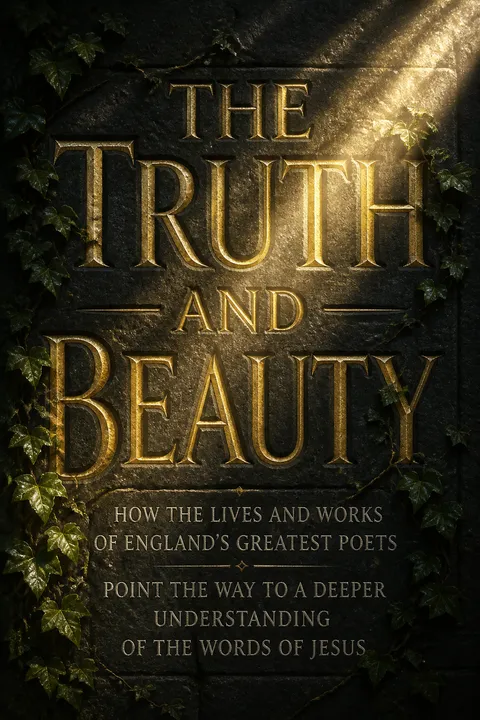
Start with a relationship. The book begins with a problem: its author believes in Jesus but finds the Sermon on the Mount hard to understand as practical guidance. During a late-night conversation, his son suggests that he is treating Jesus as a set of ideas rather than trying to know him. The distinction changes the project. To know someone is to learn how that person sees, and to let that perspective alter one’s own. The author returns to the Gospels, even learning some Greek, hoping to understand Jesus as a person rather than settling for familiar religious explanations.
Poetry becomes a route. English Romantic writers help him imagine the world as Jesus might have experienced it: meaningful, beautiful, and alive with more than material facts. The book moves from their historical crises to a reading of the Gospels shaped by their art.
The personal opening gives the book a useful method: interpret commands through the character and attention of the person who gives them. That resembles learning ethics through exemplars, a tradition in which moral understanding grows by noticing how a good person responds to particular situations, not only by memorizing rules. The approach also has a risk. A reader may project a preferred Jesus onto the text and call that intimacy. The author’s willingness to wrestle with difficult passages helps resist easy piety, but close reading still needs historical and theological checks.
Use Hamlet's doubt to ask who gets to name reality.
The self can mislead. The book reads Hamlet as a drama about knowing what is true after religious authority has fractured. A ghost claims that Hamlet’s father was murdered, but Hamlet cannot tell whether the apparition is trustworthy or whether it is manipulating him. To investigate, he pretends to be mad. His performance then makes him wonder whether he can still distinguish his inner self from the role he plays. Even his view of the world shifts with his mood.
Stories organize experience. The Reformation and the loss of shared church authority sharpen the same question: who can explain what events mean? The author argues that stories shape how people understand identity, history, and morality. If every account is merely a power play, it becomes difficult to explain why one account is truer or more just than another.
Hamlet is an unusually vivid way to show that skepticism is not merely an intellectual puzzle. Uncertainty about the world can destabilize a person’s sense of self, because identity is partly built from memories, social roles, and other people’s interpretations. Yet the book’s account of the Reformation can sound too linear: disagreement about religious authority did not automatically erase standards of truth. Institutions can be fallible and still help test claims. The lasting question is not whether stories shape reality, but what evidence and shared practices help distinguish a truthful story from a persuasive one.
Let science explain nature without mistaking explanation for the whole.
Mechanism is not meaning. The Romantics did not simply oppose science. They feared that successful explanations of matter would be mistaken for a complete account of human life. Newton’s analysis of light, for example, explains how a rainbow forms; the author argues that it does not exhaust the human experience of seeing one as beautiful. Science can describe physical processes without settling every question about value, consciousness, or purpose.
Frankenstein dramatizes the danger. Mary Shelley’s novel imagines a scientist creating life while neglecting the relationships that make a person human. The author reads the abandoned creature as a warning about creation without care, and emphasizes the mother’s role in early human development. This interpretation connects the novel’s horror to anxieties about technology, embodiment, and the human costs of treating life as a technical problem.
The distinction between scientific method and materialism is essential. Science can identify mechanisms, while the claim that only mechanisms exist is a broader philosophical position. Keeping those claims separate protects both serious inquiry and serious questions about meaning. The book’s reading of Frankenstein also highlights how dependence and care shape personhood, a theme relevant to developmental psychology and ethics. Its gender argument, however, risks making motherhood the exclusive source of humanizing care. Attachment, empathy, and responsibility matter profoundly, but they are not limited to mothers or reducible to a single family form.
Build reform on inherited moral habits, not fantasies of perfect people.
Good intentions do not guarantee good rule. Wordsworth first welcomed the French Revolution, then watched its promise of liberty give way to terror and war. The book uses this reversal to challenge utopian politics: a movement that assumes people can be remade by dismantling old institutions may justify coercion in the name of future virtue. Edmund Burke’s counterargument is that moral habits and social trust develop over time, and that freedom depends on them.
Virtue needs freedom. The book calls this the paradox of virtue: goodness must be chosen freely to count as goodness, yet people need moral formation to choose well. Milton’s account of rebellion in Paradise Lost supplies a literary parallel. A rebel who rejects every limit in pursuit of freedom may end up ruled by force, because power, rather than virtue, fills the space left behind.
This section’s strongest contribution is its insistence that institutions carry moral memory. Political change is not a laboratory reset: people inherit habits, expectations, and forms of trust that laws alone cannot manufacture. Modern institutional thinking supports the caution that incentives and rules often produce unintended behavior. Still, tradition is not self-justifying. It can preserve unjust arrangements as easily as valuable practices. The practical challenge is to reform institutions without pretending that reformers are morally pure or that history offers no useful knowledge.
Train attention through poetry to experience nature as more than stuff.
Imagination works with reality. Coleridge and Wordsworth develop a picture of the mind as a collaborator with the world, not a passive camera and not an all-powerful inventor. A falling tree produces physical vibrations; a listener experiences them as sound. A hailstorm scatters leaves; Wordsworth’s poem lets readers see them as a lively scene. The mind contributes to experience, but the world constrains what can truthfully be perceived.
The poems restore attention. Coleridge’s Rime of the Ancient Mariner turns a killing of a seabird into a journey through guilt and renewed love for living things. Wordsworth’s poems direct attention toward ordinary landscapes and overlooked people. Together, the poets invite readers to see meaning within nature rather than treating nature as inert material. John Stuart Mill described Wordsworth’s poetry as a source of inward joy during a period of despair.
This account connects poetry to a familiar feature of perception: attention is selective, and what people notice changes what the world feels like. Art can make overlooked details emotionally available, enlarging the range of experiences a reader can imagine. That does not by itself prove that nature contains a divine message. It does show that a purely inventory-based description can miss what human beings actually encounter. The distinction matters: poetry may disclose value and invite metaphysical reflection, while the existence of a transcendent source remains a further claim, not a conclusion forced by aesthetic experience.
Stay open to ambiguity without surrendering the search for truth.
Keats resists premature certainty. He names Negative Capability the ability to remain with doubt, mystery, and competing possibilities without rushing to a tidy explanation. This differs from simply giving up on truth. It is a discipline of receptivity, especially valuable to a poet trying to enter lives and experiences beyond his own.
The odes test that discipline against death. In “Ode to a Nightingale,” the bird’s song offers a brief imaginative escape from illness, grief, and time, but the poet returns to his mortal self. In “Ode on a Grecian Urn,” art preserves a scene beyond ordinary change, yet cannot give its figures a living future. “To Autumn” brings ripeness and decline together without pretending that one cancels the other. Keats himself died young, before knowing how enduring his poetry would become.
Negative Capability resembles intellectual humility: the capacity to suspend judgment long enough to notice complexity, while remaining willing to revise a conclusion when evidence arrives. That balance is useful well beyond art, from scientific inquiry to difficult conversations. Ambiguity should not become an excuse to treat every claim as equally plausible. Keats’s poems are powerful partly because they do not resolve mortality by argument; they let readers feel the tension between permanence and loss. The experience can deepen reflection, but it cannot promise that the hoped-for eternity is real.
Treat Jesus's life as meaning lived, not symbols alone.
The message has a body. The book uses Logos, a Christian term for the divine Word and ordering meaning through which creation becomes intelligible, to describe Jesus as both a person and the embodiment of truth. His meals, friendships, fears, healings, and death are not merely illustrations of a doctrine. They are human actions that also carry meaning.
Miracles belong to the claim. Jesus points to healings as evidence of who he is, so the author refuses to explain them away as symbols. He argues that modern disbelief often targets their divine source, not the bare possibility that matter could be changed. The Gospels also show Jesus learning and living within human relationships. The author gives special attention to Mary, reading her motherhood as part of how Jesus enters embodied human life, while presenting this as his interpretation of the texts.
The focus on embodied action gives theological claims a concrete test: what does a belief look like when enacted in eating, healing, friendship, and vulnerability? That question can connect religious ethics with the study of moral formation, where repeated practices shape perception and character. The argument for miracles, however, needs care. The idea that consciousness matters to experience does not establish that supernatural intervention occurred in a specific event. Likewise, readers can value Mary’s maternal role without accepting every claim the book makes about gender. Distinguishing interpretation from demonstration keeps the inquiry open.
Practice enemy-love to remake the perceiver, not to control the world.
Love changes the person who acts. The author reads the Sermon on the Mount not as a program for making society painless, but as a way to see people as God sees them. The Good Samaritan illustrates the challenge: a despised outsider gives care to an injured stranger. Jesus’ unexpected instruction is not merely to recognize who counts as a neighbor, but to become a neighbor through mercy.
Judgment is not the same as discernment. In the story of the accused adulteress, Jesus refuses to let a crowd turn condemnation into a spectacle, while still telling the woman to change her conduct. The book argues that loving enemies and withholding judgment may not reform other people or fix public life. Their immediate purpose is to reshape the person practicing them.
This reading makes demanding moral advice more intelligible by shifting its goal from managing outcomes to forming the agent. In moral psychology, perspective-taking can reduce the reflex to flatten another person into a single offense, though it does not guarantee reconciliation or safety. The distinction between refusing condemnation and refusing accountability is crucial. Institutions still need to protect people from harm, and mercy should not require victims to remain exposed to abusers. The book’s account is most persuasive when nonjudgment disciplines contempt without erasing responsibility.
Choose costly integrity only if hope reaches beyond death.
Truth can carry a price. The book presents Jesus’ death as both an actual execution and a revelation of what happens when a truthful life collides with political, religious, and popular power. The crucifixion is tragic because Jesus does not avoid suffering by abandoning his mission. His anguish in Gethsemane and his cry from the cross keep the story from turning pain into something easy or noble.
Resurrection changes the horizon. For the author, the resurrection is not only a metaphor for moral renewal. It is an event that promises the body and the person a future beyond death. That hope makes costly love and integrity rational when they bring losses that worldly success cannot repay. The book closes with the Emmaus story, where the risen Jesus helps followers read their past anew and recognize meaning in what had looked like defeat.
The ending links ethics to a serious question: what can sustain costly commitments when their rewards are delayed, uncertain, or absent? Religious hope offers one answer, while secular traditions may ground sacrifice in solidarity, dignity, or obligations to future generations. The book is right that pretending to believe is unlikely to withstand severe suffering. Yet ethical courage can arise from more than confidence in personal immortality. Its account of resurrection is a theological claim, not an argument that every reader must accept in order to see the force of the moral challenge.
Analysis
The book’s unusual method is its central achievement. It treats poetry not as decoration for theology, but as a way to train perception. Hamlet dramatizes the instability of self and truth; Frankenstein tests what creation without care might cost; Wordsworth and Coleridge restore attention to ordinary nature; Keats gives mortality an artistic form. These literary readings prepare the author to approach Jesus not only as a teacher of propositions but as a life whose actions disclose a vision of reality. The movement from literary history to Gospel interpretation gives the argument both narrative momentum and emotional credibility.
Its most productive distinction is between explaining the world and exhausting its meaning. Scientific accounts can describe how rainbows form or bodies respond, while questions about beauty, obligation, and purpose remain open. The book sometimes blurs this distinction, especially when it treats consciousness or quantum physics as evidence for divine creation. Human meaning-making does not logically establish a transcendent mind, and the scientific uncertainty described in the text should not be treated as proof of theology. The argument is stronger as a critique of reductionism than as a scientific case for miracles.
The same care is useful in its political and gender arguments. Burke’s suspicion of utopian certainty is persuasive, but inherited customs can preserve injustice as well as wisdom. The author’s reading of Mary Shelley foregrounds maternal care and the vulnerability of embodied life, yet sometimes turns a literary interpretation into a broad claim about women and society. Those claims deserve scrutiny without dismissing the novel’s concern with abandonment and responsibility.
The book is best read as an invitation to moral and imaginative attention, not as a neutral survey of Romanticism or a conclusive proof of Christianity. Its compelling question is practical: what kind of person does a particular account of reality teach someone to become? The answer matters even to readers who remain unconvinced by its metaphysics.
Review Summary
Glossary
Natural supernaturalism
Transcendence reframed through natureA Romantic literary approach that relocates religious patterns and hopes within human consciousness and experience of the natural world. Rather than relying directly on traditional doctrines, poets use encounters with nature and the imagination to recover a sense of transcendence. The book treats this as a partial route back toward Christian understanding, not as complete Christian theology.
Negative Capability
Remaining open amid uncertaintyJohn Keats’s term for the ability to stay with uncertainty, mystery, and doubt without forcing them into a premature explanation. In the book, this capacity lets a poet receive a wider range of human experience instead of making every subject conform to a fixed personal philosophy. It is openness to complexity, not a claim that truth is unknowable.
Logos
Divine ordering meaningA Christian theological term for the Word of God and the ordering meaning through which creation is made intelligible. The book uses it to describe Jesus as the Word embodied in a human life. In this account, his actions and character connect material existence with moral and spiritual meaning.
Paradox of virtue
Freedom enables chosen goodnessThe book’s name for the tension that virtue must be freely chosen to be genuine, while people also need moral formation to recognize and choose the good. Political systems that try to compel goodness can produce compliance or oppression rather than virtue. The concept informs the book’s defense of freedom alongside moral tradition.
Poetical Character
A receptive, expansive imaginationKeats’s conception of a poetic mind capable of entering many experiences without reducing them to its own established identity or opinions. Such a mind can attend to contradictory, beautiful, unpleasant, or unfamiliar realities. The book connects this receptiveness to artistic creation and to the effort to perceive the world without rushing to judge it.
Eternal Feminine
An ideal of feminine generativityA phrase associated in the book with Goethe and used by the author to interpret Mary as an image of femininity and humanity receiving and bringing forth divine life. The author connects this reading to motherhood and Jesus’ embodied human development. It is an interpretive theological idea, not a neutral historical description of Mary.

Download PDF
Download EPUB
.epub digital book format is ideal for reading ebooks on phones, tablets, and e-readers.








