

Plot Summary
Grant Denied, Essex Beckons
In 1881, Dr Simeon Lee1 is trying to secure a medical grant to investigate cholera among London’s poor. The committee rejects his proposal, dismissing both his limited publications and his costly plan to test whether animals might yield protective material. Without funding, Simeon1 has little choice but to accept a paid position treating his distant relative, the country parson Oliver Hawes.7
Simeon’s father21 warns him not to involve himself in the Hawes7 family’s scandal: Oliver’s brother11 James11 is dead, and James’s wife,2 Florence,2 was blamed. But the warning sharpens Simeon’s1 curiosity. He travels to Ray, a tidal island off Essex, where a single house stands apart from the mainland and the local people know far more than they will say.
Simeon’s medical ambition is both compassionate and precarious. He wants to intervene in suffering that the medical establishment has accepted as ordinary, yet his poverty makes him dependent on the very aristocratic household whose history he is cautioned against probing. The rejected grant therefore does more than redirect his career. It brings him into a world where authority, illness, and family reputation are already entangled. His father’s warning frames curiosity as a professional danger, but Simeon’s habits as a doctor make it difficult to treat unexplained suffering as someone else’s business.
The Woman Behind Glass
At the Peldon Rose, the publican and ferryman Morty15 tell Simeon1 that Florence2 killed James11 by breaking a decanter against his face, after which infection set in. They also hint that she is not far away.
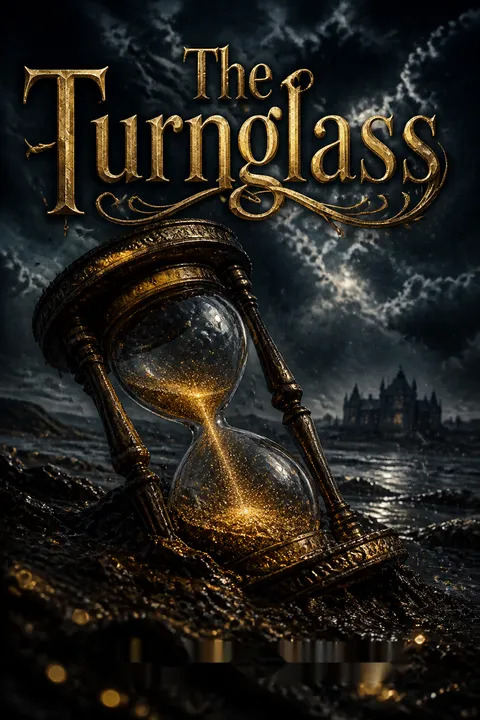
Simeon1 crosses the dangerous Strood at night and reaches Turnglass House, named for its glass hourglass weather vane. He finds Oliver7 ill in a book-lined library, then discovers that a transparent wall divides the room from a furnished cell. Florence2 sits behind it, watched and watched over in equal measure.
Oliver7 says she was confined there instead of sent to Bedlam, and that she receives laudanum each night. When Florence2 directs Simeon1 to a strange American story called The Gold Field, he realizes the book matters to her, though not why.
The glass partition makes the house’s power structure visible: Florence can be seen, but cannot freely act or communicate. Oliver describes the arrangement as protection, while Simeon notices that protection and confinement can occupy the same space. The drugged silence complicates any judgment of Florence’s supposed madness, since the household controls both her movement and her alertness. The strange book introduces another kind of enclosure, one made of narrative rather than glass. Simeon’s first medical task is already inseparable from the question of who gets to define another person’s reality.
A Parson Fears Poison
Oliver’s7 heart grows weaker, his fever rises, and he becomes convinced that someone is poisoning him. Simeon1 checks the household’s food and drink, but housekeeper Eliza Tabbers14 and servant Peter Cain13 eat the same meals without becoming ill.
Cain13 tests the new brandy on his dog and then himself; neither shows signs of poisoning. Outside, villagers gather to watch the house, while Oliver7 names a rebellious young man and a grieving mother as possible enemies.
Simeon1 visits the mother, Mary Fen, and discovers why her daughters died: mercury from her husband’s knife-plating work poisoned her while she was pregnant. The finding clears her of deliberate murder, but it gives Simeon1 no explanation for Oliver’s7 decline. Florence2 remains silent, observing from behind the glass.
The episode exposes how easily fear turns poverty and eccentricity into evidence. Oliver reads religious disapproval and village hostility as proof of a conspiracy, while Simeon tests each claim against what bodies and shared exposures reveal. His discovery about the Fen family demonstrates the value of inquiry, but also its limits: a correct diagnosis can explain one tragedy without solving another. Florence’s silence continues to resist the household’s competing accounts of her. She is not simply a suspect or a patient; she is a witness whom the others have made difficult to hear.
The Body in Mud
While examining the mudflats, Simeon1 finds a human hand and drags the preserved body of John White12 onto solid ground. John,12 a local oysterman missing for more than a year, has torn flesh and knife marks beneath his ribs.
His cousin Charlie reacts to the discovery with contempt, while the magistrate William Watkins8 avoids discussing John’s12 possible smuggling connections. A post-mortem confirms that an attacker broke John’s12 neck and stabbed him from behind. Cain13 finally admits that John12 worked in the contraband trade.
When Simeon1 watches the smugglers unload goods on the Hard, he recognizes Morty15 leading them. Morty15 says John12 had accused James Hawes11 of betrayal shortly before disappearing, then names James11 as the likely killer, leaving Simeon1 with a dead man’s accusation and a second unsolved death.
The mud preserves what the community’s story has tried to erase. Locals describe drowning as an ordinary hazard, but the knife wounds make John’s death deliberate, converting landscape into evidence rather than explanation. Simeon’s investigation also reveals a community bound by silence: Morty’s smuggling network, Cain’s guarded answers, and Watkins’s evasions all protect people who may be implicated. Yet Morty’s accusation against James cannot be treated as proof. The section’s tension comes from the gap between a plausible account and a verifiable one, a gap Simeon’s medical discipline insists on keeping open.
Hawes’s Hidden Journal
Oliver7 dies after a night of worsening fever, despite Simeon’s1 attempts to revive him. Rummaging through the library, Simeon1 finds a hidden compartment in Oliver’s7 writing desk. It contains an ornate opium pipe and points him toward The Gold Field, whose back pages conceal Oliver’s journal.
The journal vanishes during a nighttime break-in, but a loose letter identifies Florence2 and Annie White10 as women once placed in Oliver’s7 care after trouble in London. Florence2 then steers Simeon1 toward a Limehouse address.
At the Red Lantern, a Chinese woman recognizes the pipe and says it belonged to a customer called Mr Tyrone.9 Simeon1 returns with a name at last, but the stolen journal and Watkins’s8 evasions make clear that the family’s history is still being actively concealed.
Oliver’s death turns a medical case into a historical investigation, but the objects left behind refuse to offer a simple answer. The hidden pipe suggests private appetite; the journal records a public man’s private reasoning; the stolen pages show that someone still fears what those records contain. Florence’s indirect clues make her an active participant even while she remains locked away. Simeon must learn to read objects, omissions, and arrangements as carefully as symptoms. The story’s books are not decorative symbols: they are physical hiding places where the powerful have stored the versions of events they do not want examined.
A Pipe Points London
Simeon’s1 discoveries in the journal and Florence’s2 account finally connect Tyrone9 to the deaths around Turnglass House. Oliver7 had met him through a London brothel, where Tyrone9 encouraged the parson’s forbidden desires and supplied a dagger.
When John White12 confronted Oliver7 over the exploitation of his sister Annie,10 Tyrone9 killed John12 and hid his body in the mud. Oliver7 then helped frame James11 by sending Florence2 a forged note that made her believe James11 had abused Annie.10 Florence2 attacked James11 with a decanter; the wound became infected and killed him.
In London, Florence2 found Annie10 being brutalized in an institution, rescued her, and escaped a second abduction with Annie’s10 help. Their flight ended when Oliver7 and Tyrone9 recaptured Florence2 and returned her to Turnglass House.
The journal dismantles the respectable moral story Oliver has told about himself. He does not merely fail to protect others: he helps manufacture the evidence that turns Florence against James, while Tyrone performs the violence Oliver can disavow. Florence’s impulsive act becomes the visible crime, while the deliberate deception behind it remains hidden. Annie’s abuse reveals how institutions can reproduce the coercion they claim to correct, and Florence’s rescue attempt becomes both courageous and costly. The shifting responsibility in this history shows how guilt can be assigned to the person easiest to imprison rather than the person who designed the trap.
Laudanum’s Last Dose
Simeon1 reconstructs Oliver’s7 final illness from the habit he had overlooked. Florence2 had once been allowed to sit with Oliver7 in the library, where he dosed her with laudanum. She secretly poured some into his brandy barrel.
Because the opium settled at the bottom, Oliver7 unknowingly drank increasingly strong doses as he emptied the barrel. When it ran dry, his body suffered withdrawal: the pain, vomiting, and heart strain that Simeon1 had mistaken for a new poisoning.
Florence2 confirms the method and explains that years of forced laudanum had left her mind clearer than Oliver7 believed. She asks Simeon1 to give John White12 a proper burial in the family crypt and leave Oliver’s7 body in the mud. Simeon1 agrees, though the book ends before showing those arrangements.
Florence’s revenge is constructed from the very treatment used to control her. She does not overpower Oliver physically; she learns the material logic of his addiction and lets his own routine carry the consequences. That ingenuity complicates any clean division between victim and avenger, without erasing the coercion that shaped her choices. Simeon’s agreement to her burial request marks a change in his role: he is no longer only a diagnostician seeking a cause, but a witness deciding how the dead will be remembered. His answer offers a measure of justice, not a cure for what has happened.
The Writer’s Last Night
In 1939 Los Angeles, aspiring actor Ken Kourian3 meets Gloria19 at a diner and follows her to a party at the coastal glass mansion of writer Oliver Tooke.5 Oliver’s5 odd, searching manner draws Ken3 into a friendship, and a recommendation from him wins Ken3 a film role.
Ken3 also meets Oliver’s sister4 Coraline4 and their politically powerful father,6 Governor Oliver Tooke.6 At a later party, Ken3 sees the Governor6 pushing an eugenics bill and hears Oliver5 speak uneasily about guilt and his new novel, The Turnglass.
After a night out, Ken3 swims to Oliver’s5 stone writing tower and finds him dead from a gunshot wound. The police call it suicide, but Ken3 remembers seeing two figures head toward the tower and takes Oliver’s unpublished book, convinced it may explain what happened.
Ken’s arrival in the Tooke circle offers the belonging he has been seeking in a city that treats aspiring actors as interchangeable. Oliver’s friendship appears generous, yet his silences and unfinished novel suggest that intimacy is carrying information neither man can fully name. The Governor’s public certainty about eugenics contrasts with Oliver’s private guilt, linking political ideals to intimate family damage. Oliver’s death abruptly turns Ken from hopeful newcomer into investigator. His choice to keep the manuscript is an act of loyalty, but also a decision to enter a family history whose costs he does not yet understand.
The Book Becomes a Map
Ken3 and Coraline4 compare Oliver’s novel with the family’s past. Newspaper archives show that Coraline’s younger brother5 Alexander was reported kidnapped in England in 1915, and that their mother2 Florence2 later drowned there.
Ken3 learns from Piers Bellen,20 a government clerk who had been pressuring Oliver,5 that the coroner returned an open verdict on Florence’s2 death. Coraline4 remembers that Oliver5 spent a month in England and returned changed. The pair decide to follow his trail.
On their way to the transatlantic plane, someone deliberately shoves Ken3 onto the tracks; he survives only by flattening himself beside the rails. The attack convinces them that Oliver’s5 investigation has living enemies. They continue to England, carrying his novel as both a family history and a possible set of directions.
The novel’s mirrored plot gives Ken and Coraline a method, but not certainty. Every clue is double-edged: the newspaper account reports a kidnapping, yet the open verdict leaves Florence’s death unresolved. Coraline’s willingness to travel marks a shift from defensive distance to active inquiry, while Ken’s near-fatal fall makes the past feel physically present. Their investigation is not simply a search for truth. It is a test of whether the family can tolerate a truth that may implicate those they still love, and whether a story written as a warning can also serve as a usable guide.
Clothes That Should Be Buried
In Essex, Ken3 and Coraline4 visit the burned ruin of Turnglass House, where the glass cell and its old library have collapsed into debris. On Mersea, they find Pete Weir, a former Tooke6 servant. He tells them that the day after Florence2 was supposedly drowned, he saw her maid Carmen18 carry dresses and personal belongings to a waiting car.
The evidence suggests Florence2 survived and was taken elsewhere. The local publican adds that Charlie White was questioned when Alexander disappeared and still lives nearby; Charlie accuses the family’s ancestor Simeon21 of wrongdoing but offers no proof.
Ken3 recognizes that Oliver’s story points toward London and an institution where Florence2 might have been hidden. The pair leave Ray with a new lead: the coroner’s account was false, and someone preserved Florence’s2 life in secret.
The discarded clothes carry more evidentiary weight than the official testimony. A practical detail, moving possessions after an alleged death, punctures a public narrative that has endured for nearly two decades. The ruined house gives Ken and Coraline a physical version of Oliver’s literary world, but its emptiness warns that resemblance is not proof. Charlie’s accusation complicates the family’s inherited legend without resolving it. The investigation advances through ordinary witnesses and material traces, not through a single authoritative confession. In this family, history survives in the habits of servants and fishermen long after the powerful have written their own accounts.
The Mother Called Jessica
Following the novel’s references, Ken3 and Coraline4 search for the former Magdalen institution and eventually locate Florence2 in a convent hospital under the name Jessica. She is alive, but disoriented, devout, and convinced that her dead son Alexander visits her.
The sisters say she entered voluntarily and is not legally detained; she has also chosen severe religious penance for a guilt she will not explain. Governor Tooke6 arrives and tells Coraline4 that her mother2 has been hidden there, not imprisoned by force.
He argues that Florence2 is fragile and that the losses in the family have left her unsafe. Coraline4 insists that Florence2 should return home. The Governor6 relents and begins arranging the journey, while Ken3 and Coraline4 carry the knowledge that their family’s official history was deliberately managed.
Florence’s reappearance unsettles the distinction between rescue and release. She is not held by a locked cell, yet her delusions, self-punishment, and dependence on the convent’s care make freedom a complicated prospect. Coraline’s insistence on taking her mother home comes from love, but also from anger at a father who withheld the truth. The Governor’s willingness to cooperate does not restore trust; it reveals how long private decisions have been made on Coraline’s behalf. Florence’s mistaken belief about her son shows how grief can preserve emotional connection by distorting time and identity.
A Hanging, Then Handcuffs
Back in Los Angeles, Ken3 returns to the glass house and finds Florence2 hanging in Coraline’s4 bedroom. He has only just discovered her when Detective Jakes17 arrives, summoned by an unexplained call. The officers find rope marks on Florence’s2 wrists and a room disturbed by Ken’s3 entrance, making the death look like a staged scene. Jakes17 arrests Ken3 for the deaths of both Florence2 and Oliver.5
At the station, Ken3 refuses to answer questions without a lawyer, but officers beat him in his cell and try to strangle him with a noose. Jakes17 interrupts the attack and releases him, though he warns Ken3 that the case remains open. The violence confirms that someone with influence wants Ken3 silenced or blamed before he can finish investigating.
The suspected murder of Florence converts Ken’s search for family truth into a fight for survival. The physical evidence is ambiguous, but its arrangement is powerful enough to dictate a story about guilt before an investigation can test it. The attempted killing inside the station reveals that institutional authority is not neutral; some officers protect the case’s convenient explanation rather than the prisoner. Jakes’s intervention is limited, not heroic, but it gives Ken a narrow opening. The section makes the novel’s central problem concrete: whoever controls the evidence can decide which person becomes the public villain.
The Foal Beneath the Picture
After a plain-faced intruder attacks him in his room, Ken3 uncovers a tiny wooden foal hidden behind one of Florence’s miniature paintings. A handwritten note connects the keepsake to Oliver5 and Alexander, suggesting the family’s names conceal more than the published story admits.
Ken3 finds a newspaper report showing that Dr Kruger16 treated the Tooke children after their return from England, then confronts Kruger16 about the brothers’ medical histories. Before Ken3 can settle the danger, the tropical storm strikes Los Angeles.
He and Coraline4 flee in the Governor’s6 car, pursued by the same ordinary-looking man. Ken’s3 driving throws the pursuer’s car into a streetlamp, where leaking gas ignites it. The attacker dies before Ken3 can identify him, but the coded clue has pointed toward the family’s deepest deception.
The miniature foal turns a minor image in Oliver’s novel into a material key. Its smallness matters: the truth has been hidden not in a grand archive but inside an object easy to overlook, much like the family’s substitution of one identity for another. Ken’s investigation now depends on reading both textual echoes and physical evidence. The storm intensifies that logic, making the city’s infrastructure unstable and the pursuit impossible to separate from the weather. The attacker’s death removes a source of testimony, but it also strips away the possibility that this is merely a misunderstanding or an isolated family secret.
The Son Who Survived
Ken3 and Coraline4 confront Governor Tooke6 as the storm batters the glass house. Ken3 accuses him of arranging the removal of his polio-stricken elder son and raising the younger boy under the elder’s name.
The Governor6 admits that he believed disability made the original Oliver unfit to live and that he had the boy taken away, while Alexander was presented as Oliver.5 Florence2 was pressured into the plan and spent the rest of her life consumed by guilt. The surviving son eventually learned the truth, discovered his mother2 was alive, and wrote The Turnglass as a warning before threatening to expose his father.
The Governor6 sent a retainer to frighten him; Oliver5 died in the confrontation. Ken3 has killed the likely retainer in the storm, and the Governor’s6 confession leaves the family’s crimes exposed, though no clean justice is promised.
The final revelation makes identity itself the instrument of violence. The Governor treats his sons as interchangeable roles in a political and eugenic project, sacrificing a child’s life to preserve his own image and ambitions. His language of duty disguises a decision rooted in fear of weakness, while Florence’s guilt shows how coercion can turn a survivor into the keeper of the crime. Oliver’s book becomes a delayed act of resistance: he cannot undo the substitution, but he can make its structure legible to those left behind. Ken’s closing insight is not that truth heals automatically, but that concealed history continues to shape the living until someone names it.
Analysis
The Turnglass treats family history as a form of active pressure. Its two narratives do not simply repeat one another; the later plot borrows the earlier story’s names, locations, and images, then makes those echoes suspect. The reader learns that a novel can preserve evidence, but also distort it, since the characters who tell the past have motives of their own. This structure makes interpretation part of the drama rather than a pause from it.
Both timelines examine how authority turns care into control. Florence2 is confined under the language of protection, while the Governor6 invokes duty and national improvement to justify decisions made over his family’s bodies. Their contexts differ, but the pattern is continuous: people with power decide whose life is worth preserving and whose testimony can be dismissed. The novel does not make every act of resistance morally clean. Florence’s2 revenge grows from coercion, and Ken’s3 pursuit of truth brings violence rather than immediate repair.
The recurring glass houses sharpen the problem of visibility. Their walls promise openness, yet the characters remain hidden from one another by shame, fear, and inherited stories. The tidal landscape offers the opposite image: it conceals evidence physically, then returns it without regard for human plans. Against both forms of concealment, the books become tools of delayed witness. Oliver’s novel cannot prevent his death, and Simeon’s1 investigation cannot undo Florence’s2 imprisonment, but each narrative makes the buried causes legible to someone willing to read carefully.
The novel’s hardest insight is that truth is not the same as justice. Recovering what happened can break the explanations that have allowed a family to function, and it cannot restore the people sacrificed to protect its reputation. Still, silence does not preserve peace. The past continues to direct the living until someone accepts the cost of looking at it.
Review Summary
The Turnglass receives mixed reviews, with praise for its innovative tête-bêche format and intriguing dual narrative structure. Readers appreciate the interconnected stories set in 1881 England and 1939 California, exploring family secrets and mysteries. Some find the Victorian-era story more compelling, while others enjoy the noir-style 1930s tale. Critics note underdeveloped characters and predictable plot twists. Overall, the book is praised for its originality and engaging premise, but some feel the execution falls short of its potential.
People Also Read
Characters
Simeon Lee
The cholera-seeking physicianA young London doctor whose research into cholera is stalled by poverty and institutional indifference. Simeon trusts observation, practical testing, and the evidence of bodies more than the status or piety of the people around him. His decision to treat Oliver Hawes7 draws him into a household where illness is mixed with secrecy and control. He is curious without being naturally cynical, and his professional empathy makes him reluctant to leave a vulnerable person to the law’s worst remedies. His attention to small inconsistencies gives him a path through the family’s competing stories.
Florence Hawes
The woman behind glassThe beautiful, strong-willed wife of James Hawes11 and daughter of magistrate William Watkins8. Florence is confined in a glass-fronted room after a violent family crisis, and the people around her treat her silence as proof of instability. She has artistic skill, a sharp memory, and a mind that remains active even when others assume it has been subdued. Her reserve is not passivity: she watches, chooses what to reveal, and measures the people who come to her. Florence embodies the danger of allowing a household or institution to define a woman’s testimony before hearing it.
Ken Kourian
The actor turned investigatorA Georgia-born aspiring actor and newspaper copywriter who arrives in Los Angeles hoping to build a life beyond his small-town beginnings. Ken is observant, stubborn, and uncomfortable with prejudice, though he is still learning how power operates in the film industry and in the Tooke family6. His friendship with Oliver5 gives him a taste of belonging, and Oliver’s5 death forces him to turn that attentiveness into investigation. Ken is willing to risk his safety for a truth he cannot yet fully understand. His instincts are sometimes uncertain, but he keeps testing them against evidence.
Coraline Tooke
The guarded family heirThe Governor’s6 daughter and Oliver’s5 younger sister, Coraline is intelligent, politically perceptive, and fiercely private. She understands her father’s6 ambitions but resists the family’s demand that she serve its public image. Her coolness functions as protection against a household where grief and history are managed rather than discussed. Ken’s3 investigation draws her into a search she has long avoided, forcing her to confront her mother’s2 disappearance and her brother’s secrets. Coraline’s loyalty is deep, but it does not make her obedient; she can love her family and still challenge the decisions that have shaped it.
Oliver Tooke
The troubled novelistA successful young writer and the son of California’s Governor6, Oliver is Ken’s3 first genuine friend in Los Angeles. He is wealthy, socially connected, and outwardly composed, yet his conversations repeatedly return to guilt, family history, and the uncertain meaning of a life. He uses books and private writing to approach questions he struggles to raise directly. Oliver’s attention to people and their histories makes him a thoughtful companion, but his reluctance to speak plainly leaves those close to him with unanswered questions. His final novel carries an unusual importance for the family.
Governor Oliver Tooke
The patriarch politicianA wealthy California governor with presidential ambitions, Tooke presents himself as a defender of order, family strength, and national improvement. He is disciplined in public and accustomed to making decisions for others, especially when he believes that political or familial duty demands it. His influence reaches from campaign strategy to private family arrangements. Beneath his certainty lies a man shaped by grief and a relentless fear of weakness. His devotion to legacy can look like care, but it leaves little room for the people he claims to protect to define their own lives.
Oliver Hawes
The ailing country parsonA country clergyman and Simeon’s1 distant relative, Oliver lives among thousands of books on the isolated island of Ray. He is gentle in manner and deeply religious, but his ideas about sin and authority are rigid. He has taken responsibility for Florence’s2 confinement and presents it as a compassionate alternative to an asylum. His illness draws Simeon1 into the household, where Oliver’s fear and certainty become central questions. He is both a spiritual authority and a man whose private history is not as settled as his public role suggests.
William Watkins
The compromised magistrateFlorence’s2 father and the local magistrate, Watkins is amiable in conversation but hesitant when family matters demand courage. He wants to protect his daughter from harsher legal consequences, yet he struggles to admit what he has allowed others to decide for her. His shame makes him evasive, and his concern for reputation often competes with his paternal affection. Watkins shows how a person can participate in damaging arrangements without possessing the strength to defend them openly.
Tyrone
The dangerous confidantA rough-speaking stranger who enters Oliver Hawes’s7 life through the church and draws him toward pleasures he has denied himself. Tyrone is observant about other people’s appetites and skilled at presenting his influence as a form of help. He carries himself with confidence and treats moral boundaries as negotiable. His presence unsettles the divide between temptation and violence, making him difficult to dismiss as merely a bad influence.
Annie White
The abused village girlA young woman from a fishing family, Annie is drawn away from Mersea by promises of a different life. Her vulnerability is exploited by adults and institutions that claim authority over her. Even after severe mistreatment, she retains courage and the capacity to act decisively when danger returns. Annie’s experience reveals the social costs borne by poor women whose stories are easily ignored.
James Hawes
The dead elder brotherOliver’s7 younger brother and Florence’s2 husband, James is remembered locally as handsome, impulsive, and drawn to risky company. His relationship with Florence2 is passionate and volatile, while his activities connect him to the smuggling culture around Ray and Mersea. The people who speak of him disagree about what kind of man he was, making his reputation part of the mystery rather than a reliable guide to it.
John White
The missing oystermanAn oysterman from Mersea whose disappearance becomes a crucial piece of Simeon’s1 investigation. John is described as strong and quiet, a man who belongs to the local smuggling network. His absence has been explained as a likely drowning, but the people who knew him have reasons to keep their memories guarded.
Peter Cain
The guarded house servantA red-haired servant who works as Turnglass House’s gardener and general factotum. Cain is blunt, loyal to the household’s past, and wary of Simeon’s1 questions. His rough manners can conceal useful knowledge, while his attachment to the people of Mersea makes him reluctant to cooperate with an outsider.
Eliza Tabbers
The steadfast housekeeperThe housekeeper at Turnglass House, Tabbers prepares meals, tends fires, and keeps daily life functioning on an isolated island. She is loyal to Oliver7 and sensitive to the suspicion Simeon1 directs toward the household. Her practical knowledge is valuable, though she is careful about what she shares.
Morty
The island ferrymanAn older ferryman who knows the tidal routes and the people who use them. Morty speaks plainly, but his knowledge of the island’s illicit trade makes him cautious about outsiders. He is one of the first people to give Simeon1 a glimpse of the local past.
Dr Arnold Kruger
The family physicianA physician connected to the Tooke family6 and to the Governor’s6 political interests. Kruger presents himself as a practical medical man, but becomes guarded when Ken3 asks about the family’s history. His presence links the household’s private decisions to organized ideas about health, disability, and social worth.
Detective Jakes
The wary investigatorA Los Angeles detective who initially treats Oliver’s5 death as an apparent suicide and later investigates Florence’s2 death. Jakes is experienced, skeptical, and inclined to trust the evidence he can see. His conduct reflects both the limits and the unevenness of law enforcement in a city where political influence and police practice can collide.
Carmen
The family’s loyal maidA longtime Tooke6 servant who has cared for the family across several generations. Carmen knows intimate details of the household and has been asked to keep some of them private. Her loyalty is genuine, but the burden of silence has placed her in an uneasy position between employer and family.
Gloria
Ken’s ambitious acquaintanceA stylish young woman Ken3 meets at a diner. Gloria understands the social machinery of Los Angeles and believes connections matter more than talent. Her introduction gives Ken3 access to Oliver’s5 circle, though their outlooks quickly diverge.
Piers Bellen
The opportunistic government clerkA boastful man Ken3 meets at Oliver’s5 party, Bellen presents himself as a film producer and behaves as if access to powerful people is his entitlement. He later emerges as a source of information about the Tooke family6, though his motives are self-serving.
Simeon Tooke
The remembered family physicianA doctor from the family’s earlier generation whose work and history remain influential in later Tooke6 family life. He is remembered as a physician with serious ambitions and as a figure whose account of the past shaped what his descendants believed about their inheritance.
Plot Devices
The tête-bêche novel
Two stories, one mirrorThe book’s inverted, back-to-back structure links an 1881 Essex mystery with a 1939 California investigation. The later story contains a novel, The Turnglass, whose people, places, and incidents echo the earlier narrative. Ken3 and Coraline4 use those parallels as clues, while the reader must continually reconsider which events are historical, fictional, or altered. The device makes reading itself investigative: a repeated name or image can reveal a connection, but the mirrored versions are not identical, so resemblance never guarantees truth.
Turnglass House
A house that reflectsThe glass-fronted California mansion copies an older family house on the tidal island of Ray. In the earlier story, glass creates a literal barrier around Florence2; in the later story, the transparent walls reflect the family’s public image while exposing only fragments of its private life. The matching houses connect generations and turn the setting into a memory structure. Their unusual architecture also gives the novel a visual language for divided identity, surveillance, and the unstable boundary between what a family shows and what it hides.
The hidden journal
A past concealed in printOliver Hawes7 hides his private journal inside the back of The Gold Field, making a book within a book into a practical hiding place. Florence2 later directs Simeon1 toward it, while another person steals it to prevent its contents from being exposed. The journal records Oliver’s7 private thoughts and recasts events that local rumor has reduced to simple accusations. In the later narrative, Oliver Tooke’s novel similarly carries clues intended for Ken3 and Coraline4. Both books make authorship an act of concealment and eventual disclosure.
The tidal mudflats
The landscape keeps evidenceThe Strood and surrounding mudflats determine when Ray can be reached and when it is cut off. Their danger shapes daily life, enables secret travel, and offers a convincing explanation for disappearances. At the same time, the mud preserves a body that challenges the local story of accidental drowning. The same landscape appears in the later family history, tying the missing child and Florence’s2 reported death to a place where evidence can be hidden, lost, or recovered according to the tide.
The foal and miniature
Small objects expose identityA dead foal appears in the 1881 narrative as a seemingly minor event, while Florence’s2 miniature paintings preserve paired images of the English and California houses. In the later investigation, a tiny wooden foal hidden behind one painting becomes a clue to the Tooke family’s6 concealed history. The objects work because Oliver5 embeds meaning in details that appear ordinary on first reading. Their physical intimacy, held inside a picture and carried across generations, turns a family keepsake into an archive that official records have failed to provide.
Download PDF
Download EPUB
.epub digital book format is ideal for reading ebooks on phones, tablets, and e-readers.








