

Plot Summary
The Family of Three
Dara and Marie Durant inherit their mother’s dance school after their parents die, and the sisters keep its cramped studios running with Charlie, the former star pupil who grew up in their home and married Dara.
Their childhood made the three of them a private unit: lessons, dancing, and family rituals rarely admitted anyone else. Now Nutcracker auditions dominate the school, with Dara choosing earnest Bailey Bloom as Clara and Corbin Lesterio as the Prince.
But Marie has been living upstairs at the studio for eight months, after leaving the shared house without explanation. On the morning of the cast announcement, Dara finds her hammering open pointe shoes. The familiar ritual feels newly violent, a small warning before the family’s carefully managed season breaks apart.
The school is more than a workplace. It is the Durants’ inherited method of keeping the world small, repeatable, and legible. Ballet supplies rules for bodies and schedules, while the family’s closed circle supplies rules for intimacy. Marie’s departure seems limited because she remains in the building, but that half-exit unsettles the arrangement more than a clean break might. Dara’s attention to casting and routine shows how she handles uncertainty: by assigning everyone a place. The hammering shoe quietly challenges that authority. Marie is not simply unsettled; she is rehearsing force.
The Heater’s First Fire
During the night, the old space heater in the third-floor studio catches the curtains while Marie sleeps. Firefighters contain the blaze mostly to Studio B, but smoke, water, and damaged flooring leave the dance school with one unusable room just as rehearsals intensify.
Marie says she cannot remember turning on the heater. Dara suspects her sister’s carelessness, then voices the more frightening possibility that Marie started the fire deliberately. Charlie dismisses the accusation and calls the insurer, while Dara tries to reassure anxious parents and students that the Nutcracker will continue.
With classes already crowded and the performance schedule fixed, they cannot wait long for repairs. The damaged studio forces them to invite an outsider into the building and gives the crisis a practical excuse to grow.
The fire converts private tension into a visible emergency. Until this point, Marie’s departure can be treated as a family inconvenience; now her living arrangement has helped endanger the institution that supports all three of them. Yet the cause remains emotionally uncertain even when the heater offers a plausible explanation. Dara reads intention into the damage because she already experiences Marie as unpredictable, while Charlie protects the familiar account. Their disagreement shows how the family’s unity depends less on shared truth than on agreeing which questions will not be pursued. The fire also introduces the novel’s central irony: repair begins by making the building more vulnerable.
Derek Opens the Wall
Derek Girard arrives as the contractor recommended through the school’s parents. Instead of offering only a quick repair, he proposes enlarging Studio B, raising its ceiling, and transforming the aging school into a more marketable ballet palace.
Charlie sees a chance to expand a business that has outgrown its rooms; Dara resists, especially when Derek suggests replacing the iron spiral staircase leading to the third floor. Marie, silent through most of the visit, suddenly claims the right to decide.
She later supports the renovation, and the workers begin tearing down the wall. Dara watches the hammer strikes with a bodily dread she cannot explain. The destruction opens the studio physically, but it also lets Derek’s presence spread through every room and gives him daily access to the sisters’ routines.
Derek succeeds by joining practical need to fantasy. He offers a bigger studio, but he also flatters the Durants as artists whose ambitions deserve a grander stage. Charlie hears an answer to financial and professional limits; Dara hears a stranger rewriting the structure that has held her family together. Marie’s sudden claim to authority complicates Dara’s belief that she alone keeps the school functioning. The demolition matters because it is both literal renovation and an emotional breach. The staircase, which Dara insists must remain, connects the public workplace to the family’s hidden rooms. Derek’s proposal therefore reaches beyond construction before anyone admits that it does.
Desire Behind Plastic
The plastic curtain meant to shield classes from construction becomes a screen for secrecy. One morning Dara sees Marie with Derek in Studio B, in an encounter that leaves her sister flushed and bruised. Later, Marie tells Dara that their intimacy began when Derek surprised her in the tiny powder room, and insists that she wanted what followed.
She describes the force of his hands as both frightening and thrilling, while Dara struggles to reconcile this with the vulnerable sister she thinks she knows. Their conversation makes clear that the encounter was not a single lapse.
Marie has been preparing herself for Derek, wearing a white leotard and seeking his attention. Meanwhile, Derek’s suggestive attention toward Dara unsettles her too, and she channels her confusion into forceful massage of Charlie’s injured back.
The affair exposes the gap between what Dara sees and what Marie experiences. Dara initially interprets the bruises through danger and violation; Marie describes appetite, chosen surrender, and a desire to be physically overwhelmed. The account does not make the power imbalance disappear. Derek controls the worksite and carries social authority, while Marie’s hunger is entangled with loneliness and a long habit of seeking sensation through her body. Dara’s response is equally revealing. She condemns Marie’s behavior, yet Derek’s attention stirs her, and she turns toward Charlie’s damaged body to experience a kind of control. Desire here is neither simple liberation nor simple victimhood. It is a force shaped by unequal power and old family habits.
Marie Buys an Exit
Marie bleaches her hair, begins dressing to please Derek, and buys a conspicuous orange car, though she has little driving experience. She presents the purchase as her own decision, while Dara assumes Derek has directed it.
Their sisterly arguments sharpen as Marie talks about people who leave, buy houses, and build lives elsewhere. Derek, meanwhile, keeps asking about the Durants’ old house on Sycamore and hints that it could be renovated for profit. At the school, his delays and constant interruptions strain classes, while Bailey Bloom faces escalating hostility from girls jealous of her Clara role.
A hidden razor blade injures Bailey’s foot, and another shoe is sabotaged with glue. Dara tries to keep the Nutcracker moving, but the pressure around Marie, Derek, and the school’s children now converges.
Marie’s car is an object with two meanings. Dara sees another sign of Derek’s control, but Marie frames it as a tool for mobility and adulthood. Her purchase dramatizes a conflict the sisters cannot settle verbally: whether independence means choosing something for oneself or merely acting under a new person’s influence. Derek’s interest in the house gives that conflict material stakes. Bailey’s injuries mirror the adults’ pressure in miniature. The children learn that access to a coveted role invites both admiration and sabotage, while Dara uses discipline to contain the damage. The school’s polished fairy tale and its backstage cruelty are no longer separable from the adults’ private bargains.
The House Becomes Leverage
The renovation stalls, then a damaged pipe floods Studio B and ruins the new sprung floor. Charlie learns that the insurance paperwork he signed assigns benefits to Derek, so the claim money has been flowing to the contractor rather than the school.
At the same time, Dara discovers that Marie remains on the deed to the childhood house, despite selling her share years earlier. Marie has contacted the county recorder about transferring ownership, and Derek uses her key to enter the house while Dara is away.
He argues that Marie was treated unfairly and presents himself as her advocate, though his questions about the property reveal his own interest. Dara and Charlie realize that the contractor’s delays, financial control, and access to their family home are connected. Their private quarrels have become a threat to what they own.
The flood makes the renovation’s cost impossible to ignore, while the insurance assignment turns trust into a financial mechanism. Charlie’s signature matters because the Durants have delegated decisions to him for years without checking the fine print. The deed exposes a second weakness: a family arrangement treated as settled was never legally completed. Derek can exploit the mismatch between emotional certainty and documented ownership. Marie’s attempt to act independently may be genuine, but it gives him leverage over Dara and Charlie. The scene thus reframes the house as both a cherished memory and a vulnerable asset. Their attachment does not protect it from law, money, or manipulation.
The Spiral Staircase Fall
At the studio, Derek confronts Dara, Charlie, and Marie over the house deed and demands a settlement, claiming that Marie’s share was taken from her unfairly. He also mocks the Durants’ closeness, turning their shared childhood and sleeping arrangements into an accusation.
Charlie charges him on the narrow spiral staircase. Marie intervenes, grabbing at Derek as the two men struggle, and their combined movement sends him over the railing. He strikes the desk below, where the bill holder’s metal spike pierces his eye.
The three stand over his body, unable to reverse what happened. Charlie and Marie insist that it was an accident; Dara immediately takes control, deciding they must conceal their presence and Marie’s affair before the police arrive.
The death grows from a confrontation that is at once financial, sexual, and familial. Derek has found the Durants’ most private bond and turned it into a weapon, but the violence that follows does not resolve whether the family acted together or merely collided in panic. Charlie’s attack and Marie’s attempt to intervene become physically inseparable on the staircase. The bill holder, once a domestic tool for organizing bills, transforms into an instrument of death. Dara responds by restoring order through a story, just as she restores order in class through correction. Her competence is real, but it now serves concealment.
The Story They Give
Dara and Charlie clear Marie’s bedding and clothes from the third floor, wash the sheets, and scrub Derek’s muddy footprints while Marie, dazed and vomiting, is taken home. Charlie returns to the studio and reports finding the contractor at the foot of the stairs.
Dara backs his account when police question her, and the death is treated as a fall. Investigators still notice the damaged staircase and ask about the earlier fire and flood, while a newspaper report says the manner of death remains under review.
The children and parents at the school quickly return to Nutcracker worries. Bailey continues rehearsing as Clara, even as rumors spread. Dara tells herself the official explanation will hold, but the word unnatural, repeated by the students, makes the death feel less settled.
The cover-up is not a single lie but a sequence of practical acts: remove the bed, scrub the prints, keep Marie away, and repeat a narrow account. Dara’s skill at organizing people and spaces becomes the engine of concealment. Yet the school’s normal machinery keeps working around the death, absorbing it into the same cycle of injuries, rehearsals, and parent demands. That continuity is disturbing because it is both useful and numbing. The newspaper’s uncertainty and the detectives’ questions resist Dara’s attempt to close the event. Even the children’s use of unnatural gives the hidden violence a name, though they do not know what they are naming.
The Wife Behind the Work
Detectives tell Dara that Derek had a widow, and Dara presses Bailey’s mother, Mrs. Bloom, for the truth. Mrs. Bloom admits she had an affair with Derek after hiring him to renovate her bathroom.
Derek’s wife had been the physical therapist treating her migraines; when she discovered the affair, she begged Mrs. Bloom for money, citing debt and children. Mrs. Bloom paid Derek repeatedly and feared he would expose her. She also denies recommending him to the Durants, contradicting the story they had been given.
Dara follows a lead to the therapy clinic and sees Charlie embracing the same woman. The contractor’s arrival at the studio was not a simple referral, and Charlie’s connection to his wife is another secret hidden inside the school’s carefully managed family.
Mrs. Bloom’s confession changes the moral scale of the story. Derek did not merely exploit Marie’s appetite; he built a pattern of affairs, financial pressure, and intimate blackmail that reached into several households. Mrs. Bloom’s polished appearance concealed fear, debt, and a desperate effort to protect her daughter from scandal. Dara has treated such women as foolish for remaining with him, but the confession reveals how shame and threats can make exit feel more dangerous than submission. Seeing Charlie with Derek’s wife converts suspicion into personal betrayal. The family’s private world is no longer sealed from the outside. Its members have been carrying separate versions of the same man.
A Plan Turns Personal
Dara confronts Charlie, who admits that he became involved with the physical therapist, Derek’s wife. She had described years of infidelity and abuse, and the two of them began imagining that Derek might disappear through some kind of accident.
Charlie helped bring him to the studio, hoping the danger surrounding the contractor would finally end. The renovation disasters and the fall were not a precise plan, he insists, and he denies knowing about any expected insurance payout.
Dara hears both his guilt and his attempt to make the choice sound inevitable. She refuses to let him fold the betrayal into their shared history and tells him to leave. Marie joins Dara in sending him away, ending the three-person household that had seemed permanent.
Charlie’s confession destroys the comforting distinction between the people who were trapped and the person who acted. He had been seeking relief for a woman he believed was abused, but his rescue fantasy depended on bringing a dangerous man into another family’s space. His language of inevitability resembles the family’s old defense: events simply happened, choices were made for them. Dara rejects that defense, though she cannot yet separate Charlie’s love from his harm. Her decision to expel him is not a clean moral victory. It is the first time she refuses to preserve the group at any cost, even as she remains implicated in the earlier concealments.
The Door from Childhood
After Charlie leaves, Dara and Marie return to their childhood bedroom and remember what they had buried. As teenagers, Dara discovered their mother in an intimate encounter with Charlie, then fifteen.
Their mother asked Dara to keep quiet, and the sisters later understood that she had shaped their closeness with Charlie, inviting bodily intimacy and calling it family affection. They also revisit the violence between their parents, which Dara had remembered in a simpler, more protective version.
Marie says their mother, not their father, was driving the Buick the night it crashed. Their mother had been drinking and had taken the keys after a furious argument. The sisters recognize that their family’s rules about love, loyalty, and silence were formed by adults who made children carry adult secrets.
This revelation recasts the Durants’ intimacy without reducing it to a single label. What Dara remembered as a cherished family ritual was also shaped by an adult’s sexual boundary violations and a demand for secrecy. Marie’s recollection of their mother driving likewise unsettles the romantic legend of the parents’ final handhold. The sisters have protected their family by simplifying it: one parent as the aggressor, one as the victim, their own closeness as innocence. The fuller history is more painful because it resists clean roles. Their recognition does not instantly free them, but it gives them a reason to question the inheritance they have mistaken for destiny.
Guilty Beside the Snow
The morning after the sisters revisit their history, insurance investigator Randi Jacek returns to examine the staircase. Dara hears her climb toward the third floor and follows. There she finds Charlie hanging from an orange extension cord looped around a heating duct.
A note in his pocket carries one word on each side: guilt and snow, the latter referring to the Nutcracker’s stage snow. Police investigate Charlie’s death alongside Derek’s, and Dara gives them a limited account that keeps the affair and the family’s private history concealed.
The school prepares to move rehearsals to the theater, while Dara and Marie remain in the house, stunned and unable to speak plainly about either death. Charlie’s body has ended the triangle, but the silence that held it together remains.
The note compresses Charlie’s divided self into two obligations: guilt for what he has done and the ordinary work that still needs doing. The word snow belongs to the school’s seasonal machinery, an image of harmless theatrical magic that now sits beside his death. Randi’s investigation makes the hidden past newly vulnerable to outside scrutiny, but Dara continues to control what can be known. Her choice protects Marie and the family’s secrets while deepening her isolation. Charlie’s death may look like an ending, yet the sisters cannot treat it as resolution. They have lost the person who linked them, and inherited the silence he helped sustain.
Ashes Across Sycamore
Before dawn, Marie wakes Dara and pulls her from the childhood house as smoke and flames consume it. Firefighters trace the blaze to a blocked furnace flue packed with old debris, an accidental failure in a house already full of age and neglected repairs.
The sisters watch the rooms that held their childhood collapse, then recognize their mother’s rabbit-fur blanket among the debris. For years the blanket had been part of their Nutcracker ritual, a charged emblem of family comfort; now it is simply another burned remnant.
Dara and Marie survive, and the destruction removes the house that had kept them bound to the past. Two months after Charlie’s death, Marie leaves for a life beyond the family home, while Dara remains to rebuild the school.
The final fire is materially distinct from the studio fire, but its emotional force comes from their resemblance. Once again, flames expose the danger of a structure the sisters treated as permanent. This time no contractor or family member is blamed; the old flue and accumulated debris provide an ordinary cause. The rabbit blanket’s survival as an object among the wreckage complicates its former role as comfort and eroticized family symbol. It cannot rescue the house or restore childhood. Marie’s departure becomes possible only after the home itself is gone, while Dara’s choice to stay suggests that leaving is not the only form of change.
Bailey Takes the Stage
A year later, Dara is back at the Ballenger Center for another Nutcracker season. The school has continued without Charlie, and Marie has been gone for two months, traveling in Greece and sending postcards. Corbin, who once danced the Prince, has left ballet under pressure from his father and taken up football.
Bailey Bloom, however, finally dances Clara after the previous season’s fire canceled the performances. Her mother watches proudly from the front row.
Before Bailey enters, Dara sees the girl’s old uncertainty give way to readiness and lets her claim the moment as her own achievement. Bailey crosses from the wings into the lit stage, carrying the Nutcracker into the unknown. Dara remains behind, watching the door open without pretending she can choose what waits beyond it.
The final performance does not restore the old family or erase the damage of the previous year. Instead, it gives Dara a different role. She once tried to keep everyone safe by assigning parts, controlling routines, and hiding disruption. Now she supports Bailey without claiming ownership of the girl’s success. Bailey’s performance echoes the novel’s repeated image of Clara crossing into adulthood, but the ending resists a simple triumph: Marie has left, Charlie is gone, and Corbin’s future has moved elsewhere. The school continues, yet its meaning has shifted. Tradition remains valuable only when it can make room for a person to leave.
Analysis
The Turnout treats family not as a refuge from the world but as a small system that creates its own rules and then mistakes them for nature. The Durant school gives those rules a public form. Dancers repeat movements until pain becomes technique; sisters repeat family rituals until secrecy feels like loyalty. Dara’s need to manage bodies, schedules, and stories is understandable in a world where injuries and accidents can alter a life in seconds. But control also protects the conditions that harmed her. She can recognize danger in Derek’s renovation and still defend the staircase that carries the family’s buried history.
The novel’s most unsettling question is how desire operates inside unequal relationships. Marie describes wanting Derek’s force, while Mrs. Bloom’s history shows how attraction can become leverage when shame, money, and threats enter the room. The book refuses to make desire either proof of freedom or evidence that a person has no agency. Instead, it shows how people can choose within conditions that have already narrowed their choices. Charlie’s affair and his alliance with Derek’s wife turn rescue into another form of control: he imagines removing a danger rather than confronting the systems that keep producing it.
Ballet provides the book’s sharpest model of this contradiction. Its beauty depends on discipline, repetition, and bodies pushed past ordinary limits. Those same practices can produce skill and belonging, but they can also teach young people to call harm necessary. The Nutcracker repeatedly stages a girl crossing into adulthood, yet the adult world around the dancers is not a simple escape from childhood. It is crowded with inherited secrets and compromised forms of care.
By the end, the house burns and the old trio dissolves, but the conclusion is not a clean liberation. Dara remains at the school, Marie leaves, and Bailey enters the role that once carried so much rivalry. The change lies in Dara’s willingness to let another person take the stage without claiming that tradition can keep anyone safe forever.
Review Summary
Reviews for The Turnout are polarizing, averaging 3.11/5. Fans praise Abbott's atmospheric, gothic portrayal of ballet's dark underbelly, lauding the slow-burn tension, lyrical prose, and surprising twists. Many compare it favorably to her previous works exploring competitive female-dominated sports. Critics, however, found the pacing frustratingly slow, characters unlikeable and difficult to connect with, and certain scenes unnecessarily uncomfortable or disturbing. The contractor Derek was viewed by some as cartoonishly villainous. Most agree the final act delivers significant impact, though whether it justifies the buildup remains divisive.
Characters
Dara Durant
The keeper of formDara is the darker-haired Durant sister, a demanding ballet teacher and the organizer of the family dance school. She trusts repetition, discipline, and precise roles because they make unstable situations feel manageable. Her students experience her as rigorous, sometimes severe, but her standards arise from a deep belief that preparation can prevent injury and humiliation. Dara is especially attached to the school and the childhood house, spaces she treats as records of who the family is. Her attention to bodies is both professional and personal: she reads posture, pain, and hesitation as evidence. Beneath her control sits a strong appetite for feeling, though she rarely admits how much her own desire resembles the intensity she criticizes in others.
Marie Durant
The restless twinMarie is Dara’s fair-haired sister, a ballet teacher whose warmth makes her especially beloved by younger students. She is impulsive, emotionally porous, and drawn to sensations that unsettle the rules Dara relies on. As a child she was close to their father and quick to imagine escape; as an adult she still moves between departure and return, rarely knowing how to build a stable life outside the family. Marie’s apparent carelessness hides a keen instinct for what other people conceal. Her body is central to how she experiences the world, both through dance and through desire. She resists being defined by Dara’s judgments, even when she depends on the family she is trying to leave.
Charlie
The wounded centerCharlie entered the Durants’ lives as a gifted young ballet student and became part of their household, school, and private rituals. He is Dara’s husband and Marie’s long-standing family companion, though those labels never fully describe his place among them. Once a beautiful, promising dancer, he lives with serious injuries that have ended his performing career. He now handles the school’s accounts, schedules, and worried parents, using competence to remain useful in a world where his body no longer obeys him. Charlie is gentle and attentive, but also conflict-avoidant. He tends to let events gather around him rather than interrupt them, a habit that can look like kindness until responsibility becomes unavoidable.
Derek Girard
The invasive builderDerek is a middle-aged contractor whose imposing manner and easy confidence fill the Durants’ small studios. He presents himself as a practical worker with artistic instincts, able to see value where others see damage. He flatters clients by linking renovation to their deepest ambitions, then pushes beyond the job they thought they hired him to do. Derek is socially alert, watching for fractures in relationships and opportunities to make himself indispensable. His charm depends on treating boundaries as negotiable and private information as a tool. Around him, the school’s disciplined femininity and the family’s guarded intimacy become things he studies, tests, and tries to convert into leverage.
Madame Durant
The ballet matriarchThe sisters’ mother founded the Durant School and trained her daughters to regard discipline and pain as part of a dancer’s life. A former professional ballerina, she combined elegance with strict control, creating a household where ballet shaped nearly every hour. Her teachings gave Dara and Marie their craft, but also supplied family rules they struggle to distinguish from healthy boundaries. The girls remember her through rituals, advice, and the rooms she claimed as private space, even as their memories of her grow less secure.
Mr. Durant
The absent electricianThe sisters’ father is an electrician who spends long stretches away from home and retreats into drinking when present. He shares a volatile marriage with Madame Durant and offers Marie a rougher, more permissive kind of attention than Dara receives. His injuries, temper, and private habits become part of the children’s understanding of masculinity and danger. He is neither a simple refuge nor a simple villain, which makes the sisters’ memories of him difficult to separate from their parents’ conflict.
Bailey Bloom
The chosen ClaraBailey is a small, conscientious student selected by Dara to dance Clara. She is self-critical and initially vulnerable to the jealousy of girls who wanted the role, but she keeps returning to rehearsal despite injury and intimidation. Her mother’s difficult circumstances leave her with less reliable adult support than some of her classmates. Bailey’s relationship with Dara is built on correction and trust: she needs discipline, but also someone who will not confuse fear with incapacity. Her growing confidence gives the school’s annual production a human center beyond its prestige.
Corbin Lesterio
The young princeCorbin is a fourteen-year-old dancer whose long lines and seriousness make him Dara’s choice for the Nutcracker Prince. He is earnest, eager to improve, and aware that other boys mock him for ballet. His father wants him to be less exposed to that ridicule, while Corbin wants to be taken seriously as a dancer. Under Dara’s exacting instruction, he learns to inhabit a role that asks for strength and delicacy at once. His presence also reveals how the school’s ideals can offer boys a place to be watched without shame, even when the outside world resists that possibility.
Mrs. Bloom
The anxious patronBailey’s mother is a polished, generous supporter of the school who has her own buried history with ballet and an intense investment in her daughter’s success. She is fastidious about appearances and protective of Bailey, yet her private life is less secure than her public manner suggests. Her anxiety often emerges as concern about the school’s conditions, schedules, and costs. She understands the costs of secrecy and the difficulty of leaving a powerful man, though she does not easily speak about either.
The physical therapist
The unseen caretakerThe physical therapist treats Charlie’s chronic pain and becomes a source of practical relief and emotional attention. She is also connected to Derek’s household, though the Durants initially understand her only through her skilled hands and calming manner. Her work gives Charlie a rare sense of being cared for rather than managed. She has children and a complicated home life, which shapes the way she seeks support and imagines escape.
Madame Sylvie
The longtime partnerMadame Sylvie leads the Mes Filles Ballet Company, the Durant school’s longtime partner for the Nutcracker. She has known the family since their mother’s era and served as a steady adult presence after the parents died. Calm, observant, and practical, she understands the ballet as both art and business. Her experience allows her to see the emotional meanings beneath the production without demanding that the sisters explain themselves.
Benny and Gaspar
The repair crewBenny and Gaspar are Derek’s workers, responsible for much of the actual demolition and repair at the school. They are skilled, hardworking, and more attentive to the children than their employer is. As the renovation grows increasingly chaotic, they become witnesses to the contractor’s habits and the building’s hazards. Their practical labor contrasts with Derek’s grand promises and Charlie’s paperwork.
Randi Jacek
The claims investigatorRandi investigates insurance claims for All-Risk, the company that insured Derek. She knows him from long before the renovation and approaches his death with a personal interest as well as professional suspicion. Blunt, observant, and persistent, she studies the staircase as physical evidence rather than accepting a convenient explanation. Her familiarity with Derek reminds Dara that even a person who seems to exist only inside her family’s crisis has a history beyond it.
Detective Walters
The persistent detectiveWalters questions Dara about Derek’s death and the earlier incidents at the studio. His casual manner does not make him easy to dismiss; he notices patterns in the fire, flood, and fall. He represents the outside authority the Durants fear entering their private world.
The Lesterio father
The worried sportsmanCorbin’s father worries that ballet exposes his son to mockery and injury. His own athletic background shapes what he considers normal for a boy, but he is not indifferent to Corbin’s distress. His concern creates pressure between protection and the freedom to pursue a stigmatized art.
Plot Devices
The Nutcracker
The yearly pressure gaugeThe school’s annual Nutcracker production structures the novel’s calendar and gives the Durants a public purpose that persists through private crisis. Casting determines which girls are admired and which feel rejected; rehearsals turn pain, discipline, and competition into ordinary work. Clara’s story of crossing from childhood into a strange adult world also echoes the sisters’ difficult relationship with desire and family. The ballet’s recurring images of the doll, the dream, and the journey allow characters to project private meanings onto a familiar performance. Its production schedule keeps the school operating even when the building and family are coming apart.
Pointe shoes
Pain made into ritualPointe shoes require dancers to soften, cut, score, and sew the footwear until it fits the individual foot. The preparation ritual makes visible the novel’s larger interest in how people train their bodies to endure pressure. For Dara, proper preparation is a form of protection and control. Marie’s use of a hammer rejects that careful method and turns a shared craft into an act of force. The shoes also bring the cost of ballet into the classroom, where blisters and damaged toes sit beside satin fantasies. They help connect physical discipline to the characters’ broader habits of accepting, shaping, and sometimes seeking pain.
The spiral staircase
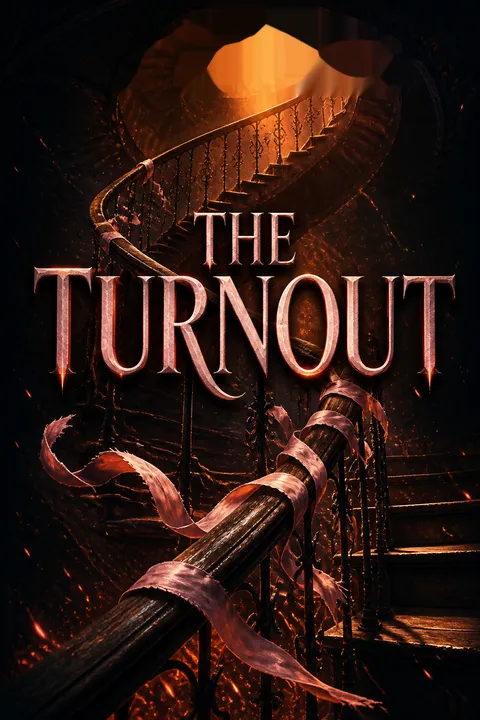
A dangerous family thresholdThe iron staircase links the school’s public studios to the private third floor, first claimed by the sisters’ mother and later occupied by Marie. Dara’s refusal to replace it is rooted in attachment to the family’s history, while Derek sees it as an unsafe obstacle to renovation. Its narrow turns make it a literal passage between the Durants’ controlled public identity and their hidden domestic life. The staircase becomes central to the novel’s questions about access, boundaries, and what a family can keep private. Its physical instability makes the danger of preserving old structures more than metaphorical.
The fires and flood
Damage that invites intrusionThe space-heater fire creates the need for repairs, giving Derek an opening into the studio and the Durants’ daily life. The later flood damages his new work and deepens the school’s financial dependence on him. These disasters keep the renovation behind schedule and provide repeated reasons for people to enter rooms they once kept private. The final house fire has a separate, ordinary cause: a furnace flue blocked by years of debris. Together, the incidents make the family’s environments feel fragile, while preserving uncertainty about how much harm comes from accident, neglect, or human intent.
The rabbit blanket
A charged family relicThe rabbit-fur blanket belongs to the sisters’ mother and appears in their memories of Nutcracker nights, family closeness, and childhood comfort. Its charged texture and warmth make it a sensory emblem of the Durants’ private rituals. As the sisters’ memories become less reliable, the blanket’s meaning shifts: it can suggest shelter, secrecy, and the family’s habit of covering what should be examined. Its appearance among the remains of the house draws the old family story into the final movement of the novel, where survival no longer depends on preserving the rooms or rituals intact.
Download PDF
Download EPUB
.epub digital book format is ideal for reading ebooks on phones, tablets, and e-readers.








