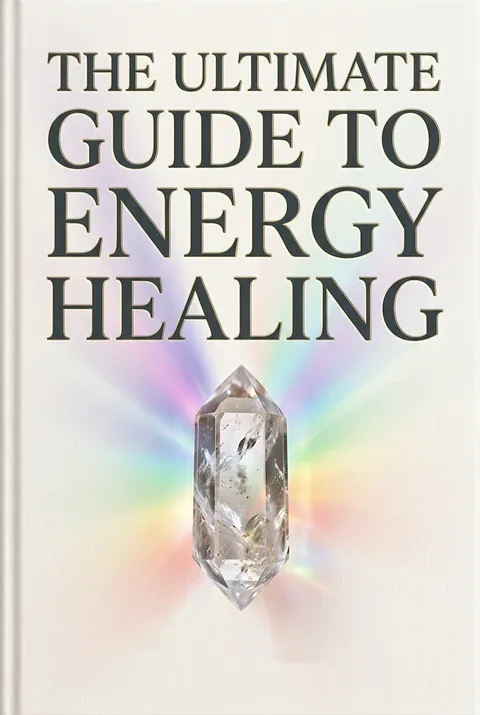


Key Takeaways
Use energy healing as a layered practice of self-observation, not medical treatment.
A personal origin story. Kat Fowler traces her interest in energy healing to a sense that yoga and meditation left something out. She recounts childhood trauma, later panic attacks, agoraphobia, and PTSD, then describes daily meditation and energy practices as central to her recovery over two intense years. Her experience gives the book its emotional rationale: healing, in her view, should include the spiritual as well as the physical and psychological.
Experience is not proof. Fowler's account is testimony, not evidence that energy work caused her recovery or that it treats PTSD. The book itself says its content is not medical advice. Its practices are best approached as spiritual or reflective exercises, alongside appropriate professional care, not instead of it.
The memoir gives readers a reason to take the practices seriously without requiring them to accept every metaphysical explanation. That distinction matters: a ritual can feel meaningful, help someone pay attention to their inner life, or provide a calming routine without proving that invisible fields caused an illness. Fowler's recovery story should be read with compassion and care, not as a prescription or a verdict on treatments that work differently for different people.
Map recurring life patterns onto chakras, but do not treat the map as diagnosis.
A map of the self. In Fowler's model, chakras are subtle-energy centers that process experience. Seven primary centers run from the root, associated with security and survival, to the crown, associated with spiritual connection. The heart sits between the lower centers of earthly life and the upper centers of spiritual perception. The aura is described as a surrounding field with seven layers linked to physical, emotional, mental, and spiritual experience.
Balance means integration. Fowler argues that no center is inherently superior: a person focused on spiritual concerns but disconnected from daily needs may be ungrounded, while someone focused only on practical survival may feel cut off from meaning. The book also links chakras to glands and bodily symptoms, but these are parts of its spiritual framework, not established medical anatomy or a way to diagnose illness.
The model's strongest practical use is as a vocabulary for questions: Where do fear, self-expression, connection, or agency feel difficult? That can make diffuse concerns easier to notice and discuss. Its danger appears when metaphor becomes diagnosis, such as assuming a physical symptom proves a chakra is blocked. The map can guide reflection, but it should not be mistaken for a scan of the body or a substitute for medical assessment.
Regulate your breath before attempting to change your energy.
Start with the body. Fowler recommends preparing through diaphragmatic breathing, in which the belly expands on the inhale and relaxes on the exhale. She pairs it with sama vritti, a breathing practice that gives inhalation and exhalation equal counts, such as four seconds each. A body scan, mindful attention, and sitting quietly build on these exercises. Journaling helps the practitioner notice what changes rather than relying on memory alone.
Make it manageable. Even a few minutes of slow, comfortable breathing can create a pause before more elaborate visualization. The point is not to force a special sensation, but to settle attention and approach practice with less agitation. If meditation or inward focus feels distressing, stop or adapt the exercise; stillness is not automatically calming for every person.
This preparation is among the book's most accessible elements because it begins with something observable: breath, posture, and attention. It also offers a useful test of the larger framework. If a practice reliably helps someone feel steadier, that benefit can matter without proving that subtle energy has moved. The caution about distress is important: a calming technique should remain an option, not become another demand to endure discomfort.
Make preparation repeatable: clear your space, set an intention, and close deliberately.
Create a reliable beginning. Fowler suggests reducing clutter, choosing a place to practice, and adding personally meaningful cues such as a candle, music, flowers, or a crystal. A ritual is a repeated sequence that signals a transition into focused practice. She also recommends stating an intention, such as releasing tension or bringing attention to a particular area. In her account, intention directs energy; in practical terms, it can also clarify what the session is meant to explore.
End with a clear boundary. After deeper exercises, she advises deliberately ending the session, for example by imagining a protective boundary or simply saying the practice is complete. She treats these steps as ways to contain and focus the work, not as a reason to depend on special objects. Breathing and attention alone should be enough to practice.
A repeatable ritual can make an abstract activity easier to enter and easier to end. Its value need not depend on whether a room stores invisible emotional residue: tidying, lowering distractions, and naming a purpose can all focus attention. The useful test is whether a ritual supports presence and choice. If the practitioner comes to believe that only a particular object or ceremony can keep them safe, a supportive cue has become a source of dependence.
Ground first, especially when spiritual practice makes ordinary life feel distant.
Return attention to the present. Fowler's grounding exercise uses an image of a cord extending from the base of the spine into the Earth. Practitioners then imagine drawing a steady, nourishing energy upward through their feet and legs. She describes possible sensations such as warmth, heaviness, or tingling, but also emphasizes that people may feel little at first. For an alternative, she suggests touching the body, naming the date and location, drinking water, doing a simple chore, or going outside.
Use the result as a check-in. The aim is to feel more present and settled before or after visualization. Fowler also makes clear that spiritual exercises can leave someone feeling spacey or clumsy, and advises against driving until fully oriented. Her claims about Earth energy and health should be understood as spiritual beliefs, not proof of a physical treatment.
This section is strongest when grounding means reconnecting with immediate, ordinary cues: the floor, the date, the body, and the next practical task. Those actions offer a useful counterweight to practices that intensify imagination or inward focus. The book's language of Earth energy adds spiritual meaning for those who find it resonant, but the safety value does not depend on accepting that explanation. Orientation is a concrete outcome worth prioritizing.
Use hands and breath as attention tools, not proof of invisible diagnosis.
Practice a simple circuit. Fowler teaches readers to warm their palms, notice sensations between the hands, and imagine energy moving through the body. She calls the palm centers palm chakras. Her central channel, the vertical power current, is an imagined pathway running up the body's center and connecting the main chakras. In one exercise, a practitioner imagines drawing light downward through the crown while breathing in, then directing it outward through the hands while breathing out.
Keep sensations in perspective. The method can be used as a focused body-awareness exercise, with hands placed near areas that need attention. Warmth, pressure, tingling, or no distinct sensation are all possible experiences. Fowler treats such sensations as feedback about energy, but they do not establish a diagnosis or confirm that an unseen force has been transmitted.
The hand exercises turn visualization into an embodied task, which can make attention easier to sustain. They also invite a useful discipline: record what was actually felt, and separate that observation from the explanation attached to it. Tingling may be interpreted spiritually, but sensation alone cannot settle what caused it. That distinction preserves the exercise's contemplative value while discouraging unwarranted certainty.
Clear gently: identify, release, replenish, then leave time to integrate.
Work in stages. Fowler's advanced method, which she calls psychic surgery, is a visualization practice for locating and releasing what she interprets as an energetic block. The sequence is to identify the issue, consider whether one is ready to release it, imagine removing it, and then fill the area with healing light. She compares deeper patterns to knots that should not be forced loose before the surrounding area is prepared. The larger principle is to proceed gradually rather than pursue dramatic experiences.
Allow a recovery interval. Fowler calls the period after a session functional integration, when a person adjusts to the changes they believe the practice has produced. She recommends rest, hydration, and self-care. However, new or worsening physical or psychological symptoms should not automatically be reframed as cleansing or healing. Persistent or serious symptoms warrant qualified medical or mental-health care.
The sequence encourages patience and a sense of completion, rather than treating intensity as evidence of progress. The replenishing step also offers a psychologically coherent ending after an emotional exercise. A key boundary is how discomfort gets interpreted. Calling symptoms an integration phase may reassure someone, but it can also delay care if every setback is absorbed into the spiritual story. The book's recommendation to seek medical advice when symptoms persist is therefore essential.
Use energetic boundaries to support, not replace, real relationship decisions.
Notice persistent entanglement. Fowler describes energy cords as imagined links through which people exchange feelings, thoughts, or attention. She associates them with intense relationships, recurring preoccupation, or a sense of being unable to move on. Her cord-release exercise asks the practitioner to identify the attachment, consider what keeps it in place, and visualize removing it before filling the space with light.
Match inner work with action. Fowler stresses that a symbolic release may not last if behavior continues to reinforce the relationship pattern. A person who wants distance may also need to change contact, communication, or boundaries. Conversely, releasing an imagined cord does not require ending a relationship. This approach is most useful when it helps clarify choices and respect autonomy, rather than implying that another person's hidden energy controls one's life.
The cord image gives a memorable shape to the experience of feeling consumed by a relationship. Its most constructive implication is behavioral: reflect on what maintains the attachment, then make a conscious decision about contact and boundaries. The account becomes less helpful when it treats a cord as an objective force or assumes a mutual invisible agreement. Observable choices and communication provide a firmer basis for relationship decisions than an unseen diagnosis.
Pace the work, record outcomes, and seek qualified care for persistent symptoms.
Build a practice slowly. Fowler advises moving through exercises in sequence, repeating foundational work before attempting advanced techniques, and leaving time between sessions. She suggests beginning with short self-guided sessions, perhaps a few times weekly, and extending them only if they feel manageable. A dedicated journal can track what was practiced, what sensations or emotions arose, and how the person felt before and after.
Keep tools optional. Crystals, sound, color, nature, and movement are presented as supports, not requirements. The book also recommends closing each session and returning attention to the present. Its own disclaimer is important: energy healing is not medical advice or a substitute for professional treatment. Do not use a spiritual explanation to delay care, stop medication, or diagnose yourself.
The book's emphasis on pacing and journaling helps turn an expansive spiritual program into something that can be evaluated over time. A record can reveal whether a practice is consistently calming, neutral, or unsettling, instead of letting vivid moments dominate recall. The same self-monitoring should include practical functioning and symptoms, not only perceived energy. Tools are most useful when they support observation without becoming the authority on what is happening.
Analysis
Fowler's book is best understood as a spiritual practice manual, not a clinical account of energy medicine. Its structure moves from a metaphysical anatomy of chakras and the aura, through preparation and regulation, into increasingly elaborate visualization exercises. The progression gives beginners a sense of sequence and emphasizes a valuable discipline: prepare, practice, close, and reflect. Its personal origin story also conveys why someone might seek a spiritual vocabulary after conventional approaches feel incomplete.
The central editorial challenge is separating practices from explanations. Slow breathing, focused attention, journaling, movement, time outdoors, and deliberate relationship boundaries can be useful behaviors without establishing the existence of chakras, auric layers, past-life trauma, or energy cords as measurable entities. The book frequently treats its spiritual model as causal, including when linking imbalanced energy to illness. Those links should not be presented as medical fact. Chakra systems are meaningful within particular spiritual traditions, but they are not accepted anatomical structures, and energy-healing techniques have not been shown to cure PTSD or physical disease.
This distinction matters especially because Fowler's recovery narrative includes severe trauma and psychiatric symptoms, and describes limited benefit from therapy and EMDR. That is one person's account, not evidence against those treatments. EMDR is an established evidence-based therapy for PTSD, although no treatment works for everyone. Meditation and breath practices may support relaxation for some people, but inward attention can also be difficult or destabilizing, particularly for people with trauma. Readers should adapt or stop exercises that cause distress and work with qualified clinicians for persistent symptoms. A careful reader can still find value here: use the imagery as a reflective language, the rituals as optional structures, and the journaling as a way to observe effects. The strongest adaptation preserves the book's invitation to self-awareness while declining its unsupported medical claims. Spiritual meaning and clinical evidence can coexist, provided neither is mistaken for the other.
Review Summary
The Ultimate Guide to Energy Healing receives overwhelmingly positive reviews, with readers praising its comprehensive and accessible approach to energy healing. Many find it informative for beginners and experienced practitioners alike. Reviewers appreciate the book's clear explanations, practical techniques, and beautiful illustrations. They highlight its value in promoting self-care, spiritual growth, and overall well-being. Some readers suggest that audio guidance would enhance the meditation exercises. Overall, the book is highly recommended for those interested in chakras, auras, and holistic healing practices.
People Also Read






Glossary
Chakras
Subtle-energy centersIn Fowler's spiritual model, chakras are centers that process energetic information and correspond to regions of the body and aspects of experience. The book focuses on seven primary centers, from the root at the base of the spine to the crown at the top of the head. These are spiritual concepts, not recognized anatomical structures or medical diagnostic tools.
Aura
Layered energy-field modelThe aura is described in the book as a field surrounding the body, extending several feet outward in seven layers. Each layer is associated with different kinds of experience, including physical sensation, emotion, thought, and spirituality. Fowler treats its condition as changeable and offers exercises to strengthen or clear it. The aura is not an established medical structure.
Vertical power current
Central imagined energy channelFowler's term for a central line of subtle energy running up the body, slightly in front of the spine. The seven primary chakras are said to connect with it, and exercises use it as a route for imagined energy moving between the crown, heart, hands, and Earth. Yogic traditions have related concepts, but this book's model is not a physical channel.
Functional integration
Post-session adjustment periodA term attributed in the book to Russell Forsyth for the period after energy work when the body is believed to adjust to changes in energy. Fowler says it may involve tiredness, shifts in mood, or sensations that arise after a session, and recommends rest and self-care. Persistent or serious symptoms should not be assumed to be integration and require appropriate professional assessment.
Psychic surgery
Visualization-based block releaseFowler's name for an advanced visualization exercise intended to locate and remove an energetic block. The practitioner identifies the concern, considers readiness to release it, imagines extracting and dissolving it, then imagines filling the area with light. The term does not refer to physical surgery, and the exercise is not a medical procedure or treatment.
Energy cords
Imagined relational energy linksIn Fowler's framework, energy cords are subtle links associated with exchanges of emotion, thought, or attention between people, places, or memories. The book describes them as potentially draining and teaches visualization exercises for releasing them. The concept can serve as a metaphor for relational entanglement, but should not be treated as proof of another person's influence or intent.
Light codes
Spiritual information packetsFowler uses light codes to describe subtle information believed to arrive during connection with the Soul, higher self, guides, or other spiritual sources. She compares them to a compressed archive that takes time to unfold and interpret. The term belongs to the book's metaphysical vocabulary and does not refer to a recognized biological code or measurable data transmission.
Akashic Records
Metaphysical soul-history archiveThe book describes the Akashic Records as an energetic library containing information about beings, timelines, and an individual's Soul journey. Fowler presents access to these records as part of spiritual healing and self-understanding. This is a metaphysical belief, not a documented archive or a validated method for recovering factual memories.
sama vritti
Equal-count breathing practiceA yogic breathing practice in which inhalation and exhalation are given equal durations. Fowler suggests a simple version, breathing in for four counts and out for four counts, for a few minutes. The exercise is used to steady attention and support relaxation before meditation or energy work. Counts should remain comfortable rather than forced.
Download PDF
Download EPUB
.epub digital book format is ideal for reading ebooks on phones, tablets, and e-readers.








