

Key Takeaways
Treat your beliefs as maps, then check them against the living terrain
Your mind edits reality. Neuro-Linguistic Programming (NLP), as this book presents it, studies patterns in thinking, language, and action so people can practice them deliberately. Its starting distinction is that a mental map is a selective representation, not the whole situation. The mind leaves out information, turns individual events into broad rules, and assigns meanings to ambiguous moments. These shortcuts help people navigate life, but they can also mislead: a partner's silence may become supposed proof of rejection.
Check the situation itself. Joe realizes he has treated his interpretation of his girlfriend's behavior as fact. Instead of assuming what she thinks, he decides to ask her. The authors trace NLP's early development to observing therapists Virginia Satir and Milton Erickson, whose effective questions and communication patterns could be described and taught, rather than dismissed as mysterious intuition.
The map metaphor is useful because it makes room for revision without requiring people to deny their experience. Cognitive science likewise treats perception as an active interpretation shaped by expectations, not a neutral recording. The practical test is whether a belief helps predict events and respond well. Still, flexibility should not collapse into the idea that all interpretations are equally sound. A map can be incomplete, but evidence from the world can show that it is also wrong. Asking a partner what they meant is more reliable than endlessly polishing an internal story.
Change a memory's mental form before letting it dictate today's mood
Thoughts have adjustable qualities. The book calls the size, distance, brightness, color, and movement of internal images, along with qualities of inner sounds and bodily feelings, submodalities. It proposes changing these qualities to change how a remembered event feels. For a distressing scene, the exercise is to make its image smaller, farther away, and less vivid, while turning down its sounds. For a pleasant memory, the reverse can intensify the feeling.
Try a modest test. Joe recalls a confrontation and finds that reducing the mental scene's vividness makes it less upsetting. In another exercise, teacher Liz revisits a difficult situation after practicing a positive feeling, and reports experiencing it differently. The aim is not to change what happened, but to loosen the automatic emotional response attached to remembering it.
The useful idea is that recollection is an experience in the present, not merely a file being replayed. Cognitive reappraisal, the deliberate reinterpretation of a situation, is also used in established approaches to emotion regulation. Yet the book's specific image-manipulation exercises should not be mistaken for proven treatment for trauma, severe anxiety, or depression. A person may feel relief, no effect, or greater distress. That variation matters. Low-stakes memories can be a sensible place to experiment, while persistent or overwhelming symptoms call for qualified support rather than pressure to make the image disappear.
Practice a useful emotional state before the hard conversation begins
Build a repeatable cue. Anchoring is the book's term for linking a feeling to a chosen stimulus, such as a gesture, word, or imagined control. Joe brings to mind a joyful boat trip, makes the memory vivid, and pairs its rising excitement with a mental lever. When he later imagines moving that lever, the feeling returns. The point is to practice access to a resourceful state before a moment when it could help.
Your state enters the room. The book argues that mood affects communication: a tense person may make an already difficult exchange harder, while calm or warmth can invite a different response. Joe notices that his work stress may affect the tone of evenings with his girlfriend. The method asks him to change his own readiness first, not to assume he can control someone else's reaction.
An anchor resembles associative learning: a cue can become linked with a practiced response. It also resembles a simple pre-performance routine, where a rehearsed action helps someone enter a desired mode. The book's emphasis on preparing before interaction is particularly practical because emotional regulation is harder once conflict is underway. Mood can influence a group, but the metaphor of feelings spreading should not imply that one person's state determines everyone else's. Context, relationship history, and the other person's needs still matter. A cue is a prompt for practice, not a remote control for people.
Aim desire toward the life you want, not the thing you resist
Give motivation a destination. The book argues that trying not to think about a temptation can keep attention fixed on it. Instead, notice the desire and redirect its energy toward a chosen outcome. Bandler illustrates this with people struggling to stop eating chocolate: rather than making the chocolate the center of a mental battle, he asks them to focus on wanting better health and other valued changes.
Replace, do not merely remove. The same logic applies to Joe. He has been preoccupied with suppressing shyness and frustration in his relationship. He decides to picture the confidence and warmth he wants to bring to social situations instead. This approach treats motivation as usable force whose direction can change, while emphasizing that a person needs a new behavior or aim to fill the space left by an old pattern.
The advice has a useful parallel in research on ironic thought suppression: efforts to banish a thought can keep it mentally active. Redirecting attention toward a positive goal may offer a more workable alternative than repeating a prohibition. But changing the target of desire is not, by itself, a reliable treatment for addiction or compulsive behavior. Practical supports, altered surroundings, and professional care can be necessary. The strongest reading of the book's point is not that wanting the right thing cures every problem, but that attention and motivation need a constructive direction.
Build rapport by adapting carefully, not impersonating the other person
Notice how people communicate. Rapport means a felt sense of connection and mutual understanding. The book recommends building it by subtly matching another person's posture, speaking pace, tone, and language. Representational systems is its term for the sensory forms people use to describe experience, such as images, sounds, and bodily feelings. Someone saying they see a problem differently may be inviting a visual explanation; another person may describe what feels right.
Match to understand, not to perform. Virginia Satir's work with a couple illustrates the idea: she acknowledged the wife's visual way of describing household problems and translated her needs into terms her sound-focused husband could grasp. In a workshop exercise, Joe discovers that deliberately mismatching a partner's mannerisms irritates her, while subtle matching makes conversation easier. The book cautions against copying every movement, which can feel mocking rather than attentive.
The most valuable part of matching is the discipline of noticing another person's pace and preferred language. Research on social mimicry and interpersonal synchrony suggests that subtle coordination can support affiliation, but that does not validate every NLP claim about sensory language. A person's words are clues, not a diagnosis of a fixed visual, auditory, or feeling type. The ethical distinction is important: adaptation should make listening easier, not disguise an attempt to steer someone. Genuine curiosity and responsiveness are more durable than a clever imitation.
Ask precise questions that turn sweeping judgments into workable problems
Find the missing specifics. The Meta Model is a set of conversational questions intended to clarify vague statements, challenge overgeneralizations, and widen a person's view of available choices. Instead of accepting a conclusion such as being bad with people, ask what that means and in which situations it happens.
1. Ask how, what, where, or who specifically.
2. Ask who says, or how the person knows.
3. Test words such as always, everybody, or never.
4. Clarify what a broad term means, or compared with whom.
5. Explore what seems to prevent change and what might happen if change were possible.
The questions change Emily's story. She tells Joe that a bully has made her life unbearable and that she is stupid. He asks who made that judgment and compared with whom. Emily recognizes that the insult comes from the bully, not an objective measure, and decides to talk with her mother about the problem.
The Meta Model has a clear connection to Socratic questioning, in which careful questions help people examine the assumptions beneath a conclusion. It is especially useful when a sweeping belief hides a concrete problem that can be addressed. However, questions can feel like cross-examination if the listener has not first established trust. Emily's story also shows why specificity is not the same as minimizing: a bully's behavior is a real problem, even if the bully's judgment is not reliable. Good questioning should clarify both the person's interpretation and the facts that require action.
Treat personality labels as learned patterns, not permanent identities
Describe the behavior, not a life sentence. The book argues that many habits, skills, beliefs, and fears are learned, and therefore may be changed. Joe's claim that he is not a people person begins to look less like a permanent identity and more like discomfort in particular social situations. Naming the specific moments gives him something to practice, such as speaking with customers or approaching unfamiliar colleagues.
Study what works. A founding idea of NLP in this account is to observe people who perform a skill well, identify the patterns behind their actions, and teach those patterns to others. Bandler describes Satir and Erickson as practitioners whose methods could be examined instead of attributed to innate gifts. This framing turns self-improvement from a search for a hidden, fixed self into a process of learning and trying different responses.
Replacing identity labels with descriptions of behavior can make change more concrete. It also fits skill-learning approaches, which break a broad capacity into actions that can be practiced and adjusted. The caution is that not every constraint is merely a learned habit. Temperament, disability, health, resources, and social conditions can shape what is possible and what support is needed. The book's most defensible claim is that past behavior does not prove future incapacity. Its more absolute language about becoming whoever one chooses should be read as an invitation to agency, not a denial of real limits.
Build a future rehearsal from five good memories and one next step
Use the past as material. In a guided exercise, Caroline, an aspiring actor, imagines looking down on a timeline of her past and future. Rather than treating failed auditions as proof she will fail again, she extracts useful lessons from them and imagines carrying those lessons forward. She then draws on a powerful positive memory and pictures a more confident response to future auditions.
Make the rehearsal practical. The workshop asks participants to connect several positive memories, then add one specific action they will take after the session. Joe later applies the ideas at home. When his girlfriend arrives upset about an agent's criticism, he resists making the moment about his own fears, listens, and responds to what matters to her. The book's narrative closes on application: a technique earns value when it changes an actual conversation.
Future simulation can help people prepare for situations that otherwise feel abstract, and grounding a desired response in a remembered success gives the rehearsal emotional detail. The useful addition is the next step: imagery without a concrete action can become comforting fantasy. Joe's exchange with his girlfriend is a strong test because he uses questions and attention rather than treating a technique as a magic phrase. The story is illustrative, not outcome data, and the characters are identified as fictional. Readers can still borrow the practice while judging its value by real-world results.
Analysis
The book is best understood as a workshop manual staged as a story. Joe arrives with relationship anxiety and social unease, then encounters a set of tools for inspecting his thoughts, shifting emotional responses, and communicating with more care. This narrative gives abstract concepts a human test: the techniques matter when Joe stops assuming what his girlfriend thinks, helps Emily name a bullying problem, and approaches colleagues with greater attention. The recurring lesson is that behavior can be observed, described, practiced, and revised.
Its strongest practical contributions are the distinction between an event and the interpretation attached to it, the insistence on clarifying vague claims, and the responsibility to adjust communication when it fails. These ideas have recognizable neighbors in cognitive reappraisal, Socratic questioning, and skills training. The book's distinctive emphasis is on the sensory construction of inner experience: changing the vividness of a mental image or the qualities of inner speech is presented as a direct lever on feeling.
That confidence requires careful boundaries. Seminar demonstrations and fictionalized participant stories make techniques memorable, but they do not establish that a brief exercise reliably resolves phobias, depression, or entrenched distress. The book offers little evidence for evaluating how often these methods work, for whom, or compared with other approaches. Its broad claims about rapid change should therefore be treated as encouragement and hypotheses, not clinical guarantees. The advice to practice on ordinary worries is different from attempting to process severe trauma alone.
The most durable reading is neither uncritical acceptance nor dismissal. Treat the techniques as experiments: identify a specific situation, try a response, and observe what changes. Keep the author's useful bias toward flexibility, but preserve reality checks, evidence, and professional support when problems are serious. Joe's progress is ultimately less about controlling his mind than about becoming less certain of his first interpretation and more responsive to the people in front of him.
Review Summary
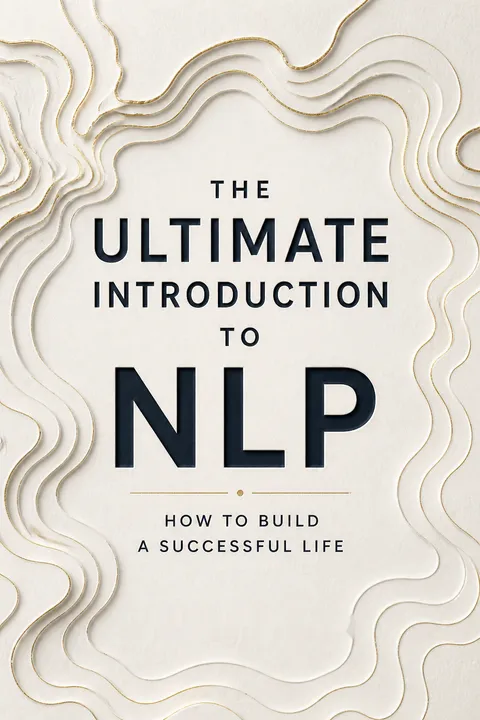
The Ultimate Introduction to NLP receives mixed reviews. Many praise its accessible introduction to NLP concepts through storytelling, finding it engaging and informative. Readers appreciate the practical techniques and easy-to-understand explanations. However, some criticize the writing style as simplistic or cheesy, and question the scientific validity of NLP. Critics also note the book's focus on Bandler's seminars rather than comprehensive NLP coverage. Overall, it's viewed as a good starting point for NLP beginners, but may not satisfy those seeking in-depth analysis or scientific rigor.
People Also Read









Glossary
Neuro-Linguistic Programming
Patterns for thought and communicationA field that the book describes as studying how people organize thought, language, feeling, and behavior, then identifying patterns that can be practiced or changed. Its early practitioners observed skilled therapists and communicators to make their methods teachable. The book presents NLP as a practical approach to personal change, not simply a theory to discuss.
The map is not the territory
A representation is not realityThe principle that a person's understanding of a situation is a selective mental representation, rather than the situation in full. The book says people delete details, generalize from experiences, and assign meanings to events. Recognizing these processes can help someone question an assumption, seek missing information, and consider another person's perspective.
Submodalities
Qualities of inner experienceThe sensory qualities of mental images, sounds, and bodily feelings. Examples include an image's size, distance, brightness, color, or movement, and an inner voice's volume or tone. The book proposes that deliberately changing these qualities can change how a memory or anticipated event feels, and offers exercises to make images less or more vivid.
Anchoring
A cue linked to a feelingA technique for associating an emotional state with a chosen stimulus, such as a gesture, word, or imagined object. In the book's exercise, a participant intensifies a positive memory while moving an imagined lever, then uses that lever as a cue to bring the feeling back. The method depends on creating and rehearsing the association.
Representational systems
Sensory forms of thoughtThe sensory modes through which people represent and describe experience, especially visual images, sounds, and bodily feelings. The book treats sensory words as clues to how someone is thinking in a particular conversation. It recommends responding in language that fits those clues, while noting that people are not permanently one sensory type.
Rapport
A felt sense of connectionA sense of mutual ease and understanding between people. The book describes rapport as something people naturally build through verbal and nonverbal coordination, including posture, voice, pace, and word choice. Its exercises teach deliberate, subtle adaptation as a way to improve communication, while distinguishing this from copying every movement.
Pacing and leading
Match, then invite changeA communication approach in which a person first adapts to another's current manner or state, then gradually shifts their own behavior in a direction they hope the other person may follow. The book illustrates this with matching a person's posture or breathing before becoming more open. It presents the shift as subtle and dependent on rapport.
Meta Model
Questions that clarify languageA set of questions developed in early NLP to clarify vague statements, identify deleted information, challenge broad generalizations, and examine conclusions. Questions such as who specifically, how do you know, or compared with whom can turn an overwhelming claim into a more precise issue. The book recommends using the questions conversationally and establishing rapport first.
Timeline
A mental layout of timeA person's imagined spatial arrangement of past, present, and future. In the book's exercise, participants notice where they picture events in time and use that arrangement to review past experiences and imagine future ones. The technique asks them to draw useful lessons from setbacks and rehearse more resourceful feelings and actions.
FAQ
What's "The Ultimate Introduction to NLP" about?
- Overview: "The Ultimate Introduction to NLP" by Richard Bandler is a comprehensive guide to understanding and applying Neuro-Linguistic Programming (NLP) in everyday life.
- Story Format: The book is structured as a narrative following a character named Joe, who attends an NLP workshop led by Dr. Richard Bandler, allowing readers to learn through his experiences.
- Core Message: It emphasizes the power of NLP techniques to change one's thinking, improve communication, and create a better life.
- Practical Application: The book provides practical exercises and techniques that readers can use to take control of their thoughts and emotions.
Why should I read "The Ultimate Introduction to NLP"?
- Personal Development: The book offers tools to help you take control of your life by changing your thinking patterns and emotional responses.
- Improved Communication: It teaches how to become a masterful communicator, which can enhance personal and professional relationships.
- Practical Techniques: The book includes exercises and techniques that are easy to apply in real-life situations, making it a practical guide for self-improvement.
- Inspirational Stories: Through Joe's journey, readers can see the transformative power of NLP in action, providing motivation and inspiration.
What are the key takeaways of "The Ultimate Introduction to NLP"?
- Map vs. Territory: Your understanding of the world is based on your internal representation (map), not the world itself (territory).
- State Control: You can change your emotional state by altering your internal representations, leading to better outcomes.
- Rapport Building: Matching and mirroring others' communication styles can create a sense of connection and improve interactions.
- Meta-Model Questions: These questions help clarify and specify information, opening up new possibilities for change.
How does "The Ultimate Introduction to NLP" explain the concept of the "map is not the territory"?
- Concept Explanation: The book explains that our perception of reality is a map created by our brain, which is not the same as the actual territory (reality).
- Perception Filters: We delete, distort, and generalize information to create our maps, which can lead to misunderstandings and limitations.
- Expanding Maps: By expanding our maps and considering different perspectives, we gain more freedom and flexibility in our thoughts and actions.
- Practical Application: The book encourages readers to regularly update their maps to ensure they align with reality and to avoid unnecessary constraints.
What is the "state control" technique in "The Ultimate Introduction to NLP"?
- State Control: The book teaches that you can control your emotional state by changing your internal representations, such as images, sounds, and feelings.
- Anchoring Technique: It introduces the concept of anchoring, where you associate a positive feeling with a specific trigger, allowing you to access that state when needed.
- Practical Exercise: Readers are guided through exercises to amplify positive feelings and eliminate negative ones by manipulating their internal representations.
- Benefits: By mastering state control, you can improve your mood, enhance your performance, and influence others positively.
How does "The Ultimate Introduction to NLP" teach rapport building?
- Rapport Definition: Rapport is a sense of connection and understanding between people, which can be consciously created using NLP techniques.
- Matching and Mirroring: The book explains how to subtly match and mirror another person's body language, tone of voice, and language patterns to build rapport.
- Pacing and Leading: Once rapport is established, you can lead the other person into a more positive state or direction.
- Practical Application: Exercises in the book help readers practice these techniques to improve their personal and professional relationships.
What are Meta-Model Questions in "The Ultimate Introduction to NLP"?
- Purpose: Meta-Model Questions are designed to specify and clarify information, helping to uncover the underlying structure of a person's thoughts and beliefs.
- Types of Questions: The book provides examples of questions like "What do you mean by that?" and "How do you know?" to challenge generalizations and assumptions.
- Belief Change: By questioning beliefs, you can create doubt and open up possibilities for change and new perspectives.
- Practical Use: These questions are useful in therapy, coaching, and everyday conversations to facilitate deeper understanding and problem-solving.
What is the significance of "state" in "The Ultimate Introduction to NLP"?
- State Definition: A "state" refers to your emotional and physiological condition at any given moment, which influences your behavior and interactions.
- State Management: The book emphasizes the importance of managing your state to achieve desired outcomes and improve communication.
- Contagious States: Your state can affect others, so being in a positive state can lead to more positive interactions and relationships.
- Practical Techniques: Techniques like anchoring and submodality changes are taught to help readers manage their states effectively.
How does "The Ultimate Introduction to NLP" address limiting beliefs?
- Belief Identification: The book helps readers identify limiting beliefs that hold them back by using Meta-Model Questions to challenge and clarify these beliefs.
- Belief Change: It provides strategies to replace limiting beliefs with more empowering ones by expanding the individual's map of the world.
- Practical Exercises: Readers are guided through exercises to question and change their beliefs, leading to greater personal freedom and potential.
- Empowerment: By changing beliefs, readers can overcome obstacles and achieve their goals more effectively.
What are some of the best quotes from "The Ultimate Introduction to NLP" and what do they mean?
- "The map is not the territory." This quote emphasizes that our perception of reality is not reality itself, highlighting the importance of updating our mental maps.
- "You can be whoever you choose to be." It underscores the power of choice and change, encouraging readers to take control of their identity and future.
- "If you go into the right state, you can do just about anything." This quote highlights the importance of state management in achieving success and influencing others.
- "The only time you ever lose is when you stop." It encourages persistence and resilience, reminding readers that continuous effort leads to success.
How does "The Ultimate Introduction to NLP" suggest handling negative emotions?
- Submodality Changes: The book teaches how to change the qualities of negative memories (e.g., size, color, brightness) to reduce their emotional impact.
- Anchoring Positive States: By anchoring positive feelings, you can access them when needed to counteract negative emotions.
- White-Out Technique: It introduces a technique to "white out" negative images, making them less vivid and impactful.
- Focus on Solutions: Instead of dwelling on problems, the book encourages focusing on solutions and positive outcomes.
What practical exercises does "The Ultimate Introduction to NLP" include?
- Anchoring Exercise: Readers learn to associate positive feelings with specific triggers to access those states on demand.
- Submodality Exercise: The book guides readers in changing the qualities of their internal representations to alter their emotional responses.
- Rapport Building Exercise: It includes exercises to practice matching and mirroring others to build rapport and improve communication.
- Meta-Model Practice: Readers are encouraged to use Meta-Model Questions to clarify and challenge beliefs, enhancing understanding and problem-solving.
About the Author
Other books by Richard Bandler








Download PDF
Download EPUB
.epub digital book format is ideal for reading ebooks on phones, tablets, and e-readers.








