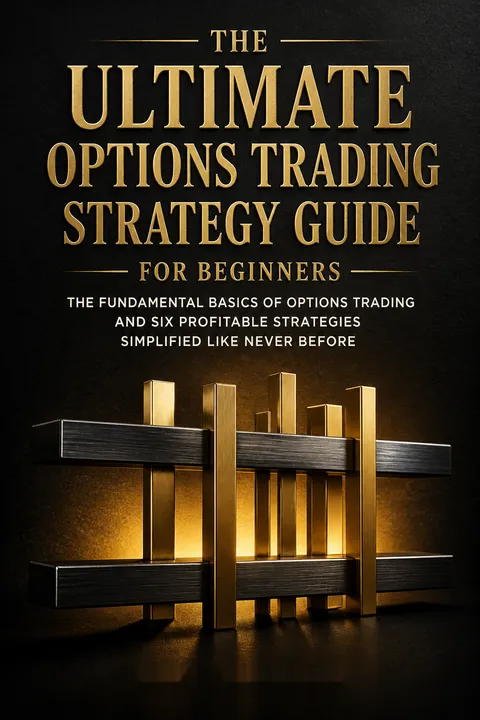


Key Takeaways
Use options to define a loss before you speculate on direction.
A crash exposed the cost. In January 2008, as the subprime crisis rattled markets, India’s benchmark index fell 10% in minutes and trading was suspended. The author and his cousin had entered the market with unhedged options and futures, buoyed by earlier wins. They eventually lost hundreds of thousands of rupees; his cousin lost more than four times as much as he did. The lesson was not that markets can be forecast reliably, but that a position should be built to survive being wrong.
Structure matters more than confidence. The book’s central promise is to show beginners how options can be combined into trades with known maximum gains and losses. That is risk management, not a guarantee of profit. Even a carefully bounded position can lose money, and the possible loss must be affordable before the trade is placed.
The 2008 story makes a useful distinction between being right about a market and being resilient to being wrong. In risk management, the first question is often not, “What is most likely?” but, “What happens if the unlikely event occurs?” Options can help make that second question concrete. Still, a hedge is not a force field: gaps, execution problems, and changing market conditions can complicate the planned payoff. The strongest lesson is therefore procedural. Calculate the downside, understand the protection, and do not treat a favorable forecast as a substitute for a survivable position.
Treat every option as a dated contract, not a cheap stock substitute.
Rights have a price. An option gives its buyer the right, but not the obligation, to buy or sell an underlying asset at a set strike price by a stated expiry. A call gives the right to buy; a put gives the right to sell. The buyer pays a premium for that right. A contract also covers a specified lot size, so the total premium is the quoted premium multiplied by the number of units covered.
A simple model clarifies the trade. In the book’s cattle-market analogy, a buyer pays a farmer for the right to buy cows at an agreed price within 30 days. If prices rise, the right may become valuable; if they do not, the buyer can walk away, losing the premium. A put works in reverse: it gives its buyer the right to sell at the agreed price. Exchange rules determine when exercise is allowed, and expiry limits how long the contract lasts.
The contract analogy is valuable because it separates ownership from exposure. An option buyer is purchasing a conditional right, not a fractional share of the underlying asset. That distinction helps explain both the attraction of options and their trap: a small upfront payment can control a much larger position, but the contract can expire worthless. The analogy also has limits. Real options are priced continuously, and closing a position usually means trading the contract itself rather than exchanging physical goods. The strike, expiry, and premium are the minimum facts needed to understand what is actually being bought.
Track time and volatility, because direction alone cannot explain option prices.
Premiums have several drivers. The book introduces the Options Greeks, measures used to describe how an option’s price may respond to market changes. Delta estimates the premium’s change for a one-unit move in the underlying and is sometimes used as a rough, imperfect proxy for the chance of finishing in the money. Gamma measures how quickly delta changes. Vega tracks sensitivity to implied volatility, while rho describes sensitivity to interest rates.
Time works against buyers. Theta measures time-decay, the loss of an option’s time value as expiry approaches. A call can lose value even while its underlying rises if the move is too small to offset time-decay or a fall in implied volatility. The book’s example of a $510 call on a stock near $500 shows how an option with no intrinsic value can still carry a premium because time remains.
The Greeks turn a vague market intuition into a set of sensitivities. Their value is diagnostic: a trader can ask whether a position depends mainly on a price move, a volatility change, or enough time passing. This resembles engineering, where a system is tested against several inputs rather than a single ideal condition. But the measures are estimates, not independent controls. Delta changes, volatility can move abruptly, and models rely on assumptions. Treating a Greek as a precise prediction, especially delta as an exact probability, risks replacing uncertainty with false precision.
Pair bought and written options to set a payoff boundary in advance.
A spread combines positions. In a spread, a trader buys one option and sells another on the same underlying with the same expiry, using different strike prices. The purchased option helps limit the risk created by the written option. A credit spread brings in more premium than it pays out when opened; a debit spread costs more to enter than it receives. In either case, the pairing can establish maximum potential profit and loss before the trade begins.
Match the trade to the view. The book presents two credit spreads for directional views: a Bull Put Spread, used when the trader expects a stock to stay above a support area or rise, and a Bear Call Spread, used when the trader expects it to remain below resistance or fall. The two debit spreads, Bull Call and Bear Put, are designed for moderate upward and downward moves. All require a view about price, time, and the chosen strikes.
Defined payoffs are a major advantage because they make a position easier to audit before entry. The spread is not simply “safer” by virtue of having two legs; it exchanges one kind of exposure for another, and the protection works only if the legs are correctly sized and aligned. This is a useful example of financial engineering: a risk is reshaped, not erased. The book’s strategy labels help beginners organize decisions, but the labels should not become shortcuts. A trader still needs to calculate the payoff, including costs, rather than assume the name guarantees a particular result.
Sell range-bound risk only when the capped reward justifies the tail loss.
Credit spreads collect premium. In the Bull Put Spread, the trader sells an out-of-the-money put and buys a lower-strike put as protection. In the Bear Call Spread, the trader sells an out-of-the-money call and buys a higher-strike call. Both receive a net credit, and time-decay can help if the underlying stays on the favorable side of the short strike. The bought option limits the worst-case loss, but that loss can still exceed the maximum gain.
The Iron Condor combines both sides. It pairs a Bull Put Spread with a Bear Call Spread, seeking to profit if the underlying stays within a range. The book’s Nifty example earned a modest profit despite a roughly 250-point rise, as time-decay helped the position. Yet its stated maximum possible loss was several times its maximum possible profit. The strategy’s probability of a win does not tell the whole story; the size and frequency of losses matter too.
Credit strategies resemble insurance underwriting: many small premiums can be collected, while an adverse move may produce a much larger loss. That helps explain why a high percentage of winning trades does not automatically imply a profitable approach. The relevant question is whether the average gain, average loss, and frequency of each outcome combine favorably after costs. The Iron Condor is appealing when a market appears range-bound, but range estimates are fragile around major news or volatility shifts. Its defined maximum loss is useful only if the trader can tolerate that loss and does not mistake a quiet period for a permanent condition.
Use debit spreads when direction matters, then demand movement before time runs out.
Debit spreads pay for a bounded view. A Bull Call Spread buys a lower-strike call and sells a higher-strike call, aiming to profit from a moderate rise. A Bear Put Spread buys a higher-strike put and sells a lower-strike put, aiming to profit from a moderate decline. The premium paid to open the position is the maximum loss. The short option caps the upside, but also reduces the entry cost compared with buying the long option alone.
Stagnation can still hurt. Unlike credit spreads, these positions generally lose value as time passes if the expected move does not arrive. In the book’s Tech Mahindra example, the stock had fallen sharply after disappointing earnings, then rebounded; the spread was closed after six days rather than held in hope of reaching its maximum payoff. A trader must consider how far and how quickly the underlying needs to move, not merely whether the directional view sounds plausible.
A debit spread is a way to pay a known amount for a directional thesis while selling away some upside to lower the cost. That can make the trade’s risk easier to budget than an unprotected position. The trade-off is a deadline: the underlying must move sufficiently before the option’s remaining time-value drains away. This is a useful reminder that forecasts need both direction and timing. A sound long-term belief about a company can still be a poor short-term options trade if the market takes too long to agree.
Buy both directions only when a large move can outrun premium decay.
Straddles and strangles pay for movement. A Long Straddle buys a call and a put at the same strike and expiry. A Long Strangle buys both options at different, usually out-of-the-money, strikes. Either can benefit from a large move up or down without requiring the trader to predict the direction. The buyer’s maximum loss is the combined premium; the underlying must move far enough to cover that cost before the position becomes profitable.
The event must move the market. Before the 2016 US presidential election, the book’s trader bought a Nifty strangle because the result could prompt a sharp reaction. After Donald Trump’s unexpected victory, the index fell more than 300 points; the put gained enough to outweigh the call’s decline, and the position was closed within three days. The reversal the next day illustrates why event trades can lose value quickly through time-decay and falling implied volatility.
These positions are wagers on the size and timing of uncertainty, not just on whether news will be dramatic. Markets often price anticipated events in advance, so an event can surprise the public without producing a sufficiently large move relative to the options’ premiums. The election example makes the payoff vivid, but a single successful trade cannot establish a repeatable edge. A disciplined evaluation asks how large the move must be, what the market already expects, and how much of the premium is attributable to elevated volatility.
Set loss limits before entry; a likely win can still be a bad bet.
Control the size of failure. The author warns against unhedged positions, especially naked option selling, where losses can be extremely large or theoretically unlimited. He recommends limiting the risk on any one trade to no more than 4-5% of available capital, cutting losing positions rather than waiting for a rescue, and defining exit points before entering. Buying an option caps the buyer’s loss at the premium, but that does not make repeated speculative purchases harmless.
Costs and volatility can change the result. High implied volatility can inflate option premiums; if volatility falls, an option may lose value even when the underlying moves in the expected direction. Time-decay also disadvantages option buyers. Brokerage fees and other trading costs accumulate, particularly in strategies with several legs. Calculate the entire position’s worst-case loss and realistic costs, not just the margin blocked by a broker or the most attractive possible payoff.
This is where the book’s practical advice is strongest: establish the exit and the acceptable loss before a trade becomes emotionally charged. Behavioral finance describes how people often hold losing positions too long to avoid admitting a mistake, while eagerly closing winners to lock in relief. A written plan can counter that asymmetry. Still, a fixed percentage is a guideline, not a universal law. Position sizing should reflect the trader’s circumstances, portfolio concentration, and the possibility that real execution differs from a payoff diagram.
Paper-trade a small watchlist before risking real capital.
Practice the process first. The book recommends spending two to three months paper-trading before placing live options trades. Paper trading means recording hypothetical entries and exits without committing real money. It suggests focusing on eight to ten stocks or indexes, observing their price behavior and volatility, and testing strategies against different market conditions. The goal is not to prove that a strategy can win once, but to learn how its payoff behaves and where judgment tends to fail.
Review every position. The author’s accompanying workbook is designed to calculate potential profit and loss and display payoff diagrams for the six strategies. A trader can use those tools to check maximum gain, maximum loss, and break-even levels before entry. After closing a simulated or live trade, record what happened and why. Compare the original thesis with the result, including whether the exit plan was followed and whether costs or volatility changed the outcome.
Simulation is a low-cost way to learn mechanics, build a record, and discover whether a strategy is understandable under pressure. It also guards against the common error of confusing a profitable outcome with a good decision. Its limitation is emotional realism: a hypothetical loss does not feel like a real one, and paper trades may not reflect the price or liquidity available in live markets. A useful practice record therefore tracks not only results, but also assumptions, execution prices, and rule-following. The aim is preparation, not certainty.
Analysis
This 2017 book is a beginner’s manual that moves from options vocabulary to pricing sensitivities, common mistakes, and six example strategies. Its narrative frame is personal: the author’s losses during the 2008 crash motivate a shift from naked speculation toward trades with explicit limits. The most durable contribution is that shift in attention. Rather than treating a market forecast as the whole trade, the reader is asked to consider the contract’s expiry, premium, volatility exposure, and worst-case payoff.
The strategies are presented as practical templates. Credit spreads and Iron Condors seek premium when an underlying stays within a favorable range; debit spreads seek a directional move; straddles and strangles seek a large move without choosing its direction. This taxonomy is accessible, but it can make trading appear more mechanical than it is. Strike selection, volatility pricing, liquidity, execution, and transaction costs all influence results. A payoff diagram describes outcomes at expiry under specified assumptions, not the probability that those outcomes will occur.
The book’s strongest claims need careful qualification. A high probability of profit does not necessarily produce positive expected returns when losses are larger than gains. The sample trades from Indian markets in 2016 and 2017 are illustrations, not evidence that the strategies reliably generate steady income. In addition, return calculations that include broker-blocked margin can be hard to compare with returns on capital genuinely at risk or deployed elsewhere. The author’s warnings about hedging, position size, and rehearsal partly counterbalance the optimistic language about consistency.
Readers should treat the guide as an introductory map, not a current trading system or personalized financial advice. Its value lies in teaching the reader to ask what a position can lose, what conditions make it profitable, and how time and volatility affect the result. That discipline is more transferable than any single named strategy.
Review Summary
The Ultimate Options Trading Strategy Guide for Beginners receives positive reviews for its clear explanations of options trading basics and strategies. Readers appreciate the author's use of simple language, practical examples, and real-world scenarios. Many find it valuable for novice traders, praising its comprehensive coverage of fundamental concepts. Some reviewers note that while it's excellent for beginners, experienced traders may find it too basic. The book is commended for its systematic approach, accessible content, and ability to demystify complex topics in options trading.
People Also Read








Glossary
Options Greeks
Option price sensitivitiesA group of measures describing how an option’s price may respond to changes in its underlying asset, time, volatility, or interest rates. The book covers delta, gamma, vega, theta, and rho. They help explain price sensitivity, but their values are estimates that change with market conditions rather than guarantees of how an option will behave.
Implied volatility
Market-priced expected volatilityA volatility estimate implied by an option’s current market premium and a pricing model. It reflects the market’s near-term pricing of uncertainty, not a promise that the underlying will move by a particular amount. Higher implied volatility generally raises option premiums; a decline can reduce premiums even when the underlying moves in the buyer’s expected direction.
Time-decay
Loss of time valueThe erosion of an option’s time value as its expiry approaches. If other pricing factors stay unchanged, less time remaining generally means less opportunity for the underlying to move favorably. Time-decay tends to burden option buyers and benefit option sellers, although other changes, especially in price and implied volatility, can outweigh it.
Credit spread
Spread opened for net premiumA paired options position that receives more premium from the option sold than it pays for the option bought. The purchased option limits the potential loss from the written option when the legs are matched as intended. The position has a capped maximum gain and loss, and often benefits from time-decay if the underlying remains in a favorable range.
Debit spread
Spread opened for net costA paired options position that costs more to buy than it receives from the option sold. The net debit is generally the maximum amount at risk, while the sold option reduces the entry cost and caps potential profit. A debit spread usually needs a sufficiently large move in the expected direction before expiry to overcome its cost and time-decay.
Bull Put Spread
Bullish put credit spreadA credit spread created by selling a put option and buying a lower-strike put on the same underlying with the same expiry. It is used when the trader expects the underlying to remain above the short put’s strike or rise. The premium received is the maximum potential gain, while the bought put limits the maximum loss.
Bear Call Spread
Bearish call credit spreadA credit spread created by selling a call option and buying a higher-strike call on the same underlying with the same expiry. It is used when the trader expects the underlying to remain below the short call’s strike or decline. The net premium is the maximum potential gain, and the long call limits the maximum loss.
Iron Condor
Two-sided range credit spreadA four-option position combining a put credit spread below the underlying price and a call credit spread above it, with the same expiry. It aims to profit if the underlying remains within the range between the short strikes. The premium received is limited, and the protective long options cap losses if the underlying moves sharply beyond either side.
Bull Call Spread
Bullish call debit spreadA debit spread created by buying a call and selling a higher-strike call on the same underlying with the same expiry. It aims to profit from a moderate rise in the underlying. The net debit is the maximum potential loss, while the difference between the strikes, less the debit, sets the maximum potential gain.
Bear Put Spread
Bearish put debit spreadA debit spread created by buying a put and selling a lower-strike put on the same underlying with the same expiry. It aims to profit from a moderate decline. The net debit is the maximum potential loss; the lower-strike short put reduces the cost of entry and caps the maximum potential gain.
Long Straddle
Long call and put togetherA position that buys a call and a put on the same underlying, with the same strike and expiry. It can profit from a sufficiently large move in either direction, without requiring a directional forecast. The total premium paid is the maximum loss, and the underlying must move far enough to offset that cost.
Long Strangle
Out-of-money call and putA position that buys an out-of-the-money call and an out-of-the-money put on the same underlying with the same expiry. It seeks a large move in either direction. The combined premium is at risk, and the required move is generally larger than for a comparable straddle because both options begin farther from the underlying price.
FAQ
What is "The Ultimate Options Trading Strategy Guide for Beginners" by Roji Abraham about?
- Beginner-Friendly Options Guide: The book is a comprehensive, jargon-free introduction to options trading, designed specifically for beginners.
- Step-by-Step Learning: It covers the fundamental basics of options, explains key terms, and walks readers through real-world examples and analogies.
- Strategy-Focused Content: The core of the book is dedicated to six profitable options trading strategies, each explained with case studies.
- Practical Tools and Resources: It includes downloadable worksheets, third-party resources, and advice on avoiding common pitfalls in options trading.
Why should I read "The Ultimate Options Trading Strategy Guide for Beginners" by Roji Abraham?
- Avoid Costly Mistakes: The author shares personal experiences and common errors to help readers avoid losing money due to lack of knowledge.
- Clear, Simple Explanations: Concepts are broken down into layman’s terms, making complex topics accessible to those without a financial background.
- Actionable Strategies: Readers learn not just theory, but practical, step-by-step strategies that can be applied in real trading scenarios.
- Focus on Risk Management: The book emphasizes hedging, limiting risk, and disciplined trading—crucial for long-term success.
What are the key takeaways from "The Ultimate Options Trading Strategy Guide for Beginners"?
- Options Trading Fundamentals: Understanding what options are, their types (calls and puts), and essential trading terms.
- Importance of Hedging: Always trade with hedged positions to protect against unexpected market moves.
- Six Core Strategies: Mastery of six proven options strategies, including both credit and debit spreads, and when to use each.
- Risk and Money Management: Never risk more than 5% of your capital on a single trade, and always define exit points for both profits and losses.
How does Roji Abraham explain stock options and their basic terms in "The Ultimate Options Trading Strategy Guide for Beginners"?
- Relatable Analogies: The book uses real-world analogies (like cattle trading) to explain how call and put options work.
- Key Terms Defined: Terms such as strike price, lot size, premium, and expiry date are clearly defined with practical examples.
- Types of Options: The difference between call and put options, as well as European vs. American style expiries, is explained.
- Market Relevance: The book contextualizes options within actual stock exchanges, making the concepts relevant for global readers.
What are the six profitable options trading strategies taught in "The Ultimate Options Trading Strategy Guide for Beginners"?
- Bull Put Spread: A credit spread strategy for when a stock is unlikely to fall further, profiting from time-decay.
- Bear Call Spread: A credit spread for when a stock is unlikely to rise, also leveraging time-decay.
- Iron Condor: A non-directional, high-probability credit spread that profits if the underlying stays within a range.
- Bull Call Spread: A debit spread for moderately bullish outlooks, offering higher reward-to-risk ratios.
- Bear Put Spread: A debit spread for moderately bearish outlooks, with capped risk and reward.
- Long Straddle/Strangle: Unlimited profit, limited risk strategies for highly volatile situations, profiting from large moves in either direction.
How does "The Ultimate Options Trading Strategy Guide for Beginners" by Roji Abraham help readers avoid common pitfalls in options trading?
- No Naked Options: Advises against buying or selling naked options without hedging, due to high risk.
- Time-Decay Awareness: Emphasizes the impact of time-decay on option premiums, especially for buyers.
- Volatility Traps: Warns against buying options during periods of high implied volatility, which can lead to overpaying.
- Discipline in Losses: Stresses the importance of cutting losses early and not overexposing capital to a single trade.
- Brokerage Costs: Recommends using low-cost brokers to maximize long-term profitability.
What are the "Options Greeks" and how are they explained in "The Ultimate Options Trading Strategy Guide for Beginners"?
- Delta: Measures how much an option’s price changes with the underlying asset’s price movement; also used as a probability indicator.
- Gamma: Indicates how much delta will change as the underlying price changes, highlighting risk and reward potential.
- Vega: Shows how sensitive an option’s price is to changes in volatility, crucial for understanding premium pricing.
- Theta: Represents time-decay, or how much value an option loses each day as expiration approaches.
- Rho: Measures sensitivity to interest rate changes, though it’s less relevant for short-term trades.
How does "The Ultimate Options Trading Strategy Guide for Beginners" by Roji Abraham use real-world examples and case studies?
- Analogies for Clarity: Uses stories like Bob’s call option trade and Jacob’s put option trade to make abstract concepts tangible.
- Detailed Case Studies: Each strategy is accompanied by a real trade example, including entry/exit points, rationale, and outcomes.
- Profit/Loss Analysis: Case studies include payoff diagrams and ROI calculations to illustrate risk and reward.
- Global Relevance: While examples are often from the Indian market, the principles and strategies are universally applicable.
What is the importance of hedging and risk management in "The Ultimate Options Trading Strategy Guide for Beginners"?
- Hedging as Protection: The book insists on always using hedged positions to avoid catastrophic losses from unexpected market events.
- Defined Risk Exposure: Encourages limiting risk to no more than 5% of total capital per trade.
- Spread-Based Strategies: Promotes spreads (combining buying and selling options) to cap both potential losses and gains.
- Exit Discipline: Advises setting clear exit points for both profits and losses before entering a trade.
What resources and tools does Roji Abraham recommend in "The Ultimate Options Trading Strategy Guide for Beginners"?
- Downloadable Workbooks: Provides Excel worksheets for each strategy to help plan and analyze trades.
- Online Courses: Recommends specific Udemy courses for further learning.
- Top Trading Blogs: Suggests reputable blogs like Option Pit and Sheridan Mentoring for ongoing education.
- Virtual Trading Platforms: Encourages practice on simulators like Investopedia Stock Simulator before risking real money.
What are the best quotes from "The Ultimate Options Trading Strategy Guide for Beginners" by Roji Abraham and what do they mean?
- "Hope isn’t a strategy, so if you’re losing a trade, know when to cut your losses and exit." – Emphasizes the importance of discipline and not relying on wishful thinking in trading.
- "You are much more likely to make 10 small trades that earn you $100 each than that one single trade which could earn you $1000." – Highlights the value of consistent, small wins over risky, big bets.
- "The knowledge I came to possess was always out there and yet I had never tried to seek it out earlier because of the false sense of confidence I got from my winning trades when I started out." – Warns against overconfidence and the need for continuous learning.
- "Learning is a never-ending process and once you become a confident trader, you would most likely want to learn and experiment even more strategies." – Encourages ongoing education and adaptation in trading.
How should a beginner approach options trading according to "The Ultimate Options Trading Strategy Guide for Beginners" by Roji Abraham?
- Start with Paper Trading: Practice on virtual platforms for 2-3 months before risking real money.
- Focus on a Few Stocks: Study 8-10 stocks or indexes to understand their patterns and volatility.
- Learn from Mistakes: Use early mistakes as learning opportunities to refine strategies and risk management.
- Continuous Improvement: Regularly review trades, seek new knowledge, and adapt strategies as you gain experience.
Download PDF
Download EPUB
.epub digital book format is ideal for reading ebooks on phones, tablets, and e-readers.








