

Key Takeaways
Bind your future self to a boring plan before markets test you
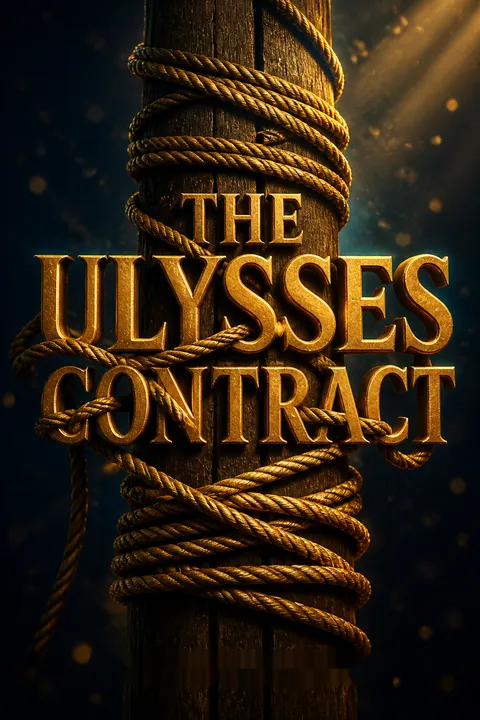
Make the decision early. A Ulysses contract is a commitment made while clear-headed to limit a future choice made under pressure. In the Odyssey, Ulysses has his crew secure him to the ship’s mast so he cannot steer toward the sirens. Investors face quieter sirens: panic, hot tips, and the urge to chase a rising price. The book’s practical version is an automatic plan for saving and investing, established before temptation arrives.
Reduce the daily struggle. Saving also means resisting the pull of the hedonic treadmill, the recurring desire for a newer car, bigger house, or status object that quickly becomes ordinary. Automatic transfers and investments can turn a good intention into a routine, while less attention to tempting purchases makes it easier to stick with it.
What's striking is the shift from treating discipline as a personality trait to treating it as a design problem. Behavioral science often finds that people make different choices when a decision is distant than when it is immediate. A precommitment narrows the gap between the plan made in calm conditions and the choice made during a market scare. The approach is powerful because it reduces repeated exposure to temptation. It still needs a sensible plan: automation can reliably execute a poor allocation just as easily as a good one, so the initial decision deserves care.
Treat crashes as normal, and your panic as the real risk
Expect the storm. In the 1987 crash, Australia’s All Ordinaries index fell 25 percent in a day. The author watched traders struggle to sell into a market with few buyers. Yet a broad Australian share investment with dividends reinvested grew to more than 14 times its crash-day value over the following three decades. The historical lesson is not that every stock recovers, but that a diversified market portfolio has repeatedly rebounded from severe downturns.
Distrust the stampede. A woman’s fall on the Brooklyn Bridge once sparked a deadly rush because people mistook screams for evidence that the bridge was collapsing. Investors can react similarly to alarming headlines and other people’s selling. Mean reversion, the tendency for extreme market measures to move back toward longer-term averages, can offer perspective, but it does not identify the bottom or guarantee recovery on a schedule.
The bridge story makes a useful distinction between danger and signals that merely feel like danger. In markets, falling prices are real, but the conclusion that permanent collapse is underway may not be. A long time horizon and diversification can make volatility more tolerable by reducing dependence on any one company or moment. Still, historical rebounds are not a promise: national markets can stagnate, and investors near retirement may not have time to wait out a long decline. Resilience comes from matching risk to the actual horizon, not from pretending risk has disappeared.
Stop asking forecasters what markets will do next
Confidence is not foresight. The book argues that economic and market forecasts are unreliable because the future depends on too many changing forces. Philip Tetlock’s study collected 27,450 judgments from 284 political and economic experts; their predictions performed worse than random guesses. The examples include prominent forecasters who failed to anticipate the Great Depression and the Global Financial Crisis, despite their credentials and confident delivery.
Ignore the market story. Commentators often explain a market move after it happens, even when several opposing forces could have caused it. A favorable jobs report, for example, does not dictate that shares must rise. Instead of selling or waiting for a predicted recession, the book recommends investing according to a long-term plan that does not require accurate forecasts.
This is a strong argument against treating forecasts as trading instructions. It also helps distinguish prediction from planning. A household can still ask what would happen to its finances if unemployment rose or rates changed; scenario planning tests resilience without claiming to know which scenario will occur. The risk is turning healthy skepticism into a belief that no forward-looking information is useful. Forecasts can be wrong while still clarifying uncertainty. The key is to avoid granting a confident prediction more authority than a diversified plan, a realistic time horizon, and the investor’s capacity to absorb losses.
Assume stock-picking skill is rare, even when returns look brilliant
Luck wears a skill costume. In Australia, SPIVA data cited in the book show that 74 percent of active funds underperformed their benchmark over five years, and 83 percent did so over 15 years. Strong performance in one year is weak evidence of lasting skill: the managers at the top of one period often fall back in the next. A study by Eugene Fama and Kenneth French found that the results of most US active funds largely resembled chance, with a small number of possible skilled or unusually poor managers at the extremes.
Valuation requires judgment. A stock has a current trading price, future cash flows that cannot be known in advance, and an estimated intrinsic value derived from assumptions. That estimate is not an objective fact. Buffett and quantitative traders have built unusual, demanding processes, but their success does not make those processes easy to copy.
The central strength here is the use of base rates: before choosing a manager, ask how often managers as a group actually beat their benchmarks. That question is more informative than a compelling interview or a recent winning streak. The evidence is not proof that no active manager can succeed, and past performance studies can be affected by survivorship and measurement choices. But a rare exception is difficult to identify in advance. For most readers, the practical burden of proof belongs to anyone charging extra for a claimed edge.
Buy the market cheaply rather than paying managers to beat it
Keep more of the return. An index fund holds the companies in a market index, usually in proportions similar to the index, and aims to track its return rather than select winners. Its main advantage is often its low fee. In the book’s example, a worker contributing regularly for 40 years could accumulate about $5.18 million in a fund charging 0.1 percent annually, versus $3.62 million at a 1.5 percent fee, assuming identical investment performance before fees.
A famous test. Warren Buffett bet that a low-cost S&P 500 index fund would outperform a hand-picked group of hedge funds over ten years. The index fund won decisively, and the opposing manager gave up before the full term ended. The book’s conclusion is not that every index fund suits every investor, but that low fees are a controllable advantage when manager skill is hard to spot.
Fees are unusually powerful because they are known in advance, while future returns are not. This makes cost control a rare part of investing where the investor can act on a fairly firm number rather than a forecast. Indexing also limits the temptation to switch strategies based on short-term rankings. Yet an index fund is not a complete financial plan: the choice of market, mix of shares and defensive assets, and need for cash all matter. A cheap fund can still carry more risk than an investor can tolerate.
Treat new technology as progress, not proof that every stock is valuable
A familiar cycle repeats. Canal, railway, bicycle, radio, electronics, internet, and cryptocurrency booms all drew investors toward exciting new technologies. The technology could be real and transformative while many companies built around it were poor investments. During the Dot.com bubble, the Nasdaq rose about 400 percent in the final five years of the 1990s, then fell 78 percent from its peak. More than 90 percent of Dot.com companies failed, while a few survivors, such as Amazon, became enormous successes.
Separate invention from investment. When excitement pushes aside ordinary business analysis, rising prices become the argument for buying. The book calls the belief that every entrant in a promising new sector will succeed the big market delusion. History cannot identify the next winner with certainty, but it shows how often a genuine innovation attracts speculative copycats and inflated valuations.
The distinction between technological importance and investor return is essential. A product can change daily life while its early shareholders earn little, because the price may already assume extraordinary success or competition may redistribute the profits. This is a problem of selection: people remember the surviving giant and forget the many failed competitors. The historical examples do not imply that new technologies should be avoided. They suggest asking who captures the value, how durable the advantage is, and what the price already assumes before confusing social excitement with evidence of future profits.
Let time, not trading, turn ordinary savings into wealth
Compounding rewards duration. When investment gains remain invested, future gains can build on earlier gains. The author’s example of a 30-year-old with $50,000 already saved, adding $850 monthly and earning a hypothetical 7.5 percent after inflation, produces about $2.2 million by age 65. The result depends on the assumptions, but it shows why regular contributions and time can matter more than spectacular individual picks.
Do not mistake motion for progress. During bull markets, inexperienced traders may believe their repeated buying and selling caused their gains, when broadly rising prices lifted many investments together. Trading also creates fees, taxes, and the risk of missing a recovery. The book cites a long-run Australian share return of about 7 to 8 percent annually after inflation, while emphasizing that actual returns arrive unevenly and can include sharp declines.
Compounding is not magic; it is arithmetic that magnifies both the rate earned and the time invested. That makes patience valuable, but it also makes assumptions important. A projected balance is a planning tool, not a promise, and a steady historical average conceals volatility and inflation uncertainty. Regular saving can improve outcomes even when the return is merely average, because contributions add capital rather than relying on market timing. The most useful lesson is to focus on controllable inputs, while allowing enough flexibility for real life to interrupt a perfectly smooth spreadsheet.
Build a farm for income, not a casino for excitement
Own productive assets. The book asks investors to picture shares as pieces of businesses that produce goods, services, and, sometimes, dividends, rather than as flashing prices on a screen. A portfolio becomes a financial farm: a pool of assets intended to generate income over time. A retired couple who owned listed property trusts sold them during the Global Financial Crisis after repeatedly watching prices fall. The investments later recovered, while their replacement cash earned less than the trusts had been distributing.
Define enough. The goal is not limitless wealth but a portfolio large enough to support the life its owner wants. The author’s final plan begins with estimating future income needs, working years, savings capacity, and whether retirement spending will come only from income or also from selling assets. A cash reserve can help cover expenses without forcing sales during a downturn.
The farm metaphor shifts attention from daily valuation to the productive purpose of ownership. It can help investors distinguish price volatility from changes in the underlying ability of an asset to generate income. The metaphor also clarifies that the target is personal: one household may need substantial assets, while another may value a modest lifestyle and need much less. However, income is not automatically safer than total return, and dividends can fall. A sound plan considers both the assets’ value and the timing of withdrawals, rather than treating distributions as guaranteed harvests.
Analysis
The book’s most useful move is to recast investing as a problem of self-management rather than prediction. Its central question is not how to identify tomorrow’s winning stock, but how to build a plan that survives the investor’s own fear, greed, impatience, and susceptibility to confident stories. The Ulysses contract supplies the organizing metaphor: precommitment protects a long-term purpose from a short-term emotional state. Automatic saving, low fees, diversification, and restrained trading are practical expressions of that idea.
The case for passive investing is especially compelling when the reader lacks a demonstrable edge. Active managers face a structural hurdle: fees reduce the return available to clients, and recent outperformance does not reliably identify future winners. The book connects these base rates to recurring financial manias, showing how new technology and persuasive narratives repeatedly invite investors to mistake rising prices for proof of value. Its historical range makes the behavioral claim memorable: the players and inventions change, but the appetite for quick riches does not.
Two tensions deserve attention. First, the author rejects market timing but describes buying when panic has made prices attractive. The most coherent interpretation is not that crashes can be timed precisely, but that investors with spare capital and an established valuation framework may act when prices become unusually depressed. Without that framework, the advice can become another forecast. Second, past market recoveries and long-run average returns are informative, not guarantees. Investors with short horizons, unstable income, or imminent withdrawals cannot simply borrow the confidence of a 30-year accumulation example.
The book is strongest when it converts uncertainty into a controllable process: save regularly, minimize avoidable costs, diversify, and stop demanding that every decision be brilliant. Its aim is not to make the reader a champion investor. It is to help the reader avoid being forced into bad choices, and to define financial success as enough capital for a chosen life rather than an endless contest for maximum wealth.
Review Summary
The Ulysses Contract receives overwhelmingly positive reviews, with readers praising its practical investment advice, easy-to-understand approach, and focus on long-term strategies. Many appreciate the author's use of historical examples and anecdotes to illustrate key points. Readers find the book's emphasis on passive investing and index funds particularly valuable. Some note that while the content may not be entirely new for experienced investors, it serves as an excellent resource for beginners and a refresher for others. The book's Australian context is also highlighted as a strength.
People Also Read







Glossary
Ulysses contract
A binding future commitmentA decision made in advance to constrain one’s future actions, especially when emotions or temptation may undermine a considered plan. In the book, the term refers to setting up automatic saving and investing so that panic, market excitement, or unnecessary spending is less able to derail long-term financial goals.
WYSIATI
Limited facts feel completeAn abbreviation for what you see is all there is, a concept discussed by Daniel Kahneman. It describes the tendency to form confident judgments from the information immediately available while failing to account for missing evidence. In investing, it can make a partial story about a company, market, or forecast feel like a complete explanation.
SPIVA
Active fund scorecardAn abbreviation for S&P Indices Versus Active. It refers to S&P Dow Jones Indices research comparing actively managed funds with relevant market benchmarks across regions and time periods. The book uses SPIVA findings to show that a large share of active funds underperform their benchmarks, particularly over longer periods.
mean reversion
Movement toward long-term averagesThe tendency for an unusually high or low measurement to move back toward its longer-term average. The book uses a swinging pendulum as an analogy and applies the idea to financial extremes such as interest rates and market valuations. Mean reversion may offer perspective, but it does not reveal precisely when a turn will occur.
strategic mediocrity
Consistent, modest outperformanceAn investing approach that seeks a steady edge rather than dramatic wins. A manager using it avoids large bets and aims to perform moderately well across many periods, allowing consistency to compound into a strong long-term record. The method may look unremarkable in any single year and can therefore be overlooked by investors focused on rankings.
quants
Quantitative trading specialistsShort for quantitative analysts, quants use mathematics, statistics, and computer systems to search large data sets for market relationships or pricing discrepancies. They may act on patterns without needing to explain why those relationships exist. Their approach differs from business-focused stock analysis and often depends on proprietary code, computing power, and specialized expertise.
the big market delusion
Assuming every entrant winsA term attributed in the book to financial economist Bradford Cornell. It describes investors pricing an entire new industry as if all its companies will become successful, even though the sector can support only a limited number of winners. The book applies the idea to technology booms, in which real innovation coexists with failed firms and inflated share prices.
financial farm
Assets built to support incomeThe book’s metaphor for a portfolio of productive assets accumulated to provide income and financial security. Like a farm, it is meant to be maintained over time and judged by what it can produce, not by every fluctuation in its quoted price. Its appropriate size depends on the owner’s desired spending and retirement plan.
FAQ
1. What is The Ulysses Contract: How to Never Worry About the Share Market Again by Michael Kemp about?
- Investing focus: The book is a comprehensive guide to investing in the stock market, covering its history, psychology, and practical strategies.
- Behavioral insights: It explores how human emotions and biases impact investment decisions and how to overcome them.
- Disciplined approach: Kemp advocates for a rational, disciplined investment plan to achieve financial freedom and peace of mind.
- Four-part structure: The book is organized into sections on investment traps, gaining an edge, investment certainties, and the Ulysses contract concept.
2. Why should I read The Ulysses Contract by Michael Kemp?
- Author’s expertise: Michael Kemp brings decades of experience, having witnessed major market events and learned from both personal and professional investing.
- Practical wisdom: The book debunks common investing myths and provides actionable advice to avoid costly mistakes.
- Stress-free investing: Kemp’s approach aims to help readers invest confidently without worrying about market volatility.
- Historical perspective: Readers gain valuable lessons from past market manias and crashes, helping them avoid repeating common errors.
3. What are the key takeaways from The Ulysses Contract by Michael Kemp?
- Avoid emotional traps: Recognize and manage psychological biases like fear, greed, and groupthink that lead to poor investment decisions.
- Embrace discipline: Develop a long-term, consistent investment strategy, often through low-cost index funds and automation.
- Learn from history: Understanding past market cycles and manias helps investors resist hype and speculative bubbles.
- Patience and compounding: Success comes from patience and allowing compounding to work over time, not from chasing quick wins.
4. What is the "Ulysses contract" concept in The Ulysses Contract by Michael Kemp?
- Myth-inspired discipline: The concept is based on Ulysses tying himself to the mast to resist the Sirens, symbolizing self-imposed rules to avoid temptation.
- Financial application: It means creating a disciplined investment plan that protects against impulsive, emotion-driven decisions.
- Automation focus: Kemp recommends setting up automatic savings and investment systems to minimize the urge to deviate from your plan.
- Long-term benefit: Sticking to a Ulysses contract increases the likelihood of achieving financial security and happiness.
5. How does Michael Kemp in The Ulysses Contract explain the role of emotions and behavioral biases in investing?
- Innate biases: Investors are influenced by subconscious biases like overconfidence, confirmation bias, and regret, which evolved for survival but harm investing.
- Emotional pitfalls: Emotions such as fear, greed, and FOMO often lead to irrational decisions like panic selling or chasing hot stocks.
- Groupthink dangers: Following the crowd amplifies bubbles and crashes, as seen in historical and recent market manias.
- Self-awareness: Skilled investors acknowledge their biases and strive to counteract them by focusing on facts and exploring opposing views.
6. What are the main "Siren Songs" or investment traps described in The Ulysses Contract by Michael Kemp?
- Psychological traps: The book highlights behavioral biases and emotional triggers that mislead investors into making poor choices.
- Market myths: Beliefs in market timing, easy stock picking, and trusting forecasts or social media tips are described as seductive but dangerous.
- Pattern-seeking: Investors’ tendency to see patterns in random data leads to overreliance on technical analysis and false signals.
- Emotional investing: FOMO and herd behavior often result in buying high and selling low, which Kemp advises to avoid.
7. How does The Ulysses Contract by Michael Kemp address market timing and stock picking?
- Market timing skepticism: Kemp, echoing experts like Buffett and Bogle, argues that consistently timing the market is nearly impossible and often harmful.
- Stock picking challenges: Most stock pickers are essentially gambling, with true skill being extremely rare and hard to identify.
- Three stock prices: The book explains the difference between market price, intrinsic value, and realized value, highlighting the uncertainty in valuation.
- Long-term focus: Kemp advocates for staying invested through market cycles and buying when prices are depressed, rather than trying to predict short-term moves.
8. What does Michael Kemp recommend regarding active versus passive investing in The Ulysses Contract?
- Active management pitfalls: Research shows that 74% to 96% of active fund managers underperform their benchmarks over time, mainly due to fees and luck.
- Passive investing benefits: Kemp recommends low-cost index funds and ETFs, which typically outperform active managers due to lower fees and broad diversification.
- Warren Buffett’s endorsement: The book cites Buffett’s advice for most investors to put 90% of their money in low-cost index funds.
- Consistent returns: Passive strategies provide reliable market exposure and reduce the risk of underperformance.
9. How does The Ulysses Contract by Michael Kemp use history to inform investment decisions?
- Learning from the past: Kemp emphasizes that history reveals consistent patterns of human behavior and market cycles.
- Avoiding repeated mistakes: By studying past manias and crashes, investors can better resist hype and avoid costly errors.
- Emotional connection: The book encourages readers to immerse themselves in historical events to understand the emotions and decisions of past investors.
- History as a "mast": Kemp suggests that history is the strongest anchor for disciplined investing.
10. What is Michael Kemp’s advice on developing an investing edge in The Ulysses Contract?
- Edge defined: An investing edge is a unique, sustainable advantage that allows an investor to outperform the market.
- Rarity of edges: True edges are obscure, personal, and difficult to maintain; most investors do not have one.
- Skill vs. luck: Most outperformance is due to luck rather than skill, making it hard to identify future winners.
- Practical alternative: Kemp suggests that most investors are better off with disciplined, low-cost, long-term strategies rather than chasing elusive edges.
11. How does The Ulysses Contract by Michael Kemp explain the importance of patience and compounding?
- Patience as a virtue: Successful investing requires the ability to wait for gains, which often accrue slowly over time.
- Power of compounding: Reinvesting returns over decades can turn modest savings into substantial wealth, described as the "eighth wonder of the world."
- Start early: Beginning to save and invest early, even with small amounts, leads to greater financial security due to compounding.
- Avoiding quick wins: Kemp warns against seeking fast profits, emphasizing that real wealth is built gradually.
12. What practical steps does Michael Kemp recommend for everyday investors in The Ulysses Contract?
- Set clear goals: Define your financial objectives, required amount, and investment horizon to create a realistic plan.
- Automate investing: Use automatic savings and investment plans (the Ulysses contract) to maintain discipline and consistency.
- Diversify and minimize fees: Invest broadly in low-cost index funds or ETFs, avoid market timing, and ignore hot tips.
- Let compounding work: Be patient and allow time and compounding to grow your wealth steadily.
Download PDF
Download EPUB
.epub digital book format is ideal for reading ebooks on phones, tablets, and e-readers.








