

Plot Summary
Chapel Without Windows
She writes in secret on scraps hidden beneath her clothes, using stolen ink and sometimes her own blood. Inside the House of the Sacred Sisterhood, the unseen He preaches that the women are unworthy, while the Superior Sister enforces his doctrine with a whip.
The Chosen are divided into mutilated orders: blind singers, deaf visionaries, and tongueless listeners. The Enlightened, sheltered behind a carved black door, supposedly interpret God's will.
During a ceremony, the narrator sees a Full Aura wandering from her guarded quarters and mistakes the spectacle for proof of divine power. She longs to become Enlightened, though the cries behind their door trouble her. Her diary becomes the only place she can question the rules without being punished.
The convent makes hierarchy visible by turning bodies into evidence: sewn eyes, cut tongues, damaged ears, scars. The narrator has learned to read these injuries as sacred credentials, so her desire for advancement is also a desire to have suffering recognized as meaningful. Her private writing quietly resists that system, even as she repeats its vocabulary and hopes to rise within it. This contradiction gives the diary its tension. She is not yet outside the faith; she is trying to become valuable according to its terms, while recording details that suggest its promised refuge may be another form of captivity.
The Saint's Stolen Crystal
When a poisonous haze darkens the sky and freezes the compound, the women fast, bleed, and sleep beside servants around a shared fire. The Superior Sister calls each disaster a test of faith, and the violence continues after the haze lifts.
During a ceremony, the women learn that a Minor Saint has been murdered and her sacred crystal stolen. Mariel, already a target for defiance and mistakes in tending the blind singers, is subjected to needles and whipping, then burned before the others.
The narrator does not believe the spectacle proves Mariel's guilt. At the dead saint's funeral, the body is carried to the Tower of Silence, where the Chosen are left exposed rather than buried. The ritual offers grief, punishment, and a feast, all under the same rules.
The House converts ecological catastrophe into a moral accusation. Haze and cold become proof that the women have failed spiritually, so the response is not practical care but more submission. The saint's murder intensifies this logic: rather than investigate, the leaders stage a punishment that gives fear a body to blame. Mariel's execution also exposes the community's complicity. The women watch, judge, and anticipate the funeral meal, finding small pleasures inside a system that starves them. The Tower's treatment of sacred corpses completes the contrast: the institution preserves status after death while denying ordinary women even the dignity of an unmarked grave.
The World Before the Wall
Before the convent, the narrator grows up amid floods, drought, hunger, and a mother who dies in their empty kitchen. She survives with a band of children led by Ulysses, sharing food and stories while adults hunt them for their supplies. After those children are murdered, she flees with a small, wary animal she names Circe.
The pair travel through ruined towns, scavenging water and food, until four men attack the narrator in a dead grove of artificial trees. Circe fights them and is killed. The narrator buries her beneath a struggling sapling, then wanders alone until she reaches the convent half-dead. The losses explain why she distrusts mercy, why she hoards memories, and why the survival instincts she learned still shape her choices.
The narrator's past is not simply a catalogue of disasters. Each loss revises her idea of what intimacy costs: her mother offers beauty and learning, Ulysses offers collective survival, and Circe offers trust without language. Violence destroys each fragile shelter, teaching her that attachment can make a person vulnerable without making the attachment foolish. Her account also complicates the convent's claim that the outer world is wholly corrupt. It is brutal, but it contains care, shared stories, and acts of protection that the institution later labels impure. Remembering that history lets the narrator distinguish survival from obedience, though she has not yet learned to act on the difference.
Helena's Buried Cross
At the House, Helena is the first to treat the narrator as someone worth saving. She disobeys the Superior Sister's order to leave the nearly dead wanderer outside, brings her through the gate, and nurses her through quarantine, accepting punishment for the risk.
The narrator later becomes attached to Helena and secretly writes about her, but the pages are dangerous evidence of desire and forbidden belief. When Helena hides a gold cross, the narrator reveals its location to the other women.
They seize Helena and bury her alive among the unnamed dead. The narrator remembers finding the grave afterward, though she cannot fully trust her own memory of digging Helena up and closing her mouth. Her guilt gives the diary a second purpose: preserving the person she helped erase.
The narrator's betrayal is both personal and institutional. The House has trained her to treat visible traces of the old religion as threats, and she acts on that training against the woman who once saved her. Her later uncertainty about what she did at the grave does not undo the betrayal; it shows memory trying to soften an unbearable responsibility. Helena's cross functions as a small object with enormous emotional force. It marks a belief the regime cannot absorb, but also the narrator's failure to protect a private bond. Writing becomes a belated form of loyalty, one that cannot rescue Helena but can refuse the official silence around her.
The Deer in the Tower
While gathering mushrooms, the narrator finds a woman unconscious among the trees, dressed in a stained dress and oversized boots. She runs rather than risk contamination. That night, after climbing the Tower of Silence to steal the dead Minor Saint's crystal, she finds the stranger there too. The stone in the corpse's hands proves to be a worthless substitute, planted by Lourdes, but the encounter gives the narrator a chance to help the wanderer.
She brings food and water, orders her to hide, and later stages her discovery as a confused newcomer so the House will accept her after quarantine. The Superior Sister assigns the stranger a new name: Lucía. The narrator's choice to shelter her turns curiosity into a dangerous private alliance.
Lucía enters the story through a failed theft and a small act of concealment. The narrator has spent years treating others as possible sources of danger, yet she risks punishment for a stranger whose appearance seems almost unreal to her. That risk is not uncomplicated compassion: she initially leaves Lucía alone to judge whether she will survive, then helps partly because she sees the possibility of a future candidate for the elite orders. The episode reveals how the House makes care conditional on usefulness. Naming Lucía completes the institution's attempt to claim her, but the secret between the women gives her arrival another meaning, one not wholly controlled by the ceremony.
Lucía Walks Through Fire
When the women fear acid rain, Lucía volunteers to cross a path of burning embers. She walks barefoot to the other side without visible injury, leaving the Superior Sister's bell dropped and the congregation unable to explain what they saw.
Lourdes, the ambitious unworthy who expects to rise through ritual sacrifice, responds by placing a wasps' nest in Lucía's bed. The swarm surrounds Lucía but does not attack her; when she looks toward Lourdes and her followers, the wasps pursue them instead.
The narrator embraces Lucía afterward, while the Superior Sister watches her with growing interest. Lucía's calm under danger makes her both a source of hope and a threat to the hierarchy, whose leaders cannot decide whether to honor her, control her, or destroy her.
The two ordeals turn the convent's rituals against their intended purpose. The firewalk is offered as sacrifice, yet it produces no legible injury and therefore no proof that suffering earns protection. The wasps make the reversal sharper: Lourdes's attempt to weaponize nature becomes a public demonstration that her control is fragile. Whether Lucía commands the insects or the witnesses misread what happened remains uncertain, and that ambiguity matters. The women are trained to accept supernatural explanations from authority, but Lucía's presence gives them evidence they interpret for themselves. Her power is dangerous partly because it cannot be easily translated into the House's official account.
Fireflies in Their Hollow
Lucía and the narrator begin meeting at night in a hollow tree, where Lucía describes the hidden sounds and names of plants. One night they see a firefly, a creature the narrator believed extinct, and the sight leads to their first kiss. Their intimacy gives the narrator a kind of safety she has not known since her childhood companions died.
It also stirs memories she had sealed away: her mother's books and small celebrations, and the lessons of Ulysses and Circe. Lucía speaks of dreaming of a green world beyond the walls, which the narrator dismisses as impossible. By day they hide their closeness from the other women, especially Lourdes, whose growing suspicion turns their refuge into a secret that could expose them.
The firefly matters because it breaks the House's monopoly on interpreting signs. For the narrator, its return is neither a doctrinal message nor a test; it is a living encounter that leads to touch, pleasure, and memory. Lucía's attention to nature creates a different practice of knowledge, one based on listening rather than submission. Their relationship does not erase the narrator's trauma, but it allows her to experience vulnerability without immediate punishment. The hollow tree also reverses the convent's architecture: instead of a locked chamber controlled by authorities, it is a shelter shaped by living growth and shared consent. Its beauty is real, but its secrecy makes it precarious.
Lourdes Hangs in the Garden
The narrator and Lucía find a Diaphanous Spirit dead near the crops, her wrists marked and her mouth empty. The narrator takes the dead woman's sacred crystal, while Lucía suspects the Sisterhood has punished her for trying to escape.
After three days confined, the women hear rumors that Lucía caused the disappearance through witchcraft. The narrator secretly gives Lourdes poisonous mushrooms, and Lourdes dances in a drugged frenzy. In the woods, the women witness the Superior Sister beating and threatening her.
They strike the Superior Sister with branches, pull Lourdes away, and flee, but by morning Lourdes is hanging from a tree. The narrator and Lucía cut her down, bury her, and place the stolen crystal on her body. The rescue cannot undo the violence or the Sisterhood's retaliation.
This sequence strips away the supposed moral clarity of the House. The dead seer suggests that its own sacred order may be punishing the women it claims to protect, while rumor turns Lucía into a convenient explanation for the loss. The narrator's poisoning of Lourdes is an attempt to regain agency through the same manipulations and bodily control she has witnessed. When she and Lucía intervene in the Superior Sister's assault, they act together, but the next morning shows the limits of their power. Burying Lourdes with the crystal is not forgiveness or absolution. It is a refusal to let the institution dictate the meaning of her body after death.
The New Enlightened
After the Superior Sister confines María de las Soledades in the Tower of Silence, the narrator and Lucía climb its eighty-eight steps to bring her water. They find her among the bones of the dead Chosen, too weak to recover, and she dies as a vulture circles overhead.
The narrator grieves the cruelty she once accepted toward María, while Lucía steadies her. Soon the leaders announce that a new Enlightened has been chosen. During the ceremony, a Full Aura points to Lucía, and two Diaphanous Spirits lead her behind the black door.
The narrator cannot say goodbye or use Lucía's real name. She understands that the institution's highest honor is also a way to remove Lucía from her, and that the cries behind the door are no longer distant rumors.
The failed rescue makes the cost of delay concrete. The narrator and Lucía finally act for María, but the House has already reduced her to a body waiting among the remains of other women. Her death forces the narrator to recognize the violence she had previously treated as ordinary. Lucía's selection then transforms aspiration into threat: the role the narrator once coveted now means separation, confinement, and likely bodily violation. The ceremony's gestures are public and orderly, but the narrator experiences them as a private loss. The title of Enlightened does not signify freedom from the system. It signifies that the system has found a new way to possess someone it cannot easily explain.
The Door Opens Inward
After eight days of hearing cries behind the black door, the narrator picks its lock and finds the Enlightened trapped in an abusive ritual with He, while the Superior Sister guards him.
The revelation destroys the religious story she has served: the hidden ruler is a man, and the supposed divine order conceals his exploitation of the women. The narrator stabs the Superior Sister and beats He with her whip, then frees Lucía. As they flee, other women and servants follow.
At their hollow tree, Lucía refuses to leave the wounded narrator behind, but the narrator urges her through the gap in the wall, knowing her wound is fatal. She leaves her diary in the tree and waits for the bells, making her final act an attempt to preserve the truth and buy the others time.
The final discovery changes the meaning of earlier details without making them disappear. The cries, locked quarters, and mutilated bodies were not evidence of mysterious holiness but signs of human abuse protected by religious language. The narrator's violence is therefore not a conversion into purity; it is a desperate interruption of a structure that has taught women to police one another. Her choice to remain behind echoes the sacrifices demanded by the convent, but differs in its purpose: she chooses the risk herself to give others a chance to escape. The diary completes that refusal. It cannot guarantee survival, yet it preserves testimony beyond the authorities' power to rename or erase it.
Analysis
The novel's central institution survives by translating material vulnerability into spiritual rank. Food shortages, toxic weather, bodily illness, and the collapse of ordinary social life are not treated as problems to solve together. Instead, leaders turn them into tests that demand individual sacrifice. The result is a community where women compete for safety while helping enforce the conditions that endanger them. The House's hierarchy is not merely a false theology imposed from above; it is a social arrangement reproduced through envy, fear, and the small rewards of being favored.
The narrator's diary interrupts that arrangement because it preserves facts that doctrine must distort. Yet her record is not the testimony of an innocent outsider. She has hurt others, participated in the House's contempt, and betrayed Helena. Her growing capacity for compassion does not erase those actions. It changes what she is willing to do with what she remembers. The book treats memory as a moral practice: to write Helena, Circe, and the children back into existence is to reject the institution's claim that only the sacred deserve remembrance.
Lucía's bond with the narrator offers an alternative to both the convent's coercive intimacy and the brutal isolation of the wasteland. Their desire grows through shared attention to plants, animals, and signs that authority cannot fully control. The possibility that the natural world is recovering remains uncertain, but the relationship makes uncertainty livable. The ending gives no easy victory. The narrator exposes the hidden abuse and helps others flee, but her wound and the approaching bells leave her fate unresolved. Her manuscript becomes a fragile counter-history, not a guarantee of rescue: a record that the women were more than the roles assigned to them.
Review Summary
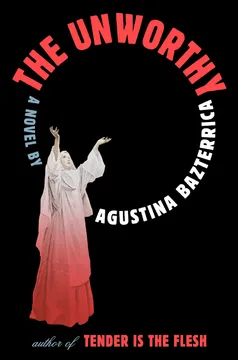
The Unworthy is a disturbing dystopian novel set in a post-apocalyptic world. It follows an unnamed protagonist in a religious cult, detailing brutal rituals and hierarchies. The story explores themes of environmental collapse, religious fanaticism, and female subjugation. Readers found the book provocative, grotesque, and emotionally impactful, praising Bazterrica's vivid writing and ability to create tension. While some felt the ending was unsatisfying, many appreciated the book's unflinching portrayal of human cruelty and the glimmer of hope it offered.
Characters
The narrator
The secret chroniclerAn unnamed survivor who records the House of the Sacred Sisterhood from inside its rules. Her intelligence is practical and unsentimental: she studies insects, hides tools, picks locks, and watches how power moves through the women's bodies. She wants recognition and once hopes to become one of the Enlightened, but her diary preserves evidence that strains against the beliefs she repeats. Childhood losses have taught her to distrust dependence, while her attachments to Helena, Circe, and Lucía keep drawing her toward care. She is capable of cruelty as well as loyalty, and her writing does not excuse her choices. What drives her is the need to remember a self that the institution keeps trying to rename.
Lucía
The wild newcomerA wanderer who arrives at the Sisterhood exhausted, self-possessed, and difficult to place within its categories. The narrator is drawn to her before she knows her name, sensing an independence that does not resemble the convent's hunger for rank. Lucía pays attention to natural sounds and living things, and she acts with a calm that unsettles women accustomed to ritual fear. Her relationship with the narrator develops through secrecy, shared wonder, and physical tenderness. She is not simply a rescuer or an idealized escape route; she has her own sense of purpose and keeps parts of her past private. Her presence makes the narrator imagine that the world may hold possibilities beyond the wall.
The Superior Sister
Armed guardian of doctrineThe House's military-minded enforcer, recognizable by her boots, whips, and command of every punishment. She manages food, labor, access to the sacred quarters, and the stories the women are permitted to believe. Her discipline is methodical rather than chaotic, which makes her violence feel like an ordinary part of administration. The women fear and admire her, and the narrator is particularly susceptible to her imposing beauty and physical authority. The Superior Sister presents herself as protector of the community, yet her power depends on keeping the women divided and dependent. She treats obedience as proof of virtue and dissent as contamination.
He
The hidden divine rulerThe unseen leader who speaks from behind a screen and teaches the women that their survival depends on obedience. His body and daily life are withheld from the unworthy, allowing rumor to turn him into a figure of supernatural beauty or terror. He controls the meanings attached to disasters, sacrifice, and the specialized orders of the Chosen. The distance around him is part of his authority: women are told that access itself marks spiritual worth. The narrator's limited knowledge of him reflects the larger structure of the House, where those who bear the costs are prevented from seeing who benefits.
Lourdes
The ritual's favored rivalAn ambitious member of the unworthy who excels at devising punishments and organizing ceremonies. Lourdes has cultivated a pristine appearance and a circle of followers, making her seem close to the advancement she desires. She understands how to please the Superior Sister and how to turn other women's weaknesses into leverage. The narrator envies her ingenuity even while resenting her cruelty. Beneath Lourdes's carefully managed authority is a fierce appetite for recognition, and Lucía's arrival threatens the position she has built. Her presence shows how a brutal system can recruit its victims as enthusiastic managers of one another's suffering.
Helena
The first keeper of mercyA compassionate dissenter who once risks contamination and punishment to bring the narrator into the House. Helena treats care as an obligation rather than a reward for obedience. Her connection to the old religion and her willingness to challenge authority make her an unsettling presence in a community built on erasure. The narrator remembers her as both a source of safety and a person she failed, which gives their bond a lasting moral weight. Helena represents a form of loyalty that does not depend on doctrine, rank, or usefulness.
Circe
The feral companionA small, watchful animal the narrator encounters while both are surviving outside the House. At first, each treats the other as a possible threat; shared food, warmth, and travel gradually build trust. Circe communicates through attention and action rather than speech, bringing the narrator offerings and staying near her through the ruined landscape. The narrator names her after a sorceress from a story, joining childhood reading to a relationship that feels immediate and real. Circe embodies companionship without the bargains and hierarchies that govern human groups.
The narrator's mother
The keeper of storiesA loving mother who teaches her daughter to read, notice beauty, and value books even as ecological disasters make ordinary life harder. She remembers small pleasures, such as coffee and bread, as reasons to celebrate rather than luxuries to dismiss. Her stories about animals, architecture, and myth become part of the narrator's inner vocabulary. She cannot protect her daughter from the collapse, but the habits of attention she passes on survive hunger and grief. In memory, she offers a counterweight to the House's demands that the narrator reject her origins.
Ulysses
The children's strategistA resourceful boy who leads the narrator's makeshift band of orphaned children. Ulysses teaches practical skills such as picking locks and hunting, but his deeper leadership comes from insisting that the children share food and protect one another. He understands that survival requires planning without surrendering loyalty. He also encourages the narrator's reading, making stories part of the group's brief moments of warmth. His example shapes the narrator's understanding of family as something people make through action.
Mariel
The punished dissenterA young woman whose growing defiance and visible distress make her a target for the Sisterhood's discipline. She serves the Minor Saints and struggles to meet the impossible demands placed on her. Other women watch her with a mix of contempt, fear, and fascination, revealing how the House encourages them to participate in punishment. The narrator is drawn to Mariel's unpredictability, though not always out of compassion. Her presence exposes the ease with which a community can mistake suffering for guilt.
María de las Soledades
The silent ritual witnessA woman whose chosen name and old desires mark her as difficult for the House to absorb. She refuses, at different moments, to conceal her questions, her pain, or her memories of language and faith. Her visible wounds make her an object of judgment, and some women use her as a target for their own powerlessness. The narrator initially watches her through the same contemptuous habits as the others, which makes their later concern morally significant. María embodies the private life that survives beneath imposed names.
Catalina
The language learnerOne of the unworthy women, alert to oddities in the House's teachings and vulnerable to the punishments that follow questions. Catalina's experience of the Creek of Madness deepens the unease around the water the women are made to drink. Her observations sometimes approach truths that the Sisterhood would rather keep unspoken.
Élida
The fragile newcomerA newcomer still learning the House's language and customs. Because she struggles to communicate, other women treat her as weak and easy to exploit. Her situation shows how isolation becomes another tool of discipline, especially for those without allies or fluency.
Tobías
The youngest survivorOne of the children in the narrator's former group. His earnest questions about animals and stories help show how children build knowledge in a world where education and safety have largely vanished.
The servants
The burdened laborersNameless women made to cook, clean, tend wounds, and absorb the risks that the unworthy and the Chosen refuse. Their bodies carry visible marks of the contaminated outside world, a condition the House uses to justify their low status. They are essential to the community's survival but denied its dignity. The narrator sometimes depends on their labor while joining in the contempt directed at them, exposing how hierarchy persists through everyday acts of use.
The Chosen
The mutilated sacred ordersThe Minor Saints, Diaphanous Spirits, and Full Auras form the Sisterhood's visible spiritual elite. Their mutilations are presented as gifts that free them from ordinary distractions, while their songs, visions, and listening supposedly connect the House to its hidden God. The unworthy admire them and fear the price of joining them. Their bodies make the Sisterhood's ideals tangible, but their isolation also keeps the rest of the women from knowing what their lives are actually like.
Plot Devices
The book of the night
A hidden recordThe narrator's clandestine pages give the novel its intimate frame. She writes with stolen ink, charcoal, plant dyes, and blood, then hides the sheets in cells, floorboards, or against her body. The act lets her preserve memories the Sisterhood tries to erase and examine beliefs she cannot safely challenge aloud. Because the writing is interrupted by searches, danger, and recovered memories, it also reveals how hard it is for her to tell a stable story about herself.
The sacred hierarchy
Power through ritualThe House assigns spiritual status through strict ranks, bodily mutilation, punishment, and controlled access to the hidden leader. Sacrifice is used to explain environmental disasters, while ceremonies turn violence into public doctrine. The system drives rivalries among the unworthy and makes the women police one another, even as they depend on the same institution for food and shelter. Its rules shape nearly every major choice the narrator faces.
Nature's signs
Unsettling evidenceHaze, poisoned animals, fireflies, wasps, bees, and the return of a vulture provide evidence that the world outside may be changing. The Sisterhood interprets these events as messages from God, while Lucía and the narrator encounter them as parts of a living environment whose meaning is not settled. The signs keep supernatural possibility alive without making the institution's explanations trustworthy. They also give the characters moments of beauty and danger that exist beyond official doctrine.
Imposed names
Identity under erasureThe Sisterhood assigns new names to arrivals and treats their former identities as contamination. This practice makes obedience easier to enforce and severs women from the histories that might connect them to another life. The narrator's effort to remember her mother, Helena, Circe, and her own past resists that erasure. Names become both a tool of control and a private form of recognition between people who trust one another.
Download PDF
Download EPUB
.epub digital book format is ideal for reading ebooks on phones, tablets, and e-readers.








