

Key Takeaways
Treat each action as whole-person coordination, not an isolated body part
One organism, many processes. Alexander rejects the idea that the mind and body operate as separate systems. Speaking, walking, deciding, and even withholding a response all involve the organism as a whole. A specific movement may draw attention to one part, but that part’s action depends on how the rest of the person is coordinated. He calls this broad pattern the “use of the self,” meaning the way the whole person is engaged in activity, not simply how a limb is used.
A practical starting point. The book begins with Alexander’s attempt to understand why reciting damaged his voice while ordinary conversation did not. His investigation led him beyond the throat to the way he organized himself while speaking. The larger claim is that improving an activity requires attention to the conditions shaping it, not just the part that appears to fail.
The whole-person lens is a useful corrective to explanations that divide experience into purely mental or physical causes. It resembles systems thinking: a local output can depend on relationships among many components. That perspective can help people notice how posture, attention, effort, and task demands interact. It should not, however, erase useful distinctions. A voice problem can have specific medical causes, and a systemic description alone does not identify them. Alexander’s framework is strongest as a way to observe activity and ask better questions, not as proof that every disorder shares one cause.
Question bodily feelings when they conflict with what you can observe
The mirror changed the investigation. Alexander watched himself recite and saw his head draw back, his larynx sink, and his breathing become audible. He had not felt himself doing these things. When he looked again during ordinary speech, he noticed milder versions of the same tendencies. What seemed natural from the inside did not match what he could see.
Familiar is not the same as accurate. Alexander argues that repeated patterns can feel correct simply because they are familiar. When he tried to move his head in a new way, his habitual movement returned at the very moment he began speaking. The discrepancy persuaded him that bodily feeling could not always serve as a reliable guide to what the body was doing. He uses “sensory appreciation” for this felt awareness of one’s own use.
This account anticipates a familiar problem in skill learning: intention is not a dependable record of execution. A person may believe a movement is happening because it is what they meant to do, while observation shows something else. Video, mirrors, and skilled feedback can expose that gap, although each also has limits and can make movement self-conscious. The useful lesson is not to distrust all sensation. It is to compare sensation with outcomes and observation, especially when a long-practiced habit is being changed.
Pause the automatic response before attempting to change it
Stop the first impulse. Alexander repeatedly found that deciding to speak triggered the same old pattern he was trying to change. His solution was not to push harder in the opposite direction. He practiced receiving the urge to speak without immediately acting on it. He calls this “inhibition ”: deliberately withholding the habitual response long enough to choose how to proceed.
A pause creates choice. He describes deciding afresh whether to speak, do something else, or not pursue the original goal. The point was to interrupt the automatic link between stimulus and familiar action. This was difficult precisely because the old response felt natural and the alternative felt wrong. In Alexander’s account, refusing to act at once was not passivity. It was the first practical step toward acting with more deliberate direction.
A pause can create room between impulse and action, a principle shared by many approaches to self-regulation. It is especially relevant when urgency itself increases tension or narrows attention. The method is not a universal answer to every fast response: some situations demand immediate action, and excessive monitoring can interfere with fluent performance. Its best use is selective. When a recurring reaction is unwanted and there is time to choose, a brief interruption can make the pattern observable rather than inevitable.
Choose the means before chasing the result
Plan the route, not just the destination. Alexander calls the reasoned steps toward an outcome the “means-whereby.” Instead of trying directly to recite well, he tried to work out what sequence of directions and actions might support better speaking. He practiced those directions without immediately attempting the final task, then learned to maintain them as he moved through the activity.
Keep the sequence connected. In his account, directions for an early part of an action must remain active while directions for later parts are added. If attention collapses into the desired result, the familiar habit can take over. Alexander’s example is a golfer trying to make a good stroke by sheer effort while overlooking how the movement is organized. The approach shifts attention from “make it happen” to “what conditions would make this action possible?”
This distinction between outcome and process is valuable because outcomes often arrive too late to guide each movement. A musician, athlete, or speaker benefits from attention to controllable steps, not just the hoped-for result. Alexander’s emphasis on sequencing also points toward the demands of complex motor learning: several elements may need to be coordinated rather than corrected one at a time. Still, process is not an end in itself. A sound method must be judged by whether it improves the actual task, not by how sophisticated its instructions feel.
Use head and neck coordination as a starting point for whole-body change
A central relationship. Alexander came to believe that the way the head and neck related to the rest of the body influenced the organism’s general coordination. He named this organizing relationship the “primary control.” While investigating his voice, he found that pulling his head back tended to coincide with other changes, including a lowered larynx and a shortened posture. Attempts to move differently seemed to affect more than the head alone.
Direction, not forced posture. The book does not present the primary control as a fixed pose to hold. Alexander describes it as a direction of use, developed by preventing habitual patterns and practicing a different coordination. He believed the resulting changes could influence breathing, voice, and other actions. His approach depends on guided practice because, by his account, the new coordination initially feels unfamiliar and cannot be reliably judged by sensation alone.
The idea that head position, balance, and movement are interdependent fits a broad systems view of posture and action. A small change can alter the demands placed on other parts of the body, so a single rigid correction may be less useful than attention to coordination. The caution is that Alexander’s term can sound more anatomically definitive than the evidence presented here warrants. His observations are a practitioner’s account, not a demonstration that one control point governs all function. The concept is most useful as a prompt for whole-body observation.
Do not rehearse a symptom while trying to correct it
The golfer’s instruction missed the pattern. Alexander imagines a golfer told to keep his eyes on the ball. The golfer wants to obey, but still looks away because the instruction targets one visible mistake while leaving his habitual way of organizing the swing untouched. Trying harder may reinforce the same pattern. Alexander argues that the eye movement is a sign of a broader coordination problem, not necessarily the root cause.
The stutterer’s drills raised a similar concern. A pupil could practice particular consonants in exercises yet continue to stutter in conversation. Alexander observed that effort to pronounce difficult sounds came with more tension and a return to habitual use. He argued that repeatedly practicing the target sound in the same strained pattern can rehearse the difficulty rather than resolve it. His alternative was to establish a different general use before testing the sound again.
These cases highlight a real distinction between practicing a component and changing the conditions under which it occurs. A drill can help when it isolates a skill that can safely be trained in isolation; it can mislead when the difficulty depends on context, tension, or coordination. Alexander’s examples encourage educators to ask what a practice session is actually reinforcing. They do not establish that targeted exercises are generally ineffective. The better question is whether practice transfers to the situation where the person needs the skill.
Consider whole-body use when diagnosing a persistent functional problem
Look beyond the visible symptom. Alexander argues that a diagnosis is incomplete if it ignores how habitual use may affect functioning elsewhere. He recounts cases involving pain, difficulty walking, voice problems, and other complaints in which he observed patterns of tension or restricted movement. In one consultation, he reports that a specialist’s chest examination changed after Alexander altered the patient’s position and maintained that change during a second test.
A claim with limits. Alexander describes several pupils whose symptoms improved while they learned a different way of using themselves. These are case histories, not controlled evidence, and the book does not establish that faulty use causes all disease or that his method replaces medical care. Its defensible contribution is a question for assessment: could habitual movement or effort be contributing to this person’s difficulty, and should that be considered alongside other causes?
The invitation to examine function alongside symptoms is compatible with patient-centered care, where daily activity and context can matter as much as a test result. It also exposes a tension in Alexander’s argument: a broad explanation can connect observations, but it can overreach when it claims a common cause for very different conditions. Anecdotes can generate hypotheses, not settle them. A modern reader can retain the observational question while rejecting any implication that people should delay diagnosis, medication, or other evidence-based treatment.
Learn unfamiliar movement through guided experience, not instructions alone
Words cannot supply a new sensation. Alexander warns that describing a movement is not the same as enabling someone to feel and perform it. He found that a direction he had reasoned out could still be lost when he attempted to speak. He also says his pupils often needed repeated, hands-on guidance before a new pattern became familiar enough to use in ordinary activity.
Practice is part of the teaching. The book argues that learning depends on trying a new way while resisting the urge to return to what feels right. Alexander therefore doubts that readers can reliably teach themselves the full technique from written instructions. His account of a small school describes children applying the approach during reading, writing, and other lessons, so practice involved everyday tasks rather than a single isolated exercise.
The emphasis on experience over explanation is persuasive for embodied skills. A verbal model can clarify what to attend to, while demonstration and feedback help reveal whether the intended action is actually happening. This resembles apprenticeship: competence grows through guided attempts, correction, and transfer into real tasks. At the same time, instruction should not become mystique. A teacher’s authority is best supported by transparent goals, observable progress, and respect for the learner’s own reports, particularly when health claims are involved.
Judge learning by how you act while pursuing a goal
The process is part of the education. Alexander wants learners to notice not only whether they finish a task, but how they organize themselves while doing it. In the school he describes, children practiced the approach while reading and writing, rather than treating it as a separate lesson about posture. He argues that this makes the method relevant to ordinary activity and to the way people respond under pressure.
Build a more deliberate response. The aim is not to follow one correct posture or a fixed code of behavior. It is to pause, consider what the situation requires, and choose a way of acting that does not simply reproduce a familiar habit. Alexander sees this as a basis for broader education and self-direction. In practical terms, the method asks learners to value the quality of their attention and coordination alongside the result they seek.
This educational principle expands skill training from performance into metacognition, the ability to notice and adjust one’s own thinking and action. It also counters a narrow, outcome-only view of success: a student can finish a task while relying on effortful habits that make the next task harder. Yet process measures need balance. Attention to movement should support learning, not crowd out subject knowledge or create anxiety about every gesture. The strongest version treats awareness as a tool that serves participation, not as a permanent demand for self-surveillance.
Analysis
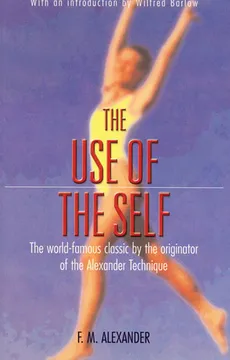
The Use of the Self is part memoir, part practical philosophy, and part argument about education and medicine. Its organizing story is Alexander’s investigation of his failing voice. The mirror turns a personal problem into a method: observe an action, question the feeling that it is being performed correctly, experiment with a different response, and notice what changes. This narrative gives the book unusual coherence. Its central terms, including primary control, inhibition, and means-whereby, all grow out of the same practical puzzle: how to interrupt a familiar action when the familiar action is the obstacle.
The book’s lasting insight is epistemic as much as physical. People can be poor judges of their own actions, particularly when a practiced pattern feels natural. Alexander’s insistence on comparing intention with observable performance remains useful in coaching, rehabilitation, and education. So does his warning that “try harder” can intensify the very behavior one hopes to change. The method encourages a pause, deliberate choice, and attention to the conditions that shape performance.
Its larger claims need firmer boundaries. Alexander extends observations from his own case and teaching practice into broad statements about disease, medical diagnosis, civilization, and human development. The text offers striking anecdotes, but not controlled comparisons that can establish causation or show that one method treats diverse conditions. Reports of improvement deserve attention as reports, not proof that a general theory explains a particular illness. The book’s own argument is most persuasive when framed as a practical method for observing and retraining habits, not as a substitute for clinical diagnosis.
Read that way, the work remains compelling without requiring acceptance of every claim. Its durable question is simple: when an action repeatedly fails, is the problem only the visible error, or also the way the whole person prepares to act? Alexander asks readers to investigate that question patiently, and to treat awareness itself as a learnable skill.
Review Summary
Reviews of The Use of the Self are mixed, averaging 3.93/5. Readers appreciate Alexander's autodidactic approach and the foundational ideas behind the Alexander Technique, with some finding it life-changing. However, many criticize the writing style as repetitive, convoluted, and overly long-winded. Some note the content feels dated and self-absorbed, while others find it invaluable, particularly for musicians and technique students. Common themes include neuroplasticity, habit reformation, and mind-body connection. Overall, it is considered more accessible to newcomers than those already familiar with the technique.
Glossary
Use of the self
Whole-person use in activityAlexander’s term for how the person as a whole is engaged in action. It includes more than the movement of a specific body part, encompassing the coordinated activity involved in thinking, deciding, moving, speaking, and responding. He argues that the use of one part cannot be separated from the use of the organism overall.
Primary control
Central coordination of useAlexander’s name for the organizing relationship of the head and neck with the rest of the body. He treats it as a primary influence on the coordination of the organism, rather than as a particular posture to hold. In his technique, the learner practices directions intended to improve this relationship and its effects on activity.
Inhibition
Withholding habitual responseThe deliberate decision not to respond immediately in a familiar, habitual way to a stimulus. Alexander treats this pause as an active part of learning, because it interrupts the pattern that would otherwise take over automatically and creates an opportunity to choose a different course of action.
means-whereby
Reasoned route to an endAlexander’s term for the considered means used to reach a goal. Instead of pursuing an outcome directly through habitual effort, the learner reasons out a sequence of actions and directions that may support it. The component steps are linked and maintained together, rather than treated as isolated tasks.
end-gaining
Direct pursuit of resultsAlexander’s term for focusing on an intended result while neglecting the way it is pursued. He argues that this habit can trigger familiar patterns of use even when those patterns interfere with the desired outcome. His proposed alternative is to attend to the means of action before trying to secure the end.
sensory appreciation
Felt awareness of useAlexander’s term for the sensory information through which a person feels how they are using themselves. He argues that this awareness may become unreliable when a habitual way of moving feels normal simply because it is familiar. In his method, new experience and observation are used to develop more dependable self-judgment.
non-doing
Restraint before actionA practical attitude central to Alexander’s technique: not rushing to perform a familiar action just because a stimulus or goal has appeared. It involves withholding the habitual response while considering a more deliberate way to proceed. It is not inactivity for its own sake, but a pause that makes a different response possible.
Download PDF
Download EPUB
.epub digital book format is ideal for reading ebooks on phones, tablets, and e-readers.








