


Plot Summary
Arkham's Last-Resort Job Hunt
At twenty-one, Lucas Daniels1 is running out of places to apply in Arkham. He has moved there to escape Milton and the home of his stepfather, Sheriff Garrett Stone,4 whose lingering looks and touches make Lucas1 feel hunted. His mother,3 who loves Garrett4 and hopes the family can settle together, keeps suggesting Lucas1 take a job at the sheriff's station.
He refuses, though he cannot tell her exactly why. After another rejection at a peculiar apothecary, Lucas's familiar intuition insists he should stay in town. Across the street, a grand building appears through the fog, bright with restaurant and bar lights but absent from every online search. Called Club Dyavol, it seems to offer the work he needs, and Lucas1 feels compelled to enter.
Lucas's job hunt is practical, but the choice beneath it is about who gets to define his safety. His mother interprets Garrett's offer as stability and renewed family life; Lucas experiences the same arrangement as dependence on a man he distrusts. His intuition has helped him before, so following it is not mere recklessness, yet he cannot explain its instructions in ordinary terms. Dyavol arrives at the intersection of economic need and private alarm: the place offers a possible wage, while its unlisted status echoes the unease he has been trying to leave behind.
A Sanctuary Under Strain
Three floors above the club, its owner, Count Konstantin Volk,2 monitors Dyavol through a wall of cameras. The establishment is a vampire Sanctuary, where human Guests are carefully managed and the outside world kept ignorant.
Konstantin's worsening curse makes ordinary touch and sensation painful, leaving him confined to his private floor and dependent on observation. His ally Lizzy,5 an eighty-eight-year-old vampire who looks eleven, helps run the club's systems. They watch Marius Reynard,6 a Council leader's10 favored vampire,6 indulge himself among human Guests.
Marius's6 House has a history of conflict with Konstantin,2 but the Sanctuary's rules prevent its master from retaliating against a member who has not broken them. Then Lizzy5 spots Lucas1 outside, seemingly able to see a building the spells should conceal.
Dyavol's polished hospitality rests on a hard division between those who know the rules and those whose ignorance is managed for them. Konstantin's surveillance keeps the place orderly, but also substitutes for a body he can no longer comfortably use. Marius tests the distinction between authority and restraint: Konstantin dislikes him, yet must enforce rules rather than personal grievance. Lizzy's competence gives her influence in a world where her childlike appearance invites others to underestimate her. Lucas's visibility unsettles the system before he crosses its threshold, turning a laborer's search for work into a threat to the Sanctuary's assumptions.
The Door Opens for Lucas
Lucas1 approaches Dyavol while speaking with his mother3 on the phone. Its muscular guards stop a nervous vampire from the disfavored House Graughan, but they do not acknowledge Lucas1 at all. At the entrance, the air seems to turn white and heavy around him; a woman's unseen voice urges him inside and directs him to find the Wolf.2
The moment passes, and Lucas1 steps through the brass doors without resistance. Inside, the wolf emblem on the floor and Konstantin's2 surname catch his attention, but he tries to behave like an ordinary applicant.
He considers the restaurant and bar, then walks toward the cocktail lounge. There, Marius6 notices him. From his surveillance room, Konstantin2 watches the stranger enter despite every spell and security measure that should have kept him out.
The scene gives Lucas a double experience of agency. He chooses to enter because he needs work, but the voice and the failed wards suggest that another force has already shaped the route. His ordinary explanations remain intact: the guards simply missed him, and the building is a possible employer. That gap between his interpretation and the evidence is the source of suspense. Dyavol's security is not merely a magical barrier; it is the mechanism by which vampires distinguish permitted presence from intrusion. Lucas passes without either permission or resistance, making his very existence a breach.
Marius Chooses His Prey
Marius6 intercepts Lucas1 and treats his search for a job as a pretext, gripping his arm and steering him toward the vampires at his booth. He calls Lucas1 human and assumes he can be controlled, while Lucas1 struggles to get free.
Collette Martin,7 Dyavol's security chief, and her second, Darrell Johnson,8 step in, but Marius6 invokes his powerful sire10 to challenge their authority. Konstantin2 appears in person and orders Marius6 and his companions to leave.
The confrontation exposes Konstantin's2 weakness: once he has expelled them, he collapses against the elevator wall, overwhelmed by his curse. Lucas,1 meanwhile, is seized by Collette7 and Darrell8 and taken to the spa. Konstantin2 orders them to bathe him before bringing him upstairs, turning a job inquiry into forced questioning.
Marius's predation is wrapped in the language of membership and privilege: he assumes that Lucas's body is available because he has classified him as prey. Collette and Darrell counter him through procedure, while Konstantin's intervention carries the authority of ownership but exacts a physical cost. Lucas sees that cost, a first crack in the image of the formidable club master. Yet the rescue does not make him free; the Sanctuary's staff immediately restrain him. The scene therefore keeps protection morally complicated. Konstantin stops one coercive encounter, then uses his own power to determine where Lucas goes next.
Truth Under the Red Eyes
In the locker room, Darrell8 orders Lucas1 to wash and change into silk pants. Lucas1 refuses until Darrell8 uses vampire Seduction, a power meant to bend human will; Lucas1 shakes it off and recognizes the attempted intrusion.
Konstantin2 then questions him from the room above, where cameras let him speak without approaching. His influence loosens Lucas's1 defenses, and Lucas1 reveals that he was adopted after being left at a hospital, that his father died after a long illness, and that Garrett's4 presence makes him feel hunted even though the sheriff has not openly harmed him.
Konstantin2 promises to let him go after their conversation. Still suspecting Lucas1 may be part of a plot, he leans in and bites his neck to learn what the young man's blood can reveal. Lucas1 blacks out.
The interrogation shifts power in small increments. Darrell's Seduction fails, demonstrating that Lucas is not as susceptible as the people Dyavol usually manages. Konstantin gets further by mixing supernatural influence with genuine disclosure: Lucas tells the truth, but not under conditions he chose. His account of Garrett is notably uncertain, as though he needs permission to trust his own alarm. Konstantin's promise creates an ethical obligation just before he violates Lucas's bodily autonomy by feeding. The bite is simultaneously investigation and possession, showing how quickly concern for an unexplained stranger can become a rationale for taking from him.
A Taste of Witch Blood
Lucas's1 blood tastes unlike any Konstantin2 has known. As he feeds, the pain of the curse recedes, his senses clear, and even touch becomes bearable. But Konstantin2 loses control and drinks until Lucas's1 heartbeat slows.
Xavier Fall,9 a vampire professor and Konstantin's2 trusted friend, pulls him away and checks Lucas,1 finding him exhausted but stable. Konstantin2 recognizes a magical quality in the blood, recalling the similar taste of a witch whose blood he once drank. He concludes that Lucas1 has witch blood.
The relief is real but temporary, and it arrives at the cost of nearly killing the person who brought it. Xavier9 suspects the encounter was engineered and urges Konstantin2 to keep Lucas,1 while Konstantin2 recoils from the idea of turning him into a captive source of relief.
The apparent cure makes the feeding more than a romantic or predatory encounter: it becomes a resource problem with a human cost. Konstantin's restored senses tempt him toward dependence precisely because the relief is so immediate. His near-fatal loss of control complicates any claim that he can use Lucas's blood responsibly. Xavier reads the event strategically, asking what Lucas's arrival means for Konstantin's survival; Konstantin instead confronts the person harmed by that strategy. The difference is not simply compassion versus coldness. It is a dispute about whether desperate need can convert another person's body into legitimate property.
Mercy Against Strategy
Xavier9 argues that Lucas1 may be the only thing easing Konstantin's curse and that letting him leave could cost them their chance. Konstantin2 refuses to imprison him as a Blood Slave, erase his family's memories, or keep him against his will.
He has promised Lucas1 he can go home, and he will not use uncertainty about the young man's origins to excuse breaking that promise. Their disagreement also exposes the danger of telling the Vampire Council that Lucas1 may have witch ancestry, which could inflame old hostilities.
Konstantin2 chooses a narrower solution: have Lucas's memory of the supernatural encounter removed, then offer him legitimate work at Dyavol. The job gives Lucas1 a reason to return without making him a captive, though Konstantin's2 plan still relies on withholding the truth.
Konstantin's decision is a meaningful restraint, not a clean absolution. He declines the most overt form of exploitation, a Blood Slave, because it would deny Lucas personhood. Yet he also alters Lucas's memory and withholds the supernatural facts, preserving the Sanctuary's secrecy and his own access to him. The promised job is a compromise between coercion and freedom: Lucas can choose to return, but the choice is built on incomplete knowledge. Xavier's alarm is understandable because Konstantin's survival may depend on Lucas; the story's ethical tension lies in showing that even a compassionate decision can retain the structure of control.
The Card in His Pocket
Lucas1 wakes on the train to Milton with a sore neck and no clear memory of leaving Dyavol. The card in his pocket restores fragments: Collette7 interviewed him, he accepted a starting position, and Darrell8 drove him to the station.
He remembers drinking juice and eating cookies while he recovered, but the encounter with vampires and Konstantin's2 bite remain beyond reach. At Milton, an elderly woman he had seen on the train disappears from view. A woman's voice returns, telling him that he has found the Wolf2 and must make the Wolf2 his own.
Lucas1 heads home believing that a night's sleep will clear his confusion and that he has finally found work in Arkham. The job gives his original search a practical answer, while the command leaves the reason for his arrival unresolved.
The ending grants Lucas what he wanted while withholding the knowledge that would let him understand its price. Work offers a route away from Garrett's household, so the choice to return to Dyavol may feel entirely self-directed. The memory gap, however, makes that freedom unstable: someone has edited the experience that produced his decision. The woman's shifting age and disappearance suggest the force behind Lucas's intuition is not an ordinary bystander, but the story stops before identifying her. Its final command converts the Wolf from a mystery Lucas has found into a relationship someone expects him to claim.
Analysis
The novella makes a club the hinge between ordinary economic vulnerability and a hidden political world. Lucas1 does not enter Dyavol seeking romance or occult revelation; he needs wages and distance from a household where his instincts tell him he is unsafe. The supernatural setting therefore does not replace his practical problem. It intensifies it. Konstantin2 offers a possible refuge from one kind of predation while exercising powers that can restrain, influence, and erase Lucas.1 That contradiction prevents the vampire club from becoming a simple fantasy of escape.
Dyavol's rules provide real protection, especially against members such as Marius,6 but they are also an instrument of authority. Konstantin's2 enforcement of boundaries distinguishes him from Marius,6 yet his decision to bathe, question, feed on, and later alter Lucas's1 memory shows how easily protection can slide into control. His refusal to keep Lucas1 as a Blood Slave matters, but it does not undo the harm or restore the knowledge taken from him. The job offer is ethically ambiguous because it gives Lucas1 the independence he sought while inviting him back under conditions he cannot fully evaluate.
The story also links bodily vulnerability to political history. Konstantin's curse has isolated him from touch and ordinary sensation; Lucas's1 blood briefly restores those capacities, making desire, relief, and danger inseparable. Xavier9 sees the potential remedy as a resource that must be secured, while Konstantin's2 promise to Lucas1 forces him to acknowledge a claim beyond his own survival. The ending refuses a settled resolution: Lucas1 has found work and a path out of Milton, but his memory is incomplete and a mysterious voice assigns him a role he has not consciously chosen. The central question is not simply whether Lucas1 belongs at Dyavol, but whether belonging can be freely chosen when another person controls the terms of remembering.
Review Summary
The Vampire's Club holds an overall rating of 3.86 stars, with readers praising its intriguing vampire-witch premise, likable characters, and the chemistry between leads Lucas and Konstantin. Many highlight the exceptional audiobook narration by Ethan Holtan as a standout element. Common criticisms include its short length, cliffhanger endings, and the serial format splitting what could be one novel. Most readers found it a promising, entertaining start, eager to continue the series despite minor flaws.
People Also Read



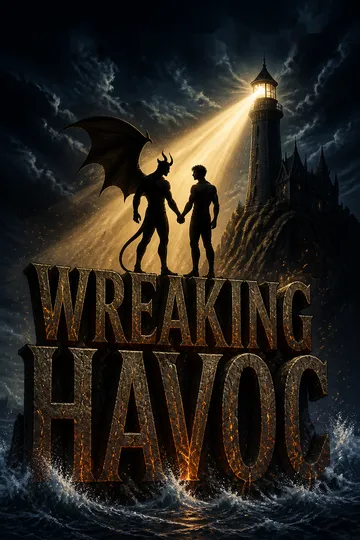


Characters
Lucas Daniels
Intuitive job seekerLucas is a twenty-one-year-old adopted man trying to build an independent life after moving from Milton to Arkham. He is hardworking, quick with humor, and practiced at making himself seem less worried than he is. His intuition has repeatedly guided him toward danger or help before he understands why, but he does not treat it as a substitute for common sense. His father's death and his mother's3 devotion to her new husband4 leave him protective of her while increasingly wary of the home she wants him to share. Lucas's defining tension is between a strong instinct for self-preservation and a deep need to trust that he can choose his own direction.
Konstantin Volk
Imprisoned vampire hostKonstantin is the vampire master of Club Dyavol, a Sanctuary whose order depends on strict rules, careful secrecy, and his ability to read people from a distance. A curse has made touch and other sensations painful, confining him largely to the club's upper floor. He is proud, controlled, and accustomed to treating restraint as part of leadership, yet the isolation has sharpened his awareness of everything he can no longer do. His care for Lizzy5 and his refusal to treat people as disposable coexist with a formidable capacity to command. Lucas1 unsettles that balance by arriving outside Konstantin's systems of knowledge and control.
Lucas's mother
Lucas's protective motherLucas's1 mother wants him safe and close, and she sees Garrett's4 offer of work as a chance for the family to regain stability. Her encouragement comes from love, but her faith in her husband4 makes it difficult for her to recognize why Lucas1 resists living and working under his authority. She and Lucas1 care for one another, even when he conceals the depth of his unease to avoid hurting her.
Garrett Stone
Powerful local stepfatherGarrett is Lucas's stepfather1, his mother's husband3, and the sheriff of Milton. He offers Lucas1 work at the station and represents the settled family life Lucas's mother3 hopes to build. Lucas1 experiences Garrett's attention as unsettling and his home as suffocating, though he struggles to name what he fears. That uncertainty makes Garrett an important pressure in Lucas's1 life even when he is absent from Arkham.
Elizabeth Lizzy Stewart
Traumatized vampire survivorLizzy is an eighty-eight-year-old vampire who appears to be eleven. She is a trusted member of Konstantin's2 inner circle and uses her skill with computers to support Dyavol's security. Her intelligence and dry humor sit beside the lasting vulnerability of someone who has survived abuse by a vampire. She is cautious with men but forms a strong chosen family with Konstantin2, Collette7, and Darrell8, whose loyalty helps her act without being reduced to her past.
Marius Reynard
Predatory Council scionMarius is a vampire of House Lequarde and the favored fledgling of Arsene Reynard10, the Vampire Council's head. He cultivates beauty, entitlement, and the appearance of effortless power, using his influence over humans to reinforce his status. His conduct at Dyavol shows how privilege can disguise coercion: he expects others to accept his access and resent any boundary imposed on him. His presence also forces Konstantin2 to balance personal anger against the Sanctuary's rules.
Collette Martin
Measured vampire enforcerCollette is Dyavol's head of security and one of Konstantin's2 most trusted allies. She is disciplined, capable, and clear-eyed about the difference between a powerful member and a permitted one. Her past connection to House Reynard gives Marius's6 presence personal weight, but she does not let old loyalties undermine her commitment to Konstantin's2 chosen family. She combines the professional authority of an enforcer with a protective concern for the people under her care.
Darrell Johnson
Formerly ruled protectorDarrell is Collette's7 second-in-command, a physically imposing vampire whose calm manner makes him a steady presence in the club. He is loyal to Collette7 and Konstantin2, and his past experience of being controlled gives him an aversion to compelling others. That moral discomfort does not always prevent him from following orders, which makes his duty to Dyavol and his personal ethics a recurring tension.
Xavier Fall
Scholar and trusted friendXavier is a vampire and professor of Occult Studies at Miskatonic University. Bookish and observant, he serves as Konstantin's2 confidant and a link to supernatural scholarship beyond the club. He tends to approach danger as a problem to contain, which can make his advice more strategic than humane. His friendship with Konstantin2 is genuine, but concern for his friend's survival pushes him to challenge choices he considers dangerously idealistic.
Arsene Reynard
Vampire Council leaderArsene is the head of the Vampire Council and Marius's sire6. Though he does not appear in person, his political position shapes how Konstantin2 handles Marius6 and what the Sanctuary can risk revealing. His authority makes even an absent figure a source of pressure.
The Nomad
Konstantin's ancient sireThe Nomad is Konstantin's sire2, an exceptionally powerful vampire whose history with the witches casts a long shadow over Konstantin's curse. He remains offstage, but the possibility that Lucas's1 arrival concerns him influences how Xavier9 interprets events.
Gaia
Legendary curse-bearing witchGaia is a powerful witch whose enmity with the Nomad11 shapes the curse affecting Konstantin2. She belongs to the supernatural history that vampires and witches still struggle to interpret, and her legacy makes any hint of witch involvement politically dangerous.
Lucretia Horne
Dyavol's warding spellcasterLucretia was the witch Konstantin2 hired to protect Dyavol with powerful concealment spells. Though she is no longer present, the reliability of her work becomes important when Lucas1 enters past defenses that should have stopped him.
Lady Harlowe
Eccentric club investorLady Harlowe is an elderly Dyavol patron who arrives with the confidence of someone accustomed to being welcomed. Her interest in supporting technology ventures offers a glimpse of the club's wealthy, unusual membership.
Plot Devices
Lucas's intuition
A pull toward hidden eventsLucas1 experiences an urgent certainty when he is on the right track, though he sometimes misunderstands what the feeling means. It has helped him make timely decisions before, so his choice to remain in Arkham carries personal credibility even when the reader sees a supernatural hand at work. At Dyavol, the intuition draws him toward the building and continues to direct him after the first unexplained voice. It acts as both an internal compass and an external mystery: Lucas1 trusts it, but cannot tell whether it is his own faculty or a force using him.
Dyavol's wards
A hidden vampire refugeWitch-made spells conceal Dyavol from ordinary human notice and guard its entrances, while the club's surveillance and staff provide a practical second layer of protection. Vampires and invited human Guests can enter; other people should not even perceive the Sanctuary. The guards' failure to see Lucas1 and the absence of any security alert make his arrival a breach with consequences beyond his job search. The wards establish that Dyavol is a carefully maintained refuge, not simply an exclusive nightclub, and their failure raises the possibility that Lucas1 is tied to an older supernatural conflict.
Konstantin's curse
Pain that narrows his worldA curse makes Konstantin's2 senses misfire, turning touch, light, sound, and smell into sources of pain. As it worsens, he retreats to the dark upper floor and relies on cameras and trusted staff to manage the Sanctuary. The affliction gives his authority a physical limit: he can command the club, but cannot move through it freely or comfort his allies with touch. It also makes the possibility of relief emotionally and politically charged, since any apparent remedy could become a source of dependence.
Vampire memory control
Secrecy through altered memoryVampires use Seduction to influence human attention and memory, helping Dyavol keep its members and feeding practices hidden. The power is not absolute: Lucas1 resists Darrell's8 attempt to compel him, which marks him as unusual before anyone understands why. Later, Konstantin2 uses memory alteration to protect the club's secrecy after the encounter. This device makes consent central to the supernatural politics of the story, because the same ability can defuse danger, erase a person's knowledge, or deprive them of control over their own account of events.
Download PDF
Download EPUB
.epub digital book format is ideal for reading ebooks on phones, tablets, and e-readers.








