

Key Takeaways
Treat every electric vehicle as a mining decision, not a clean escape
A flower exposes the trade-off. In 1983, botanist Jerry Tiehm found a tiny wildflower in Nevada that would be named Tiehm’s buckwheat. Decades later, miners found lithium beneath the same rare habitat. The proposed mine promised metal for electric-car batteries, but could damage a species found nowhere else on Earth. In 2020, thousands of plants were destroyed. Investigators concluded that ground squirrels were the most likely cause, though the episode intensified scrutiny of the project.
There is no impact-free switch. Electric vehicles can reduce emissions from driving, but their batteries require mined materials, including lithium, nickel, and copper. A cleaner end product does not erase the consequences of making it. The central question is not whether electrification is good or mining is bad. It is what environmental and social costs people will accept, and who gets to decide.
What’s striking is how a small, unfamiliar species makes an abstract supply chain visible. Climate policy often compares emissions in common units, while biodiversity loss, sacredness, and community disruption resist easy conversion into a single score. That does not make comparison impossible, but it makes the underlying values worth stating openly. The buckwheat case also tests a familiar assumption: that a technology is environmentally sound simply because it helps reduce one major harm. A credible transition has to count both the emissions avoided and the ecological losses risked.
Secure mineral supply without pretending domestic mines can meet demand alone
Batteries are material-intensive. A standard Tesla Model 3 battery described in the book contains roughly 6 kilograms of lithium and 17 kilograms of copper in its cells, alongside substantial amounts of nickel, graphite, and other materials. Electric vehicles use about twice as much copper as comparable gasoline-powered cars. The International Energy Agency estimated that meeting climate goals would require dozens of new lithium, nickel, and cobalt mines.
Where metals are processed matters too. China dominates much of the battery and rare-earth processing chain, even when ore comes from countries such as Chile or Australia. The United States holds substantial lithium resources but was projected to produce only a small share of its needs by 2030. Domestic mines could diversify supply, but long construction timelines, limited processing capacity, and opposition make reliance on any single country or source risky.
The book’s supply-chain argument is strongest when it distinguishes resources from industrial capability. A deposit is not a battery: extraction, refining, specialized knowledge, transport, and manufacturing must all connect. This resembles a broader lesson in economic security: concentrated production creates leverage even when raw materials are geographically widespread. Yet security is not synonymous with self-sufficiency. A resilient system can include several trading partners, recycled materials, and domestic expertise. Framing the choice as either importing everything or mining everything at home obscures those more practical options.
Reject projects where sacred ground or fragile watersheds bear the cost
Some places carry more than economic value. In Arizona, the proposed Resolution Copper mine could produce a major share of U.S. copper, but its underground extraction would eventually cause a vast surface collapse at Oak Flat. San Carlos Apache people consider the site sacred and use it for ceremonies. The project also raised concerns about water use in a drought-stricken state and a huge tailings facility.
Other sites face different but similarly serious stakes. In Minnesota, opponents of the Twin Metals project feared pollution could reach the Boundary Waters through connected waterways. In Alaska, the Pebble project threatened streams and wetlands linked to Bristol Bay’s salmon fishery. These conflicts are not merely arguments about scenic views. They involve religious practice, water systems, livelihoods, and ecosystems that may be impossible to restore once damaged.
These cases challenge the idea that every impact can be offset somewhere else. A destroyed worship site or an altered watershed is not necessarily replaceable with money, jobs, or habitat elsewhere. Environmental decision-making therefore needs thresholds, not only cost-benefit calculations: some risks may be unacceptable even when a project has large public benefits. The harder question is who defines those thresholds. Historical exclusion makes consultation especially fraught for Indigenous communities, whose claims are often evaluated by institutions that once denied their authority over the land.
Earn community trust before selling distant climate benefits as local progress
A national purpose does not guarantee local consent. In Gaston County, North Carolina, Piedmont Lithium announced a Tesla supply deal before applying for key permits or adequately explaining its plans to neighbors. Residents feared blasting, dust, water impacts, and damage to family land. After public opposition, county officials temporarily restricted mining while they developed rules. The company’s Tesla arrangement was delayed, and its plans shifted toward projects elsewhere.
Trust is built through conduct, not slogans. In Superior, Arizona, some residents hoped Resolution Copper would bring jobs to a struggling town, while Apache opponents rejected the destruction of Oak Flat. Rio Tinto also had to address local costs and clean up old industrial contamination. A process called Free, Prior, and Informed Consent means Indigenous communities should be able to make decisions about projects affecting them, rather than being treated as one more audience for a sales pitch.
The North Carolina example shows how process can determine whether a technically promising project becomes politically viable. Research on procedural justice, the perceived fairness of decision-making, finds that people judge decisions partly by whether they were heard, treated respectfully, and given understandable reasons. That does not mean every project can satisfy every neighbor, or that local opposition should automatically settle national policy. It does mean late-stage outreach cannot substitute for genuine participation before investments and expectations harden.
Make mining standards public, independent, and demanding enough to change behavior
Buyers helped build a common yardstick. Tiffany & Co. recognized that it could not control every mine supplying its jewelry, but its purchasing power could encourage better practices. Working with environmental organizations and others, it helped form the Initiative for Responsible Mining Assurance, or IRMA. The group brought mining companies, buyers, labor, local communities, Indigenous representatives, and environmental organizations together to develop standards covering issues such as water, worker safety, and mine waste.
Transparency is a start, not a guarantee. Independent auditors compare a mine’s practices with IRMA’s standards and publish detailed results. The scores can reveal problems and create pressure for improvement. But an audit does not itself close a mine or require an automaker to buy only from approved sites. Ford supported IRMA while still purchasing lithium from a project that did not undergo its review, partly because audited supply was limited.
IRMA’s design recognizes that mining problems cross institutional boundaries. No single company, regulator, or advocacy group has the information or power to oversee an entire supply chain. Shared standards can turn vague promises into inspectable claims, much as accounting rules make corporate performance more legible. The weak point is enforcement: disclosure creates leverage only if buyers, investors, communities, or regulators act on what it reveals. A demanding audit also cannot resolve the prior question of whether a particular place should be mined at all.
Rare-earth security requires processing know-how, not just a hole in the ground
The United States once led this industry. California’s Mountain Pass mine supplied a large share of the world’s rare earths in the 1980s. But rare earths require complex separation and processing, and U.S. research and production capacity dwindled as China expanded its expertise. The metals are used in magnets for electric vehicles, wind turbines, electronics, and military equipment.
A reopened mine did not erase dependence. After Molycorp went bankrupt, a new consortium bought Mountain Pass for $20.5 million. The mine restarted, but it initially sold its concentrate to a Chinese partner for processing. That arrangement exposed the difference between extracting ore and controlling the value chain. Earlier, General Motors had sold its Magnequench magnet business and patents to a consortium with Chinese partners. Rebuilding supply security requires skilled workers, processing plants, technical research, and durable customers, not merely access to deposits.
Mountain Pass is a caution against measuring industrial strength by the number of mines alone. Processing expertise accumulates through practice, equipment, research, and networks of specialized firms. Once that ecosystem disappears, reopening a mine cannot instantly recreate it. The case also complicates the language of dependence: foreign investment and technical partnerships can help restart production, yet they may preserve the very bottleneck policymakers hope to remove. Resilience is better understood as having credible alternatives than as insisting on national ownership of every step.
Treat extraction breakthroughs as experiments until they work at commercial scale
Direct lithium extraction sounds promising. Direct Lithium Extraction, or DLE, uses filters, membranes, or other processes to remove lithium from brines. Unlike conventional evaporation ponds, it could require less land and produce lithium faster. At California’s Salton Sea, companies hoped to filter lithium from hot geothermal brines while also generating electricity. But heat, corrosion, and clogged equipment proved formidable engineering problems, and a planned federal grant to Berkshire Hathaway fell apart.
A pilot is not a proven industry. Bolivia’s government also backed DLE trials after its state-run effort to produce lithium from the Salar de Uyuni struggled with difficult chemistry and limited expertise. Several companies tested competing systems there, but the technology’s promise had not yet translated into reliable commercial production. New extraction methods may reduce some harms, but they still require energy, water, chemicals, infrastructure, and oversight.
DLE illustrates the gap between laboratory performance and industrial reliability. A process that works in a controlled test may behave differently with variable brines, extreme temperatures, and years of continuous operation. That gap is common in engineering, where scale introduces maintenance, safety, and cost constraints absent from prototypes. Public funding can justifiably support risky innovation, but milestones should test not only output, but also water use, waste, energy demand, and equipment life. Calling a technology green before those measures are established invites disappointment.
Recycle batteries early, but do not mistake circularity for mineral independence
Old batteries contain valuable materials. The book reports that only 17.4 percent of the world’s electronic waste was collected for recycling in 2019. Lithium-ion batteries can be recycled, but their varied designs and fire risk make collection and processing difficult. In 2017, a railcar carrying used batteries exploded in Houston after a battery fire, illustrating the safety challenges of transport and recycling.
Recycling can recover, but not supply everything. Companies such as Li-Cycle developed processes that recover up to 95 percent of certain metals from battery material. A hub-and-spoke system can reduce the cost and distance of shipping batteries to centralized processors. Yet the battery supply chain needs new material to build its first large fleets, and recycling capacity takes time to grow. The book’s conclusion is practical: recycling can reduce future mining needs, but it cannot replace new production during the rapid expansion of electrification.
Recycling changes the timing and location of extraction rather than abolishing material demand. Its strategic value grows as products reach the end of their useful lives, while early demand still depends heavily on newly mined inputs. This is a classic circular-economy challenge: collection systems, product design, safety rules, and economic incentives must all work together. The comparison with lead-acid batteries is instructive because standard designs and established return systems support high recycling rates. Battery makers can help by designing products for disassembly and recovery from the outset.
Reopen damaged mines only when cleanup duties are measurable and enforceable
Mining leaves obligations long after production ends. A copper deposit may yield only a small fraction of its weight as usable metal, leaving enormous volumes of waste rock and tailings. Dam failures in Brazil and South Africa killed people and spread toxic sludge, reinforcing public distrust. Historic pollution can also linger for generations, as at Stibnite in Idaho, where wartime mining left contaminated waste and damaged salmon habitat.
Cleanup can create a different bargain. Perpetua Resources proposed restoring parts of the old Stibnite site while mining gold and antimony there. The company argued that production could fund remediation; the Nez Perce tribe remained concerned that new operations might worsen water quality. This is the promise and risk of a brownfield project, a proposed industrial site with a history of development. Reusing damaged land can avoid some new disturbance, but cleanup claims need independent verification, firm financial guarantees, and clear responsibility if the plan fails.
The brownfield argument is compelling because it links new economic value to repair of old damage. It also raises a moral hazard: if companies can promise cleanup without binding performance requirements, remediation becomes a marketing asset while the public retains the downside. Financial assurance, transparent monitoring, and long-term responsibility are therefore central, not administrative details. The comparison with pristine sites should also include the full lifecycle of both options. A previously mined landscape is not automatically expendable, especially when communities still depend on its water and wildlife.
Require one accountable plan for mines, permits, species, and public money
Government signals often conflict. In Nevada, one federal agency considered whether Tiehm’s buckwheat should be listed as endangered while another advanced the mine’s review and the Energy Department considered a conditional loan of up to $700 million. The loan could not be paid until permits were secured, but the mixed signals left residents, conservationists, and investors unsure how the government was weighing the trade-offs.
The same tension shaped other projects. The Biden administration supported critical-mineral development in some cases while blocking or restricting others, including projects near the Boundary Waters. Agencies had distinct duties, but their decisions did not always add up to a clear national strategy. The book argues, in effect, that climate goals, supply security, biodiversity, Indigenous rights, and local economies cannot be handled as unrelated files. Public decisions should explain how competing goals are weighed and who is accountable for the result.
This is a problem of institutional coordination as much as political will. Agencies with separate mandates can each act rationally while producing an incoherent overall policy. A transparent decision framework would not eliminate disagreement, but it could make the trade-offs visible, establish consistent evidence requirements, and clarify when a project cannot proceed. Such coordination must not become a shortcut around environmental review or Indigenous authority. Its purpose should be coherence and accountability, not simply faster approvals.
Analysis
The book’s central achievement is to make the clean-energy transition physically legible. A battery is no longer an abstract climate solution once its ingredients are traced back to a Nevada flower, an Apache ceremonial site, a Congolese cobalt mine, or a processing plant in China. That shift in scale is important: it connects household technologies to geology, labor, colonial history, local politics, and national security without pretending those interests naturally align.
Its strongest argument is not that mining should expand everywhere, but that refusing to mine locally does not make material demand disappear. Imports can shift environmental damage and labor risks elsewhere, while concentrated processing creates strategic vulnerability. Yet the reverse claim also needs scrutiny. Domestic production is not automatically cleaner, fairer, or more legitimate. The record described here includes pollution, damaged sacred sites, flawed permitting, and dependence on foreign technical partners even at a reopened American mine. National security can explain why a project matters, but it cannot by itself establish that a specific site is acceptable.
The cases suggest a more demanding standard for public decisions: compare the full chain of alternatives, including recycling, reduced material use, different battery designs, imports from multiple suppliers, and domestic projects. Then distinguish harms that can be repaired from losses that are effectively irreversible. That process should include affected communities before investment decisions become political faits accomplis, and should attach enforceable obligations to public loans and private promises.
The book is deliberately unresolved because the underlying problem has no single technical fix. DLE may reduce some land disturbance, recycling may ease future pressure, and responsible-mining standards may improve transparency, but each is limited by engineering, timing, or enforcement. The durable lesson is to stop treating green technology as clean by definition. A credible transition must disclose where its materials come from, who bears the costs, and why the chosen trade-off is justified.
Review Summary
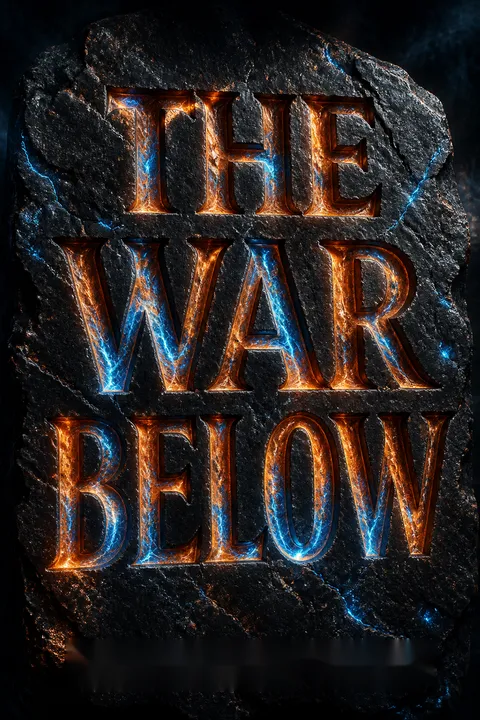
The War Below explores the complex battle between mining for critical minerals needed for green technology and environmental conservation. Readers praised Scheyder's balanced reporting on conflicts between mining companies, environmentalists, and local communities. The book examines the paradox of needing these minerals for clean energy while potentially destroying ecosystems to obtain them. Some found it informative but repetitive, while others appreciated the nuanced discussion of trade-offs between economic development and environmental protection. Overall, it provides insight into the challenges of transitioning to sustainable energy.
People Also Read





Glossary
Direct Lithium Extraction
Filters lithium from brineA group of processes that selectively removes lithium from salty water, or brine, using materials such as filters, membranes, or beads. DLE may use less land and take less time than large evaporation ponds, but its performance depends on the chemistry and temperature of the brine. In the book’s account, several approaches remained unproven at independent commercial scale.
Initiative for Responsible Mining Assurance
Independent mining standardsA multi-sector organization formed to develop standards for responsible mining. Its participants include mining companies, buyers, environmental groups, local communities, Indigenous representatives, labor, and investors. Independent auditors assess mines against standards covering subjects such as water, waste, worker safety, and community rights, then publish detailed results. IRMA can increase transparency and create pressure to improve, but it does not itself decide whether a mine should be built.
Free, Prior, and Informed Consent
Indigenous project consentA principle that Indigenous peoples should be able to make decisions about projects affecting their lands and communities without coercion, before decisions are final, and with access to relevant information. The book presents the term as an important standard for mining companies engaging with Indigenous communities. It also shows that companies and tribal leaders can disagree about whether consultation has been adequate or whether consent has been obtained.
tailings
Waste left after processingThe leftover material from separating valuable minerals from mined rock. Because ore can contain only a small percentage of usable metal, tailings may make up most of the material processed. They can contain water, chemicals, or toxic substances and must be stored and monitored. Tailings dams and other facilities can pose serious risks to nearby communities and waterways if they fail or leak.
thermal runaway
Self-amplifying battery fireA dangerous failure in which a lithium-ion battery cell overheats and triggers further heat-producing reactions. Damage, short circuits, overcharging, or high temperatures can contribute. Heat may spread from one cell to others, making the resulting fire difficult to control. The risk matters during shipping, storage, reuse, and recycling, where damaged batteries may be handled or dismantled.
brownfield
Previously developed industrial siteA site with a history of industrial or mining activity, often including existing infrastructure or environmental damage. Reusing a brownfield for a new mine may avoid disturbing entirely untouched land and can create an opportunity to address old pollution. However, past disturbance does not make a site harmless, and cleanup commitments must be assessed alongside the risks of new operations.
FAQ
What’s The War Below: Lithium, Copper, and the Global Battle to Power Our Lives by Ernest Scheyder about?
- Critical minerals and green energy: The book investigates the global struggle over lithium, copper, and other essential metals needed for electric vehicles and renewable energy, focusing on the tension between environmental protection and resource extraction.
- Mining controversies and case studies: It presents real-world conflicts at sites like Thacker Pass and Rhyolite Ridge in Nevada, and the Resolution Copper mine in Arizona, highlighting the perspectives of miners, Indigenous peoples, environmentalists, and local communities.
- Geopolitical and economic context: Scheyder situates these mining battles within broader global supply chains, U.S. energy policy, and international competition, especially with China’s dominance in mineral processing.
Why should I read The War Below by Ernest Scheyder?
- Insight into green energy dilemmas: The book offers a nuanced look at the environmental, social, and economic challenges of sourcing metals vital for climate change solutions.
- Understanding real-world impacts: Through detailed case studies, readers see the direct effects of mining projects on communities, ecosystems, and Indigenous lands.
- Relevance to current debates: As the world transitions to renewable energy, the book explains the critical role of metals and the geopolitical stakes, making it essential for those interested in climate policy, sustainability, and energy.
What are the key takeaways from The War Below by Ernest Scheyder?
- Mining is essential but contentious: The green energy transition relies on metals like lithium and copper, but mining often leads to environmental harm and social conflict.
- U.S. supply chain vulnerabilities: The United States has significant mineral reserves but depends heavily on imports and lacks sufficient processing capacity, especially compared to China.
- Complex stakeholder conflicts: Mining projects face opposition from environmentalists, Indigenous groups, and local communities, making it difficult to balance economic development, environmental stewardship, and cultural preservation.
How does The War Below by Ernest Scheyder explain the role of lithium-ion batteries in the green energy transition?
- Battery composition and metals: Lithium-ion batteries require metals like lithium, nickel, cobalt, copper, and graphite, which are critical for energy storage and powering electric vehicles.
- Demand surge and supply challenges: The book details how the shift to electric vehicles and renewables is driving a massive increase in demand for these metals, necessitating dozens of new mines globally by 2030.
- Supply chain vulnerabilities: Scheyder highlights the challenges in mining, processing, and refining these metals, including geopolitical risks and environmental concerns.
What is direct lithium extraction (DLE) and why is it significant in The War Below by Ernest Scheyder?
- Definition and promise: DLE is a set of emerging technologies designed to extract lithium from brine more efficiently and with less environmental impact than traditional evaporation ponds.
- Technological challenges: Despite heavy investment, no DLE technology had worked independently at commercial scale by the book’s publication, making it a high-stakes gamble for countries like Bolivia.
- Potential impact: Automakers, investors, and mining companies are betting on DLE to supply the bulk of lithium needed for electric vehicles, hoping it will revolutionize the industry.
How does The War Below by Ernest Scheyder portray the environmental and social impacts of mining?
- Historical and ongoing harms: The book recounts disasters like the Brumadinho dam collapse and the destruction of Aboriginal sites, illustrating the environmental and cultural damage mining can cause.
- Water use and pollution: Mining projects often require vast amounts of water and can pollute waterways, threatening ecosystems and local communities.
- Community and Indigenous rights: Mining frequently displaces or disrupts Indigenous peoples and local residents, raising questions about consent, cultural preservation, and equitable development.
How are Indigenous tribes and local communities involved in mining conflicts in The War Below by Ernest Scheyder?
- Diverse perspectives: Indigenous communities are shown both opposing and supporting mining projects, reflecting varied priorities such as protecting sacred sites or seeking economic benefits.
- Sovereignty and consent: The book discusses concepts like Free, Prior, and Informed Consent (FPIC) and how tribes negotiate or resist mining on their lands.
- Tensions and alliances: Conflicts arise not only between tribes and companies but also within alliances, as social and political issues complicate opposition movements.
What is the significance of Tiehm’s buckwheat and the Rhyolite Ridge conflict in The War Below by Ernest Scheyder?
- Rare plant species: Tiehm’s buckwheat is a rare flower found only at Rhyolite Ridge in Nevada, where a lithium-boron mining project threatens its survival.
- Symbol of biodiversity vs. mining: The plant has become a focal point for environmentalists, representing the conflict between protecting biodiversity and enabling the green energy transition.
- Legal and scientific challenges: The book details the discovery of mass destruction of the plant, debates over its cause, and the struggle to balance lithium mining with species conservation.
How does The War Below by Ernest Scheyder address the role of major companies and governments in the mining sector?
- Corporate influence: Companies like Rio Tinto, Freeport-McMoRan, Albemarle, and Tesla are central actors shaping mining development and global supply chains.
- Government policies: U.S. and foreign governments influence mining through regulations, subsidies, and trade agreements, often balancing economic, environmental, and geopolitical interests.
- Conflicting agendas: The book reveals tensions between promoting mining for green technologies and protecting the environment or Indigenous rights.
What are the main geopolitical issues around critical minerals in The War Below by Ernest Scheyder?
- China’s dominance: China controls a large share of global mining, processing, and refining of lithium, rare earths, cobalt, and other critical minerals, giving it significant leverage in supply chains.
- U.S. strategic vulnerabilities: The United States produces only a small fraction of its mineral needs and relies heavily on imports, raising national security concerns.
- Global competition and alliances: Other countries like Russia, India, and the European Union are also investing in critical minerals to reduce dependence on China, leading to a new geopolitical contest.
How does The War Below by Ernest Scheyder cover technological innovation and recycling in the lithium industry?
- Industry oligopoly and new players: The book traces the history of lithium production, profiling major companies and new entrants like EnergyX and ioneer.
- Recycling’s growing importance: Scheyder discusses the challenges and opportunities in recycling lithium-ion batteries to recover metals and reduce reliance on new mining.
- Innovators and companies: Entrepreneurs like Ajay Kochhar (Li-Cycle) and JB Straubel (Redwood Materials) are pioneering recycling technologies, while DLE and other extraction innovations are explored for their potential to reshape the industry.
What are the best quotes from The War Below by Ernest Scheyder and what do they mean?
- “It takes as much energy to wish as it does to plan.” —Eleanor Roosevelt: This quote underscores the need for action and planning to address mining and climate challenges, not just hope.
- “You can’t have green energy without mining.” —Mark Senti: This blunt statement highlights the unavoidable reality that mining is fundamental to producing the metals needed for renewable energy.
- “The state will never lose sovereignty when it comes to lithium.” —Evo Morales: Reflects Bolivia’s determination to control its resources and avoid past exploitation.
- “This country has to make a decision.” —Senator Joe Manchin: Emphasizes the U.S. dilemma between preserving pristine lands and developing mines critical for the green energy transition.
Download PDF
Download EPUB
.epub digital book format is ideal for reading ebooks on phones, tablets, and e-readers.








