

Key Takeaways
Become both a protector and a lover, not a caricature of either
The whole-man ideal. Lovell calls this integration the Warrior Poet: a person who develops strength for protecting others and tenderness for loving them. The model rejects two incomplete versions of masculinity, the helplessly passive man and the aggressive man who cannot control himself. Lovell’s own path moved through Army service, Christian ministry, family life, and teaching self-defense. He presents these not as competing identities but as capacities that need to work together.
Goodness governs strength. A Warrior Poet should be capable of force without being ruled by it, and capable of gentleness without surrendering responsibility. The goal is not to stay in battle mode at home. It is to bring the right kind of strength to each situation, from defending someone in danger to listening patiently to a spouse or child.
The model’s strength lies in treating care and capability as mutually reinforcing rather than opposite traits. In ethics, power becomes trustworthy when paired with restraint and accountability. That idea applies beyond masculinity: a leader needs both decisiveness and receptiveness, while a caregiver may need both compassion and boundaries. The universal language of the book can be useful, though its claim that this is the standard required of all men is broader than its examples establish. The underlying virtues are more persuasive as human capacities than as a fixed gender prescription.
Train your courage in practice, not in fantasies of heroism
Rehearsal changes response. Lovell’s account of a stressful firearms exercise makes the point concrete. Students face one another in protective gear with training ammunition, then repeat a short, chaotic scenario. They may know the mechanics of using their equipment, but fear can still disrupt their movements. Repetition helps them notice mistakes, recover, and act with more composure. The author’s conclusion is that readiness comes from practice, not from imagining oneself brave.
Give instinct a useful outlet. Lovell sees childhood games of forts, adventure, and competition as early ways children test themselves. He argues that adults also need real challenges rather than only watching athletes or fictional heroes. The useful principle is to choose demanding, appropriate practice, whether a sport, a difficult conversation, or professional training, and build competence gradually.
This resembles a basic insight from skill learning: performance under pressure depends partly on whether useful actions have been rehearsed in conditions that resemble the real task. Practice can reduce the cognitive burden of improvisation, but it cannot guarantee success, and high-risk skills require qualified supervision. The chapter is most compelling when it treats training as humility, a chance to discover what does not work. It is less compelling when every form of competition is treated as evidence of a universal warrior instinct. Courage can be cultivated through many kinds of responsibility.
Treat fear as a recurring opponent, not a flaw to hide
Fear changes its costume. As a boy, Lovell panicked on a roller coaster and asked to get off. As an adult, he recognizes that the same avoidance can appear in less obvious places: a hard conversation, a new responsibility, or an unfamiliar business decision. He calls the voice that rationalizes retreat the inner coward. It can sometimes prevent foolish risks, but if it makes every difficult choice, a person’s life shrinks around comfort.
Practice honest courage. Lovell argues that bravery begins by admitting vulnerability rather than pretending to be fearless. His practical challenge is to identify one meaningful thing being avoided and take a manageable step toward it. The point is not to seek danger indiscriminately. It is to build the capacity to act despite discomfort when the cause matters.
This distinction between feeling fear and obeying fear is psychologically useful. Avoidance often brings immediate relief, which can make future avoidance more likely; facing a manageable challenge can interrupt that loop. But discomfort is not automatically a sign that something should be endured. Fear can carry sound information about danger, coercion, or depleted capacity. The strongest version of the advice is therefore selective: notice the fear, assess what it is signaling, then choose a proportionate action aligned with responsibility rather than reflexive escape.
Build capability quietly, and keep power under voluntary control
Appearances mislead. In high school, Lovell assumed his Spanish teacher, Tony Lopez, would be an easy opponent. Lopez practiced combat sambo, a martial art, and calmly outmaneuvered the stronger, younger wrestler. The encounter taught Lovell that skill and composure can matter more than an intimidating appearance. He uses the term gray man for someone who avoids drawing unnecessary attention and understands when visibility helps or creates risk.
Capability needs restraint. Lovell argues that a person should be prepared to act decisively without advertising strength or confusing recklessness with courage. He contrasts the controlled protector with the villain, who intends harm, and the careless weak person, who causes harm through irresponsibility. The ideal is power directed by character, not aggression performed for an audience.
Lopez’s quiet competence punctures the assumption that strength must announce itself. In negotiation, emergency response, and leadership, understated preparation can be more effective than status signaling. The gray-man idea is useful as situational awareness, not as a universal rule to disappear or treat ordinary life as a threat environment. Likewise, capability alone does not establish virtue. The chapter’s best ethical test is whether others can feel safe around a person who has power, because restraint is demonstrated in conduct, not in self-description.
Write your death letter to see what deserves your life
Mortality clarifies priorities. Before combat missions, Lovell had to write letters that would reach loved ones if he did not return. The exercise made him confront what mattered beyond work, status, or possessions. He recommends writing a similar letter even without military service, as a way to say what should not remain unsaid and notice which relationships and obligations matter most.
Remember death, then return to living. The Stoic phrase memento mori means remembering that death is inevitable. Lovell presents the letter as a practical version of that reflection: write, consider the feelings it brings up, and use the resulting perspective to repair relationships or pursue neglected responsibilities. The purpose is not to obsess over dying or rush through a bucket list. It is to live the present more deliberately.
A written encounter with mortality can turn abstract values into specific names, apologies, and promises. That concreteness matters: people often endorse family or service in principle while letting urgent tasks consume their attention. The exercise can function as a values check, but death awareness is not inherently clarifying for everyone. For some, it can intensify anxiety or narrow attention. Its value depends on what follows the reflection: steady commitments and conversations, rather than panic, grand gestures, or the belief that every ordinary choice must be momentous.
Commit to a purpose and keep pursuing the people you love
A muse calls someone outward. Lovell uses muse for a person, ideal, or source of inspiration that draws someone beyond self-interest. His wife Rebekah becomes his muse after she notices how quickly he has fallen for her, then leaves him to continue pursuing the relationship. The story captures his broader point: love is not a prize secured once and for all but a continuing practice of attention and effort.
Purpose needs roots. Lovell describes earlier pursuits such as popularity, wrestling victories, and partying as meaningful for a time but insufficient as a lasting center. For him, Christian faith supplies the deeper purpose that sustains love for family and service to others. He argues that a relationship cannot carry the entire burden of a person’s meaning, yet committed relationships can help a person grow beyond self-absorption.
The muse idea links inspiration with obligation: a valued person or ideal does not merely excite someone but asks for sustained care. That is a useful correction to a culture of novelty, where initial intensity can be mistaken for durable love. The chapter also avoids making a spouse the sole source of purpose, an important protection against placing impossible emotional demands on a partner. Its account of commitment is strongest when paired with mutuality and safety; perseverance should not be confused with accepting abuse or denying legitimate reasons to leave.
Learn to move with life's demands instead of trying to erase them
Balance is learned movement. Lovell initially struggles to learn swing dancing, then finds that it teaches him to adjust to changing music and other dancers. He applies the lesson to life: people cannot eliminate every responsibility or control every disruption, but they can improve how they respond. A man who focuses only on work, physical toughness, or family obligations may neglect other parts of his life and eventually burn out.
Choose a sustainable pace. Lovell describes easing his academic ambitions from straight As to Bs while working and serving in campus ministry. He also argues for boundaries, the limits people set on time and energy, and for pacing long commitments rather than sprinting through all of them. The practical task is to compare stated priorities with actual time use, then adjust commitments where the mismatch is clear.
The dance metaphor makes adaptation feel active rather than passive: flexibility is a skill, not surrender. The emphasis on boundaries also challenges the assumption that virtue means unlimited availability. In organizational life, unchecked demands expand to fill whatever capacity is offered, so clear limits protect both performance and relationships. Still, balance is not a fixed allocation that can be optimized once. Caregiving, illness, work, and other changing conditions alter what is possible. The chapter’s best advice is to review the load repeatedly and adjust without treating every season as a personal failure.
Measure success by goodness and relationships, not applause or net worth
Achievement is not character. Lovell introduces Michael Faustus, a fictional climber who reaches the summit of South America’s tallest mountain after years of high-profile accomplishments. Instead of fulfillment, he finds loneliness and no clear next purpose. The parable illustrates the difference between greatness as visible achievement and goodness as the way a person treats others and lives by chosen values.
Count what remains. Lovell recalls the historical Ranger Robert Rogers as an exceptional soldier whose financial troubles and troubled marriage complicated his legacy. By contrast, he remembers a period of missionary work when his family had little money but a strong sense of shared purpose. His proposed measure of success includes faith, marriage, children, work, personal growth, and service, with priorities kept in workable balance.
The chapter distinguishes a public scorecard from a relational one. Money and achievement can provide security and meaningful opportunities, but they cannot certify that someone is trustworthy, loving, or content. That distinction is especially useful in cultures where measurable outputs become proxies for human worth. Yet the contrast should not become a romantic dismissal of financial stability: material hardship can damage relationships and constrain choice. A fuller account asks not whether ambition is good or bad, but whether its costs are consistent with the life and relationships a person means to protect.
Defend truth by learning deeply and arguing with intellectual humility
A worldview shapes conduct. Lovell recounts a philosophy class where he felt the instructor undermined students’ confidence in truth without offering stronger explanations in return. He argues that philosophy, understood as the pursuit of wisdom, helps connect facts, values, and experience into a coherent view of the world. His examples range from Socrates, who questioned powerful assumptions, to Chesterton’s image of people dismantling a streetlamp before understanding why it was there.
Learn before taking a stand. Lovell urges readers to study history, read challenging books, examine information sources, and speak up for their convictions. He sees public disagreement as a way to approach truth, provided people can admit they may be mistaken. He is especially critical of relativism and the rewriting of traditions, arguing that ideas have consequences for civic life and freedom.
The chapter rightly treats ideas as consequential rather than decorative. A society that cannot explain its commitments may struggle to defend them, and careful study can expose contradictions in both inherited and fashionable beliefs. Its polemic against relativism, however, sometimes blurs the difference between denying all facts and revising claims through evidence. Intellectual courage requires more than resisting cultural pressure; it also requires testing one’s own sources and distinguishing criticism of tradition from contempt for history. The strongest call is not simply to defend convictions, but to make them answerable to reason and experience.
Raise children through responsibility, wonder, and four kinds of strength
Build a sturdy foundation. Lovell describes a child as a table supported by four pillars: physical, social, spiritual, and mental development. Physical care includes health and discipline; social development includes manners, emotional control, and conflict resolution; spiritual development provides moral grounding; mental development includes reading, reasoning, and creative problem-solving. He argues that feeding and housing children is essential but does not exhaust the work of parenting.
Give children both structure and room. Lovell’s family makes time for chores, homeschooling, outdoor exploration, reading aloud, and shared activities. He worries that overscheduled days and constant screen use can crowd out imaginative play and direct family teaching. A vivid example is his children’s excitement when he offers extra chapters at bedtime. His practical invitation is simple: set aside focused time with children and join an activity they choose.
The four-part model usefully prevents parenting from collapsing into grades, behavior, or material provision alone. Reading aloud and unstructured play also create opportunities for language, imagination, and shared attention. The author’s emphasis on fathers as essential male role models reflects his experience, but the developmental needs he names are not exclusive to one sex. Children benefit from reliable caregivers who provide affection, boundaries, intellectual stimulation, and moral guidance. The framework travels well when treated as a checklist of needs rather than a rigid assignment of those needs to mothers and fathers.
Protect freedom by becoming less dependent and more engaged
Freedom has two sides. Lovell argues that people should defend liberty and also use it to build a worthwhile life. He connects personal discipline, civic participation, and practical resilience, warning that a person who cannot meet basic needs may have fewer choices in a crisis. His self-sufficiency advice begins with ordinary preparations such as stored food, water, household necessities, tools, and emergency supplies, rather than requiring a complete retreat from society.
Preparation should support service. Lovell traces the idea of home as refuge and argues that practical skills can help a family withstand interruptions to normal systems. He also urges readers to speak, vote, read, and connect with others rather than treating freedom as only an individual possession. His larger point is that preparation is valuable when it reduces fear and allows people to care for others, not when it becomes an all-consuming fixation.
Resilience is strongest when it combines household competence with dependable relationships and civic institutions. A modest reserve of essentials can reduce vulnerability to routine disruptions, while neighbors and community networks provide help that private stockpiles cannot. The book sometimes presents political and firearms claims in sweeping terms, so its broader principle deserves separation from its most contentious applications. Preparedness should be lawful, proportionate to plausible risks, and balanced against present needs. Independence is not isolation; freedom also depends on cooperation, trustworthy institutions, and the ability to participate in shared decisions.
Analysis
The book is a memoir-inflected guide to character, organized around a deliberately paradoxical ideal: a person should be capable of force yet governed by love, disciplined yet responsive, ambitious yet unwilling to sacrifice every relationship for achievement. Lovell builds this case through stories from childhood, Army Ranger service, marriage, faith, and parenting. The narrative gives abstract virtues physical scenes: a failed roller-coaster ride becomes an encounter with fear, a wrestling match exposes the limits of ego, and a letter written before deployment makes mortality immediate.
Its most durable contribution is the insistence that competence is morally incomplete without self-command and care. Physical readiness, intellectual seriousness, emotional presence, and spiritual conviction are treated as interconnected capacities. The practical exercises, especially writing a death letter and auditing how time is spent, translate that ideal into reflection and behavior. The framework also offers a useful critique of achievement culture: professional distinction cannot compensate for neglected loved ones or an unexamined life.
The book’s Christian commitments are not incidental. Jesus is its ultimate model of goodness, and faith supplies Lovell’s account of meaning, moral authority, and sacrifice. Though the book presents the Warrior Poet as broadly accessible, its deepest logic rests on that theological foundation. Readers outside the faith can still use its emphasis on service and accountability, while recognizing the difference between shared ethical language and the author’s full religious claim.
Some arguments are less secure. Lovell often generalizes from military experience to claims about all men, society, education, or political freedom. His accounts of masculinity can make aggression seem more universal, and gender roles more fixed, than the examples demonstrate. His advocacy of hardship also needs careful limits: discomfort can build capacity, but it can also cause injury or reinforce harmful stoicism. The book is best read as a forceful personal ethic, not a neutral account of human nature. Its central challenge remains valuable when applied with judgment: develop strength for the sake of others, and measure that strength by what it protects.
Review Summary
The Warrior Poet Way receives mostly positive reviews, praised for its insights on balanced masculinity, blending strength with emotional intelligence. Readers appreciate Lovell's practical advice, Christian perspective, and call for men to be protectors and nurturers. Some criticize its simplistic views and heavy religious focus. The book resonates with many men seeking guidance on manhood, though it may not appeal to skeptics. Overall, it's seen as a valuable resource for those aligned with its conservative, faith-based approach to masculinity.
Glossary
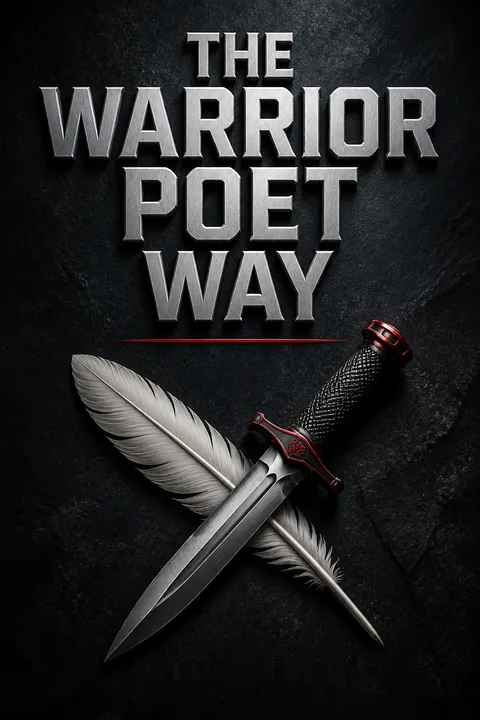
Warrior Poet
Integrated strength and tendernessLovell’s central ideal of a person who combines protective capability with emotional depth, love, and humility. The Warrior Poet is meant to be able to confront danger without becoming reckless, and to care for family and community without becoming passive. The term describes an integrated character, not merely a soldier who also enjoys art.
Warrior Within
Capacity for protective actionLovell’s name for the instinctive readiness to confront challenges and protect others. He argues that this capacity is present from childhood but can be dulled by passivity or misdirected into entertainment and aggression. Training and responsibility, rather than forceful self-image, help develop it into disciplined action.
inner coward
Voice of fearful avoidanceLovell’s label for the part of a person that prefers comfort, evades responsibility, and rationalizes avoiding necessary conflict. It is not simply the experience of fear, which can be reasonable. The term describes a recurring temptation to let fear govern choices, and the author recommends countering it through humility and appropriately chosen challenges.
gray man
Low-profile capabilityA person who avoids unnecessary attention and does not advertise capability, especially in situations where standing out could create risk. Lovell extends the tactical idea beyond physical danger, arguing that people should discern when visibility serves a purpose and when humility or discretion is wiser. It is situational awareness, not a requirement to remain unnoticed at all times.
muse
Source of outward inspirationLovell’s term for a person, ideal, or source of inspiration that draws someone beyond self-interest and toward love, commitment, or a larger purpose. His wife and Christian faith occupy this role in different ways. A muse is not merely a romantic fascination; the relationship or ideal calls for sustained effort and helps orient a life.
memento mori
Remembering mortalityA Latin phrase meaning remember that you will die. Lovell uses the idea to encourage deliberate living rather than fixation on death. His practical exercise is writing a letter to loved ones as if it were a final message. The reflection is meant to clarify priorities, prompt unfinished conversations, and return attention to present responsibilities.
Four pillars
Four domains of child developmentLovell’s parenting model describes a child’s development through physical, social, spiritual, and mental needs. Physical care includes health and safety; social growth includes emotional control and relationships; spiritual development supplies moral grounding; mental development involves learning and reasoning. The image is a table whose stability depends on support across all four areas.
FAQ
What's The Warrior Poet Way about?
- Exploration of Masculinity: The book delves into the concept of the "Warrior Poet," a man who embodies both strength and sensitivity. It argues that true masculinity involves being both a protector and a lover, capable of facing challenges while nurturing relationships.
- Purpose and Identity: It explores the journey of finding a purpose that transcends personal desires, emphasizing the importance of living for something greater than oneself.
- Faith and Service: John Lovell shares his personal journey of faith, particularly his commitment to Jesus Christ, which serves as his ultimate source of purpose and inspiration.
Why should I read The Warrior Poet Way?
- Personal Growth: The book offers practical advice for men seeking to improve themselves and their lives, providing actionable steps to cultivate both physical and emotional strength.
- Cultural Relevance: In a time when traditional masculinity is often criticized, Lovell presents a balanced view that celebrates the warrior spirit while advocating for compassion and love.
- Inspiration for Men: It serves as a guide for men to embrace their masculinity while also nurturing their emotional and spiritual sides, promoting a holistic approach to manhood.
What are the key takeaways of The Warrior Poet Way?
- Balance of Strength and Sensitivity: Lovell argues that a true man must be both a warrior and a poet, embodying strength while also being emotionally available.
- Living with Purpose: The book encourages readers to identify a higher purpose in life, which can guide decisions and actions, ultimately leading to a more fulfilling existence.
- Commitment is Essential: True love and purpose require ongoing commitment, especially in relationships, to foster growth and connection.
What are the best quotes from The Warrior Poet Way and what do they mean?
- "All men dream: but not equally." This quote suggests that those who take action on their dreams are the ones who truly make an impact.
- "A good man is a very, very dangerous man who has that under voluntary control." It emphasizes that true strength lies in self-control and the ability to channel one's power for good.
- “True success comes in sacrificing for others.” This encapsulates the idea that fulfillment and happiness are found in serving others and nurturing relationships rather than pursuing material success.
What is the concept of the "Warrior Poet" in The Warrior Poet Way?
- Duality of Identity: The "Warrior Poet" represents a man who is both fierce and gentle, capable of fighting for what is right while also nurturing relationships.
- Courage and Compassion: True masculinity involves being courageous in battle while also being compassionate in love.
- A Call to Action: The concept serves as a rallying cry for men to embrace their full potential, cultivating both their warrior instincts and poetic sensibilities.
How does The Warrior Poet Way address the issue of fear?
- Confronting Fear: Lovell emphasizes the importance of facing one's fears head-on to overcome the inner coward and achieve personal growth.
- Fear as a Barrier: Fear can prevent men from pursuing their true potential, but recognizing it as a natural part of life is crucial.
- Practical Strategies: Lovell provides advice for battling fear, such as engaging in challenging activities and embracing discomfort to build resilience and confidence.
How does John Lovell define a "muse" in The Warrior Poet Way?
- Inspiration Source: A muse is someone or something that inspires you to reach beyond your limits and pursue your true potential.
- Relationship Catalyst: It can help deepen relationships, encouraging individuals to strive for growth and connection, even during challenging times.
- Not Just Romantic: A muse can also be a mentor, a cause, or a passion that drives you to become a better person.
How does The Warrior Poet Way define true masculinity?
- Strength and Vulnerability: True masculinity is the ability to be both strong and vulnerable, showing emotions while also being a protector.
- Purpose and Responsibility: Men should live with purpose and take responsibility for their actions, serving others and standing up for what is right.
- Rejecting Societal Norms: Lovell challenges modern societal expectations of masculinity that often promote passivity, calling for men to embrace their warrior instincts.
What practical advice does John Lovell offer in The Warrior Poet Way?
- Daily Disciplines: Establish daily routines that promote physical, mental, and emotional strength, including regular exercise and meaningful conversations.
- Facing Challenges: Seek out challenges that push you out of your comfort zones, as overcoming adversity is essential for personal growth.
- Building Relationships: Nurture relationships with family and friends, advocating for open communication and vulnerability as key components of strong connections.
How does The Warrior Poet Way address the concept of death?
- Facing Mortality: Lovell encourages readers to confront their own mortality as a means of living more fully, prioritizing what truly matters in life.
- Writing a Death Letter: This practice helps clarify one's values and relationships, allowing individuals to express their love and intentions before it's too late.
- Living with Purpose: Understanding the inevitability of death can inspire men to live with greater purpose and urgency, making the most of every moment.
What is the significance of the "War of Ideas" in The Warrior Poet Way?
- Intellectual Engagement: Lovell emphasizes the importance of engaging in the battle of ideas, equipping men to defend their beliefs and values.
- Philosophical Foundations: Philosophy shapes our understanding of truth and morality, and Lovell encourages readers to seek wisdom and develop a coherent worldview.
- Cultural Responsibility: Men have a responsibility to stand up for truth and challenge destructive ideologies, engaging in meaningful discourse to defend their principles.
What is the significance of the title The Warrior Poet Way?
- Dual Identity: The title reflects the central theme of integrating the warrior's strength and the poet's sensitivity into a cohesive identity.
- Path to Fulfillment: True fulfillment comes from embracing both aspects of oneself, leading to a more balanced and meaningful life.
- Cultural Commentary: It critiques modern masculinity, advocating for a redefinition that includes emotional depth alongside physical prowess.
Download PDF
Download EPUB
.epub digital book format is ideal for reading ebooks on phones, tablets, and e-readers.








