

Key Takeaways
Treat education as a bridge from isolation into a wider world
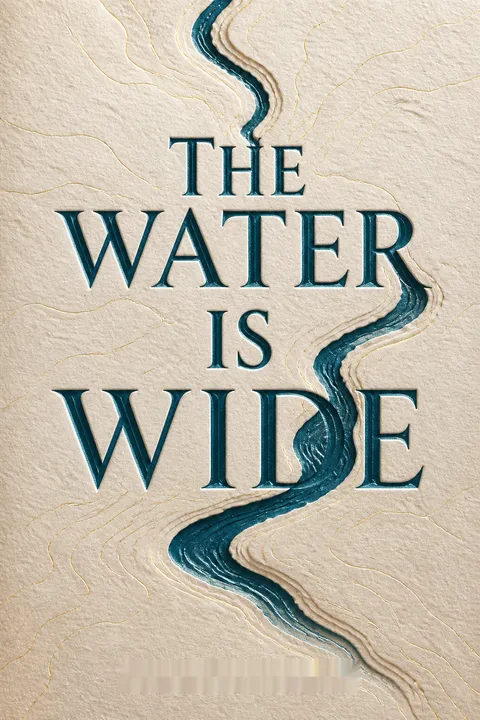
The river is a barrier. Pat Conroy arrives at Yamacraw, a South Carolina island reachable only by boat, to teach children whose lives have been cut off from much of the country. There are no telephones, the roads are rough, and the school has few suitable books. The island’s oyster industry has collapsed after pollution contaminated the water, driving hundreds of residents away in search of work.
A wider horizon matters. Conroy sees that schooling cannot be separated from the island’s isolation and economic history. His task is not simply to teach textbook material, but to help children imagine and navigate a world beyond the river. The book’s title evokes that crossing: education may offer a route outward, but it cannot erase the barriers children face.
The bridge is both literal and educational. Conroy’s daily boat ride makes visible a basic point about access: schooling depends on transportation, infrastructure, and the ability to reach people and resources. The island’s isolation also shows why equal treatment is not always equitable treatment. A rule designed for mainland schools can quietly exclude a community with different constraints. Still, a teacher can widen a child’s sense of possibility without being able to repair the economy or institutions that restrict it. The book is strongest when it holds both truths together.
Find out what students know before trusting their grade labels
The diagnosis shocks him. Conroy’s first attempts to assess his class reveal that many children cannot write their names, spell basic words, or retell a simple story. On a basic knowledge check, six cannot recite the alphabet, three cannot spell their names, and four cannot add two plus two. Eighteen children cannot identify the United States as their country, and none can name an ocean until he connects the question to the beach beside them.
The grade is not the skill. Administrators offer little practical guidance, while textbooks assume knowledge the students have not been taught. Conroy’s informal tests uncover the gap between official placement and actual learning. The results turn a vague impression of disadvantage into concrete evidence, which he reports to the superintendent.
The assessment works because it replaces assumptions with observable starting points. In education, a grade label can conceal large differences in prior opportunity, language experience, and practice. A useful diagnostic does not merely rank students. It helps a teacher choose the next learnable step. Conroy’s examples also show that questions can fail when they rely on a teacher’s framing: the children know the beach, but not the term Atlantic Ocean. The limitation is that a shocking baseline can become a deficit portrait if it ignores what students already understand. Conroy’s later conversations help correct that imbalance.
Make knowledge stick by linking it to curiosity, performance, and play
Attention opens the door. Conroy uses music, films, maps, conversation, and a tape recorder to reach students whom conventional lessons have not engaged. He turns classical music into a guessing game, teaching the class to recognize pieces by Beethoven, Brahms, and Rimsky-Korsakov. The children also use a recorder to hear their own voices, then sing songs they know by heart. A discussion of a film about the Salem witch trials becomes a lively retelling of The Wizard of Oz, which many students already know from television.
His method is a pep rally. The pep-rally method is Conroy’s informal approach of teaching facts through energetic repetition, jokes, and call-and-response. It gives children a way to participate together, even when some are still struggling with reading.
The classroom becomes more than a place to receive information. It is a stage where students can perform competence, hear themselves, and build shared memory. That resembles experiential learning: new material becomes easier to retrieve when connected to something vivid and familiar. The music game also gives students a public success they can demonstrate to visitors. Yet enthusiasm is not the same as mastery, and group chanting can conceal who has understood. Conroy’s approach works best as an invitation into learning, not as a substitute for checking each child’s progress.
Use real journeys to teach what a classroom cannot show
The trip is part of the lesson. Conroy organizes a Halloween visit to Beaufort and a longer journey to Washington, D.C., taking children who have rarely left Yamacraw into new places and relationships. In Beaufort, they join a school carnival and trick-or-treat with local families. A storm delays their return, forcing the group to spend another night away from the island, but the children remember the welcome and the adventure.
Ordinary things become discoveries. In Washington, the monuments and museums matter, but so do the zoo, bicycles, and a paved hill. On the drive, one student asks about the lines painted on the highway. The markings are invisible to Conroy through familiarity, but new and meaningful to a child accustomed to unpaved roads.
A field trip changes the unit of learning from a topic to an encounter. The road markings, which adults stop noticing, reveal how much assumed knowledge is built into daily life. Travel also creates contact between children who might otherwise meet only through stereotypes. The visits do not automatically dissolve prejudice, and the stormy Halloween return shows the practical risks of taking children beyond familiar routines. Their value comes from careful preparation, trusted adults, and the chance to experience places rather than merely hear them described.
Learn from students’ expertise before calling their world deficient
The children know their place. Conroy initially sees his students mainly through what they lack in school knowledge. Then they teach him about hunting, cleaning game, fishing with the tides, local weather, and the island’s stories. They can explain when fish are likely to bite and how to prepare the animals their families eat. Their speech is Gullah, the Sea Island variety of speech described in the book as combining African linguistic roots with English; Conroy struggles to understand it, and the children struggle with his speech too.
Knowledge runs both ways. Their unfamiliarity with maps or national history does not mean they are empty of knowledge. The island has its own expertise, vocabulary, and memory. Conroy’s teaching improves when he listens as well as explains.
This shift resembles the idea of situated knowledge: people develop skill through the demands and practices of their own environment. The children’s knowledge of tides is not a lesser version of textbook geography. It is precise knowledge suited to fishing and island life. Their dialect also presents a two-way communication problem, not simply a student deficit. The book’s account remains filtered through Conroy, who sometimes interprets local beliefs as ignorance before learning more about their context. That limitation makes his willingness to be corrected especially important.
Separate generous intentions from the structural changes children need
Goodwill can miss the point. The island has a public library stocked with 2,000 books, but many residents cannot read, and the collection includes works far beyond the children’s reading levels. The school receives unsuitable textbooks and donated materials that do little to meet local needs. The oyster industry’s collapse has also deprived families of income, while the polluted water and difficult crossings remain beyond any classroom lesson.
Access requires practical support. Conroy uses his boat to bring films, equipment, visitors, and supplies. Yet even basic needs, such as reliable transportation and appropriate instruction, become disputes with administrators. The contrast is sharp: outsiders can announce a library or air conditioning, while children still lack the conditions and teaching that make education usable.
The book distinguishes symbolic provision from effective provision. A library is not useful merely because books have been delivered; readers need accessible material, instruction, and reasons to use it. This is a broader lesson in public services: inputs are easy to count, while actual access and capability are harder to establish. Conroy’s boat makes the infrastructure gap tangible, but individual improvisation is fragile. A committed teacher can patch holes in a system, yet those patches should not be mistaken for a durable public solution.
Protect children’s dignity, especially when discipline becomes difficult
Fear is not instruction. Mrs. Brown calls children slow or retarded, scolds them about their bodies and homes, and uses leather straps to punish them. Conroy sees how the children tense up when they hear a beating next door. He rejects corporal punishment, but managing frequent fights and disruptions tests that conviction. He tries games, jokes, and arm-wrestling; at one point he uses a painful finger-pressure trick, which he calls milking the rat, to stop fights without a belt.
His own methods need scrutiny. Conroy’s humor sometimes helps children feel safe, but it also crosses lines. He frightens girls with a made-up ghost story, then stages a fake attack, leaving them terrified. Good intentions do not guarantee that a teacher’s performance respects a child’s feelings.
The tension here is not simply between strictness and kindness. It is between preserving order and preserving dignity, under conditions where children have learned that force is normal. Conroy’s painful technique avoids the strap but still relies on coercion, a reminder that a gentler intention can reproduce the logic of punishment. His ghost prank exposes a different danger: a teacher’s authority can make a joke feel real to a child. The section invites a practical test for discipline: does it help a child learn self-control, or merely teach them to fear the adult?
Pair moral courage with strategy when confronting entrenched power
Speaking up has consequences. Conroy repeatedly challenges the school administration over poor conditions, transportation costs, and the quality of education. After the board initially blocks him from speaking, he later addresses it and wins approval for the boat’s gas expenses. But the victory does not settle the conflict. In the following year, the superintendent fires him, citing insubordination and other charges. The board sustains the dismissal, and a judge rules that the board has broad authority to remove him.
Resistance has costs for others. Island parents organize a school boycott in his support. Threats of fines, jail, and lost benefits frighten families, so Conroy calls the boycott off. The episode shows that the people with the least power may bear the greatest risk when a dispute becomes a public showdown.
Conroy’s confrontation exposes how institutions can praise democratic procedure while narrowing who gets heard. His first board appearance produces a concrete win, but a single victory does not change who controls hiring, budgets, or enforcement. The boycott makes the distribution of risk visible: a teacher can leave, while parents remain vulnerable to economic pressure. Courage matters, but movements also need shared decision-making and protection for those who face retaliation. The memoir’s account is a warning against confusing personal bravery with a strategy that serves the whole community.
Count small gains honestly, without pretending one teacher can rescue a community
Progress is real and limited. By the end of the year, some students have learned the alphabet, written their names, or counted further than before. Three boys make substantial progress learning to swim at a camp, while the girls remain too frightened to enter the pool. The children’s knowledge of music, places, and people has grown, but Conroy doubts that he has changed their life prospects substantially.
He questions his own role. The islanders begin to describe him as proof that white teachers are better, a stereotype he does not want to reinforce. He hopes a young Black couple can replace him and offer students a different example. His final measure is not a heroic rescue, but whether the children have more knowledge and possibility than before.
This ending resists two familiar distortions: the claim that nothing can improve, and the savior story in which one outsider fixes a community. Small gains matter because they are concrete, but they coexist with poverty, racism, and weak institutions. Conroy’s concern about becoming an educational authority who strengthens white superiority is especially important. Representation is not a complete remedy, but who teaches can shape what children believe about expertise and belonging. The honest measure is therefore both personal and structural: what changed in the classroom, and what remained beyond it?
Analysis
The Water Is Wide works as a memoir of teaching, but its deeper subject is the collision between access and authority. Yamacraw’s river makes exclusion visible: children are separated from schools, services, and experiences that mainland residents take for granted. Conroy answers with improvisation. He turns music into a game, invites visitors into the classroom, and takes students across the water. These episodes make learning tangible, while also showing that opportunity depends on transport, materials, time, and institutional permission.
The book’s narrative strength is its willingness to let the teacher change. Conroy arrives convinced that knowledge flows from him to the children. Their command of tides, hunting, local speech, and island history unsettles that model. His failures matter too. He humiliates students with jokes, uses pain to control behavior, and initially reads cultural difference as ignorance. The memoir is therefore more persuasive as an account of learning to teach than as a manual offering a clean method.
Its racial politics are both revealing and complicated. Conroy names his own racist past and the prejudices of white administrators, yet the story remains organized around his arrival, his outrage, and his expulsion. The children’s voices animate the book, but they rarely control its interpretation. That imbalance is not a reason to dismiss the account. It is a reason to read its scenes alongside the question of who gets to narrate reform, and whose knowledge counts as evidence.
The conflict with the school system also complicates the idea that moral clarity guarantees change. Conroy’s testimony wins a modest transportation concession, but the administration retains the power to fire him. The boycott makes the same point from another angle: protest can create pressure, yet the most vulnerable families may pay the price. The book’s lasting argument is not that one charismatic teacher can overcome structural neglect. It is that children deserve serious teaching, meaningful access, and respect, while their communities deserve more than gestures and promises.
Review Summary
The Water Is Wide is highly regarded by readers for its powerful depiction of Conroy's year teaching on a remote South Carolina island in 1969. Many praise Conroy's lyrical writing, humor, and dedication to his underprivileged students. The book offers insight into racial issues and educational neglect of the era. While some find it dated or paternalistic, most appreciate its honest portrayal of Conroy's idealistic efforts to broaden his students' horizons against institutional resistance. The memoir resonates with educators and those interested in Southern culture and civil rights history.
People Also Read









Glossary
Gullah
Sea Island speech varietyA distinctive speech variety associated with Black communities of the Sea Islands and coastal South Carolina. Conroy describes it as combining African linguistic roots with English and notes claims that older English forms remain in it. He and his students initially struggle to understand one another, making language difference a practical classroom challenge rather than evidence that either side lacks intelligence.
pep-rally method
Energetic group learningConroy’s informal name for teaching basic information through lively repetition, jokes, questions, and group responses. He uses the approach for topics such as geography, history, and science, encouraging students to answer together and enjoy demonstrating what they remember. It helps sustain attention and create shared momentum, though group responses alone cannot show whether every student has learned the material.
Play and Talk
A spelling board gameA classroom game Conroy uses with students who have very limited reading and writing skills. Players spin to land on a letter, identify its sound, and name or spell a word beginning with it. The game gives students practice with letters and words in a playful setting, while its competitive format also reveals how strongly some children respond to challenge.
milking the rat
Painful finger-pressure restraintA finger-pressure technique Conroy remembers from childhood and uses to interrupt fights among his students. It involves pressing an opponent’s fingernail and finger joints to cause pain, with the pressure adjusted by the person applying it. Conroy presents it as an alternative to a strap, but it remains a coercive method and should not be mistaken for nonviolent discipline.
Yamacraw Island Project
College community programA program associated with Cowell College at the University of California, Santa Cruz. It sends pairs of college students to live on Yamacraw for a quarter, learn about island life, and help residents where possible. One aim is to support the school, although the existing teacher’s resistance often limits the students’ classroom involvement.
snowbirds
Winterbound yachts and boatsThe islanders’ name for large yachts traveling south along the inland waterway as cold weather arrives. Their wakes can overturn small fishing boats or bateaux. Because many island residents spend time on the water and some cannot swim, these passing boats represent a serious drowning risk, strengthening Conroy’s determination to teach his students to swim.
FAQ
What's The Water Is Wide about?
- Teaching on Yamacraw Island: The book follows Pat Conroy's experiences as a teacher on Yamacraw Island, a remote and impoverished community in South Carolina.
- Cultural and Racial Themes: Conroy explores the racial and cultural dynamics of the 1960s, addressing systemic racism and educational neglect.
- Personal Growth: The narrative is as much about Conroy's personal journey and self-discovery as it is about his teaching experiences.
Why should I read The Water Is Wide?
- Engaging Storytelling: Pat Conroy's vivid and emotional writing style draws readers into the world of Yamacraw Island.
- Insightful Social Commentary: The book offers a critical look at educational disparities and racial tensions, encouraging reflection on systemic racism.
- Inspiration and Hope: Conroy's dedication to his students and the transformative power of education provide an inspiring and hopeful message.
What are the key takeaways of The Water Is Wide?
- Transformative Education: The book highlights the power of education to change lives and the importance of equitable opportunities for all students.
- Empathy and Understanding: Conroy learns to see beyond racial stereotypes, developing a deeper understanding of his students' lives and struggles.
- Challenging Norms: The narrative encourages questioning societal norms and standing up against injustice, emphasizing advocacy for marginalized communities.
What are the best quotes from The Water Is Wide and what do they mean?
- “You remind me of that boy I was, Pat.”: This quote highlights mentorship and the impact of personal experiences on one's choices.
- “The river is deep, the river is wide.”: A metaphor for the barriers faced by the Yamacraw community and the journey toward understanding.
- “No man or woman has the right to humiliate children, even in the sacrosanct name of education.”: Emphasizes the ethical responsibility of educators to treat students with respect.
How does Pat Conroy's background influence his teaching in The Water Is Wide?
- Military Upbringing: His experience at The Citadel shapes his views on discipline, contrasting with the informal environment of Yamacraw.
- Personal Reflection: Conroy's reflections on his childhood and prejudices provide insight into his growth as an educator.
- Desire for Change: His background fuels his passion for social justice and improving educational experiences for his students.
What challenges does Pat Conroy face while teaching on Yamacraw Island?
- Cultural Barriers: Significant cultural differences complicate communication and understanding between Conroy and his students.
- Resistance from Authority: He faces opposition from the school administration, particularly from Mrs. Brown, who resists his progressive methods.
- Limited Resources: The lack of educational resources on the island presents a constant struggle for effective teaching.
How does The Water Is Wide address themes of race and identity?
- Confronting Prejudice: Conroy's journey involves confronting his own prejudices and societal norms surrounding race.
- Cultural Understanding: The narrative emphasizes understanding and respecting different cultural identities.
- Empathy and Connection: The book illustrates the power of empathy in bridging racial divides and fostering meaningful change.
How does Conroy's relationship with his students evolve in The Water Is Wide?
- Initial Distance: Initially, there is a significant distance between Conroy and his students due to past experiences with white teachers.
- Building Trust: Over time, Conroy builds trust and rapport through genuine engagement and understanding.
- Mutual Growth: The relationship evolves into a partnership where both Conroy and his students learn from each other.
What role does the community play in The Water Is Wide?
- Support and Resistance: The community's response to Conroy's efforts is mixed, reflecting the complexities of race relations and community identity.
- Cultural Heritage: The rich cultural heritage of the island's residents is a significant aspect of the narrative.
- Collective Struggles: The community's struggles with economic hardship and educational neglect are central to the story.
How does the environment of Yamacraw Island impact the story in The Water Is Wide?
- Isolation and Neglect: The island's physical isolation reflects the neglect faced by its residents, particularly in education.
- Natural Beauty: The island's beauty contrasts with the community's struggles, highlighting the complexity of their lives.
- Cultural Identity: The unique cultural identity of the residents is deeply intertwined with the environment.
How does Conroy's teaching philosophy evolve throughout The Water Is Wide?
- Initial Idealism: Conroy begins with idealism and a desire to make a difference through education.
- Realization of Limitations: He confronts the harsh realities of teaching in a marginalized community.
- Emphasis on Relationships: By the end, Conroy recognizes the importance of building strong relationships with his students.
What impact does The Water Is Wide have on readers?
- Awareness of Educational Inequality: The book highlights disparities in education faced by marginalized communities.
- Inspiration to Advocate for Change: Conroy's story serves as a call to action for equitable education and support for marginalized voices.
- Empathy for Diverse Experiences: The narrative fosters empathy for the experiences of others, particularly those from different cultural backgrounds.
About the Author



Download PDF
Download EPUB
.epub digital book format is ideal for reading ebooks on phones, tablets, and e-readers.








