

Plot Summary
The Question After the Camps
At Gordon High, Laurie Saunders edits a school paper and worries that her staff will miss another deadline. In history class, her teacher, Ben Ross, shows seniors a film of Nazi concentration camps.
Laurie and other students cannot understand how ordinary Germans allowed the atrocities to continue, while Ben can offer only explanations about fear and disorganization. His student Robert Billings sleeps through the film and remains isolated from classmates who mock him. After school, Ben reads about Nazi Germany, still searching for an answer the books do not provide.
He decides to create a classroom experiment that will let students experience how obedience and collective power might take hold. His curiosity begins as a teacher’s attempt to make history tangible, but it will draw him into the very authority he means to examine.
The opening sets up two forms of exclusion: Laurie’s frustration with an apathetic school culture and Robert’s entrenched isolation. The film turns historical horror into a present-tense moral problem, but Ben’s inability to explain complicity exposes the limits of knowledge delivered as information. His decision to recreate social conditions is pedagogically imaginative and ethically hazardous. He assumes that an experience can clarify what explanation cannot, yet he has not accounted for the fact that students will experience his authority as real, not simulated. The experiment’s danger is therefore embedded in its method: to teach obedience, Ben must first ask for it.
Discipline Takes the Room
The next day, Ben writes a lesson about discipline on the board and asks his students to sit with controlled posture, then leave their desks and return quickly at his command. The first attempts are noisy, but David Collins arranges the class in an efficient line, and the final timed return takes only seconds.
Ben adds rules for standing before speaking and addressing him formally. Students who usually drift through class begin answering briskly and moving in unison. Robert follows every instruction, earns Ben’s public approval, and smiles as classmates copy his posture.
The students leave energized by the precision they have created together. Ben notices that they remained engaged beyond the bell, while David begins imagining how the same sense of coordination might help his struggling football team.
The exercise offers immediate rewards: order, speed, recognition, and the relief of knowing exactly what to do. Robert’s visible success is especially important because discipline gives a disregarded student a role he can perform competently. Yet the class’s collective pleasure makes control feel self-chosen. Ben is not simply imposing rules; he is turning compliance into a shared achievement, which lets students experience obedience as agency. David’s interest also shifts the lesson from the classroom into school life. The experiment becomes portable because its emotional payoff, belonging through coordinated action, can be applied to any group dissatisfied with its own performance.
The Wave Gets a Name
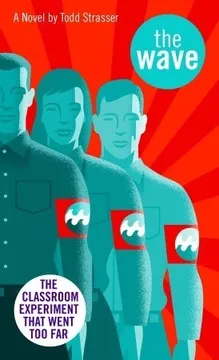
When students arrive the following morning already sitting in disciplined rows, Ben adds community to the lesson. He draws a wave symbol, establishes a salute, and gives the class a shared identity. The ceremony draws in even reluctant students, including Laurie, who senses how easily the group’s energy gathers force.
After class, David persuades teammates Brian Ammon and Eric to try the same principles at football practice. The players’ quarrels, especially between Brian and his ambitious backup, Deutsch, expose their lack of teamwork.
David argues that they must support a common goal rather than compete for individual status, and the players agree to learn the Wave salute and slogans. Their coach notices a new seriousness at practice, giving David early evidence that the movement can produce practical results.
Naming the group transforms a classroom routine into an identity. The wave emblem and salute make membership visible, while repeated phrases bind individual students to a common script. David’s football application reveals the appeal of the movement beyond Ben’s teaching: teamwork answers the players’ frustration with losing and their fear of being overlooked. The same structure that briefly includes Robert also threatens to define belonging through conformity. Laurie’s unease is a counterpoint to David’s enthusiasm; she registers not merely the novelty of the ritual but its capacity to absorb judgment. The group’s early benefits are real, which makes its later coercion harder for members to recognize.
Membership Becomes a Mandate
Ben formalizes membership with yellow cards, marking some students as monitors who should report rule-breaking. He adds action to the group’s principles and directs members to recruit others. Students from outside the history class begin joining, and Wave members gather at one cafeteria table.
Robert, once left alone, is welcomed into the group and starts speaking with confidence. Laurie, however, questions the assumption that everyone wants to belong; Robert answers that members must support the movement.
At home, Laurie’s mother warns that Robert’s sudden transformation may depend on the safety of the group, while Ben’s wife, Christy, notices her husband becoming absorbed in the experiment. Ben continues because students are studying more and the football team seems newly organized, though his wife’s caution and Laurie’s discomfort point to costs beneath the apparent success.
The membership cards convert an abstract community into a system of observation. Monitors do not need to punish anyone for the threat of surveillance to alter behavior; students learn that membership includes watching one another. At the same time, the movement offers genuine relief from school hierarchies. Robert’s inclusion and Amy’s enjoyment of equality are not cynical illusions, but benefits purchased through a narrowing tolerance for dissent. Ben’s personal investment is another warning sign. He sees improved preparation and order, then treats those outcomes as evidence that the experiment is working, even as students become less analytical. The danger grows through small, useful compromises, not through an abrupt change in purpose.
The Anonymous Warning
As The Wave spreads through Gordon High, Principal Owens questions Ben about its reach and warns him to watch the students closely. Ben insists he remains in control. Soon Laurie finds an unsigned account from a junior who says older students pressured friends to join and threatened that nonmembers would lose their friendships.
The writer’s anonymity tells Laurie that fear is already shaping what students dare to say. Around the school, members distribute pamphlets and prepare a Wave rally. Robert asks to serve as Ben’s bodyguard, convinced that the leader needs protection.
Ben agrees, though he recognizes that accepting the role strengthens the image of himself as someone who must be guarded. Laurie’s newspaper staff urges her to report on the movement, and she begins gathering evidence rather than dismissing her unease.
The anonymous report gives Laurie concrete evidence that the movement’s equality has a boundary: those outside it may be threatened with social abandonment. Its unsigned status matters as much as its account, because the student has already learned that public disagreement carries a risk. Robert’s offer of protection shows how thoroughly the leader-follower relationship has entered students’ imaginations. Ben understands that the bodyguard role magnifies his authority, yet accepts it to sustain the experiment. His self-awareness does not prevent participation; it becomes a way to rationalize it. Meanwhile, Laurie’s journalistic instincts turn private suspicion into an evidentiary task, setting her apart from people who accept the group’s own account of itself.
Laurie Refuses the Rally
On the day of the Wave rally, Laurie sees Brian fighting Deutsch and shouting the movement’s slogans, while David treats the conflict as proof that the team must become more unified. Laurie refuses to attend the rally.
David accuses her of resenting a group where she is no longer exceptional, and the argument ends their relationship. At the school, she hides in the newspaper office with staff members Alex Cooper and Carl Block, who also avoid the rally. Later, Laurie’s father tells her that a Jewish sophomore was beaten after resisting pressure from Wave members; the boy’s family plans to contact the principal.
Laurie realizes the movement has reached beyond chanting and school spirit. She decides The Grapevine must expose what is happening, even as she knows that publishing against The Wave may make her a target.
Laurie’s refusal is a costly act because it separates her from both the movement and David. Their argument shows how group loyalty can recast a partner’s independent judgment as vanity or betrayal. David does not set out to harm Laurie; he has accepted a framework that makes disagreement look like an attack on collective welfare. The report of violence against a Jewish student changes the stakes from social pressure to physical danger, echoing the history that began the experiment. Laurie’s choice to use the newspaper is therefore not simply a rejection of The Wave. It is an attempt to restore public evidence and open debate where membership has begun to police both.
The Grapevine Names the Cost
Laurie’s special issue of The Grapevine includes the junior’s account, a report on the beaten sophomore, interviews with worried adults, and her editorial against the movement. Amy confronts her, revealing how years of comparison with Laurie made The Wave’s promise of equality feel like relief.
Laurie publishes anyway, and the paper circulates quickly through the school. David and other members resent the coverage; Robert calls Laurie a threat, and Brian urges David to make her stop. After school, David waits with Brian and catches Laurie on her way home.
He tries to force her to withdraw her criticism, grabs her arms, and throws her onto the grass. Seeing Laurie sobbing, David recognizes that his defense of a movement for unity has made him use force against the person he loves. He apologizes, and the shock breaks his certainty.
The newspaper creates a counterpublic: students and adults can compare the movement’s claims with specific reports of intimidation and violence. Amy’s confession complicates the conflict, since The Wave offers comfort to someone exhausted by comparison, even while it suppresses difference. David’s attack is the decisive personal consequence of that suppression. The violence is not an alien act imposed from outside; it emerges from his conviction that Laurie’s speech endangers everyone else. His immediate remorse does not erase the harm, but it punctures the moral story he has used to excuse coercion. For Ben, the printed evidence and David’s actions make it impossible to keep treating the experiment as harmless play.
Ben Builds an Exit
That night, David and Laurie visit Ben at home and tell him that students are afraid to criticize The Wave. David admits he nearly hurt Laurie because of it. Ben agrees the movement has gone too far, but asks them to return to class without revealing their meeting.
The next morning, Principal Owens gives Ben one day to end the experiment or face dismissal. In class, Ben announces that a national Wave leader will appear at an exclusive rally and claims the movement has been forming across the country.
David and Laurie protest, but the class turns against them, and Ben sends them to the principal’s office. They spend the afternoon convinced that he has betrayed them. Their exclusion leaves the students unchallenged until the rally, where Ben intends to make the group confront what it has become.
Ben’s plan repeats the ethical problem that created the crisis: he uses deception to direct students toward a lesson about the danger of surrendering judgment. He believes a staged revelation will make the experience undeniable, but David and Laurie have little reason to trust him after watching him lead the movement. Their protest is not a failure of insight; it is evidence that their judgment remains active, even under pressure. Principal Owens’s ultimatum also makes the experiment’s institutional consequences explicit. Ben must now confront responsibility as teacher and leader, not merely as an observer of student behavior. The planned rally is both a pedagogical resolution and a final exercise of power.
Hitler on the Screen
At the auditorium rally, Wave members fill the room, guard the doors, and wait for the promised national leader. When no broadcast appears, their uncertainty grows. A student finally challenges the claim, and Ben reveals a large image of Adolf Hitler instead of a movement leader.
He explains that no national Wave exists and points out how students accepted authority, excluded outsiders, and threatened dissenters. The audience watches footage of young Nazis, and students begin leaving in tears, discarding their membership cards and banners.
Laurie and David meet Amy, Brian, and Eric among the shaken crowd. Ben apologizes for leading them into the experiment and accepts his own responsibility. Robert remains devastated by the loss of the belonging he had found; Ben comforts him and offers to spend time with him.
The blank television screens force students to experience dependence before the image supplies its answer. Their attention has been trained upward, toward a leader who will tell them what the movement means. Hitler’s image collapses the safe distance between historical perpetrators and Gordon High’s students, connecting their recent acts of exclusion to the lesson that first troubled them. Ben’s apology matters because it refuses to place all blame on impressionable teenagers; he recognizes that the adult who designs the conditions also shapes the harm. Robert’s grief preserves the story’s moral complexity: ending coercion also removes a community that had offered him dignity. The resolution is not that belonging is false, but that it cannot justify surrendered judgment.
Analysis
The Wave is interested less in extraordinary villains than in the ordinary rewards that make authoritarian behavior feel reasonable. Discipline saves time; community eases loneliness; action gives frustrated students a sense of efficacy. Those benefits are real, which is why the movement does not need to begin with hatred. It begins by solving problems that the students recognize, then gradually defines disagreement as disloyalty and outsiders as obstacles.
The novel’s school setting makes this progression legible at human scale. Robert gains attention and purpose, Amy finds relief from comparison, and David sees a chance to improve the football team. Their motives differ, but each finds something the group has withheld or failed to provide. Laurie’s journalism offers a counterweight: she tests the movement’s claims against reports of coercion, while her friendship with Amy reveals that equality can feel liberating to one person and suppressive to another. Neither response is reducible to simple virtue or folly.
Ben’s role is the story’s sharpest ethical complication. He begins with an educational aim, yet the experiment rewards him with attention and obedience. Knowing that his authority is becoming dangerous does not immediately make him relinquish it. The final revelation therefore indicts not only students who followed but also the adult who designed their conditions and enjoyed their compliance. At the same time, the ending refuses an easy victory: the movement’s collapse leaves Robert grieving the belonging he had found. The lesson is not that people should avoid community, but that community must preserve the right to question its leaders, its rules, and its own account of whom it serves.
Review Summary
The Wave received mixed reviews, with an average rating of 3.61 out of 5. Many readers found the premise intriguing and the message powerful, highlighting how easily fascism can take root. However, some criticized the writing quality and character development as lacking depth. The book's short length and simplistic approach were seen as both strengths and weaknesses. Many appreciated its educational value in schools, while others felt it oversimplified complex issues. Despite its flaws, most agreed it was an important story that provokes thought about conformity and individual responsibility.
People Also Read


Characters
Laurie Saunders
The skeptical editorLaurie edits The Gordon Grapevine and is David Collins’s girlfriend and Amy Smith’s closest friend. Observant, academically capable, and independent-minded, she is initially drawn into the energy of Ben Ross’s experiment, but notices when its rules begin to punish doubt. Her instinct is to test claims against evidence: she listens to students, questions the group’s assumptions, and treats the school paper as a responsibility rather than a social accessory. Laurie’s confidence can make her seem privileged to friends who measure themselves against her, especially Amy. Her central tension is learning that dissent may cost her affection and safety, yet refusing to use popularity as a reason to stay silent.
Ben Ross
The teacher turned leaderBen is a young history teacher at Gordon High, known for energetic lessons that turn historical topics into participatory exercises. After students question how Germans tolerated Nazi crimes, he designs The Wave to make group discipline and obedience tangible. His curiosity is sincere, as is his wish to teach effectively, but he is also susceptible to the gratification of being followed. Ben becomes absorbed in the experiment and repeatedly interprets order and improved schoolwork as signs of success. His wife, Christy, recognizes how deeply the project occupies him. Ben’s defining psychological conflict is between the educator who wants students to think and the authority figure who discovers how satisfying it is when they do what he asks.
David Collins
The idealistic football playerDavid is Laurie’s boyfriend, a talented running back, and a student who hopes to become an engineer. He wants Gordon High’s football team to win and sees The Wave as a practical way to replace quarrels and individual ambition with teamwork. That desire makes him receptive to its structure, especially when teammates respond to his leadership. David is not initially cruel or authoritarian; he believes cooperation can make school fairer and the team stronger. His weakness is treating the movement’s stated goals as proof of its actual effects. Laurie’s resistance forces him to confront the gap between helping a group and defending it at any cost.
Amy Smith
Laurie's competitive friendAmy is Laurie’s petite, curly-haired best friend and a bright student who often shares Laurie’s classes. Their friendship carries an unspoken contest over grades, popularity, and boys, leaving Amy feeling that she must keep pace with Laurie to remain valued. The Wave appeals to her because its promise of equal standing eases that pressure. She is neither unintelligent nor simply swept along; she recognizes a genuine emotional relief in belonging to a group where comparison seems unnecessary. Her perspective complicates Laurie’s opposition by showing why an appealing collective identity can meet real psychological needs, even when it begins to restrict individual judgment.
Robert Billings
The overlooked classmateRobert is a heavy, untidy senior who sleeps in class, avoids eye contact, and is routinely mocked by classmates. His older brother Jeff is remembered as a high-achieving athlete and student, a comparison that has helped Robert give up on trying. Ben sees his withdrawal as a problem, while other students treat it as a joke. The Wave offers Robert clear rules, a visible role, and a rare chance to be noticed for doing something well. His need for belonging is sincere and powerful, making him especially responsive to a group that promises acceptance. Robert embodies the difference between inclusion that respects a person and inclusion that depends on obedience.
Christy Ross
Ben's clear-eyed partnerChristy teaches music and choir at Gordon High and is Ben’s wife. Practical, affectionate, and familiar with her husband’s tendency to become consumed by new interests, she notices his growing investment in The Wave before he fully admits it to himself. Christy questions whether students are learning to think or merely enjoying decisions being made for them. Her concern is not hostility to Ben’s teaching, but an intimate understanding of how quickly his enthusiasm can become self-absorption. She offers a grounded perspective on the experiment’s effects at school and on the risks Ben is taking with his professional reputation.
Principal Owens
The cautious administratorPrincipal Owens oversees Gordon High and is an imposing, experienced administrator. He appreciates Ben’s work and hears that The Wave has improved classroom participation and football practice, but the movement’s spread and rituals make him wary. Owens tries to balance openness to an unusual teaching experiment with his responsibility to students, parents, and staff. His warnings are initially measured because no major complaint has yet reached him; later, rising pressure forces him to set a firm deadline. He represents the institutional duty to intervene when an educator’s experiment affects people beyond the classroom.
Brian Ammon
The anxious quarterbackBrian is Gordon High’s undersized senior quarterback, worried about facing a much larger opponent and frustrated by the team’s poor record. David’s promise of greater unity appeals to him because he wants a practical way to improve and feel less vulnerable. Brian joins The Wave enthusiastically, helps extend it through football, and is drawn to its certainty and camaraderie. His competitiveness with backup quarterback Deutsch makes the promise of team loyalty especially charged. Brian shows how fear and the desire to perform well can make collective discipline feel like protection.
Eric
David's football teammateEric is a Black student in Ben’s history class and a member of the football team. During the Holocaust lesson, he challenges the idea that a population could remain unaware of mass murder. Later, he is initially skeptical of David’s effort to bring The Wave to the team, but eventually participates. His early questions establish a sharp concern with how systems of power operate, while his place among the players ties him to the movement’s practical promise of teamwork.
Brad
The class's sharp-tongued bullyBrad is a student who mocks Robert and often uses jokes to dominate a room. He becomes involved in The Wave and helps enforce its rituals at school events. His behavior reflects how a movement can redirect existing social power without necessarily changing the impulse behind it: the student who once targeted an outsider can now act as a gatekeeper for a larger group. Brad’s participation helps show how quickly ordinary school status games can acquire the language and discipline of collective loyalty.
Alex Cooper
The irreverent reporterAlex reviews music for The Grapevine and is one of the paper’s pranksters. His humor and refusal to treat school life solemnly make him an ally when Laurie begins questioning The Wave. He and Carl avoid the rally and help Laurie’s staff resist pressure to conform. Alex’s skepticism is expressed through irreverence, but it serves a serious purpose: ridicule can puncture the movement’s insistence that every member display reverence and unity.
Carl Block
The Grapevine investigatorCarl is The Grapevine’s investigative reporter, a tall student who often jokes alongside Alex. When Laurie decides the paper must examine The Wave, Carl gathers information about the student who was beaten and helps assemble the special issue. His role is practical rather than ideological: he seeks accounts and details that can be checked. In doing so, he helps Laurie turn private alarm into a public record.
Deutsch
The ambitious backup quarterbackDeutsch is a junior backup quarterback who wants Brian’s position and openly resents being second string. His rivalry with Brian exposes the team’s existing competition and gives David a concrete example when he argues for cooperation. Deutsch’s ambition is ordinary within a competitive sport, but The Wave reframes it as disloyalty to the team.
Mrs. Saunders
Laurie's politically alert motherLaurie’s mother is politically engaged, perceptive, and quick to notice patterns others dismiss. She warns Laurie that group belonging can be especially attractive to people who feel unhappy or inferior, and she worries about Robert’s sudden change. Her concerns sometimes irritate Laurie, who initially sees them as excessive, but they give the story an adult perspective on the movement’s psychological appeal.
Mr. Saunders
Laurie's easygoing fatherLaurie’s father manages a semiconductor division and enjoys golf. Generally easygoing, he first sees cooperation as a useful quality, but later brings Laurie information about the assaulted student. His concern helps Laurie understand that The Wave’s effects are reaching families beyond the classroom.
Norm Schiller
The football coachNorm Schiller teaches biology and coaches Gordon High’s football team. Frustrated by years of losses and low morale, he initially welcomes the change David brings to practice. His response gives Ben another reason to believe the experiment is helping, while the team’s actual performance shows that unity cannot replace skill and preparation.
Plot Devices
The classroom experiment
History made experientialBen’s teaching experiment begins after students struggle to understand how ordinary people tolerated Nazi crimes. He introduces discipline and coordinated movement so the class can feel the appeal of a tightly organized group rather than merely read about it. The device gives the story its central causal mechanism: students experience real rewards, including order, recognition, and belonging, while Ben discovers that his authority is more seductive than he expected. Because the experiment uses actual students and spreads beyond its intended class, its teaching method becomes the source of the danger it was meant to expose.
Wave rituals and emblem
Belonging made visibleThe wave symbol, salute, shared slogans, posture rules, and fast call-and-response exercises make group identity visible and repeatable. Members can recognize one another in hallways and demonstrate loyalty without explaining themselves. The rituals initially create a satisfying sense of order, especially for students who feel excluded or anxious. As the movement grows, the same visible signs distinguish members from outsiders and make conformity easier to monitor. Their narrative function is to show how identity can become embodied in habits before participants have examined what the group asks them to believe.
Membership cards
Peer surveillance beginsBen distributes yellow cards and marks a few with red Xs, assigning those holders to monitor and report rule-breaking. The cards appear to be a classroom exercise in group self-management, but they introduce surveillance into ordinary student relationships. The mechanism changes the meaning of belonging: members are not only expected to follow rules but may be expected to watch others. It also marks the point when the experiment becomes more systematic, as recruitment, equality, and action are framed as obligations rather than spontaneous enthusiasm.
The Grapevine
Evidence against the movementLaurie’s school newspaper provides a channel for students and adults to share accounts that the movement’s own language would suppress. The anonymous junior’s report, the account of an assaulted sophomore, and Laurie’s editorial let readers compare claims of equality with experiences of pressure and harm. The paper is not neutral in the sense of withholding judgment; Laurie makes a case against The Wave. Its power comes from making dissent public and specific, allowing students to see that private unease is shared by others.
The staged national rally
A mirror of obedienceBen tells the class that a national Wave leader will address them, then uses the rally to reveal the image of Adolf Hitler instead. The students’ expectation of an unseen authority exposes how readily they accepted the promise of leadership and the rules surrounding the meeting. The revelation connects their own conduct to the history lesson that began the experiment. It is a calculated deception, and its effectiveness does not erase the ethical problem of Ben using authority to correct the obedience he helped create.
Download PDF
Download EPUB
.epub digital book format is ideal for reading ebooks on phones, tablets, and e-readers.








