

Plot Summary
The Volcano in the Garden
Jesse is twelve when his father, recently retraining as a science teacher, builds a model volcano in their Queensland garden. His father wants to impress Jesse’s classmates; Jesse would rather surf. When Jesse turns the gas valve, the model’s glass bowl has slipped out of place.
His father lights the mixture, and the resulting blast sends glass through his chest. Jesse keeps filming as his father dies. Police release the video as a warning about homemade experiments, but newspapers and television turn the accident into a joke, even awarding Jesse’s father a mock prize for foolish deaths.
The attention follows Jesse and his mother home from the hospital. A week later, she takes him to Wales and buys a failing coastal campsite, leaving his old life behind.
A Friend in the Cold
Jesse hates the Welsh rain, the tiny school, and being treated as an outsider. On his thirteenth birthday, a surfboard sent from Australia makes him understand that his mother will not take him home. When the sun finally appears and waves break at the beach, he paddles out and catches a ride that draws the attention of John Buckingham, a confident boy from a wealthy family.
John lends him an old wetsuit and a broken-geared bike. Jesse first invents a story about his father being struck by a bus, then admits the truth about the volcano. John promises to keep it private and tells him not to blame himself. Jesse finds a friend, and surfing begins to loosen the grip of exile.
The Private Coastline
Jesse, John, and the quieter local boy Darren become a tight surfing trio. John’s charm makes his appetite for risk feel like an invitation rather than a warning: he pushes Jesse and Darren to jump higher, dive deeper, and tolerate discomfort. While fishing, he persuades them to test whether a wounded crab catches fish better than a dead one, and Darren’s humane objections give way under pressure.
Soon afterward, the boys study a map of the privately owned coast south of their beach. They slip through brambles, avoid the estate house, and keep walking when Darren urges them to turn back. At an isolated inlet, they discover a strange suspended rock and watch two clean waves peel across an unseen reef. John names the place Hanging Rock Bay.
Cara Between Friends
At school, Jesse slowly becomes friends with Cara Williams, the beautiful girl most boys are too intimidated to approach. He mistakes her growing warmth for the start of a romance and turns down an evening invitation because Darren is with him. Then John announces that he is dating Cara.
Jesse hides his hurt while the school spreads rumors about the couple, and John disappears from the surf for weeks. When John returns, he says the relationship ended because Cara did not interest him. Jesse cannot forget that John had the intimacy he wanted.
Meanwhile, crowds at Town Beach grow rough, and a visiting surfer punches the elderly local Gwynn after stealing his wave. Darren proposes that the three boys use their hidden break instead. Jesse’s private heartbreak helps push him toward the dangerous adventure John prefers.
Their Own Perfect Wave
The boys reach Hanging Rock by an inland route Darren has scouted, then find the reef working in powerful surf. Jesse nearly gets swept out by the current, but catches a huge wave sitting down and rides it back into the bay.
Once he is safe, he and John and Darren surf the break and agree to keep it secret. To carry their boards there without attracting notice, John devises a fake burglary: they leave their old boards outside Jesse’s house, claim they were stolen, and let Jesse’s mother claim insurance for a replacement.
Darren cannot afford a new board and is left out of the deception’s benefit. The original boards remain hidden in a cave, and the boys surf Hanging Rock for years. Their secret begins as shared freedom, but John increasingly decides who must bear its costs.
The Man on the Reef
A lone visitor arrives at Hanging Rock after Jesse has served him in the campsite shop and given him a map. John confronts him as an intruder and displays his hunting knife. The visitor warns him to put it away, then a struggle leaves John’s arm broken and the knife lodged in the man’s stomach.
Jesse’s later account says the fatal wound happened during the fight; the man is still alive afterward and asks for help. John argues that calling for help will send them all to prison. He pulls out the knife, worsening the wound, and the boys drag the dying man into their cave.
They find his red Nissan, and Jesse drives it to Cornwall while John directs him. They break its window, scatter the man’s clothes, and leave the car by the sea to suggest a surfing disappearance. Back home, they demolish Hanging Rock with fireworks and petrol, burying the body beneath the collapse.
The Years John Left
After recovering from his broken arm, John moves to London and cuts contact, telling Jesse and Darren they must keep their heads down. Jesse waits years for John to call him back, following his rise through gossip magazines while remaining stuck at the campsite.
He eventually meets Angel at an adult education course, but his mother’s cancer soon worsens and she dies before he can bring John to see her. Darren argues that John owes them for the crime they helped conceal, and Jesse helps him write a blackmail letter. No money arrives.
Instead, Darren’s brother Ben is killed in a knife attack, and Angel dies from an overdose. Jesse believes John arranged both deaths as punishment, though he has no proof. Fear and resentment bind Jesse and Darren more tightly to the secret they have carried.
Jim’s Empty Car
Years earlier, psychologist Natalie met Jim Harrison after he intervened when two drunks harassed a stranger in a bar. She was drawn to his nerve and restless confidence, though his habit of abandoning plans to surf eventually strained their marriage.
Before one trip, Jim left after an argument about money, housework, and his unreliable car. Natalie had recently slept with Jim’s business partner, Dave, and wonders whether Jim saw them together at the office. When Jim fails to return or call, Natalie reports him missing.
Police find her borrowed car at Porthtowan, with surf clothes and empty packets of paracetamol inside, and suspect suicide. Natalie lies that the packets were hers. A storm washes ashore a different man’s body, and the search is halted after police learn Jim may have entered the water days earlier.
The Wallet in Wales
Eight years after Jim vanished, a coastal-path worker phones Natalie about a wallet found in a bag near Llanwindus, Wales. The bag also contains Jim’s clothes, although his car was found in Cornwall. Natalie brings Dave, still her close and compromised ally, to investigate.
In the village pub, a local surfer named Darren denies recognizing Jim’s photograph but reacts nervously and leaves. Natalie and Dave find Jesse at the derelict campsite. Jesse tells them the story of Hanging Rock, presenting John as the one who killed Jim and later threatened anyone who might expose him.
Dave and Natalie fly with Jesse to the coast and see the immense rockfall that hides the body. The landscape confirms that a body could remain buried there, but it cannot confirm Jesse’s account of how Jim died.
A Choice Above the Sea
When Dave tries to call the police, Jesse says John knows about Natalie’s sister and her two sons, making disclosure dangerous. Jesse insists that John is a killer and that only killing him can stop him.
Natalie and Dave hesitate, but Jesse’s warning lands on fears already sharpened by the hidden body and the unexplained deaths of Ben and Angel. Dave discovers that John is a regular client of their helicopter company and has booked a flight to Ireland.
At a party hosted by Dave’s wife, Elaine, he tells Natalie that he has long imagined killing the driver who left Elaine permanently disabled in a hit-and-run. He sees the coming flight as a chance to act. He and Natalie prepare a plan to drug John, inject him with a fatal dose, and stage his death as a jump from the helicopter.
The Wrong Man in the Helicopter
John boards Dave’s helicopter without realizing Natalie is the co-pilot, then recognizes her and maintains an easy composure. He drinks the drugged champagne, grows drowsy, and slumps unconscious. Natalie approaches with a syringe, but her first clumsy injection wakes him.
Dave tells John they believe he killed Jim. John denies it and offers a different history: Jesse stabbed Jim, then persuaded John and Darren to help cover it up. He also disputes Jesse’s claims about Ben and Angel. Natalie cannot know which man is lying, but she has already injected some of the drug.
John suffers convulsions and dies. Dave and Natalie do not land or seek help. They strap lead weights to John’s body, throw him into the Irish Sea, discard the poisoned supplies, and report that their passenger jumped. His accusation leaves the central crime unresolved.
Epilogue
Jesse’s final account places him years later beside a warm tropical break, running a small beach bar with a new companion whom he calls Darren because he cannot pronounce the man’s real name. He has money to invest, time to surf, and a transactional view of the young women he and his companion date.
News of John’s apparent suicide briefly draws attention because of his famous girlfriend, but no one suspects Jesse. The last image is not a return to justice or remorse. Jesse watches the waves and carries on, while the truth about Jim’s death remains buried with the body.
The epilogue does not settle the competing accounts so much as expose the danger of trusting the voice that has guided the reader. Jesse’s ease, prosperity, and casual treatment of other people suggest that he has escaped the consequences of the past, but the text does not establish exactly how he obtained his money or whether he engineered Natalie and Dave’s actions. His borrowed name for his companion echoes his old friendship with Darren while replacing the real person with someone easier to use. The ending makes survival feel morally unstable: Jesse has escaped the law, but the story offers no evidence that escape has made him free of what he did.
Analysis
The novel makes the act of telling a story part of the suspense. Jesse’s first-person account is immediate, funny, and rich in practical details about surfing, but its confidence can disguise self-interest. When John later claims that Jesse stabbed Jim, earlier scenes change shape: John’s pressure on the boys may have been coercion, but Jesse’s descriptions may also have turned his own actions into someone else’s responsibility. The book refuses to certify either version, forcing the reader to distinguish vividness from reliability.
Surfing supplies more than setting. It gives the boys a reason to seek risk, a hierarchy built on skill, and a language for belonging. Hanging Rock begins as a refuge from crowds, then becomes property in the boys’ minds. Their claim to the wave makes exclusion feel natural, and that habit prepares them to treat an outsider as a threat rather than a person. The transition from protecting a secret to hiding a death is not presented as a single leap. It grows through repeated boundary tests and John’s power to make hesitation seem like betrayal.
Natalie’s investigation mirrors Jesse’s narration. She searches for facts because her work has trained her to interpret behavior, yet guilt about her affair and her lie about the pills complicate her judgment. Dave’s practical intelligence offers a temporary sense of control, but his plan to kill John recreates the very logic he condemns: private certainty replaces public evidence. When John dies before the competing accounts can be tested, the mystery is not solved so much as converted into another cover story.
The novel’s bleakest implication is that survival and innocence are not the same. Jesse’s epilogue suggests a life rebuilt through evasion, while Natalie and Dave remain bound to a decision they cannot safely disclose. The final cost is not simply that a murderer may escape. It is that every attempt to close the past creates another secret that someone must carry.
Review Summary
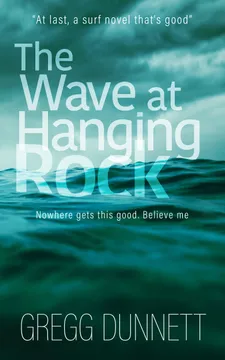
The Wave at Hanging Rock received mixed reviews, with an average rating of 3.82 out of 5. Readers praised the author's writing style, intriguing plot twists, and character development. Many found the surfing scenes informative, while others felt they were tedious. The book's pacing was criticized as slow at times, but the tension built effectively. The ending was controversial, with some readers finding it confusing or unsatisfying. Despite these criticisms, many readers enjoyed the psychological thriller aspects and the unexpected turns in the story.
Characters
Jesse
The restless narratorJesse grows up between a public tragedy and a private life he cannot easily explain. Surfing gives him a language for belonging after his mother takes him from Australia to Wales, while his friendships with John and Darren become the center of his adolescence. As an adult, he remains attached to the past and to the possibility that someone else will rescue him from a stagnant life. His account is vivid but self-protective: he explains events through loyalty, fear, and the pressure of the moment. That retrospective certainty invites listeners to question where memory ends and justification begins.
Natalie
The searching psychologistNatalie is a psychologist, Jim’s wife, and a woman accustomed to asking what behavior means. She values competence and honesty, yet her affair with Dave and her concealment of the painkiller packets reveal how fear and shame can narrow judgment. When Jim disappears, she wants evidence rather than reassurance, but grief makes each new fact feel like a verdict on her marriage. Her professional knowledge helps her recognize how dangerous a manipulative person might be, though it cannot tell her which of two conflicting accounts is true. She is driven by the need to understand what happened and protect the people still within reach.
John Buckingham
The magnetic risk-takerJohn is wealthy, handsome, socially fluent, and unusually comfortable pushing other people toward risks they would not choose alone. As a boy, he can make daring feel like friendship and hesitation feel like weakness. He values freedom, status, and sensation, but resists obligations that might interrupt his plans. His complicated relationship with his father and his attraction to surfing help explain his appetite for escape, without making it simple. Years later, he has become a successful businessman whose public image conceals the history he shares with Jesse and Darren.
Dave
The careful business partnerDave is Jim’s business partner and a practical helicopter pilot who prefers schedules, procedures, and measured decisions. His steadiness contrasts with Jim’s impulsiveness, which makes him both a trusted colleague and a tempting alternative for Natalie. Their affair compromises his judgment and complicates his loyalty to his wife, Elaine. Dave wants to protect people he loves, but his belief that careful planning can control a moral crisis leads him into increasingly dangerous choices. He is not indifferent to right and wrong; he is a man trying to make fear look like a plan.
Jim Harrison
The absent surferJim is Natalie’s husband, a helicopter-business owner and committed surfer whose need to chase good waves repeatedly collides with domestic responsibilities. His charm and spontaneity first attract Natalie, but the same qualities can make him unreliable as a partner. He wants freedom without always accounting for what it costs the people waiting at home. After he disappears, his absence becomes a mystery shaped by Natalie’s guilt, the evidence in his car, and the stories others tell about him.
Darren
The hesitant local friendDarren is Jesse and John’s local friend, a quiet boy who is often more compassionate and cautious than the others. His brother Ben’s advice influences his care for animals, and he tends to speak plainly when he does speak. Darren wants companionship and adventure, but he is uncomfortable with cruelty and danger. His loyalty repeatedly draws him into decisions made by stronger personalities. As an adult, he remains tied to the village and to the shared history he cannot simply forget.
Jesse’s mother
The grieving campsite ownerAfter her husband’s death attracts public ridicule, Jesse’s mother moves them from Australia to Wales and tries to build a life through hard work. She runs the campsite, repairs what she can, and keeps grief largely private from her son. Her decision protects them from the media but also uproots Jesse from his home and friends. She wants stability, even when the practical and emotional costs of starting over are high.
Cara Williams
The admired classmateCara is a striking student whose beauty makes her the focus of school gossip and adolescent fantasy. She is also a person with ambitions beyond the village, including a desire to travel. Her tentative friendship with Jesse gives him a rare chance to speak to her as a person rather than an image. The attention around her limits how freely she can move through school, while Jesse’s inexperience makes it difficult for him to read her intentions.
Angel
Jesse’s new companionAngel meets Jesse in an adult education class and draws him into a life far removed from the campsite and his old loyalties. She is irreverent, impulsive, and openly dismissive of the course and its teacher. Their relationship offers Jesse a possible new direction, though drug use and instability shape their time together. She is not simply an escape for him; her directness exposes how little he has built for himself beyond waiting for John.
Elaine
Dave’s observant wifeElaine is Dave’s wife, an outgoing host who takes pride in bringing friends and family together. A past accident left her using a wheelchair, and the limits it placed on her body and sex life have shaped her marriage. She is perceptive about shifts in other people’s behavior, even when she chooses not to confront what she suspects. Her parties create a public setting where private tensions between Natalie and Dave become harder to hide.
Ben
Darren’s older brotherBen is Darren’s older brother, a trainee veterinarian and vegetarian whose concern for animals informs Darren’s gentler instincts. Darren trusts his practical advice, especially when handling the crabs the boys use for bait. Ben represents a more careful kind of maturity than John’s rule-breaking confidence.
Linda
Jim’s grieving motherLinda is Jim’s mother, newly bereaved after her husband’s death. She visits Natalie with food and household requests, often missing how intrusive her presence feels. Her affection for Jim is mixed with a practical dependence on him, and her visits expose the strained, unfinished bond between mother-in-law and daughter-in-law.
DS Venables
The investigating detectiveDS Venables is the detective assigned to Jim’s disappearance. She gives Natalie difficult updates, follows up evidence in the car, and tries to balance compassion with the need to ask uncomfortable questions. Her investigation is limited by incomplete evidence and the mistaken identification of another man’s body.
Plot Devices
Jesse’s recorded childhood accident
The camera keeps the pastJesse films his father’s volcano demonstration, and the video later becomes a public spectacle. It establishes the family’s reason for leaving Australia, gives Jesse an early experience of other people turning tragedy into entertainment, and plants the image of an experiment gone fatally wrong. The recording also introduces the gap between what an observer sees and what the event means to the people inside it.
Hanging Rock Bay
A secret with a costThe secluded reef gives Jesse, John, and Darren a private world beyond crowded Town Beach. Their attempts to protect it encourage trespassing, deception, and eventually violence against an outsider. The rock itself becomes both sanctuary and evidence: the boys use its collapse to conceal a body, and years later the same landscape brings Natalie and Dave close to the truth without resolving it.
The competing accounts
Memory becomes evidenceJesse recounts the boys’ past as a story of John’s dangerous influence, while John later tells Natalie that Jesse stabbed Jim and manipulated the others into helping him. Neither account is independently confirmed. This conflict changes the listener’s understanding of the first-person narrative: vivid detail can create confidence without guaranteeing truth, especially when the storyteller has a reason to shift blame.
Jim’s missing body
An absence sustains doubtJim’s car, empty painkiller packets, and the wrongly identified body encourage investigators and Natalie to imagine suicide, while the lack of Jim’s body prevents certainty. Years later, his wallet and clothes appear in Wales, far from the car in Cornwall. The evidence generates new questions rather than a clean answer, linking Natalie’s grief to Jesse’s buried past and making the final confrontation depend on stories that cannot be fully tested.
The staged helicopter death
A murder disguised as escapeDave and Natalie plan to poison John during a private helicopter flight, then report that he jumped into the sea. The plan draws on Dave’s flying expertise, their access to the aircraft, and the earlier missing-person case. When John survives the first dose long enough to offer another account of Jim’s death, the plan becomes a choice made under pressure. The staged disappearance completes the novel’s cycle of concealed bodies and uncertain explanations.
Download PDF
Download EPUB
.epub digital book format is ideal for reading ebooks on phones, tablets, and e-readers.








