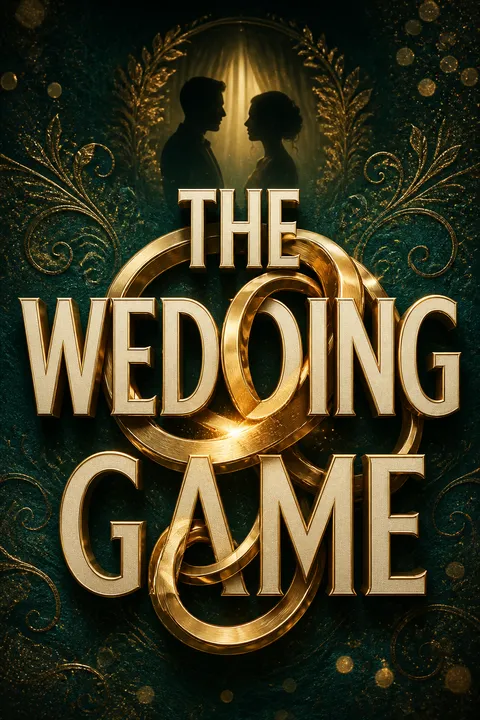


Plot Summary
Prologue
Thaddeus Baxter, a Manhattan event planner, wants to give his fiancée Naomi the wedding they once imagined, but her pregnancy and recent unemployment force them to choose a courthouse ceremony and save for a home. Then Thad finds The Wedding Game, a reality competition promising a budget wedding and a Manhattan penthouse.
Contestants must bring a family member, and he turns to his distant older brother, Alec, the divorce lawyer who once shielded him from their parents’ bitter marriage. Thad sees the show as a chance to secure a future for his child and reclaim the closeness he lost with Alec.
The prologue presents the competition as more than a prize contest: Thad is trying to convert a material opportunity into proof that his family can still belong together. His need for Alec is rooted in childhood, when his brother was both protector and refuge, but the adult relationship has become sporadic. That gap gives the wedding show its emotional charge before it begins. Thad’s narration is comic and self-dramatizing, yet beneath the jokes is a serious fear that his child will inherit the same family distance he experienced after Alec left. The penthouse promises security, while Alec’s participation promises something harder to buy: renewed presence.
Luna Applies for Two
Luna Rossi, a successful New York crafter, spots The Wedding Game while finishing a beaded vest and immediately imagines her brother Cohen and his fiancé, Declan, winning its Manhattan penthouse.
The couple plans a courthouse wedding to save money, though Luna knows Cohen once hoped to celebrate his marriage openly after years of hiding his affection in public. When she proposes the show, Cohen refuses and inadvertently reveals that Declan does not know about that old wish.
Luna later takes Farrah’s reckless advice, submits an application without permission, and gets the couple accepted. At their apartment, Cohen is furious, but Declan sees the chance to have the wedding they both want. Cohen agrees, while making clear that Luna has damaged his trust.
Luna’s intervention grows from genuine care, but it also exposes the danger in treating love as permission to manage another person’s life. She reads Cohen’s unspoken longing accurately, yet decides that understanding him gives her the right to act for him. The show’s family-member rule turns that impulse into a plot engine: her meddling becomes a literal prerequisite for entry. Cohen’s anger is not simple resistance to change. He has spent years protecting his privacy, and Luna’s unilateral application makes his private history public before he chooses to share it. Declan’s support gives the opportunity a legitimate opening, but it does not erase the breach between the siblings.
A Brother Says Yes
Thad visits Alec Baxter at his law office with a request to join the competition. Alec, a prominent divorce attorney, rejects reality television, wedding crafts, and any project that would consume his weekends. He has built a life around work and the belief that marriage ends in conflict.
Thad explains that Naomi is pregnant, recently lost her job, and that a free wedding plus the penthouse could give their new family a real start. More than that, he reminds Alec that he misses the brother who protected him during their parents’ fights and fears his child will grow up barely knowing him.
Alec resists, then accepts after his friend Lucas presses him to consider how little time he has spent with Thad. He visits Thad and Naomi to confirm his decision.
Alec’s resistance is less about television than about avoiding a setting where his convictions might be challenged. Divorce law has made him fluent in betrayal and financial warfare, while the competition asks him to cooperate in building a marriage. Thad’s appeal works because it names the cost of Alec’s withdrawal rather than merely demanding his labor. The unborn child sharpens that cost: absence is no longer only a private wound between brothers but a pattern that could repeat across generations. Alec’s agreement is therefore a first, limited act of repair. He has not yet become emotionally available, but he has accepted a situation that will make avoidance harder.
Coffee Starts a War
On the first filming day, Alec arrives among bright workstations and wedding supplies, already regretting the commitment. Looking for coffee, he mistakes Luna for a production assistant and orders her to refill an empty carafe.
Luna returns with the drink and makes clear she is a contestant, not his employee. Their first exchange turns into a public contest of insults, with Luna judging his manners and Alec mocking her craft credentials. The first challenge asks teams to build a wedding theme from mystery objects.
Luna’s team assembles a modern rustic board, while Thad and Naomi’s chaotic mix of feathers, palms, and flamingos earns the judges’ approval under the mistaken theme of a dancing bird. Team Baxter takes the extra money, and Luna decides Alec’s win must be suspicious.
The coffee mistake compresses Alec’s emotional problem into a small social action: he assumes service will appear when he wants it, then encounters someone who refuses to accommodate him. Luna’s anger is justified, but the contest quickly becomes more than a clash over manners. Each reads the other through a defensive stereotype. She sees a privileged lawyer who profits from failed marriages; he sees a self-satisfied craft expert eager to dominate. The lopsided first result also disrupts Luna’s confidence in preparation. Her brother’s wedding is at stake, yet the judges reward a design she considers incoherent. Competition encourages her to confuse her own taste with objective proof of merit.
Luna Finds Her Rhythm
For the venue challenge, Luna rejects an attractive rooftop and a seafood hall she knows has a poor reputation, choosing The Shed for its reclaimed wood and adaptable rooms. She divides the reception across only three spaces, places the ceremony in a circle around the couple, and saves money for food.
The judges award Team Rossi first place. The following week, she designs original rustic invitations with hand lettering, beating the other teams’ less personal work and earning another win.
Alec remains disengaged, while Thad keeps trying to draw him into planning. The contrast grows sharper as Luna’s craft turns Cohen and Declan’s preferences into workable choices. Her victories give the couple momentum, but they also make the competition feel increasingly personal.
Luna’s strengths are not merely manual skill. She combines intimate knowledge of the couple with practical judgment, translating affection into floor plans and paper design. Her success is strongest when she listens to Cohen and Declan rather than trying to predict what an audience will reward. Yet repeated wins create a new pressure: she begins to feel responsible for securing not just a beautiful wedding but the whole future she imagines for her brother. The penthouse becomes entangled with her sense of competence. Alec’s absence, meanwhile, is not neutral. Each challenge gives Thad another reason to experience his brother as physically present but emotionally unavailable.
Alec Sees the Damage
During the bouquet and boutonniere challenge, Luna’s team struggles with a blindfolded process, and Alec’s team produces weak arrangements. Thad confronts Alec for refusing to practice with him during the week, then Naomi explains how much Thad has admired his older brother since childhood. Thad once dreamed of becoming a protector like Alec and building a loving marriage unlike their parents’.
Alec recognizes that his absence has cost more than shared weekends. After Lucas tells him there is still time to change the competition, Alec decides to learn the next challenge rather than merely show up. He searches for cake tutorials, finds Luna’s social media, and creates a fake crafting account to ask for her recipe and advice.
The failed bouquet is a relational test disguised as a craft exercise. Its rules require one person to describe and another to trust, making the team’s poor communication visible in the finished work. Naomi’s account of Thad’s childhood admiration makes Alec confront the asymmetry between how he sees himself and how his brother sees him. Alec believes leaving home was necessary for survival; Thad remembers being left behind. His turn toward the cake challenge is both sincere and flawed. He wants to repair the relationship, but chooses deception and competitive advantage as his tools, repeating the very habit of controlling the situation instead of speaking honestly.
The Macadamia Nut Disguise
Alec follows Luna to a baking supply shop, disguised in sunglasses and a borrowed hat, and copies the ingredients she selects. His attempt at stealth collapses when he knocks over cans of nuts and bottles of extract. Luna recognizes his list, then connects him to the new account that has been messaging her for cake advice.
Alec admits that he is desperate to stop disappointing Thad and fears losing his future niece or nephew before getting to know them. The confession changes Luna’s view of him. Rather than expose him or walk away, she gives him basic baking guidance and offers to teach him in person. Alec accepts, and their rivalry becomes an uneasy collaboration.
The shop scene turns surveillance into vulnerability. Alec’s elaborate disguise is comic, but its purpose is serious: he does not know how to ask for help without feeling weak or indebted. Luna catches the lie through concrete evidence, yet what matters is the honesty that follows. His admission does not excuse the fake account; it lets her see the fear beneath his tactics. Her choice to help is not a reward for manipulation so much as a response to a recognizable emotional need. The scene also shifts their power balance. Luna remains the more capable baker, but Alec risks being seen as incompetent, and that risk opens a path toward genuine intimacy.
A Cake Changes Everything
At Alec’s apartment, Luna guides him through batter, frosting, and the small techniques he never learned as a child. While they bake, Alec describes their parents’ constant fights and his decision to leave Thad behind after college.
Luna explains how her close family supported her unconventional craft career. Their conversation gives Alec a new account of his own influence: Thad’s kindness may reflect the care Alec once gave him. Alec’s practice pays off at the cake challenge.
He makes a berry-topped, lightly frosted cake with almond flavoring, tailoring it to Thad and Naomi’s tastes, and wins first place. Later, Luna brings slices of her own cake to his apartment to judge the result. Their joking turns sincere, and they share their first kiss.
The cake carries several kinds of inheritance at once. Luna learned cooking as part of family ritual; Alec learned almost nothing at home, then teaches himself as an adult. The process makes care visible through repetition, measurement, and patience rather than grand declarations. Luna’s reframing of Thad’s character helps Alec distinguish his past protective role from his later abandonment. His winning cake matters because he has finally listened to the couple instead of treating the challenge as an inconvenience. The kiss follows a shared accomplishment, not a sudden change in attraction. Mutual respect has replaced the original contest, allowing desire to emerge without either character having to surrender their identity.
A Date Kept Quiet
Alec and Luna begin dating after their kiss, sharing a first dinner at their neighborhood diner and stories about the work and family choices that shaped them. Luna introduces him to Farrah, who tests him with an elaborate imaginary fistfight and ultimately accepts his humor. Alec asks Luna to keep their relationship from Thad until the show ends, afraid that his brother will see her as an opponent and the romance as another betrayal.
Luna dislikes hiding anything from Cohen, but agrees to protect Alec’s fragile attempt at reconnecting with Thad. Their attraction deepens in private, and they become physically intimate. Alec also calls his mother, Meredith, hoping to invite her to the set and begin repairing their estranged relationship.
Their romance develops through disclosure, humor, and physical trust, but secrecy introduces a structural weakness. Alec asks Luna to manage the consequences of his family conflict by concealing their relationship, and she agrees because she understands how much he wants to regain Thad. The choice is loving, yet it places Luna between two loyalties and makes her responsible for preserving Alec’s fragile progress. Farrah’s mock combat offers a contrasting model of conflict: direct, playful, and safe enough to end in laughter. Alec’s call to Meredith shows that Luna’s influence is extending beyond romance. He is beginning to approach the family history he had built his life around avoiding.
Meredith Never Arrives
Alec invites Meredith to the centerpiece challenge, hoping she will meet him and Thad at the studio. She cancels at the last moment, citing a difficult night, and Alec’s anger spills into the filming day. His team’s centerpiece fails, leaving Thad convinced Alec has returned to indifference. Luna’s team places second, while Team Hernandez wins.
Afterward, Luna goes to Alec’s apartment, finds him drinking, and stays as he grieves the mother he wanted but could not rely on. He smashes the bottle in the kitchen sink, then lets Luna comfort him without turning the moment sexual. The next day, Naomi visits Alec, explains that Meredith has repeatedly disappointed both brothers, and gives him an ultrasound image of his child.
Meredith’s absence converts an old family pattern into a present event. Alec had risked reaching out, so the cancellation confirms the belief that his needs will not be met. His anger at the studio is partly displacement, but it also reveals how little practice he has had at regulating hurt without withdrawing. Luna’s response is significant because she stays without treating him as a project to fix. Naomi’s visit widens the support network and names the family pattern clearly, while the ultrasound image gives Alec a concrete relationship to protect. The child is no longer an abstract reason to join the show; the image makes his future role tangible.
Mary Names the Secret
After the centerpiece filming, judge Marco offers Luna a collaboration on a modern invitation line, recognizing her distinctive designs. Alec misses the offer while dealing with his mother’s cancellation, and Luna delays telling him.
At a later dinner, host Mary DIY appears and announces the opportunity in front of Alec, adding that Marco had once considered her own idea. Alec feels excluded from Luna’s news; Luna explains she was trying to be sensitive to his pain.
Their argument forces them to admit that protecting one another can become another form of withholding. They reconcile, and Alec listens as Luna describes the collaboration. The next challenge will focus on final decorations, leaving both relationships and the competition close to their breaking point.
The collaboration gives Luna professional recognition separate from her role as Cohen’s sister, while Mary’s announcement turns private timing into public humiliation. Alec’s hurt is understandable, but the deeper issue is not the business opportunity itself: he wants to be the person with whom Luna shares joy as well as distress. Luna has tried to spare him, repeating the same protective logic that has shaped her relationship with Cohen. Their quarrel therefore anticipates the larger rupture. Care becomes controlling when each person decides what the other can bear to know. Their reconciliation is real, but it does not resolve the risk created by a secret that affects both families.
The Secret Hits the Set
During the final decoration challenge, Alec recognizes the burlap ribbon Luna needs and hands it to her before remembering that their teams are competing. Mary notices and publicly identifies Luna as his girlfriend. Thad accuses Alec of choosing the rival team over him and suspects Luna has coached Alec to sabotage the competition.
Cohen learns that Luna hid the relationship and says her habit of deciding what is best for him has controlled his choices for years, including the show and wedding. Alec takes blame for asking Luna to keep the romance secret, but the damage is done. Luna breaks with Alec, then tells him she regrets choosing him. Both walk away believing they have lost the people they most need.
The ribbon is a small object with a large social meaning: Alec’s instinctive kindness reveals a private bond in a public contest. The exposure forces everyone to interpret the relationship through competition, even though the central injury is secrecy. Thad experiences Alec’s action as another abandonment; Cohen experiences Luna’s concealment as part of a longer pattern of overprotection. Both reactions are intensified by histories the show cannot contain. Luna and Alec’s breakup follows a cascade of legitimate grievances and badly aimed blame. Their worst words arise when each is already frightened of losing family, which makes the romance collateral damage in the very conflict it was meant to soften.
A Scrapbook Meets Silence
Alec begins therapy, then visits Meredith to retrieve an album of childhood photographs. She admits that his resemblance to his father made it difficult for her to treat him fairly, but she does not promise to become a different mother.
Alec accepts that their relationship may remain limited. He turns the photographs into a scrapbook for Thad, dividing it into their past, present, and a future he hopes to share with Thad’s family. Thad initially refuses to forgive him, still hurt that Alec practiced with Luna instead of spending time with him.
Alec then visits Cohen and Declan, takes responsibility for asking Luna to hide the relationship, and explains how much she loves her brother. He leaves without demanding that either man resolve the conflict immediately.
Alec’s repair work becomes more credible when it stops depending on a single apology producing instant forgiveness. Therapy gives him a framework for recognizing inherited patterns; Meredith’s admission gives him information, not the mothering he wanted. He accepts that distinction rather than treating her honesty as a cure. The scrapbook is an attempt to make time visible, but Thad’s refusal exposes its limitation: memories cannot substitute for the ordinary hours Alec withheld. His visit to Cohen and Declan likewise shifts from self-defense to accountability. By leaving without insisting on immediate reconciliation, Alec begins to respect other people’s pace rather than controlling the terms of repair.
Cohen Opens the Door
After several days of silence, Cohen visits Luna with Declan and apologizes for blaming her for their wider frustration. He admits that she had been directing the wedding and much of his life because she feared seeing him hurt, but he also knows her intentions came from love.
Luna apologizes for applying without permission and hiding Alec. The siblings restore their closeness before meeting their parents for dinner, where Luna acknowledges that she loves Alec despite their separation.
At the Friday wedding, Cohen and Declan marry in a ceremony shaped by their families’ traditions and Luna’s handmade decorations. Alec attends, but he and Luna exchange only stiff congratulations in the receiving line. She cannot yet risk reaching for him, and he leaves rather than press her.
Cohen’s reconciliation does not erase the truth in his criticism. Luna’s protectiveness has often crossed into direction, and her growth requires hearing that without denying the love behind it. Cohen, in turn, recognizes that his own frustration with the televised wedding and its pressure contributed to his outburst. Their reunion restores a bond without making either sibling flawless. The ceremony then embodies what Luna had wanted for Cohen: a public celebration of love, supported by family and personal details. Alec’s presence makes the cost of the breakup visible, but the receiving line gives them no safe space to speak honestly. Reconciliation between siblings does not automatically repair a romantic relationship.
Love Takes the Floor
At the Saturday wedding of Luciana and Amanda, Cohen and Declan tell Alec that Luna still loves him, but he assumes her silence means she wants distance. Before Thad’s Sunday ceremony, Alec brings his brother their old scrapbook, his grandfather’s cuff links, favorite beer, and wings.
Thad sees that Alec has made an effort to remember their shared life and finally embraces him, accepting that his brother wants to be present. At the reception, Luna watches Thad and Naomi dance, then crosses the floor and asks Alec to dance with her. They confess that they love each other and apologize for the hurtful words that ended their relationship. Alec and Luna reunite as their families celebrate around them.
The final gestures are deliberately concrete. Alec’s gifts show attention to Thad’s preferences and history, while the scrapbook’s empty pages leave room for a future rather than claiming that the past is repaired. Thad’s forgiveness answers the novel’s central familial wound, but only after Alec has learned that intention alone is not enough; presence must be practiced. Luna’s walk across the dance floor mirrors her earlier drive to intervene, yet this time she asks rather than decides for someone else. Their reunion depends on mutual acknowledgment, not on a grand rescue. The wedding setting gathers the book’s two forms of love, familial and romantic, into one public act of choosing to stay.
Epilogue
After the show, Team Hernandez wins the public vote, leaving Thad without the penthouse. But Luna offers the nearby rent-controlled apartment she is leaving, giving Thad and Naomi room for their daughter and a home close to Alec. Alec and Luna move in together, and he joins her online craft videos while continuing his law career.
Their families begin gathering for Sunday brunch, turning the competition’s temporary teams into a lasting circle. Thad’s prize is not the apartment the show promised, but a brother who now shows up, a sister-in-law who welcomes him, and a growing family within reach.
The result refuses to equate winning with receiving the advertised prize. Team Hernandez takes the official victory, while Thad’s family gains a different form of security through Luna’s apartment and the renewed bonds among the brothers. The ending redirects the competition’s promise from ownership to proximity: a penthouse would have solved a housing problem, but shared routines create belonging. Alec’s place in Luna’s craft videos also makes his transformation visible in ordinary, slightly comic practice. He is no longer defined only by courtroom competence or emotional restraint. The Sunday brunches matter because they repeat; the family is built through reliable presence, not one televised ceremony.
Analysis
The novel makes family inheritance a matter of behavior rather than destiny. Alec and Thad grow up in the same conflict, but they carry it in opposite directions. Alec escapes by becoming self-reliant and professionally skilled at ending marriages; Thad insists on closeness, sometimes with more emotion than Alec knows how to bear. Their conflict is not simply that one brother cares and the other does not. Alec cares deeply, but he has mistaken protective labor in childhood for a permanent claim on Thad’s affection. Thad, meanwhile, mistakes Alec’s late return for proof that the older version of his brother still exists unchanged.
Luna mirrors Alec in a different register. She is also driven by care, but her craft and competence make intervention feel natural. She can plan a venue, design an invitation, and solve a practical problem, so she assumes she can solve emotional ones too. Cohen’s anger makes the cost of this assumption legible. His sister’s love is real, yet he needs the right to choose how publicly and quickly he lives. The novel’s most consequential growth therefore involves not learning to care more, but learning that care without consent can become control.
The wedding show externalizes these habits. Every challenge asks contestants to make something together under time pressure, and the objects become measures of trust. Alec’s cake succeeds when he listens to Thad and Naomi; the final ribbon exposes the secrecy he and Luna have mistaken for protection. The show rewards spectacle, but the characters’ lasting gains come from quieter acts: showing up, telling the truth, accepting imperfect apologies, and continuing to make time for one another.
The ending also separates emotional victory from material victory. Thad does not win the penthouse, yet he gains a brother who intends to stay. Cohen and Declan’s wedding gives public shape to a love Cohen once hesitated to display. Luna’s creative career advances through her own talent, not simply through the competition. The book’s romance works because love does not cure family history; it gives the characters a reason to confront it without repeating it.
Review Summary
People Also Read










Characters
Luna Rossi
Crafting prodigy and fixerLuna is an imaginative, successful crafter whose skill spans sewing, lettering, baking, and design. She is deeply loyal to her older brother Cohen and welcomes his fiancé Declan as family. Her optimism makes her generous, but it can also become intrusive: she often assumes that recognizing someone’s needs gives her the right to solve them. Creating things is how she expresses affection and builds a life on her own terms. She is proud of her work, yet her ambition is not simply commercial; she wants her creations to make other people feel celebrated. Luna’s strongest relationships ask her to balance that impulse to help with respect for other people’s choices.
Alec Baxter
Guarded divorce attorneyAlec is a successful lawyer who represents women in divorce cases and approaches marriage with deep skepticism. His parents’ destructive relationship made work and emotional distance feel safer than dependence. As an older brother, he once protected Thad from their home life, but leaving for college allowed him to mistake escape for closure. Alec is intelligent, observant, and capable of tenderness, though he often hides those qualities behind sarcasm and self-sufficiency. He has little experience asking for help directly and can resort to control or avoidance when frightened. His connection with Luna challenges both habits: she notices his pain, but also expects him to take responsibility for how he treats the people he loves.
Thaddeus Baxter
Hopeful younger brotherThad, usually called Thad, is an event planner engaged to Naomi and Alec’s younger brother. Dramatic, affectionate, and quick to express enthusiasm, he wants a secure family life that differs from the marriage he witnessed as a child. Alec was his protector and childhood hero, so his longing for his brother’s attention carries the weight of an old attachment. Thad’s emotional openness can seem comic, but it also makes him willing to name what hurts. He values shared experiences and practical signs of care, not just assurances. The competition matters to him as a chance to provide for his growing family and to recover a sense of partnership with Alec.
Cohen Rossi
Quiet, protective carpenterCohen is Luna’s older brother, a carpenter, and Declan’s fiancé. Reserved and practical, he prefers building things to drawing attention to himself. His childhood experiences of bullying and the difficulty of living openly as a gay man have made him cautious about public affection. Cohen values his close bond with Luna, who has stood beside him through important moments, but her protectiveness can leave him feeling managed rather than trusted. He wants a life with Declan that honors both privacy and the freedom to celebrate their relationship. His quietness should not be mistaken for passivity: he knows what he wants, even when voicing it takes time.
Declan
Patient teacher and partnerDeclan is a public school teacher and Cohen’s fiancé. Warm, steady, and attentive, he can ease Cohen out of his guardedness without demanding that he become someone else. He is generous with Luna and treats her as family, while his calm judgment helps the couple navigate the wedding competition. Declan is proud of his Chinese American heritage and wants its traditions represented in a way that feels intimate and respectful. His patience is not passivity: he understands that love requires asking what his partner wants rather than assuming. He offers a counterweight to both Luna’s tendency to take charge and Cohen’s instinct to retreat.
Naomi
Thad’s candid fiancéeNaomi is Thad’s fiancée, a warm and perceptive woman who is expecting their first child. After losing her job, she shares Thad’s concern about creating a stable home. She sees how much he admires Alec and is willing to tell Alec what that admiration means, even when the truth is uncomfortable. Naomi is not merely a supportive partner; she can read a family dynamic clearly and intervene with compassion. Her practical kindness helps Alec understand the damage caused by his absence, while her bond with Thad keeps his exuberance grounded in the needs of their future household.
Farrah
Luna’s fierce best friendFarrah is Luna’s longtime roommate and best friend, a fashion professional whose bluntness contrasts with Luna’s sunny optimism. She is protective without being solemn, often expressing concern through jokes, food, and theatrical threats. Farrah recognizes when Luna is acting against her own interests, though she does not try to make decisions for her. Her quick humor gives Luna a place to process the competition and her attraction to Alec without pretending either is simple. She also insists that Alec earn the trust Luna gives him.
Meredith Baxter
Alec and Thad’s motherMeredith is Alec and Thad’s mother, a woman shaped by a bitter marriage and unhealthy ways of coping with its aftermath. Her relationship with her sons is strained, and she is not consistently able to offer the care they need. Alec remembers trying to comfort her as a child, then learning to expect distance. Her history helps explain the brothers’ family wounds without excusing the harm caused by her choices. Meredith remains difficult for Alec to approach because affection and resentment coexist in him.
Alec and Thad’s father
Absent, work-driven fatherThe Baxter brothers’ father is a Wall Street workaholic whose marriage to Meredith is marked by arguments and long absences. His choices leave Alec and Thad to manage much of their childhood emotional life together. Alec defines himself against his father’s selfishness, but the fear of resembling him also contributes to Alec’s guardedness.
Lucas
Alec’s candid colleagueLucas is Alec’s colleague and friend, willing to challenge him when he hides behind work. Having lost his own brother, he understands the permanence of missed chances and urges Alec to repair the relationship with Thad. Lucas’s advice is direct rather than sentimental, and he later helps Alec find a therapist. He provides a perspective Alec cannot get from his family because he is outside their shared history.
Mary DIY
The show’s polished hostMary DIY is the celebrity craft host and face of The Wedding Game. Luna admires her work before meeting her, imagining a personal connection based on their shared interest in making things. On set, Mary is more focused on presentation and her own status than on the contestants. Her celebrity persona gives Luna an early lesson in the distance between a public image and a private person.
Helen
Opinionated contestant’s motherHelen is Amanda’s outspoken mother and a member of Team Hernandez. She offers opinions on nearly every detail and brings an abrasive, theatrical energy to the competition. Her interference can make challenges chaotic, but her certainty also gives her daughter a forceful ally. Helen is less skilled at listening than she is at making herself heard.
Luciana
Dog spa owner and brideLuciana is Amanda’s fiancée and a contestant on Team Hernandez. She owns a dog spa and approaches the wedding competition with warmth and confidence. Her affectionate partnership with Amanda offers a different model of teamwork from the strained sibling pairs around them. Luciana’s calm presence helps balance Helen’s louder personality.
Amanda
Trainer and brideAmanda is Luciana’s fiancée, a personal trainer, and one of the contestants. She and Luciana work together with steady affection, even when Helen’s interference makes the challenges harder. Amanda’s practical manner keeps her focused on the task rather than the drama around it.
Marco Vitally
Wedding invitation designerMarco is a judge known for his wedding invitation designs. He notices Luna’s lettering and modern visual style, taking her craft seriously as professional work. His attention offers a view of the wider industry Luna hopes to join.
Diane DeBoss
The show’s exacting directorDiane directs The Wedding Game and keeps filming moving despite the contestants’ rivalries and outbursts. She is practical, controlled, and increasingly required to manage the personal conflicts spilling into production.
Plot Devices
The Wedding Game
Love under a deadlineThe reality show requires each couple to bring a family member, create a wedding on a strict budget, and face craft and planning challenges. Judges award challenge advantages, while viewers choose the season winner and its Manhattan penthouse prize. This format forces relatives and partners to cooperate in public, making private fractures visible through concrete tasks: choosing venues, designing invitations, building centerpieces, and handling a cake. It also keeps the story moving through weekly deadlines. The prize motivates the couples, but the show’s true pressure comes from demanding teamwork from people who have not yet learned how to trust one another.
The Penthouse Prize
A home for new familiesThe promised Manhattan penthouse gives both couples a material reason to enter the competition. For Thad and Naomi, it could make a home possible after Naomi loses her job and becomes pregnant. For Cohen and Declan, it represents a chance to live closer to Luna and build the family life they want. The prize also shapes Luna’s decision to apply without permission and Alec’s decision to join Thad. By attaching a home to the wedding, the show makes security appear winnable. The story tests that promise against other forms of support, including kinship, work, and the willingness to make room for one another.
The Craft Challenges
Feelings made visibleEach weekly task turns emotional dynamics into visible results. Venue planning rewards Luna’s knowledge of Cohen and Declan’s needs. The bouquet challenge exposes poor communication when partners must rely on each other without full control. Cake-making gives Alec a chance to learn a skill while listening to Thad and Naomi’s preferences. The final decorations challenge makes his instinctive help for Luna impossible to hide. Crafts are therefore not just decorative scenery. They provide a practical language for care, competence, trust, and rivalry, while the show’s judges and cameras turn every success or failure into public evidence.
ChrisEcrafts
A false identity opens trustAlec creates a fake Instagram account to obtain Luna’s cake recipe and watch her baking research without admitting that he needs help. His disguise at the supply shop and copied shopping list make the deception comic, but they also reveal how uncomfortable he is with vulnerability. When Luna catches him, he can no longer hide behind the account and explains his fear of failing Thad. The false identity briefly gives Alec access to Luna’s expertise, but the honest confession that follows changes their relationship. It is a spoiler device because the account’s identity and discovery mark a turning point in their romance.
About the Author
Other books by Meghan Quinn










Download PDF
Download EPUB
.epub digital book format is ideal for reading ebooks on phones, tablets, and e-readers.








