

Plot Summary
Prologue
In 1982, Faruk Darvinoglu finds an ornate manuscript in a neglected archive near Gebze. Its title, The Quilter’s Stepson, appears to have been added later, and its pages bear childish drawings.
Faruk compares its claims with historical records, finds both plausible details and discrepancies, then gives up on proving who wrote it. He recasts the manuscript in modern Turkish and publishes it as a story whose author, history, and truth remain uncertain.
The frame makes uncertainty part of the novel’s machinery before the captive scholar begins his account. Faruk handles the manuscript as both an artifact and a story, but his research cannot settle whether its author invented history, borrowed from it, or concealed himself inside it. That failure prepares the reader for a narrative in which memory and identity are equally hard to authenticate. The handwritten title and drawings also hint that the book’s meaning may have been shaped by more than one hand, turning the act of transmission into an early version of the novel’s central exchange.
The Oars Fall Silent
A young Italian scholar is sailing from Venice toward Naples when a Turkish fleet overtakes his ship. The crew’s delay in whipping the captive oarsmen gives the Turks time to board, and the scholar is taken to Istanbul. In prison, he avoids the galley by claiming expertise first in astronomy, then medicine; when he treats the pasha’s cough with homemade remedies, the grateful official protects him.
The scholar earns money by treating other patients and pays for Turkish lessons, yet he remains enslaved and is sent to exhausting construction work. Useful, he discovers, is not the same as free. His hope of ransom returns when the pasha summons him, but the meeting brings a stranger who looks startlingly like him.
The capture strips the scholar of the intellectual authority he took for granted in Europe, but his education still gives him bargaining power. He survives by improvising a medical identity, and the pasha’s improvement converts that performance into patronage without changing his legal condition. This distinction matters: expertise earns him privileges, not self-determination. His early adaptations are practical and self-protective, yet they begin the novel’s deeper question about whether a person is defined by inner character or by the role circumstances require him to play. The near-identical stranger makes that question visible rather than merely philosophical.
A Face Across the Room
The stranger is Hoja, a learned Ottoman household tutor whom the pasha pairs with the Italian to prepare wedding fireworks. They test powders and rockets together, and their successful display dazzles the court and the child sultan.
The Italian expects his work to earn release, but the pasha instead offers freedom in exchange for conversion to Islam. When the Italian refuses even with executioners waiting beside a grave, the pasha gives him to Hoja as a slave.
Hoja has already prepared a room and wants the foreigner to teach him everything he knows. Their lessons begin as an unequal exchange, but Hoja quickly learns from the Italian’s books and memories, until teacher and pupil can no longer agree who is leading their shared investigations.
The fireworks offer the Italian a brief, intoxicating sense that skill might buy a route home, then expose the limits of that bargain. His refusal to convert is less a confident declaration than a choice made under terror, but it preserves a boundary he can still call his own. Hoja’s acquisition of him turns resemblance into a practical arrangement: one man possesses the other’s knowledge, while the captive watches that knowledge become difficult to distinguish from its new owner’s ideas. Their intimacy is therefore built from coercion as well as curiosity, a fact that complicates every later claim of brotherhood.
Lessons Become a Rivalry
Hoja absorbs the Italian’s books and begins proposing theories about the heavens, clocks, currents, and the habits of animals. Sadik Pasha’s exile interrupts their hopes of patronage, but Hoja eventually gains access to the young Sultan Mehmed IV through demonstrations of an orrery and elaborate animal treatises.
When the sultan’s rabbit escapes a hunt and survives, Hoja interprets the episode as a warning that the ruler will outlast a hidden threat. The prediction pleases the boy, especially after a palace conspiracy fails, and Hoja receives land income.
Yet repeated promises of an observatory and a House of Science go nowhere. Hoja’s ambition grows, while the Italian’s homesickness curdles into resentment at being both source of knowledge and captive witness.
Hoja’s rise depends less on verified science than on his ability to translate observation into forms the sultan can use: a moving model, an animal story, a prediction that later events appear to confirm. The rabbit becomes political evidence because the ruler chooses to read it that way. Hoja is neither simply a fraud nor a neglected scientist; he is learning how institutions reward knowledge when it flatters power. Meanwhile, the Italian’s resentment marks a shift in their bond. He still contributes to Hoja’s work, but now experiences that contribution as a continuing theft of the life and authority he once possessed.
The Mirror Turns Hostile
As Hoja waits for royal favour, the two men begin writing about their pasts and their supposed differences. The exercise turns cruel: Hoja demands that the Italian document his failings, reads the pages with fascination, and beats him when the confessions unsettle him.
When plague reaches Istanbul, Hoja insists that the Italian’s fear reveals guilt, then forces their attention back to the question of who they are. A red swelling on Hoja’s body may be an insect bite or a plague bubo. In front of a mirror, he insists that they are alike and imagines taking the Italian’s place. The Italian, convinced Hoja may die, flees to Heybeli Island, carrying money he secretly saved.
The writing exercise begins as a method of self-knowledge but becomes a means of control. Hoja wants the Italian’s confessions because they promise access to an interior life he cannot obtain through study alone; once the exercise exposes his own vulnerability, he turns curiosity into punishment. Plague makes the body an unreliable text, with one swelling carrying the possibility of death and the mirror multiplying uncertainty about identity. The Italian’s flight is both a betrayal of a sick companion and an attempt to recover agency. He escapes the house, but not the attachment that has taken shape there.
A Calendar for the Plague
Hoja finds the Italian on the island and brings him back because the sultan wants a forecast of the plague’s course. Together they count deaths, map the disease, and advise restrictions on travel and crowded markets. Hoja persuades the sultan to treat the plague as a cunning enemy, while the Italian’s records help them estimate when it may recede.
Their calendar is adjusted to promise an earlier end than the figures support, and Hoja wraps the prediction in a story the sultan finds persuasive. The restrictions provoke unrest, but deaths decline and the sultan credits Hoja. He is appointed imperial astrologer and moves through the city in triumph, while the Italian, who helped build the plan, is shoved back into the crowd.
The plague episode turns their private contest into coordinated public work. The Italian contributes observation and arithmetic; Hoja supplies a political language that makes action acceptable to a ruler wary of religious objections. Their forecast is neither pure science nor pure deception: it combines imperfect data, strategic distortion, and a narrative fitted to the sultan’s fears. Its success gives Hoja office, but the public celebration separates him from the collaborator whose methods helped make it possible. The Italian’s exclusion renews an old wound, now sharpened by the fact that he has helped create the very power that leaves him behind.
The Sultan's Private Theatre
Hoja’s new position gives him daily access to the sultan, whose dreams and animal enthusiasms become subjects for interpretation. The Italian joins the palace visits and records the dreams, but Hoja increasingly treats the sultan’s fears as instruments for steering policy.
They speak of an ambitious weapon and of a society weakened by its refusal to learn from others. After years of promises and stalled projects, they collect their memories and imagined visions of future defeat into a book for the ruler.
The sultan responds by ordering them to build the weapon and grants them the resources to do it. The commission revives their partnership, although each man understands the project through a different hope: Hoja seeks historical transformation, while the Italian longs to belong again.
The sultan’s dreams let Hoja convert private anxieties into political leverage, while the Italian’s notebooks make their conversations durable and organized. Yet the weapon commission follows a book of imagined defeats, not a demonstrated invention. The court treats warning as a form of proof, and the pair seize that opening because it offers the resources they have long wanted. Their stated ambition to improve the empire also conceals a personal need: Hoja wants to escape the humiliation of being ignored, while the Italian wants the intimacy of their earlier work restored. The project gives them common purpose without resolving their unequal relationship.
The Iron Monster Grows
For six years, Hoja develops the weapon from sketches into a towering iron engine, drawing money and labour from the estates the sultan has granted them. His first cannon designs anger the artillery master, and the sultan orders a different approach.
As Hoja works in seclusion, the Italian becomes the public face of the project, visiting the palace and entertaining courtiers and foreign ambassadors with stories. He grows comfortable among feasts and ceremonies, while Hoja remains absorbed in the machine and hopes to establish ties with European scholars.
The engine finally moves during a trial, but it is clumsy, expensive, and difficult to crew. When the sultan marches toward Poland, the weapon is still unproven, and Hoja must take it to war.
The machine turns the men’s earlier intellectual collaboration into a material object that consumes money, labour, and reputation. Its scale gives their abstract claims a public body, but its dependence on coerced workers and patronage makes it vulnerable before it reaches a battlefield. Their paths now diverge: the Italian learns to inhabit court life, while Hoja retreats into an invention that promises both recognition and escape. This reversal unsettles their old teacher-pupil arrangement. The Italian has gained social ease but lost the shared focus that once made him feel indispensable; Hoja has gained a project but become more isolated inside it.
A Brother's Empty House
On the road through Edirne, Hoja takes the Italian to the house where his sister Semra once lived. Her husband and family remain, but Semra has gone to Istanbul and is believed dead. Hoja leaves without explaining his purpose. The campaign soon makes the weapon’s uncertain status dangerous: the army doubts it, and soldiers blame the Italian for the supposed curse surrounding it.
The sultan orders the engine attached to his own forces, preventing the dispute from stopping its journey. As the army advances, Hoja interprets omens and tells the sultan increasingly grim stories. The Italian, once eager to return to his own country, now feels detached from both Europe and the life Hoja imagines for him.
The visit to Semra’s house gives Hoja a brief encounter with a life that has continued without him. He does not reclaim the family connection or explain himself; he simply leaves, carrying the same distance that marks his relationship with the Italian. The campaign intensifies this pattern by making the two men’s bond a matter of public suspicion. The Italian is targeted as an outsider even while the weapon depends on the knowledge he supplied. Meanwhile, Hoja’s omens and stories protect his position, but their increasing darkness suggests that performance is beginning to substitute for confidence.
Confessions in the Rain
During hunting stops in Christian villages, Hoja begins questioning residents about their worst sins. Their answers are ordinary lies, jealousies, and petty thefts, but Hoja insists that a deeper truth must distinguish them from the Ottoman army.
He uses the Italian’s earlier written confessions as examples, and soldiers beat villagers who fail to satisfy him. A similar inquiry among Muslim villagers produces much the same admissions, undermining Hoja’s theory. He nonetheless escalates the interrogations, and the sultan watches with troubling interest.
The Italian first recoils, then finds himself drawn into the spectacle. By the time the army reaches the wet northern forests, Hoja’s search for proof has become a ritual of coercion, without yielding the difference he set out to find.
Hoja’s inquiry repeats the earlier writing sessions on a much larger and more dangerous scale. He assumes that self-disclosure will reveal a stable difference between peoples, but the villagers’ ordinary failings and the Muslim comparison refuse to support that premise. Rather than revise the theory, he increases the pressure on his subjects. The sultan’s attention and the Italian’s gradual fascination show how coercion can recruit spectators who initially recognize its cruelty. Hoja’s method thus defeats its own purpose: a search for inward truth produces rehearsed confessions under threat, leaving power, not character, as the clearest fact in the scene.
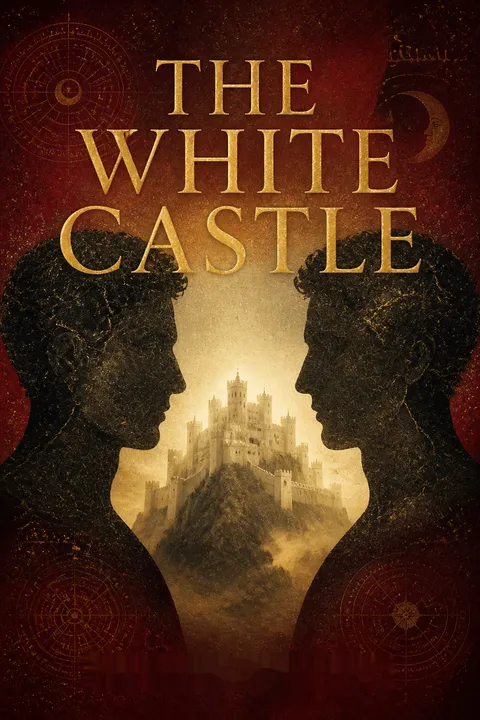
The White Castle
Rain turns the roads to mud, and the enormous weapon stalls repeatedly. Its first attack on a small fortification fails when the crew scatters and the machine becomes trapped; conventional forces take the position with little difficulty. Ahead, the white castle stands beyond a flooded, swampy approach.
Hoja sees that the army is unlikely to reach it and that the Italians’ blame may fall on his companion. After a final private meeting with the sultan, Hoja returns to their tent. The men exchange clothes without argument. The Italian gives Hoja his ring and a medallion holding a lock of his former fiancée’s hair; Hoja disappears into the fog, and the Italian sleeps in his place.
The machine’s failure strips away the promise that technical ingenuity can guarantee power or safety. The castle, visible but inaccessible, becomes the point where the campaign’s practical defeat meets the men’s long private fantasy of exchanged identity. Their clothing swap is not a triumphant solution but a decision made under mortal pressure, after Hoja recognizes the danger awaiting the Italian. The ring and medallion carry memories across the boundary they have chosen to cross. Because the novel does not render the exchange as a clean escape from the self, the act feels less like a disguise than an admission that each man has already inhabited part of the other.
The Book of His Shadow
The narrator later describes a settled life in Gebze: he has left court service, married, raised children, and written stories. A visitor arrives with news that the other man returned to Italy, published accounts of Ottoman life, and reunited with his former fiancée. The visitor has also heard that the Italian is writing about the narrator.
Their exchange unsettles the narrator, who retrieves the manuscript he abandoned years earlier. As the visitor reads, he recognizes a childhood scene from the Italian’s story in the garden outside the window. The narrator watches him make that connection and resumes writing, unable to separate his own memories from the man he calls his shadow.
The final frame refuses to certify which life belongs to which man. The visitor arrives carrying another account of the exchange, but his report cannot settle the matter; instead, it adds a second version that the narrator must absorb. The manuscript becomes a place where remembered scenes can be claimed, borrowed, or recognized by someone who was not present. The garden view gives the visitor a concrete test of the story, yet even recognition does not restore a stable identity. The narrator’s renewed writing is both an attempt to preserve the bond and evidence that he cannot finally write himself apart from the other man.
Analysis
The White Castle makes the exchange between East and West intimate rather than abstract. Its central pair are not representatives who remain safely on opposite sides of a debate; they are two men who share a face, a table, a body of knowledge, and eventually a set of possible biographies. Their resemblance begins as a shock, but the more consequential likeness comes from prolonged contact. Hoja learns the Italian’s knowledge and stories, while the captive absorbs Hoja’s habits, ambitions, and social world. The novel asks whether identity is a private possession or a pattern other people can learn, imitate, and narrate.
Knowledge in this story is never simply a contest between rational Europe and mystical Ottoman authority. The Italian’s education does not free him, and Hoja’s speculative intelligence does not overcome the court’s appetite for spectacle and political utility. Astronomy, bestiaries, dream interpretation, plague statistics, and the war machine all move through systems of patronage. A useful idea must be made legible to a ruler, and the ruler’s needs can turn inquiry into propaganda. The plague response is especially revealing: observation matters, but so do framing, fear, and the authority to impose restrictions.
The confessional episodes expose the ethical danger in the desire to know another person completely. Hoja seeks a truth hidden inside the mind, yet pressure produces performances of guilt rather than access to an essential self. His interrogations of villagers transform private curiosity into state-backed violence. The method fails intellectually even as it succeeds in controlling bodies. The novel thus distinguishes understanding from possession: to demand another person’s truth is not necessarily to know them.
The ending offers no clean verdict about which man truly became which. The manuscript, the visitor’s account, and the narrator’s memories overlap without settling into a single authoritative record. This instability is not a puzzle with a missing answer so much as the novel’s final claim: lives become entangled through imitation, attachment, and storytelling. The self may remain singular in feeling, but it is never narrated alone.
Review Summary
The White Castle is a complex novel exploring identity, doppelgangers, and East-West relations. Set in 17th century Istanbul, it follows a Venetian slave and his Turkish master who resemble each other. Their relationship blurs the lines between self and other as they exchange knowledge and roles. While some readers found it thought-provoking and brilliantly crafted, others felt it was slow-paced or confusing. The novel's ambiguous ending and unreliable narrator sparked diverse interpretations about its meaning and themes.
Characters
The Italian
Captive scholar and narratorAn educated young man from Italy, he begins with confidence in his command of science and his own future. Captivity forces him to use knowledge as a survival tool, first by presenting himself as a physician and then by teaching Hoja. He is observant, imaginative, and capable of deep attachment, but fear and resentment often make him passive or evasive. His yearning for home gradually becomes entangled with his fascination with Hoja and with the Ottoman world around him. His account is reflective rather than fully reliable: he repeatedly questions his memories, admits to invention, and cannot always distinguish what he experienced from what he later made into a story.
Hoja
Ambitious Ottoman scholarA tutor and self-taught intellectual, Hoja is hungry for knowledge, recognition, and an explanation of why people think as they do. He studies with formidable discipline, building on the Italian’s books while resisting the idea that his learning comes from another man. His curiosity is mixed with pride, impatience, and a deep dependence on the approval he claims not to need. He can be generous and companionable, but when uncertainty threatens his self-image he turns demanding and cruel. Hoja’s inventions and theories are inseparable from his desire to alter the society that dismisses him, and from his wish to understand the stranger who seems to reflect him.
Sultan Mehmed IV
Curious ruler and patronThe Ottoman ruler first appears as a child fascinated by models, animals, and explanations of the natural world. As he grows older, he remains drawn to dreams, hunts, and unusual spectacles, but he can also read the rivalries around him with more intelligence than Hoja expects. He uses Hoja’s predictions and the Italian’s knowledge for amusement, reassurance, and political ends. His patronage offers the two scholars a route to influence, though his attention shifts and cannot be mistaken for a consistent commitment to science. The sultan’s questions about the men’s resemblance sharpen their uncertainty about how much of each personality belongs to the other.
Sadik Pasha
First powerful patronThe pasha initially protects the Italian after benefiting from his improvised treatment and later pairs him with Hoja to prepare a court celebration. He values talent when it serves his household and political position, but his favour is conditional. His proposal that the Italian convert in exchange for freedom exposes the limits of his benevolence. By encouraging Hoja to turn scientific ambition toward weaponry, he helps set the men on a path toward royal service, even as his own fortunes rise and fall.
Kosem Sultana
Threat within the palaceThe sultan’s grandmother, Kosem Sultana, represents the dynastic rivalries that make court life dangerous. Her political influence and hostility toward the young ruler help explain why Hoja’s predictions can become valuable. She appears chiefly through reports of palace intrigue, so the narrator knows her less as a private person than as a force acting through factions, threats, and succession plans.
Turhan Sultana
The sultan's protective motherThe sultan’s mother, Turhan Sultana, has influence over access to her son and over the court’s shifting balance of power. She can restrain political decisions and protect the ruler from some threats, making her a significant presence even when she stays outside the men’s daily work. Her position reminds Hoja that his access to the sultan depends on a family and political structure he cannot control.
Huseyn Efendi
Imperial astrologer in dangerThe imperial astrologer whose political predictions draw him into lethal court intrigue, Huseyn Efendi serves as a warning to Hoja about the risks attached to the office he covets. His seized books and papers become material for Hoja’s research, but they also show how easily scholarship can be entangled with political survival.
Sitki Efendi
Hoja's court rivalAn imperial astrologer who challenges Hoja’s interpretations and warns the sultan against accepting his proposals. Sitki’s opposition gives Hoja a rival to outmaneuver and makes clear that courtly authority depends as much on factional advantage as on knowledge.
Semra
Hoja's absent sisterHoja’s sister is remembered as virtuous and beloved, unlike the brothers he describes with contempt. His memories of her reveal a capacity for tenderness beneath his self-importance. When he seeks her household during the campaign, the encounter exposes the distance between the family life he remembers and the life that has continued without him.
Evliya Chelebi
Traveler and story collectorAn elderly traveler who visits the narrator in Gebze, Evliya Chelebi is compiling a vast account of places and customs. He wants stories about Italy despite knowing the narrator has never been there, and he rewards invention with more tales of his own journeys. His curiosity prompts the narrator to tell the story of the two men, while his warning against excessive self-scrutiny offers a final challenge to the book’s inward gaze.
Faruk Darvinoglu
Editor of the manuscriptThe modern scholar who finds the manuscript and presents it to readers. Faruk investigates its historical claims but cannot establish its author’s identity, then chooses to publish the story rather than resolve its uncertainties. His framing turns the reader into another participant in the question of who wrote or lived the account.
Plot Devices
The mirror and resemblance
Makes identity visibleThe Italian and Hoja look so much alike that their resemblance unsettles them before either can explain it. The mirror turns that likeness into a repeated test: each man watches the other imitate his movements, and both begin to imagine inhabiting the other’s life. It is not proof that they are the same person, but it gives their rivalry a physical form and makes ordinary gestures feel borrowed. The mirror’s role is psychological as well as practical, preparing the later clothing exchange while keeping the reader uncertain about whether the men’s likeness comes from appearance, memory, or mutual influence.
Confessional writing
Turns memory into leverageThe men write about their pasts and failings in hopes of discovering what makes each of them who he is. Hoja’s demand that the Italian record his faults becomes coercive, and the pages give Hoja material with which to judge and punish him. Later, Hoja tries to use the same method on villagers, expecting their admissions to reveal a difference between peoples. The exercise repeatedly promises access to a hidden self, but the resulting accounts are shaped by fear, rivalry, and the person asking the questions. Writing thus becomes both an instrument of intimacy and a form of power.
The plague calendar
Turns data into authorityDuring the epidemic, the Italian records deaths and helps map the plague’s spread, while Hoja frames the disease as an enemy the sultan can fight without defying divine will. Their calendar combines observations, uncertain calculation, and deliberate adjustment. Its apparent success gives Hoja political authority and makes the pair’s mixed methods hard to separate from the stories used to sell them. The episode shows how a ruler’s fear can determine which evidence counts, while also providing the men with a rare period of shared work and trust.
The iron war machine
Materializes a shared ambitionCommissioned by the sultan after years of promises, the machine is meant to break enemy defenses and prove that Hoja’s ideas can change the course of history. Its development consumes resources and turns the men into public figures, though they understand its purpose differently. The machine’s immense size and strange appearance inspire awe before it has proved useful. When it struggles on muddy roads and fails in its first assault, its material weakness exposes the gap between grand theory and practical result. It is both the project that binds the men together and the pressure that drives them toward their final decision.
The discovered manuscript
Keeps authorship unsettledFaruk’s prefatory account frames the novel as a manuscript found, edited, and published by a later reader. That frame makes the narrator’s claims part of a chain of transmission rather than a transparent record. The narrator himself admits to uncertain memories and invented details, while the final visitor brings another version of the life at the center of the book. The manuscript therefore does more than preserve events: it asks who is entitled to tell them and whether a borrowed story can become one’s own. Its unresolved authorship echoes the characters’ uncertainty about identity.
FAQ
Synopsis & Basic Details
What is The White Castle about?
- Captivity and Identity: A young Italian scholar is captured by Turkish pirates and becomes a slave to a man who is his double, exploring themes of identity and self.
- Clash of Cultures: The story delves into the complex relationship between the scholar and his master, Hoja, as they navigate the cultural differences between the West and the Ottoman Empire.
- Ambition and Knowledge: The narrative follows their shared pursuit of knowledge and power, as they rise in the Ottoman court and work on ambitious scientific projects.
Why should I read The White Castle?
- Intriguing Dual Narrative: The novel offers a unique exploration of identity through the mirrored relationship of two men, blurring the lines between self and other.
- Rich Historical Setting: Pamuk vividly portrays 17th-century Istanbul, immersing readers in the cultural and political landscape of the Ottoman Empire.
- Philosophical Depth: The story delves into profound themes of knowledge, ambition, and the nature of reality, prompting readers to question their own perceptions.
What is the background of The White Castle?
- 17th-Century Ottoman Empire: The novel is set against the backdrop of the Ottoman Empire, a period marked by both scientific curiosity and political intrigue.
- Cultural Exchange: The story explores the interactions between Western and Eastern cultures, highlighting the tensions and fascinations that arise from their encounters.
- Historical Context: The narrative incorporates elements of Ottoman history, such as the plague and the political machinations of the court, adding depth and realism to the story.
What are the most memorable quotes in The White Castle?
- "Many men believe that no life is determined in advance, that all stories are essentially a chain of coincidences.": This quote highlights the theme of fate versus free will, questioning the nature of narrative and destiny.
- "It was as if someone wanted to play a trick on me and had brought me in again by a door directly opposite the one I had first come through...": This quote captures the initial shock and confusion of the scholar upon meeting his double, emphasizing the theme of mirrored identities.
- "I am what I am, I am what I am, ah!": This recurring refrain encapsulates Hoja's struggle with self-discovery and the existential questions that plague him, revealing his inner turmoil.
What writing style, narrative choices, and literary techniques does Orhan Pamuk use?
- Metafiction and unreliable narration: Pamuk blurs the lines between fiction and reality, using a frame narrative and an unreliable narrator to question the nature of truth and storytelling.
- Symbolism and allegory: The novel is rich in symbolism, with objects like the white castle and the weapon representing larger themes of ambition, knowledge, and the unattainable.
- Psychological realism: Pamuk delves into the inner lives of his characters, exploring their complex motivations, fears, and desires with a focus on their psychological states.
Hidden Details & Subtle Connections
What are some minor details that add significant meaning?
- The Left-Handed Calligrapher: His presence highlights the importance of writing and interpretation, suggesting that even seemingly minor figures play a role in shaping the narrative.
- The Table: The table where the scholar and Hoja work and write becomes a symbol of their shared intellectual pursuits and the power dynamics between them.
- The Mirror: The mirror, initially a source of terror, becomes a recurring motif, representing the characters' struggle with identity and the blurred lines between self and other.
What are some subtle foreshadowing and callbacks?
- The Scholar's Initial Fear: The scholar's initial fear of being captured and killed foreshadows the later threats to his life and the constant danger he faces.
- The Fireworks Display: The fireworks display foreshadows the later creation of the weapon, highlighting the characters' shared fascination with spectacle and power.
- The Recurring Refrain: Hoja's recurring phrase, "I am what I am," foreshadows his eventual breakdown and the loss of his sense of self.
What are some unexpected character connections?
- The Sultan and the Scholar: The sultan's growing interest in the scholar, rather than Hoja, reveals a hidden power dynamic and a subtle shift in the narrative's focus.
- The Impersonator and the Scholar/Hoja: The impersonator's ability to mimic both men highlights their shared traits and the fluidity of identity, blurring the lines between them.
- Evliya Chelebi and the Narrator: The narrator's encounter with Evliya Chelebi at the end of the book reveals a connection between the narrator's story and the broader world of travel and storytelling.
Who are the most significant supporting characters?
- The Sultan: His capricious nature and fascination with the scholar and Hoja drive much of the plot, highlighting the dangers of courtly life and the pursuit of power.
- The Left-Handed Calligrapher: He represents the importance of writing and the preservation of knowledge, serving as a link between the characters' intellectual pursuits and the world around them.
- The Impersonator: He acts as a mirror, reflecting the characters' identities back at them and forcing them to confront their own perceptions of self.
Psychological, Emotional, & Relational Analysis
What are some unspoken motivations of the characters?
- The Scholar's Desire for Home: The scholar's longing for his past life in Italy fuels his actions, even as he becomes increasingly entangled in the Ottoman world.
- Hoja's Need for Validation: Hoja's relentless pursuit of knowledge and power stems from a deep-seated need for validation and a desire to prove his worth.
- The Sultan's Fear of Loss: The sultan's fascination with dreams and his reliance on the scholar and Hoja reveal his underlying fear of losing his power and position.
What psychological complexities do the characters exhibit?
- The Scholar's Internal Conflict: The scholar struggles with his identity, torn between his past life in Italy and his present life in the Ottoman Empire, leading to a sense of alienation.
- Hoja's Obsessive Nature: Hoja's obsessive pursuit of knowledge and his inability to accept his own limitations reveal a deep-seated insecurity and a fragile ego.
- The Sultan's Paranoia: The sultan's unpredictable behavior and his reliance on dreams and interpretations highlight his paranoia and his fear of betrayal.
What are the major emotional turning points?
- The Scholar's Capture: The scholar's capture by pirates marks a turning point in his life, forcing him to confront his own mortality and the fragility of his existence.
- The Plague Outbreak: The plague outbreak intensifies the characters' fears and anxieties, testing their relationships and forcing them to confront their own mortality.
- The Identity Swap: The exchange of identities between the scholar and Hoja represents a major emotional turning point, challenging their understanding of self and other.
How do relationship dynamics evolve?
- Master-Slave to Equals: The relationship between the scholar and Hoja evolves from a master-slave dynamic to a complex mix of rivalry, friendship, and shared identity.
- The Sultan's Shifting Favor: The sultan's favor shifts between the scholar and Hoja, highlighting the instability of power and the dangers of courtly life.
- The Scholar's Growing Detachment: The scholar's growing detachment from Hoja and his increasing interest in the sultan reveal a shift in his priorities and a growing sense of alienation.
Interpretation & Debate
Which parts of the story remain ambiguous or open-ended?
- The True Nature of the Weapon: The true nature and purpose of the weapon remain ambiguous, leaving readers to question whether it was ever intended to be a practical tool or a symbol of their shared ambition.
- The Scholar's Final Identity: The scholar's final identity remains open-ended, as he grapples with the blurred lines between himself and Hoja, leaving readers to question the nature of self.
- The Meaning of the Ending: The ending, with the scholar living in seclusion and reflecting on his life, leaves readers to interpret the ultimate meaning of his journey and the lessons he has learned.
What are some debatable, controversial scenes or moments in The White Castle?
- The Interrogations of the Villagers: Hoja's violent interrogations of the villagers raise questions about the ethics of knowledge and the abuse of power, prompting readers to consider the moral implications of his actions.
- The Exchange of Identities: The exchange of identities between the scholar and Hoja is a controversial moment, challenging readers to question the nature of self and the boundaries of identity.
- The Scholar's Complicity: The scholar's complicity in Hoja's actions, even as he expresses his reservations, raises questions about his own moral responsibility and his role in the events that unfold.
The White Castle Ending Explained: How It Ends & What It Means
- The Scholar's Seclusion: The scholar's decision to live in seclusion reflects his desire to escape the complexities of his past and to find peace in solitude.
- The Unattainable White Castle: The white castle, a symbol of their shared ambition, remains unattainable, highlighting the futility of their quest for absolute knowledge and power.
- The Enduring Power of Storytelling: The scholar's decision to write his story underscores the enduring power of storytelling and the human need to make sense of our experiences, even in the face of ambiguity and loss.
About the Author

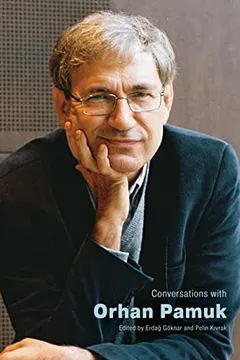
Download PDF
Download EPUB
.epub digital book format is ideal for reading ebooks on phones, tablets, and e-readers.








