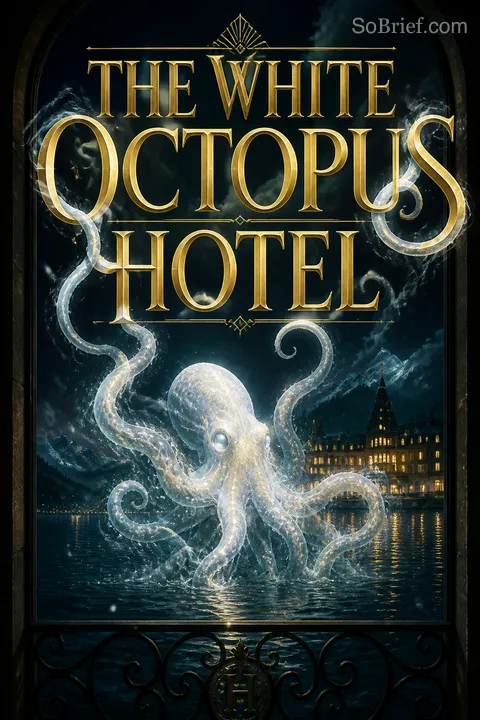


Plot Summary
The Birthday Visitor
On her twenty-seventh birthday in London, Eve Shaw tries to work through the day while a white rabbit with a black-marked eye follows her, visible only to her. At the auction house, a frail visitor named Max Everly gives her a pearly octopus ornament that precisely matches the creatures she secretly draws and tattoos on her skin.
He knows her name and birthday, and seems to recognize her, though she has never met him. As Eve helps him down the front steps, Max suffers a fatal heart attack. His final plea connects her to a hotel, but she has no idea what he means. She keeps the ornament, unsettled by the feeling that the stranger’s gift has opened something.
A Teacup Points North
A year later, while avoiding her birthday in France, Eve finds a battered lavender-grey tea service at a flea market. Its white octopus emblem has the same black-tipped tentacle as Max’s ornament and Eve’s own drawings.
An auction-house colleague links the china to the White Octopus Hotel, a legendary Swiss establishment said to have collected magical objects before mysteriously closing in 1935. Online, Eve finds photographs of the hotel and learns that the celebrated painter Nikolas Roth once lived there.
The building feels unmistakably familiar, although it had shut decades before Eve was born. Max’s request to return to the hotel no longer sounds like a dying man’s confusion. Eve begins to suspect that the matching objects are a trail meant for her.
The Gate Never Closed
Auctioneer Victor Harris confirms that the hotel’s objects may possess real magic. He lends Eve a key marked Room 27 and tells her about writing paper that can send a letter to a younger self. Eve wants it for one reason: to prevent her sister Bella’s death. When she asks her estranged mother, Jane, about the hotel, Jane reveals that she once explored its abandoned lobby with three-year-old Eve and found a key to a room that did not exist.
Her photograph shows the child inside the building. The memory opens the wound Eve has avoided since age four: she left the garden gate open, Bella ran into the road, and a car killed her. Eve decides that if the paper is real, she will use it, whatever her new life might cost.
The Room That Wasn't
Eve travels to the Swiss village across the lake from the ruined hotel, then loses her cherished fumsup charm while crossing by boat. Inside the derelict lobby, she finds her octopus emblem stamped on a guest book, and her living inked tentacle reaches from its pages to touch her. She follows the brass key’s number through the floors, finding Rooms 26 and 28 but no Room 27.
A photograph in the library shows Eve herself in the hotel decades earlier, wearing clothes from the 1930s. The key fits a lock hidden on the inside of Room 28’s door. When Eve turns it, the ruined room vanishes around her. She wakes in a clean, furnished bedroom in 1935, eighty years before her own time.
A Party Before the Closing
A bellhop named Alfie explains the hotel’s rules: Room 27 admits travelers from the future, its wardrobe dresses them for the period, and leaving will erase their memories of the stay.
Eve has arrived just before a three-day celebration of the hotel’s fortieth anniversary, although she knows it will close permanently in a few days. At the opening party, owner Anna Roth announces a hunt for twelve clocks and thirty-six octopuses.
Eve recognizes Max Everly, the composer whose music has sustained her through depression, and then meets Jane, her pregnant mother, as a young woman. Jane does not recognize her daughter. An elderly hotel historian confirms that Room 27 is one of three time-traveling rooms and invites Eve to learn the hotel’s history.
A Photograph Comes Alive
As Eve searches the hotel, the objects make its rumors tangible: a mirror shows a clock that is not in the room, a telephone rings without a wire, and an unseen figure coughs whenever someone lies. Max, who distrusts most of the hotel’s magic, helps her identify clues. In an old photograph, Eve recognizes herself in a nurse’s uniform beside a much younger Max, proof that she once visited the hotel in 1918.
Max says he remembers a nurse named Eve Shaw from his recovery after the war, but does not understand how the woman before him can be the same person. Eve also sees her younger self with Jane and begins to feel the cost of changing their past. Still, she continues hunting for the writing paper.
The Luggage Room
Eve and Max find a hidden lift key and descend to the Luggage Room, where trunks bear both their names. Eve’s cases contain the octopus drawings she has kept secret; Max’s contains letters and casualty notices from the First World War. Opening his trunk brings his dead comrades back as visions, including Thomas, the friend Max shot to spare him a prolonged death.
A separate trunk holds paintings credited to Nikolas Roth, including an image of the hotel’s three time-traveling keys. Eve pulls the Room 17 key from the canvas, and the hotel’s hidden room dissolves. She uses the new key alone, since it will not work while Max is beside her, and travels back to June 1918.
The Nurse in 1918
In 1918, Eve arrives as a volunteer nurse at the hotel, now a hospital for British prisoners of war. She meets Max as a skeletal, silent officer recently released from a German camp, and helps him through a night terror in which he mistakes her for an enemy. When Matron threatens to transfer him to an asylum for refusing food, Eve serves him the rations he remembers from the trenches.
Max eats, and the transfer is postponed. She brings a gramophone to the ward despite Matron’s ban, giving the wounded men music and Max a reason to look beyond his memories. He gradually speaks to Eve, writes to parents he knows are dead, and begins composing again. Eve recognizes his songs as the music that later helped her survive.
The Roof and the Piano
After the armistice, Max’s grief and guilt deepen until he climbs onto the icy roof intending to jump. Eve reaches him, and her living octopus tentacles pull him back from the edge. That rescue becomes the memory he later carries into 1935. Max begins playing the lobby piano again, and the two find comfort in skating, music, and an intimacy neither can safely promise to keep.
Eve knows she must return to 1935 to pursue the letter that could undo Bella’s death. Yet when she saves Max, she sets the key aside and stays with him for a time. On his twentieth birthday, a miniature piano music box plays a song whose inscription binds their names together. Eve leaves 1918 only after Anna summons her back.
Apples Behind the Door
Back in 1935, Eve learns that Max has lived through the years since their first meeting in 1918. He helps her resume the hunt, but an apparently frightened guest admits that Anna instructed him to invent stories about the hotel’s dangers.
When Eve confesses that she deliberately left the gate open, Max understands her guilt without pretending the choice had no consequence. A flood of apples erupts from a painting, forcing them from the room. They find the hidden basement, where their trunks and Nikolas Roth’s paintings vanish after Eve takes the Room 17 key.
Anna later burns the stored art and music boxes. Nan, a Roth child, reveals that her clockwork mouse band can play the lost music. It leads Eve to the final clock, a photograph of herself and Bella, and the clue that Room 7’s missing key belongs to another Eve.
The Child in Room Seven
During the final party, snow falls from the ballroom ceiling and the mirrors reveal another life: the birthday celebration Bella never lived to enjoy. Eve follows the rabbit to Room 7 and meets herself as a four-year-old, dressed for Bella’s funeral and refusing to go downstairs.
Her younger self has reached the hotel by drawing a door and using a key Nan slipped to her. Eve’s anger nearly turns into an attack, but Max comforts the child and gives her the fumsup charm that once steadied him.
The girl agrees to return to her parents. As she leaves, Eve understands that the octopus ornament belongs on the grandfather clock, replacing its missing time weight. The ceremony is not about saving Bella; it asks Eve to face the life she actually has.
The Weight of Time
When Eve restores the octopus to the clock, its final weight unlocks the scavenger hunt prize: one sheet of writing paper capable of reaching her younger self. Anna and her brothers reveal the price of using it. The clock would rewind forty years, but bringing Bella back would cost eight lives, including Max’s.
They also reveal that Anna is Eve and Max’s daughter, Annabella, and that Nikolas Roth’s hidden paintings were made by Eve under a man’s name, while Max created the music placed in the hotel’s boxes. Eve refuses the letter rather than sacrifice Max or anyone else. She chooses the unknown future over an attempt to rewrite grief. With their children gone, she and Max wind the clock and step into 1895 to build a life together.
Epilogue
Eve and Max marry and make the White Octopus Hotel their home, raising Harry, Tristan, and Anna among its shifting rooms and enchanted objects. Their life holds the First World War, grief, and years of ordinary tenderness as well as wonder. When Eve grows old and dies, Max remains with their children until he is ready to follow her.
He takes the Room 7 key, believing the journey will bring them together once more. His promise to find Eve again closes the circle: the elderly stranger who once carried the octopus to her office was Max, returning to the beginning of their story.
The ending does not erase loss; it gives loss a place inside a life that continues. Eve’s death remains real, as do the children’s grief and Max’s coming solitude, but the hotel’s looping time offers reunion without pretending that love makes mortality harmless. The final visit to young Eve also turns the opening’s uncanny gift into an act of care rather than a puzzle. Max returns not to rescue Eve from her past, but to give her the object that will eventually lead her toward a future she could not imagine. The circle is comforting precisely because it is built from choices, not escape.
Analysis
The novel makes time travel an ethical problem rather than a fantasy of correction. Eve wants the writing paper because she believes a single warning can undo Bella’s death and repair her parents’ lives. Yet the hotel gradually reveals what that wish conceals: changing the past would not simply remove pain, it would redistribute consequence, threatening Max and the lives built around him. Eve’s refusal is not a claim that the past was acceptable. It is the recognition that grief cannot be repaired by treating other people as replaceable.
The story’s objects give psychological states physical form. The gate becomes the site of Eve’s self-condemnation; the rabbit and apples turn memory into an intrusive presence; her octopus drawings make private distress visible without making it legible to everyone. Max’s music performs a different kind of containment. It does not silence trauma, but gives it structure and a witness. The hotel’s magic therefore works best when it creates contact, not escape.
The novel also resists the comforting idea that love cures damage. Eve and Max remain vulnerable to grief, fear, and the aftereffects of war. Their relationship offers companionship and the possibility of a shared life, not immunity from suffering. That distinction gives the ending its emotional credibility: choosing love does not cancel what happened to Bella, and choosing not to rewrite history does not mean Eve has forgiven herself completely. It means she can stop making punishment the sole proof that she remembers.
Finally, the looping structure changes the meaning of the opening. Max’s gift first appears to be an eerie interruption in Eve’s lonely life. By the end, it is a deliberate return across time, part of a chain of care that carries the characters toward choices they have not yet made. The circle does not trap them in repetition. It allows the past to be revisited with new knowledge, while leaving the future open to work, art, family, and loss.
Review Summary
The White Octopus Hotel has earned a strong overall rating of 3.92/5, with readers praising its atmospheric 1930s hotel setting, emotional depth, and surprising twists. Many loved the blend of time travel, magical realism, grief, and romance, drawing comparisons to The Warm Hands of Ghosts and The Night Circus. However, some found the pacing slow initially and the time travel mechanics confusing. The romance between Eve and Max resonated with many, though a few wished for more on-page development. The ending divided readers, with some finding it magical and others feeling it incomplete.
Characters
Eve Shaw
The haunted artistEve is a reserved London auction-house valuer with an artist’s eye, mismatched eyes, and a private world of living octopus drawings. She uses black clothes, work, and distance to manage what she cannot explain to other people. Her sharpness can read as coldness, but it often protects a deeply alert and compassionate nature. She is drawn to abandoned objects because they hold traces of lives that have disappeared. Her central struggle is not simply whether to believe in magic, but whether she can accept that responsibility and self-punishment are not the same thing. Art gives her a way to shape inner pain without having to make it tidy or publicly acceptable.
Max Everly
The composer in timeMax is a gifted composer and former First World War officer whose wit and showmanship coexist with profound unease. He distrusts easy consolation, especially claims that love or art can undo suffering, yet music remains the means by which he reaches feelings he cannot otherwise bear. His charm is not simple confidence: it often hides fear, survivor guilt, and a belief that he has no right to a peaceful life. He recognizes pain in others without demanding that they explain it neatly. His connection with Eve grows through shared vulnerability, but their different eras and their obligations make affection inseparable from loss.
Jane Shaw
Eve's distant motherJane is a photographer whose work draws her toward abandoned places and distant countries. She loves her daughters but struggles to express affection consistently, especially when grief and exhaustion make ordinary parenting feel impossible. Her relationship with Eve is strained by a shared history neither knows how to discuss. Jane is not presented as a simple source of blame or comfort: she is a mother with her own limits, regrets, and private means of survival. Photography gives her a language for looking at what has been left behind, even when she cannot speak directly about what happened in her family.
Bella Shaw
Eve's younger sisterBella is Eve’s much younger sister, remembered through small, vivid acts: taking balloons, offering leaves and apples, and reaching for her older sister’s hand. In Eve’s childhood, Bella’s needs often seem to claim the attention Eve longs for herself. That ordinary sibling irritation becomes inseparable from the family’s deepest wound. Bella matters not as an emblem of innocence but as a particular child whose brief life is preserved in fragments, some loving and some difficult. Eve’s memories of her are complicated, and that complication is essential to understanding how grief can distort affection without erasing it.
Anna Roth
The hotel's guarded heiressAnna is the poised young owner of the White Octopus Hotel and daughter of the painter Nikolas Roth. She is capable of commanding a room, protecting family secrets, and keeping the hotel’s strange traditions in motion. Beneath her polish lies a fierce attachment to the place and to the people who depend on it. She can be withholding when she believes the truth would cause harm, a choice that makes her difficult to trust. Her resemblance to Eve and the traces of a rabbit in her life suggest that the hotel’s past and future are more intimately connected than she initially lets on.
Nikolas Roth
The reclusive painterNikolas Roth is a celebrated but elusive artist who lives in the White Octopus Hotel and refuses to circulate his paintings beyond its walls. He is controlling about access to his home and guarded about the reasons behind his artistic secrecy. During the hotel’s earlier years, his distance from the wounded servicemen and his family creates an atmosphere of unease. Roth’s reputation is built on the assumption that one solitary genius made the work associated with his name. The hotel, however, complicates the boundary between artistic identity, private creation, and public myth.
Victor Harris
The retired auctioneerVictor is a former auction-house valuer who has spent decades collecting stories about the White Octopus and its objects. He is practical enough to understand auction lore and open-minded enough to take its magic seriously. His memories give Eve the key to begin her search, though he cannot tell her what her own octopus does. Victor’s fascination is partly scholarly and partly personal: he has devoted years to tracking one particular object, making him a mirror of Eve’s growing obsession.
Alfie
The discreet bellhopAlfie is a young bellhop raised in the hotel, warm and professional even when explaining impossible rules. He treats time travel as an unusual service matter rather than a crisis, which helps Eve orient herself in 1935. His loyalty to the hotel is familial as well as occupational. By explaining that travelers pay with memories and must return to their own time, he makes the hotel’s wonder inseparable from its costs.
Harry
The hotel mixologistHarry works behind the hotel bar and belongs to the Roth family. He knows the rhythms of the hotel’s magical rooms and objects, but is cautious about what he says when a lie might provoke the Eavesdropper. His practical, hospitable manner contrasts with the dangers and mysteries around him. He helps make the hotel feel like a functioning home, not merely a collection of supernatural curiosities.
Tristan
Keeper of the clocksTristan is the hotel’s librarian and caretaker of its clocks. Thoughtful and technically curious, he explains the clockwork that makes time behave strangely without pretending to understand time itself. His work links the hotel’s domestic routines to its larger mysteries. He is also a steady presence among the Roth family, tending to practical responsibilities when others are overcome by emotion.
Nan
The secret-keeping childNan is a mischievous Roth child who slips beneath tables, plays with a clockwork mouse band, and knows more about the hotel than adults assume. She treats its mysteries with a child’s matter-of-fact curiosity. Her willingness to guide Eve toward clues comes from trust rather than a full understanding of the stakes. Nan’s connection to the hotel’s younger guests allows her to communicate across boundaries adults cannot easily cross.
Mrs. Roth
The hotel historianThe elderly historian has spent much of her life inside the White Octopus and knows its customs, family history, and elusive objects. She is patient with Eve’s questions but does not mistake information for wisdom. Her reflections on grief and the things people leave unsaid offer Eve a perspective she is not yet ready to accept. She combines scholarly attention with the tenderness of someone who has experienced loss firsthand.
Suzy
Eve's steady stepmotherSuzy is Eve’s warm, dependable stepmother, offering care without demanding that Eve perform gratitude or happiness. When Eve struggles at university, Suzy brings practical help and encourages her to return to drawing. Her steadiness gives Eve a form of family support that does not erase the pain surrounding Bella. Suzy’s presence also complicates Eve’s wish to change the past, since a different history would alter the life Suzy has built.
Mrs. Jones
The strict wartime matronMrs. Jones supervises the nurses caring for British prisoners of war at the hotel in 1918. She is blunt, efficient, and responsible for keeping both staff and patients safe. Her rules can feel harsh to Eve, but they arise from the real limits of a wartime hospital and the risks posed by severe trauma. She represents the institutional care available to men whose psychological injuries are poorly understood.
Thomas
Max's fallen comradeThomas is a fellow officer and aspiring saxophonist who shares Max’s wartime life alongside Rupert and John. His friendship is bound to music, humor, and the ordinary plans the men try to preserve in the trenches. The memory of Thomas becomes entangled with Max’s guilt and traumatic recollections. He represents both the real cost of war and the intimacy Max fears losing when he allows himself to care.
Rupert Lawson
The quick-witted officerRupert is a young officer who uses card tricks and teasing humor to keep his companions’ spirits from collapsing in the trenches. His liveliness helps Max’s circle preserve a sense of ordinary friendship amid constant danger. He is engaged to Betty and often receives her trench cakes.
John Waugh
The gentle solicitorJohn is a softly spoken officer and trained solicitor who writes anxiously about his pet tortoise. His careful, domestic concerns bring a fragile normality to the officers’ life at the front. He shares Max’s camaraderie with Rupert and Thomas.
Plot Devices
The White Octopus Hotel
A house outside timeThe hotel changes its appearance and uses across different eras while preserving rooms, objects, and memories from each. Its three rooms with sevens in their numbers allow travelers to move between times, but checking out normally costs them the memories of their stay. The hotel is both setting and active force: it arranges clothing, reveals hidden rooms, and brings people together through objects and recurring events. Its strange rules make time travel feel less like a tool Eve controls and more like an invitation with consequences.
The Three Room Keys
Doors into other yearsThe keys to Rooms 7, 17, and 27 let specific guests cross through time when used from the correct side of a door. Each traveler’s destination is connected to the hotel and to their own history. The keys make movement possible, but they do not offer a simple way to change events. Eve’s two journeys bring her into contact with different versions of herself and Max, and each return forces her to decide what she is willing to remember or leave behind.
The Moving Octopuses
Art that reaches backEve’s octopus drawings move, leave ink, and sometimes extend their tentacles into the world around her. One of them becomes a tattoo that travels across her skin and responds to danger. Octopus images also mark the hotel’s objects and rooms, creating a visual link between Eve’s private art and the building’s hidden mechanisms. The motif gives her an unusual means of grounding herself, while also making visible the feelings she has spent years concealing.
The Scavenger Hunt
A map of the hotelAnna’s anniversary challenge asks guests to locate twelve clocks and thirty-six octopuses, with a Roth painting and a magical object promised as a prize. The hunt gives Eve a concrete reason to explore, but its clues also direct her toward hidden rooms, lost histories, and the hotel’s strange relationship with time. It is not simply a contest to be won. Completing its pattern leads Eve to the missing weight in the lobby clock and forces her to confront what the promised writing paper would demand.
The Living Music
A hand through darknessMax’s compositions become a continuing bridge between him and Eve across decades. Music steadies Eve during periods of despair and gives Max a way to return to feelings he has buried after the war. At the hotel, a magical music box plays the most beautiful music in the world, and the tune can emerge through an unexpected clockwork mouse band. Music carries memories that the hotel’s rules might otherwise erase, and turns private suffering into something another person can hear without needing to explain it.
Download PDF
Download EPUB
.epub digital book format is ideal for reading ebooks on phones, tablets, and e-readers.








