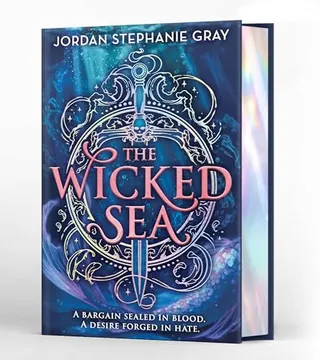


Plot Summary
Prologue
Five centuries of human persecution have left merrow corpses hanging above a royal celebration in Mortia. Siren Aurelia11 and her sisters Argonia and Phylla attack the palace garden in revenge, killing guards and revelers as Aurelia11 confronts King Constane.10
Their song nearly forces him to kill himself, but Warlock Arion Stone2 arrives untouched by siren magic and cuts Aurelia’s11 throat. The king10 orders the sisters’ bodies displayed with the others. This earlier massacre explains why Zephyra’s1 later arrival in Mortia, where merrow are hunted and executed, is so dangerous.
The prologue makes violence an inherited political ritual rather than an isolated outbreak. Humans turn merrow remains into party ornaments, while Aurelia answers by making the celebration itself a killing ground. Her revenge is understandable but not clean: she targets the guards as well as the king, and the scene offers no safe boundary between justice and retaliation. Arion’s resistance to siren song establishes warlocks as a counterforce to merrow power, while his presence at the massacre links the personal story to a conflict already centuries old. The spectacle shows how public cruelty breeds the reprisals that authorities then use to justify further cruelty.
The Crypt Robbery
Zephyra1 joins Vesper,4 her younger sister4 Eos,6 and their explosives expert Stavros7 in a raid on a noble tomb beneath Mortem’s temple. The crew needs the valuables to escape poverty in Crestfall, but Zephyra1 has failed to secure the key and Eos6 must squeeze through a narrow vent to open the entrance. Inside, an ice-breathing wraith attacks them.
Zephyra’s1 quick thinking turns Stavros’s7 gunpowder into a blast, but the creature vanishes, Vesper4 is wounded, and guards close in. Zephyra1 abandons the others and runs. At the gang leader Magnus’s lair, she tries to trade the stolen jewels for passage out of Mortia, then reveals her pink merrow hair to frighten his men. A winged warlock2 appears behind her.
Zephyra’s first defining choice is not the theft but the flight that follows it. She wants enough money to buy safety, yet the instant the plan collapses, survival outranks loyalty. Her companions’ suspicion of her is therefore not merely unfairness she must overcome; it reflects a real pattern of self-protection. The heist also makes survival material. A cottage, food, and distance from the sea are not romantic abstractions to Zephyra, but imagined proof that no one can own or imprison her again. The wraith’s unexplained disappearance turns a familiar crime into a larger supernatural pursuit, while the false hair and the jewels show how quickly she adapts when ordinary deception stops working.
The Gallows Bargain
The warlock,2 Arion Stone,2 imprisons Zephyra1 while searching histories for a cure to the black veins spreading from his heart. Historian Gavriall Praesepultus5 identifies a poem connecting the lost underwater utopia Abysses to Mortem’s missing heart. Zephyra1 confirms that merrow stories place Abysses beneath the sea, but King Constane10 orders her execution before Arion2 can learn more.
At the public gallows, Constane10 also condemns Stavros7 for aiding her and has him killed. Arion2 watches the execution begin, then cuts Zephyra1 free and blasts the crowd aside. He carries her toward the docks, asking her to guide him to Abysses in exchange for her life. His decision makes him a traitor to the kingdom he served.
Arion’s choice begins as self-interest, but it breaks the moral machinery that has defined him. He does not rescue Zephyra because he has reconsidered Mortia’s treatment of merrow; he needs her knowledge to survive. Yet saving her means defying the king, abandoning his station, and accepting that his official duty may be unjust. Stavros’s death makes Zephyra’s escape costly before the partnership has even begun. The spectacle at the gallows also mirrors the prologue’s public violence, but reverses the roles: the state now celebrates a merrow’s death, and Arion disrupts the audience rather than completing the execution. His act opens a route forward without resolving his prejudice.
A Debt Beneath the Waves
Zephyra1 pretends to cooperate, then throws dirt into Arion’s2 eyes and races for the sea. She dives from the port, transforms into a mermaid, and expects the warlock’s2 wings to keep him out of the water. Instead, Arion2 follows and begins to drown. Zephyra1 initially holds him under, furious that he arrested her and delivered her to the gallows, but an old memory teaches her that a merrow life debt binds rescuer and rescued.
She hauls him upward with her water magic. A sea sorcerer’s3 magic then makes Zephyra1 drown too, so Arion2 wakes and blasts them both toward a ruined shore palace. When he wounds her, the same cut appears on his body. A shining cord confirms they are linked until she saves his life in return.
The bond transforms rescue into an involuntary relationship, but its deeper force is ethical: neither character can treat the other as disposable without sharing the cost. Zephyra’s decision to save Arion comes from a rule she knows, not affection, and she still intends to escape him. Arion’s reciprocal rescue introduces a second threat, the sorcerer who can reach her even in the sea. Their matching wounds make intimacy physically legible before either trusts the other. The cord is not a romantic shortcut; it is a constraint that exposes how both have used control to protect themselves. Zephyra’s most urgent fear is not the warlock but the unseen captor her return to the ocean may awaken.
The Library Route
At the shore palace, Arion2 explains that he needs Mortem’s heart because warlock magic is killing him. Zephyra1 admits she cannot lead him to a surviving Abysses, but recalls a previous attempt to steal records from Lucia’s sealed Illuminated Library.
The library may hold reliable evidence about the lost city, unlike the conflicting legends each kingdom teaches. She describes the Greenwood Isles and their dryads, whose defenses react to hostile intentions and uncontrolled emotion.
Arion2 can disguise them with magic, while Zephyra1 knows how to enter the library. Her reluctance to return there hints at a buried disaster, but she offers no details. They agree to travel together, with the goal of finding a route to the heart and breaking their life debt.
The library redirects the plot from a search for a mythical object toward a search for suppressed history. Zephyra’s knowledge is experiential, while Arion’s comes from texts shaped by the kingdom that trained him; neither source is sufficient alone. Their plan therefore depends on a provisional collaboration between opposed forms of knowledge. Zephyra’s silence about her earlier visit is also psychologically precise: she can offer a route without yet exposing the shame attached to it. Arion’s need makes him listen, but not yet believe her account of history. The coming journey is built on asymmetric trust, with each carrying a piece of the map and each keeping back a piece of the past.
The Isle Remembers
On the Greenwood Isles, shopkeepers Gerald and Harold16 recognize Zephyra1 from her earlier visit. Their casual recollection triggers the memory she has tried to suppress: she once came here with Jacin,8 the young man she loved, to steal proof that humans and merrow had lived together. A dryad attacked after she feared the theft would be discovered, killing Jacin8 while Zephyra1 escaped.
Now her distress provokes the island’s dryads again. Arion’s2 magic fails as he struggles to disguise their emotions, then erupts and devastates the marketplace and library. The surviving islanders turn against them. Before they can face the mob, the death cult Cultus Mortis appears, freezing the island and killing people around them.
The island makes memory an active danger. Zephyra’s past does not simply hurt her; her fear helps trigger the very defenses that threaten the group. Jacin’s death establishes the private guilt beneath her practiced confidence, while her refusal to explain it shows how shame isolates her from potential allies. Arion’s failed disguise is more than a tactical error: the magic he uses to control appearances cannot manage the emotional reality he has been trained to suppress. Its explosion converts a rescue mission into a public catastrophe. The island’s destruction also complicates the heroes’ moral position. They are not innocent travelers, even as the cult’s arrival makes them victims again.
The Cult in the Trees
Cultus Mortis freezes Arion2 and Zephyra1 in place and begins killing the islanders. Zephyra1 breaks through her terror long enough to scream, startling the cultists, while Gavriall5 rushes in and throws salt water over them.
The distraction lets Arion2 recover enough magic to freeze and burn his attackers. Because the cult can only truly die by drowning, the group flees into the sea. Zephyra1 gives Arion2 underwater breathing with a kiss; Gavriall5 receives the same gift so he can follow.
They reach a hidden cavern, where Gavriall5 admits a merrow he loved was hanged by humans. He also shares an explorer’s report about Dima Vasiliev, who found strange black stone during an expedition into dangerous depths. The clues point toward the Syl and its Sceleratus Trench.
The attack forces cooperation through practical acts rather than reconciliation. Gavriall’s bucket matters because the cult’s power has a specific vulnerability, while Zephyra’s kiss converts a private gift into a means of keeping the whole group alive. The survivors do not emerge morally cleansed: they leave islanders behind, and the casualties remain a weight rather than a solved problem. Gavriall’s story gives the human side of the merrow conflict an intimate face. His lover was not a symbol but a person whose murder altered his life. The discovery that water can defeat the cult also plants a concrete rule for the eventual confrontation, turning the sea from setting into weapon.
Vesper’s Return
Vesper4 finds the cavern and holds Gavriall5 at trident point, accusing Zephyra1 of abandoning the crew. She reveals that Eos6 died after Zephyra1 fled the temple: Eos6 hid Vesper4 in the tomb while guards seized her and Stavros.7 Vesper4 has made a bargain with the sea sorcerer3 to bring Eos6 back, and she intends to take Zephyra1 to him.
Zephyra1 escapes into the water, but Arion2 follows the bond. Vesper’s4 siren song enchants him while Gavriall5 helps seize Zephyra.1 Before they can carry her away, a giant squid attacks. Arion2 and Zephyra1 fight it off, but a Tempest skyship drops a weighted net over all four. The group is hauled aboard, separated, and imprisoned.
Vesper’s anger gives Zephyra’s earlier flight its human consequence. The revelation of Eos’s death makes guilt specific: Zephyra did not merely leave friends in danger, she left a younger sister who chose to protect Vesper. Vesper’s bargain repeats the pattern of choosing a loved one at any price, which makes her both antagonist and emotional counterpart to Zephyra. The siren song temporarily turns Arion against Zephyra, demonstrating that their bond cannot guarantee trust or clear perception. The squid and skyship then interrupt a personal reckoning with escalating external danger. Capture leaves the group physically together but morally divided, each carrying a different grievance and a different bargain.
The Tempest Expedition
Princess Amaya Frost,9 a descendant of the storm god Tempestas, explains that her crew captured the fugitives because they found a warlock,2 mermaids, and evidence of a massacre. Arion2 admits they seek Mortem’s heart, and Gavriall5 recalls Vasiliev’s expedition.
Amaya9 reveals that her ancestor Queen Emilia15 funded it and that Vasiliev returned with amber-flecked adamant before leading a final voyage into the Syl. The report identifies the Sceleratus Trench as their destination.
Zephyra1 recognizes that the sorcerer’s castle stands in that same region and that reaching it means returning to the place where she was imprisoned. Amaya9 agrees to take them there in exchange for a share of the treasure, giving the group transport they could not secure alone.
Amaya’s arrival changes the quest from a desperate search into an expedition with resources, but her offer is transactional rather than trustworthy. The clue’s chain is unusually concrete: a poem points to Abysses, Gavriall supplies Vasiliev’s account, and Amaya supplies the expedition’s destination. Each character contributes a different kind of evidence. For Zephyra, however, the location is not merely geographic. The Sceleratus Trench contains the castle where she was held for years, so the route to salvation runs directly through her trauma. The book’s adventure structure and its recovery narrative now become inseparable: the party cannot reach the heart without asking Zephyra to revisit what she has survived.
The Cost of Magic
In an underwater cavern, Arion2 finally tells Zephyra1 that warlock magic consumes its wielder; black veins mark the damage, and both will die if he continues spending power. Zephyra1 refuses to let him treat himself as expendable, while Arion2 asks about the library and her fear of the Syl.
They trade pieces of their histories: he describes the torture and murder demanded by the Warlock Trials, and she remembers wanting a quiet home rather than another escape.
Their emotional defenses give way to desire, and they share an intimate encounter through Arion’s2 magic. Later, Zephyra1 tells him about the sorcerer’s3 eight years of imprisonment, though she withholds how she escaped. Their attraction becomes trust, but the life debt still makes every choice dangerous.
This section replaces the simple power imbalance between warlock and mermaid with mutual vulnerability. Arion’s magic is not an unlimited advantage; it is a bodily debt that threatens both people because their lives are linked. Zephyra’s anger at his self-sacrifice is therefore a defense of her own right to survive, not only concern for him. Their intimacy offers pleasure and temporary relief, but it does not erase the political opposition between them or the coercive bond that first joined them. Each disclosure is partial. Arion names the system that remade him, while Zephyra reveals the duration of her captivity but keeps her escape secret. Trust advances by increments, not by confession alone.
Blood Across Four Seas
To prevent the sorcerer3 from tracking her, Zephyra1 and Arion2 use their bond to spill her blood across all four seas, repeating the route so he cannot locate her easily. Arion2 heals the wounds and keeps her alive, despite the strain worsening his own decline. At the Sceleratus Trench, Zephyra1 touches the sea and uses her aecorian power to draw the water into a vast whirlpool.
The current tears Amaya’s9 ship apart and drags it to the trench floor. Felix18 is pinned and badly injured, while Zephyra1 and the others survive the crash. Amaya9 dries Zephyra1 so she can walk, and the party arms itself. The journey’s escape strategy has delivered them to the sorcerer’s territory, with no intact ship to retreat to.
The blood route is a clever attempt to reclaim control over surveillance, but it makes Zephyra’s body the instrument of the plan. Her wounds are deliberate, yet the power to endure them belongs partly to Arion, who spends magic he can scarcely afford. The trench descent then literalizes the cost of their ambition: the sea obeys Zephyra, but its obedience destroys their transport and injures the crew. Amaya’s storm-born authority cannot prevent every consequence, and the group’s preparation does not make them safe. The decision to continue is a point of no return. They have reached the site of the heart by sacrificing the means of easy escape.
The Castle of Teeth
The party reaches the sorcerer’s3 vast castle, where a coral maze and skeletal remains guard the entrance. Inside, the doors lock behind them and the corridors begin shifting. Human teeth embedded in a wall reveal a guard named Caspian,17 calcified into the structure but still able to recognize Zephyra.1 A child guard also awakens, altered with glowing amber.
Both are enslaved servants, so Zephyra1 refuses to let the others kill them. The group splits to search for a route below. Arion2 follows a music box into a memory of his father’s murder, but Zephyra1 pulls him back. In a mirror hall, she guides him past images of Cultus Mortis. When the stairs rise instead of descend, Arion2 jumps with her into the darkness.
The castle externalizes captivity through architecture that consumes its servants and rearranges the boundaries between rooms, bodies, and memory. Caspian’s recognition makes Zephyra’s past visible without exposition: she knows the people the sorcerer has trapped, and they know her as someone who once belonged there. Her insistence that they are not to be killed complicates the party’s usual survival logic. Arion, meanwhile, becomes vulnerable to the same kind of memory trap that has defined Zephyra’s history. She guides him through his trauma even while navigating her own, reversing the rescuer role. Their leap from the moving staircase is both a tactical gamble and a refusal to let the castle dictate their direction.
Blood Opens the Floor
In a lower chamber, seven stone guards wake and attack Zephyra.1 Arion’s2 fear for her breaks his restraint; he releases a burst of magic that burns the guards and cracks the castle. Zephyra’s1 blood runs into the fissures, which widen into the outline of a hidden door. The damaged structure then gives way, dropping members of the expedition through the floor.
Philippe and others are killed on impact, while Arion2 uses what magic remains to slow several falls. The survivors regroup beside the newly exposed entrance, marked with a mermaid’s tail. Arion’s veins have reached his jaw, and he is close to death. Zephyra1 insists on following the door despite the danger, because the heart may be their only chance to save him.
The door opens through the conjunction of Arion’s destructive power and Zephyra’s blood, tying their separate capacities to the discovery. But the revelation is not a clean reward. Their way forward appears amid deaths caused by the castle’s collapse, and Arion’s magic brings him closer to the end he has been trying to outrun. Zephyra’s insistence on continuing is no longer merely a wish to escape her captor; she is choosing to remain beside someone whose survival has become personal. The mermaid-shaped entrance suggests that the buried history recognizes her in a way the human histories never could. The scene makes revelation inseparable from cost.
Abysses Beneath the Castle
The hidden passage leads the group into a chamber of whispers and ghosts. Zephyra1 alone hears them begging to be saved; after she opens a strange door, a tidal wave sweeps the party out of the castle. Arion2 rescues her when she cannot swim with human legs. Beyond them, the drained trench reveals an intact city of white stone and turquoise glass: Abysses.
In its temple, murals show humans and merrow living together, then depict a winged Mortem12 pursuing Vila,13 the mermaid who removes his heart. The images contradict Mortia’s story that a mermaid deceived an innocent god. Arion2 sees that his training rested on a false history, while Zephyra’s1 inherited account gains visible proof. They locate the heart beneath Mortem’s12 statue.
Abysses is not only a lost place but an archive that resists the political story told above it. Its murals make coexistence visible and expose how a culture can convert its own god’s violence into a justification for war. Arion’s crisis is epistemic as well as moral: the institutions that shaped his identity have taught him a false account of the conflict he fought. Zephyra’s people preserved a truth that human authorities erased, though her own knowledge has never been complete. The ghosts’ plea and the city’s preservation suggest that the past is not passive. It continues asking the living to account for what they inherited and what they choose to do with it.
The Cult Claims the Heart
Cultus Mortis storms the temple and kills Amaya’s9 remaining crew. Amaya9 reveals that she had already bargained with the cult, hoping to save Tempest, and had helped lead the party into its reach. Arion2 attacks with a harpoon launcher, but the immortal cultists overwhelm the group. Zephyra1 floods the Death Lord and its followers with seawater, killing them at last.
The High Sorcerer3 then enters, removes the harpoon from Arion’s2 chest, and calls Zephyra1 his wife. The others freeze under his power. Zephyra1 recognizes the old captor who ruled her years in the castle, while Arion2 bleeds beside the unopened bronze chest. The heart is within reach, but their enemy has arrived before they can use it.
The battle strips away the expedition’s fragile coalition. Amaya’s betrayal is not driven by simple greed; she has accepted the cult’s promises as a way to protect her people, repeating the book’s pattern of desperate bargains. Zephyra’s water power finally turns the sea into an answer to the cult’s apparent immortality, but victory does not restore control. The sorcerer arrives with the ability to immobilize the survivors and injure Arion at the moment of discovery. Calling Zephyra his wife converts a private history of coercion into a public claim over her. The heart is no longer merely a cure. It is the object around which competing forms of ownership gather.
The Heart’s Last Exchange
The sorcerer3 reveals himself as Mortem12 and claims Zephyra1 is Vila,13 the goddess reborn. He explains that Jacin,8 Zephyra’s1 first love, was part of his experiment: after Zephyra1 bargained to save Jacin,8 Mortem12 trapped them both, then forced her to kill Jacin8 for her freedom. Gavriall,5 Amaya,9 and Vesper4 have also been maneuvered by his bargains.
Mortem12 offers to restore Eos6 and save the others if Zephyra1 opens the chest. Though Arion2 urges her to stop him, Zephyra1 chooses the people she loves. She opens the lock and places Mortem’s heart in his chest. He restores Eos,6 frees the survivors, and revives Arion,2 then snaps Zephyra’s1 neck before she can escape. Mortem12 regains his full power; Zephyra1 dies.
The climax turns the heart into an ethical test rather than a simple prize. Zephyra can crush it and stop Mortem, but doing so kills everyone whose life he has tethered to his. Her choice to restore him is made under coercion, yet it also grows from a deliberate rejection of the isolation that once governed her survival. The revelation of Jacin sharpens that conflict: Zephyra has already killed someone she loved to escape, and Mortem uses her guilt to make every alternative feel like another abandonment. Her sacrifice saves the others temporarily, but it does not reconcile love with safety or make Mortem’s bargain just. His renewed power immediately exposes the limits of her agency.
Epilogue
In the Fathoms, Zephyra1 wakes without her name or her memories, moving through landscapes that shift from river to forest to desert and sea. A castle draws her toward it despite her instinct to flee. Inside, she finds a man waiting on a dark throne.
His white hair and green eyes stir recognition she cannot explain. He calls her Zephyra1 and welcomes her home. The name Jacin8 rises in her mind just before the scene ends, leaving their reunion suspended between memory, guilt, and whatever death has made of them.
The epilogue refuses to make death a clean conclusion. Zephyra loses the narrative of her own life, yet her body and instincts still recognize places associated with captivity and the sea. The shifting landscapes suggest that the Fathoms do not offer a stable afterlife but a terrain shaped by memory, desire, and unresolved bonds. Jacin’s appearance reconnects the ending to the secret at the center of Zephyra’s guilt, but the reunion supplies no explanation or absolution. Instead, the final recognition raises a new question: whether love persists as memory, as punishment, or as a bond neither character can escape.
Analysis
The Wicked Sea builds its romance inside a conflict over who gets to define history and whose survival counts as justice. Mortia’s public theology presents warlocks as protectors and merrow as monsters, but the discovery of Abysses exposes a shared civilization erased by the victorious human account. Arion’s2 transformation is therefore not simply a change of heart toward Zephyra.1 He must question the institutions that trained him, the killings those institutions authorized, and the identity he built by obeying them.
Zephyra’s1 parallel struggle concerns the difference between responsibility and self-condemnation. She has caused harm through flight, including consequences she cannot undo, but Mortem12 weaponizes that guilt to make coercion resemble choice. Her history with Jacin8 gives the final bargain its force: she has once chosen escape over a loved one, and she cannot pretend that choice did not matter. Yet the book does not resolve this by declaring self-sacrifice inherently virtuous. Zephyra’s1 decision to restore Mortem12 is made within a rigged system, and his immediate violence demonstrates how little control the bargain grants her.
The recurring motif of bonds links magic to politics and intimacy. The life debt makes care physically consequential; the sorcerer’s bargains turn need into ownership; the old war divides whole peoples through stories they inherit. The novel’s sharpest distinction is not between humans and merrow, or even between love and hatred, but between reciprocal attachment and possession. Arion2 begins by treating Zephyra1 as a means to a cure, while Mortem12 calls domination love. Their contrast asks whether intimacy can survive unequal power. The ending withholds a reassuring answer. Arion2 lives, Zephyra1 dies, and her arrival in the Fathoms with Jacin8 suggests that neither history nor consequence is finished.
Characters
Zephyra
Runaway mermaid thiefZephyra is an aecorian mermaid from the Syl who disguises her pink hair and survives on theft, nerve, and fast improvisation. Her wish for a quiet home grows from years of danger and captivity, but she has learned to treat attachment as a risk and flight as her surest skill. She is funny, combative, observant, and capable of sudden tenderness, especially toward people she thinks are vulnerable. Her water magic gives her formidable power, yet her deepest conflict is not whether she can fight. It is whether she can accept responsibility without deciding that every harm makes her irredeemable.
Arion Stone
Mortia’s winged warlockArion is Mortia’s most powerful warlock, trained to suppress emotion and regard merrow as enemies. His authority, wings, and magic conceal a life shaped by poverty, violence, and institutional conditioning. He measures himself by usefulness and strength, so the discovery that his power is killing him threatens both his life and his identity. Zephyra1 unsettles the certainty on which he depends: she challenges his history, resists his control, and makes him feel what his training taught him to deny. His capacity for care emerges first through choices he can still call tactical, then becomes harder to separate from affection.
High Sorcerer
Sea-bound bargain makerThe High Sorcerer rules from a strange castle in the Sceleratus Trench and gains influence through bargains that offer desperate people what they most want. He is patient, theatrical, and skilled at turning affection into leverage. His calmness makes his cruelty more unsettling: he treats manipulation as an ordinary exchange and expects others to accept the price after they have already paid it. Zephyra’s1 history with him gives the quest a personal danger distinct from the political conflict between humans and merrow. He represents power exercised through dependency rather than open force.
Vesper
Protective siren sisterVesper is a silver-haired siren and Eos’s6 fiercely protective older sister. Practical, suspicious, and capable in a fight, she distrusts Zephyra1 from the beginning, partly because the younger mermaid’s recklessness threatens the family Vesper has struggled to keep alive. Her loyalty can be severe: she protects those she loves even when doing so requires a dangerous bargain. Grief sharpens her anger, but it does not erase her capacity to reconsider. Vesper and Zephyra1 are foils in their different responses to loss, each attempting to save someone they love without knowing what the price will become.
Gavriall Praesepultus
Historian with a criminal pastGavriall is a former gambler who has secured a place among Mortia’s historians through an extraordinary memory and a talent for reading people. He is witty, vain, self-preserving, and more courageous than he likes to admit. His knowledge of texts gives the group crucial leads, while his instinct to protect himself makes his loyalty difficult to assess. He understands how institutions can be used as shelter by people who know how to perform repentance. His complicated history with a merrow gives him personal reasons to doubt the hatred his society treats as common sense.
Eos
Vesper’s hopeful younger sisterEos is Vesper’s4 younger sister, a small, silver-haired mermaid whose warmth persists amid poverty and danger. She helps the crew through stealth and ingenuity, but she is not merely protected by her older sister4: she makes difficult choices for the people she loves. Her kindness toward Zephyra1 gives the newcomer a rare experience of being welcomed without first proving her worth. Eos’s optimism is practical rather than naïve. She shares food, takes risks, and keeps believing that a different life might still be possible.
Stavros
Explosives expert and guardianStavros is a broad, explosive-minded member of the street crew who treats his gunpowder as both a tool and a treasured creation. His blunt manner and readiness for violence conceal a history of family brutality and a fierce protectiveness toward Vesper4 and Eos6. He is dependable in a crisis, even when his preferred solution is to make something explode. His place in the crew shows how people build family through repeated acts of protection, not simply through blood.
Jacin
Zephyra’s first loveJacin is the young man Zephyra1 loves before the events of the main journey. Their shared attempt to find evidence of human and merrow coexistence connects her personal history to the lost city of Abysses. He represents a period when Zephyra1 could imagine trust and a future with someone, but also the lasting vulnerability created when love becomes entangled with bargains and power. His memory shapes the choices she makes long after their time together.
Princess Amaya Frost
Storm-born treasure hunterAmaya is a daughter of Tempestas and a leader who commands storm magic, a skyship, and a disciplined crew. She is ambitious, sharp-minded, and proud of her family’s achievements, but her responsibilities make her vulnerable to promises that seem capable of protecting her kingdom. Amaya approaches the expedition as both a historical discovery and a chance to secure resources for Tempest. Her self-assurance can make her underestimate the dangers she has chosen to bargain with.
King Constane
Ruler of anti-merrow MortiaConstane rules Mortia through spectacle, militarized fear, and public punishment. He presents the kingdom’s persecution of merrow as defense, using their violence as proof that further violence is necessary. His court celebrates slain merrow, and his authority depends on keeping that story intact. Constane’s polished self-importance makes him a political antagonist whose cruelty is normalized rather than hidden.
Aurelia
Siren avengerAurelia is a siren of the Sel who leads her sisters in a revenge attack on Mortia’s royal garden after humans slaughter refugee merrow. Her fury is rooted in the desecration of her people, and she sees violence as the only language the kingdom has honored. The prologue presents her as both a survivor of persecution and a participant in retaliatory bloodshed, establishing the cycle that shadows Zephyra’s1 story.
Mortem
God of death in human beliefMortem is the human god associated with death and the Fathoms, central to Mortia’s theology and the Warlock Trials. The kingdom’s account of his history shapes its laws, its institutions, and its belief that warlocks serve a righteous purpose. For much of the story, Mortem functions as a distant authority invoked to legitimize human power, while merrow traditions preserve a sharply different understanding of the ancient past.
Vila
Goddess in merrow traditionVila is the goddess of life, love, and sea in merrow tradition. Stories about her preserve a version of the ancient conflict that differs from Mortia’s official theology. Her image and the history attached to it connect love, power, and the fragile possibility of balance between human and merrow worlds.
Elder Branche
Warlock trials instructorElder Branche oversees Arion’s2 training and teaches him that pain, obedience, and emotional suppression are necessary to become a warlock. He is composed, authoritative, and convinced that the institution’s cruelty serves a higher purpose. His influence helps explain why Arion2 initially trusts Mortia’s version of history and confuses endurance with virtue.
Queen Emilia
Tempest’s ancestral queenQueen Emilia is Amaya’s9 great-great-great-grandmother, remembered for funding Dima Vasiliev’s expedition. Her support links Tempest’s royal history to the search for Abysses and gives the present expedition a record older than the kingdom’s current politics.
Gerald and Harold
Greenwood shopkeepersGerald and Harold are married shopkeepers on the Greenwood Isles, known for dressing visitors in elaborate clothes and speaking in playful, meandering turns. Their recognition of Zephyra1 reconnects her with the place where an earlier attempt to uncover history ended in tragedy. Their genial manner is inseparable from the island’s strict rules against theft.
Caspian
Enslaved castle guardCaspian is a castle guard whom Zephyra1 recognizes from her years inside the sorcerer’s3 domain. The castle has altered his body and narrowed his awareness, but his memories of Zephyra1 remain. His presence makes the castle’s servants more than obstacles and reveals the human cost of the sorcerer’s3 control.
Felix
Amaya’s first mateFelix is Amaya’s9 first mate, a steady officer who helps manage the Tempest crew and its dangerous voyage. He follows her orders but remains attentive to the practical risks of the expedition. His place among the crew shows the personal loyalty and expertise that support Amaya’s9 authority.
Plot Devices
The life debt
A bond with shared consequencesWhen Zephyra1 saves Arion2 from drowning, merrow custom creates a life debt that links their lives until she repays him by saving his. Their wounds appear on one another, and a visible silver cord lets Arion2 draw her closer or feel the cost of separation. The bond complicates every attempt at escape and makes violence against the other self-destructive. It also amplifies attraction and emotional awareness, though it cannot make either character trust the other. The device begins as a magical obligation and becomes a physical measure of dependence: both must decide whether care is genuine when magic has already made indifference dangerous.
Mortem’s heart
A cure and a contested historyArion2 believes the missing heart of Mortem12 contains divine power capable of stabilizing his dying magic and freeing him from Zephyra’s1 life debt. The search leads through poetry, old records, an expedition account, and finally Abysses, where the heart lies locked in a bronze chest. Different traditions explain how it was removed and what it means. The object therefore serves as a physical goal, a possible cure, and evidence that the history taught by Mortia is incomplete. Its power also attracts the High Sorcerer3, turning the group’s quest into a struggle over who can possess the authority of a god.
The sorcerer’s bargains
Desire turned into leverageThe High Sorcerer3 offers people a way to satisfy an urgent need, then makes the cost bind them to his purposes. Zephyra’s1 desire to save Jacin8 becomes the entrance to years of captivity; Vesper4 seeks Eos6, Amaya9 wants to protect Tempest, and Gavriall5 wants to survive his debts. Their bargains do not have equal terms, and apparent consent is shaped by desperation. This mechanism connects several subplots and explains why the group’s allies repeatedly conceal their motives. It also raises the story’s central question about agency: a person can choose under pressure without the choice being free of coercion.
Magic with a price
Power consumes its wielderMerrow powers depend on contact with salt water and differ by sea, while warlocks can perform a much wider range of magic at a bodily cost. Arion’s2 magic is inseparable from his survival, yet every use accelerates the black veins spreading from his heart. The contradiction forces him to confront a system that trained him to treat self-destruction as proof of worth. Zephyra’s1 water manipulation supplies a contrasting form of power rooted in connection to the sea rather than institutional discipline. The limits of each system shape the action: water can expose the cult’s weakness, while Arion’s2 dwindling reserves make every magical rescue consequential.
The moving castle
Trauma built into architectureThe High Sorcerer’s3 castle shifts its corridors, hides servants in walls, and turns objects, music, mirrors, and memories into traps. Zephyra1 knows parts of its layout from captivity, but the building never remains reliably navigable. Arion’s2 worst memory and the Cultus Mortis appear through its enchantments, making the search for the heart an assault on the characters’ internal histories as well as their bodies. The castle’s changing structure prevents the group from relying on maps or military formation. It also converts the sorcerer’s3 control into a setting: even when he is absent, the place continues to enforce his power.
Download PDF
Download EPUB
.epub digital book format is ideal for reading ebooks on phones, tablets, and e-readers.








