

Plot Summary
Reid Enters the Storm
During a violent storm, Reid Cavanagh3 slips into the Havertown house he shares with his estranged wife, Anna.2 He has sent their sons4 to his parents6 and prepared an alibi that places him elsewhere when she dies. A broken window and recent neighborhood burglary reports are meant to support his story about an unknown intruder.
Reid3 expects Anna2 downstairs, asleep on the family-room couch, but finds it empty. He resents the housework, the children,4 Anna's2 friends, and the support payments he faces in court, treating each ordinary demand as proof that his life has been stolen. Rather than abandon the plan, he searches upstairs, convinced he can still stage the scene and return as a grieving husband.3
Reid's plan grows out of a private story in which inconvenience becomes persecution. He turns childcare, legal obligations, and Anna's body into evidence against her, then treats murder as a practical solution to a problem he believes she created. His careful alibi does not make him calculating in a morally complex sense; it shows how thoroughly he confuses control with intelligence. The storm and prepared burglary give his resentment a theatrical setting, but his real danger lies in his conviction that his grievance grants him permission.
Anna Takes the Balcony
Anna2 hears Reid's3 familiar throat clearing and realizes he has entered the house. She knows the pending court hearing over child support and alimony has sharpened his anger, and she takes a golf club upstairs to defend herself. As he searches the rooms, Anna2 hides in a cramped office, then slips through a shallow balcony door when she hears him approach.
Rain slicks the narrow ledge, and vertigo nearly sends her over the edge. She stays pressed against the wall while Reid3 enters the room carrying a knife and wearing gloves. When he fails to find her, he searches downstairs. There, he turns a corner and encounters Paige,1 the woman he has been seeing,1 standing in the family room with the golf club.
Anna's escape is precarious rather than triumphant. The balcony offers almost no safety, only a few feet of concealment bought at the cost of a fall. That physical exposure mirrors her position in the marriage: she knows Reid's habits intimately, yet knowledge alone cannot make her safe. The golf club connects the domestic life Reid despises with Anna's immediate defense, while his gloves and knife confirm that his arrival is planned, not impulsive. His unexpected encounter with Paige cracks the control he believed he had over the evening.
Paige Hears His Grievances
Nine weeks earlier, Reid3 meets Paige1 at a hotel bar after a work conference. He complains about Anna,2 the children,4 household expenses, and the divorce, presenting himself as a neglected man rather than a husband3 who resents responsibility.
Paige1 listens and appears to understand, so Reid3 quickly confides that he has decided the marriage is over. He is drawn to her polished appearance and attention, and mistakes her interest for proof that he is still desirable. Their meetings continue.
Four weeks before the storm, Paige1 recognizes that Reid's3 complaints are becoming fixed and that he talks about a future without Anna2 as if her absence were already settled. He treats Paige1 as an ally in his imagined escape, never asking what she wants or why she keeps listening.
The bar encounter turns attention into a weapon, though Reid believes it is a gift he has earned. Paige's attentive silence lets him hear his own grievances without challenge, and he interprets that space as intimacy. His attraction is bound up with comparison: he measures Anna against an idealized woman who appears to require nothing from him. Paige, meanwhile, gains access to the language and fantasies Reid uses to excuse himself. Their apparent affair is therefore less a romance than an uneven exchange: he believes he is being admired, while his confidences expose the danger he poses.
Paige Watches Anna
As Reid3 grows more obsessed with life after Anna,2 Paige1 watches the separated couple during a custody exchange. She sees Reid3 approach Anna2 after dropping off their sons4 instead of letting the handoff end; after he drives away, Anna2 sits crying before she leaves.
Paige1 later meets Anna2 at the boys'4 sports camp and sees how the mother2 manages their noise and needs with tired affection, unlike Reid's3 portrait of a lazy, unfit wife.2 She also follows Anna2 and hears Reid3 describe driving past the family home, studying murder cases, and hiding his digital activity.
His talk shifts from hypothetical complaints to money, the coming court hearing, and the children4 being safely with his parents6 on a particular night. Paige1 decides Anna2 is in immediate danger.
Paige's surveillance corrects the one-sided account Reid has supplied. The custody exchange is modest evidence, but Anna's private grief and steady care of the boys contradict his caricature of her as selfish and incapable. At the same time, Reid's online research and precise attention to timing make his intentions legible as preparation, not mere venting. Paige's decision to intervene is shaped by both evidence and projection: she recognizes a pattern, yet her urgency also comes from a personal history she has not shared. The resulting rescue begins with observation, but it will depend on Anna's judgment too.
Paige Forces Her Warning
On the stormy night, Paige1 reaches Anna's2 house without a car nearby and knocks at the back door. Anna2 recognizes her from the boys'4 camp and tries to shut her out. Paige1 insists that Reid3 intends to kill her, but Anna2 initially defends her estranged husband3 and reaches for her phone. Paige1 blocks her and produces a gun, forcing her way inside to keep Anna2 from calling for help before Reid's3 plan is set in motion.
Anna2 darts toward the kitchen knives. Paige1 tackles her, and Anna2 strikes her head against a cabinet, leaving a wound. Paige1 pulls her away from the knives, binds her to a chair in the basement laundry room, and waits for Reid,3 believing that making him confront his own plan is safer than letting him hunt Anna2 freely.
Paige's rescue begins as an act of coercion. She has a credible warning but no trust, and the gun that is meant to protect Anna makes Paige look like another threat. Anna's resistance is rational: a stranger has invaded her home and refuses to let her contact the police. The collision at the counter leaves Anna injured, complicating any clean distinction between rescue and violence. Paige chooses control because she believes time is short, but the choice places Anna in the same vulnerable position Reid intended to exploit. Her plan will only become defensible if Anna can eventually act for herself.
The Basement Is Waiting
After meeting Paige1 downstairs, Reid3 follows her into the basement, where toys fill the playroom and laundry baskets crowd the unfinished section. He finds Anna2 slumped in a chair, wrists and legs tied, a scarf gagging her, and blood dried across her hairline.
Paige1 explains that she restrained Anna2 after a struggle, then challenges Reid3 with the complaints he has repeated about his wife.2 Reid3 reaches for Anna's2 throat, but Paige1 makes him answer for the knife, gloves, and the boys'4 absence.
Anna2 wakes fully as Paige1 removes the gag. Reid3 immediately tries to recast Paige1 as an obsessed attacker and himself as the husband3 who came to help. Anna2 watches both of them, hearing Reid's3 familiar contempt beneath his sudden performance of concern.
The basement rearranges the power Reid expected to hold. He has brought weapons and rehearsed a story, but the bound woman he expected to find helpless is awake and listening, while Paige controls the room's only visible weapon. His first response is not remorse but narrative management: he searches for a version of events that leaves him innocent. Anna's presence changes the stakes because she can compare his account with years of lived experience. Paige's decision to remove the gag restores Anna's voice, but it also turns the confrontation into a test of whether she can trust her own evidence.
The Marriage Loses Its Alibi
With the gag removed, Anna2 asks Reid3 about Paige1 and the affair he denies. Paige1 confirms that she has been present in his life, while Reid3 insists the real cause of the marriage's collapse was Anna's2 behavior. Anna2 answers with specifics: he ignored and belittled her, broke their agreement about major spending when he bought golf clubs, and made her feel useless.
Reid3 reduces those injuries to a divorce dispute and tells Anna2 that she is responsible for everything between them. When he directs his anger at Paige,1 she swings the golf club into his shoulder. The blow drops him to his knees and knocks the knife from his hand. Paige1 keeps him away from it, interrupting the story in which Reid3 alone gets to decide who is guilty.
The argument exposes how Reid uses accusation to erase consequence. He can acknowledge that the marriage is failing only when he can assign all responsibility to Anna, and he treats her concrete examples as a challenge to his authority rather than evidence of harm. Paige's strike interrupts that verbal control, but it does not resolve the conflict; it raises the immediate danger by leaving Reid injured, enraged, and disarmed. Anna's insistence on naming specific acts matters because it shifts the dispute from his grand account of being wronged to the daily methods by which he diminished her.
Paige Draws Her Gun
Reid3 pretends to submit, then lunges at Paige1 and slams her into the washing machine. He grabs the golf club, convinced that force has restored his advantage. Paige1 draws a concealed pistol and aims at him, revealing that she expected him to attack and did not rely on his cooperation. After firing a warning shot into the wall, she orders him to drop the club.
Reid3 obeys, and Paige1 moves Anna's2 chair away from him before untying her. Anna2 stands beside Paige,1 stiff from being bound, while Reid3 begs for her help and orders her to take the gun. She does neither. For the first time, Anna2 is free to leave the chair, and Reid3 cannot make her rescue him from the consequences of his own choices.
The gun is not a sudden solution so much as the last piece of Paige's contingency planning. Reid's attack repeats his core assumption that he can convert a setback into dominance through physical force. Paige's warning shot stops him, but Anna's release is the more consequential shift: the scene no longer presents her as an object the two others maneuver around. Reid immediately tries to recruit her decency, showing that his control depends as much on emotional obligation as on weapons. Anna's silence marks a pause in the old pattern, not yet a final decision.
Anna Chooses the Ending
Once free, Anna2 listens as Reid3 shifts from threats to promises of counseling and reconciliation. He invokes her childhood, using her parents' divorce and her wish to spare their sons4 a broken family as leverage.
Anna2 refuses the familiar bargain: she recognizes that his concern for their marriage appears only when he needs her protection. Reid3 then tries to make Paige1 the real problem, claiming that her hidden motives invalidate what Anna2 has seen. Anna2 rejects that distraction and keeps the focus on Reid's3 choice to come armed and kill her.
Paige1 asks whether Anna2 is certain, and Anna2 gives her permission to act. Paige1 shoots Reid.3 As he lies on the floor, Anna2 indicates that the danger is not over, and Paige1 fires again. Reid3 dies before he can rebuild his story around himself.
Anna's decision is the climax because it breaks the emotional mechanism Reid has relied on: her fear of harming the family, her empathy for his parents, and her hope that a better version of him might return. His appeal to her childhood is particularly revealing. He does not offer accountability; he uses intimate knowledge as a lever. Anna's choice is morally stark, but the narrative frames it as a judgment formed from what he has done, not a sudden appetite for revenge. Paige may wield the gun, yet Anna determines that the performance of reconciliation cannot be allowed to restart the cycle.
A Hero Is Buried
The first public account describes a home invasion, with Reid dead after trying to protect Anna from an attacker. Paige1 and Anna2 stage the house to support it: they break the back-door glass, disturb the rooms, remove obvious valuables, and leave Anna bound and visibly injured.
Paige1 also shoots Anna from an angle that makes it appear she could not have fired the fatal shots. At Reid's3 funeral, friends praise the man Anna2 knows tried to murder her, while his mother6 grieves the last surviving child in her family.
Anna2 keeps the lie so their sons4 will not have to visit their father3 in prison and his parents6 can preserve their memories. Paige1 reveals she never slept with Reid;3 she had lured him into exposing his plans after her sister7 was killed by an abusive man she failed to stop.
The staged account asks the reader to distinguish public truth from moral truth. Anna and Paige give the community a story it can absorb: a husband died defending his wife, and a random intruder escaped. The lie protects the children from a brutal prosecution of their father, but it also requires Anna to sit through praise for the man who tried to kill her. Paige's confession reframes her earlier intimacy with Reid as a deliberate trap, and her sister's death explains the urgency behind it without erasing the danger she brought into Anna's home. Their version of justice is protective, costly, and unofficial.
Paige Opens Another Case
Months later, Paige1 sits in her Michigan home and returns to the online work she paused after Reid's3 death. By day she treats legitimate therapy clients; in her off-book practice, she enters chat rooms under the identity of an angry, divorcing man. When men reveal resentment or fantasies of escape, she steers them toward a second persona, a sympathetic professional who listens and offers access to her.
Paige1 admits that this work can bring money, but it also carries the cost of killing. A new user, Greg, arrives late and complains that his wife pushes him until he cannot tolerate her. Paige1 recognizes the warning in his first messages and begins assessing him, setting aside her recovery for another possible threat.
The ending refuses the comfort of a completed case. Paige has taken time away, but the habits that made her effective have become a vocation she cannot simply switch off. Her paired online identities turn grievance into a screening tool, yet the method depends on impersonation, surveillance, and the possibility of lethal force. Greg's opening complaint is deliberately ordinary, which makes Paige's attention less a verdict than an assessment: anger can cool, or it can become a plan. The final scene leaves her in the uneasy space between prevention and vigilantism, choosing to listen again because she remembers the cost of waiting.
Analysis
The novella's central conflict is over who gets to define what happened inside a marriage. Reid3 narrates himself as a provider trapped by an unreasonable wife,2 using the familiar language of sacrifice to obscure how he controls money, criticizes Anna,2 and plans her death. Paige's1 intervention exposes that private story, but the book does not treat rescue as uncomplicated: she enters Anna's2 home armed, injures her, and temporarily takes away her freedom. Anna's2 agency emerges not because another woman1 simply saves her, but because she ultimately judges Reid3 by his actions rather than by his promises or by Paige's1 account.
The alternating perspectives make self-deception part of the suspense. Reid's3 confidence initially lends his plans a false coherence; each new viewpoint reveals the people and facts his version omits. His true-crime research also turns a public appetite for murder stories into a blueprint for concealing domestic violence. He understands how suspicion works, but not how much his own behavior has already disclosed.
The ending complicates conventional justice. Paige1 and Anna2 construct a lie that protects the children4 and lets Reid's parents6 preserve their image of their son,3 yet that protection requires Anna2 to endure a funeral where his supposed heroism is celebrated. Paige's1 history explains her refusal to wait after her sister's7 death, while her return to online baiting suggests that trauma can create a purpose and a dangerous method at once. The final message is not that vigilantism cleanly repairs what institutions miss. It is that the burden of preventing harm often falls on people with little certainty and no painless choice, while the stories they tell afterward can protect survivors and still carry a cost.
Review Summary
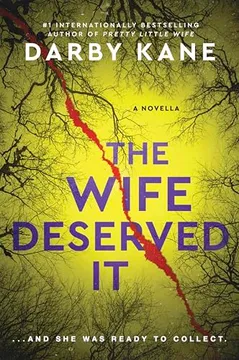
The Wife Deserved It is a novella-length domestic thriller receiving mostly 4-star reviews, praised for its fast pace, intense tension, and satisfying twists. Readers love hating the narcissistic antagonist Reid, while rooting for wife Anna. The dual-POV structure and audiobook narrators—Johnathan McClain and Eva Kaminsky—earn consistent praise. Critics note its brevity as either a strength or weakness, with some feeling shortchanged by limited character development. The morally complex character Paige generates particular enthusiasm, with many hoping for a sequel or series.
Characters
Paige
The watchful strangerPaige enters Reid's3 life as a poised, attentive woman who seems to offer the admiration he believes Anna2 has denied him. Her calm manner conceals a sharp ability to observe how people behave when they think they are understood. She listens closely, notices the gap between Reid's3 complaints and Anna's2 actual life, and keeps her own motives difficult to read. Paige is driven by a personal history that makes passivity feel dangerous, but her confidence in intervention can become coercive: she is willing to frighten, deceive, and physically restrain someone in order to act before a threat escalates. Her tension lies in the distance between wanting to protect others and deciding, sometimes for them, what protection requires.
Anna Cavanagh
The exhausted motherAnna is Reid's3 separated wife and the mother of Michael4 and Tyler5. She manages the children's routines, works in a school district office, and tries to keep a family functioning while a divorce and financial dispute narrow her choices. Reid3 portrays her as demanding and inadequate, but her care for the boys4 and her efforts to negotiate practical arrangements show a woman carrying more than her share of domestic responsibility. Anna is not written as flawless or endlessly patient; she can be defensive, weary, and slow to accept how dangerous her husband3 has become. Her central struggle is learning to trust what she has experienced rather than letting hope for family stability erase it.
Reid Cavanagh
The aggrieved husbandReid is Anna's2 estranged husband, a cost analyst who measures himself against an idealized future he believes marriage and fatherhood took from him. He prizes his education, appearance, and financial contributions, but treats ordinary obligations as humiliations and expects praise for performing the minimum. His resentment is especially visible in how he describes Anna's2 body, parenting, friendships, and requests for support. Reid's self-image as the reasonable party survives by converting disagreement into evidence of persecution. He can plan carefully, yet his entitlement makes him misread other people and underestimate the consequences of his own behavior. His charm and confidence make his grievance story persuasive to those who do not see its daily effects.
Michael Cavanagh
Anna and Reid's elder sonMichael is one of Anna2 and Reid's3 young sons. He appears in the tense custody exchanges and the busy rhythms of camp, school, and home life. His subdued manner during a handoff shows that the conflict between his parents reaches the children even when they do not argue openly in front of him.
Tyler Cavanagh
Anna and Reid's younger sonTyler is Anna2 and Reid's3 younger son. He brings home camp papers and seeks his mother's2 attention amid the noisy rush of the other children. His small, ordinary needs help reveal the family life Anna2 maintains and the stakes of the adults' choices.
Reid's parents
His protective parentsReid's parents take the boys4 during the storm and provide Reid3 with a place to live after the separation. They continue to see him through the protective lens of their surviving child, shaped by the earlier car accident that killed two of their children. Their loyalty gives Reid3 practical support and emotional cover, even as it limits their ability to recognize his failings.
Paige's sister
The loss behind PaigePaige's sister was killed by an abusive partner after Paige1 failed to respond decisively to a warning. Though she does not appear in the present action, her death shapes Paige's1 vigilance and her determination not to wait for certainty before intervening. That history gives Paige's1 work urgency, while also explaining why she may see danger as a call to act rather than a question to investigate.
Plot Devices
Alternating viewpoints and timelines
Reframes the apparent crimeThe story opens in the present with Reid3 entering the house and planning Anna's2 murder, then shifts among his perspective, Anna's2 immediate danger, and Paige's1 memories from earlier weeks. Each shift changes what the reader thinks the scene means. Reid's3 self-justifying narration makes him appear calculating but credible to himself; Paige's1 history reveals how she came to understand his intentions; Anna's2 viewpoint shows the physical fear hidden by his account of their marriage. The structure delays a full explanation of Paige's1 role, allowing the same storm-night events to acquire new meaning without changing their sequence.
Reid's false alibi
Turns planning into evidenceReid3 studies true-crime cases, sends the boys4 to his parents6, leaves his phone away from the house, and prepares a staged break-in. He believes these steps will let him present himself as a grieving husband3 rather than the person who entered the house with gloves and a knife. The details instead expose how much deliberate preparation lies behind his claimed spontaneity. His attempt to master the story of the crime becomes one of the clearest signs of his intent.
Paige's online personas
Draws dangerous men closePaige1 uses a false identity as a disgruntled man in online spaces, then directs promising contacts toward another persona who presents herself as a sympathetic professional. The double performance encourages men to reveal the anger they might otherwise conceal, allowing Paige1 to assess whether their resentment is temporary or points toward danger. Reid's3 attraction to her listening and apparent agreement helps him disclose his thinking. The technique is deliberately ambiguous: it can expose threats before they act, but it also relies on deception and places Paige1 inside volatile situations.
The staged home invasion
Protects the family with a lieAfter the shooting, Paige1 and Anna2 arrange the house to support a false account of an outside attacker. They break the back-door glass, disturb the home, remove visible valuables, and leave Anna2 restrained and injured. Paige1 also creates an additional injury that makes Anna2 appear unable to have fired the fatal shots. The fabricated evidence supports a public story that Reid3 died defending his wife2, sparing their sons4 from the truth of their father's3 attempted murder and from seeing him prosecuted. It also forces Anna2 to maintain a fiction that honors the man she knows he was not.
Download PDF
Download EPUB
.epub digital book format is ideal for reading ebooks on phones, tablets, and e-readers.








