

Plot Summary
Prologue
Two years before the main story, Kion Locke2 and Taissa Cho1 face each other as rival Robbers in a carriwitchet final. Taissa1 flies past the Stymphs’ defenses, steals the last draconian jewel, then makes an impossible leap back to her wyvern.
Kion2 sees the Luck glyph on her neck and recognizes it as forbidden. As the Wyverns celebrate, he turns toward the referee with a smile. The match ends in triumph for Taissa,1 but Kion’s2 discovery sets the scandal that will drive them apart.
The opening makes a private act visible at the worst possible moment. Kion sees the glyph, but neither he nor the reader yet knows who put it there or why. That gap turns the scene into the seed of a public verdict: Taissa’s spectacular skill is immediately recast as evidence against her. The jewel she wins matters less than the interpretation Kion carries away. Their rivalry begins as a contest of speed, but its lasting injury will come from how quickly suspicion hardens into certainty.
Locke Comes Begging
Two years after her expulsion, Taissa1 lives on a failing grocery-store wage, avoids hostile fans, and clings to the hope that the Wyverns might call her home. Kion2 arrives at her cottage with an offer: join the Stymphs, his team now at the bottom of the Minor League and close to being dissolved.
Samara Heaton’s pregnancy has left a hole in the roster, and Kion2 believes Taissa1 can help fill it. She remembers him as the hero she once adored and the rival who reported her Luck glyph. Their reunion begins with Taissa1 tackling him in her garden, not with forgiveness. But the chance to play again outweighs her anger, so she leaves Banallan for Pinion-upon-Keat.
Taissa’s return is driven by more than professional ambition. Staying in Banallan keeps her close to the team and world that rejected her, a choice that preserves hope while prolonging humiliation. Kion’s offer reverses their old positions: the once-untouchable star now needs the discarded rival. Yet his practical motive cannot erase the fact that he helped make her exile possible. Their reunion therefore begins with unequal knowledge. He sees a solution to a roster crisis; she sees a chance to reclaim a self that the scandal stripped away.
A Deal on Her Terms
Kion2 uses a Truth glyph to make Taissa1 hear that he genuinely needs her, then accepts her demand that he kneel and beg before she agrees. At the Stymphs’ Nexitory, owner Bill Dodds23 objects to recruiting a disgraced player, while publicist8 Niamh8 sees an opportunity in a leaked photograph of Kion2 and Taissa1 together.
She proposes a fake romance to attract favorable coverage, sponsorships, and money. Taissa1 accepts because the publicity could ease her debts and keep her on the team. Kion2 resists, but the contract requires them to perform affection and keep the arrangement from their teammates. He also conceals a crucial fact: coach Royd has quit, leaving Kion2 to coach the team himself.
The bargain puts humiliation, money, and belonging on the same scale. Taissa makes Kion kneel because she wants visible acknowledgment of the power imbalance he once ignored; the gesture cannot repair her career, but it forces him to experience a fraction of her vulnerability. The fake romance then turns private pain into club strategy. Their bodies become promotional material before either can trust the other. Kion’s concealed coaching role compounds the pattern: each enters the arrangement with information withheld, making cooperation possible while planting fresh reasons for distrust.
Cronus Takes a Rider
At the Stymphs’ stable, an injured old bird named Cronus3 lunges at Taissa.1 She heals his burned foot instead of fleeing, then returns alone that night to persuade him to bond with her. Cronus3 accepts after she promises he will fly and compete again. Kion2 inks the Bonding glyph onto them, linking Taissa1 not only to Cronus’s3 anger but to his buried fear of the handler who abused him.16
The next morning, Kion2 makes Taissa1 train before dawn and teaches her how different a stymph is from her former wyvern.5 Cronus3 repeatedly bucks her from his saddle. She finally stays on long enough to fly, but the team’s first practice match remains a chaotic failure.
Taissa recognizes Cronus because his anger is not simply aggression. He has been made dangerous by confinement and mistreatment, then blamed for the violence that followed. Her refusal to tame him through force distinguishes her from the people who controlled both their lives. Their bond is therefore not a cure for trauma but a negotiated relationship that gives Cronus choice. Kion’s coaching has a similar double edge: he pushes Taissa hard because safety and team survival demand discipline, but his attention also reveals a protectiveness he cannot yet acknowledge.
The Match Becomes a Massacre
Against the Dunanaird Cockatrices, the Stymphs’ first game is already faltering. Taissa’s1 temper earns a purple card, teammates collide, and the opposing side takes a jewel. Then every cockatrice suddenly goes limp in midair. The NCL Stymphs dive through the rain, rescuing riders before the Wingeds crash into the pitch and stands.
Kion2 saves several players, while Taissa1 carries the Cockatrices’ Bailer to safety and helps recover bodies from the wreckage. The creatures survive in comas, but spectators and players die. A magistrate questions Taissa1 alone because of her past scandal, and the DMC calls the event an unexplained illness. The Stymphs technically win, but the result feels like a sentence imposed on the survivors.
The catastrophe destroys the comforting boundary between sport and spectacle. The same dives and rescues that make the players heroes are also the skills that expose them to falling bodies, wreckage, and death. Taissa’s public reputation makes her an easy suspect, despite her work saving the opposing team. Kion’s trauma makes him freeze amid the carnage, while Taissa keeps moving. Their different responses do not signify strength versus weakness; they reveal how survival habits can be useful in one moment and paralyzing in another.
Sansa Calls Across Cities
A síceach named Alun reads Taissa1 and Kion’s2 auras and confirms the Stymphs carry an Unlucky curse, though he cannot identify its maker. The club still presses the pair into a paid Wily Witch shoot. During a staged intimate pose, Taissa’s1 old bond with Sansa5 flares beneath the scar left by its removal.
She hears the wyvern’s5 distant distress and abandons the shoot in lingerie, with Kion2 following her to Banallan. The DMC confirms that other Wingeds have fallen ill as well. At the Wyverns’ stable, Taissa1 reaches Sansa,5 who is alive but comatose, and finds glittering black powder around her nostrils. She preserves a sample, then kicks former coach Colum Frasier15 before escaping.
The curse investigation becomes personal when Taissa learns that the bond she believed severed can still carry Sansa’s distress. Her impulsive escape from the shoot rejects the marketable version of intimacy and answers a real relationship instead. The black powder gives her grief a practical direction: she can search for a cause, not merely mourn an unreachable companion. Her attack on Frasier foreshadows what she has not yet been able to say aloud. The body remembers coercion before the mind can make a public case of it.
The Dust Reveals the Withers
After Taissa1 tells Kion2 that Frasier15 forced the Luck glyph onto her and threatened Sansa,5 Kion2 believes her and admits that he grew up abused in a South London orphanage. Their shared secrets change the rivalry, but the black powder soon turns their cottage into a darker mystery: when it falls into the fireplace, a horse made of smoke appears and vanishes.
James4 recalls similar powder from a bargain tied to his father’s rise and death. Taissa1 and Kion2 connect the sign to Púca Púca LLC, a front for the Withers.19 With Jacks Clarke’s20 help, they enter the Unseelie club Shrieking Pumpkin and confront leader Orla Banes.19 She confirms the curses were commissioned through her organization but refuses to identify the client.
The powder transforms an abstract diagnosis into evidence of a social system. Púca bargains make harm transactional, while their clients can hide behind intermediaries and plausible deniability. At the same time, the investigation forces Taissa and Kion to revise their picture of one another. Her alleged cheating began in coercion; his hostility grew from a childhood that taught him to hide weakness. Their disclosures do not erase responsibility, but they replace caricatures with histories and make cooperation emotionally possible.
The Messenger Confesses
After Taissa1 finds her underwear stolen from her flat, Kion2 makes her stay in his and buys her replacement clothes. The pair apologize for old injuries and recognize that their attraction is no longer only part of the publicity scheme. Meanwhile, former handler Markus16 returns to the stables and Kion2 pins him before he can leave.
Under a Truth glyph, Markus16 admits that a masked client paid him to carry messages to a Wither named Pieter Kenth. He never saw the client clearly and does not know the bargain’s full terms. Magis Rowan Elder17 arrests him for aiding a cursecaster, but the person who hired him remains free. Taissa’s1 stolen clothes and the anonymous client leave two threats inside the Nexitory.
Markus’s confession narrows the search without solving it. He is guilty of helping arrange the bargain, but his role as courier protects the person who designed it. The theft of Taissa’s underwear makes that anonymity feel intimate and invasive rather than merely bureaucratic. Kion responds by offering shelter and practical care, acts that begin to outgrow their staged romance. Their alliance now contains real tenderness, but neither has fully learned how to trust it. The unresolved stalker threat keeps vulnerability from becoming safety.
James Falls, Kion Chooses
When the DMC proposes using the Wild Hunt to win a wish that could reverse both curses, James4 collapses at lunch, visibly aged and unconscious. A diagnostic glyph shows heavy exposure to dark magic. Kion2 and Taissa1 search James’s4 flat and find a Púca note promising that the Stymphs will have no competition.
Kion2 cannot accept that his closest friend made the bargain, so he hides the evidence and threatens to remove Taissa1 from the team if she takes it. He immediately regrets the threat and kneels to ask her for time until after the Hunt. Taissa1 agrees, though the betrayal cuts deeply. Before the trip, Kion2 and Taissa1 become a real couple and tell the team their histories.
Kion’s choice exposes the asymmetry between his trust in James and the suspicion he once gave Taissa. He protects his oldest bond by withholding evidence, even though doing so risks Taissa’s place and the Wingeds’ recovery. His desperate kneeling repeats their original bargain, but its meaning has changed: he now recognizes the damage his words can do. Taissa’s agreement is not absolution. It is a time-limited act of love that preserves room for the truth while refusing to pretend that the threat did not hurt her.
The Hunt Claims Its Riders
Before the Wild Hunt, Óríon10 reveals that he is the son of an Icelandic crime boss and killed his father after his sister Selka died; the Stymphs respond by claiming him and Kion2 as family. Kion2 also admits his orphanage past, while Taissa1 tells the team that Frasier15 forced the Luck glyph onto her. At totality, all eight athletes mount black púcas and race down Sliabh Réaltach.
Riders fall one by one, leaving Taissa1 and Kion2 alongside King Puck and Queen Pike.22 Taissa1 edges past the monarchs and wins by a hairsbreadth. She carefully asks Orla19 to reverse both the team’s curse and the Sleeping Death without tricks. Orla19 complies, and the Wingeds recover, though James4 remains comatose.
The Hunt makes the team’s private loyalties visible under extreme physical pressure. Each rider must act alone when teammates fall, yet their earlier disclosures let them race as a unit rather than as isolated athletes. Taissa’s victory depends on skill and endurance, not the Luck glyph that defined her public disgrace. Her wording of the wish matters because the story has shown how bargains exploit careless language. The cure is earned through precision, but it cannot restore James immediately or erase the costs already paid.
The Healer Was the Stalker
Back in Pinion, Kion2 searches Edward Becerra’s21 desk and finds Taissa’s1 stolen knickers hidden in a drawer. Magis Elder17 arrests the team medic,21 who confesses that he stalked Taissa1 and arranged the first curse as revenge for Kion’s2 role in her disgrace. When Taissa1 joined the Stymphs, Edward21 commissioned the Sleeping Death to undo his earlier bargain, but the conflicting curses magnified the harm.
He planted the note and Fury traces in James’s4 room to frame him. Taissa1 kicks Edward21 as he is taken away. The team finally has the culprit, but James4 remains unconscious, bearing the bargain’s price. After the Withers19 transfer that cost to Edward,21 James4 wakes in hospital and forgives Kion2 for doubting him.
Edward’s betrayal exposes how care can be imitated as a route to possession. His work as a healer gave him access to Taissa’s injuries and trust, while his stalking treated her life as something he could rearrange for his own emotional gratification. The second curse was meant to repair the first, but the attempt to control consequences created a broader disaster. Kion’s misjudgment of James repeats his earlier failure with Taissa, yet this time he must face it before reconciliation. James’s return depends on exposing the truth, not protecting appearances.
Taissa Names the Coercion
One month later, Taissa1 rides Cronus3 for the Stymphs against the Perytons and helps secure their victory. At the press conference, with Kion2 and Mahina14 holding her hands beneath the table, she publicly identifies Frasier15 as the coach who forced the Luck glyph onto her after her father’s death.
The allegation prompts a new investigation and reverses the public story that had branded her a cheat. Her teammates and mother7 support her, while the club’s improving finances allow Bill23 to hire a new coach. Taissa1 also reconnects with Sansa,5 whose bond with her is being restored. She has not recovered the years she lost, but she is no longer carrying the truth alone.
Taissa’s testimony changes the meaning of her return. Until now, she has been able to prove her ability on the field but not control the story attached to her name. Speaking publicly is an act of authorship, and the team’s physical presence gives that act a social foundation. Her account does not depend on Kion rescuing or translating her. It depends on her choosing the moment and the terms. The match matters because she enters the press room as a player again, not as a scandal reduced to a headline.
The Stymphs Find Home
Taissa1 and Kion’s2 partnership steadies as the Stymphs return to competitive form. The club rebuilds, James4 rejoins his teammates after recovering, and Taissa’s1 public account brings support rather than another wave of condemnation. Sansa5 is reunited with Taissa,1 who keeps her bond with Cronus3 as well.
The once-isolated old stymph accepts the wyvern5 into the stable’s family, while the team prepares for a future beyond mere survival. Taissa1 ends the main story among teammates who know what happened and stand beside her, with Kion2 no longer hiding his scars or affection from her. The sport that once became the instrument of her exile becomes the place where she can play, speak, and belong again.
The resolution restores more than a roster or a ranking. Taissa’s two bonds make belonging expansive rather than exclusive: loving Cronus does not erase Sansa, and the team’s loyalty does not require anyone to conceal a wound. Kion’s growth likewise rests on letting others witness what he used to camouflage. Their repaired community is not free of conflict; its members still tease, compete, and argue. What changes is that disagreement no longer automatically means abandonment. The team becomes a chosen family through repeated acts of protection, not a sentimental label.
Epilogue
A year later, Kion2 and Taissa1 play for the Stymphs in the World Cup final in Brazil. Taissa1 evades a longma by leaping from Cronus,3 retrieves a jewel, and carries it across the boundary; Kion2 brings the final jewel through soon after. Their team wins the Cup.
In the celebration, Kion2 kneels and offers Taissa1 an opal ring, asking her to marry him. She accepts, promising she wants their arguments and their happiness for the rest of their lives. He once thought himself lucky only when an illicit glyph tipped a match. Now he understands that what he has found with Taissa1 is chosen, shared, and real.
The final image returns to the prologue’s airborne leap and changes its meaning. Taissa repeats the maneuver without a Luck glyph, converting a moment once used to condemn her into proof of her own skill. Kion’s proposal follows a victory built by the whole team, not by magical advantage or a private bargain. His old wish to be chosen becomes reciprocal: he offers commitment, and Taissa answers freely. The opal echoes the game’s jewels, but it is not stolen or won from an opponent. It becomes a promise made in public, after both have learned that love is safest when it does not require disguise.
Analysis
The novel asks what happens when institutions mistake a visible result for a complete explanation. Taissa’s1 illegal Luck glyph is real, but the public story that she is a cheat hides the coach’s15 coercion, her grief, and the threat to Sansa.5 The Stymphs’ bad play is real, too, but the label of incompetence conceals a curse. In both cases, scrutiny initially lands on the person easiest to blame rather than the structures and actors with power.
Carriwitchet makes those judgments physical. Riders depend on Wingeds, teammates, and formations; nobody can win through isolated talent alone. The Bonding glyph intensifies that dependence by making care and pain perceptible across species. Taissa’s1 approach to Cronus3 matters because she refuses to treat his fear as defiance. Kion’s2 role as captain2 likewise becomes more than command when he learns that protecting a team sometimes means letting its members see his weakness.
The romance develops through revision rather than destiny. Taissa1 and Kion2 begin with fixed stories about one another, then discover that memory, trauma, and deliberate misreading helped create their hatred. Their apologies do not erase the harm. They become meaningful when followed by changed behavior: Kion2 believes Taissa1 about Frasier,15 Taissa1 gives Kion2 room to face his past, and both learn to distinguish love from performance.
The magical bargains extend the same question to language. The Withers19 exploit ambiguous wishes, while Taissa’s1 carefully phrased request succeeds because she has learned to ask for what she means. The final victory therefore depends on more than speed. It requires evidence, consent, solidarity, and a willingness to name the harm accurately. The story’s answer to shame is not simply public praise. It is a community capable of hearing the truth, defending the vulnerable, and remaining together after the spectacle ends.
Review Summary
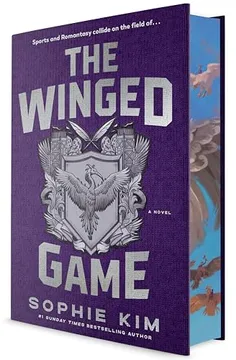
The Winged Game is a fantasy sports romance standalone with an overall rating of 3.99/5. Most reviewers praised its witty banter, creative worldbuilding, compelling rivals-to-lovers dynamic, and strong found family elements. The magical sport Carriwitchet, played on winged creatures, was widely enjoyed, with comparisons to Quidditch. Characters Taissa and Kion were largely beloved for their slow-burn chemistry. Common criticisms included pacing issues, an occasionally confusing world, insufficient gameplay detail, and a predictable or flat mystery resolution. Negative reviewers found characters immature and the romance shallow.
Characters
Taissa Cho
Disgraced star RobberTaissa is a gifted carriwitchet Robber whose quick hands and daring aerial instincts once made her a national sensation. Energetic, competitive, and rarely still, she channels frustration into gardening and crochet when the sport is taken from her. Her sharp tongue protects a softer need to be believed and welcomed, especially after public judgment costs her team, career, and bond with her wyvern5. She is fiercely loyal to Wingeds and people she loves, sometimes to the point of risking her own safety. Taissa’s central struggle is not whether she can play again, but whether she can trust a community after being betrayed by one. Her courage combines physical nerve with a growing willingness to speak plainly about harm.
Kion Locke
Stymphs captainKion is a formidable Robber, captain, and reluctant coach whose abrasive manner makes vulnerability difficult to see. He values discipline and loyalty because the Stymphs gave him the first durable sense of family he has known. Childhood abuse has taught him to expect rejection and to hide its evidence behind a Glamour glyph. He is often more comfortable protecting others than asking them to protect him, and his temper can turn fear into cruelty before he understands what he is doing. Taissa1 unsettles his fixed judgments because she recognizes his competitive mind while challenging his assumptions. His development depends on learning that honesty is not surrender and that closeness does not have to end in abandonment.
Cronus
Geriatric stymphalianCronus is an ancient, scarred stymph with a violent reputation, a sharp beak, and a tongue as cutting as his feathers. Years of confinement and mistreatment have made him suspicious of handlers and resistant to riders. He still longs to fly and compete, though he protects that longing with boasts, threats, and a refusal to submit. Taissa1 treats him as a partner rather than equipment, offering him agency and defending him from those who hurt him. His bond with her lets his humor and tenderness surface without sanding away his stubbornness. Cronus represents the difference between managing a dangerous creature and earning the trust of a wounded one.
James Ridgeshaw IV
Stymphs BailerJames is the Stymphs’ Bailer and Kion’s2 closest friend, a polished, wealthy warlock whose careful manners conceal a history of illness and family cruelty. He is observant, loyal, and often the calm counterweight to Kion’s2 impulsiveness. His attachment to the team is complicated by pressure from his mother to abandon carriwitchet for a more respectable career. James can be exacting with others, particularly when he fears the team is making a reckless choice, but his loyalty is not passive: he wants the club to survive and his friends to remain together. His composure is a form of control, not proof that he feels less than the people around him.
Sansa
Taissa’s former wyvernSansa is the small, sharp-minded wyvern Taissa1 chose when other players dismissed her as a runt. Their bond was built through trust, shared humor, and years of flying together. Sansa’s spirited nature and fierce protectiveness made her more than Taissa’s1 mount: she was her closest companion. Losing access to her leaves a wound that Taissa1 cannot replace simply by choosing a new Winged.
Cato
Kion’s stymphCato is Kion’s2 bronze-beaked stymphalian and long-standing partner on the field. Vain, hungry, and quick with teasing commentary, he shares a close bond with Kion2 and often sees through his captain’s2 attempts to hide what he feels. Cato understands the other birds’ relationships and carries their news between them, making him both a formidable teammate and an irreverent observer.
Estee Cho
Taissa’s outspoken motherEstee is Taissa’s1 warm, forceful mother, who encouraged her daughter’s early riding and carriwitchet ambitions. She responds to grief by staying busy and remains loving even when her advice veers into comic overconfidence. Her support gives Taissa1 a rare refuge outside the league, though distance and her own financial strain prevent her from fixing every practical problem.
Niamh
Stymphs publicistNiamh is the Stymphs’ Summertides publicist, relentlessly upbeat and attuned to the way attention can become sponsorship. She sees the fake relationship as a chance to rescue a club losing money and status. Her enthusiasm often collides with the players’ needs, especially when she prioritizes publicity over exhaustion or grief. Beneath the glittering plans, she is trying to keep her own job and the club’s staff intact.
Knox Tanaka
Mischievous offensive DozerKnox is a quick, playful Dozer whose jokes and provocations can aggravate his teammates as readily as they lift their spirits. Like Kion2, he grew up outside the Hidden Cities and knows what it is to feel out of place in a guarded, wealthy sport. He chases recognition and fun, but his loyalty appears whenever a teammate is threatened. His rivalry with Óríon10 masks a bond neither is quick to name.
Óríon Magnússon
Hard-edged Icelandic DozerÓríon is a powerful, secretive Dozer from Vesturbær, marked by a past he rarely discusses. He speaks little, guards his privacy, and uses cutting remarks to keep others at a distance. His fierce competence and readiness to protect teammates make him an anchor in crises. He and Knox9 argue constantly, but their antagonism contains a degree of attention and familiarity that neither openly admits.
Brontë Rihowl
Fearless offensive DozerBrontë is an aggressive Dozer with a blunt sense of humor and a taste for provocation. She treats danger as something to meet head-on and often hides discomfort behind a joke or challenge. Her history with Isla12 complicates her team relationships, while her willingness to confront Kion2 and defend others makes her a forceful presence. She is not always careful with people’s feelings, but she is rarely indifferent to them.
Isla Adaway
Shy defensive KnockerIsla is a small, shy Knocker whose admiration for Taissa1 helped draw her into professional carriwitchet. She is generous with gifts and attentive to the team’s needs, sometimes more comfortable caring for others than asking for care herself. Her gentle manner can conceal real competitive courage. Isla’s complicated connection with Brontë11 makes her sensitive to rejection, yet she continues to seek connection rather than retreat completely.
Adriel Pollack
Gentle, sharp KnockerAdriel is a beautiful, soft-spoken Knocker who is more perceptive and stubborn than his appearance suggests. He translates for Mahina14 and teaches the team British Sign Language, helping make communication a shared responsibility. His close friendship with Mahina14 is full of teasing and quiet attentiveness. Adriel’s loyalty is practical: he shows up, listens, and does not mistake gentleness for weakness.
Mahina Kehele
Sign-speaking defensive KnockerMahina is a perceptive Knocker who communicates through sign after losing her voice to a merrow’s bargain as a child. Her expressions and hands are lively, and her humor can be wonderfully blunt. She dislikes pressure and the exposure of public attention, but she is courageous when her friends need her. Her partnership with Adriel13 is built on fluent communication and an ease that makes their shared silence feel active rather than lonely.
Colum Frasier
Wyverns former coachFrasier is Taissa’s1 former coach, a veteran whose authority over players gives him unusual access to their careers and bodies. He presents himself as a respected professional, but his priorities are winning and controlling the people expected to deliver it. His relationship with Taissa1 becomes a source of fear that she cannot safely discuss while her wyvern5 remains in his sphere of influence.
Markus Terven
Abusive former handlerMarkus is a former Stymphs handler with a history of resentment toward Cronus3 and little respect for the birds in his care. His bitterness over his own stalled playing career becomes cruelty toward a creature he blames for his failures. Markus is a small but important example of how a club’s culture can excuse abuse when experienced staff are scarce.
Rowan Elder
Proud curse investigatorRowan Elder is a geancánach magistrate with the Curse Catching Bureau, recognizable by his pipe, formal manner, and confidence in his expertise. He approaches cases through procedure and research, often frustrating Taissa1 and Kion2 when they need immediate answers. His professional pride can make him slow to share information, but he is capable of recognizing evidence and acting when a case becomes clear.
Felicity Vance
Winged illness investigatorFelicity is a Department of Magical Creatures agent investigating the illness affecting the Wingeds. Practical and direct, she has little patience for Rowan Elder’s17 evasions and pushes the two departments to share responsibility. Her work represents the specialist knowledge and institutional caution that the players need, even when secrecy and jurisdiction slow their response.
Orla Banes
Withers syndicate leaderOrla is the sharp, self-possessed leader of the Withers, a púca syndicate that sells supernatural bargains through a respectable-looking front. She is amused by courage and contemptuous of clumsy threats, but she follows the organization’s rules about clients and contracts. Her combination of candor and menace makes her an unpredictable source of information.
Jacks Clarke
Dullahan with connectionsJacks is a charming, troublesome dullahan with unusual sight and a talent for arriving where he is least expected. He treats danger and extortion as entertainment, and his romantic declarations are rarely dependable. His knowledge of the Unseelie world gives Kion2 and Taissa1 a route into places they could not reach alone, though his help always comes with mischief.
Edward Becerra
Stymphs team medicEdward is the Stymphs’ healer, a handsome, attentive warlock whose bedside manner makes injured players feel cared for. His gentle presentation earns trust, especially from athletes accustomed to painful collisions and rushed treatment. He is also drawn to Taissa1, and his attention adds unease to Kion’s2 already complicated feelings about the team’s medic21.
Queen Pike and King Puck
Unseelie royal rulersPike and Puck are the powerful Unseelie monarchs who preside over the Wild Hunt. Their reputation for cruelty makes even experienced athletes wary of attracting their attention. Pike is shrewd and well informed, while Puck commands the Hunt’s unruly gathering. Together they embody the political power and danger behind the stories Seelie citizens tell about the Unseelie.
Bill Dodds
Stymphs club ownerBill owns the Stymphs and measures every decision against the club’s precarious finances. He is skeptical of Taissa’s1 recruitment and wary of scandal, but he also knows the team must improve or face dissolution. His concern for reputation often puts him at odds with the players’ immediate needs.
Plot Devices
Carriwitchet
Aerial sport and battlegroundCarriwitchet is a team sport descended from magical warfare. Riders bond with Wingeds, solve a riddle before mounting, then compete to steal fossilized Winged eggs called draconian jewels from siege towers. Robbers collect jewels, while Dozers, Knockers, and Bailers attack, defend, and rescue players. The sport organizes the novel’s action and relationships: Taissa’s1 skill is both her identity and the reason she returns, while the Stymphs’ losing streak threatens their jobs and family. Its rules, formations, and physical danger also make the Wild Hunt’s race feel like a distorted version of the game they know.
Glyph magic and bonds
Magic written on the bodyWitches and warlocks use qyls to draw glyphs that alter ability, perception, healing, protection, or truth. Carriwitchet’s Bonding glyph connects rider and Winged so they can share thought and emotion. That bond makes Taissa’s1 former connection with Sansa5 central even after the glyph is forcibly burned away, and lets her understand Cronus3 beyond his violent behavior. Glyphs also create evidence and danger: the forbidden Luck glyph ruins Taissa’s1 public standing, while Truth glyphs later expose testimony and preserve secrecy. Because magic is embodied, its benefits and violations cannot be separated from consent.
Fake relationship publicity
Romance turned into promotionAfter a photograph of Taissa1 and Kion2 circulates, Niamh8 and Bill23 turn public speculation into a strategy. The pair must appear to be dating so the Stymphs can gain attention, sponsors, and money while hiding Taissa’s1 recruitment until she can play. Dates, social media posts, and a risqué magazine shoot make their rivalry visible as romance. The device lets public performance gradually collide with private feeling, but it also makes their affection vulnerable to commercial pressure. They must decide whether intimacy belongs to their contract, their audience, or themselves.
The curses and black dust
A clue hidden in bargainsThe Stymphs’ run of implausible failures begins as a suspected case of the Blunduns, until Alun reads the players’ auras and identifies an Unlucky curse. Separately, glittering black powder leaks from sick Wingeds and becomes a smoke horse when heated. James4 connects the powder to a dangerous bargain from his family’s past, leading the players toward the Withers19. The two curses, one aimed at the team and one at the Wingeds, are linked to hidden clients and deliberately ambiguous contracts. The dust provides a physical clue, while its transformation signals that ordinary sports medicine cannot solve the crisis.
The Wild Hunt boon
A perilous cure with rulesA DMC legend offers the Stymphs a way to reverse the curses: during the Summer Eclipse, a Seelie rider must stay on a púca horse through the Wild Hunt and reach the finish ahead of the rest. The winner receives a boon without payment. The rules make riding, endurance, precise phrasing, and teamwork matter as much as courage. Falling can mean death, and the Unseelie crowd includes rulers22 capable of seeing through glamours. The race turns the sport’s familiar skills into a survival test and gives Taissa1 a chance to claim a cure without sacrificing another life or bond.
Download PDF
Download EPUB
.epub digital book format is ideal for reading ebooks on phones, tablets, and e-readers.








