

Key Takeaways
Build an information diet around enduring sources, not the loudest feed
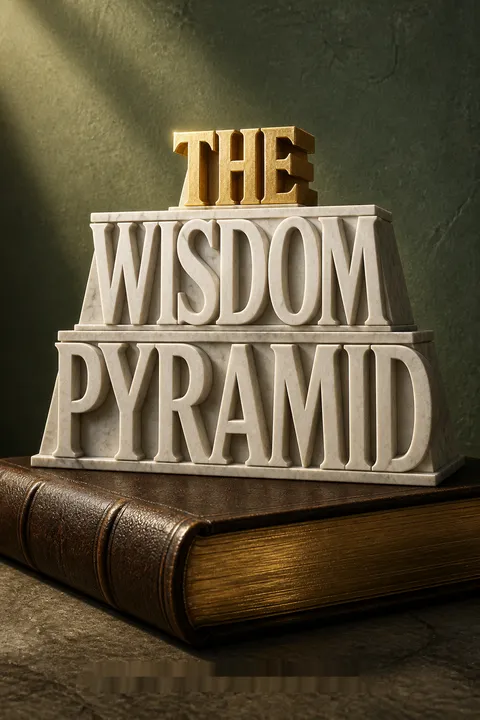
Wisdom is more than knowledge. It is the ability to judge what is true and live well in light of it. Brett McCracken argues that digital life often serves up information that is abundant, fast, and tailored to personal taste, but those qualities do not make it nourishing. His proposed Wisdom Pyramid ranks sources by durability and reliability: Scripture and the church form its foundation, followed by nature, books, and beauty, with the internet and social media near the top, to be used more selectively.
The order matters. The pyramid is a Christian framework: it treats God as the source of wisdom and Scripture as its firmest guide. The other sources can help readers understand and apply truth, but the book argues they should not displace that foundation.
The pyramid works as an attention policy, not merely a ranking of media. It asks readers to invest their most focused hours in sources with context, continuity, and accountability rather than whatever has won the latest contest for attention. That is useful even beyond the book’s Christian commitments: any information diet needs criteria for trust and proportion. The theological basis, however, is a substantive premise, not a neutral finding. Readers who do not share it can still use the hierarchy as a prompt to ask which sources deserve authority and why.
Treat information overload as a health risk, not an all-you-can-eat buffet
More input can mean less clarity. McCracken calls excessive information intake “information gluttony”: consuming far more than a person can thoughtfully process. He describes its costs as mental strain, fragmented attention, helplessness about distant crises, paralysis amid too many choices, and a tendency to seek out information that confirms existing beliefs. A person might move from a frightening health search to distressing news alerts, then into other people’s online disputes, without gaining useful understanding or a way to act.
The problem is not simply quantity. A feed places trivial entertainment beside grief, conflict, and urgent news, making it harder to judge what deserves attention. McCracken’s remedy is to choose what enters the mind rather than treating every available item as a demand for consumption.
The food metaphor makes an invisible cost concrete: attention, like digestion, has limits. Cognitive-load theory similarly distinguishes useful complexity from excess demands that crowd out working memory and judgment. The practical question is not whether information is good or bad in isolation, but whether a person has enough context and capacity to use it. There is also a risk in treating distress as a simple consequence of media intake. News can expose genuine danger and injustice. Selectivity should protect attention without becoming an excuse to ignore realities that call for response.
Slow your information intake before speed replaces judgment
Novelty rewards reaction. Online platforms privilege what is new, immediate, and likely to provoke a response. McCracken argues that rapid switching between short items trains people to skim, weakens opportunities for reflection, and keeps the present moment crowded out by whatever is trending now. He calls this “perceptual presentism,” a habit of seeing reality mainly through brief, current fragments, rather than through history and accumulated perspective.
A fast story can be a false story. In the book’s example of actor Jussie Smollett’s reported attack, major outlets and social media users reacted to early claims before the account was established as false. The lesson is not to distrust all reporting, but to let verification and time do their work. Read beyond the headline, wait before sharing, and allow first impressions to be revised.
Slowness here is an epistemic tool: it creates room for context, source checking, and the possibility of changing one’s mind. That complements journalism’s own verification norms, which are hardest to maintain when speed is treated as a measure of relevance. Yet delay is not always wisdom. Emergencies require timely information, and withholding reports can also cause harm. A sound practice distinguishes urgent alerts from material that merely feels urgent because it is repeated, emotional, or trending.
Let tested authorities challenge your instincts and curated bubble
The self is not a complete reference library. McCracken argues that the internet’s abundance can encourage people to treat personal feelings as final authority and to distrust expertise. But experience in a subject matters: a trained critic, doctor, or scholar may notice evidence that a casual observer misses. Expertise is fallible, and credentials alone do not guarantee wisdom, but dismissing accumulated knowledge leaves people more exposed to error.
Other people can reveal blind spots. Search rankings and personalized feeds often make an individual’s existing preferences feel like common sense. The result can be incompatible sets of “facts” and fewer encounters with credible disagreement. McCracken’s alternative is humility: consult informed sources, listen to people outside one’s usual circle, and accept that truth is not created by personal preference.
This is a case for social epistemology: knowledge depends on other people’s testimony, training, and correction. No individual can personally verify every medical, scientific, or historical claim. At the same time, authority needs scrutiny, since institutions can be biased, mistaken, or self-protective. The useful alternative to both blind trust and blanket skepticism is calibrated trust: weigh expertise, evidence, track record, and openness to correction. Diverse exposure helps only when it includes serious arguments, not merely opposing voices selected for outrage.
Put Scripture at the base, then read it in context and obey
The foundation is theological. For McCracken, the Bible is the most reliable source of wisdom because it is God’s self-disclosure. This is a Christian conviction, not a claim that every reader will accept. He argues that Scripture should shape a reader’s assumptions, rather than being selectively used to defend them. That means attending to the whole narrative, not extracting convenient lines, and allowing its teaching to inform all areas of life.
Reading should form a life. The book links Bible reading with worship, prayer, and obedience, while urging humility about difficult passages. It describes the Holy Spirit’s role as illuminating Scripture’s meaning, not supplying private revelation that overrides the text. McCracken’s childhood memory of his father’s well-used Bible illustrates how daily practice and example can make a source of authority tangible across generations.
The emphasis on context is a strong safeguard against proof-texting, a habit found in religious and political arguments alike. Reading whole texts also makes interpretation answerable to more than a reader’s preferred sentence. The theological account of Scripture’s authority and spiritual illumination remains a confessional commitment, and sincere communities disagree about interpretation. That makes interpretive humility especially important: readers benefit from historical study, trusted communities, and a willingness to distinguish a text’s claims from their own assumptions about it.
Commit to a local church for wisdom you cannot curate alone
Community corrects isolation. McCracken sees the church as a community that interprets Scripture together, transmits practices across generations, and makes believers accountable to people beyond themselves. Weekly worship, prayer, shared meals, and the Christian calendar can create rhythms that resist the demands of online life. A congregation also offers embodied relationships: people meet face to face, serve one another, and become known beyond the polished fragments shared on a screen.
Commitment narrows options. In a culture of endless choice, staying with one imperfect community can offer continuity and mutual responsibility. The book does not claim every church is healthy; it names hypocrisy, abuse, and failures of leadership as reasons people leave. Its argument is that those failures call for discernment and repair, not the assumption that spiritual life is best pursued alone.
A durable community can supply forms of accountability that personalized media cannot: obligations, shared memory, and relationships that survive disagreement. Those same structures can also protect harmful leaders or punish dissent. Commitment is valuable when paired with transparency, safeguards, and meaningful routes to challenge authority. The book’s defense of church is strongest when understood as a claim about the need for embodied, intergenerational community, rather than as a guarantee that any particular institution reliably provides wisdom.
Go outdoors to relearn creaturely limits, wonder, and stewardship
Nature resists personal preference. Weather, seasons, and the limits of the human body remind people that reality is not simply whatever they want it to be. In McCracken’s Christian account, creation is a “second book”: it can disclose aspects of its Creator, while Scripture remains the clearer guide. Observing animals, landscapes, and natural cycles can cultivate wonder and humility, as well as a sense of responsibility for the world people inhabit.
Attention has a physical setting. The book cites research associating time in nature with lower stress and improved well-being, including studies in which children spent time in forests. It also warns against treating nature as a god or overlooking human beings as part of creation. Its practical invitation is to spend time in the actual world, not only consuming images of it through screens.
Outdoor attention can interrupt the abstraction of screen life: bodily scale, weather, and ecological interdependence become immediate rather than theoretical. Environmental psychology offers a useful parallel, studying how natural settings can restore directed attention and support well-being. The theological interpretation of nature as revelation is distinct from those empirical claims. A landscape can inspire awe, but it does not by itself settle moral questions; observation, scientific explanation, and ethical reasoning remain necessary companions to wonder.
Read across eras and viewpoints to deepen empathy and judgment
Books give attention a longer span. A sustained encounter with a writer or character can expose readers to motives and experiences unlike their own. McCracken argues that books also help connect ideas across fields and periods, making the present seem less self-contained. He recommends choosing old books for their time-tested perspective, challenging books that test assumptions, and enjoyable books that keep reading a pleasure. He also relays C. S. Lewis’s suggestion to read one old book for every three new ones.
Reading is not surrender. A reader can understand an argument without accepting it, then assess it against other knowledge. The book’s advice is to be open enough to learn and discerning enough to reject what does not hold up. Fiction, history, theology, and other genres can all enlarge the reader’s mental map.
Long-form reading trains a different mode of attention from rapid browsing: it asks readers to hold a voice in mind, follow a line of reasoning, and tolerate unresolved complexity. Narrative may also make other lives easier to imagine, though empathy effects depend on what is read and how it is discussed. The old-book recommendation usefully counters presentism, but age is not proof of truth. Durable works deserve attention, while their historical exclusions and assumptions deserve examination too.
Make room for beauty and silence to shape what you love
Beauty reaches beyond argument. Music, stories, visual art, and the natural world can move the emotions and direct attention toward what seems worthy of love. McCracken argues that beauty can help people perceive truths that a list of propositions may not make felt. He points to contrast and tension in art, such as a musical resolution after dissonance, as forms that echo human longing and hope.
Attention completes the encounter. Beauty is easy to flatten into background noise when consumed in constant fragments. The book connects silence, leisure, and rest with the ability to notice and contemplate. It also warns that beauty can become an idol if treated as an ultimate end. In its Christian framing, art is most nourishing when it points beyond itself rather than replacing the source of truth.
Aesthetic experience can organize emotion before a person has words for it. That makes art powerful in both education and persuasion: form influences what an audience feels, not only what it can paraphrase. The same power calls for discernment, since compelling art can intensify falsehood as readily as insight. Beauty is also culturally contested, so the book’s claim that it ultimately points to God is a theological interpretation rather than a universal conclusion. Still, deliberate attention can make aesthetic pleasure more reflective and less passive.
Use the internet with a purpose, and leave most of it unopened
Online tools have real benefits. McCracken credits the internet with widening access to knowledge, giving overlooked voices a platform, and enabling public scrutiny of powerful people and institutions. But abundance and speed also make online life a poor foundation for wisdom. His five habits are to go online with a clear aim, choose quality over quantity, slow down before sharing, diversify the voices encountered, and use platforms to recommend what is good rather than merely amplify anger.
A boundary can be more useful than escape. Not everyone can disconnect from digital tools, and the book does not prescribe a universal retreat. Instead, it treats online space as a place requiring care: seek useful material, avoid aimless scrolling, and contribute responsibly. Christians, in particular, are urged not merely to leave digital spaces but to help make them healthier.
This is a more practical position than either techno-optimism or total withdrawal. Digital services can reduce barriers to education and visibility, while their engagement incentives often reward outrage, novelty, and compulsive checking. Individual habits matter, but they cannot fully counter design choices made at platform scale. Purposeful use is therefore best seen as one layer of response, alongside norms and product decisions that make careful attention easier rather than commercially inconvenient.
Measure wisdom by how you live, not how much you know
Wisdom is an orientation. In the book’s closing image, two builders face the same storm, but only the house on a stable foundation stands. McCracken uses this parable to argue that information matters when it shapes judgment and action. A wise life, in his Christian framework, is marked by discernment amid abundance, patience amid speed, and humility about personal understanding.
The direction is Godward. The book describes wisdom as looking to God, listening to Scripture, and loving God, rather than accumulating facts or opinions. That orientation should show up in daily conduct: what a person gives attention to, how carefully they speak, whether they rest, and how they treat neighbors and creation. Knowledge is valuable, but the test is whether it helps someone live more truthfully and faithfully.
The distinction between knowing and acting is central to practical wisdom, which involves selecting an appropriate response under real constraints rather than reciting information. The builder image captures how habits and foundations matter most when circumstances become difficult. Yet visible conduct is not a simple measure of inner wisdom: outcomes depend on opportunity, health, and social conditions as well as judgment. A useful assessment considers both the quality of decisions and the conditions that make wise action possible.
Analysis
The book’s central intervention is not a claim that digital media is uniformly corrupting. It is a claim about proportion and authority: a culture that treats every available signal as equally urgent, credible, and personally tailored will struggle to distinguish information from wisdom. The pyramid gives that argument a memorable architecture. Its descending order asks readers to give priority to sources that are slower, more durable, and more accountable, while treating social media as supplementary rather than foundational.
The framework’s strongest insight is its attention to formation. Information is not merely content received by an unchanged mind. Repeated habits of scrolling, skimming, reacting, worshipping, reading, and gathering shape what people notice and what they consider trustworthy. The proposed remedy therefore includes practices and communities, not just better fact-checking. This connects epistemology to daily life: attention is a limited resource, and its allocation has moral and social consequences.
The pyramid is also explicitly theological. Scripture occupies the base because the author understands it as divine revelation, and the rest of the model is interpreted within Christian commitments. That clarity is a strength for Christian readers, but it means the framework is not a neutral ranking that can be empirically imposed on everyone. Readers outside that tradition can still use its questions: Which sources have earned authority? Which endure scrutiny? Which encourage accountable action?
There is a tension in the defense of authority. Expertise and community can correct individual blind spots, but institutions can also protect their own interests, marginalize dissent, or confuse tradition with truth. The book acknowledges institutional failure, though its preferred safeguards rely heavily on the very religious authorities it recommends. A fuller application pairs humility toward personal judgment with independent checks on communal power.
The result is a practical argument for intellectual ecology. Wisdom requires not maximal information, but a habitat in which attention, interpretation, and action can mature.
Review Summary
The Wisdom Pyramid by Brett McCracken receives high praise for its timely and practical approach to cultivating wisdom in the digital age. Readers appreciate McCracken's insightful analysis of information overload and his proposed solution: a "wisdom pyramid" prioritizing Scripture, church, nature, books, beauty, and lastly, internet/social media. The book is lauded for its balanced perspective, challenging content, and applicability to modern life. While some readers disagree with specific points, most find it a valuable resource for Christians navigating today's information-saturated world.
People Also Read




Glossary
Wisdom Pyramid
Hierarchy of wisdom sourcesA visual guide to ordering sources of knowledge by their reliability and durability. In McCracken’s Christian model, Scripture and the church form the foundation, followed by nature, books, and beauty, with the internet and social media at the top for more selective use. The hierarchy reflects the author’s theological commitments, not a neutral or universally accepted ranking.
Information gluttony
Excessive information intakeMcCracken’s term for consuming more information than a person can thoughtfully process. He associates it with anxiety, fragmented attention, helplessness about distant problems, paralysis among choices, and retreat into confirming sources. The term frames information consumption as a habit with consequences for mental and spiritual life, much as excessive eating can affect physical health.
Perceptual presentism
Attention trapped in nowMcCracken’s term for experiencing reality mainly through brief fragments of current events and trends, with little perspective from history or long-term consequences. Social feeds and real-time updates can intensify this orientation by continually replacing one urgent present with another. The concept warns that what is new or immediate is not necessarily tested, important, or wise.
Information-action ratio
Information without practical agencyA concept McCracken draws from media critic Neil Postman. It describes the widening gap between information people receive and their ability to respond meaningfully to it. News about distant events can create awareness and conversation without offering context or a realistic path to action, leaving people burdened rather than empowered.
Overchoice
Too many optionsA term associated with Alvin Toffler for the stress and indecision that can arise when people face more choices than they can evaluate. McCracken applies it to digital abundance, such as endless streaming options and personalized recommendations. Too many possibilities can produce anxiety, passivity, and weak commitment rather than a feeling of freedom.
Nova effect
Expanding spiritual optionsA term Charles Taylor uses for the widening variety of moral and spiritual choices available in modern societies. McCracken uses it to explain why people may feel overwhelmed by competing accounts of belief and the good life. Abundance of options can make it difficult to commit to a tradition or sustain a coherent worldview.
Nature deficit disorder
Reduced contact with natureRichard Louv’s phrase for the potential costs of children spending less time outdoors and more time in built or screen-based environments. McCracken invokes it to support the value of direct encounters with nature for attention and well-being. It is a descriptive concept, not a formal medical diagnosis.
The two books
Scripture and creationA Christian theological idea that God is made known through Scripture, sometimes called special revelation, and through the created world, sometimes called general revelation. McCracken treats Scripture as the primary and clearest source, while nature offers an indirect witness that can prompt wonder, humility, and awareness of the Creator.
FAQ
What's "The Wisdom Pyramid: Feeding Your Soul in a Post-Truth World" about?
- Concept of Wisdom Pyramid: The book introduces the "Wisdom Pyramid," a framework inspired by the Food Pyramid, to guide readers in cultivating a healthy diet of knowledge and wisdom.
- Addressing Information Overload: It addresses the challenges of information overload, misinformation, and the decline of wisdom in the digital age.
- Sources of Wisdom: The book identifies reliable sources of wisdom, such as the Bible, the church, nature, books, beauty, and the Internet, in a hierarchical order.
- Practical Guidance: It offers practical advice on how to prioritize these sources to foster wisdom and spiritual health in a post-truth world.
Why should I read "The Wisdom Pyramid"?
- Navigating Information Chaos: The book provides tools to navigate the overwhelming amount of information available today, helping readers discern truth from falsehood.
- Spiritual Growth: It emphasizes the importance of spiritual growth and wisdom, offering a structured approach to deepen one's relationship with God.
- Cultural Relevance: The book addresses contemporary issues such as digital distraction, individualism, and the erosion of truth, making it relevant for today's readers.
- Practical Application: It offers actionable steps and habits to incorporate wisdom into daily life, making it a practical guide for personal development.
What are the key takeaways of "The Wisdom Pyramid"?
- Prioritize Reliable Sources: The book emphasizes the importance of prioritizing reliable sources of wisdom, such as the Bible and the church, over fleeting and unreliable sources like social media.
- Balance and Moderation: It advocates for a balanced and moderate approach to information consumption, avoiding gluttony and speed in favor of depth and reflection.
- Community and Accountability: The book highlights the role of community and accountability in gaining wisdom, encouraging readers to engage with the church and other communal sources.
- Integration of Beauty and Nature: It underscores the value of beauty and nature as sources of wisdom, encouraging readers to appreciate and learn from God's creation.
How does the "Wisdom Pyramid" work?
- Hierarchical Structure: The Wisdom Pyramid is structured hierarchically, with the most enduring and reliable sources at the bottom and the least reliable at the top.
- Foundational Sources: The Bible and the church form the foundation, providing the most direct and trustworthy communication of truth.
- Supplementary Sources: Nature, books, and beauty serve as supplementary sources that enhance understanding and appreciation of God's wisdom.
- Cautious Use of Internet: The Internet and social media are at the top, to be used sparingly and with discernment, as they are less reliable and more fleeting.
What are the symptoms of "information gluttony" according to Brett McCracken?
- Anxiety and Stress: Overconsumption of information leads to stress and anxiety, as the brain becomes overwhelmed with constant multitasking and information triage.
- Disorientation and Fragmentation: The barrage of disconnected information fragments our attention and erodes our ability to distinguish between trivial and important matters.
- Impotence: Exposure to far-removed news and issues creates a sense of impotence, as we feel unable to take meaningful action on the information we consume.
- Decision Paralysis: The overabundance of choices leads to decision paralysis, making it difficult to commit to anything or make informed decisions.
How does "The Wisdom Pyramid" address the issue of "perpetual novelty"?
- Slower Pace: The book advocates for a slower, more reflective pace of information consumption, emphasizing the value of depth over speed.
- Critical Thinking: It encourages critical thinking and reflection, warning against the dangers of skimming and superficial engagement with information.
- Historical Perspective: The book highlights the importance of historical perspective and continuity, urging readers to learn from the wisdom of the past.
- Resisting Presentism: It warns against "perceptual presentism," where the present moment dominates our attention, and encourages a broader, more balanced view of time.
What role does the church play in gaining wisdom according to "The Wisdom Pyramid"?
- Interpretive Community: The church serves as an interpretive community, providing collective wisdom and guardrails against errant theology and individualistic interpretations.
- God-Centered Rhythms: It offers God-centered rhythms and practices that counter the me-centered focus of the digital age, fostering spiritual growth and wisdom.
- Embodied Community: The church provides an embodied community that grounds us in tangible reality, offering accountability and support in a disembodied world.
- Continuity and Tradition: It connects us to a larger story and tradition, offering stability and wisdom in a constantly changing world.
How does nature contribute to wisdom in "The Wisdom Pyramid"?
- Reveals God's Attributes: Nature reveals aspects of God's character, such as his power, creativity, and love, offering insights into his wisdom.
- Sanity and Perspective: It provides sanity and perspective in an insane world, reminding us of our place in creation and the limits of human control.
- Embodied Experience: Nature offers an embodied experience that reconnects us with the physical world, countering the disembodiment of digital life.
- Humility and Awe: It fosters humility and awe, encouraging us to appreciate the beauty and complexity of God's creation and our role within it.
What is the significance of beauty in "The Wisdom Pyramid"?
- Engages the Heart: Beauty engages the heart and emotions, providing a deeper understanding of truth that complements intellectual knowledge.
- Reflects God's Glory: It reflects God's glory and creativity, offering a glimpse of the divine through art, music, and nature.
- Silences and Slows: Beauty silences and slows us down, creating space for reflection and contemplation in a noisy and fast-paced world.
- Rest and Worship: It invites rest and worship, reminding us of God's abundance and the importance of enjoying his creation.
How can the Internet and social media be used wisely according to "The Wisdom Pyramid"?
- Purposeful Use: The book encourages purposeful use of the Internet, avoiding aimless surfing and focusing on activities that support one's values.
- Quality over Quantity: It advocates for quality over quantity, suggesting careful selection of online content and prioritizing trusted sources.
- Diverse Exposure: The book recommends diversifying exposure to different perspectives and voices, challenging one's own biases and assumptions.
- Sharing Goodness: It encourages sharing what is good and true online, using digital platforms to celebrate beauty and truth rather than spreading negativity.
What are some practical habits for cultivating wisdom from "The Wisdom Pyramid"?
- Prioritize Scripture: Make the Bible the foundation of your wisdom diet, reading and meditating on it regularly to ground yourself in God's truth.
- Engage with Community: Participate actively in a church community, seeking accountability, support, and collective wisdom from fellow believers.
- Appreciate Creation: Spend time in nature, observing and learning from God's creation, and allowing it to shape your understanding of his character.
- Seek Beauty: Incorporate beauty into your life through art, music, and literature, using it to engage your heart and deepen your love for God.
Download PDF
Download EPUB
.epub digital book format is ideal for reading ebooks on phones, tablets, and e-readers.








