

Plot Summary
Prologue
On the winter night Omat is born, the hunters of the isolated camp are already dead, and her mother, Nona, dies in childbirth. The newborn barely breathes, so Puja lays her in the snow and begs the Moon to spare her. At dawn, a white wolf warms the child with its breath.
Puja carries the living baby home and nurses her, while Omat’s grandfather, Ataata, recognizes his dead son’s spirit in the child. The family names the infant Omat, expecting a boy and future hunter. The story begins with a child saved by a spirit, born into grief and destined to belong to more than one world.
The birth story gives Omat a history before she can choose one. Her family understands her survival as a reunion with the dead, and that belief becomes both a source of belonging and a demand: she is expected to carry her father’s name, spirit, and social role. The wolf’s intervention does not erase the mother’s death or the camp’s losses. Instead, it makes Omat’s life an answer to catastrophe. The later conflict over her body and powers is therefore seeded at birth. Others keep trying to make her survival mean one thing, while she must decide what kind of life the gift actually permits.
Caribou Name the Child
At eight, Omat lives with hunger as a daily fact. When Ataata returns from hunting with news that the caribou herd has starved, the camp faces another winter without food. Ataata journeys to the Ice Bear spirit and finds a herd inland; the family builds stone figures to funnel the animals into the river, where the hunters can kill them.
Omat’s older milk-brother, Kiasik, rushes toward a charging bull, and Omat draws its attention with a sling. The stone barely slows it, but Ataata speaks in the sacred spirit language and sends it away. He tells Omat that the child knew the caribou’s true name because her dead father’s spirit lives within her. Kiasik’s jealousy begins to grow.
The hunt makes spiritual inheritance practical: Omat’s gift saves a child and helps feed a camp, rather than serving as a decorative miracle. Yet the same moment sharpens the family’s unequal expectations. Ataata sees a future leader; Kiasik sees another reason he may be passed over. The story’s early tenderness is real, but it cannot protect Omat from being made responsible for other people’s survival. Her power arrives first as a family resource, before it becomes a self she can claim.
The Story Makes a Place
Years of training have taught Omat to hunt and sing, but Saartok’s laughter reveals what Omat has not been told: her body is female. Ataata explains that he raised her as a boy because she carries her father’s spirit, and promises that she may choose her life when her body changes. Omat refuses the future of wifehood.
At the Sun’s return celebration, she sings the story of Malina and Taqqiq, a tale of incest and pursuit that warns Ququk against keeping his daughter Saartok unmarried. Her performance helps force Ququk to accept a marriage between Saartok and Tapsi, the camp’s gentle but uncertain hunter. The match gives their shrinking community a chance at children, while Omat proves that her voice can do what strength alone cannot.
Omat’s identity is not presented as a private puzzle detached from community. Her people’s naming customs make kinship fluid, while their gender rules remain strict; she can be her father and still be told that her body will decide her future. Storytelling lets her intervene without physical force, but the tale’s warning also exposes the danger of inherited authority. Omat uses myth to protect Saartok from a real abuse of power. Her first act of leadership is therefore not a hunt, but a public reinterpretation of what the community’s own rules demand.
The Wolf Accepts Omat
After her first successful walrus hunt, Omat faces a new test: finding a helping spirit before Ataata can no longer guide the camp. Alone and without food or tools, she travels inland to a wolf cave and waits through three days of hunger. Singarti, the Wolf Spirit, appears and makes Omat experience death and rebirth before teaching her to take wolf and raven forms.
Her new senses reveal prey and distance in ways human sight cannot. When she tries to fly to the Moon, however, Singarti turns her back and warns her not to treat the spirit world as her own. Omat returns carrying wolf fur and new abilities, but not permission to go wherever her curiosity leads.
The initiation grants Omat agency while placing limits around it. Transformation is not a fantasy of escaping the body forever; it is a disciplined relationship with other beings, governed by reciprocity and restraint. Omat’s first impulse is to turn her gift into limitless power, but Singarti insists that survival depends on accepting boundaries. This lesson will matter when gods later exploit her ambition. Her ability to cross forms makes her a bridge, not a sovereign. The distinction is small at first and disastrous when forgotten.
A Ruin Beneath the Moss
As the old hunters weaken, Omat finds a rectangular stone settlement unlike any Inuit home. Among its remains, she discovers a warm shard of quartz and receives a vision of dogs, blood, and screaming. Ataata calls the ruined builders dwarfs and warns her away, but the shard leaves Omat wondering whether another people once lived on this land and vanished.
Soon Ipaq, Ataata’s brother, dies after a fall into icy water, and the camp’s seal hunt fails. Grief and hunger deepen the fear that the small community will not endure. When two unfamiliar sled teams appear across the ice, their food and children promise connection at last. Omat’s hope arrives alongside an unanswered question: what happened to the people who were here before?
The ruin quietly challenges the family’s belief that their isolation is natural and permanent. Its geometry and the shard make the past materially present, while the camp’s grief makes disappearance feel possible rather than mythical. The arrival of strangers seems to answer Omat’s wish for a larger human world, but the earlier ruin has already complicated the idea that new arrivals simply bring progress. The story plants a warning before anyone knows how to read it: people can be displaced, and the survivors may inherit both their tools and their violence.
The Whale Hunter Arrives
The newcomers are led by Issuk, a boastful hunter who brings meat, wives, a baby, and a little girl to a camp that has never seen children. Their arrival revives the Inuit family’s hope, and Issuk promises to lead them south after whales. During a game, he uses a hidden piece of antler to win Kiasik’s seal amulet.
Omat exposes the cheating and retrieves it, but Issuk turns the dispute into a public attack on her right to hunt. His men laugh when her clothing tears and reveals her female body. Kiasik sides with Issuk, arguing that the returned seals prove Omat’s presence has brought bad luck. Ataata, desperate for food and unsure whom the spirits favor, tells Omat to stay behind.
Issuk’s food is not merely generosity; it gives him leverage over a starving community. His confidence and hunting skill make his authority attractive precisely when Ataata’s generation is failing. Omat’s exposure turns a dispute about cheating into a trial over who may count as a hunter. Kiasik’s choice is painful because it combines envy with genuine fear for his family. The betrayal is not simple malice. Under scarcity, the camp is ready to believe that excluding Omat will restore order, even though she has repeatedly helped keep them alive.
The Moon Claims His Blood
Seeking help before the whale hunt, Omat travels in raven form to Taqqiq, the Moon Man. Taqqiq reveals that he has been trying to prevent her birth, has urged Sanna to keep animals from her camp, and fears Omat will end the world. He also causes Omat’s first menstrual bleeding, declaring that she is a woman and severing her connection to the spirits.
Omat returns unable to shift or hear animals. On the hunt, Ataata falls through the ice and dies; Issuk takes his bear claw and claims there was nothing to be done. When Omat tries to enter a trance and ask Ataata what happened, nothing answers. Issuk calls her a fraud, and Omat is left powerless before the man who controls the camp’s food.
Taqqiq weaponizes Omat’s body to make a social category feel like a sentence. The timing collapses her first blood, her lost magic, and Ataata’s death into one rupture: the person who affirmed her choice is gone just as the world begins to deny it. The Moon’s prophecy also makes her question whether her existence is harmful, a psychological burden that will recur whenever others suffer near her. Issuk benefits from the spiritual silence, but the deeper violence comes from a system in which bodily change can be used to revoke identity and authority.
Taken as Issuk’s Wife
After Ataata’s death, Issuk enters Omat’s home and rapes her. The next morning, the camp does not punish him; its need for meat and whale knowledge outweighs any desire to protect her. Issuk binds Omat to his sled and takes her south as a third wife, while Puja begs in vain for her to be left behind.
At first Omat retreats into numbness, but the sight of Ataata’s dog, Black Mask, struggling under Issuk’s harness gives her a reason to endure. Issuk later forces Omat to carry Kidla’s baby, using the child to shame her. The infant’s crying keeps Omat anchored in her body. She begins to eat and walk again, not because she has forgiven her captors, but because survival leaves revenge possible.
The assault is followed by collective silence, making the community’s bargain as consequential as Issuk’s individual brutality. Omat’s recovery does not arrive as a sudden triumph; it begins in the stubborn work of eating, walking, and caring for a child she did not choose to carry. The baby’s dependence interrupts dissociation and returns Omat to the present. Black Mask offers another model of endurance, though she too is treated as expendable. Omat’s will to live becomes less a belief in justice than a refusal to let Issuk decide when her life ends.
A Whale Costs a Hunter
The party races across softening sea ice toward the whales, carrying an umiaq that cannot hold everyone if the ice breaks. When Issuk tries to kill pregnant Black Mask, she bites his leg and escapes, leaving Omat without her last familiar companion.
At the whaling ground, the hunters harpoon a whale, but the first drag line slips free. Omat, watching from the ice, knots a loose cord around Onerk’s foot as the man holds the replacement float. The whale’s pull drags Onerk into the sea, where he dies.
The hunters still bring the whale ashore, but Omat is horrified by her unintentional power over another person’s life. Then unfamiliar creaking and splashing approach through the fog, signaling the arrival of a much more dangerous kind of hunter.
Omat’s act with the cord is both an accidental killing and a distorted echo of the women’s taboo against cutting or tying during a whale hunt. She has been excluded from the hunt, yet her small action becomes part of its machinery. This is not the return of her old spiritual power, but a new, frightening capacity to affect events without understanding the consequences. The whale’s abundance cannot cleanse the cost. The approaching ship then widens the scale of danger: Omat has been struggling against one camp’s rules, but an entirely different culture is about to arrive with weapons and ambitions she cannot yet imagine.
The Snow Hut Massacre
A Norse ship lands beside the whale, and Ingharr Ketilsson kills Patik before the newcomers slaughter Issuk’s family. Omat sees Kidla plead over her baby, Nua dead by the iglu, and Uimaitok fallen in the entrance. She wounds Ingharr with her harpoon, but the Vikings retreat with Kiasik, who is injured and still alive. Issuk returns, pierced by arrows, and asks Omat to save him.
She refuses, strips Ataata’s bear claw from his body, and sends his corpse into the water. With the boat gone and no dogs left, Omat abandons the thought of returning home empty-handed. She puts on Onerk’s clothes, cuts her hair, takes what supplies remain, and follows the killers south to rescue Kiasik and avenge the dead.
The massacre turns Omat’s pursuit from a rescue mission into a response to a larger pattern of conquest. She cannot save everyone, and her choice to run toward Kiasik means leaving the survivors of the wreck behind. Issuk’s death does not restore moral balance; Omat’s refusal to save him is an act of judgment, but it also sends him into Sanna’s realm, where the consequences remain uncertain. Dressing in Onerk’s clothes makes survival physical and symbolic. Omat does not recover the old self. She assembles a new one from the dead and keeps moving.
A Bear, Three Pups
Alone in the southern wilderness, Omat finds Black Mask dying beside three wolfdog pups. She ends the old dog’s suffering, spares the pups, and carries them inside her parka. White Paw, Floppy Eared, and Sweet One become her new pack. Soon a red-haired Norseman named Brandr arrives with a brown bear behind him.
Omat and the pups bring the bear down, and she stitches Brandr’s injured leg with thread from his sleeve. They cannot understand each other’s speech, but he offers a sharp knife and treats Sweet One gently. Omat recognizes him as one of the men from the massacre and initially sees him only as a route to Kiasik. Still, his music and quiet care begin to make solitude less absolute.
The pups turn caregiving from a role imposed by Issuk into a choice Omat makes. She has to kill Black Mask, then preserve what remains of her companion’s line, accepting both grief and responsibility. Brandr enters as an enemy associated with the massacre, but his treatment of Sweet One complicates Omat’s first judgment. Their early trust is practical rather than sentimental: she saves his leg, and he gives her tools. The relationship begins in mutual dependence, not absolution. Omat’s capacity to recognize kindness survives even after violence has taught her to expect the opposite.
The Red Village Remembers
Following tracks through the forest, Omat and Brandr reach a village of red-painted people. Their blind elder recognizes Omat’s Inuit clothing and gives her a bitter drink that opens memories of an older massacre: Omat’s ancestors drove the people from the rectangular settlements she once found in the tundra.
The villagers seize the pair, but Omat drinks again and enters Brandr’s memories. She wakes able to speak Norse and understands that the violence between their peoples began before either of them was born.
During the escape, Brandr’s strength and Omat’s call to her wolfdogs get them through the forest. Omat now knows that the people she loves may also inherit the role of invader, and that her rescue of Kiasik will take her into the Norse settlement.
The red village overturns Omat’s comforting division between her own people and foreign aggressors. Her ancestors also displaced a prior population, and the ruin she once treated as a mystery becomes evidence of that history. The potion makes memory a shared territory: Omat learns Brandr’s language by entering his life, but she also has to face a past that predates their personal choices. This revelation does not make all violence equivalent. It does make innocence harder to claim by ancestry alone. The question shifts from who began the cycle to whether anyone can interrupt it.
Brandr’s Buried Crimes
As winter traps them together, Omat and Brandr exchange stories, build shelter, and grow close. Omat’s dreams of Brandr’s past force a confrontation: he admits that he participated in Viking sexual violence and that he left Leifsbudir after Freydis ordered Galinn’s death and he killed Snorri’s father, Ulfar, while escaping.
Brandr had hoped his brother would find goodness in him; instead, shame kept him wandering. Omat does not excuse what he did, but she stays beside him after hearing the truth. Their intimacy becomes possible because neither pretends to be untouched by harm. When a storm clears, they resume the journey toward Leifsbudir, where Kiasik is captive and Brandr’s past is waiting.
The confession refuses the easy romance in which tenderness cancels past harm. Omat recognizes the difference between explanation and excuse, and Brandr is made to name what he chose rather than hiding behind the berserker rage. Her own history makes her particularly alert to the cost of men treating violence as a custom or divine permission. Their connection deepens through testimony, but forgiveness is not presented as automatic. Omat remains a judge of Brandr even as she becomes his companion. Trust here is not innocence restored; it is an agreement to see the other clearly.
Freydis Keeps Her Captives
A Norse ship captures Omat while she hunts seals and carries her toward Freydis’s winter camp. Freydis makes her a thrall and strips away her amulets, while Snorri, Ulfar’s son, guards her. At the camp, Omat discovers Kiasik alive but gravely ill and enslaved to Ingharr. She claims she can speak with the Norse gods and warns Freydis that Thor wants her to stay close to the shore, buying time for her brother.
When Ingharr attacks Omat, Snorri intervenes and passes her a gold armband that buys Ingharr off. Omat cares for Kiasik, but his illness makes escape impossible. Freydis’s ambition grows, and Ingharr’s threat hangs over them. Omat must decide whether protection means waiting or risking everything to flee.
Omat survives captivity by turning the Norse belief system into a language of negotiation. Her false prophecy protects Kiasik, but it also strengthens Freydis’s conviction that the gods endorse her ambitions. This is a morally unstable tactic: Omat can reduce immediate harm only by feeding the very mythology that may cause larger violence. Snorri’s intervention complicates his hatred of Brandr, showing that a child shaped by vengeance can still choose mercy. Meanwhile Kiasik’s illness forces Omat to confront the limits of loyalty. She cannot make rescue succeed simply by wanting it more fiercely.
Narwhals Cross the Ice
When Ingharr takes Omat onto the ice, Brandr arrives on a raft pushed by three narwhals. Omat cannot leave Kiasik behind, so the reunion becomes a standoff rather than an escape. Snorri holds a knife to Omat’s throat, and Brandr surrenders to protect her. Captured with him, Omat discovers that Muirenn is Loki in disguise.
The Trickster restores her shamanic power and asks her to summon Sanna so the Norse ships can be driven away. Omat agrees only after recognizing that destroying ships will not erase the Norse appetite for conquest. She intends to frighten them into leaving, not simply drown them. Loki’s help gives her power again, but his presence makes clear that the gods have their own designs.
The narwhals bring Omat the reunion she longed for, but not freedom. Her choice to stay for Kiasik costs Brandr his chance to escape, and his surrender returns that sacrifice in kind. Their bond now rests on shared risk rather than one person rescuing the other. Loki’s return restores Omat’s abilities while reopening the danger of being used by powers larger than herself. She has learned that even an ally may be pursuing a private end. Her plan to spare the Norse while ending their campaign marks a shift from retaliation toward political consequence.
The Gods Enter Ragnarok
Omat summons Sanna and the animal spirits, then raises stone giants to make the Norse believe Freydis’s nightmare is real. But Taqqiq turns the breaking ice into an attack on every gathered spirit. Omat reaches the Moon and wounds him, giving Malina the chance to stop her brother’s pursuit.
Below, the Norse gods and Inuit spirits collide in Ragnarok. Kiasik returns to save Omat and dies when Ingharr, embodied as Frey, strikes him; Brandr kills Ingharr with Frey’s magic sword.
Omat breaks the ice around Freydis’s ship so survivors can flee and carry the story of defeat home. The ice shelf collapses, swallowing gods, animals, and the dead. Omat and Brandr reach shore, but her attempt to end invasion has cost her brother and nearly every spirit she loved.
The climax makes Omat confront the difference between defeating an enemy and controlling the story that follows. Her plan to stage a terrifying warning is overtaken by Taqqiq’s desire to eliminate rival powers and Loki’s desire for a final battle. Kiasik’s death completes a painful reversal: he returns at the moment Omat no longer wants him to prove his love through sacrifice. Brandr’s killing of Ingharr answers one debt but cannot repair the losses. Omat lets Freydis escape because the tale of defeat may protect her people more effectively than another massacre.
Thread Holds the World
After the battle, Omat and Brandr find Snorri and bring him north. Brandr agrees to take the boy back to Greenland, both to settle the debt for Ulfar and to keep Christianity from entering Omat’s community. Omat returns to Puja and learns Saartok has given birth; she names the baby Kiasik, carrying her lost milk-brother’s name into the next generation.
Brandr sails away with Snorri, and Omat discovers she is pregnant. She begins weaving a blanket from musk ox underwool, singing her history into the cloth so her child can inherit the whole story. Her work gives shape to a future that is neither purely Inuit nor purely Norse. She mourns the gods and animals she has lost, but she has not surrendered the possibility of life continuing.
The aftermath refuses a neat reward for sacrifice. Omat returns to a living community, but her brother is dead, her magic is gone, and the man she loves must leave. Naming Saartok’s child Kiasik makes remembrance a social act rather than a private consolation. Weaving similarly turns narrative into something touchable and usable, a blanket that can protect a child even when the spirits cannot. Omat’s pregnancy does not resolve her identity by assigning her a single role; it enlarges the life she already inhabits. The future begins in grief, craft, and chosen kinship.
Epilogue
Omat’s woven account restores the gods and spirits in changed forms, joined by the story she has passed to her daughter. The Inuit and Norse powers agree to share the land and protect it from outsiders for a time.
Years later, as Omat paddles with her daughter, Singarti appears on the shore and a small Norse boat approaches from the sea. Brandr has returned. Omat brings their daughter to him, then races his boat toward shore, no longer forced to choose between her people and the love that crossed the ocean to find her.
The ending treats storytelling as a form of creation, not simply remembrance. Omat’s account gives the gods a way to return, but not to the old hierarchy: Inuit spirits and Norse gods must share a place shaped by a mixed child and a shared history. The bargain is deliberately temporary, so the novel does not pretend that story alone can abolish future conflict. Brandr’s return offers personal reunion without undoing Omat’s obligations to her community. She meets him as a hunter, mother, and narrator, still moving between worlds rather than being absorbed by one.
Analysis
The novel makes identity a problem of relationship rather than classification. Omat is not simply a woman who wants to be a man, or a shaman who crosses into animal form. She is a child shaped by name-soul inheritance, a hunter recognized by skill, a body marked by menstruation, and a person whose community’s categories cannot contain her. The plot repeatedly tests whether those categories are tools for living together or instruments for deciding who may speak and act.
Its two cultures are not arranged as innocence against corruption. The Norse bring iron, slavery, and conquest, but Omat’s discovery of the older settlement forces her to acknowledge that her own ancestors displaced people before her. This does not flatten moral differences. It changes the scale of responsibility: inherited identity cannot absolve present choices, and survival cannot be made synonymous with innocence. Brandr’s confession and Omat’s response enact that distinction, allowing intimacy without pretending that affection erases harm.
The gods extend the same question into cosmology. Their power depends on stories and worship, but their motives are intensely human: fear of replacement, longing, grievance, and the wish to rule. Omat’s effort to use myth against invasion nearly destroys the world because she underestimates how many agendas have gathered around the same story. The final woven cloth offers no simple cure. It holds conflicting histories together without smoothing their knots, and its endurance gives the next generation a usable inheritance.
The book’s deepest political claim is modest but demanding: coexistence is not achieved by pretending that every tradition is harmless, or by eliminating difference. It requires reciprocal limits, preserved memory, and the willingness to let old stories change. Omat cannot keep every loved one alive or restore her former powers. What she can do is refuse a single, victorious account of the world and make room for a future in which more than one people, and more than one self, can belong.
Review Summary
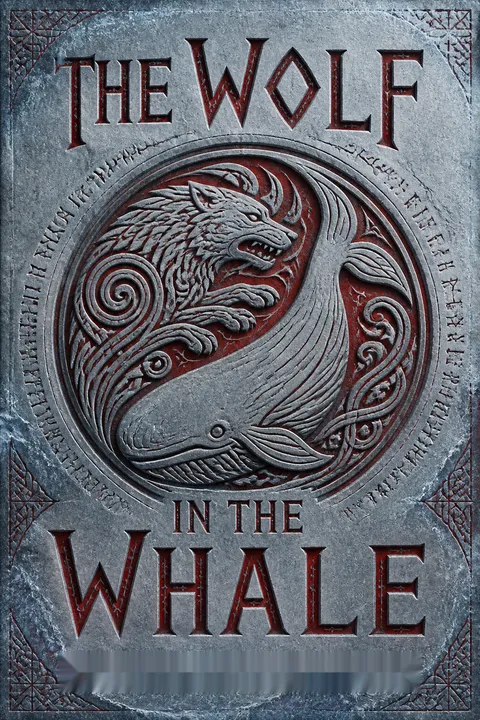
The Wolf in the Whale is a captivating blend of Inuit and Norse mythology set in 1000 AD. Readers praise the rich world-building, atmospheric writing, and complex characters, particularly the protagonist Omat. The novel explores themes of gender, identity, and cultural clash. While some found the pacing uneven and content occasionally brutal, most reviewers were deeply moved by the story. Many highlighted the author's extensive research and respectful portrayal of Inuit culture. Overall, it's widely regarded as a unique and powerful fantasy novel that leaves a lasting impact.
Characters
Omat
The reborn angakkuqOmat is the narrator and child of an isolated Inuit community, raised as a boy because her family believes she carries her dead father’s spirit. Her body, gender, and inherited name do not fit neatly into the camp’s rules, but she is a gifted hunter, singer, and developing angakkuq. She is observant, proud, and inclined to act before she has fully weighed the cost. Her fierce loyalty to family can become self-erasure, while her curiosity draws her beyond the boundaries others set. Omat’s central drive is to protect her people and claim the authority to define herself. She approaches identity not as a single answer but as a life lived across categories.
Brandr
The restless Norse wandererBrandr is a Greenland Norseman, sailor, fighter, and traveler whose long journeys have made him skilled at surviving unfamiliar lands. He is physically imposing but attentive to vulnerable creatures, especially his younger brother and injured animals. A practiced storyteller, he uses humor and myth to approach feelings he struggles to state directly. Brandr is burdened by the violence of the Viking world and by his own choices within it, yet he resists easy claims of innocence. His relationship with Omat grows through practical care, difficult truths, and an unusual respect for her independence. He wants connection, but fears that his past makes him unworthy of it.
Kiasik
The jealous milk-brotherKiasik is Omat’s cousin and milk-brother, raised beside her as a sibling and trained to hunt for their small community. He is brave, energetic, and eager to prove himself, but his pride makes him reckless and his affection often tangles with envy. He wants to be useful and admired, especially by Ataata, whose attention Omat seems to attract more easily. Kiasik’s competitive streak can make him mistake Omat’s difference for a threat to his own place. Beneath it, he is loyal to family and capable of tenderness, though he struggles to express care without turning it into a contest.
Ataata
The elder shamanAtaata is Omat’s grandfather by blood and the father she knows, as well as the camp’s leading angakkuq and most experienced hunter. He is patient, observant, and deeply committed to the traditions that make survival possible. Unlike many elders, he allows Omat room to question the gendered future expected of her, though his faith in her also places a heavy burden on her shoulders. He has lost his son and much of his former spiritual power, yet continues to teach hunting, storytelling, navigation, and ritual. Ataata represents both inherited wisdom and its limits: a guide who loves Omat, but cannot determine what the spirits will demand of her.
Puja
The steadfast foster motherPuja is Omat’s aunt, foster mother, and lifelong source of practical care. She nursed Omat beside her own son, Kiasik, and understands that kinship is made through daily labor as much as blood. Direct and protective, she tends lamps, clothing, food, and wounds, often expressing love through tasks rather than speeches. Puja worries when Omat takes risks, but she does not reduce her to her body or insist that she follow a conventional female role. Her loyalty is steady even when she disagrees with Ataata or Omat. She embodies the knowledge that keeps a community alive when its hunters and spiritual leaders fail.
Freydis
The ambitious expedition leaderFreydis Eriksdottir leads a Greenlandic expedition westward, pursuing wealth, distinction, and the promise of a new land. She is disciplined, politically shrewd, and accustomed to commanding men who may doubt her authority. Her faith in the Norse gods and her ambition reinforce one another: she interprets dreams as instructions and sees hesitation as a danger to leadership. Freydis is capable of decisive courage, but her confidence can harden into certainty that other people exist to serve her plans. Omat recognizes in her a woman who has broken expected limits, while also seeing the violence Freydis uses to hold power.
Issuk
The coercive whale hunterIssuk is an accomplished hunter who follows whales across the ice and arrives with the food Omat’s community desperately needs. His confidence, skill, and appetite for risk make him persuasive, especially to hungry people who have few alternatives. He treats authority as something proven by dominance and regards women, animals, and dependents as resources to command. Issuk can read weakness in others and exploit the community’s divisions. His presence brings useful knowledge, but also a harsher model of leadership that pits survival against consent.
Taqqiq
The possessive Moon ManTaqqiq is the Inuit Moon Man, brother to the Sun Woman Malina and ruler of tides and lunar cycles. He is powerful, lonely, and deeply invested in maintaining his place among the spirits. His long pursuit of his sister shapes the stories people tell about darkness, blood, and the balance of the sky. Taqqiq sees human lives from a vast distance, but that perspective does not make him compassionate. He is both a source of light and a reminder that divine power can be possessive, capricious, and threatened by change.
Sanna
The Sea MotherSanna is the Sea Mother, guardian of seals, whales, walruses, and the life beneath the ice. Her own story begins with abandonment and violence, and her loneliness shapes how she treats those who enter her deep realm. She is generous when moved by affection, yet can become wrathful when she feels betrayed. Sanna’s connection to Omat is complicated by family, grief, and the animals both need to survive. She embodies the ocean’s double nature: a source of sustenance and a power that can swallow those who mistake its gifts for guarantees.
Loki
The double-edged tricksterLoki is a Norse shapeshifter and trickster, born among the Frost Giants but living among the Aesir. He is clever, theatrical, and comfortable inhabiting identities that others treat as fixed. His wit conceals a sharp sense of exclusion and grievance, as well as a capacity for genuine attachment. Loki understands that gods depend on human belief, but he also sees mortals as pieces in a larger contest. He is difficult to trust because help and manipulation often arrive together in his schemes.
Snorri
The divided young thrallSnorri is the young son of Ulfar and a member of Freydis’s expedition. His loyalty to his father and his fear of Brandr shape his first response to Omat, whom he guards as a captive. Yet he is not simply a vessel for revenge: he can act with kindness even when it conflicts with the people around him. Snorri’s Christian faith gives him a source of certainty, but it also separates him from the spiritual world Omat knows. His youth makes him vulnerable to the ideologies and debts adults place upon him.
Muirenn
The watchful old thrallMuirenn is an elderly Irish thrall who serves Freydis aboard the Norse ship. She is practical, perceptive, and more compassionate than the hierarchy around her allows her to be openly. Muirenn sees how power works in the camp and looks for small opportunities to protect those with less of it. Her care for Brandr reaches back to his childhood, while her sympathy for Omat comes from recognizing the cost of captivity. She offers food, warning, and quiet intervention when direct resistance would be dangerous.
Ingharr
The brutal Norse fighterIngharr Ketilsson is a powerful Greenlandic hunter who craves the status of a warrior. He uses intimidation, violence, and his reputation for fearlessness to dominate other people. Ingharr sees women and captives as possessions, and he treats combat as a stage on which he can prove his importance. His pride makes him dangerous, but also leaves him vulnerable to challenges that threaten his standing. He represents the violence that Brandr has fled and Omat refuses to accept as inevitable.
Tapsi
The gentle uncertain hunterTapsi is Omat’s cousin and Ipaq’s adopted son. Cheerful and good-hearted, he is less naturally skilled at hunting than Kiasik and feels the pressure of being the camp’s eldest young man. He marries Saartok despite his own doubts about whether he can provide for her. Tapsi’s gentleness is often mistaken for weakness, but he is willing to accept responsibility when others need him. His relationship with Saartok offers the isolated camp a possibility of renewal.
Saartok
The grieving daughterSaartok is Ququk’s daughter, long bereaved of the young hunter she expected to marry. Her grief has narrowed her life, leaving her vulnerable to her father’s control and to a future chosen for her by others. She is not merely sorrowful, however; she can speak plainly when a child is endangered and still hopes for a family of her own. Her bond with Omat begins when Omat listens to her fears and helps her find a future beyond mourning.
Kidla
The young motherKidla is Issuk’s younger wife and the mother of a baby boy. Bright-eyed and affectionate with her child, she navigates a marriage in which her choices are constrained by Issuk’s authority and his arrangements with other men. Her warmth draws Kiasik toward her, while her vulnerability exposes the unequal terms on which Issuk’s household operates. Kidla’s care for her baby and her moments of companionship with Omat reveal a life beyond the roles others impose on her.
Nua
The watchful little girlNua is Issuk’s young daughter, curious about spirits and eager to imitate the rituals she sees adults perform. She is observant and often more perceptive than the adults assume. Her fear around men reflects the instability of the household she inhabits, but she still plays, learns, and seeks reassurance from those who seem safe.
Black Mask
The loyal lead dogBlack Mask is a small white sled dog with a black face, first cherished by Omat as a starving child and later trusted as Ataata’s lead dog. She is resilient, alert, and capable of drawing a team forward despite her size. Her life links Omat’s childhood tenderness to the harsher choices of adulthood. Black Mask is both working partner and family member in a world where dogs are essential to survival, yet too often treated as expendable.
White Paw, Sweet One, and Floppy Eared
Omat’s wolfdog companionsThese three wolfdogs become Omat’s traveling pack after she finds them as abandoned pups. White Paw is alert and strong-willed, Sweet One is gentle and closely attached to Brandr, and Floppy Eared is exuberant and playful. They give Omat companionship when she has lost her family and help her survive in unfamiliar country. Their loyalty is not simple obedience; each has a distinct temperament and a capacity to choose whom to trust.
Ipaq
The warm-hearted elderIpaq is Ataata’s older brother and a skilled fisherman whose humor helps keep the small camp’s spirits alive. He is the adoptive father of Tapsi and Millik, and he takes part in the community’s hunts and ceremonies. His presence helps show what the camp has lost as its older generation weakens.
Ququk
The guarded old hunterQuquk is an aging hunter and the father of Saartok. His sternness comes partly from grief and partly from fear that the small camp cannot afford another failure. He is protective of his daughter, but his control over her future reveals how scarcity can make care feel like confinement.
Uimaitok
The practical older wifeUimaitok is Issuk’s older wife and Nua’s mother. Experienced in sewing, food preparation, and the rules of whaling, she teaches Omat skills that become essential on the journey. Her practical knowledge coexists with her submission to Issuk’s household, giving Omat a view of how women preserve one another within restrictive arrangements.
The Aesir
The Norse divine familyThe Aesir include Odin, Thor, Frigg, Frey, Freya, and other Norse gods whose powers are tied to the prayers and stories of their people. They embody a mythology organized around kinship, battle, fate, and honor. Their different temperaments matter: Thor favors force, Frey favors growth, Freya joins love to courage, and Odin seeks foresight. They are not distant abstractions in this world; belief gives them access to human lives.
Singarti
The guiding Wolf SpiritSingarti is the great Wolf Spirit who saves Omat at birth and later becomes her helping spirit. He teaches through animal behavior, transformation, and clear limits rather than through human comfort. Singarti represents a relationship with power grounded in mutual respect: Omat may learn from him, but she cannot command every realm or ignore the consequences of crossing its boundaries.
Malina
The pursued Sun WomanMalina is the Sun Woman, sister to Taqqiq, whose daily passage across the sky shapes the Inuit calendar and the rhythms of survival. Her myth carries the memory of violence and flight, but she is more than a victim in a story told by others. Her return and her relationship to her brother make the changing balance between dark and light personal as well as cosmic.
Plot Devices
Name-soul rebirth
Kinship across generationsIn Omat’s community, a child may inherit the name and spirit of a dead relative. This belief explains why Omat is raised as her father’s son and why the family treats the dead as present within the living. It also makes identity relational rather than strictly individual: Omat is simultaneously a child, a parent’s continuation, and a member of a crowded ancestral line. The device supports the novel’s emotional language of grief and renewal, while creating pressure for Omat to fulfill expectations attached to the person she carries.
Aglirutiit
Rules with spiritual stakesThe aglirutiit are sacred prohibitions governing hunting, sex, domestic work, and ritual. Omat’s community believes that breaking a rule can drive animals away or invite spiritual punishment, so taboos shape practical decisions as much as religious ones. The rules protect accumulated knowledge, but they can also be used to police gender and preserve authority. Omat learns that they are not neutral: Issuk invokes them to discredit her, while her own actions reveal that strict obedience does not always keep a community safe.
Spirit transformation
Crossing between worldsAngakkuit can enter trance, travel beyond the body, and take animal forms such as wolf, raven, or lemming. Omat’s transformations give her heightened senses and access to spiritual relationships that ordinary hunters cannot perceive. The ability is not unlimited: it requires discipline, leaves the body vulnerable, and can be taken away. Its changing availability tracks Omat’s power and isolation. Later, the loss and return of her magic make clear that spiritual gifts are relational, not possessions she can use without consequence.
Whaling taboos and gear
Ritual changes the huntThe whale hunt depends on precise tools and customs: a toggling harpoon, a drag float, strong lines, and the women’s observance of rules intended to keep the rope intact. These details make the hunt a communal achievement rather than a single hunter’s feat. They also turn small actions into consequential ones. Omat’s knot and the loose line connect exclusion, taboo, and unintended death, while the whale itself provides food and materials that make the Norse expedition seem worth following.
Story and woven cloth
Memory becomes materialSongs and myths explain the world, influence social choices, and give characters a way to approach truths they cannot state directly. Omat’s performance of the Sun and Moon tale alters Saartok’s future, while Brandr uses Norse myths to share grief and guilt. In the final movement, Omat makes a rough cloth while recounting her life, turning a spoken history into something her child can inherit and use. The device links storytelling to survival: stories can guide, manipulate, preserve, and, in the novel’s cosmology, restore what violence has destroyed.
Download PDF
Download EPUB
.epub digital book format is ideal for reading ebooks on phones, tablets, and e-readers.








