

Key Takeaways
Practice courage before the crisis, because nerve grows through repetition
A timid beginning. Roosevelt describes himself as a sickly, asthmatic child, physically awkward and easily cowed by other boys. At nearly fourteen, after two boys on a trip to Moosehead Lake humiliated him in a fight, he began boxing. He trained for years before he improved. He later applied the same logic to fear: act steadily while afraid, and repeated self-command can make steadiness more natural.
Effort has limits. Roosevelt distinguishes extraordinary gifts from ordinary abilities developed through sustained work. He did not claim to become a champion boxer, rider, or marksman. His point was that training could make an average person more capable, while judgment should still prevent unnecessary risks.
What's striking is the emphasis on practice rather than a heroic personality fixed at birth. That resembles exposure-based learning: manageable encounters with a feared situation can teach people that anxiety need not dictate behavior. The useful distinction is between courage and recklessness. Roosevelt's hunting examples make clear that preparation, judgment, and limits matter alongside nerve. A modern reader can apply the principle to difficult conversations or demanding work without borrowing his taste for physical danger.
Make room for demanding work, outdoor curiosity, books, and family life
A wider definition of vigor. Roosevelt's energetic public image is only one part of this memoir. He describes natural-history collecting as a boy, hard work on a Dakota cattle ranch, rowing and walking, and a home life centered on his children at Sagamore Hill. He valued books that genuinely interested their readers, rather than treating reading as a display of status. At home, children explored, swam, read, and played, while still being expected to do lessons and work.
Joy belongs beside duty. Roosevelt rejects a life devoted only to work, but he also sees pleasure as hollow when detached from responsibility. His ideal joins physical effort, intellectual curiosity, domestic affection, and public service. That mix gives the autobiography warmth beyond its accounts of office and conflict.
The memoir's private scenes complicate the familiar image of Roosevelt as a man defined only by combativeness. His account suggests that energy is not merely output. It also includes attention to animals, books, children, and the changing seasons. That breadth echoes research on recovery and well-being, where restorative leisure can support sustained effort rather than compete with it. The account is also shaped by privilege: Roosevelt could afford time, land, and domestic help, resources unavailable to many readers he admired.
Earn political authority by working beside people, not by patronizing them
A newcomer in Morton Hall. After Harvard, Roosevelt joined a rough neighborhood Republican club in New York, despite warnings from wealthy acquaintances that its members were beneath him. There he befriended Joe Murray, an Irish-born former soldier and local political organizer. When Murray's Democratic allies broke promises to his group, the group backed Republicans at the next election. Murray later helped secure Roosevelt's first Assembly nomination.
Fellowship changed his politics. Roosevelt says that working with people unlike himself taught him to see citizenship as shared work, not charity from a superior. He learned that reformers could lose public trust when they treated ordinary people as objects to improve. In the Legislature, allies from very different backgrounds could cooperate when their standards of honesty and public duty aligned.
This is a practical account of political legitimacy. Trust grows through repeated contact and reciprocal work, not simply through good intentions or polished messaging. The story also complicates the idea that reform must arrive from outside political organizations: Roosevelt entered a machine's local world and learned its relationships before challenging its abuses. Still, his account presents the alliance chiefly through his own later leadership story. The people around him deserve recognition as political actors in their own right.
Join moral purpose to practical skill, or leave reform to its opponents
The tenement-house lesson. As a young legislator, Roosevelt expected to oppose a bill restricting cigar-making in tenement apartments. Businessmen argued that owners should be free to use their property, and the proposal seemed contrary to the laissez-faire economics he had learned. Visits to cramped apartments, where adults and children worked, ate, and slept among tobacco and bedding, changed his mind. He championed the bill, which passed but was later struck down by New York's highest court.
Good motives are not enough. Roosevelt distinguishes effective reform from drawing-room denunciations of corruption. Honest people need to understand conditions firsthand, organize support, and know how to use institutions. He also insists that reformers judge wrongdoing consistently, whether committed by employers, labor leaders, or politicians.
The tenement visits illustrate a basic strength of field research: direct observation can expose what abstract categories conceal. A room described legally as a home may function as an unsafe workplace, making the meaning of regulation a question of lived conditions. Roosevelt's insistence on competence also anticipates a familiar problem in public administration: rules that cannot be enforced invite cynicism. Yet his balance between opposing labor and business wrongdoing can obscure unequal bargaining power unless fairness is assessed in context.
Give public officials clear authority, then judge them by accountable results
A tangled police department. As New York Police Commissioner, Roosevelt faced a structure divided among four commissioners, a chief, the mayor, and the governor. Officials could block one another, while court review often reinstated officers dismissed for misconduct. He argued that diffuse authority made both effective service and clear accountability difficult.
Enforcement without favoritism. Roosevelt used entrance examinations to select officers and promoted some for conspicuous courage and reliable service. He also enforced the Sunday-closing law for saloons, which had previously been applied selectively and used for police and political blackmail. He reported fewer drunken-brawl cases at Bellevue Hospital and letters from families glad to spend Sundays together. The episode shows his belief that fair enforcement requires both capable officials and equal treatment.
The institutional argument remains useful: responsibility is hard to assign when authority is fragmented, and a system can become unaccountable while appearing full of checks. Roosevelt's focus on merit, discipline, and equal enforcement adds operational detail to that theory. But concentration of power creates its own risk. The Sunday law's effects, as he reports them, do not by themselves establish that the law was wise or that every citizen accepted its moral basis. Accountability needs public scrutiny as well as executive capacity.
Treat workers as partners in democracy, while holding unions to the same law
A strike became a national emergency. In 1902, a coal strike threatened heating and public order across the eastern United States. Roughly 150,000 miners were involved, with hundreds of thousands of family members dependent on them. Roosevelt pressed for arbitration after the operators rejected compromise. They accepted a commission only if it excluded a labor representative. He appointed union leader E. E. Clark under the label of sociologist, added Bishop Spalding, and included labor officials in the commission's work. An agreement ended the deadlock.
Collective bargaining answers unequal power. Roosevelt argues that an individual miner could not negotiate on equal terms with immense companies, so workers needed unions to bargain together. He supports unions as a democratic institution, not as automatically virtuous. Violence, intimidation, and corrupt leadership, he says, must be confronted just as corporate abuses must be.
The strike reveals why formal freedom to negotiate can be inadequate when one side can wait and the other must sell today's labor or lose it. Collective bargaining can counter that imbalance, a point consistent with modern theories of countervailing power. Roosevelt's solution also treats the public as a stakeholder when essential supplies are interrupted. The challenge is that emergency authority can privilege continuity over workers' leverage. Fair arbitration depends on genuine representation, credible procedures, and safeguards against simply restoring the status quo.
Regulate corporate conduct without treating size itself as guilt
First establish the government's power. Roosevelt's administration challenged the Northern Securities Company, a railway holding company formed by exchanging stock among companies. The Supreme Court had previously read federal power narrowly in the Sugar Trust's Knight case. In 1904, the Court upheld the government's case, restoring a basis for federal action against industrial combinations. Roosevelt's administration also pursued the Standard Oil and Tobacco trusts and enforced laws against railway rebates.
Then choose a workable remedy. Roosevelt argues that lawsuits can punish or dissolve a particular trust, but cannot provide steady oversight of every large business. He favors administrative regulation that distinguishes fair competition from practices such as restricting supply, deceiving customers, or crushing rivals. In his view, the test should be conduct, not mere scale, with rules clear enough for honest firms to follow.
The distinction between firm size and market conduct is a durable regulatory question. Large organizations can produce efficiencies, but concentration can also make exclusionary behavior more damaging and harder to detect. Roosevelt's proposed expert oversight recognizes that courts decide cases one dispute at a time, while markets change continuously. His confidence in a capable commission deserves a qualification: regulators can be captured, underfunded, or politically constrained. The design of oversight, including transparency and independent enforcement, matters as much as the stated principle.
Manage public resources for lasting public use, not quick private gain
Build homes, not just projects. Roosevelt links conservation to the practical security of settlers and future generations. The Reclamation Act of 1902 funded irrigation in the arid West, with settlers expected to repay the cost so the money could be reused. Twenty-eight projects begun from 1902 to 1906 were designed to irrigate more than three million acres and serve over 30,000 farms.
Protect resources through expert stewardship. Roosevelt transferred national forests to the Forest Service and supported rules for grazing, timber, and water power. During his administration, the national forest area grew from about 43 million to 194 million acres. He also withdrew about 68 million acres of coal lands from entry while Congress considered policy. Conservation, in his account, means regulated use and public oversight, not simply locking nature away.
The chapter's core insight is that natural resources are infrastructure: forests affect watersheds, rivers connect transport and irrigation, and land policy shapes who can build a livelihood. The reclamation repayment system also links public investment to ongoing capacity rather than one-time spending. Modern ecological economics strengthens this long-horizon view by accounting for services that markets often price poorly. Roosevelt's language of productive use can nevertheless understate ecological limits. Stewardship requires asking not only who benefits, but whether extraction itself is sustainable.
Build strength to deter war, then use diplomacy to secure peace
Unpreparedness has a price. As Assistant Secretary of the Navy, Roosevelt believed war with Spain was likely and helped prepare the fleet. He sent Admiral Dewey instructions that positioned the Asiatic squadron for action before war was declared. In the Spanish-American War, he saw improvised planning and inadequate equipment firsthand with the Rough Riders. He argued that a nation that refuses preparation may face greater cost and danger when conflict arrives.
Strength can support negotiation. His administration later sent sixteen battleships on a sixteen-month voyage around the world, which he viewed as both training and a signal of readiness. In 1905, he helped bring Russia and Japan to peace talks at Portsmouth. He believed diplomacy is strongest when paired with the ability to defend national interests, while rejecting war when a just settlement is possible.
This is a theory of deterrence: credible capability can reduce an adversary's expectation that coercion will succeed, while diplomacy offers an exit from conflict. The fleet's voyage also tested logistics, training, and public confidence, not merely the ships' weapons. Yet military readiness can become an arms race if other states interpret it as preparation for attack. The value of strength therefore depends on transparent aims, proportionate capacity, and diplomatic channels that make restraint as credible as force.
Use executive power decisively, but make public purpose the test
Act when delay becomes its own decision. Roosevelt describes the President as a steward responsible for serving the public unless the Constitution or law forbids an action. He applied this approach in Santo Domingo, where U.S. management of customs revenues paid creditors, supported the local government, and, he argued, removed the pretext for European intervention.
The Panama choice remains contested. After Colombia's legislature rejected a canal treaty, Panama declared independence in 1903. Roosevelt recognized the new republic and negotiated an agreement that allowed the United States to build the canal. He presents this as necessary after years of instability and Colombian obstruction. The result was the canal, but his account also shows how executive initiative can reshape another country's political future.
Roosevelt's argument is a strong case for executive capacity under conditions where delay may cause concrete harm. His examples show how action can produce public goods, from canal construction to financial stability. They also expose the central democratic risk: a leader's belief in the public interest does not make a contested intervention self-justifying. Panama's separation and the canal's strategic value gave the United States substantial power. A sound assessment must weigh outcomes against sovereignty, consent, and the precedent created for future executives.
Analysis
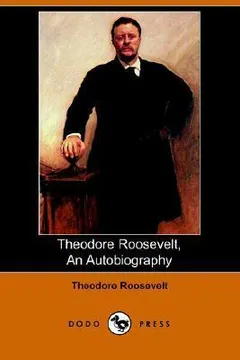
Roosevelt's autobiography is at once a life story and a defense of a governing philosophy. The narrative moves from a sickly boy learning discipline, through ranch work and city politics, to a presidency defined by administrative action. He uses remembered episodes as political evidence: the tenement cigar rooms reveal the limits of laissez-faire theory; the coal strike shows the public consequences of concentrated economic power; conservation demonstrates the value of planning beyond an election cycle. The governing ideal is a demanding combination of ethical purpose, operational competence, and personal accountability.
The book's most useful tension is its insistence that power must be strong enough to act and constrained enough to serve. Roosevelt distrusts diffuse responsibility, timid legalism, and private privilege, yet his own executive theory gives the President substantial discretion. His distinction between what is forbidden and what is not expressly forbidden can produce energetic government, but it also makes the executive the judge of when urgency warrants unilateral action. The Panama narrative is the sharpest test: Roosevelt presents the canal as a public necessity and Colombia as an obstruction, while the intervention also advanced American strategic interests and changed Panama's political status.
The autobiography is a primary source, not a neutral verdict. Roosevelt selects details that establish his fairness, courage, and foresight, and reports successes more confidently than uncertainty or opposition. His discussion of labor and corporate power is more attentive to structural inequality than many contemporary political accounts, but his assumptions about gender, race, empire, and military virtue reflect his era and limit his universal claims. The lasting value lies less in adopting every judgment than in studying the method: inspect conditions directly, distinguish conduct from category, build institutions capable of enforcement, and ask who bears the costs of a policy. Its memorable proposition is that ideals matter politically only when converted into competent, accountable action.
Review Summary
Reviews for Theodore Roosevelt are mixed, averaging 3.9/5. Many readers praise Roosevelt's engaging prose, his vivid accounts of life out West, and his time with the Rough Riders. His chapters on nature and personal character are frequently highlighted as compelling. However, critics note the autobiography is often self-aggrandizing, politically dense, and omits significant life events, including his Bull Moose campaign and personal family tragedies. Some find the political sections dry and repetitive, while admirers consider it invaluable primary source material for understanding early 20th-century American history.
Glossary
The strenuous life
Active work with purposeRoosevelt's phrase for a life that combines demanding work, courage, self-discipline, and enjoyment rather than retreating into comfort. In the autobiography, it applies to physical training, public service, and facing danger when duty requires it. It does not mean constant exertion for its own sake: recreation and family life remain part of a worthwhile life.
Square Deal
Fairness across competing interestsRoosevelt's name for a standard of public fairness that should apply to workers, businesses, and individuals alike. It rejects favoritism based on wealth or class, while allowing government to address abuses and protect the public. The phrase is not a promise that every party gets the same outcome, but that conduct is judged fairly and rules apply consistently.
spoils system
Jobs awarded for party serviceA political practice in which government positions are treated as rewards for supporting the winning party or its leaders. Roosevelt argues that it weakens public administration because appointments and dismissals depend on political loyalty rather than competence. It also gives officeholders a direct financial incentive to work for party organizations instead of serving the public.
Civil Service Reform
Merit-based public employmentThe effort to select and manage government employees according to fitness and performance rather than party patronage. Roosevelt supports competitive entrance examinations where they suit the work, but warns against applying identical tests to every occupation or relying on written exams for promotion. The system is a tool for honest, capable administration, not an end in itself.
Monroe Doctrine
Opposition to new European controlA principle of United States foreign policy opposing new European settlement or domination in the Western Hemisphere. Roosevelt treats it as a national policy rather than international law, and argues that asserting it creates duties as well as rights. In his view, the United States must be strong enough to deter outside intervention and must act responsibly toward its neighbors.
Reclamation Act
Federal irrigation investmentThe 1902 law that directed proceeds from the sale of public lands toward irrigation projects in the arid West. The projects were intended to make otherwise unproductive land suitable for settlement and farming. Settlers were expected to repay the government, allowing the funds to circulate into further projects rather than serve as a one-time grant.
Jackson-Lincoln theory
Active presidential stewardshipRoosevelt's label for a view of executive power in which the President should act affirmatively for the public welfare unless the Constitution or laws explicitly prohibit the action. He contrasts it with a narrower approach that favors inaction unless authority is specifically granted. The theory emphasizes responsibility and initiative, but it also raises questions about the limits of unilateral executive power.
Big Stick
Diplomacy backed by strengthA shorthand for Roosevelt's approach to foreign policy: deal with other nations courteously and fairly while maintaining the ability to defend national interests. He argues that preparedness can deter conflict and make diplomacy credible, but that military strength does not excuse injustice or bullying. The principle rejects both reckless provocation and helplessness.
Conservation movement
Planned public resource stewardshipThe effort Roosevelt promoted to inventory, protect, and wisely use forests, water, minerals, land, and wildlife. Conservation, as he defines it in practice, is not simply preservation from all use. It requires expert management, public oversight, and an allocation of resources that favors durable public benefit over short-term private gain.
Download PDF
Download EPUB
.epub digital book format is ideal for reading ebooks on phones, tablets, and e-readers.








