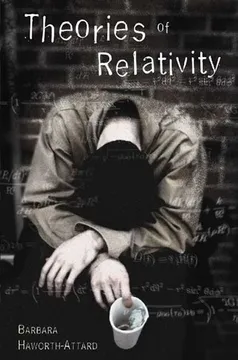


Plot Summary
Coins at Cathedral
Sixteen-year-old Dylan1 has been sleeping rough since his mother8 threw him out, and he tries to make street life manageable by testing theories about strangers. Outside an office tower, he asks passersby for change and watches the fourth person prove his rule by giving him a hot sausage.
Across the street, Brendan,6 whom Dylan1 calls Vulture,6 strips young Jenna2 of her warm clothes and arranges her hair and blanket to attract churchgoers’ charity. Dylan1 sees how carefully Brendan6 turns her into a source of income. When the computer-support worker3 offers Dylan1 food, he accepts, though he suspects every kindness carries a price. The sausage costs him the lunch crowd, but he clings to his theory that the fourth person came through.
Dylan’s theories are not idle games. They give a teenager who has lost control over housing, food, and family a small instrument for predicting what comes next. The fourth-person rule converts random generosity into something he can almost trust, while his suspicion that every gift demands repayment protects him from dependence. Vulture’s careful staging of Jenna exposes a sharper kind of prediction: he understands exactly how the crowd will respond and uses that knowledge to extract money from both Jenna and the faithful. Dylan can recognize the exploitation, but at this point he can only watch it.
A Borrowed Bed Turns Dangerous
Jenna2 joins Dylan1 at Mandy’s Donuts, where a meal loosens his guardedness and brings out the story he normally keeps private. He tells her about his absent biological father,9 the men who came and went from his mother’s8 home, the beatings by Pete, and the grandparents11 who once made him feel safe. Jenna2 reveals little, but Dylan1 notices a bruise on her arm and senses that her life is not as protected as her clothes suggest.
Later, Twitch4 leads him to Brad’s17 apartment, promising warmth and a place to sleep. Dylan1 showers and settles down, only to wake with Brad’s17 hand on his thigh. Twitch4 has accepted Brad’s17 pills, food, and money in exchange for sex. Dylan1 leaves in disgust, newly uncertain about the bargains people make to survive.
The contrast between Dylan and Jenna begins as a contrast in circumstance: she ran away from comfort, while he was expelled from instability. Yet their conversation shows that outward resources reveal little about the harm happening inside a home. Dylan’s memory of his grandparents is both emotional shelter and a standard against which he judges the adults around him. Brad’s apartment then makes survival’s hidden costs immediate. Twitch does not understand the encounter as Dylan does, which prevents Dylan from treating him as simply a betrayer. His anger and his pity arrive together, exposing the limits of his belief that street life can be navigated by mistrusting everyone.
The Locker and the Brothers
Jenna2 accompanies Dylan1 to his old high school so he can collect the belongings left in his locker. Mr. Crowe,16 the computer teacher, recognizes that Dylan’s1 story about moving is false, but Dylan1 evades his questions and takes only a few items.
At his younger brothers’13 school, Micha13 runs into his arms, while ten-year-old Jordan12 hangs around with troublemaking boys. Dylan1 gives them candy and warns Jordan12 to behave, still trying to parent the children13 he has been forced to leave.
A social worker’s arrival reminds him how often he once staged a clean, orderly household before inspections. Micha13 asks when Dylan1 will come back; Dylan1 cannot answer. He leaves when a teacher tells him he cannot remain on school grounds, with Micha13 calling after him.
Dylan’s older-brother role is more than affection; it is the structure that has made his chaotic childhood feel survivable. He has fed, guarded, and presented his brothers as proof that the family is functioning, even when their mother could not provide consistent care. Seeing them brings relief, but it also intensifies his helplessness, because love does not grant him authority or a place in their home. His warning to Jordan repeats the adult role he has been made to occupy, while Micha’s plea makes clear what that role costs him. The school’s ordinary rules abruptly end a reunion Dylan cannot afford to prolong.
No Address, No Job
Dylan1 spots a part-time opening at a coffee shop and prepares carefully for the interview, washing himself in a library bathroom. The manager rejects him because he has no permanent address and looks unkempt, then gives him a coffee he cannot bring himself to refuse.
Glen,3 the office worker who first shared food,3 later offers gloves and a hat and urges Dylan1 to consider an alternative school for street kids. Dylan1 resists, convinced that school cannot solve the immediate problem of getting through winter.
Vulture6 offers the opposite bargain: steady food, shelter, and money in return for working for him. When Dylan1 steals soap, deodorant, and menstrual products for Jenna,2 police identify her as a fourteen-year-old runaway, not nearly sixteen as she claimed. The risks surrounding her grow harder for Dylan1 to ignore.
The failed interview shows how poverty reproduces itself through apparently neutral requirements. Dylan can learn quickly and wants to work, but an address and clean clothes function as entry tickets he cannot obtain without already having the job. Glen’s offer and Vulture’s offer answer the same material need, yet they carry radically different assumptions about Dylan’s future. One offers support that preserves his agency, while the other turns shelter into ownership. Dylan’s attempt to steal necessities for Jenna is compassionate but improvised; learning that she is only fourteen makes his protective impulse more urgent without giving him the power to protect her safely.
Lurch Sets a Trap
At the youth centre, Dylan1 plays checkers with Twitch4 and learns that Amber,5 the street girl who once helped him,5 is pregnant. Lurch,15 a muscular associate of Vulture’s,15 sits down and offers Dylan easy money, a room, and protection. He hints that refusal could bring violence, then says he has a gift for Twitch.4
Dylan1 realizes Twitch4 brought him to the centre to meet Lurch,15 likely hoping to earn that promised reward. Dylan1 rejects the offer and warns Lurch15 that he will not work for Vulture.6 The exchange leaves him exposed: he has openly challenged the people who control much of the street economy, and Twitch’s4 apparent friendship now looks tangled with the same system of bargains Dylan distrusts.
Lurch’s threat works because it borrows the language of rescue. He names the very things Dylan lacks, then makes their provision conditional on obedience. Dylan’s refusal is a genuine act of self-protection, but it is not a triumph over power; it makes the danger more visible. The possible betrayal by Twitch complicates Dylan’s rule that no one on the street can be trusted. Twitch may be seeking drugs or safety rather than deliberately targeting his friend, but the consequences for Dylan are still real. Amber’s pregnancy adds another vulnerable life to a world in which shelter and care are routinely exchanged for control.
The Madonna in Stone
Dylan1 takes Jenna2 and Twitch4 to a free Christmas-season dinner in Holy Rosary Cathedral’s basement, where they meet Ainsley,7 a former street kid who now volunteers at the youth centre.
Ainsley7 does not try to convert Dylan1 or shame him for needing food, and her calm unsettles his expectation that adults always demand something. Upstairs, Dylan1 studies a statue of a mother and child that resembles the image Vulture6 has fashioned from Jenna.2
Ainsley7 tells him that Jenna2 seems to have been abused before she ran away and warns that he cannot force her to accept help. Dylan1 reacts angrily, insisting Ainsley7 knows nothing about him. Still, the church’s warmth and silence leave him longing for a place where he might belong without having to pretend belief.
The cathedral gathers the book’s competing forms of care into one setting. Its free meal is material help without an immediate demand, while its statue becomes disturbing because Vulture has turned Jenna’s apparent innocence into a commercial image. Ainsley’s own history gives her warning moral weight, but she does not claim that experience makes her able to control Jenna’s choices. Dylan hears that restraint as indifference because he is desperate for a clear rescue plan. His attraction to the church is similarly practical before it is theological: its quiet offers a temporary reprieve from the street and a glimpse of belonging that does not depend on being useful.
The Letter Joan Hid
Dylan1 returns home to check on Micha13 and Jordan12 and finds Christmas lights, a tree, and a house made orderly by Dan,10 his mother8 Joan’s8 new partner. Joan8 introduces Dylan1 as a cousin rather than her son, then gives him an unopened letter from his grandfather,11 Edward.11 The letter is three years old and invites Dylan1 to visit or live at the farm.
Joan8 admits that his grandmother14 Anne14 died years earlier, a fact she never told him. Dylan1 stays long enough to eat with the family, watching Dan10 care for the boys13 and seeing how much has changed without him. He leaves with the letter and a rural address, furious that Joan8 concealed a possible refuge and grieving the childhood he might have had there.
The Christmas tree turns domestic improvement into an injury. Dan’s care is plainly good for Micha and Jordan, but Dylan experiences each sign of stability as evidence that the household can function after erasing him. Joan’s lie about his identity makes that erasure explicit. The concealed letter then transforms his anger into a more painful counterfactual: Edward offered him a home, but Dylan never knew it existed. The revelation does not make the past simple, since Dylan was also trying to protect his brothers. It does show how withholding information can trap a child inside responsibilities adults have assigned him.
Stoveworks and Murdock
After a night in an abandoned factory called Stoveworks, where addicts sleep beside fires and broken floors, Dylan1 refuses to make the place his refuge. At the street school, he uses a computer to find Murdock and Edward’s11 telephone listing. Glen3 offers him a paid errand job and a bus fare advance, with the amount recorded as a debt Dylan can repay through work.
Dylan1 hesitates over the obligation but accepts the route back to his grandfather.11 He then asks for more credit to buy Christmas gifts for Micha13 and Jordan.12 Glen3 buys the brothers13 a remote-control car and a CD player, and gives Dylan1 a player of his own. Dylan1 begins to imagine taking Jenna2 with him to the farm, where she might be safe.
Stoveworks is a physical version of the future Dylan fears: the place is still shelter, but every available comfort is surrounded by hazards and neglect. The street school offers a different kind of infrastructure, one built around flexibility rather than punishment. Glen’s written advance matters because it converts charity into a legible agreement without turning Dylan into property. Dylan can accept help while preserving his sense that he must repay it. His request for gifts reveals what he still values most: not escape for its own sake, but the chance to remain connected to his brothers. Jenna’s imagined place at the farm shows that his rescue plan is already becoming emotionally entangled.
Tickets, Gifts, No Jenna
Dylan1 buys a ticket to Murdock and asks Jenna2 to come with him; she agrees to meet him at the bus station. Before leaving, he brings the gifts to Joan’s8 house and discovers his clothes have been boxed in the basement. Joan8 explains that her own parents rejected her when she became pregnant and that Edward’s11 help had come with conditions, complicating Dylan’s1 picture of the family farm.
She still will not acknowledge him to Dan.10 Dylan1 leaves Micha13 and Jordan’s12 presents beneath the tree, then waits at the station for Jenna.2 She never arrives. Rather than exchange his ticket or return to the street, he boards the bus alone, carrying Glen’s3 CD player and the unopened question of whether Edward11 will welcome him.
Dylan’s departure is shaped by two forms of loyalty that pull in opposite directions. He tries to leave gifts so his brothers will know he remembers them, while inviting Jenna because he fears what Vulture will do to her. Joan’s account of her own childhood prevents the grandfather’s farm from becoming a simple lost paradise: Edward may have offered Dylan shelter, yet he had also refused the kind of financial help Joan wanted. Jenna’s absence defeats Dylan’s plan, but not his need to find out whether the old invitation was real. He boards without certainty, repeating the journey toward family that he has been denied.
The Farm's Last Christmas
In snowbound Murdock, shopkeeper Jack Cody19 recognizes Dylan1 and explains that Edward11 is in a nursing home, dying of lung cancer. Nurse Miriam20 lets Dylan1 stay beside his grandfather11 overnight. On Christmas morning, Dylan1 sees that the once-strong man has become frail and barely responsive. Miriam20 reveals that Dylan’s1 biological father,9 Phil,9 has recently returned to the farm, and drives Dylan1 there.
The quiet lane and familiar yard bring back memories of fireflies, but the house is cold and neglected. Phil9 emerges drunk, fails to recognize Dylan1 at first, and immediately orders him to bring in wood. Dylan1 follows him inside, shocked to find his childhood refuge occupied by a man who treated him as an unwanted burden.
The journey to Murdock promises a return to safety, but the people Dylan finds are altered or absent. Edward’s physical decline forces Dylan to confront the difference between remembered protection and present reality. The farm still holds the sensory map of his childhood, yet Phil’s presence makes it impossible to inhabit that memory without confronting its history. Jack and Miriam supply the practical kindness Dylan needs to reach Edward, but neither can restore the years lost. The Christmas setting sharpens the disjunction between idealized family ritual and the actual scene: a sick old man, an abandoned house, and a father who meets his son with an order.
Phil's Fight, Jack's Truth
Dylan1 heats canned soup, cleans the farm kitchen, and argues with Phil,9 who drinks, smokes, and dismisses responsibility for having abandoned him. When Phil9 smashes the wedding photograph and attacks Dylan,1 Dylan1 punches back, then escapes in Phil’s9 car during a snowstorm. He crashes into a ditch and Jack19 finds him walking toward town.
Back at the nursing home, Jack19 explains that Edward11 tried to seek custody of Dylan,1 but Anne’s14 death and returned letters left him believing he had lost contact. Dylan1 spends Christmas night beside Edward,11 eating a turkey dinner brought by nurse Amy21 and holding his grandfather’s11 hand. He leaves the next day with Edward’s11 hat and gloves, carrying both grief and evidence that he had mattered to him.
The fight breaks Dylan’s hope that finding Phil might repair the missing part of his family. Phil’s contempt repeats the rejection Dylan has feared, but Jack’s account challenges Dylan’s belief that Edward simply failed to look for him. The returned letters make the separation more tragic than intentional, without erasing the consequences of it. Dylan’s decision to return to Edward’s bedside is an act of attachment after the farm has ceased to be safe. The inherited hat and gloves are practical protection as well as a small physical link to the grandfather whose care Dylan had remembered but doubted.
The Backpack Taken
Back in the city, Dylan1 learns from Ainsley7 that Twitch4 is hospitalized with pneumonia and hepatitis. Outside Mandy’s Donuts, he finds Jenna2 working for money and accuses her of choosing Vulture6 over their plan to leave. Jenna2 warns him that Vulture6 knows he tried to take her away, then pulls Lurch15 back toward the shop to keep him from attacking Dylan1 immediately.
It does not save Dylan1 for long. Lurch15 and four Bandana Kids corner him near the locked cathedral, beat him severely, and steal the backpack that held his clothes, books, photographs, and CD player. Jenna,2 Amber,5 and Gladdy18 find him injured. Against Dylan’s1 protests, Amber5 and Jenna2 help him reach Stoveworks, while Gladdy18 lets him lean on her shopping cart.
The stolen backpack makes violence more than bodily harm. Dylan has kept nearly everything he owns inside it, so its loss threatens the continuity of the self he has tried to preserve through photographs, books, and small possessions. Jenna’s warning suggests she is trying to reduce the danger, but Dylan reads her actions through hurt and jealousy, making it harder for him to understand the choices she faces. The rescue is collective and unheroic: Amber, Jenna, and Gladdy each provide a body, a cart, or a route to shelter. Their help contradicts Dylan’s rule that street survival requires everyone to fend for themselves.
Pills Replace the Pain
At Stoveworks, Gladdy18 uses her remembered nursing skills to bind Dylan’s1 injured ribs, while Amber5 keeps him warm and cleans his face. Jenna2 brings pills that dull the pain; Dylan1 accepts them until relief becomes something he depends on. Ainsley7 warns that he needs medical care, but he cannot bear the thought of leaving the factory or facing another demand.
During the long recovery, Amber5 tells him her birth name is Faith5 and explains that she has already lost a child to the care system. She lets Dylan1 feel her unborn baby move. Glen3 later finds Dylan1 and tells him Twitch4 has worsened, then explains that his own younger brother died after years of drug use and homelessness. Dylan1 hears the offer of help but cannot yet accept it.
The period of care reverses Dylan’s usual role: he has spent years looking after younger children, but now he is dependent on Amber, Jenna, and Gladdy. That dependence initially feels like rescue, then narrows into a chemical routine as the pills make pain and fear temporarily disappear. Amber’s disclosure of her given name and her unborn child creates intimacy without turning her into a simple cautionary figure; she is making decisions under severe material constraints. Glen’s history reveals why he invests in street education, but his experience cannot compel Dylan to choose recovery. Help becomes possible here, not inevitable.
Jenna Names Her Father
When Jenna2 stops bringing pills, Dylan1 leaves Stoveworks and seeks more from one of the Bandana Kids. The boy supplies several tablets and brings him to a New Year’s party at Vulture’s6 apartment, where Dylan1 drinks, takes drugs, and briefly escapes the pain. In the hallway, Jenna2 explains that her father sexually abused her and framed it as love; she fears her younger sister remains in the house.
Returning home is not a solution she can trust. Vulture6 sends her back to work and makes clear that Dylan’s food, pills, and shelter have created a debt. He proposes putting Dylan into prostitution to repay it. Jenna’s2 earlier silence and attachment to Vulture6 now look less like naivety than a survival strategy shaped by abuse and coercion.
Jenna’s revelation retroactively changes the meaning of her runaway story without making her choices easy to judge. She has fled one abuser and attached herself to another controller because Vulture offers a distorted form of protection from the first danger. The pills reproduce this structure for Dylan: relief arrives through a person who can later name a price. Vulture’s attempt to recruit Dylan shows how quickly survival transactions become ownership claims. The scene refuses a clean distinction between home and street as safe and unsafe spaces. Jenna’s disclosure gives Dylan crucial knowledge, but knowledge alone does not free either of them.
The House Refuses Him
Dylan1 discovers his backpack in Vulture’s6 apartment but leaves it behind after deciding he cannot return to that arrangement. High and injured, he goes to Joan’s8 house, pushes Micha13 aside in confusion, and confronts his mother8 for abandoning him. Joan8 insists he no longer belongs there.
Dan,10 seeing that Dylan1 is intoxicated and frightening the boys,13 gives him ten dollars and sends him away, promising to speak with Joan8 but setting a firm boundary. Dylan1 vomits outside and apologizes for breaking Micha’s13 snowman. He reaches the library washroom with no clear memory of how he got there. The remaining money, his bruised body, and the absence of his backpack make the bottom of his life feel literal and immediate.
Dan’s response differs from Joan’s: he recognizes the danger Dylan presents while intoxicated, protects Micha and Jordan, and still gives Dylan money. The gesture is not reconciliation, but it is a boundary paired with limited care. Dylan’s return to the house exposes how much he wants acknowledgment from Joan, even after her repeated rejection. His apology to Micha shows that his anger has not erased his concern for the younger boy. The missing backpack and memory make visible the material and psychological costs of his dependence. He has reached a point where neither family loyalty nor street bargains can restore control by themselves.
The Call to Glen
Alone in the library washroom, Dylan1 imagines Albert Einstein examining his belief that relatives always fail him. The imagined argument forces him to consider that he has mistaken rejection for proof that he is worthless, even as it cannot undo what his family has done.
Outside, Amber5 finds him near Brad’s17 apartment and admits that prostitution keeps taking pieces of her self-respect. She urges him to understand why Jenna2 stays with Vulture,6 while Dylan1 recognizes that he has been measuring his worth by whether other people need him.
When Brad’s17 light goes out, Dylan1 does not enter the apartment. He calls Glen3 instead and asks when he can start work. The novel ends not with rescue completed, but with Dylan1 choosing the first concrete step toward a different life.
Einstein appears at the moment Dylan’s habitual method of control has failed: theories cannot explain away addiction, abuse, bereavement, or his own capacity to hurt the people he loves. The hallucinated debate turns his self-condemnation into a question rather than a verdict. Amber’s presence matters because she offers neither moral purity nor easy optimism; she knows the cost of survival and still treats Dylan as someone capable of choosing. The darkened window at Brad’s apartment marks an opportunity Dylan refuses, while the call to Glen converts insight into action. The ending remains deliberately provisional: agency begins with a decision, not a guarantee.
Analysis
The novel follows a teenager who has been made responsible for other people long before anyone gives him dependable care. Dylan’s1 role as protector of Jordan12 and Micha13 helps him endure his mother’s8 unstable household, but it also binds his self-worth to being needed. When Joan8 expels him, he loses not only a home but the task that has organized his life. On the street, the same pattern reappears in harsher form: Brendan,6 Lurch,15 and drug suppliers meet urgent needs and then convert them into debts. The book distinguishes this coercion from Glen’s3 support not by making one person generous and another cruel, but by showing whether help preserves the recipient’s ability to choose.
Dylan’s theories are a psychological defense against unpredictability. Counting donors, studying Einstein, and imagining rules let him treat rejection as something explainable. Yet his deepest assumptions are emotional rather than scientific: that everyone leaves, that every gift creates an obligation, and that his worth depends on whether family members need him. Edward’s letters unsettle those assumptions without erasing the damage caused by lost contact. Likewise, Jenna’s2 disclosure shows that running away cannot be judged apart from what she fled, while Amber’s5 care reveals solidarity among people who have little to spare.
The story does not offer a sudden rescue or imply that education alone can solve homelessness. Instead, it makes the final choice deliberately small and concrete. Dylan1 declines the familiar bargain at Brad’s17 apartment and calls Glen3 about work. He does not yet have stable housing, restored family ties, or a guaranteed future. What changes is his willingness to accept assistance without confusing it with ownership, and to act for his own survival rather than only for his brothers12 or Jenna.2 His first escape from the black hole is a decision, not a miracle.
Review Summary
"Theories of Relativity" receives generally positive reviews, with readers praising its raw, unflinching portrayal of teen homelessness through protagonist Dylan's story. Many find it emotionally impactful and eye-opening, appreciating its authenticity and ability to foster empathy. Common criticisms include an unsatisfying or ambiguous ending, occasionally clichéd characters, and pacing issues. The book is frequently assigned in schools and noted for its relevance to real-world social issues. Overall, readers agree it is an important, thought-provoking read that challenges assumptions about homeless youth.
Characters
Dylan Wallace
Streetwise castoffDylan is a sixteen-year-old who has been pushed from home into street life, where he survives by observing people, making theories, and guarding his possessions. His sharp humor and ability to read buildings and situations coexist with deep insecurity about whether he matters to anyone. He has spent much of childhood caring for his younger brothers13, so he instinctively protects others even when he denies needing help himself. His interest in Einstein gives him a language for thinking about time, matter, and control. Dylan’s central struggle is learning to distinguish dependence from exploitation and accepting that seeking help need not surrender his independence.
Jenna
Runaway seeking safetyJenna is a young runaway whose polished clothes and silver-blond hair set her apart from the street life she is entering. She is warm and perceptive with Dylan1, but she also hides information and clings to Brendan’s6 protection, even when it comes with bruises and demands. Her decisions are shaped by fear, shame, and a longing to believe that someone can keep her safe. Jenna is not simply a victim waiting to be rescued; she weighs immediate danger against uncertain alternatives. Her relationship with Dylan1 brings tenderness and conflict into the same space, especially as he mistakes concern for a right to decide what she should do.
Glen Matthews
Patient street advocateGlen is a wealthy technology executive who first approaches Dylan1 with food and later connects him to the alternative school for street kids. He offers practical support, including work, a bus fare advance, and gifts for Dylan’s brothers13, while trying not to disguise help as a demand for obedience. His care is informed by the death of his younger brother, though he resists treating Dylan1 as a replacement or a means of repairing the past. Glen understands that he can offer opportunities but cannot make Dylan1 take them. His steadiness gives Dylan1 an example of adult support that includes limits and respects choice.
Twitch
Restless street kidTwitch is an eighteen-year-old street kid whose constant movement, drug use, and awkwardness make him easy for others to dismiss. He befriends Dylan1, but his need for pills and shelter sometimes draws him into unsafe arrangements, and he cannot read. The book links his present vulnerability to earlier abuse and school discipline without reducing him to either. Dylan1 often responds to Twitch as he would to a younger brother, alternating between irritation, protectiveness, and mistrust. Twitch’s physical illness makes the consequences of street survival visible, while his friendship challenges Dylan’s1 belief that caring for someone guarantees they will behave safely.
Amber, also called Faith
Pregnant street survivorAmber is a streetwise young woman who once showed Dylan1 how to survive downtown and later becomes one of his most dependable sources of care. She speaks bluntly, works under Brendan’s6 control, and faces pregnancy without stable housing or adequate support. Her toughness is not indifference: she recognizes fear in others because she has lived with it herself. Amber’s past includes foster care and the loss of a child, experiences that complicate her determination to keep her unborn baby. She treats people on the street as individuals, learning their names and offering practical help even when she distrusts their choices.
Brendan, called Vulture
Predator of runawaysBrendan is an adult who profits from vulnerable street kids, controlling access to food, shelter, money, and drugs through debts and threats. Dylan1 calls him Vulture because he appears to live off other people’s need. Brendan is calculating rather than merely chaotic: he stages Jenna to attract donations, keeps her dependent, and recognizes the leverage created when someone accepts his help. His offers sound practical because they answer urgent needs, but they are designed to increase his control. Brendan represents the danger of a system in which care is scarce and predators can present exploitation as protection.
Ainsley
Former street kid, future advocateAinsley volunteers at the youth centre and church dinner while studying to become a social worker. She has been homeless herself and carries scars from an earlier period of crisis, but she does not use her history to claim authority over every young person she meets. Instead, she offers information, food, and routes toward practical help. Ainsley sees warning signs in Jenna2 and Twitch4, yet understands that advice cannot substitute for a person’s consent or for adequate services. Her attention to prevention reflects a wish to reach children before neglect and abuse become street survival.
Joan
Dylan's unreliable motherJoan is Dylan’s mother1 and the parent of Jordan12 and Micha13. She has moved repeatedly, formed relationships with several men, and relied heavily on Dylan1 to care for the boys13. She wants a stable new start with Dan10, but hides Dylan’s1 identity and withholds Edward’s letters rather than confront the past. Her own parents’ strict religious rules and refusal to help her financially shaped her anger and distrust, though that history does not excuse her treatment of Dylan1. Joan’s need to escape shame repeatedly outweighs her willingness to acknowledge the needs of her children.
Phil
Absent biological fatherPhil is Dylan’s biological father1, who left before Dylan1 was born and eventually returns to the family farm. He is physically strong, drinks heavily, and resents the expectations his parents placed on him. Phil explains his abandonment as a consequence of Joan’s8 choice to have a child, refusing to accept responsibility for Dylan1. His return forces Dylan1 to confront the difference between longing for a father and being met by the actual man. Phil’s bitterness toward Edward11 and his rejection of responsibility echo the family damage Dylan1 has grown up inside.
Dan
Joan's steady partnerDan is Joan’s8 fiancé and the adult helping make her home cleaner and more stable. He cooks, buys Christmas gifts, and gives Micha13 and Jordan12 routines Dylan1 never had. Joan’s8 concealment of Dylan1 puts Dan in the middle of a family history he does not understand. When Dylan1 returns intoxicated, Dan protects the younger boys13 and sets a firm boundary, while still offering limited practical help. His steadiness is meaningful to Dylan1 precisely because it is not accompanied by full acceptance or an easy reconciliation.
Edward Wallace
Dylan's farm grandfatherEdward is Dylan’s paternal grandfather1, a farmer whose size and quiet competence once made the boy feel protected. He taught Dylan1 to notice weather and animals, and the farm became one of the few places Dylan1 remembers as safe. Edward’s conflict with Joan8 over access to Dylan1 and his later attempts to contact his grandson1 complicate the idea that he simply abandoned him. His love is remembered through practical care, old photographs, letters, and the sensory details of the farm.
Jordan
Dylan's ten-year-old brotherJordan is Dylan’s ten-year-old brother1, quick-witted and already drawn toward disruptive friends. Dylan1 tries to keep him from repeating the patterns of the adults around them, often taking on a parental authority their mother8 does not provide. Jordan’s jokes and resistance conceal how much he depends on Dylan1. His presence anchors Dylan’s1 sense of purpose, even as the older brother’s1 absence makes it impossible to protect him directly.
Micha
Dylan's youngest brotherMicha is Dylan’s six-year-old brother1, affectionate and prone to nightmares. Dylan1 has been the person who comforts him and watches over him, so separation feels especially painful. Micha is excited by small signs of stability, including Christmas lights, a tree, and a new snowsuit. He misses Dylan1 openly, reminding him that his choices affect a child who cannot understand why he has left.
Anne
Dylan's remembered grandmotherAnne is Edward’s11 wife and Dylan’s paternal grandmother1. Dylan1 remembers her through the farm, her knitting, and the practical warnings that made childhood feel orderly. She dies while Dylan1 is still estranged from the family, a loss Joan8 never tells him about. Anne remains part of Dylan’s1 idea of home even when her face has grown indistinct in his memory.
Lurch
Vulture's enforcerLurch is a large, intimidating associate of Brendan’s6, with a history of arrests and a talent for making threats sound like offers. He approaches Dylan1 through the promise of money, shelter, and protection, then uses intimidation when Dylan1 refuses. Lurch is less a planner than an instrument of Brendan’s6 power, enforcing the debts and boundaries that keep street kids under control.
Mr. Crowe
Teacher who noticesMr. Crowe is Dylan’s former computer teacher1, who recognizes that Dylan’s1 story about moving is a cover. He does not force a confession, but makes clear that he knows the boy needs help. Later he volunteers at the alternative school, where Dylan1 can use computers and study outside the regular system. His attention contrasts with the many adults who have allowed Dylan1 to disappear.
Brad
Predatory apartment hostBrad is an adult with a comfortable apartment who offers Twitch4 and Dylan1 food, pills, and a place to sleep. Dylan1 discovers that the apparent generosity carries a sexual expectation, one Twitch4 has learned to tolerate for shelter and money. Brad’s tidy rooms make the imbalance between adult resources and teenage vulnerability especially stark.
Gladdy
Former nurse on the streetGladdy is the street woman Dylan1 first knows as the Swear Lady, a person whose curses and fiercely guarded shopping cart make others keep their distance. Beneath her disordered appearance, she retains practical nursing knowledge and uses it when Dylan1 is badly injured. The contrast between her reputation and her competence challenges the habit of treating homeless people as indistinguishable or incapable.
Jack Cody
Murdock's helpful shopkeeperJack Cody runs the small store that also serves as Murdock’s bus stop. He remembers Dylan1 as a child and recognizes him when he arrives in the snow. Jack drives him to the nursing home and later helps him after his escape from the farm. His familiarity with the Wallace family gives Dylan1 information he has never received from his parents.
Miriam Collins
Nurse with family historyMiriam is a nurse at the Murdock Home who knew Joan8 when they were younger. She makes room for Dylan1 to stay beside Edward11 and later drives him to the farm. Her knowledge of the town helps Dylan1 understand how long his grandfather11 has been ill and how little the family has spoken openly about the past.
Amy
Nurse who offers careAmy is a nurse at the Murdock Home who provides Dylan1 with food, warm clothing, and a place to stay after he returns injured from the farm. She treats his bruised face as something worth addressing and recognizes his attachment to Edward11. Her care is direct and practical, without requiring Dylan1 to explain himself first.
Paul
The Garbage ManPaul is a homeless man who wears layers of garbage bags and searches restaurant dumpsters for food. Dylan1 initially sees him as a frightening eccentric, then becomes curious about the person beneath the appearance. Amber’s5 habit of learning people’s names helps Dylan1 recognize that Paul is not merely a street spectacle.
Plot Devices
Dylan's theories and Einstein
A mind seeking controlDylan1 uses small rules, such as his prediction about which passerby will give money, to impose order on a life where adults repeatedly make decisions for him. His book about Einstein gives him a framework for thinking about time, matter, and whether people can escape the forces acting on them. The book passes between characters as a gift and a point of connection, while the theories expose Dylan’s1 need to believe he can predict rejection. Near the end, an imagined conversation with Einstein challenges his assumptions about his own worth and helps him move from explanation toward action.
The backpack
A portable sense of selfDylan1 keeps almost everything he owns in one backpack: clothing, his sleeping bag, photographs, a toothbrush, and eventually small gifts and the Einstein book. Guarding it becomes a way to guard his identity when he has no fixed home and fears being forgotten. Its loss during the street attack is therefore both practical and emotional. The backpack makes material vulnerability concrete, while Dylan’s1 efforts to keep it close show how little security he has been able to build.
Edward's letter
A hidden route homeThe unopened letter from Edward11 supplies Dylan1 with an address, an invitation, and the possibility that someone once wanted him to come back. Joan’s8 decision to hide it explains why Dylan1 never reached the farm during the years he most needed another adult. The letter does not promise that the farm will still be safe or that Edward11 can repair the past. Instead, it gives Dylan1 a reason to travel and forces him to test his childhood memories against the people and circumstances he finds there.
Street debts and bargains
Help turned into controlFood, pills, shelter, and protection circulate through the street economy, but the people who provide them often use the resulting debt to demand obedience. Brendan6 turns Jenna’s2 need for safety into an ongoing obligation, while Lurch15 offers Dylan1 the same kind of arrangement. Dylan’s1 acceptance of pills and a place at Brendan’s6 party exposes how quickly immediate relief can become leverage. Glen’s3 written work advance offers a contrasting model: help can involve repayment without making the recipient someone’s property.
Holy Rosary Cathedral
Charity beside exploitationThe cathedral shelters a free meal and offers Dylan1 a rare quiet space, yet its steps are also where Brendan6 stages Jenna2 to draw donations from worshippers. A statue of a mother and child echoes the image Brendan6 imposes on her, turning religious symbolism into a tool of street commerce. The building therefore holds two realities at once: genuine help from volunteers and the public spectacle of poverty outside its gates. Dylan’s1 wish to belong there is less a declaration of faith than a longing for rest and welcome.
Download PDF
Download EPUB
.epub digital book format is ideal for reading ebooks on phones, tablets, and e-readers.








