

Key Takeaways
Let cultural crossings complicate your loyalties, not erase your inheritance
A childhood between worlds. Achebe grew up inside two traditions. His father was a Christian teacher and evangelist; his great-uncle Udoh held prestigious titles in Igbo society and remained committed to ancestral religion. His mother quietly challenged a taboo by picking kola fruit from her own tree. These encounters taught Achebe to examine beliefs without flattening them into a simple contest between right and wrong. Oral stories, Igbo proverbs, and formal schooling all fed his imagination. At Umuahia and Ibadan, he encountered British literature and education, but learned that the story of Africa had to come from within African experience.
That tension shaped Things Fall Apart. Achebe wrote against depictions that treated African societies as having no history or complex culture. His work made room for a voice missing from the stories others told about Africa.
What's compelling is that cultural inheritance appears here as a conversation, not a museum piece. Achebe can value the education brought by missionaries while questioning the colonial world that delivered it, and he can respect tradition without treating every custom as beyond criticism. This resembles a strength of pluralistic education: encountering different systems of meaning can expose the assumptions hidden inside each one. The balance is delicate, though. A writer speaking for an overlooked culture can still be mistaken for speaking for everyone in it. Achebe's personal history is most persuasive when it makes that complexity visible rather than claiming to settle it.
Colonial borders joined 250-plus peoples; leaders had to build consent they inherited
A difficult inheritance. Achebe traces Nigeria's instability to a country assembled under British rule from societies with different languages, religions, and political histories. The book describes more than 250 ethnic groups brought into one state, with the northern and southern protectorates joined under colonial administration. Indirect rule worked differently across regions, and British-created warrant chiefs disrupted local political life in Igbo communities.
Independence brought real hope. Achebe recalls a generation stepping into government, business, and education after British officials departed. Yet regional parties and leaders often treated political power as a contest among ethnic blocs. Achebe also recounts evidence that British officials manipulated the first independence-era election to favor their preferred allies. In his account, independence transferred authority, but did not automatically create public trust, fair institutions, or a shared national identity.
The important distinction is between a state and a nation. Borders can create a jurisdiction quickly; trust, common rules, and a sense of mutual obligation take much longer. Achebe's history shows how inherited divisions became politically potent when parties competed for control of the state. Still, colonial design alone cannot explain what followed. Nigerian leaders made consequential choices, and local rivalries had their own histories. The book's strongest argument is not that Nigeria was doomed by its borders, but that leaders failed to build institutions capable of making diversity politically safe.
When leaders weaponize ethnicity, citizens become targets of political failure
A coup becomes a scapegoat. In January 1966, junior officers staged a coup that killed several political and military leaders. Although the coup was not a simple ethnic operation, its leadership and killings were quickly interpreted by many as an Igbo bid for power. Rumor filled the information vacuum, and authorities failed to dispel it. A countercoup followed in July; General Aguiyi-Ironsi and Western Region governor Adekunle Fajuyi were killed.
Achebe describes attacks on Igbo civilians as the crisis's most frightening turn. He and his family fled Lagos after soldiers searched for him, partly because his novel A Man of the People had depicted a coup. Neighbors told departing Igbos they would make food cheaper by leaving. Achebe remembers that moment as the discovery that a place he had called home might not accept him.
This sequence illustrates how political violence is often prepared by stories before it is carried out by weapons. A coup's uncertain motives became a collective accusation, and collective blame made ordinary people seem like legitimate substitutes for the officials or officers who had acted. That pattern is recognizable across conflicts: rumor narrows explanation, identity supplies a culprit, and institutions either correct the story or let it harden. Achebe writes as a targeted witness, which gives the account emotional force. It also makes careful distinctions essential, since the intentions of individual plotters and the actions of the wider population were not identical.
When a government cannot protect a people, secession becomes a question of survival
The road to Biafra. Achebe reports that pogroms beginning in 1966 killed about 30,000 Igbo and other Easterners, while hundreds of thousands, perhaps close to a million, fled to the Eastern Region. He argues that the federal government's failure to stop the violence destroyed confidence that citizens could remain safe within Nigeria. The January 1967 Aburi summit in Ghana offered a possible settlement, including greater regional authority, but the two sides understood the agreement differently and its provisions were not carried out.
In May 1967, a regional assembly authorized the declaration of an independent Republic of Biafra. Achebe stresses that secession grew from a collective fear for safety, not simply from Ojukwu's personal ambition. Nigeria's federal leaders, meanwhile, feared that accepting Biafra's departure would encourage other regions to leave. These competing claims turned a constitutional crisis into war.
The conflict pits two legitimate political questions against each other: whether a state can preserve its territorial integrity, and whether its citizens can withdraw when it fails to protect them. Achebe gives priority to the lived danger facing Easterners, making the case for secession a claim about security as much as sovereignty. The Aburi breakdown also shows why agreements require shared definitions and credible implementation, not just signatures. At the same time, the book's account cannot erase the anxieties of minorities within the proposed Biafran state, or the difficulty of knowing whose consent a new border would represent.
Starvation can become policy when victory outranks civilian life
A war reaches the kitchen. Nigeria's blockade cut Biafra off from ordinary access to food, medicine, and supplies. As territory shrank, civilians crowded into camps and improvised shelters; air raids and ground attacks made even markets and refuge uncertain. Achebe recounts children suffering from kwashiorkor, a severe illness caused by protein deficiency, and cites an estimate that three million children were near death by 1968. He places the final death toll at roughly two to three million, mostly from starvation, while acknowledging estimates vary.
The book argues that denying food became a deliberate weapon of war and asks whether that policy constituted genocide. Nigerian leaders defended the war as necessary to preserve the country, while Biafrans feared that surrender would expose them to renewed violence. Achebe does not treat civilian hunger as an accidental side effect of strategy. He makes it a central test of political responsibility.
The section forces a distinction between a war's stated goal and the means chosen to pursue it. A blockade may be presented as pressure on an armed opponent, yet when food cannot reach civilians, the boundary between military strategy and mass punishment collapses. The legal question of genocide depends on intent as well as consequences, so the label requires evidence and careful adjudication. Achebe's moral question remains urgent even where legal conclusions are contested: how much civilian suffering can leaders knowingly impose in the name of national unity, and who has the authority to stop them?
Humanitarian outrage matters, but great powers still follow interests
The world watched and bargained. Television and newspaper images of starving children brought Biafra into homes abroad and helped mobilize church groups, relief organizations, writers, musicians, and ordinary donors. Achebe remembers the joy in Biafra when Tanzania's Julius Nyerere recognized the republic, even though recognition brought little military help. International aid flights became essential, but relief work was dangerous and contested.
Achebe portrays foreign policy as a struggle between compassion and calculation. Britain armed Nigeria while protecting commercial and oil interests; France supported Biafra while seeking regional influence; the Soviet Union also supplied Nigeria. The United States officially called itself neutral, although public pressure encouraged greater humanitarian assistance. The Organization of African Unity and the United Nations failed, in Achebe's view, to mediate effectively as the crisis deepened.
The book captures a recurring gap between public empathy and state policy. Images can make distant suffering morally immediate, but they do not automatically outweigh trade, strategic influence, or fears about separatism. Humanitarian relief can save lives while leaving the political machinery of violence intact. There is also a cost to visual attention: a population may become internationally legible chiefly as a mass of victims, rather than as people with varied political views and lives beyond the emergency. Achebe's account is strongest when it asks both what aid accomplished and why the powerful failed to prevent the conditions that made aid necessary.
Test a nation's ideals against its leaders' decisions under pressure
Biafra imagined a different state. Achebe helped lead the committee that produced the Ahiara Declaration, a statement of Biafra's political principles, including self-determination, liberty, and social justice. The republic also showed striking resourcefulness under blockade. Its scientists built weapons and communications equipment, refined petroleum, and maintained a hidden airstrip at Uli that received relief flights at night.
Yet the ideals collided with the conduct of wartime leaders. Achebe describes Biafra's costly invasion of the Mid-West, the execution of officers accused of plotting against Ojukwu, and the Kwale oil-worker killings, which damaged international goodwill. He also recounts missed opportunities for compromise. These episodes complicate any simple portrait of Biafra as either a pure liberation movement or merely a rebellion. The book honors the population's ingenuity while questioning decisions made in its name.
A crisis can generate impressive improvisation, but ingenuity is not the same as accountable government. The Ahiara Declaration gave political language to a society fighting for survival; the harder test was whether leaders could accept limits, disagreement, and compromise while under threat. This is where the account resists easy hero worship. It distinguishes the population's courage from the choices of its leadership, and it shows how a cause's moral authority can be weakened by actions that contradict its declared principles. The challenge applies to every movement that claims to protect a people: its methods must remain answerable to the people it represents.
Make excluded histories visible, even when that means entering political danger
A writer is part of public life. Achebe sees storytelling as a moral responsibility because literature can challenge who is allowed to define a people's past. His novel Things Fall Apart answered accounts that treated African society as historyless. During the war, he served Biafra as an envoy and helped create the Citadel Press with his friend Christopher Okigbo, hoping to publish work, including books for children, rooted in local life.
Okigbo joined the Biafran army and died in battle. Achebe recounts learning of his death over the radio, then remembers his young son's desperate response. The loss makes the argument about art and politics intimate: writers are not detached observers when their communities are at risk. Achebe rejects a universal rule that every artist must become an activist, but insists that silence can itself carry consequences.
Achebe's position connects representation to power: stories shape which losses are noticed, which histories are taught, and whose claims sound credible. That makes literary work civic without making every novel a political tract. The Citadel Press is especially revealing because it joins cultural independence to the practical work of publishing, including material for children. Still, the writer's proximity to a cause can narrow what gets questioned. Achebe's own willingness to describe Biafran misjudgments helps counter that risk. Political commitment is most useful when it sharpens attention rather than replacing scrutiny.
Turn Nigeria's postwar lesson into fair elections and accountable institutions
A ceasefire is not repair. In January 1970, Biafra surrendered after thirty months of war. General Gowon's promise of no victor and no vanquished offered a conciliatory public message, but Achebe argues that former Biafrans faced continuing economic and political exclusion. He points to the postwar limit of twenty pounds for many Igbo account holders, disputes over abandoned property, and the shortfall between reconstruction promises and actual support. Gowon offers a different account in the book, saying the policies were not designed to impoverish the Igbo and that reintegration was attempted.
Achebe's prescription for Nigeria is institutional, not messianic: fair elections, independent oversight, a stronger press and justice system, and accountability for public theft. He condemns godfatherism, where wealthy patrons sponsor candidates and distort political choice. Mandela's decision to leave office after one term serves as his model of leadership that does not confuse public service with permanent possession of power.
The postwar chapter asks readers to distinguish reconciliation as a slogan from reconciliation as a material and political process. Ending combat matters, but so do livelihoods, equal citizenship, public memory, and credible mechanisms for addressing harm. Gowon's response usefully shows that postwar policy can be remembered differently by its architects and those who experienced its effects. Neither recollection alone settles the record. Achebe's emphasis on institutions is persuasive because personal virtue cannot reliably substitute for checks on power. Yet institutional reform also depends on citizens being able to organize, speak, and contest outcomes without fear.
Analysis
This book moves from childhood to national catastrophe, but its deeper subject is the struggle over who gets to belong and who gets to tell the story. Achebe's early life supplies the interpretive key: he inherits Christian education, Igbo memory, and colonial literature without allowing any one tradition to monopolize truth. That sensibility becomes both his literary method and his political argument. The same commitment to complexity informs his account of Nigeria's collapse, where colonial structures matter, but so do the decisions of Nigerian leaders, military factions, and foreign governments.
The narrative is deliberately personal. The manuscript follows a writer who becomes a refugee, a diplomat, a witness to starvation, and a bereaved friend. Christopher Okigbo's death and Achebe's family's repeated escapes give large political claims human scale. Poetry appears beside historical explanation because the facts of war do not fully convey its atmosphere, fear, or damage.
The book is also an intervention, not a detached survey. Achebe argues strongly that the pogroms, blockade, and postwar policies reveal grave crimes and continuing exclusion. He includes opposing explanations and Gowon's responses, but the account remains rooted in the Biafran experience. Readers should distinguish documented events, estimates, contemporary allegations, and Achebe's conclusions, especially around death tolls, intent, and responsibility. That perspective does not diminish the testimony; it clarifies what kind of evidence it offers and where debate remains necessary.
Its lasting contribution is a demand that national unity be judged by the safety and equal standing of actual people, not by maps or official language. A country is not made whole merely because war ends. It must earn allegiance through protection, fair institutions, honest memory, and a political order in which difference does not turn citizens into suspects.
Review Summary
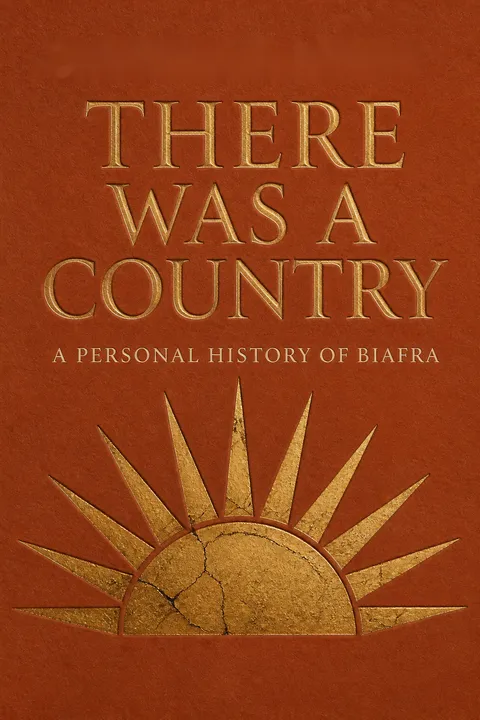
There Was a Country is a personal memoir of Chinua Achebe's experiences during the Nigerian-Biafran War. Readers praise Achebe's eloquent writing and insights into Nigerian history, though some found the book's structure disjointed. Many appreciated learning about this often-overlooked conflict and its lasting impact. The book combines historical analysis, personal anecdotes, and poetry to paint a vivid picture of the war and its aftermath. While some reviewers felt Achebe's perspective was biased, most found the book to be a valuable contribution to understanding this complex period in African history.
People Also Read






Glossary
Aburi Accord
Failed federal settlementThe January 1967 agreement reached by Nigerian military and regional leaders at a meeting in Aburi, Ghana. It addressed constitutional reform, displaced people, regional authority, and the rejection of force. Achebe argues that the participants left with different understandings of what the agreement required, and that the federal government's failure to implement it deepened Eastern distrust.
Ahiara Declaration
Biafran political principlesA political statement delivered by Biafran leader Chukwuemeka Odumegwu Ojukwu in June 1969, based on work by a committee that included Achebe. It explained the case for Biafran independence and set out ideals such as self-determination, liberty, and social justice, while condemning ethnic hatred and the blockade. The declaration was intended to guide the new republic and present its argument to the world.
mbari
Igbo art of lifeAn Owerri Igbo artistic practice in which a decorated mud structure contains life-size figures representing the community's world: people, deities, animals, foreigners, crops, and sources of danger. Achebe describes mbari as art that celebrates life and seeks protection through depicting it. Its inclusive, changing character informs his view that art should remain connected to ordinary people and lived experience.
Négritude
Black cultural self-definitionA literary and political movement associated with Léopold Sédar Senghor, Aimé Césaire, and Léon Gontran Damas. It developed in response to colonialism and racial denigration, encouraging people of African descent to reclaim and value their cultures through literature and political thought. Achebe presents it as part of a wider exchange among African, Caribbean, and Black American intellectual movements.
federal character
Ethnic balance in appointmentsA Nigerian principle used to distribute public appointments and opportunities across the country's regions and ethnic groups. Achebe criticizes how it can be invoked to displace merit, including when qualified people are replaced by less qualified candidates to achieve ethnic balance. His concern is that a policy presented as inclusion can become a cover for discrimination and institutional decline.
godfatherism
Patron-controlled political advancementA form of political patronage in which wealthy and influential sponsors select and fund candidates, then use money, intimidation, or other means to secure their election. Achebe argues that this practice restricts genuine public choice and gives private patrons excessive influence over government. He calls for reforms that make elections accessible and overseen by competent, independent officials.
Biafran Organization of Freedom Fighters (BOFF)
Civilian-military liaison organizationAn organization created by Biafran leader Ojukwu to improve relations between the army and civilians. Achebe was invited to help develop its educational work. The group also took on more explicitly military roles, including propaganda and guerrilla activity. Its formation reflected an effort to present the Biafran army as connected to the people it claimed to defend.
FAQ
What's There Was a Country: A Personal History of Biafra about?
- Personal Narrative: The book is a memoir by Chinua Achebe, detailing his experiences during the Nigerian Civil War, also known as the Biafran War.
- Historical Context: Achebe explores the ethnic tensions and colonial legacies that led to the war, emphasizing the impact of British colonial rule on Nigeria.
- Cultural Reflections: The narrative intertwines personal stories with cultural reflections, exploring themes of identity, nationalism, and the role of the writer in society.
Why should I read There Was a Country by Chinua Achebe?
- Insightful Perspective: Offers a unique insight into the Biafran War from the viewpoint of one of Africa's most celebrated authors.
- Literary Significance: Showcases Achebe's storytelling mastery, weaving personal narrative with historical analysis.
- Understanding Ethnic Conflict: Provides a critical examination of ethnic tensions and the consequences of colonialism, relevant for those studying conflict resolution and African history.
What are the key takeaways of There Was a Country by Chinua Achebe?
- Impact of Colonialism: Illustrates how colonial rule created artificial boundaries and ethnic divisions in Nigeria.
- Role of the Writer: Emphasizes the responsibility of writers to engage with society and address pressing issues.
- Human Cost of War: Captures the suffering of civilians during the war, highlighting the humanitarian crisis that ensued.
What are the best quotes from There Was a Country by Chinua Achebe and what do they mean?
- Understanding History: “A man who does not know where the rain began to beat him cannot say where he dried his body.” This Igbo proverb underscores the importance of understanding one’s history.
- International Inaction: “The silence of the United Nations” reflects Achebe's criticism of the international community's inaction during the Biafran War.
- Hope and Resilience: “We shall emerge triumphant from this ordeal” from the Biafran national anthem encapsulates the hope and resilience of the Biafran people.
How does Chinua Achebe describe his childhood in There Was a Country?
- Cultural Crossroads: Describes his upbringing during a time of cultural change, where traditional Igbo values intersected with Western influences.
- Education and Influence: Emphasizes the importance of education in his family, noting how it shaped his identity as a storyteller.
- Family Legacy: Shares anecdotes about his parents, highlighting their integration of traditional and Western values.
What role does poetry play in There Was a Country by Chinua Achebe?
- Expression of Suffering: Achebe uses poetry to articulate the pain and trauma experienced during the Biafran War.
- Juxtaposition with Prose: Intersperses prose with poetry, conveying complex emotions and experiences in a multifaceted way.
- Cultural Significance: Reflects the rich oral traditions of the Igbo people, connecting personal experiences to broader cultural narratives.
How does Chinua Achebe address the theme of identity in There Was a Country?
- Ethnic Identity: Explores the complexities of Igbo identity in the context of the Nigerian Civil War.
- Personal vs. National Identity: Reflects on the tension between personal identity and national belonging during the Biafran struggle for independence.
- Cultural Heritage: Emphasizes the importance of cultural heritage in shaping identity, using Igbo traditions and proverbs.
What insights does There Was a Country provide about the Nigerian Civil War?
- Causes of the Conflict: Delves into the historical and political factors that led to the outbreak of the war.
- Humanitarian Crisis: Highlights the devastating humanitarian impact, including widespread starvation and displacement.
- Lessons for the Future: Emphasizes the need for unity and understanding among Nigeria’s diverse ethnic groups.
How does Chinua Achebe portray the role of the military in There Was a Country?
- Military Influence on Politics: Discusses the military's growing influence in Nigerian politics and its role in exacerbating ethnic tensions.
- Biafran Military Structure: Provides insights into the organization and challenges faced by the Biafran military.
- Consequences of Militarization: Reflects on the broader implications of militarization for Nigerian society.
What is the significance of the Ahiara Declaration in There Was a Country by Chinua Achebe?
- Foundational Document: Served as a philosophical and political manifesto for the Republic of Biafra.
- Cultural and Historical Context: Drew inspiration from African traditions and global movements for liberation.
- Legacy of the Declaration: Symbolizes the struggle for autonomy and the quest for a just society.
How does Chinua Achebe reflect on the concept of home in There Was a Country?
- Sense of Belonging: Discusses how the war intensified the Biafrans' connection to their homeland.
- Cultural Identity: Emphasizes the importance of cultural identity and heritage in defining home.
- Loss and Displacement: Captures the pain of losing one's home and the emotional toll of war.
What are the implications of the Nigeria-Biafra War for contemporary Nigeria as discussed in There Was a Country?
- Ethnic Divisions: Warns that unresolved ethnic tensions from the war continue to plague Nigeria today.
- Lessons for Leadership: Serves as a cautionary tale about the consequences of poor leadership.
- Call for Reconciliation: Advocates for healing and reconciliation among Nigeria's ethnic groups.
About the Author

Download PDF
Download EPUB
.epub digital book format is ideal for reading ebooks on phones, tablets, and e-readers.








