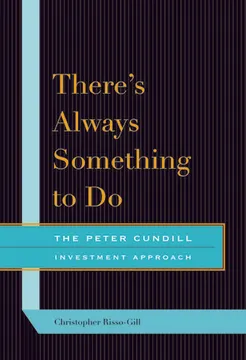


Key Takeaways
Buy assets at a deep discount to conservative liquidation value
The price is the protection. In 1973, Peter Cundill found his investing method in Benjamin Graham’s emphasis on margin of safety: buy a security for much less than a cautious estimate of what its assets are worth. A net-net is a company whose net current assets, after liabilities, exceed its share price. Cundill’s early Bethlehem Copper purchase came close: the company had cash about equal to the share price, no debt, and a producing mine. The stock rose from an average cost near $4.50 to $13 within months.
Cheap can mean very cheap. Credit Foncier Franco Canadien traded around $43 when Cundill estimated its liquidation value above $150. Conservative accounting concealed valuable property and mineral rights. The lesson was not to buy any low-priced share, but to establish what the business could plausibly return before relying on a brighter future.
What's striking is how this approach turns valuation into a stress test. Rather than asking only what a business might earn in favorable conditions, the investor asks what remains if optimism disappears. That resembles safety engineering, which designs for failure modes instead of assuming ideal operation. Yet liquidation estimates are not guarantees: land can be hard to sell, asset values can fall, and managers may prevent value from reaching shareholders. The discount is meaningful only when the assets are real, the liabilities are understood, and there is a credible route from balance-sheet value to investor value.
Do the accounting yourself, then distrust your elegant forecast
Read beneath the headline. Cundill trained as a chartered accountant and treated financial statements as evidence to interrogate, not answers to accept. His early screening rules favored shares below book value, preferably below net working capital after long-term debt, with a record of profits and dividends and limited borrowing. He scrutinized footnotes, off-balance-sheet obligations, management, and assets that might be carried at outdated values. The purpose was not to build a complicated prediction model, but to discover what the published numbers concealed.
Forecasts are road maps. Cundill distrusted projections of earnings and market direction. He saw forecasts as tools for identifying obstacles and opportunities, not as the foundation for buying a stock. His own elaborate attempt to quantify price appreciation by weighting many variables proved too complicated to work reliably. Direct research, simple arithmetic, and repeated checking gave him more confidence than a precise-looking formula.
This is a useful distinction between precision and accuracy. A spreadsheet can calculate a forecast to several decimal places without making its assumptions trustworthy. Cundill's insistence on primary documents also limits dependence on consensus narratives, though it does not eliminate judgment or bias. Accounting statements are representations shaped by conventions, estimates, and incentives. The analyst's task is therefore partly forensic: identify which assumptions matter, test them against cash and obligations, and admit where uncertainty remains rather than disguising it with mathematical polish.
Let mispricing, not market predictions, govern your buying pace
Cash can be a position. Cundill rejected the idea that he had to remain fully invested. When holdings rose above the values he could justify, he sold and let cash accumulate, rather than forcing purchases in an expensive market. Before the 1987 crash, more than 40% of the Value Fund was in short-term instruments. This was not the payoff from knowing the crash's date. It was a consequence of his valuation rules, which had already prompted sales.
Be ready when prices break. After the crash began, he used the fund's liquidity to buy securities that had become cheaper, including shares he had sold earlier. The fund gained 13% in 1987 while major markets fell sharply. Cundill also used a rule of selling half a position after it doubled, leaving the rest to be managed according to the changing value of the company.
Cash is often dismissed as indecision, but here it functions as an option: it preserves the ability to act when prices move faster than research can be completed. That option has a cost, because cash can lag during long advances and investors may misjudge when to redeploy it. Cundill's method reduces reliance on timing by tying cash to the valuation of individual holdings. The discipline is not to predict every downturn, but to avoid letting the fear of missing a rally erase the ability to respond to a genuine bargain.
Cross borders only after learning how local books conceal value
Foreign markets require local homework. Cundill did not treat international investing as simply buying familiar companies abroad. He studied accounting practices, political conditions, business culture, and local shareholder protections, then built relationships with professionals who understood value investing. His first substantial move beyond North America was Sweden. After visiting Volvo's operations and studying the market, he bought Volvo as a net-net in 1977. It took about two years for the investment to show its worth.
Difference can create a barrier. In Japan, Cundill found companies with substantial securities portfolios carried at cost and shares trading below book or liquidation value. He believed the unfamiliar accounting and corporate structures kept many investors away. His approach required checking those differences rather than assuming that an overseas balance sheet meant the same thing as a North American one.
The broader insight is that unfamiliarity can be a source of both mispricing and genuine danger. Local knowledge helps separate a market's unusual conventions from warning signs that deserve a higher discount. This is a form of institutional analysis: the same asset can be worth less to an outside shareholder when governance, liquidity, or legal rights are weak. Global reach therefore does not mean treating the world as one interchangeable market. It means comparing opportunities while accounting for the systems that determine whether reported value can be realized.
Distress can pay, but legal rank and elapsed time belong in the price
Read the claims, not just the assets. In distressed corporate debt, Cundill assessed whether a company's assets could cover its obligations through an orderly reorganization or liquidation. He also studied the legal documents governing each bond, because different issues could occupy different places in the creditors' repayment order. The case of LTV showed why timing matters: valuable property supported the investment, but labor disputes, pension obligations, and complex negotiations kept the company in bankruptcy from 1986 until 1993. The investment avoided an absolute loss, yet performed poorly after years of delay.
Sovereign debt needs a different balance sheet. Countries have no simple corporate liquidation value, but they have assets, tax revenues, and a continuing need to borrow. Cundill bought Panamanian defaulted debt at an average of 39 cents and sold it in 1995 for a 121% gain, after analyzing frozen cash, political conditions, and the prospect of renewed access to credit.
The key refinement is to treat time and legal priority as components of valuation, not administrative details. A claim can be well covered on paper and still deliver a poor return if the process takes years or the investor ranks behind other creditors. This connects distressed investing to litigation and project finance, where the path to realization can matter as much as the headline asset value. Country debt adds political uncertainty that cannot be modeled away. A large discount is a starting point for analysis, not proof that the risk is small.
Keep Graham's test, but widen what counts as an asset
Look beyond the obvious balance sheet. Cundill's method began with Graham, but he adapted it as straightforward net-nets became harder to find. He searched for extra assets such as real estate carried at old cost, securities portfolios recorded below market value, and valuable subsidiaries hidden inside holding companies. In Japan, he could buy individual companies below liquidation value even while believing the broad market was dangerously expensive. He bought selected shares while using put options on the Nikkei, an index of Japanese stocks.
The reverse can also be useful. Cundill called a market-wide valuation extreme the antithesis of value: a situation so far beyond reasonable measures that he considered a short position. This was not a forecast that every company in that market was bad. It was a way to distinguish an overvalued market from particular securities whose assets still offered a margin of safety.
This flexibility prevents a sound principle from hardening into a checklist that no longer fits the available opportunities. It also demands a strong boundary: broad market pessimism and company-level value are separate claims, and each needs its own evidence. Derivatives can express the first view, but they add timing and structure risks that ordinary asset-based purchases may not carry. The framework works best when adaptation changes the tools or the assets being examined, while preserving the central requirement that the downside be analyzed before the upside is imagined.
When everyone agrees, appoint someone to argue the losing case
A margin can disappear. Cable & Wireless looked attractive after selling businesses and building a large cash position. Cundill bought shares at just over £4, expecting the remaining businesses and cash to provide protection. Management then spent heavily on internet acquisitions that lost money, while accounting problems and undisclosed obligations eroded confidence. Cundill sold after the position had cost the Value Fund nearly $59 million. The experience showed that cash on a balance sheet is not a shield if management can consume it faster than investors can reassess the business.
Invite resistance early. Cundill's team had shared the optimistic view and lacked a strong internal dissenter. He concluded that an analyst should be assigned to challenge an investment when the whole group agrees. He also regretted selling Westar below 50 cents under pressure, only to see it rebound above $2. The two cases show opposite dangers: refusing to revise a thesis, and abandoning it to satisfy discomfort.
The devil's advocate idea is a practical defense against groupthink, but it should not become ritualized opposition for its own sake. The strongest challenge tests a thesis against specific failure mechanisms: hidden liabilities, deteriorating cash flow, or management behavior that invalidates asset estimates. Cable & Wireless also exposes a weakness in static balance-sheet analysis: assets can be real and still be squandered. Good investment review therefore needs both a valuation case and a continuing account of what could make that case false.
Build judgment through curiosity, patience, and daily discipline
Research is a practiced habit. Cundill read widely, traveled to understand unfamiliar places, and kept a daily journal for decades. His approach joined detailed accounting work with conversations about politics, culture, and business. He argued that instinct mattered, but that instinct grew from experience and repeated attention to evidence, rather than from tips or flashes of inspiration alone.
Endurance has a physical analogue. At 37, after never running more than five miles, Cundill trained for six weeks and completed his first marathon in 3:13. He went on to run twenty-two more, eventually breaking three hours. The story reflects a broader temperament he valued in investing: persistence through discomfort without confusing stubbornness with sound judgment. For him, discipline meant returning to the work and reconsidering the evidence, not merely holding on.
The compelling point is not that investors must run marathons, but that routines can protect attention when outcomes are slow and emotionally noisy. Curiosity supplies new evidence, while discipline keeps the investigator returning to it. The limit is important: persistence can turn into escalation of commitment if a person treats endurance itself as proof of correctness. Cundill's own distinction between patience and stubbornness is therefore central. A durable routine should make reassessment more likely, not make changing one's mind feel like defeat.
Turn a founder's judgment into a team before illness intervenes
A method must be teachable. Cundill built a research team and created practical tools, including the net-net worksheet, to make analysis repeatable. When Mackenzie acquired his firm in 2006, he was already facing a degenerative neurological condition, later diagnosed as Fragile X-associated tremor/ataxia syndrome. He stayed involved until 2009, while encouraging his colleagues to take greater responsibility rather than depend on his daily decisions.
Succession takes preparation. Andy Massie and Lawrence Chin emerged as key successors after years of working with Cundill. The transition preserved not just a list of investments, but the fund's analytical framework and international network. Even after stepping down, Cundill continued discussing investment decisions with former colleagues. His retirement was not a sudden departure from the work, but a transfer of responsibility built through mentoring and shared practice.
The case highlights a problem common to expert organizations: much of the valuable judgment is tacit, stored in habits and examples rather than in formal rules. Worksheets and written analysis make some of it transferable, while mentoring exposes successors to how a senior investor handles ambiguity. Still, no process can reproduce one person's intuition exactly. A resilient investment organization needs more than a replacement for its founder. It needs multiple people capable of challenging one another while preserving the principles that made the original approach coherent.
Analysis
The book's strongest contribution is its portrait of value investing as an operating discipline rather than a bargain-hunting slogan. Cundill begins with a measurable question, what could the assets support, and expands that inquiry into accounting, legal claims, culture, management, and time. The distinctive thread is not simply buying cheaply. It is refusing to let fashionable narratives replace independent work, while remaining flexible about where value might be found.
The career also makes visible a tension that abstract investment principles often hide. A margin of safety is a defense against error, but it is not a guarantee. LTV had valuable assets and still tied up capital for years. Cable & Wireless appeared to have cash protection, yet management decisions and accounting failures consumed the cushion. Those episodes make the book more instructive than a clean success story would be: the investor must keep testing whether the original thesis survives new facts.
The narrative is necessarily shaped by hindsight and by a biography centered on a highly successful manager. Its celebrated investments cannot establish that the same methods will work under every market regime, and the book's examples naturally give more space to memorable winners and lessons than to a complete statistical account of every decision. The reported returns also cover different periods and measures, so they should not be casually treated as a single comparable record.
The most transferable lesson is therefore procedural, not promissory. Analyze assets and obligations independently, leave room for uncertainty, and make room for dissent. Global investing and distressed debt show how far the method can travel, but also how much contextual knowledge it requires. Cundill's story ultimately argues for a stable framework with adaptable tactics, plus an organization capable of questioning both the market and its own most confident investor.
Glossary
Margin of Safety
Discount to estimated valueThe gap between an investment's purchase price and a cautious estimate of its underlying value. Cundill focused especially on what assets might realize after liabilities, rather than relying mainly on expected growth. A wide gap is intended to reduce the harm caused by errors in valuation, business deterioration, or unfavorable conditions, but it does not eliminate investment risk.
Net-net
Shares below net current assetsA company whose market value is below its net current assets after liabilities are deducted. The calculation gives close attention to the realizable value of cash, receivables, and inventory rather than assuming every accounting asset is worth its stated amount. Cundill used net-nets as a particularly demanding form of asset-based bargain.
Antithesis of Value
Shorting extreme overvaluationCundill's term for a market whose prices appear grotesquely detached from reasonable measures of value. Rather than shorting individual companies, he sometimes used options to bet against an entire market, as with put options on the Nikkei. The strategy required patience and a strong view that the extreme valuation could not be sustained.
Magic Sixes
Three-part bargain screenA quick screen for companies trading below 0.6 times book value, at six times earnings or less, and with dividend yields of at least 6%. Cundill used it as an initial way to scan markets for possible value investments, not as a substitute for detailed analysis of liabilities, asset quality, profitability, or management.
Cundill's Corollary
Buy amid extreme distressCundill's maxim that an investor should wait while problems are still unfolding, but consider buying when conditions become so bad that fear is widespread. The idea is that extreme distress can drive prices below underlying value. It is not a claim that every crisis creates a bargain; the investor still has to establish that the assets and claims support the purchase.
Osmosis
Experienced investment judgmentCundill's word for the intuitive judgment that develops through disciplined analysis, experience, and attention to non-quantifiable factors. It supplements numerical valuation rather than replacing it. The investor uses accumulated understanding to assess situations that no fixed formula can fully capture, while continuing to test intuition against evidence.
Extra Assets
Assets hidden from market valueAssets whose economic value may exceed the amount shown in a company's accounts or recognized in its share price. Cundill looked for examples such as property carried at old cost, investment portfolios recorded below market value, or valuable subsidiaries inside holding companies. Identifying them required detailed accounting and an estimate of whether shareholders could realize their value.
Brady Bonds
Tradable restructured sovereign debtMarketable bonds created in debt restructurings for countries that had defaulted on syndicated bank loans, named for US Treasury Secretary Nicholas Brady. The bonds allowed creditor banks to exchange illiquid defaulted claims for tradable securities, while debtor countries negotiated reductions or new repayment terms. Cundill analyzed them as opportunities within emerging-market sovereign debt.
Download PDF
Download EPUB
.epub digital book format is ideal for reading ebooks on phones, tablets, and e-readers.








