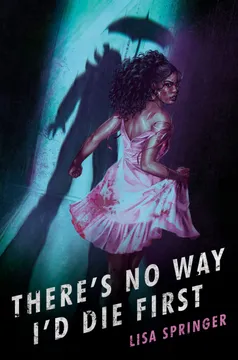


Plot Summary
Prologue
Two weeks before Halloween, horror-club founder Noelle Layne appears on a culture podcast to explain why she champions Black horror, where Black characters and filmmakers shape the story rather than serving as disposable victims.
She promotes Jump Scares and teases a private anniversary party for twelve influential classmates, hoping their audiences will help her launch a podcast of her own. Her promise of a night people will remember is playful, but it also gives the party a public audience before anyone arrives.
The interview gives Noelle’s gathering two audiences: the classmates she wants to impress and the followers whose attention could turn her hobby into a career. Her defense of Black horror is more than branding. It names the question that will govern her night: who gets to survive, and who gets to control the story of survival? The public promise of a diabolical party also creates a trap of its own. Noelle has made success visible, so when the evening turns dangerous, she cannot simply retreat into privacy.
Three Cards Before Fright Night
On Halloween, Noelle, a high-school horror critic, films a tarot reading with her best friend Demario and makeup-savvy Elise. She asks whether to expand Jump Scares into a podcast. The cards suggest growth, anxiety, and betrayal; Noelle dismisses their warning as atmosphere, even as the reading sharpens her doubts about college, her career, and whether popular musician Archer Mitchell likes her.
She wants the party that night to push her following past fifty thousand and strengthen her application for a film internship. Her parents are away, the mansion is ready, and she has invited twelve influential classmates. A persistent online troll mocks her work, but she blocks the account and focuses on the night she expects to make her name.
Noelle’s ambition is both genuine and shaped by the economy of attention: she wants to build a critical voice, but measures progress in followers and access. The tarot reading externalizes fears she already carries, especially the possibility that success might come with a moral cost. Her reflex to dismiss the warning is not foolishness so much as a practiced confidence that planning can keep uncertainty manageable.
Castle Hill Opens Its Doors
Noelle’s guests arrive at Castle Hill in elaborate costumes, and the mansion delivers the spectacle she promised. Her celebrity crush, Archer, brings custom cupcakes, while her old friend Demario and Elise help keep the party moving.
Unsettling texts arrive from unknown numbers, but Noelle assumes classmates are teasing her. A prank involving a recorded chainsaw and a fuel-scented candle makes her scream, then laugh when Josh films the reveal. Soon afterward, the storm tears at a patio awning, and Noelle notices muddy footprints outside a window.
She explains them away as old tracks and returns to hosting. When the lights later flare and an unplanned horror movie appears on the television, she treats that too as another prank, unaware that someone is already inside her celebration.
The party’s polished excess is not mere decoration. Noelle has designed every detail to convert hospitality into a public performance, and the guests arrive ready to photograph themselves inside it. That makes the early intrusions easy to misread: the real warning signs resemble the staged scares she has built into the evening. Her expertise in horror helps her recognize genre conventions, but it also encourages her to treat danger as an entertaining effect.
The Clown Starts Counting
After the guests watch Us, Noelle introduces an adult hide-and-seek game, with an entertainer called Gage playing the pursuing clown. He arrives early, silent and unnervingly convincing, carrying a battered trunk of props. Noelle collects everyone’s phones so they cannot share hiding places, then gives the group two minutes to scatter through the house.
She and Archer squeeze into a storage nook beneath the stairs. Gage finds Kelsi nearby, and a struggle ends in a scream and a heavy fall. When the power fails, Noelle and Archer leave their hiding place to restore it. They find Kelsi on the floor with blood pooled around her. The hired game has become a murder scene, and Noelle’s house is the locked setting.
The first death converts Noelle’s hobby from a lens for interpreting fear into the mechanism that has gathered everyone in one place. She has controlled the rules, the setting, and the participants, so the discovery also produces a specific kind of guilt: she feels responsible not only for inviting her friends, but for having designed the circumstances that now endanger them. The scene strips away the reassuring distance between horror and audience.
The House Becomes a Trap
Gage returns with a bloodied knife and a weaponized umbrella, and Noelle’s fake blood squib makes her Carrie costume appear to be part of the attack. The group finds the doors locked, the windows sealed, the phones missing, and the security system disabled. Gage declares that being tagged now means death.
He forces Archer to play a song connected to a copyright dispute, then crushes his hands beneath the piano lid. Noelle and her friends fight back with whatever they can grab, but Gage escapes a brief takedown with a flash-bang. Later, Noelle finds the phones and other electronics submerged in her bathtub. A recording of a podcast interview with Kelsi suggests the clown knows private details about his targets.
The failed escape turns the mansion’s comforts into evidence of vulnerability: its expensive security is useless, its technology has been sabotaged, and its curated rooms become arenas. Gage does not only attack bodies. He stages punishments around fragments of public reputation, forcing the guests to wonder what he knows and why. Noelle’s film knowledge remains useful, but it cannot make her the author of this story’s rules.
A Horse in the Hallway
While Noelle and Archer look for a way to call for help, a miniature horse bolts through the upstairs hallway. Noelle calms it and removes a message from its neck, but the words point toward an old hit-and-run. Maddie Xu recognizes the clue and hurries away, concealing what she knows. Noelle and Archer follow her into the guesthouse fun house, where Gage attacks with a hedge trimmer.
Maddie is fatally injured as Josh tries to pull her clear. The clues later connect her terror of horses to an accident in London: she and a friend took a carriage on a dare, and the friend was badly hurt. Her family’s lawyers and influence helped her escape consequences, leaving guilt and fear behind.
Gage’s punishments exploit the distance between a polished public identity and a private history. Maddie’s fear is not evidence of guilt by itself; it is the visible residue of an event she has never integrated. Noelle’s attempt to read the clues is perceptive, but the sequence also shows the limits of turning trauma into a puzzle. Understanding the past does not give her time to prevent the attack.
The River Takes Its Toll
Noelle tries to escape with the group in a rowboat, but Gage is waiting at the pier. He stabs Elise, who falls into the water as the boat overturns. Demario dives after her and disappears beneath the creek while Noelle, Archer, Josh, and Charlie search in the storm. Gage drags Noelle toward the water; she breaks his grip with her demolition hammer.
Back inside, Noelle fears that both friends are lost. She and Archer find spare clown suits and realize the attacker may be changing outfits. At the home theater, Demario eventually reappears, exhausted but alive. He says he brought Elise into the boat, but she had no pulse. The survivors reunite as Gage begins showing them recorded interrogations.
The failed boat escape makes water a physical threat and a measure of Noelle’s limits: she can plan an exit, but cannot control the storm, Gage, or who gets separated. Demario’s return complicates the grief without undoing it. His survival depends on his swimming skill, while Elise’s fate remains uncertain. Noelle must keep acting without the certainty that would make action feel justified.
The Screen Names Names
In the theater, the survivors watch a recording of Hailey, an activist who built an online following around social causes. Gage accuses her of using activism for attention and forces her to swallow computer keys; the footage ends with her apparently dead.
A second podcast recording exposes complaints around Vivek’s social platform, then Charlie leaves after a quarrel over cryptocurrency losses. Gage releases an irritant into the theater vents, driving the others into the house.
He captures Charlie and turns Mariana’s attempt to help into a fatal trap: she falls from a cut rope ladder, while Charlie runs through a garrote wire outside the entrance. Noelle leads the remaining group toward the garage, still unable to tell whether each recording reveals truth, manipulation, or both.
The recordings make media a weapon twice over: Gage uses them to humiliate his victims, then uses the survivors as captive viewers. His accusations sometimes point to real harms, but he converts critique into a license for torture. That distinction matters. The novel does not equate accountability with punishment; it shows how an ideology becomes monstrous when one person claims the right to decide who deserves to live.
The Garage Holds Another Secret
In the garage, Noelle’s group hears a noise inside a car trunk and frees Dylan, who says Gage knocked him out and left him there. Josh accuses him of stringing Elise along, revealing Dylan’s secret relationship with her while he dated Kelsi. Before they can settle the argument, Noelle’s neighbor Lauren arrives and rings the front doorbell.
A hidden explosive kills her. Gage then breaks into the garage and kills Vivek with a power drill. His disappearance and the stolen radio leave the survivors wondering whether he has help. Noelle spots the clown removing Lauren’s body and decides they cannot simply wait for rescue. She uses nylon string to rig a tripwire around a giant decorative skeleton.
The garage should be a practical refuge, but each apparent solution collapses under new evidence of Gage’s preparation. Dylan’s disclosure adds interpersonal betrayal to the night’s violence, while Lauren’s death shows that the danger extends beyond Noelle’s invited circle. The possibility of an accomplice changes the group’s problem from escaping one attacker to trusting no one. Noelle responds by shifting from evasion to strategy.
Bones Beneath the Balloons
Noelle’s tripwire topples the skeleton onto Gage, and the group briefly pins him down. He escapes before they can use his fingerprints to unlock a door. As they search for another route, Gage leaves a net of animal bones and balloons in the hallway, provoking Taylor’s memories of an animal-shelter raid organized by their former boyfriend, Silas.
A tennis-ball launcher loaded with nails then drives the survivors into the basement wine cellar. There, Josh opens Gage’s trunk and releases a swarm of mice. The group scrambles through the cellar and back upstairs, shaken but alive. The trap and the animal clues reinforce Noelle’s suspicion that Gage has studied their private histories, not merely their social media images.
Noelle’s counterattack matters even though it fails: she stops treating survival as a matter of guessing Gage’s next move and begins making the house dangerous to him too. Yet the bones reveal the asymmetry of their knowledge. Gage has researched the guests’ shame and fear; they are still piecing together his methods. Taylor’s past enters the story not as an answer, but as another wound the killer can press.
A Confession Before Escape
After escaping the cellar, Noelle and Archer search her father’s office for a car key and find the manual for the garage door’s emergency release. In the quiet, Noelle admits she bribed a contact to improve her internship chances.
Archer reveals that his team failed to clear a sample in his hit song, and that his fans harassed the artist who sued him. He has been carrying the guilt despite denying responsibility publicly. Noelle decides to withdraw her application, and Archer admits that he wrote his hit with her in mind.
They kiss, then find the release instructions. Before they can use them, Gage catches Taylor and locks a shock collar around their neck. Noelle’s porcupine Quilly distracts him, and a thrown snow globe ignites at the fireplace, burning Gage.
The romance develops through disclosure rather than rescue: both teenagers admit that their public stories conceal morally difficult choices. Noelle’s decision to withdraw the application marks a break with the belief that unfair systems justify any shortcut. Archer, meanwhile, recognizes that a legal defense did not erase the harm his fans caused. Their intimacy offers relief, but it also makes trust a conscious risk rather than a fantasy.
The Gate Gives No Way Out
With the emergency release found, the survivors force open the garage door and flee in Noelle’s SUV, but Gage follows on an electric scooter. The estate gate will not open, and Noelle’s attempt to ram it triggers the car’s emergency braking. The group abandons the vehicles and tries the perimeter wall, then returns toward the house to find tools.
Gage ambushes them, takes Demario hostage, and forces everyone inside. Dylan is caught in a bear trap while trying to help Taylor; Noelle and Archer free him, badly injuring his leg. Noelle realizes that running only lets Gage dictate the route. She agrees to return to his game, determined to turn their next encounter into a fight.
The thwarted escape is a structural reversal: Noelle has done everything the genre’s survival advice recommends, yet the locked gate and emergency braking expose how little control she has over the larger system. Her new decision is not confidence restored, but a more sober calculation. She stops treating flight as inherently safer and accepts that survival may require confronting the person who has been directing their movement.
The Jester Behind the Mask
Gage resumes hide-and-seek and forces the survivors through the house. Noelle finds her Jump Scares records and traces the troll who harassed her to Wesley Castle, a former member she removed for targeting other viewers. The clown’s stage name draws on horror films, and Noelle realizes he is likely Wesley. In the library, Gage captures Noelle, Archer, and Taylor, then orders Josh to bind them.
Josh obeys. Noelle understands that the podcast recordings and private clues required someone close to the group. Gage explains that Josh supplied information, while his own grievances include the guests’ privilege, scandals, and perceived lack of consequences. The revelation recasts the host who had seemed like a friend as part of the threat.
Wesley’s identity is not a clever mask so much as a grievance given theatrical form. He uses horror references to cast himself as judge, while Josh’s participation gives that fantasy access to intimate information. Noelle’s records, once a scrapbook of her creative community, become evidence. The revelation also exposes how easily friendship and online familiarity can be mistaken for safety.
The Last Game Turns
Wesley reveals that Josh joined the plot for cash and an NFT, hoping to punish classmates and conceal his own financial desperation. He also admits that Josh has been poisoning his father. Wesley kills Josh after their alliance breaks, and Noelle frees herself and Archer. Taylor, injured but alive, helps bring the clown down. Noelle and Archer escape to the roof, where Wesley pursues her.
She lures him onto a skylight above the drained pool; he falls through and lands below. Noelle and Archer activate Josh’s fall-detection watch, bringing emergency responders to Castle Hill. The killer’s elaborate hunt ends because Noelle uses the house’s overlooked details, not because the night follows the survival rules she once rehearsed.
The climax separates Wesley’s political language from his actual motive: he condemns privilege while exploiting the same networks and money he claims to oppose. Josh’s betrayal is similarly grounded in entitlement, not sacrifice. Noelle survives by improvising with architecture and timing, but victory is not moral purity. She has seen her own compromises clearly and still has to live with the people those choices failed to protect.
After Castle Hill
Police, firefighters, and paramedics flood the estate after Noelle’s signal brings help. Archer is alive, and Noelle sees Demario and Taylor taken to ambulances. Officers search the river for Elise, whose fate remains unconfirmed. Noelle watches the bodies of the other guests leave the house, understanding that the party she built to launch her career has become a crime scene and a permanent loss.
She and Archer head to the hospital together. At 12:22, Noelle remembers that Josh had doubted she would survive the night. She has, but the ending offers no easy celebration: her friends are gone, her ambitions have changed, and the story she once wanted to tell will take time to face.
The aftermath refuses the clean relief of a final scare followed by applause. Noelle’s survival is real, but it does not restore the community the party gathered or cancel her grief. The clock also answers the night’s repeated judgments about who can endure: Noelle outlasts them, yet victory means carrying testimony, complicity, and loss into a future she cannot yet imagine.
Analysis
The novel uses the slasher structure to ask who gets to be seen as credible, culpable, or survivable. Noelle begins by treating horror as both an artistic language and a route to recognition. Her commitment to Black horror matters because the genre’s old rules have often assigned Black characters limited agency. At Castle Hill, she discovers that invoking the Final Girl role cannot guarantee control; survival depends on changing plans, trusting friends, and reading the physical environment.
Gage and Josh make the story’s critique of wealth deliberately uncomfortable. Their targets have benefited from money, influence, or public image, and some have harmed others while escaping consequences. Yet the killers turn those facts into permission for cruelty. Gage’s moral certainty is not justice. It is a private tribunal in which the accused have no defense and the judge is also the executioner. Josh’s participation further complicates the rhetoric: he condemns privilege while acting from envy, financial fear, and personal grievance.
Noelle’s own compromised ambition keeps the book from dividing its characters neatly into innocent victims and guilty elites. Her internship maneuver is unfair, but it does not make her responsible for the murders. Recognizing that distinction allows her to face wrongdoing without accepting a killer’s logic. The final victory comes through practical improvisation and solidarity, not moral perfection. The story leaves Noelle alive, but insists that survival is not the same as escape from consequence, grief, or the work of telling what happened.
Review Summary
There's No Way I'd Die First received mixed reviews. Many praised its premise, diverse representation, and homage to classic slashers. Readers enjoyed the creative kills and fast-paced action. However, criticisms included underdeveloped characters, confusing setting descriptions, and an unsatisfying twist. Some found the social commentary heavy-handed and the villain's motivations unconvincing. The writing style and pop culture references divided readers, with some enjoying the Gen Z voice while others found it distracting. Overall, opinions varied widely on whether the book succeeded as a YA horror novel.
Characters
Noelle Layne
Horror-loving hostNoelle runs Jump Scares, a horror-film club, and wants to become a critic. She is observant, funny, ambitious, and especially committed to Black horror that gives Black characters agency. Her confidence is real, though she often measures herself through public approval and fears that she will not be taken seriously. She studies survival tactics and human behavior, turning films into a personal vocabulary for danger. Her closest bonds are with childhood friend Demario and longtime friend Elise; her crush on Archer adds an intimate hope to the party she has planned.
Archer Mitchell
Famous classmate and pianistArcher is a successful young musician who still attends school and studies classical piano. His public fame makes people assume they know him, but he keeps much of his private life guarded. He is considerate, practical, and calmer under pressure than Noelle expects, though he is also learning to take responsibility for choices made by his team and fans. His history with Noelle is built from years of small acts of kindness, and their shared interest in creative work gives their attraction substance beyond celebrity and status.
Demario Rollins
Noelle’s lifelong friendDemario is Noelle’s closest childhood friend, a competitive swimmer and lifeguard whose steadiness balances her tendency to overthink. He films her social-media content, teases her without diminishing her, and is quick to protect the people he loves. His competence in water comes from a deep personal fear of being unable to save someone. Demario’s humor and loyalty make him an anchor in the group, but his protective instincts can also draw him toward danger before he has weighed the cost.
Gage Derry
Hired Halloween clownGage arrives as the entertainer hired to lead Noelle’s party game. He uses silence, theatrical props, and an unsettling command of horror conventions to unsettle the guests. His manner shifts between slapstick and menace, making it difficult to tell when a performance has ended. He appears to understand the party’s social world far better than a hired performer should. His presence tests Noelle’s confidence in her ability to distinguish a staged scare from an actual threat.
Josh Sullivan
Podcast host and classmateJosh hosts a popular culture podcast and moves easily among Salford Prep’s ambitious students. He is witty, outspoken, and accustomed to taking up space in conversation. His family’s influence and his own media platform give him access to people who want visibility. Beneath his breezy confidence, he is preoccupied with money, status, and the direction of his family life. His friendship with Noelle brings him close to the party’s planning and to the private stories shared by its guests.
Taylor Kissick
Animal-loving travelerTaylor is a practical, outdoorsy friend who loves animals and imagines spending a gap year doing community work. They notice emotional undercurrents that others miss, including Noelle’s feelings for Archer. A painful breakup and unresolved guilt over a past friendship make Taylor cautious about trusting romantic partners. Their loyalty is strong, though guilt can make them blame themself for events they did not control.
Elise Thomas
Makeup artist in trainingElise is Noelle’s longtime friend and trusted makeup artist, with ambitions to follow her mother into Broadway design. Warm, stylish, and quick to soothe Noelle’s spiraling nerves, she often turns tension into humor or song. She is socially perceptive but private about her romantic life, keeping some difficult choices from even her closest friends. Elise’s practical creativity makes her a natural collaborator in Noelle’s party plans.
Dylan Hansen
Lacrosse starDylan is Salford’s lacrosse captain, a gifted athlete whose endorsement deal has raised his profile. He is confident, competitive, and drawn to big public moments. A serious collision with teammate Jack Hudson continues to shadow his success, while his relationships show a more conflicted private side than his polished athletic image suggests. Dylan’s instinct is often to act first and explain later.
Kelsi Crankenshaw
Influencer and horror fanKelsi is a wealthy model with a large online following and a taste for luxury. Her sharp remarks and disregard for boundaries make her difficult for Noelle to trust, yet her genuine love of horror brings them into the same club. Kelsi is accustomed to managing public attention and smoothing over mistakes with money or image work. Her relationship with Dylan is part of Salford’s visible social landscape.
Maddie Xu
Fashion influencerMaddie is a fashion-conscious traveler who has lived in several countries and rarely lacks access to money. Her light, pampered public image hides unease about the possibility of another move disrupting her senior year. She is quieter than her friends expect and uses social occasions to feel connected. Maddie’s history includes an experience she struggles to discuss, and her friendship with Charlie is more emotionally important than it first appears.
Hailey Daniel
Student activistHailey leads a girls’ empowerment group and builds a social-media presence around political and social causes. She is articulate, visible, and committed to speaking publicly about injustice. Her activism is part of how she understands her place in the world, though the demands of online attention complicate the boundary between advocacy and performance. Her girlfriend, Mariana, shares her enthusiasm for public causes and creative work.
Mariana Martinez
Playwright and performerMariana is a Broadway devotee, actor, and young playwright whose musical has attracted attention beyond school. Dramatic, playful, and quick to break into a song, she brings theatrical energy to Noelle’s party. Her family’s connections open doors, and she is eager to celebrate her Puerto Rican culture through her work. Mariana’s relationship with Hailey is affectionate and visibly close.
Vivek Bhatia
Teen tech entrepreneurVivek created Simmer, a social platform intended to give users space for their own online communities. He is clever, technically minded, and generous with advice when Noelle asks how to grow Jump Scares. His success has brought legal and ethical complications, especially as other groups use the platform in ways he did not intend. He prefers to solve problems through systems and code, even when responsibility cannot be delegated to technology.
Charlie Huang
Crypto-minded classmateCharlie is a finance enthusiast who tracks cryptocurrency and markets with anxious intensity. His boastful expertise masks a more tender attachment to his younger sister and a desire to be seen as someone who understands risk. He is close to Maddie, though he does not always know how to speak openly about that connection. His confidence can collapse into panic when the consequences become personal.
Adelina
Halloween tarot readerAdelina is a pastel-goth tarot reader Noelle visits for a Halloween social-media video. She interprets the cards with composure, but her reaction to the final card unsettles Noelle. The reading gives the party an early note of foreboding without making Adelina part of the later events.
Lauren
Neighbor and family friendLauren lives near the Layne family and is close enough to be asked to check on Noelle. She represents the ordinary adult help Noelle hopes will arrive when the party goes wrong. Her concern for the family makes her intervention well-intentioned rather than curious or reckless.
Silas
Taylor’s former boyfriendSilas is Taylor’s former partner, associated with a militant animal-rights circle and a past shelter raid. His influence on Taylor’s choices lingers after their relationship ends. Taylor’s complicated feelings about him reveal how loyalty can persist even when trust has been badly damaged.
Dr. Dillard
Noelle’s therapistDr. Dillard is a therapist who treats wealthy young clients, including Noelle. Their sessions give her a place to discuss pressure and ambition, though she is embarrassed by some of what she shares. The office represents a confidential space that Noelle believes is separate from her public life.
Plot Devices
Tarot reading
Foreshadows buried fearsNoelle treats Adelina’s cards as Halloween entertainment, but their sequence of opportunity, anxiety, and betrayal quietly frames the choices ahead. The cards do not provide a literal forecast. Instead, they give shape to doubts Noelle already has about ambition, guilt, and whether her friends see her as she hopes. Their function is atmospheric and psychological, preparing readers to notice the gap between Noelle’s confident performance and her private uncertainty.
The Fright Night game
Turns play into a huntNoelle’s hide-and-seek game supplies Gage with an initial structure for controlling the guests. The prize, collected phones, maps, and house layout make the event feel like a designed horror attraction before Gage changes its rules. As he converts tags into threats, the game becomes a means of isolating people and forcing them to move through spaces he has prepared. Noelle’s own party design gives the danger its first framework.
Podcast recordings
Expose private grievancesClips from Josh Sullivan’s podcast play through the mansion and reveal how Gage has gathered stories about the guests. Each recording points toward a public controversy or private failure, turning interviews once meant for promotion into clues about the attacker’s motives. Their usefulness is limited: the recordings reveal what Gage believes, not necessarily an objective account of what happened. This distinction keeps Noelle and the survivors from mistaking accusation for truth.
Noelle’s survival kit
Turns fandom into actionNoelle’s go bag and her accumulated knowledge of horror conventions give her practical tools: a flashlight, demolition hammer, and supplies for improvising under pressure. The bag is not a magic answer, and losing it forces her to solve problems without her rehearsed equipment. Its deeper function is to test whether knowing the rules of fictional survival can translate into judgment when real people are at risk. Noelle learns to adapt rather than simply reenact a movie.
Download PDF
Download EPUB
.epub digital book format is ideal for reading ebooks on phones, tablets, and e-readers.








