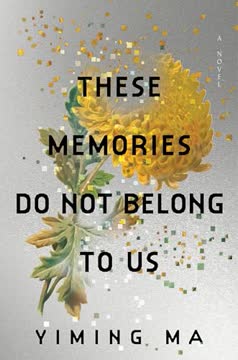
Plot Summary
Inheritance of Forbidden Memories
The narrator, a young man in a future Qin Empire, receives his mother's Mindbank after her death—a trove of illicit memories. These are not just family stories but forbidden histories, censored by the Party. His mother, a fiercely independent woman, raised him alone and protected him from the regime's scrutiny, yet chose to pass on these memories, risking his safety. The son is torn between fear and longing: to remember his mother and the truths she cherished, or to erase the past for survival. As the Party's surveillance tightens, he faces a choice—hide, forget, or share these stories with the world, even if it means his own destruction. The emotional core is grief, love, and the burden of memory as resistance.
Mindbanks and Memory Capitalism
Mindbanks, neural devices implanted in citizens' brains, have revolutionized Qin society. Memories are no longer private; they are bought, sold, and streamed, forming the backbone of the economy and education. The Party controls which memories are legal, shaping collective identity and suppressing dissent. The narrator recalls his mother's skepticism of "Memory Capitalism," her warnings that the Party's greatest power is not technology, but its ability to rewrite history and manipulate longing for harmony. The tension between technological progress and personal truth is palpable, as the narrator realizes that the cost of prosperity is the erasure of authentic, often painful, histories.
Chess Across Empires
Hao, son of a powerful Qin official, returns to his old school in conquered America, now an orphanage. He reunites with Jill, his childhood friend and chess partner, whose life was upended by war. Their reunion is fraught with nostalgia, guilt, and the scars of conflict—both literal and emotional. Through chess, they navigate their changed identities: Hao, privileged but isolated; Jill, orphaned and resilient. Their games become metaphors for power, memory, and the impossibility of returning to innocence. The chapter explores how personal relationships are shaped and shattered by the tides of history, and how games can be both refuge and battleground.
The Islander's Sacrifice
On an island untouched by Mindbanks, a humble innkeeper's life is destroyed by war. When his pregnant wife is gravely injured, he seeks to sell his most valuable possession—his memories of a catastrophic event—to save her. He braves the sea, bargains with a crime boss, and ultimately offers all his memories, knowing he will lose himself and forget his love. The Merchant, moved by this sacrifice, pays for the wife's recovery but keeps the memories locked away. The story is framed as a Memory Epic, with meta-commentary on censorship and storytelling. It's a meditation on love, loss, and the commodification of experience.
Viral Memory: Chankonabe
A classic Memory Epic, "Chankonabe" tells of a sumo wrestler in postwar Ri-Ben (Japan) and his aging mother, separated by ambition and circumstance. The mother cooks chankonabe stew, hoping to reunite with her son before she loses her sight. The son, struggling with the brutalities of sumo life, is haunted by memories of home. Their parallel narratives, interwoven with mantras and recipes, evoke longing, sacrifice, and the power of food as memory. The story's viral success popularized Mindbanks, showing how intimate, everyday experiences can transcend censorship and become collective heritage.
After the Bloom: Quarantine
In a small Qin town, a failed novelist flees her family to write, only to be trapped by a sudden outbreak of the Chrysanthemum Virus. As the Party quarantines the town, she witnesses death, betrayal, and the collapse of social order. She finds refuge with Teacher Zhong, an old watchmaker with a tragic past, and together they form a bond of mutual care and storytelling. The crisis forces her to confront her own regrets, the meaning of art, and the value of human connection. The chapter is a testament to resilience, the randomness of survival, and the small acts of love that persist amid catastrophe.
Swimmer of Yangtze
Born without arms, a boy in Maoist China learns to swim with his feet, becoming a symbol of perseverance and national pride. His father, a tailor, and their village rally around his achievements, culminating in a gold medal at the international games. Yet, the cost of glory is high: after a traumatic victory, the boy is left physically and emotionally scarred, and the village's adulation fades. The story, told through the eyes of a neighbor, explores the intersection of disability, propaganda, and the fleeting nature of fame. It's a poignant reflection on what is remembered and what is lost.
Innocents in the Tower
In a surveillance-heavy Tower, a mother navigates the dangers of Party suspicion after a neighbor is disappeared for dissent. Her son, Ren, is marked by a genetic mutation linked to a past virus, making their family vulnerable. The arrival of a new Elder, a historian, brings both threat and unexpected empathy. Through conversations about memory, history, and motherhood, the mother reveals her sacrifices and fears. The chapter delves into the moral ambiguities of survival under authoritarianism, the compromises made for children, and the quiet heroism of those who endure.
Shanghai, America, and Bird
Jiahong leaves Shanghai for New York, seeking fortune for his wife, Little Jade, and son, Bird. Their lives are split by distance, cultural dislocation, and the grind of survival. Phone calls and letters become lifelines, but also sources of misunderstanding and resentment. As Bird grows up in America, he grapples with his parents' sacrifices, the weight of expectations, and the complexities of identity. The narrative spans continents and generations, capturing the bittersweet reality of the immigrant dream—hope, loss, and the longing for home.
Promised Land: The Gaokao
In a conquered America, the Gaokao—Qin's all-important exam—becomes a virtual ordeal, testing not knowledge but endurance and pain. The protagonist, a mixed-race orphan, is given a handicapped avatar as punishment for his father's "traitorous" emigration. He crawls through simulated swamps, deserts, and seas, haunted by memories of friendship, abandonment, and the search for acceptance. The exam is both literal and metaphorical: a crucible of identity, loyalty, and the cost of survival in a society that values conformity over truth. The emotional arc is one of struggle, betrayal, and the faint hope of forgiveness.
I Had Too Much to Dream
A man's partner, an activist from an authoritarian country, disappears after a protest abroad. He is left with guilt, longing, and the burden of promises made and broken. Through memories of their relationship—its joys, arguments, and the shadow of political danger—he confronts the limits of love in the face of repression. The chapter is a meditation on complicity, the price of resistance, and the ache of loving someone who chooses a cause over safety. It's a deeply personal story set against the backdrop of global struggle.
Reincarnation and Erasure
After death, a man is Reincarnated into a mechanical body, his memories monitored by an Angelic AI. He is interrogated about forbidden poetry, family, and the fate of his twin brother, who was destroyed by the Party for a slip during the Gaokao. The process of Reincarnation is revealed as another tool of control: memories are selectively erased, pain and guilt are dulled, and individuality is subsumed. The chapter is a philosophical exploration of identity, loss, and the impossibility of true freedom under total surveillance.
Fantasia and the Towers
A woman in a high Tower, married to a senior Censor, discovers her husband's hidden desires and forbidden memories. As she navigates the expectations of wifehood, the suffocating safety of the Towers, and her own longing for agency, she is forced to confront the limits of trust and the cost of complicity. Her journey outside the Tower becomes an act of rebellion and self-discovery. The chapter interrogates gender, power, and the ways in which personal and political fantasies are policed and performed.
Final Message: The Wind Remains
In the closing message, the narrator reflects on his mother's love of the wind—a symbol of freedom and resilience. He urges the reader to remember that resistance can be small, that solidarity persists even under oppression, and that the stories we inherit and share are acts of hope. The emotional arc is one of acceptance, gratitude, and the quiet courage to remember and to dream, even when the cost is high.
Characters
The Narrator (Son)
The narrator is a young man shaped by loss, love, and the weight of forbidden memory. Raised by a fiercely protective mother, he is both grateful and resentful for the dangerous inheritance she leaves him. His psychological journey is one of fear, longing, and gradual awakening: from passive recipient to active sharer of truth. He is not a traditional hero—his resistance is born of necessity, not ideology. His relationships, especially with his mother, are marked by tenderness and regret. Ultimately, he embodies the struggle of ordinary people caught between survival and the moral imperative to remember.
The Mother
The mother is a singular force: independent, courageous, and deeply loving. She resists the Party's erasure of history by preserving and passing on forbidden memories, even at great personal risk. Her psychoanalytic core is a blend of maternal devotion and quiet rebellion. She shields her son from danger, yet trusts him with the truth when she is gone. Her legacy is not just the memories themselves, but the lesson that some stories are too important to hoard. She is both a victim and a quiet revolutionary, her love the thread that binds the narrative.
Hao
Hao, the son of a high-ranking Qin official, is caught between worlds: the conqueror's child in a foreign land, and a boy longing for lost friendship. His relationship with Jill is fraught with guilt, nostalgia, and the impossibility of returning to innocence. Psychologically, Hao is marked by privilege, isolation, and a yearning for authenticity. His development is shaped by the realization that power cannot shield him from loss or grant him true belonging.
Jill
Jill, once a privileged American girl, becomes an orphan in the wake of war. Her friendship with Hao is a lifeline and a source of pain. She is resilient, sharp-tongued, and scarred—both physically and emotionally. Her psychological arc is one of adaptation: from reluctant host to fierce survivor, from teacher to equal. Her refusal to return to Qin with Hao is an assertion of agency in a world that has stripped her of almost everything.
The Islander
The islander is an everyman whose life is upended by war. His defining trait is love—his willingness to give up all his memories, and thus his very self, to save his wife. His journey is one of desperation, courage, and tragic self-erasure. He is both a victim of larger forces and a quiet hero, his sacrifice a testament to the power and cost of love in a commodified world.
The Merchant
The Merchant is a complex figure: powerful, pragmatic, yet unexpectedly moved by the islander's sacrifice. He profits from the trade in memories, navigating the gray zones of legality and morality. His relationship with the islander reveals a capacity for empathy and a recognition of shared origins. Psychologically, he is both hardened and haunted, a symbol of the ambiguous ethics of memory capitalism.
Teacher Zhong
Teacher Zhong is an old watchmaker who shelters the narrator of "After the Bloom." He is gentle, wise, and marked by his own history of exile, love, and betrayal. His relationship with the protagonist is one of mutual care and learning. He embodies the endurance of beauty, craft, and kindness amid chaos. His development is a quiet acceptance of loss and the passing on of hope through small acts.
The Swimmer of Yangtze
The Swimmer is a boy born without arms who becomes a national icon through sheer will and talent. His journey from obscurity to fame and back to obscurity is a parable of the costs of heroism in a society that values spectacle over humanity. Psychologically, he is both proud and wounded, his identity shaped by the expectations and eventual abandonment of his community.
Ren and His Mother
Ren, a boy with a genetic mutation, and his mother, who navigates the dangers of Party suspicion, represent the everyday struggles of survival under surveillance. The mother's sacrifices and anxieties are emblematic of countless parents who must choose between safety and truth. Their relationship is intimate, fraught, and ultimately a testament to the quiet heroism of endurance.
Bird
Bird, the son of Jiahong and Little Jade, grows up between cultures, languages, and expectations. His journey is one of translation—of letters, of family history, of self. He is shaped by the sacrifices of his parents, the pressures of assimilation, and the longing to honor both past and future. His psychological arc is one of negotiation: between pride and resentment, hope and disillusionment.
Plot Devices
Mindbanks and Memory Epics
Mindbanks are the central device: neural implants that record, store, and share memories. They enable the commodification of experience, the rewriting of history, and the blurring of personal and collective identity. Memory Epics—curated, often censored narratives—become the new literature, shaping education, entertainment, and even resistance. The narrative structure is fragmented, nonlinear, and meta-textual, reflecting the way memories are accessed and experienced. Foreshadowing is achieved through interstitial messages, warnings of censorship, and the ever-present threat of erasure. The device is both a tool of oppression and a potential means of subversion.
Meta-Narrative and Censorship
Many chapters are framed as Memory Epics, with commentary from producers, censors, and users. This layering creates a sense of instability—what is real, what is permitted, what is lost? The act of storytelling itself becomes an act of resistance or complicity. The threat of censorship is omnipresent, shaping not just content but form. The reader is implicated, invited to choose the order of memories, to share in the risks of remembering.
Parallel and Interwoven Narratives
The book employs parallel stories—mother and son, lovers across borders, friends divided by war—to highlight recurring themes of loss, longing, and the search for agency. Recipes, mantras, and rituals serve as connective tissue, grounding the fantastical in the everyday. The structure is mosaic, each story a tile in a larger, unfinished picture.
Erasure and Reincarnation
The ultimate horror is not death, but the selective erasure of memory—whether through censorship, trauma, or technological "reincarnation." The process of being reborn with sanitized memories is a metaphor for the loss of self under totalitarianism. The device is used to explore questions of identity, guilt, and the possibility (or impossibility) of redemption.
Analysis
"These Memories Do Not Belong to Us" is a haunting, polyphonic meditation on memory, power, and the fragile persistence of the self under authoritarianism. Yiming Ma weaves together speculative technology, historical trauma, and intimate relationships to interrogate how societies remember, forget, and survive. The Mindbank is both a marvel and a menace: it promises perfect recall and collective progress, but at the cost of privacy, dissent, and authentic history. The book's mosaic structure mirrors the fragmentation of identity in a world where even memories are commodities, subject to censorship and revision. Yet, amid the dystopian machinery, Ma finds hope in small acts of resistance: a mother's bedtime story, a forbidden poem, a meal shared, a memory passed on. The lesson is clear—while power can erase, rewrite, and punish, the human longing for connection, truth, and freedom endures. The stories we inherit and share are not just burdens, but seeds of solidarity and change. In the end, the wind—uncontainable, ever-present—remains as a symbol of what cannot be owned or silenced.
Last updated:
Review Summary
These Memories Do Not Belong to Us receives mostly positive reviews (3.5/5 overall) for its innovative premise: a dystopian future where China rules as a global superpower and memories are commodified through implanted "Mindbanks." Readers praise the constellation novel structure of interconnected short stories exploring themes of censorship, resistance, and humanity. Many compare it favorably to Ted Chiang and Ken Liu's speculative fiction. The audiobook's full-cast narration earns acclaim. Critics note the fragmented structure can feel disjointed, with some wanting deeper worldbuilding or more cohesive plotting. Several reviewers find it timely and thought-provoking, though a few felt disappointed by its literary focus over dystopian action.