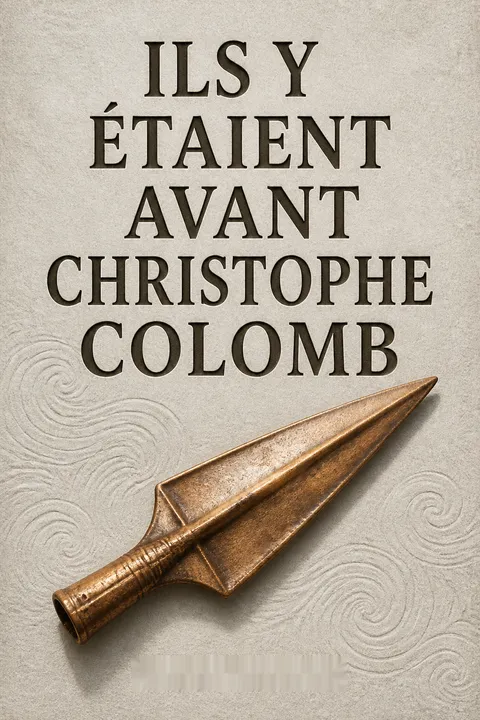


Key Takeaways
Treat African contact before Columbus as the book's thesis, not its demonstrated conclusion.
The announced argument. The subtitle presents the book as an investigation of African presence in ancient America. Its chapter list signals a broad case, ranging from a proposed route from Guinea to a Malian mariner, cultural and commercial connections, Egyptian comparisons, and possible transfers of plants and smoking practices.
A necessary limit. The supplied text contains the title, publication information, and table of contents, not the chapters' arguments or evidence. It therefore establishes what the book sets out to examine, but not which claims it supports, how it supports them, or how persuasive its evidence is. This summary can map the inquiry, not responsibly reconstruct its proof.
The distinction between a thesis and its demonstration is especially important in contested history. A strong interpretation can open neglected questions without every proposed answer being equally well supported. Readers can preserve the book's central question while asking, claim by claim, whether the evidence shows a possible journey, an actual arrival, sustained contact, or lasting influence. Those are different conclusions, each requiring more support than the one before it.
Test the Guinea route separately from the broader claim of contact.
A route under examination. The opening chapter is titled "Secret Route From Guinea," which places a possible West African crossing near the start of the book's case. The outline identifies the proposed point of departure but gives no route description, dates, navigational evidence, or account of a voyage.
Possibility is not proof. A route that could be traveled does not, by itself, show that anyone traveled it. To evaluate the chapter's claim, a reader would need to know what evidence it offers for the route, the journey, and an American landfall. The contents page does not provide those details, so the route belongs here as a central question raised by the book, not an established event.
Historical reasoning benefits from separating feasibility from occurrence. A plausible pathway can make a contact hypothesis worth investigating, but it cannot independently establish that contact happened. This is a useful discipline in migration history, maritime archaeology, and the study of ancient trade: geography can narrow possibilities, while dated, independently verifiable evidence must carry the historical claim. Keeping those steps distinct makes room for bold questions without treating an appealing route as its own answer.
Ask what each proposed witness can actually establish.
Evidence is the issue. Chapter two, "The Visible Witnesses," signals a discussion of observable evidence. The outline does not name the witnesses or say whether they are objects, images, human remains, or something else. It therefore cannot support specific descriptions of what the author presents.
Match evidence to claim. When assessing any proposed witness, ask what it directly shows, how securely it is dated, where it was found, and whether another explanation fits. An object might establish presence without proving who brought it; a resemblance might suggest comparison without establishing historical contact. The chapter title points toward evidence, but the supplied material does not allow a judgment about its quality or meaning.
The phrase "visible witnesses" invites a sound evidentiary question: what can an item testify to, and what is being inferred beyond it? Archaeology often depends on context, including an object's location, dating, and association with other finds. A striking resemblance can generate a hypothesis, but resemblance alone is weak evidence of transmission because similar forms can arise independently. The strongest interpretation is not necessarily the most dramatic one, but the one that explains the evidence with the fewest unsupported steps.
Distinguish a reported Malian voyage from evidence of arrival.
A named historical figure. "The Mariner Prince of Mali" is the focus of chapter three. The title connects the book's transatlantic inquiry to Mali and maritime travel, but the contents page does not identify the prince, describe a voyage, or state what records the chapter uses.
Track the claim's stages. A careful reading would distinguish a ruler's interest in exploration, a departure, a crossing, and an arrival in the Americas. Evidence for one stage would not automatically establish the next. Since the supplied text offers only the chapter heading, it cannot confirm which stages the book argues occurred or how it supports that account.
Historical narratives become memorable when they center on people, but a vivid protagonist can also make an uncertain chain of events feel more complete than the evidence warrants. The useful approach is not to dismiss a named figure, but to inspect the record attached to each part of the story. This method respects the possibility of overlooked history while guarding against a common narrative shortcut: treating intention, departure, and successful arrival as interchangeable.
Do not equate cultural resemblance with proof of transmission.
Connections appear in the outline. Chapters four through six are titled "Africans Across The Sea," "Among The Quetzalcoatls," and "Mandingo Traders in Medieval Mexico." Together, the headings indicate that the book considers broad African-American connections, a figure associated with Mesoamerican tradition, and trade involving Mandingo people.
The details are missing. The supplied contents do not explain what similarities or records these chapters discuss, or whether the author argues for contact, influence, or both. Readers should distinguish a resemblance between cultural elements from evidence that one group transmitted something to another. Establishing transmission generally requires more than likeness, including credible chronology and a plausible path of contact.
Comparative history is productive when it generates questions: could two traditions be connected, and what evidence would distinguish contact from coincidence? The risk is circular reasoning, where a similarity is first treated as proof of contact and then explained by the contact it supposedly proves. Chronology, context, and independent corroboration help break that loop. This standard does not make cross-cultural comparison less imaginative; it makes the resulting claims more precise and harder to misread.
Keep Egypt's African history distinct from claims of American presence.
Two linked subjects. Chapters seven through nine cover "Black Africa & Egypt," the "Black Kings of 25th Dynasty," and "African-Egyptian Presences in America." The sequence indicates that the book places Egyptian history and African identity alongside its inquiry into possible American connections.
Do not collapse the steps. The outline gives no argument about the identity of ancient Egyptians, the evidence concerning the 25th Dynasty, or the basis for the proposed American presence. These should be evaluated as separate historical questions. Evidence about a dynasty in Africa or Egypt would not, by itself, demonstrate a journey to the Americas; that further claim requires its own evidence.
This distinction protects two inquiries from being made to carry each other's evidentiary burden. Recovering African roles in ancient history can be important on its own, while claims of transoceanic contact require separate proof. In scholarship, a valid premise does not guarantee a valid conclusion: each inferential bridge must be inspected. That is particularly useful where historical exclusion has made correction necessary, since a corrective account is strongest when its evidence is as carefully tested as the narrative it challenges.
Demand dates and provenance for every proposed transplant.
Material culture closes the outline. Chapters ten through thirteen are titled "Plants & Transplants," "Smoking Tobacco & Pipes," "Mystery of Mu-Lan-Pi," and "Postscripts on Other Finds." These headings suggest that the book examines possible transfers of plants and practices, an account called Mu-Lan-Pi, and additional finds.
A heading is not a finding. The contents page does not identify particular plants or pipes, explain the account, date any evidence, or state what the additional finds are. To evaluate a proposed transplant, a reader needs to know what moved, when it appeared in each region, and how securely its origin and context are known. The outline shows the range of topics, not the conclusions.
Claims about transferred crops, tools, or customs are testable in ways that broad resemblance claims may not be. Dating and provenance can help establish where an item originated and when it entered a new setting, while patterns of distribution may clarify whether movement is plausible. Yet an isolated find can be misdated, displaced, or interpreted too confidently. The methodological lesson is neither automatic acceptance nor automatic dismissal: make each proposed transfer answer to its own material record.
Analysis
The supplied source is a table of contents rather than the book's substantive text. That limitation sharply constrains any trustworthy summary: chapter titles reveal the questions and topics Van Sertima organizes, but not the evidence, reasoning, qualifications, or conclusions within those chapters. A fuller account would require the chapter prose and, ideally, the references and descriptions of the evidence being discussed. The takeaways therefore represent the book's visible agenda without claiming to verify its historical propositions.
Even this outline reveals a consequential structure. The inquiry appears to move from a proposed route and possible witnesses toward a named Malian voyager, cultural and commercial connections, African and Egyptian history, and possible material transfers. That sequence can be read as an attempt to assemble multiple kinds of support rather than rely on a single alleged discovery. But several logically distinct propositions sit inside the larger idea of pre-Columbian contact: that a crossing was possible, that a voyage occurred, that people arrived, that contact continued, and that particular practices or objects moved between societies. Evidence for one proposition cannot simply stand in for all the others.
A useful evaluative lens is therefore evidentiary independence. A route argument, a textual account, and an archaeological find become more persuasive when their chronologies and contexts independently converge, rather than when each is interpreted through the assumption that contact already happened. Similarity can motivate comparison, but it cannot alone identify direction or transmission. This standard applies to conventional accounts as well as revisionist ones.
The book's subject also carries stakes beyond a single contact claim. Histories that omit African agency deserve scrutiny, and reconsidering them can widen the questions historians ask. That does not settle any particular claim. The strongest reading keeps the importance of the question separate from the strength of each answer. Because the provided text contains no chapter evidence, it cannot support a verdict on the book's central historical case.
Review Summary
They Came Before Columbus presents a controversial thesis about African presence in pre-Columbian America. Reviews are deeply polarized: supporters praise Van Sertima's extensive botanical, linguistic, and archaeological evidence, calling it groundbreaking scholarship that challenges Eurocentric history. Critics argue the evidence is circumstantial, pointing to flawed arguments about Olmec heads being "obviously African" and the absence of disease immunity that would indicate sustained contact. Several reviewers note the book lacks conclusive proof of extensive African-American trade networks, while others find it eye-opening and essential reading for understanding hidden historical connections.
People Also Read




Download PDF
Download EPUB
.epub digital book format is ideal for reading ebooks on phones, tablets, and e-readers.








