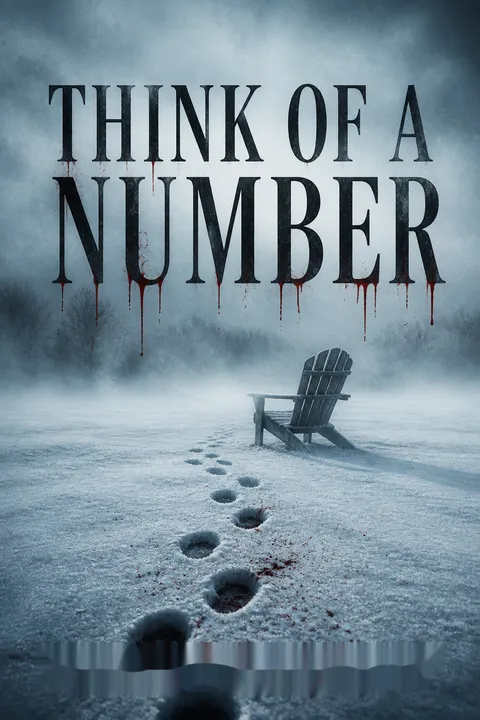


Plot Summary
Prologue
In a windowless bedroom, an elderly woman with a scarred throat asks her young caregiver why he leaves her alone. He soothes her with promises that everything will soon be put right, though her thoughts drift between childhood comforts and confused questions.
His tenderness has an unnerving edge: he speaks of debts, repayment, and a future made perfect, while she barely understands him. The scene offers no names or explanation, only a damaged mother and a son whose loving attention seems bound to a private plan.
The opening binds care to menace before the reader knows what has happened. The woman’s dependence is real, but the young man’s comfort is organized around his own idea of repair, not her needs or understanding. Her confusion lets him turn intimacy into a private stage on which he can rehearse a promise of control. The scar gives that promise a physical history, while the closed room makes protection indistinguishable from confinement. This framing prepares the novel’s central unease: people can call an act loving or righteous while using it to justify harm.
A Number Chosen in Fear
Retired NYPD detective Dave Gurney has settled into rural life, though his new project, digitally altered portraits of murderers, still keeps his attention fixed on crime. His college classmate Mark Mellery arrives with an unsettling letter: it tells him to think of a number, then claims to have predicted 658. A second note asks for exactly $289.87, payable by check or cash to X.
Arybdis, in exchange for the writer’s identity. Mellery sent a check, but it has not been cashed. He also brings poems that refer to his drinking years and promise repayment for some unnamed past harm. Gurney agrees to examine the messages, drawn by the puzzle despite knowing that he has no official role in the matter.
The first mystery recruits Gurney through the very faculty that makes retirement difficult for him: the desire to turn an anomaly into a solvable problem. Mellery’s fear is not merely that someone has threatened him, but that the writer appears to have access to his private thoughts. The exact payment request adds a practical hook to the psychological one, while the uncashed check complicates any simple blackmail theory. Gurney’s new art project matters because it shows how little retirement has altered his habits. He has left the police department, but his attention still seeks the criminal mind as its preferred subject.
The Past Comes Due
Mellery tells Gurney that his drinking once led to blackouts and that his first wife, Erin, drowned while he was drunk on a beach. Her death drove him into treatment and a new career as a spiritual teacher.
He resists involving local police, fearing both their inaction and the disruption an investigation could bring to his institute. Gurney learns that Mellery has concealed his current wife, Caddy, and later admits an affair with a guest.
At the institute, assistant Susan MacNeil receives a call from the threatening correspondent, who dictates a poem and asks after Mellery. That evening, the caller gets Mellery to choose 19, then directs him to a note already placed in his mailbox that names that number. Gurney commits himself to finding an explanation.
Mellery’s self-reinvention is built on a genuine catastrophe, but his secrecy shows how carefully he manages the story others receive. His refusal of police help protects the institute’s image and its fragile atmosphere, yet it also denies Gurney the ordinary safeguards of an investigation. The second number trick deepens this vulnerability by turning a chance choice into apparent proof of intimate knowledge. Gurney’s commitment grows precisely where Mellery’s evasions obstruct him. The case also sharpens the novel’s contrast between performed honesty and actual disclosure: Mellery teaches openness while withholding facts that could alter the investigation.
Blood on the Patio
After a caller wakes Mark and Caddy shortly after one in the morning, strange animal-like cries near the house prompt Mark to investigate. Caddy later finds him outside with his throat brutally wounded and calls for help.
Gurney hears the news the next morning and returns to the institute, where state investigator Jack Hardwick is managing the scene. The bloodied snow and a note left on the body make clear that the earlier poems were not empty intimidation.
Footprints lead from the grounds toward the woods, then appear to stop in open snow with no visible route onward. Hardwick shows Gurney the trail, asking how an attacker could have reached the end and vanished. The case has become a murder investigation, and Gurney is now a crucial witness.
The murder converts the messages from a private psychological assault into a public failure of protection. Mellery’s choice to keep police away has consequences, but the novel does not reduce the killing to a simple lesson about reporting threats; the attacker has already shaped events to exploit Mellery’s fears and the investigators’ assumptions. The footprints make the crime scene itself behave like another message. Evidence is present, yet its apparent meaning leads toward impossibility. Gurney’s return to police work is therefore less a clean reentry than a forced surrender to the kind of uncertainty he had hoped retirement would remove.
Evidence Without a Footprint
Hardwick’s team discovers that the killer sat behind the barn in a cheap folding chair, smoked seven cigarettes, and left no usable prints or biological traces on any of them. The broken Four Roses bottle used to stab Mellery was washed before it reached the scene, and the medical examiner finds that a close-range bullet killed him before the repeated wounds were inflicted.
Goose down in the wound suggests that a padded garment muffled the shot. Investigators also find a second pair of boots hanging from a tree, though its tread does not match the snow impressions. Gurney is invited into briefings and hired by District Attorney Sheridan Kline as an outside analyst. He argues that the clues are deliberate provocations aimed at the police.
The evidence is abundant but strangely sterile: the killer leaves objects that invite interpretation while withholding the accidental traces investigators usually depend on. This distinction shifts the problem from identifying what happened to asking why each clue was staged. The bullet followed by ritualized stabbing also separates practical killing from symbolic display. Gurney recognizes that the killer’s attention to police reactions is part of the crime, not a side effect. Yet his value to the investigation depends on access to the institution he has left, making his new consultant role a negotiation between expertise and professional pride.
The Trail Runs Backward
Gurney revisits the grounds and realizes that the footprints’ apparent direction may be false. Their regular spacing and the killer’s careful planning make a backward walk through the woods unlikely, so he considers reversed soles as a more practical deception.
At a nearby inn, The Laurels, he questions co-owner Bruce Wellstone about the anonymous bird-watching guest and his mother who stayed before Mellery’s murder. The guest used the name Scylla, and the pair registered as a married couple.
Wellstone also reports that a pair of ruby-colored shoes has vanished from the inn’s Wizard of Oz cottage. The bird-watcher claimed to have seen four rose-breasted grosbeaks, an unlikely boast in winter. The details seem theatrical, but Gurney suspects they belong to the same design.
The apparent trail illustrates how the killer makes investigators trust the direction of evidence rather than its construction. Madeleine’s suggestion that the impressions may point backward helps Gurney separate the shape of a clue from the movement that produced it. At The Laurels, names drawn from myth and missing stage-prop shoes extend the same strategy into ordinary hospitality. The guest’s implausible bird sighting is especially revealing because it seems designed to be remembered. These details turn whimsy into a form of authorship: the killer wants not merely to escape but to leave a puzzle whose solution advertises his intelligence.
The Peony in the Trash
A Bronx detective, Randy Clamm, asks Gurney to compare Mellery’s murder with the stabbing of Albert Rudden, an unemployed night watchman. Rudden’s wife, heavily medicated and confused, says she found a pink plastic flower beside his body and placed it in a vase, believing it was a gift from him. She had also hidden a broken Four Roses bottle because she feared the police would expose her husband’s return to drinking.
Gurney recognizes the flower’s shape as a peony, matching the name of the town where Mellery was killed. Clamm retrieves the bottle from the garbage, confirming the same weapon pattern. Gurney and Clamm now have concrete grounds to treat the two killings as connected, despite the victims’ very different lives.
The connection arrives through an object that has been misread twice. Rudden’s wife mistakes the flower for a final kindness, while the killer has used it as a signature; her attempt to protect her husband’s sobriety nearly conceals evidence of his murder. The scene refuses to make her deception malicious. It grows from shame, love, and fear of social judgment. That emotional complexity matters because the case repeatedly turns on what people hide to preserve a preferred version of themselves. Gurney’s ability to see the peony is not a triumph of abstract cleverness alone; it depends on Madeleine’s attention to physical detail.
Three Checks, One Killer
Gregory Dermott, who rents the Wycherly post-office box named in Mellery’s letter, tells Gurney that he received two more checks for $289.87, from Rudden and Richard Kartch in Massachusetts. Each was made out to X. Arybdis and returned uncashed. Gurney travels to Sotherton and finds Kartch murdered in his unfinished house, with the same throat wounds and the same planted clues.
A flounder left in Kartch’s mailbox links the scene to Flounder Beach, where Rudden lived. The case now spans three victims and several states. Gurney’s mailed poem to the unknown killer, intended as a challenge, creates fresh danger: when police protect Dermott, an officer is killed in his place.
The checks reveal that the money was never the central prize. Their repeated amount and shared destination make the victims’ correspondence a selection mechanism, while the fish and flower show how geography can be converted into a taunt. Gurney’s own decision to send a poem is an important failure of judgment: he acts as though the contest is confined to his intellect, overlooking the way a physical postmark can expose him and others. The officer’s death makes that mistake irreversible. His attraction to the adversary’s game is no longer merely a private weakness; it has become a risk imposed on people who did not choose to play.
The List Behind 658
At a BCI briefing, Gurney and lab specialist Sergeant Wigg combine two clues: the apparent mind-reading and the victims’ checks. Wigg recalls a scam that used a small payment to identify vulnerable respondents.
Gurney proposes that the killer mailed thousands of identical handwritten letters, each predicting 658; people who independently chose that number and sent checks revealed their names and addresses. The payment amount screened for fear, while the Wycherly box gave the killer a way to inspect checks without keeping the money.
A regional search also uncovers the earlier murder of Reverend Michael McGrath, whose throat wounds and revenge poem match the pattern. As the killer’s threats turn toward Dermott, officer Gary Sissek is killed while assigned to protect him.
The solution to the numbers strips away the supernatural aura without reducing the terror they caused. The trick works because each recipient experiences a mass-produced process as singular and intimate. The killer’s real achievement is not prediction but the manufacture of private certainty. The check is both a lure and an identity document, converting a moment of fear into data for later selection. The discovery of McGrath expands the history of the violence, while Sissek’s death shows that the killer’s theater can absorb people outside his original target group. The investigation must now ask not only who is next, but what pattern the victims represent.
The House Remembers
Gurney reaches Dermott’s house in Wycherly after learning that the killer has named him as a future target. There, Dermott recalls that a woman was nearly killed by a throat wound in the house years earlier.
Lieutenant John Nardo confirms the old case: local officer Jimmy Spinks, drunk, attacked his wife Felicity with a broken bottle; she survived with severe brain damage, and their child was taken into care. Nardo had worked with Spinks and admits he withheld the connection at first.
Meanwhile, a disguised caller threatens to kill everyone, and police discover that Dermott’s home has a locked basement room. Gurney begins to suspect that the current crimes are not simply revenge for drinking, but an attempt to replay a childhood catastrophe.
The old assault changes the investigation’s scale: the killer may be trying to revise a formative scene rather than punish a set of unrelated offenders. Nardo’s reluctance to disclose his history with Spinks shows how loyalty and institutional self-protection can obstruct truth even when no one is deliberately conspiring. The house becomes an archive whose rooms and locks preserve a family history that Dermott has not shared. Gurney’s suspicion remains incomplete, but it gives the scattered symbols a possible emotional center. The danger is now both procedural and personal, especially because Gurney’s own impulsive message helped bring the confrontation closer.
The Room Beneath the House
Nardo opens the locked basement room and finds a carefully furnished bedroom, framed copies of the three checks, and the elderly woman from the opening, whose scar identifies her as Felicity Spinks.
Dermott enters armed with a revolver and a whiskey bottle, revealing that he is Jimmy and Felicity’s son, renamed Gregory Dermott. He plans to reenact his father’s attack and release chlorine and ammonia through the house’s sprinkler system, killing the police who come to rescue them. Dermott orders Nardo to perform his father’s role.
Gurney disrupts the ritual by urging Dermott to shoot Nardo, then provokes him with claims that his plan contains mistakes. Nardo finally smashes the bottle against Dermott’s head as Gurney tackles the gun, and the officers rush in.
Dermott’s hidden room is a materialized fantasy of restored control: he has built a stage on which the past can be repeated with a different ending. But the reenactment does not heal the original injury; it turns his mother into a prop and makes further victims necessary to sustain his imagined correction. Gurney survives by refusing the obvious roles of pleading victim or defiant opponent. He instead destabilizes Dermott’s belief that every choice belongs to him. The tactic is psychologically precise but morally perilous, especially because it requires Gurney to weaponize his own grief and invent a violent past.
Home After the Hunt
Dermott dies in hospital from the skull injury, ending the immediate threat and leaving the investigators to account for the crimes and the people harmed by them.
On the long drive home, Gurney thinks about his own failures as a father: Danny, his young son, was killed by a hit-and-run driver while Gurney’s attention was fixed on a case; his relationship with adult son Kyle has also been left unattended. He finally returns Kyle’s call.
Kyle reveals that he has lost his job, marriage, homes, and cars in the financial collapse, and asks his father to help him consider law school. They arrange to meet. At dawn, Madeleine waits beside Gurney’s car. He steps out and holds her, returning not only to the farmhouse but to the relationship he had nearly neglected.
The resolution does not treat the killer’s death as a cure for Gurney’s grief. Instead, the case forces him to recognize how easily work becomes a defense against helplessness, and how that defense has cost him presence with his family. Kyle’s financial collapse unexpectedly removes the usual distance between them: he needs advice, and Gurney can answer without turning the conversation into an investigation. Madeleine’s welcome is concrete rather than triumphant. She is there at dawn, and he accepts her embrace. The ending offers a modest corrective to the novel’s obsession with control: attention cannot undo loss, but it can still be given to the living.
Analysis
Think of a Number turns detective work into a contest over who gets to define reality. The killer’s apparent mind-reading, reversed footprints, and carefully planted objects make evidence feel less like a record of events than a performance staged for investigators. Gurney’s task is therefore not simply to collect facts, but to recognize when a fact has been arranged to provoke a particular conclusion. The novel’s most ingenious deception, the mass mailing behind the number 658, also gives the book a pointed account of how impersonality can manufacture intimacy: a statistical coincidence feels like personal knowledge when a frightened person believes the message was meant for him alone.
The murders are rooted in an effort to control the past. Dermott’s childhood experience of his mother’s assault becomes a private drama he tries to rewrite by selecting men with histories of drinking and making them stand in for his father. Yet the investigation shows the danger in treating explanation as absolution. Understanding why Dermott built his ritual does not undo what he did, and his mother’s presence cannot restore the life that violence took from her. The novel distinguishes psychological cause from moral excuse without pretending that either one is simple.
Gurney’s parallel story gives that distinction personal force. He is exceptionally skilled at reading other people’s contradictions, but he uses work to avoid facing his own grief over Danny and his estrangement from Kyle and Madeleine. The case rewards his analytic gifts while repeatedly exposing the costs of relying on them as his only mode of contact. Madeleine’s contributions are not merely intuitive assistance: she represents a different kind of attention, one grounded in shared memory, ordinary care, and acceptance of what cannot be solved. The ending does not make Gurney whole or erase his losses. It shows him making a small, consequential choice to return a call, listen, and come home.
Review Summary
Think of a Number introduces retired detective Dave Gurney, who gets drawn into a perplexing case involving mysterious letters and murders. Readers praised the intriguing premise, clever puzzles, and well-developed characters. Many found it gripping and fast-paced, though some felt parts were overly long or predictable. The protagonist's analytical mind and troubled personal life added depth. While opinions varied on pacing and plot resolution, most agreed it was an entertaining and promising debut that left them eager to read more in the series.
People Also Read



Characters
Dave Gurney
The retired crime solverA celebrated former NYPD homicide detective, Gurney has moved to the country with his wife, Madeleine, but retirement has not quieted his appetite for difficult cases. He observes faces, words, and inconsistencies with unusual precision, and he trusts analysis more readily than emotional exposure. His portraits of murderers let him turn professional knowledge into art, though they also keep him orbiting the violence he claims to have left behind. Gurney is disciplined in an investigation and far less perceptive about the costs his absorption imposes on family. His central tension is not whether he can solve a puzzle, but whether he can remain present with people when no deduction can repair what has happened.
Madeleine Gurney
The perceptive partnerGurney’s wife is an observant, practical woman who loves the countryside and notices the emotional facts her husband tries to file away. She is not a detective, yet her memories and intuitive leaps help him recognize that clues may be staged, misread, or directed at the observer. Madeleine wants a shared life rather than a marriage organized around Gurney’s work. Her candor can frustrate him, but it also exposes the evasions beneath his rational manner. She values beauty, ritual, and saying good-bye to what has been lost, practices that contrast with Gurney’s impulse to suppress grief by moving on to the next problem.
Gregory Dermott
The security consultantDermott is a technically gifted computer-security consultant whose work protects sensitive databases. He presents himself as a meticulous professional and becomes alarmed when a series of disturbing messages appears to involve his post-office box. His guarded manner shifts between self-control and sharp irritability, making it difficult for others to know when fear is driving him and when he is withholding information. Dermott’s expertise with data and privacy places him at the edge of Gurney’s investigation, while his isolated home and rigid habits suggest a man invested in controlling his surroundings. His character embodies the tension between the systems people build to secure information and the vulnerabilities they cannot easily contain.
Mark Mellery
The threatened spiritual teacherGurney’s former college acquaintance, Mellery has rebuilt his life as an author and leader of a retreat institute after years of drinking and personal loss. He is a charismatic lecturer who teaches people to examine their own motives, but he is also invested in protecting his institute’s calm reputation. His polished public identity sits uneasily beside unresolved memories and private omissions. Mellery turns to Gurney because the threatening letters seem to know him intimately, yet he resists the ordinary help that might expose his world to scrutiny.
Jack Hardwick
The abrasive investigatorA senior state investigator, Hardwick is profane, combative, and politically inconvenient, but his instincts and command of a crime scene are sound. He and Gurney share a history from an earlier homicide investigation, which gives their exchanges a rough familiarity. Hardwick distrusts ceremony and prefers action, yet he knows how to preserve evidence and keep a team moving. His abrasive humor is both a weapon and a shield against the work’s brutality.
Sheridan Kline
The ambitious district attorneyThe county district attorney brings Gurney into the investigation as an outside analyst. Kline is intelligent, polished, and alert to the political and media dimensions of a spectacular case. He knows how to flatter people into cooperation, though his interest in publicity complicates his professed desire for justice. Kline wants a strong result and is willing to entertain unconventional thinking, but he also wants control over how the case is presented.
Rebecca Holdenfield
The forensic psychologistA respected forensic psychologist, Holdenfield offers the investigative team a framework for understanding serial murder and the emotional function of ritual. She is composed under pressure and does not soften difficult conclusions to protect the egos of law-enforcement officials. Her profile gives the team a way to think about the killer’s escalating need for control, though she distinguishes psychological interpretation from proof.
John Nardo
The Wycherly lieutenantNardo is a veteran of the small Wycherly police department, accustomed to local disputes rather than an elaborate multi-state murder case. The death of a fellow officer makes the investigation personal, and his loyalty to the department shapes what he is initially willing to disclose. He is tough and physically capable, but grief and anger strain his judgment. His willingness to listen to Gurney grows as the danger becomes harder to dismiss.
Kyle Gurney
The distant sonGurney’s adult son from his first marriage lives far from his father and has built an independent life around financial success and expensive possessions. Their relationship is strained less by open conflict than by years of missed calls and mismatched expectations. Kyle’s material confidence can make him seem self-absorbed, while his occasional requests for guidance reveal a wish for a more engaged father. He remains an important measure of what Gurney’s work has displaced.
Caddy Mellery
The institute’s guarded wifeMellery’s wife, whose full name is Cassandra, is connected to the institute’s property and its social world. She is composed in public, but the strain of her marriage and her husband’s secrecy complicate that poise. Caddy has a protective instinct toward the institute and its legacy, and she is wary of investigators who might turn private pain into public spectacle.
Sergeant Wigg
The evidence-minded analystA BCI laboratory specialist, Wigg brings calm technical rigor to a team often distracted by rank and personality. She assesses physical evidence without overclaiming what it proves, and her recollection of an old direct-mail scam helps the investigators rethink the number puzzle. Her steady manner gives useful weight to observations that others might dismiss as too strange or too small.
Randy Clamm
The Bronx detectiveClamm is a quick, energetic Bronx homicide detective who contacts Gurney when Albert Rudden’s murder resembles the killing in Peony. His nervous speech reflects a mind moving quickly through possibilities, but he is earnest and receptive to help. He follows Gurney’s lead without surrendering his responsibility for the case, and his discovery of the hidden bottle provides a crucial link.
Sonya Reynolds
The art-world allyA regional artist and gallery owner, Sonya first draws Gurney into art through her photography course, then exhibits his manipulated portraits of murderers. Her praise encourages his creative work, though her attention complicates the emotional distance between Gurney and Madeleine.
Mrs. Rudden
The grieving widowRudden’s widow is heavily medicated and deeply religious, with a childlike manner that makes her account difficult to follow. She tries to preserve her husband’s image and sobriety, and her attempt to protect him from shame affects what she tells investigators.
Felicity Spinks
The vulnerable motherAn elderly woman with serious cognitive and physical needs, Felicity depends on a caregiver and moves through the present with fragmented memories. Her vulnerability makes her difficult to protect and easy for others to speak over. The scar on her throat marks a history she cannot clearly explain.
Susan MacNeil
Mellery’s assistantSusan manages communications at Mellery’s institute and takes a troubling call from the person threatening him. Her attention to the caller’s unnatural voice gives Gurney a useful early observation about the sender’s disguise.
Bruce Wellstone
The eccentric innkeeperWellstone co-owns The Laurels and is intensely attached to its themed cottages and theatrical details. His precise memories of a guest’s behavior, including an implausible bird sighting, give Gurney clues that might otherwise have seemed like eccentric chatter.
Albert Rudden
The troubled night watchmanRudden is a Bronx night watchman with a history of alcohol problems and a life far removed from Mellery’s affluent retreat. His wife believes he has been working toward sobriety, a private effort that shapes her response to the objects found after his death.
Richard Kartch
The isolated neighborKartch is a volatile, antisocial man in Sotherton, known locally for drunken behavior and conflict with neighbors. His rough reputation contrasts with Mellery’s polished public life, making the apparent selection of both men difficult to explain.
Michael McGrath
The disgraced priestMcGrath is a former priest whose personal history includes serious misconduct and treatment for alcoholism. His case enters the investigation through a regional search for murders with similar wounds and messages.
Plot Devices
The number prediction
False mind-readingThe first letter makes Mellery believe the writer can predict 658, while a later phone call appears to predict 19. The two effects use different methods. The mailed trick relies on a large batch of nearly identical letters and a prewritten prediction, so respondents who happen to choose 658 mistake a statistical coincidence for personal knowledge. The requested check supplies the name and address of anyone frightened enough to respond. The later number is obtained during a call, then inserted into a note printed and delivered before Mellery checks his mailbox. Together, the tricks make the killer seem omniscient while allowing him to identify and unsettle potential victims.
The reversed trail
Misdirection in snowThe attacker’s footprints seem to show him arriving from the public road, killing Mellery, and walking into the woods before disappearing. Gurney eventually recognizes that the prints indicate the orientation of the boot soles, not necessarily the walker’s direction. Reversing the soles on a second pair of boots lets the killer walk forward while leaving impressions that point the wrong way. The separate boots left in a tree further mislead the police. This device turns a physical impossibility into a staged argument about the investigators’ ability to read evidence.
Geographic signatures
Locations become tauntsThe killer uses small objects and names to connect murders across distance. A plastic peony points back to Peony, while a flounder links another victim’s home to Flounder Beach. The name X. Arybdis suggests Charybdis, a mythological danger paired with Scylla, and a guest at The Laurels registers under that second name. These references work as clues and as demonstrations of the killer’s theatrical control. Each sign is easy to dismiss by itself, yet together they tell investigators that the crime scenes have been arranged for an audience.
The staged weaponry
Violence as ritualThe killer shoots each intended victim at close range, then repeatedly stabs the body with a carefully cleaned broken Four Roses bottle. The gun provides certainty, while the bottle creates the visible ritual that the killer wants investigators to interpret. Goose down at a wound points to a padded garment used to muffle the shot; in the final confrontation, a gun hidden inside a stuffed goose reveals the method more fully. The juxtaposition of precise preparation and grotesque display reflects a perpetrator trying to make practical violence serve a private fantasy.
The hidden bedroom
The past made physicalA locked basement room in Dermott’s house contains a furnished bedroom, framed copies of the victims’ checks, and an elderly woman whose presence changes the meaning of the case. The room is not ordinary storage but a preserved scene, arranged around a family history the investigators have only partly understood. It brings the killer’s private mythology into the same space as the police, making the final threat a reenactment as well as an attack. The setting reveals how a person can convert trauma into an environment designed to keep one version of the past alive.
FAQ
Synopsis & Basic Details
What is Think of a Number about?
- A Retired Detective's Return: Think of a Number introduces Dave Gurney, a highly decorated NYPD homicide detective now retired to rural upstate New York, whose quiet life is disrupted by a plea for help from an old college acquaintance, Mark Mellery.
- Cryptic Threats and Psychological Games: Mellery, a successful spiritual guru, is receiving unsettling, anonymous letters that eerily predict his private thoughts and demand money, escalating into menacing poems that hint at a dark past and impending doom.
- Unraveling a Macabre Puzzle: As the threats turn deadly, Gurney is drawn into a complex murder investigation, facing a meticulous and taunting killer who leaves behind a trail of bizarre clues and psychological challenges, forcing Gurney to confront not only the killer's twisted mind but also his own unresolved personal traumas.
Why should I read Think of a Number?
- Masterful Psychological Suspense: Readers seeking a deep dive into the criminal mind will appreciate John Verdon's intricate plotting and the killer's chilling psychological games, which elevate the narrative beyond a typical whodunit.
- Compelling Character Depth: The novel offers a nuanced portrayal of its protagonist, Dave Gurney, exploring the internal conflicts of a brilliant detective grappling with retirement, past tragedies, and the strain his obsession with puzzles places on his personal relationships.
- Intelligent, Layered Mystery: Think of a Number is a cerebral thriller, packed with subtle clues, misdirection, and a meticulously crafted mystery that challenges the reader to connect seemingly disparate elements, making the eventual unraveling deeply satisfying.
What is the background of Think of a Number?
- Rural New York Setting: The story is primarily set in the tranquil, picturesque Catskill Mountains of Delaware County, New York, contrasting the serene natural environment with the brutal and calculated violence that unfolds.
- Post-9/11 Urban Exodus: The narrative subtly touches upon the cultural context of wealthy New Yorkers seeking "rural sanctuary" after 9/11, influencing the demographic of Mellery's Institute for Spiritual Renewal and adding a layer of social commentary.
- Exploration of Self-Help Culture: Mark Mellery's Institute for Spiritual Renewal provides a backdrop for examining the self-help industry, its promises of transformation, and the vulnerabilities of its affluent clientele, some of whom harbor significant personal issues.
What are the most memorable quotes in Think of a Number?
- "What you took you will give / when you get what you gave.": This chilling couplet, found in one of the killer's early poems (Chapter 7), serves as a central thematic statement, explicitly foreshadowing the killer's motive of retributive justice and the "eye for an eye" nature of the murders.
- "The person you think you are is keeping the person you really are locked up without light or food or friends. The person you think you are has been trying to murder the person you really are for as long as you both have lived.": Mark Mellery's lecture (Chapter 15) encapsulates the novel's deep psychological themes of self-deception, internal conflict, and the destructive power of unacknowledged truths, mirroring both his own and the killer's inner turmoil.
- "There's only one way out of a dead end.": Madeleine's profound insight (Chapter 51), delivered to Gurney in a moment of crisis, becomes a guiding principle for Gurney's unconventional approach to solving the case, symbolizing the need for radical shifts in perspective when conventional methods fail.
What writing style, narrative choices, and literary techniques does John Verdon use?
- Precise, Analytical Prose: Verdon employs a clean, logical, and often detached prose style, mirroring Gurney's own analytical mind. This precision allows for meticulous detail in crime scene descriptions and psychological observations, immersing the reader in the detective's thought process.
- Dual Narrative Focus: The narrative skillfully balances the external plot of the murder investigation with Gurney's internal psychological journey. This dual focus enriches the story, making it not just a crime thriller but also a character study of a man grappling with his past and identity.
- Subtle Foreshadowing and Symbolism: Verdon masterfully uses subtle hints, recurring motifs (like the "black hole" of grief, the "painted rose" blood, or the "backwards" theme), and intertextual allusions (Scylla and Charybdis, The Shining) to deepen the mystery and provide layers of meaning that reward careful reading.
Hidden Details & Subtle Connections
What are some minor details that add significant meaning?
- The $289.87 Amount: The seemingly arbitrary sum requested by the killer ("$289.87 it cost me to find you") is later revealed as a crucial element of the "test" to identify victims, designed to compel a check payment for name/address acquisition, highlighting the killer's meticulous planning and psychological manipulation (Chapter 44).
- Madeleine's "Xmas" Anecdote: Madeleine's story about Sister Immaculata and "X-ing Christ out of Christmas" (Chapter 8) subtly introduces the Greek letter 'Chi' (X) as 'Ch', directly leading Gurney to deduce "X. Arybdis" is "Charybdis," a pivotal mythological allusion that unlocks the killer's identity and motive.
- The "Painted Rose" Blood: The killer's poem, "For blood that's as red / as a painted rose" (Chapter 6), initially seems like poetic flourish, but later connects to the "Four Roses" whiskey bottle used as a weapon, revealing the killer's symbolic and ritualistic approach to the murders.
What are some subtle foreshadowing and callbacks?
- Prologue's Ominous Poetry: The opening scene features the killer reciting a poem to his mother, "What he took he will give, when he gets what he gave" (Prologue), directly foreshadowing the core revenge motive and the "eye for an eye" theme that drives the entire series of murders.
- Gurney's "Black Hole" of Grief: The recurring internal monologue about Danny's death as "The collapsed star. The black hole whose terrible gravity had twisted their relationship" (Chapter 7) subtly foreshadows Gurney's eventual realization that his own unresolved trauma mirrors the killer's, and that his obsession with the case is a form of escape.
- The "Backwards" Motif: The killer's "backwards footprints" (Chapter 18) and the "Redrum" message (Chapter 44) are not just bizarre clues but a recurring motif, subtly hinting at the killer's desire to "rewind the tape and start it over" (Chapter 52) and reverse a past trauma, a key to his psychological profile.
What are some unexpected character connections?
- Gregory Dermott as Jimmy Spinks' Son: The most significant unexpected connection is the revelation that Gregory Dermott is actually the adult son of Jimmy and Felicity Spinks, the couple involved in the domestic assault in Dermott's house 24 years prior (Chapter 49). This links the killer directly to the traumatic event that fuels his spree.
- Gurney's Shared Trauma with Dermott: Gurney's own unresolved grief over his son Danny's hit-and-run death, and his self-blame for being "only half there" (Chapter 52), creates an unexpected parallel with Dermott's childhood trauma, allowing Gurney a unique, albeit painful, insight into the killer's motivations.
- Officer Sissek's Unplanned Victimhood: Officer Gary Sissek, the Wycherly cop killed protecting Dermott, is revealed to be a former colleague of Jimmy Spinks (Chapter 48). This suggests Sissek was not a random victim but potentially targeted due to his association with the "drunk cop" archetype, further solidifying the killer's specific vendetta.
Who are the most significant supporting characters?
- Madeleine Gurney: Dave's wife, Madeleine, is far more than a concerned spouse; she acts as his emotional anchor and intuitive foil. Her perceptive insights, like the "Xmas" clue (Chapter 8) or the "nothing real" in the notes (Chapter 29), often provide Gurney with crucial breakthroughs, while her emotional struggles highlight the personal cost of his obsession.
- Sergeant Wigg: The BCI lab technician, Sergeant Wigg, is a quiet but exceptionally sharp intellect. Her precise analytical skills, particularly in identifying the "skin oil" messages (Chapter 23) and the "direct-mail scam" (Chapter 44), are instrumental in Gurney's understanding of the killer's methods and the "number trick," often outshining her male colleagues.
- Gregory Dermott's Mother (Felicity Spinks): Though largely incapacitated and silent, Felicity Spinks is the catalyst for the entire murder spree. Her past trauma and her son's distorted perception of it are the driving force behind his actions, making her a symbolic and pivotal figure in understanding Dermott's psychological landscape (Chapter 49).
Psychological, Emotional, & Relational Analysis
What are some unspoken motivations of the characters?
- Gurney's Quest for Absolution: Beyond solving the case, Gurney is subconsciously driven by a need to atone for his perceived failures, particularly his role in his son Danny's death. His relentless pursuit of the killer is a "strenuous daily effort" (Chapter 14) to "make up for something, forget something… solve something" (Chapter 47), a personal quest for redemption.
- Madeleine's Desire for Connection: Madeleine's seemingly passive-aggressive behaviors, like leaving Danny's box out (Chapter 15) or her pointed questions about Gurney's priorities, are unspoken pleas for emotional intimacy and a shared life, a desperate attempt to pull Gurney out of his "black hole" of grief and professional obsession.
- Dermott's Need for Retrospective Control: Dermott's elaborate, ritualistic murders are motivated by an unspoken, pathological desire to "rewrite" his traumatic past. By controlling and punishing figures who embody his abusive father, he seeks to retroactively gain control over the childhood helplessness he experienced, making reality conform to his fantasy (Chapter 51).
What psychological complexities do the characters exhibit?
- Gurney's Analytical Detachment vs. Emotional Turmoil: Gurney is a man of "perfect logic and crystal clarity" (Chapter 3), using his intellect as a "cushion of abstraction" (Chapter 22) from horror. Yet, he experiences profound emotional turmoil, including guilt, sadness, and a "claustrophobia" (Chapter 15) of the mind, revealing a deep internal dichotomy between his rational and emotional selves.
- Mellery's Public Persona vs. Private Terror: Mark Mellery presents himself as a "guru of good behavior" (Chapter 2) who underwent a "dramatic spiritual transformation." However, his "panicky earnestness" (Chapter 4) and "scared shitless" (Chapter 6) reactions to the threats expose a profound psychological fragility and self-deception beneath his polished exterior.
- Dermott's Calculated Psychopathy: Gregory Dermott embodies a chilling blend of high intelligence and profound emotional derangement. His "iciness of a psychopath" (Chapter 7) is evident in his meticulous planning, taunting games, and ritualistic violence, all driven by an "obsessive-compulsive" need for "absolute control" (Chapter 45) rooted in his childhood trauma.
What are the major emotional turning points?
- The Unveiling of Danny's Box: The moment Gurney sees the "cardboard box... with a white ribbon" (Chapter 15) containing Danny's drawings, brought up from the basement by Madeleine, is a raw emotional turning point. It forces him to confront his suppressed grief and the "black hole" (Chapter 7) that has consumed his marriage, leading to a painful but necessary conversation with Madeleine.
- Madeleine's Outburst about Gurney's Obsession: Madeleine's frustrated accusation, "your brain is so tied up with murder and mayhem... there's simply nothing left for anything else" (Chapter 21), marks a critical emotional climax in their relationship, forcing Gurney to acknowledge the depth of her pain and his own self-absorption.
- Gurney's Realization of His Postmark Error: The phone call revealing the killer's threat, "after you it's Gurney's turn" (Chapter 45), coupled with the realization that his impulsive poem sent via mail revealed his home address, triggers a wave of "sickening echo" and "draining chill" (Chapter 45), forcing him to confront the direct danger he has inadvertently brought upon Madeleine.
How do relationship dynamics evolve?
- Gurney and Madeleine: From Distance to Reconnection: Their relationship begins strained, marked by Gurney's emotional withdrawal and Madeleine's "sadness and anger" (Chapter 21). Through shared moments of vulnerability (like the discussion of Danny's box) and Gurney's eventual recognition of his self-absorption, their bond slowly begins to heal, culminating in a powerful moment of acceptance and love (Chapter 53).
- Gurney and Hardwick: Antagonism to Mutual Respect: Initially, their interactions are characterized by Hardwick's "toxic" banter and Gurney's irritation (Chapter 17). However, as the case's complexities unfold and Gurney's insights prove invaluable, a grudging professional respect develops, with Hardwick acknowledging Gurney's "big-city genius" (Chapter 21) and Gurney appreciating Hardwick's competence.
- Gurney and Dermott: Intellectual Duel to Personal Vendetta: What starts as Gurney's detached intellectual pursuit of a puzzle-maker evolves into a deeply personal confrontation. Dermott's taunting, particularly his knowledge of Danny's death (Chapter 51), transforms the dynamic into a high-stakes battle of wits with profound emotional stakes for Gurney.
Interpretation & Debate
Which parts of the story remain ambiguous or open-ended?
- The Full Extent of Dermott's "List": While Gurney deduces the killer used a direct-mail campaign to target alcoholics, the precise source and full scope of this "list" of 5,000 to 15,000 names remain ambiguous. It's implied to be a medical database, but never definitively confirmed, leaving the exact reach of Dermott's initial victim pool open to interpretation.
- The Killer's Ultimate "Grand Finale" Plan: Dr. Holdenfield suggests Dermott is building towards a "climactic event" (Chapter 48) or "grand finale" (Chapter 45), possibly involving a mass gassing of police. While his chemical setup is discovered, the full, detailed scope of this final act is left to the reader's imagination, as Gurney's intervention prevents its execution.
- The Future of Gurney's Retirement: Despite the resolution of the case and Gurney's personal breakthrough, the novel ends with a sense of new beginnings rather than definitive closure on his retirement. His renewed connection with Madeleine and Kyle suggests a shift in priorities, but whether he fully abandons his "detective" identity or finds a new balance remains an open question.
What are some debatable, controversial scenes or moments in Think of a Number?
- Gurney's Decision to Send the Poem to Dermott: Gurney impulsively sends a taunting poem to Dermott via his post office box (Chapter 40), a highly unprofessional and risky move that directly leads to Dermott targeting Gurney and Officer Sissek's death. This action is debatable, as it prioritizes Gurney's intellectual game over established police procedure and personal safety.
- Gurney's Command to "Shoot Him!": In the climactic confrontation, Gurney shouts at Dermott to "Shoot him!" (referring to Nardo) (Chapter 51). This shocking command is controversial, as it appears to encourage murder, but Gurney justifies it as a psychological tactic to disrupt Dermott's control, forcing the killer to question his own omnipotence.
- The "R. Kartch" Discrepancy: Gurney's realization that Dermott knew "R. Kartch" stood for "Richard" (Chapter 49) despite only seeing "R." on the check is presented as a key "mistake" by the killer. However, some readers might debate if this is a genuine oversight by Dermott or another subtle layer of his taunting, designed to be discovered by a "smart" detective like Gurney.
Think of a Number Ending Explained: How It Ends & What It Means
- The Killer's Demise and the End of His Reign: The novel culminates in a tense confrontation at Gregory Dermott's house, where Gurney and Lieutenant Nardo are held captive. Gurney's psychological manipulation, combined with Nardo's desperate action of throwing a whiskey bottle, incapacitates Dermott. Dermott later dies from his injuries, effectively ending his serial murder spree and his "grand finale" plan to gas the Wycherly police department.
- Gurney's Personal Breakthrough and Reconciliation: The confrontation forces Gurney to confront his deepest fears and guilt, particularly regarding his son Danny's death and his own emotional detachment. His desperate call to Madeleine and her subsequent arrival symbolize a profound personal breakthrough. The ending signifies Gurney's renewed commitment to his family and a potential healing of his marriage, moving from a life consumed by puzzles to one embracing human connection.
- The Cycle of Trauma and Its Resolution: The ending of Think of a Number underscores the destructive power of unresolved childhood trauma, as Dermott's entire murderous campaign is revealed to be a reenactment of his father's violence. His death, in the very house where his trauma began, represents a tragic but definitive end to this cycle of violence, offering a dark form of "cleansing" and closure for the victims and, symbolically, for Gurney's own past.
Dave Gurney Series
Download PDF
Download EPUB
.epub digital book format is ideal for reading ebooks on phones, tablets, and e-readers.








