Key Takeaways
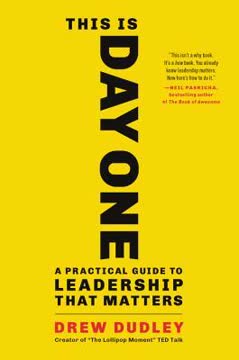
1. Redefine Leadership: Everyday Actions, Not Titles
Most of the leadership in your life is slipping by unrecognized and uncelebrated.
Beyond traditional definitions. Many people don't see themselves as leaders because society often defines leadership too narrowly, associating it with grand achievements, high-ranking positions, or significant wealth. This perception creates a wall between the concept of leadership and the identities of everyday individuals, leading to a devaluation of the leadership they demonstrate daily. The author, Drew Dudley, initially reinforced this by teaching about "giants" like CEOs and heads of state, unintentionally making leadership seem unattainable for most.
Unlearning the lesson. The book aims to help readers unlearn the idea that leadership is reserved for a select few. It emphasizes that leadership is not innate but often unconsciously taught through examples that exclude the vast majority. By focusing on what leaders do rather than who they are by title, we can recognize the pervasive, yet often overlooked, leadership that surrounds us in our daily lives.
Leadership is universal. Everyone is a leader, regardless of their job or social standing. The true measure of leadership lies in consistent, positive actions that impact oneself and others, not in external validation like money, titles, or influence. This perspective encourages individuals to embrace their inherent capacity for leadership and to stop waiting for external permission to claim the title.
2. Embrace the "Day One" Philosophy for Consistent Growth
You must treat every single one of those days like it’s Day One of your journey.
A fresh start. The "Day One" philosophy encourages treating every day as if it's the first day of a new journey, offering a sense of renewal, commitment, and forgiveness. This mindset, common in addiction recovery and elite athletics, applies to personal leadership development by fostering a daily recommitment to chosen behaviors. It means that past failures don't define today, and yesterday's successes don't excuse today's inaction.
Daily commitment. Living Day One leadership means consciously choosing to be a leader today through specific, non-negotiable actions. This approach narrows the gap between the person you aspire to be and your actual daily behavior. It shifts the focus from long-term goals to the immediate actions of the present, ensuring continuous progress.
Momentum through repetition. By repeating Day One consistently, individuals build momentum towards their aspirations. The rewards sought, such as respect, influence, or financial success, become natural by-products of embodying this type of leadership. It's about developing a relentless commitment to daily leadership behaviors, recognizing that leadership is found in consistent, simple acts, not just big, infrequent ones.
3. Operationalize Your Values with Action-Oriented Questions
If you don’t take the time to define the things that you hope will define you, you’re always going to feel as if you aren’t living up to the person you want to be.
From theory to action. Operationalizing leadership values involves a three-step process:
- Identify a key value you wish to embody daily.
- Clearly define that value (starting with "a commitment to...").
- Turn it into an action-oriented question you answer each day.
This process transforms abstract values into concrete, daily behaviors, creating a "personal culture of leadership" where value-aligned actions become instinctive.
The power of definition. Without clear definitions, values remain vague aspirations, making it impossible to recognize when you're living up to them. Defining values turns them into specific criteria for decision-making, allowing you to assess options based on consistency with your core beliefs. This clarity helps avoid regret from decisions that, while seemingly beneficial in the short term, conflict with your true self.
Questions as catalysts. Effective action-oriented questions are crucial because they demand specific actions, not just yes/no answers. They don't explicitly name the value but prompt behaviors that embody it, and they offer flexibility in how they can be answered. For example, instead of "Was I courageous today?", ask "What did I try today that might not work, but I tried it anyway?". This approach ensures daily engagement and consistent reinforcement of chosen values.
4. Cultivate Impact by Recognizing Others' Leadership
Leadership recognized is leadership created.
Creating positive moments. Impact is defined as "a commitment to creating moments that cause people to feel better off for having interacted with you." This value is operationalized by asking, "What have I done today to recognize someone else’s leadership?" This question trains you to actively seek out and acknowledge the positive contributions of others, reinforcing their good behaviors and fostering a culture of appreciation.
Banish "just." Many people diminish their own value by using qualifiers like "I'm just a receptionist" or "I'm just a janitor." The author's story of Mr. Peters, the janitor who remembered every student's name and offered kind words, illustrates how profound leadership can come from unexpected places. Recognizing these "unsung leaders" helps counteract the societal tendency to tie self-worth to job titles or financial compensation.
The ripple effect. Acknowledging someone's leadership not only makes them feel valued but also makes it more likely they will repeat those actions. This creates a positive cycle of leadership generation and reinforcement. By consciously looking for and celebrating the leadership in others, you model the very behavior you wish to see, creating ripples of impact throughout your community and workplace.
5. Practice Courage: Act Despite the Possibility of Loss
Confidence is acting like something doesn’t scare you. Courage is doing something that does scare you.
Action in the face of fear. Courage is defined as "a commitment to taking action when there is a possibility of loss." Leaders are often scared, but they don't let fear lead to inaction. The daily practice of courage, through questions like "What did I try today that might not work, but I tried it anyway?", builds resilience and prepares individuals for larger challenges. This practice provides internal evidence of capability, outweighing any perceived external losses.
Overcoming "the list." Society often imposes a subconscious "list" of accomplishments (degrees, marriage, promotions) that dictate what success looks like. Deviating from this list, even for personal fulfillment, is often seen as reckless. Courage means having the strength to write your own list, aligning your life with your core values rather than external expectations. This often involves making changes that others might judge, but ultimately leads to a more authentic and fulfilling life.
Five seconds of courage. The "magic question" – "Am I capable of five seconds of extraordinary courage right now?" – reminds us that we all possess the immediate capacity to act despite fear. Most fears are about perceived future consequences, not the immediate five seconds of action. By focusing on these small, manageable bursts of courage, individuals can overcome hesitation and build a consistent pattern of brave behavior, leading to exponential personal growth.
6. Empower Others by Living in an Economy of Abundance
In an economy of scarcity the focus is always on profit. In an economy of abundance the focus is always on value.
Catalyst for success. Empowerment is "a commitment to acting as a catalyst for the success of others." This value is operationalized by asking, "What have I done today to make it more likely someone else will move closer to a goal?" This shifts focus from competing for limited resources to creating unlimited value, fostering a mindset of collaboration and mutual growth.
Adding value, not chasing profit. The "economy of scarcity" mindset, where one person's gain is another's loss, leads to negative behaviors like greed and exploitation. Leaders choose an "economy of abundance," focusing on adding value in every interaction. This means seeking to give people something they didn't know they needed or wanted, rather than just meeting expectations. Jobs and money become natural by-products of consistently adding value, not primary goals.
Becoming indispensable. Instead of trying to outperform others, aim to become indispensable by making everyone around you shine brighter. This involves genuinely caring about others' development and actively helping them achieve their goals, whether educational, career-related, or personal. The story of the cab driver, Horus, highlights that "turning in your service" by helping others reach goals, especially dignity-related ones, is the path to personal greatness.
7. Drive Growth by Fostering Learning and Wisdom
Providing answers isn’t always the best way to help someone learn: the right question can be an absolute gift.
Expanding capacity. Growth is "a commitment to expanding the capacity to add value." It's embodied by asking, "What did I do today to make it more likely someone would learn something?" This can involve personal learning or acting as a catalyst for others' learning, ensuring continuous development for oneself and those around them. Unlike childhood, where growth is often unconscious, adult growth requires conscious planning and effort.
The "Edge of the Bed" question. To foster learning and unlock wisdom, the author developed the "Edge of the Bed Question": "Mom/Dad, what’s your best life advice? What single insight has most contributed to your happiness?" This question encourages individuals to reflect on their lived experiences and articulate their wisdom, benefiting both the asker and the answerer. It highlights that leadership insights come from everywhere, not just traditional sources.
Beyond "next-day leadership." While "next-day leadership" (quick fixes in crisis) is essential, it shouldn't become the default. Constant crisis management prevents long-term growth. True leadership involves creating opportunities for development and providing tools for others to grow, moving beyond simply "getting through until tomorrow" to actively building a better future.
8. Demonstrate Class: Elevate, Don't Escalate
Class is elevating a situation when your instincts push you to escalate, when it would be easier to escalate and when you have every right to escalate.
Choosing a higher path. Class is defined as "a commitment to treating people and situations better than they deserve to be treated, even when you have every right not to." This value is operationalized by asking, "How did I elevate instead of escalate today?" Elevating means seeking success for all, while escalating means trying to win, which necessitates someone losing. This choice reflects a leader's ability to respond thoughtfully rather than react impulsively.
The space between stimulus and response. Drawing on Stephen Covey's insight, the book emphasizes the "space between stimulus and response" as the locus of power for choosing one's reaction. In confrontational situations, this pause allows for a conscious decision to elevate—to seek understanding, empathy, and productive resolution—instead of giving in to the urge to retaliate or prove oneself "right."
Elevating email. A practical application of class is in managing frustrating emails. Instead of immediately firing off an angry response, the author suggests writing the "darkest" reply in a separate document, saving it, and then taking a break (e.g., listening to a favorite song). This process allows for emotional release without destructive consequences, enabling a more empathetic and constructive "elevate" email to be sent later.
9. Prioritize Self-Respect: Cultivate Your Own Happiness
You cannot add value to anyone else’s life until you’ve added enough to your own.
Internal happiness. Self-respect is "a commitment to making decisions that recognize four essential truths: 1. You have as much right to happiness as anyone else. 2. You cannot add value to anyone else’s life until you’ve added enough to your own. 3. Your happiness is your responsibility. 4. Happiness is not possible without forgiveness." The daily question is, "What have I done today to be good to myself?" This fosters internal happiness, reducing dependence on external validation.
Cultivating future happiness. Happiness isn't just something to be found; it must be cultivated. On good days, "plant seeds" for future happiness by doing something good for your future, potentially stressed self. This could be simple acts like adding inspiring photos to presentations or setting up small, positive reminders. These cultivated moments generate happiness consistently, providing a buffer against difficult times.
"Greatest" is the enemy of "great." Don't chase the single "greatest" moment, meal, or success, as this diminishes the value of many other "great" experiences. Instead, aim to collect as many "above the great line" moments as possible in various categories of life. This perspective, shared by a D-Day veteran, encourages appreciation for everyday joys and prevents the feeling that life's peak has already passed.
10. Plan for Failure and Embrace Healing
Failure is a part of life, it’s inevitable. You should build failure into absolutely every plan you create.
Building resilience. Self-respect involves planning for failure, not just contingency plans. By accepting failure as an inevitable part of any journey, it becomes a learning opportunity rather than a momentum killer. The "Five Steps of Everything" (First Step, Next Step, Wrong Step, Step Back, New Step) illustrate that mistakes are natural and necessary for growth, fostering resilience rather than fear of imperfection.
Stop wearing your "fake leg." As shared by Paralympian Stephanie Dixon, a "fake leg" represents anything kept in your life that slows you down or hurts you, solely to make your identity more palatable to others. Removing these elements—whether it's worrying about others' opinions of your career choices or maintaining unhealthy habits—is crucial for self-respect. It's about respecting your own "normal" and refusing to compromise your well-being for external approval.
Forgiveness and healing. Healing is a vital leadership skill. Leaders accept that vulnerability and hurt are inevitable in a life of impact, courage, empowerment, growth, and class. The insight "Only hurt people hurt others" underscores the importance of forgiving and letting go of things "living rent free" in your head. Forgiveness, even when difficult, is essential for personal well-being and prevents past hurts from becoming weapons against others.
11. Surface Your True Values: Perception vs. Reality
Make sure you go through the assignments and determine if your value perception matches your value reality.
Beyond introspection. Identifying core values isn't just about thinking; it requires specific exercises to reveal what truly drives you. The book proposes three assignments:
- The Three Key Values Hypothetical: What three values would an observer say you stand for after 30 days?
- Your Edge of the Bed Advice: What 30 pieces of life advice would you give a loved one on their last night at home?
- Your Best and Your Worst: Reflect on two proudest and two most disappointing moments, identifying the values embodied or violated.
Reverse-engineering wisdom. The "Edge of the Bed Advice" is particularly powerful for surfacing values. By analyzing each piece of advice and asking, "If someone lived by this, what value would they embody?", individuals can indirectly identify their foundational values. This method reveals values rooted in lived experience rather than idealized self-perceptions.
Aligning perception and reality. Often, the values identified through direct reflection (Hypothetical) differ from those surfaced through experience-based exercises (Advice, Best/Worst). This discrepancy highlights the gap between perceived values and actual behavioral drivers. Aligning these is crucial because decisions based on misidentified values can lead to long-term regret and a feeling of not living up to one's true self.
12. Small, Consistent Actions Create World-Changing Impact
Every time you change one person’s understanding of the world—be it an understanding of how many people care about them, of what they’re capable, or how powerful an agent for change they can be in this world or in their own life—you’ve changed the whole world.
Cumulative power of Day One. While the "Day One" philosophy emphasizes daily recommitment, it doesn't mean restarting from scratch. Each new Day One builds on the previous ones, creating a cumulative impact that, though often imperceptible in the short term, leads to significant long-term transformation. Consistency in ordinary acts, performed with extraordinary dedication, is what truly changes worlds.
Your "dollar" and your "Larry." The story of the "New Guy" and Larry, the homeless man, illustrates how simple, consistent acts of kindness and recognition can have profound, unexpected impacts. The "dollar" represents a small, daily act of generosity or connection, and "Larry" represents anyone in your life who benefits from these consistent gestures. These small, conscious acts of leadership, even if seemingly insignificant, accumulate to create meaningful change.
World-changing potential. Don't be intimidated by the idea of being a "world changer." The world is simply billions of individual understandings. By positively changing one person's understanding—of their worth, their capabilities, or their connection to others—you effectively change their entire world. This accessible definition of impact empowers everyone to see their daily actions as significant contributions to a better world, starting today, on Day One.
Last updated:
Similar Books