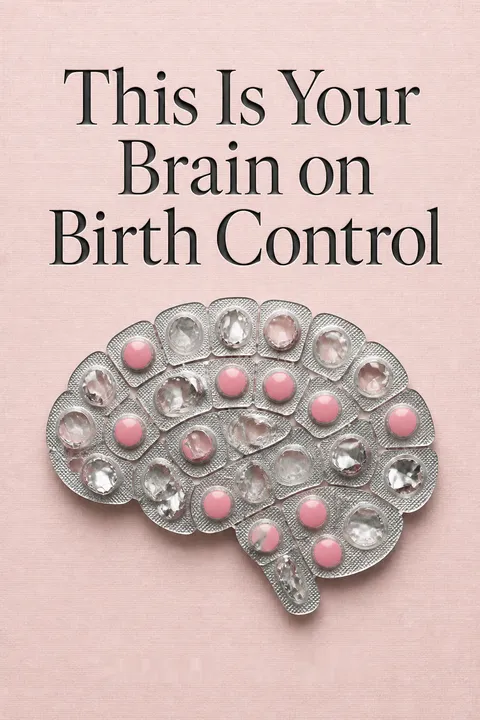


Key Takeaways
Treat hormonal contraception as a whole-body intervention, not a fertility switch.
The central claim. Sarah Hill’s argument begins with a personal surprise: after more than a decade on the pill, she noticed more energy, renewed interest in exercise and music, and a stronger sense of being engaged with life after stopping it. Her experience cannot establish cause, but it prompted a scientific question. Hormones are chemical signals that reach cells throughout the body, including many in the brain. Changing hormone levels can therefore affect more than ovulation, the pill’s intended target.
One person, many systems. The book’s central idea is that hormones help shape the brain’s working version of the self, including motivation, mood, and desire. That does not mean every pill-taker will experience the same changes, or that one hormonal state is inherently better. It means that contraception can have effects beyond pregnancy prevention, and those effects deserve attention alongside its benefits.
What's valuable here is the distinction between a drug's intended target and its wider biological footprint. Systems biology studies how changing one signal can ripple through connected networks, making a fertility medication an especially clear example. The personal story also shows why slow changes can be hard to recognize: people often explain them as maturity, stress, or a new routine. But feeling different after stopping does not prove the pill caused every change. The useful conclusion is neither alarm nor dismissal. It is to treat personal experience as a reason to ask careful questions, not as a diagnosis.
Read cycle changes as coordinated biology, not proof that women are irrational.
Two changing phases. Hill describes the ovulatory cycle as having two broad phases. In the first, rising estrogen helps coordinate conditions associated with conception; around ovulation, research finds that many women report more sexual desire and make greater efforts with appearance. After ovulation, progesterone rises as the body prepares for possible implantation. These are average patterns, not a schedule every woman experiences identically, and they do not dictate anyone’s choices.
An evolutionary account. The book links some sex differences to unequal reproductive costs: eggs, pregnancy, and lactation require more investment from women than sperm production does from men. Hill also presents menstruation as a possible way the body screens embryos before investing in pregnancy. The explanation is an evolutionary hypothesis, not a claim that biology sets a person’s values or life path.
This account helps replace the crude stereotype of hormones as random mood swings with a model of changing biological priorities. It also makes a useful distinction between explaining a pattern and prescribing a role: an evolutionary account cannot tell an individual what to want or what society should permit. The challenge is that adaptive stories can sound more certain than the evidence warrants. Present-day behavior reflects biology, learning, relationships, and culture together. The best use of the framework is to generate testable questions, while resisting the temptation to treat a plausible ancestral explanation as the only explanation.
Ask which formulation you take, because synthetic progestins are not interchangeable.
How the pill works. The hypothalamic-pituitary-gonadal axis, or HPG axis, is the signaling pathway among the brain, pituitary gland, and ovaries that helps coordinate the cycle. The pill supplies synthetic hormones that suppress signals needed for ovulation. Many combination pills contain synthetic estrogen and a progestin, a manufactured hormone that acts in some ways like progesterone. The result is a relatively steady hormonal signal rather than the natural cycle’s changing pattern.
Formulations differ. Hill explains that progestins vary in their effects. Some are derived from testosterone and may activate androgen receptors, while some later formulations can block androgen effects. That can matter for issues such as acne, unwanted hair growth, or libido, but no formulation predicts an individual’s experience with certainty. The book recommends discussing options with a clinician, allowing time to assess a change, and keeping track of relevant symptoms.
The practical strength of this section is its refusal to treat the pill as one uniform product. That is a basic principle of personalized medicine: people can respond differently to drugs that share a broad purpose but differ in their ingredients and biological activity. The book’s formulation categories can help a patient ask more precise questions, though a generation label is not a reliable personal forecast. Individual response, medical history, and the reason for using contraception all matter. A clinician can help translate a formulation detail into a safe choice, rather than leaving the patient to conduct unsupervised experiments.
Track libido changes instead of assuming low desire is simply relationship normal.
Desire has biology. Hill links the natural estrogen rise before ovulation with increased sexual motivation. She also reviews evidence that combined pills can lower available testosterone, partly by increasing sex-hormone-binding globulin, a protein that binds testosterone. A meta-analysis discussed in the book found free testosterone levels about 61 percent lower on average among pill users than among naturally cycling women. Studies also report lower desire or sexual activity for some users, and more pain or discomfort during sex.
Experiences vary. Katie, one of the book’s composite stories, lost interest in sex after starting the pill and felt desire return after stopping it and switching to a copper IUD. Other women do not have this experience. The book’s practical point is to notice changes rather than assume they are inevitable features of a long-term relationship, and to raise persistent concerns with a clinician.
Sexual desire is not a simple meter of love or relationship quality. It is shaped by physiology, stress, health, context, and interpersonal safety, so a change in desire deserves a broad assessment rather than blame directed at either partner. The testosterone finding gives a plausible biological pathway, but a group average cannot identify the cause of one person's experience. The strongest contribution is permission to treat sexual side effects as legitimate health concerns. That perspective also challenges a narrow model of contraceptive success in which pregnancy prevention matters and sexual well-being is treated as optional.
Treat pill-related partner-choice findings as intriguing, not relationship verdicts.
Possible preference shifts. Hill reviews studies suggesting that naturally cycling women may show stronger preferences for some masculine traits near ovulation, while pill users may show less variation in those preferences. One study found that women who began the pill created less masculine ideal male faces after three months; another found that partners of pill users had less masculine faces on average. A larger survey linked meeting a partner while on the pill with greater satisfaction around finances and intelligence, but lower satisfaction with some aspects of sex.
The evidence is unsettled. Some studies associated pill use at partner selection with lower divorce rates, while research that followed couples found that changes after stopping the pill varied with husbands’ attractiveness. The book also notes later studies that failed to find some proposed preference and relationship effects. These results do not establish that contraception determines whom someone loves or whether a relationship will last.
This is a good case study in why suggestive results need careful interpretation. A face-rating task is not the same as choosing a partner, and a partner’s facial masculinity is not a direct measure of genetic quality, kindness, or compatibility. Observational studies can also reflect preexisting differences between people who choose different contraceptives. The topic remains worth studying because relationships are consequential, but the evidence supports curiosity rather than individual prediction. A sound decision about a relationship should rest on lived compatibility and shared values, not a speculative reading of a person’s hormonal history.
A muted cortisol response may signal altered stress processing, not calm.
A surprising laboratory result. The hypothalamic-pituitary-adrenal axis, or HPA axis, is a brain-to-adrenal signaling pathway involved in the release of cortisol during stress. In the Trier Social Stress Test, participants give an impromptu speech to evaluators and perform difficult mental arithmetic. Hill describes studies in which pill-taking women reported feeling stressed but showed a smaller cortisol response than naturally cycling women. Other studies found differences in daily cortisol patterns and responses to exercise.
Meaning remains uncertain. Cortisol helps mobilize energy and can support attention and memory during meaningful events. The book discusses a study in which naturally cycling women remembered emotional material better after a stressor, while pill users did not show the same pattern. Hill raises possible health implications but emphasizes that the mechanisms and consequences are not established. A blunted measured response is not proof of damage or an individual diagnosis.
The key conceptual distinction is between subjective stress and one biological measure of stress. A person can feel distressed even when a particular hormone does not rise in the expected way. This is a useful warning against treating cortisol as a complete readout of emotional experience. The research also illustrates the importance of measuring hormone binding and timing, not just total hormone levels. At the same time, links from a laboratory response to everyday memory, mental health, or long-term disease require additional evidence. The result is scientifically interesting, but it should not be converted into a claim that pill users are unable to cope.
Take mood changes seriously, while recognizing that the pill helps some women.
Population signals and limits. A Danish registry study followed more than a million women and found that women prescribed hormonal contraception were more likely to receive a depression diagnosis or antidepressant prescription in the following months. The book reports a roughly 50 percent higher diagnosis rate and a 40 percent higher antidepressant-prescription rate. The strongest associations appeared among teenagers. A later registry study also found associations with suicidal behavior. These are important warning signals, but observational records cannot by themselves prove that contraception caused an outcome.
There is no universal response. Some women report anxiety or depression on a formulation, while others feel more stable on the pill. Hill notes that it can help some women with severe PMS or PMDD, a serious premenstrual mood condition. She recommends tracking mood, involving someone trusted when starting a new pill, and discussing concerning changes with a clinician rather than dismissing them as personal weakness.
The combination of large-scale records and personal monitoring is especially useful: registries can reveal patterns too rare for small trials, while individual tracking helps show whether a pattern fits one person. Neither source of evidence can replace the other. Relative risk figures also need context, including absolute rates and the possibility of unmeasured differences between groups. The balanced message is not that mood effects are inevitable, nor that they are imaginary. It is that mental health is a core outcome of contraceptive care, and that a method that works well for one person may be a poor fit for another.
Credit contraception for expanding women's choices, but scrutinize grand social claims.
A major gain in freedom. The pill lets women reduce the risk that sex will interrupt education or career plans through an unplanned pregnancy. Hill points to the sharp rise in women applying to law and medical schools after the pill became legally available to single women. By 2017, women made up more than 56 percent of U.S. college students. These changes reflect a major expansion in women’s ability to plan their lives.
Ripple effects are harder to prove. The book also suggests that changing the costs of sex may affect men’s motivation, dating, marriage, and fertility patterns. Hill describes an experiment in which men told that women had become more selective did better on achievement and self-control measures. That experiment supports a possible motivational effect, not the claim that contraception caused broad declines in men’s achievement. Large social trends have many causes, and the book’s wider explanations are more speculative than its account of reproductive freedom.
The distinction between enabling conditions and sole causes matters here. Reliable contraception can make long educational investments more feasible, but access to education, changing laws, economic conditions, and reduced discrimination also shape women’s opportunities. Likewise, a laboratory manipulation of beliefs about dating cannot explain a national achievement trend on its own. The book is strongest when it frames contraception as one powerful part of a larger system. Its more provocative social hypotheses are useful prompts for research, but they should not turn women’s autonomy into responsibility for men’s outcomes.
Demand research that studies female bodies across hormonal states.
A structural research gap. Hill argues that women have been underrepresented in biomedical research, including studies using animals and cells. Researchers may favor male subjects because female hormones fluctuate, requiring extra recruitment, scheduling, and analysis. In one study from her lab, collecting data from women at a specific cycle phase took nine months and nearly $30,000, compared with two to three months and about $12,000 for men. Those costs help explain the incentive to avoid complexity, though they do not justify ignoring half the population.
The result is less useful medicine. Research that excludes women can miss sex-specific effects and leave clinicians with weak guidance. The book notes that studies often focus narrowly on heterosexual, cisgender women, leaving other users of hormonal contraception understudied. Better research should include women, account for cycle phase when relevant, and report results clearly enough to support informed care.
This section identifies a problem deeper than individual researcher bias: institutions reward speed, scale, and clean results, while biological variation makes some studies slower and harder to interpret. That is a design flaw in the research system, not a reason to treat sex differences as noise. Including women without planning for hormonal state can also produce misleading averages, so inclusion must be paired with appropriate study design. Broader representation matters too. Findings from one group should not be treated as a complete account of everyone who uses hormonal contraception.
Choose contraception with a clinician, and keep records of how you feel.
Make the trade-off visible. The pill has major benefits, especially reliable pregnancy prevention, and the right choice depends on health, circumstances, and priorities. Hill suggests keeping a simple record of mood, energy, sleep, libido, interests, and relationships before and after a change when possible. A journal can make gradual shifts easier to notice and give a clinician more specific information than a vague impression that something feels wrong.
Personal evidence matters. The book discusses nonhormonal options such as copper IUDs and condoms, alongside hormonal formulations. It also raises uncertainty about hormonal contraception during adolescence, when brain development is ongoing and mood associations appear stronger among teenagers. This is a reason for an informed conversation, not a blanket rule against use. Decisions about starting, changing, or stopping contraception should be made with a qualified clinician who can consider individual medical needs and pregnancy risk.
The practical approach resembles a small personal health study: record a baseline, change one factor with medical guidance, and observe what follows. It is not a substitute for a controlled trial, since life circumstances change too, but it can improve recall and make clinical conversations more concrete. The emphasis on individual goals is essential because contraceptive decisions involve both medical risks and the life-changing consequences of pregnancy. Monitoring should support agency, not encourage self-blame or unsupervised stopping. The best method is not the one with the most persuasive story, but the one that fits a person's health and priorities.
Analysis
The book’s strongest contribution is a reframing: hormonal contraception is not merely a reproductive switch, because hormones coordinate activity across the body and brain. That premise makes the central question larger and more useful: not only whether a method prevents pregnancy, but how a person experiences it. Hill combines personal narrative, evolutionary psychology, laboratory studies, and population registries to make a technical subject legible and to argue that women should be heard when they report changes.
The evidence, however, is uneven. The pill’s suppression of ovulation is a well-established mechanism. Some reported associations with sexual desire, stress physiology, and mood are supported by multiple kinds of studies, but the size, consistency, and clinical importance of many effects remain uncertain. Relationship and mate-choice claims are especially vulnerable to confounding, measurement choices, and replication difficulties. A group-level difference in hormone response cannot predict a particular person’s experience, and a plausible evolutionary explanation is not proof that a behavior evolved for that function.
The book is most persuasive when it distinguishes established mechanisms from emerging hypotheses and when it treats personal testimony as a prompt for research rather than as causal proof. It is less persuasive when broad social outcomes, such as men’s achievement or changing marriage patterns, are linked to contraception through a long chain of inference. Such claims can generate testable questions, but they need stronger evidence than an individual experiment or a temporal coincidence.
Its practical conclusion is sound: reproductive autonomy and careful attention to side effects are not competing causes. Patients need accurate information, a range of options, and clinicians who take psychological and sexual well-being seriously. Better research should distinguish formulations, measure outcomes beyond pregnancy prevention, and include diverse populations. The reader should leave neither frightened of hormones nor casually assured that effects cannot reach beyond the ovaries. The defensible position is informed choice under uncertainty, supported by evidence that is specific enough to matter to the individual making the decision.
Review Summary
This Is Your Brain on Birth Control received mixed reviews. Many readers found it informative and eye-opening, praising its comprehensive coverage of birth control's effects on women's bodies and minds. Some appreciated the balanced presentation of research and personal anecdotes. However, critics found the writing style condescending, heteronormative, and overly focused on evolutionary psychology. Some felt the author made broad generalizations and lacked intersectionality. Despite these criticisms, many readers recommended the book as an important resource for women considering or using hormonal contraceptives.
Glossary
HPG axis
Cycle-regulating hormone pathwayThe hypothalamic-pituitary-gonadal axis is the signaling system connecting the brain, pituitary gland, and ovaries. Hormones released along this pathway coordinate egg development and ovulation. Hormonal contraceptives suppress parts of this signaling sequence, reducing the likelihood that an egg will mature and be released.
HPA axis
Stress-response signaling pathwayThe hypothalamic-pituitary-adrenal axis links the hypothalamus in the brain, the pituitary gland, and the adrenal glands above the kidneys. Its hormonal signals help regulate cortisol release during stress. The book discusses research finding altered cortisol responses among some users of hormonal contraception.
ovulatory-shift hypothesis
Cycle-linked mate preferencesThe ovulatory-shift hypothesis proposes that some women’s preferences change near ovulation, when conception is possible. In the research discussed by Hill, women may show greater interest in certain cues associated with masculinity or genetic quality at that time. Findings have been mixed, and the hypothesis does not predict an individual woman’s choices.
sex-hormone-binding globulin
Hormone-binding blood proteinSex-hormone-binding globulin, often shortened to SHBG, is a protein that binds sex hormones in the blood. Bound testosterone is less available for cells to use. Hill describes evidence that hormonal contraceptives can raise SHBG, contributing to lower levels of available testosterone in some users.
allopregnanolone
Progesterone-derived brain signalAllopregnanolone is a neurosteroid made when progesterone is broken down. It can influence GABA receptors, which help slow neural activity, and is associated with calming effects as well as mood, memory, and sexual motivation. The book reviews evidence that hormonal contraceptives may reduce its levels, while noting that consequences vary and remain under study.
activational effects
Temporary hormone effectsActivational effects are changes hormones produce in an already developed body or brain while the hormones are present. These effects can diminish when hormone levels change or the hormone is removed. Hill uses the term to distinguish immediate effects from more lasting influences on development.
organizational effects
Development-shaping hormone effectsOrganizational effects occur when hormones influence how the body or brain develops and is put together. Unlike temporary activational effects, organizational changes may persist after hormone exposure ends. Hill discusses prenatal development and adolescence as periods when sex hormones help shape developing systems.
Trier Social Stress Test
Laboratory social-stress taskThe Trier Social Stress Test is a laboratory procedure designed to elicit social stress. Participants prepare and deliver a speech before evaluators and a camera, then perform difficult mental arithmetic. Researchers often measure cortisol before and after the task to study biological stress responses.
FAQ
What's This Is Your Brain on Birth Control about?
- Hormonal effects: The book explores how hormonal contraceptives, especially the birth control pill, impact women's brains and bodies, affecting identity, relationships, and well-being.
- Scientific focus: Author Sarah E. Hill uses scientific research and personal anecdotes to highlight the unintended consequences of hormonal birth control.
- Empowerment through knowledge: Hill emphasizes understanding one's biology to make informed health decisions regarding contraceptive options.
Why should I read This Is Your Brain on Birth Control?
- Informed decision-making: The book provides insights into how the pill can alter mood and relationships, helping women make better contraceptive choices.
- Personal stories and research: Hill combines personal experiences with scientific studies, making complex biological processes relatable and engaging.
- Encourages dialogue: It sparks conversations among women about their experiences with hormonal contraceptives, promoting understanding and support.
What are the key takeaways of This Is Your Brain on Birth Control?
- Hormones shape identity: The book asserts that hormonal changes influence personality and behavior, crucial for understanding contraceptives' impact on self-perception.
- Unintended consequences: Hill explains how the pill affects users and their relationships, including changes in attraction and partner selection.
- Need for more research: The author stresses the need for more studies to understand the pill's long-term effects on women's health.
How does the birth control pill affect my brain?
- Hormonal changes: The pill alters hormonal profiles, affecting mood, attraction, and cognitive function, changing how women perceive themselves and partners.
- Cortisol response: Women on the pill may have a blunted cortisol response to stress, impairing emotional regulation and memory.
- Sensory perception: The pill may reduce sensitivity to genetic quality cues in partners, affecting mate selection and relationship satisfaction.
What are the sexual side effects of the pill?
- Decreased libido: Many women report reduced sexual desire on the pill, leading to relationship frustration.
- Impact on partner attraction: The pill may influence how attractive women feel and appear to others, affecting sexual chemistry.
- Hormonal imbalance: Altered testosterone levels can lead to diminished sexual desire and arousal.
How does the pill influence partner selection?
- Changes in attraction: Women on the pill may prefer less masculine partners, affecting long-term relationship dynamics.
- Long-term satisfaction: Choosing partners while on the pill may lead to less sexual satisfaction and attraction after discontinuation.
- Trait prioritization: Pill-taking women may prioritize financial stability and intelligence over physical attractiveness, impacting relationship satisfaction.
What does This Is Your Brain on Birth Control say about the relationship between the pill and mood?
- Mood changes: The pill can increase anxiety and depression in some women, significantly altering feelings.
- Individual variability: Not all women experience negative mood changes; some find it stabilizing, highlighting the need for personalized contraceptive choices.
- Research findings: Studies show women on hormonal contraceptives have a higher risk of depression and anxiety.
What are the implications of the pill on women's health?
- Autoimmune diseases: The book discusses potential links between hormonal contraceptives and autoimmune conditions, affecting inflammation and immune response.
- Cognitive effects: Evidence suggests the pill may impact cognitive function and memory, affecting educational and career goals.
- Need for better research: Hill calls for comprehensive studies on the pill's long-term health effects, emphasizing the importance of women's health issues.
What are the best quotes from This Is Your Brain on Birth Control and what do they mean?
- "You are your hormones." This quote highlights the book's theme that hormones significantly influence identity and behavior.
- "The law of unintended consequences." It underscores the complex effects of the pill on women's lives beyond its intended use.
- "Nothing in biology makes sense except in the light of evolution." This quote suggests understanding women's biology is essential for informed health decisions.
How can I make informed decisions about using the pill according to Sarah E. Hill?
- Understand your body: Knowledge of hormonal interactions with the pill is crucial for informed health choices.
- Consult healthcare providers: Discuss experiences and concerns with doctors to find the best contraceptive method.
- Monitor experiences: Keeping a journal of feelings and changes while on the pill can help identify patterns and guide healthcare discussions.
What should I do if I experience negative side effects from the pill?
- Talk to your doctor: Consult healthcare providers if you notice mood changes or other side effects.
- Consider switching methods: Explore other contraceptive options if side effects are intolerable.
- Listen to your body: Pay attention to how you feel and advocate for your health by seeking alternatives.
How does This Is Your Brain on Birth Control address the societal implications of the birth control pill?
- Educational and career advancements: The pill has enabled women to pursue education and careers without fear of unplanned pregnancies.
- Changing relationship dynamics: It has altered traditional dating patterns, allowing women more freedom in sexual choices.
- Impact on men: The pill's availability has influenced men's behaviors, potentially affecting achievement levels.
Download PDF
Download EPUB
.epub digital book format is ideal for reading ebooks on phones, tablets, and e-readers.








