

Plot Summary
Prologue
The familiar tale of the Twelve Huntsmen says a jilted woman disguised herself and eleven lookalikes to win back a king, then reunited with him when he recognized her ring.
The narrator, the mountain princess1 the king had been expected to marry instead, finds the account full of holes: it omits the reason for the disguise, the fate of the rejected bride,1 and the strange tests meant to expose the huntsmen. Her own story begins where that old version stops, with a princess1 who has been sent away to marry a stranger.
The prologue turns a familiar folktale into a problem of narrative authority. Its narrator is not the heroine the old story celebrates but the discarded woman whose perspective the tale leaves out. By exposing gaps in the inherited account, she makes omission itself part of the plot: the reader must question which characters get remembered, whose motives go unexplained, and what a supposedly happy ending conceals. The playful retelling also establishes Melilot’s wit as a means of control. She cannot change the old story’s record, but she can reclaim the right to tell what happened to her.
Teeth Before the Wedding
Melilot,1 the unmagical middle daughter of Skalla, has been sent to plant a thousand teeth in a distant field. She gathers them through an improbable trade with a tooth-collecting fairy, then nearly becomes food for three enormous sphinxes guarding the field. Her younger sister Calla8 arrives with earthworms, birds, and wasps to help, while their older sister Jonquil7 swoops in on a dragon when the sphinxes attack.
Jonquil7 brings a more troubling summons: their stepmother, Queen Hellebore,6 wants Melilot1 alone. In the palace, the queen6 announces she has accepted a marriage proposal from Gervase,4 newly crowned king of Tailliz.4 Melilot1 has not met him, and no one has asked what she wants.
The opening sets Melilot’s problem in practical, bodily terms: she gathers teeth, faces stone predators, and is traded into marriage without being consulted. Her sisters’ effortless magic sharpens her sense of being the least useful child, even as Calla’s help and Jonquil’s rescue show that family attachment persists beneath rivalry. The tooth quest also introduces the book’s comic logic, where absurd tasks have real danger and consequences. Hellebore’s proposal transforms Melilot’s familiar burden of impossible errands into a political one: she is no longer merely sent to do a task, but sent to become someone else’s queen.
A Packed Trunk
Melilot1’s sisters and their partners crowd her room to help pack, mixing warnings about fairy-tale husbands with practical concern for her safety. Liam,9 Calla’s husband,9 knows Tailliz has no sorcerers and has heard reports of unnatural animals in its forests.
Jonquil7 and Calla8 promise she can return if the marriage goes badly, but Melilot1 remembers what happened the last time she refused Hellebore:6 a year in a doorless tower, followed by the task being handed to Jonquil7 instead. Their reassurances cannot make defiance seem safe. Melilot1 packs for the journey, carrying Liam9’s needle and thread, and leaves with only a small hope that she might like Gervase4 or find a life beyond her stepmother’s6 control.
The family scene gives Melilot’s choice its emotional weight. Her sisters offer affection, but their counsel cannot erase the difference between their experiences and hers: neither has tested Hellebore’s authority in the way Melilot has. Melilot’s fear is not simply of a bad husband. It is fear that every route away from the queen leads back to another punishment. The needle and thread become a modest form of preparation rather than a magical guarantee. Her hope remains deliberately small, which makes it more credible than a sudden belief that marriage or distance will solve her life.
The Roadside Monsters
After a month of wet, uncomfortable travel, Melilot1’s enchanted pumpkin carriage is attacked in Tailliz’s forest. Eight-legged wolf creatures kill her tooth guards and smash the carriage, forcing her out among them.
A group of red-haired, green-clad hunters in masks fights the beasts with arrows, swords, wind, frost, speed, and brute strength. Melilot1 helps by driving a branch through one attacker’s skull, then stitches the badly wounded Sam2 with Liam9’s needle and thread.
The hunters suspect she may be the Skallan princess they have been seeking, but she lies and claims to be a handmaiden named Clover. Their leader, Jack,3 agrees to escort her toward the castle, though the hunters’ evasive answers make it clear they are hiding their own purpose.
The attack reverses Melilot’s usual position in her family. She cannot overpower the monsters, but she acts decisively, uses an ordinary branch, and treats Sam’s wounds with medical knowledge. Her lie protects her from strangers whose motives she cannot read, yet it also creates the mistrust that will later complicate their alliance. The masked hunters are introduced through what they do rather than what they claim: they risk injury for one another and for Melilot while keeping their identities concealed. Their extraordinary talents promise a fairy-tale rescue, but their secrecy prevents Melilot from simply accepting the role of rescued princess.
Masks at the Castle
Sam2 tells Melilot1 part of the hunters’ history during their night in the forest, including how Jack3 gathered unusual companions and won the duchess’s brothers through a dangerous contest.
The next day, the group avoids the roads because the wolf creatures have repeatedly targeted Gervase’s4 family and hunting parties. At Castle Tailliz, Melilot1 finds the nearby village abandoned and its people crowded into the castle courtyard for protection. When the huntsmen’s fellows rejoin them, one16 spits a toad at her, and her patience finally breaks.
She storms into the Great Hall, slips on peas scattered across the floor, and injures her arm. The talking lion11 declares that her fall proves she is a woman, while Jack3 presents her as Clover, the wedding planner.
The castle gives physical shape to Tailliz’s crisis: the villagers are alive, but their crowded refuge and the empty settlement outside show how thoroughly the monsters have disrupted ordinary life. The hunters’ approach to the castle remains comic and alarming at once, particularly the lion’s gender test and the toad-spitting huntsman. Melilot’s fall is not merely slapstick. It exposes how a foreign woman is treated as an intrusion before anyone asks why she has arrived. Her outburst marks a shift from trying to endure the hunters’ mysteries to asserting herself in a court that has already decided what women are allowed to do.
The Women’s Wing
Angelique,5 Gervase’s sister5 and the castle’s senior woman, escorts Melilot1 to the women’s quarters, where noblewomen spend their days sewing, spinning, and listening to stories.
Melilot1’s refusal to use a spinning wheel is mistaken for snobbery; she has spent her life avoiding spindles because they can carry deadly curses in Skalla. Angelique5 learns that Melilot1 has some sorcerous ability and asks her to join the hunts, hoping a magical ally will protect Gervase.4
She also reveals that Gervase4 became king only recently and that his authority over the nobles is fragile. Melilot1 accepts, partly because Angelique’s5 plea moves her and partly because hunting offers a chance to leave the confinement of the women’s wing and observe her intended husband.4
Melilot’s foreign habits are repeatedly misread because Tailliz treats its own customs as natural and universal. Her fear of spinning wheels is rational in Skalla, yet in this court it makes her look proud. The misunderstanding reveals how institutions can convert survival knowledge into a mark of social failure. Angelique’s request gives Melilot agency within narrow limits: she is invited to protect the king, not to choose her future. Still, her acceptance is not purely obedient. She chooses the hunt as a way to investigate her surroundings, pursue useful work, and see Sam again, allowing desire and duty to coexist without pretending they are the same.
The King’s Hunt
Before the hunt, Melilot1’s sisters visit her through a dream and deliver Gnoflwhogir’s prophecy: a disguised bride will ride with the king,4 a battle will shake the woods, and a kiss will save someone she loves. Melilot1 hides the warning from most of the party. On the ride, Gervase4 admits he agreed to marry a Skallan sorceress because his dying father demanded it, while Jack’s3 guarded manner suggests a past connection to him.
Then stone giants erupt from the forest floor and attack. Melilot’s horse24 carries her toward a ring of immense trees, but the giants pursue her and Sam.2 Remembering the prophecy, she kisses Sam2 and manages to transform herself into a lake. The hunters and king4 become birds; the stone attackers sink beneath her water.
The prophecy offers direction without certainty, forcing Melilot to act without knowing whether its language is literal or symbolic. Her choice to kiss Sam is both tactical and intimate: she uses a form of magic she has never mastered because the alternative is watching him die. The transformation reverses her self-image as a weak sorceress, but it also erases her human perspective for weeks. Gervase’s confession adds a second kind of constraint. Both prospective spouses have entered the engagement through obligation, so the romance plot refuses the easy assumption that a royal marriage automatically creates desire.
A Lake Remembers
Melilot1 remains a lake for roughly a month, barely retaining her human memories. When she finally wakes in winter, Sam2 is beside her, having stayed as a goose while the other hunters flew back to the castle.
He explains that Jack3 is his identical twin and that most of the masked hunters are women using male disguises; their unusual abilities help conceal them. Their disguises also serve as decoys because Jack3 expects the assassin targeting Gervase4 to target her.
As they search for shelter, Melilot1 tells Sam2 about her childhood: her mother22 died, her father23 married Hellebore,6 and a false prince once used her desire to escape a tower to lure her into helping him kill the queen.6 Melilot1 warned Hellebore,6 who freed her. They find a hidden sorcerer’s tower containing monster sketches and a scrying mirror that shows them the route to the castle.
The lake episode makes care visible through persistence rather than grand declarations. Sam stays when the others return to their duties, although his loyalty to Jack and his fear for his friends remain strong. The revelations about the hunters recast their masks as protection against an assassin and against a restrictive society, not simply as disguise for disguise’s sake. Melilot’s account of the prince gives her suspicion a history: she has been manipulated by someone who promised escape before, and she learned to trust evidence over flattering promises. The tower turns that personal history into evidence of a larger threat, linking Melilot’s unease to a real laboratory of manufactured monsters.
The Mirror’s Warning
Following the mirror’s directions, Melilot1 and Sam2 head through the snowy forest with the monster sketches and the enchanted glass. Near the castle, Jack3 and Clem12 ambush them. Jack3 believes Melilot1 created the creatures and engineered the attacks; Sam2 insists she saved the hunters by turning them into birds.
Their argument over Melilot1’s identity and Sam2’s feelings for her sharpens when Kit13 blows Sam2 into a tree, leaving him unconscious and vomiting. Melilot1’s fury surges into uncontrolled magic that makes nearby trees strain toward Jack,3 but Clem’s12 drawn bow brings her back to herself.
Jack’s party takes Melilot1 and Sam2 to the castle. Melilot1 is thrown into the dungeon, where fever and a bite wound leave her confused, while the others remain convinced the mirror’s accusations may be true.
The misunderstanding is not a simple failure to communicate. Jack has spent months watching her family and kingdom be attacked, and Melilot’s lies have given suspicion a plausible target. Sam’s defense of Melilot also collides with his lifelong habit of following Jack’s lead, exposing the cost of a family bond built around one person’s authority. Melilot’s sudden influence over the trees frightens her because it resembles the coercive power she associates with Hellebore. Her rage does not make her an antagonist, but it shows that she has inherited capacities she does not yet know how to govern.
The Prison Break
Melilot1’s fever breaks after an unknown stretch in the dungeon, but she still has no chance to explain herself. Then the prison shakes as monsters attack the castle.
Jack3 unlocks the cell and helps Melilot1 through a collapsing stairwell to the battlements, where they see a vast army of beasts battering the walls and a broken bridge separating the castle from shore. The hunters and archers defend the ramparts while Kit13 repels incoming missiles with wind. Jack3 still wonders whether the monsters came to rescue Melilot,1 but she denies commanding them.
Before they can settle the question, a winged creature seizes Melilot1 and carries her away from the wall. Jack3 cuts it with her sword, and Melilot1 clings to the battlement while Jack3 hauls her back to safety.
Jack’s decision to release Melilot is a concrete change in trust, though not yet a full reconciliation. Under attack, she acts on immediate need rather than waiting for proof that Melilot is innocent. The siege also makes the kingdom’s political crisis visible: the castle is a refuge and a target, while the ruined bridge isolates its defenders. Melilot’s rescue by Jack complicates the simple division between captor and ally. Their relationship remains charged with suspicion, but Jack risks herself to keep Melilot alive, giving later cooperation a foundation in action rather than apology.
The Spindle’s Curse
After Jack’s3 rescue, the hunters are summoned to the Great Hall, where the lion11 has arranged another test meant to expose their disguises. A spinning wheel waits among the nobles, saturated with dark magic that compels the hunters and Melilot1 to approach it. Melilot1 recognizes the danger and realizes she cannot stop the spell by force of will.
She throws herself onto the wheel, smashing it beneath her weight, but the spindle pierces her thigh. Breaking the enchanted object releases the spell’s hold, yet the curse has already taken effect. Melilot1 loses consciousness and enters a maze of mirrors, where she wanders among alternate versions of herself and scenes from lives she never lived.
The spinning wheel brings Melilot’s private fear into the center of the political plot. The lion’s test is meant to expose one kind of secret, but its enchantment weaponizes a custom that already confines women to prescribed labor. Melilot defeats the trap not by mastering complex magic but by recognizing that the object itself can be broken. The price is immediate: she saves the hunters from the wheel’s compulsion but cannot escape its curse. Her action is both resourceful and costly, an important distinction from the fairy-tale pattern in which bravery automatically produces a clean victory.
The Mirror Maze
In the endless mirrored corridors, Melilot1 encounters versions of herself as a queen, a monster, a bride, and a forgotten absence. Sam2 eventually appears in one of the mirrors, trapped in the same strange state after his injury.
They compare what little they know and consider whether a kiss might break the curse, even if it could leave one of them trapped alone. Sam2 chooses to kiss Melilot.1 In the waking world, Angelique5 also kisses her, and Melilot1 opens her eyes in the hidden tower where the sorceress5 has brought her body.
Angelique5 has replaced most of the tower’s monster cages with glass coffins, keeping the hunters and Melilot1 in enchanted sleep. She proposes that Melilot1 join her, presenting their shared experience as rejected daughters as the basis for an alliance.
The mirror maze externalizes the uncertainty Melilot has carried about who she might have become under different conditions. Its many selves do not offer a simple answer; even the image of a powerful queen attracts her while frightening her. Sam’s presence gives the maze emotional contact, but his kiss does not resolve the curse by itself. Angelique’s awakening kiss turns intimacy into a strategic act, leaving Melilot to ask whether being desired is the same as being understood. Angelique’s offer is persuasive because it names real injuries, yet it also threatens to turn shared marginalization into a justification for domination.
Angelique’s Crown
Angelique5 explains that she secretly bred the monsters, using them to kill her brothers and father and clear a path to Tailliz’s throne. When Gervase4 became king, she planned to remove him too, but Jack’s3 hunters repeatedly thwarted her attacks.
She trapped them and Melilot1 with the enchanted spinning wheel, then hoped to recruit Melilot1 as a fellow sorceress. Melilot1 refuses because Angelique5 wants power so others will obey her, not to change the system that confined them. She commands her hair to grow until it fills the tower and breaks its concealment spell.
The tower collapses into an acorn, and Melilot1 escapes, only for Angelique5 to pursue her as a giant dark bird. Gnoflwhogir10 arrives with Jonquil,7 Calla,8 and Liam,9 and the family carries Melilot1 away on Jonquil’s dragon.7
Angelique’s confession makes the antagonist’s grievance intelligible without making her methods defensible. Her life in the women’s wing and her family’s treatment of her explain why power became an obsession, but her imagined solution reproduces the very hierarchy that injured her. Melilot’s refusal is therefore more than a choice between two rulers. She rejects the premise that freedom means standing above everyone else. Her escape through hair, her most reliable and least prestigious magic, makes a useful counterpoint to Angelique’s grand transformations: Melilot survives by developing what she already has rather than claiming another throne.
The Family Returns
As Jonquil’s dragon7 races toward Tailliz, Melilot’s family1 explains how Calla8 learned from forest animals that Melilot1 was imprisoned and how Liam9 used the mirror to locate her. They arrived during the siege and initially faced arrows from the castle defenders before Jack’s3 hunters recognized them as Melilot’s relatives.1
Ahead, Angelique’s5 forces have broken free of Max’s15 ice and are assembling a bridge of stone giants across the bay. The largest trees are uprooting themselves and marching toward the island.
Calla8 jumps into the forest to gather its animals, while Liam9 follows with copper nails to defend against hostile trees. Gnoflwhogir10 leaps into the fight with her sword. Jonquil’s dragon7 burns at the advancing branches, then drops Melilot1 beside the surviving hunters and King Gervase.4
The return of Melilot’s family changes the scale of the conflict without removing its danger. Their arrival is not a magical shortcut: Calla responds to an animal messenger, Liam applies practical knowledge, Jonquil transports the group, and Gnoflwhogir brings force. Each contributes according to a distinct capacity. Melilot’s own family history has often made her feel overshadowed by these abilities, but now their coordination leaves room for her to act rather than replacing her. The marching trees also signal that Angelique has escalated from targeted assassination to an assault on the whole kingdom, making her desire for a crown inseparable from the destruction of the people she would rule.
The Bridge of Monsters
At the broken bridge, Gervase4 accepts that Melilot1 is his intended bride,1 and she apologizes for the disguise. The battle begins before they can discuss it further.
The hunters use speed, arrows, frost, wind, and their strange gifts against the creatures crossing the stone giants’ backs; Gnoflwhogir10 attacks from the shore, while Calla8 and Liam9 lead thousands of ordinary forest animals against the enemy’s rear. The animals force many monsters toward the sea, and the defenders briefly seem to gain ground.
Then the stone giants rise and scatter both armies, while the colossal trees reach the island and begin tearing at the castle. The attack’s first wave was only a distraction. The real threat is the living landscape itself, roused to destroy the stronghold.
The battle tests whether the kingdom’s divided groups can cooperate under pressure. The hunters’ specialized powers and Calla’s animal allies work because they are coordinated, not because any one gift is sufficient. Their early success is deliberately provisional: Angelique has used lesser creatures to exhaust the defenders before sending the rock and trees. This escalation also shifts the conflict from a contest for a royal household to a threat against a whole community. The crowd of refugees, soldiers, and animals turns the battle into a test of what rule is for. Defending a crown matters only if there are people left to live beneath it.
Stone Turns to Dust
As the trees and stone giants overwhelm the bridge, the lion11 falls and Jack3 is speared through the shoulder. Sam2 keeps fighting until a giant strikes him in the head, leaving him unconscious at Melilot’s1 feet. Fear for him breaks through Melilot’s1 exhaustion.
She screams, and the stone giants fracture into dust while the trees split and crash into the bay. Angelique5 appears, interrupts Melilot’s1 magic, and threatens her with a venomous creature. Before Angelique5 can strike, Jack,3 badly wounded but still standing, runs her through with her sword.
Melilot1 crushes the small monster under her boot, then presses her fingers into Jack’s3 wound to slow the bleeding. When Sam2 wakes, he takes over the pressure while Melilot1 stitches Jack,3 and Gervase4 promises to marry Jack3 instead.
Melilot’s greatest magic arrives not through a formal lesson or romantic reward, but through the urgency of protecting Sam. The kiss earlier helped her reach a power she could not command alone; here, emotional need releases it without that device. Yet the victory drains her and leaves room for Angelique’s final threat. Jack’s attack ends the antagonist’s violence through a concrete act, not a conversion or pardon. The aftermath immediately returns Melilot to her most grounded competence: assessing wounds, stopping blood loss, and sewing torn flesh. Her power and her medical skill coexist, preventing the climax from defining her only as a sorceress.
No Borrowed Happily Ever
After the siege, Gervase4 and Jack3 marry, and the new queen reforms Tailliz’s court: Jack3 remains general, the hunters are knighted, and the women’s wing is opened. Melilot1 and Sam2 leave together for Skalla once the spring roads clear.
Before the journey, Melilot1 tells him the rest of her tower story: a prince pretended to love her so he could reach Hellebore,6 but Melilot1 warned the queen,6 and the would-be assassin fell into the rosebushes she had grown. At home, Melilot1 refuses to kneel to Hellebore6 and challenges her punishment.
Their argument reveals the queen’s6 fear of appearing weak and Melilot’s1 need to be treated as a daughter, not a pawn. They part without a neat reconciliation, but Melilot1 chooses to travel with Sam2 and decide her own future.
The ending resolves the opening’s coercive marriage, but it refuses to replace one prescribed life with another. Gervase marries the woman he already loves, while Melilot declines to become queen merely because the arrangement was made for her. Her final confrontation with Hellebore distinguishes explanation from absolution: the queen’s fear and political logic clarify her behavior, but do not erase its harm. Melilot’s refusal to kneel matters because she can now challenge Hellebore without measuring herself against her stepmother’s power. The book’s happiness is consequently provisional and self-authored. Melilot leaves for an unknown future rather than claiming that romance, magic, or family has solved everything.
Analysis
The novel treats fairy-tale conventions as forces that organize people’s lives, not harmless narrative decorations. A marriage promise, a locked tower, a spinning wheel, and a prophecy all carry consequences because institutions and individuals act as though their rules are inevitable. Melilot1’s path toward agency begins when she stops mistaking obedience for safety and stops measuring her value against stronger sorceresses. Her medical knowledge matters as much as her magic: she tends bodies, notices neglect, and applies practical judgment in worlds that prize spectacle.
The book also distinguishes grievance from justice. Angelique5 has real reasons to resent a system that confined and disregarded her, but she seeks freedom by claiming the right to command others. Melilot1’s refusal of that alliance rejects a familiar fairy-tale replacement of one ruler with another. Her later confrontation with Hellebore6 is more difficult because the queen6 is neither innocent nor wholly monstrous. Understanding her fear of weakness does not absolve the punishments she inflicted, but it allows Melilot1 to see a person where she once saw only a force of nature.
Identity is similarly presented as something shaped by both self-knowledge and social danger. The hunters’ disguises protect them from an assassin and from rigid expectations, while Sam2’s identity as a man is affirmed through the loyalty of people who recognize him. Masks can conceal, but they can also create room to live. The conclusion offers no perfect cure for family conflict, political prejudice, or grief. Instead, Melilot1 chooses a future not dictated by a queen, a king,4 or the old stories, and begins traveling with someone2 who asks her what she wants.
Review Summary
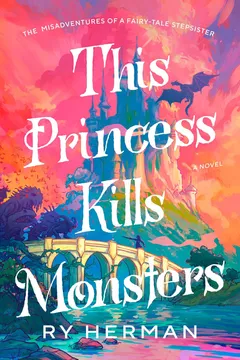
This Princess Kills Monsters receives broadly positive reviews, with an average rating of 3.97/5. Fans praise its humor, queer representation, and playful weaving of multiple fairy tale references into a feminist retelling of the Grimm Brothers' The Twelve Huntsmen. Highlights include the witty protagonist Melilot, strong sisterly bonds, and inclusive LGBTQ+ characters. Critics note weak character development, structural issues, and a title that overpromises on monster-slaying action. Some find the humor forced or the satire shallow, but most agree it's an entertaining, lighthearted read.
Characters
Melilot
The reluctant sorceressMelilot is a Skallan princess, doctor’s daughter, and reluctant sorceress whose strongest early magic seems to be making her hair grow. As the middle child in a powerful blended family, she measures herself against sisters whose gifts appear effortless and mistakes difference for failure. Her medical training gives her a practical way to help others, while her humor and skepticism help her survive impossible quests and suspicious courts. She fears becoming a pawn in Hellebore’s6 plans, yet her distrust also makes intimacy difficult. Melilot’s central struggle is to distinguish genuine care from control, and to define her own worth without matching her stepmother’s6 power or her sisters’ talents.
Sam
The steadfast hunterSam is a physically powerful hunter from Ecossia and Jack’s3 identical twin. A trans man, he is comfortable in his identity even when the world around him is less accepting, and Jack’s3 fierce loyalty has helped him claim that identity. He is generous, funny, and willing to take a supporting role, but his devotion to Jack3 can leave him uncertain where his own story begins. His attraction to Melilot1 grows amid danger, secrecy, and shared vulnerability. Sam’s combination of strength and tenderness makes him more than the group’s blunt instrument: he listens, stays, and asks others to choose their own paths.
Jack
The guarded commanderJack leads the masked hunters with discipline, suspicion, and a strong sense of responsibility. She is an identical twin, and her close bond with Sam2 has shaped her habit of taking charge and protecting him. The danger surrounding Gervase’s4 family gives her vigilance real cause, though fear can make her interpret uncertainty as proof of betrayal. Jack values competence and action more than reassurance, and she expects herself to bear the burden of keeping others alive. Her chosen name reflects the heroic role she inhabits, while her private loyalties complicate the simple image of a fearless leader.
King Gervase
The reluctant monarchGervase is a newly crowned king who inherited a kingdom under attack and a marriage promise made to satisfy his dying father. As the youngest child, he grew up indulged and free from the responsibilities now pressing on him. He loves hunting, horses, and dogs, and his kindness is more evident in his treatment of people than in any talent for court politics. Gervase is caught between inherited obligation and personal attachment, yet he is capable of listening when challenged. His uncertainty does not make him indifferent; it makes his attempts to rule fairly difficult in a court built to limit his authority.
Angelique
The hidden sorceressAngelique is Gervase’s4 older half sister, an intelligent and perceptive woman whose life has been restricted by Tailliz’s gendered customs. She is attentive to Melilot1, willing to ask for help, and skilled at reading what others conceal. Her headaches and the treatments she receives reveal how little medical knowledge her court possesses. Angelique’s experience of being overlooked has made her hungry for agency, but she understands power primarily as the ability to command obedience. Her relationship with Melilot1 is charged by recognition, attraction, and incompatible ideas about what freedom should mean.
Queen Hellebore
The terrifying stepmotherHellebore rules Skalla as a formidable sorceress and monarch, feared for her punishments and rarely willing to explain her plans. She is Melilot’s stepmother1 and the mother of Jonquil7 and Calla8, but she treats all three as pieces in a kingdom-sized strategy. Her secrecy comes partly from a belief that revealing a desired future can prevent it, and partly from her conviction that a queen cannot show weakness. Hellebore protects a prosperous realm, yet her methods make care indistinguishable from command. She is more complicated than the villain Melilot1 first believes, though understanding her does not erase the harm she causes.
Jonquil
The accomplished elder sisterJonquil is Melilot’s1 older stepsister, a skilled sorceress who rides a dragon and often arrives when danger is greatest. She is disciplined and protective, with a strong instinct to solve problems for her family. Her marriage to Gnoflwhogir10 grew from shared danger and fierce attraction. Jonquil’s confidence can unintentionally make Melilot1 feel less capable, and she must learn that helping does not always mean taking control.
Calla
The animals’ friendCalla is Melilot’s1 younger half sister, beloved by animals and followed by birds, insects, and small mammals. Her kindness is instinctive, and she treats creatures others would dismiss as companions. Calla’s optimism can make her underestimate the danger Melilot1 feels, especially when she urges her sister to defy Hellebore6. She is married to Liam9 and brings her ability to recruit the natural world to the family’s shared crises.
Liam
The practical tailorLiam is Calla’s husband8, an Ecossian whose knowledge of clothing, tools, and the western kingdoms often proves more useful than his modest manner suggests. He gives Melilot1 the needle and thread that become essential in treating injuries. His careful preparation can seem eccentric, but he anticipates dangers others overlook. Liam is loyal to Calla8 and treats her animal friendships with affection rather than embarrassment.
Gnoflwhogir
The fierce fairy wifeGnoflwhogir is Jonquil’s7 fairy wife, a tall, powerful warrior with a sword and a necklace made from the ears of enemies. She prefers bold action to caution and is quick to propose fighting, stabbing, or setting something alight. Her impulsiveness can exasperate Jonquil7, but her devotion is unmistakable. A bout of prophecy gives her warnings in riddling verse, and she regards danger as a reason to arrive armed.
The Lion
Keeper of old rulesThe enormous talking lion advises Tailliz’s royal family and believes himself responsible for preserving the kingdom’s laws and traditions. He writes books about humans and treats his theories as scientific certainty, including his bizarre tests of the hunters’ gender. His confidence often makes him ridiculous, but his influence is real because the court defers to his age and authority. He embodies the danger of mistaking inherited custom for reliable knowledge.
Clem
The watchful archerClem is an expert hunter with exceptional eyesight and a strong Ecossian accent. She is blunt, practical, and often the first to question a plan that seems needlessly dangerous. Her arrows protect the group when brute strength and magic are not enough. Clem is loyal to Jack3 but does not surrender her judgment, especially when she believes someone may be a threat.
Kit
The wind makerKit can produce powerful gusts by blowing through one nostril. She is sharp-tongued and impatient, and her ability can move enemies, create dangerous conditions, or help the hunters escape.
Harry
The swift runnerHarry runs faster than anyone can follow and can remove one leg when she needs to stand still. Her quickness makes her a valuable scout, though it can also leave her rushing ahead of the conversation.
Max
The frost makerMax carries a hat that controls her power to lower the temperature. She uses it to freeze threats and protect the group, while her dry humor and appetite remain intact even in a crisis.
Jude
The frog spitterJude has the unsettling ability to spit frogs and toads, sometimes using them as weapons. His enthusiasm for the trick makes him a menace to strangers and a recurring source of irritation among the hunters.
Jules
The flower walkerJules leaves flowers growing wherever they walk. Their modest gift adds an unexpected softness to the hunters’ collection of strange talents and hints at the many ways magic can resist easy classification.
Alex
The hardy eaterAlex can eat almost anything, a talent that is useful in a household living through shortage and long journeys. She is part of the wider group of hunters whose odd gifts become practical through cooperation.
Nick
The sneeze makerNick can make other people sneeze, a small-sounding power with tactical uses. Like the other hunters, he turns an unusual ability into part of a larger defense rather than relying on it alone.
Drew
The track eraserDrew can conceal tracks so thoroughly that animals cannot follow them. The skill helps the hunters evade the creatures and their unseen controller in Tailliz’s forest.
Fred
The window enlargerFred can make small windows larger, a peculiar talent that becomes unexpectedly useful when the hunters are trapped. The gift captures the book’s affection for powers whose value depends on context.
Melilot’s birth mother
The doctor’s wifeMelilot’s birth mother is a medically informed woman whose pregnancy leads her husband23 to steal sweet clover from Hellebore’s6 garden. She dies of pneumonia while Melilot1 is young, leaving her daughter1 with a warning to distrust the queen6. Melilot’s1 memories of her are loving but not complete, and her medical example shapes the practical attention she gives to the injured.
Melilot’s father
The doctor next doorMelilot’s father is a physician who steals magical sweet clover to help his pregnant wife22, then marries Hellebore6 after his first wife22 dies. He teaches Melilot1 medicine but does not intervene decisively in the conflict between daughter and stepmother. His quietness is partly loving and partly a failure to use the authority he has.
Poma
The patient marePoma is Melilot’s1 gentle bay mare, named for her fondness for apples. She gives Melilot1 a steady companion on the hunt and is more concerned with food than royal politics.
Plot Devices
The Twelve Hunters
Decoys behind masksJack3 gathers a dozen lookalike hunters, each with an unusual ability, to protect Gervase4 and frustrate the hidden attacker targeting his family. Their green clothes and masks make them difficult to distinguish, while their scattered powers let them answer threats in different ways. Their disguise also conceals who they are in a court that restricts women. The group’s mystery creates suspicion for Melilot1, but its eventual explanation connects the folk tale of identical huntsmen to the novel’s concerns with safety, gender, and the right to choose one’s public identity.
Melilot’s Changing Hair
Small magic, great reachMelilot’s1 hair grows whenever she is frightened or exerts her magic. At first she regards the ability as nearly useless, a humiliating contrast with her sisters’ more spectacular gifts. It later becomes a means of escape from a hidden tower when she makes it expand until it breaks the spell concealing the structure. Hair growth is both a comic inconvenience and a concrete measure of Melilot’s1 developing power. Unlike a borrowed artifact, it is a capacity she has carried all along and must learn to use for herself.
The Fairy Prophecy
A warning without certaintyGnoflwhogir’s10 prophecy predicts a disguised bride joining the king’s4 hunt, a battle in the woods, and a kiss that will save a loved one. Its riddling wording does not give Melilot1 a safe plan. Instead, it makes her interpret events as they unfold and decide whether to trust her own judgment. The warning points toward the stone giant attack and Melilot’s1 transformative kiss with Sam2, but it cannot tell her exactly what the consequences will be. Its role is less to dictate destiny than to force action under uncertainty.
The Scrying Mirror
A map that resistsAngelique’s5 enchanted mirror can show places and guide its holder toward them, but its magic prevents it from revealing its master. Melilot1 uses rhymes and commands to make it display the hidden tower and the route back to Castle Tailliz. The mirror’s images also become evidence in the conflict between Melilot1 and the hunters, because it accuses her while concealing who created it. Later, Liam9 uses it to locate Melilot1, making the same object both a source of danger and a means of rescue.
The Enchanted Spindle
Custom turned into a trapThe spinning wheel in the Great Hall is enchanted to compel the hunters and Melilot1 to approach it. Its curse relies on the familiar fairy-tale association between spindles and sleep, death, or transformation. The lion11 believes the object will expose the hunters, unaware that it serves a more dangerous purpose. Melilot1 cannot unravel the spell in time, so she breaks the wheel itself and suffers the curse anyway. The device turns a domestic tool and a gendered expectation into a weapon aimed at those already trapped by convention.
Download PDF
Download EPUB
.epub digital book format is ideal for reading ebooks on phones, tablets, and e-readers.








