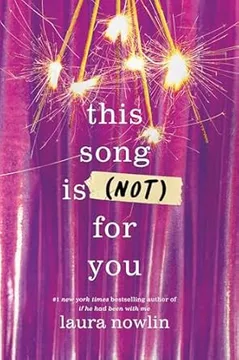


Plot Summary
A Third Musician Appears
Ramona Andrews and Sam Peterson have been inseparable since their first year at Saint Joseph’s Prep, where Ramona decided they should form a band. Now seniors, they are preparing for Artibus College’s music evaluations and imagining a future built around their songs. In the basement waiting area, Ramona meets Tom Cogsworthy, a withdrawn musician who makes experimental noise.
She discovers that he understands the music she loves, and the two trade ideas while Sam auditions. When Sam returns, Ramona urges him to recruit Tom as the band’s missing third member. Sam agrees to give him a chance, though he doubts Tom will want to join. The three leave for a diner, where Ramona makes the invitation and sends Tom their band’s website.
The first meeting establishes the novel’s central pattern: Ramona recognizes possibility in people before they recognize it in themselves. Her confidence is not simply social boldness. She uses enthusiasm to make a place for a stranger in a world where both musicians have felt out of step. Sam’s hesitation, meanwhile, shows how intimacy can be protective and limiting at once. He trusts the small world he and Ramona have made, but her invitation begins to enlarge it. The band becomes the story’s first durable form of belonging.
Sara Could Not Understand
Before the Artibus audition, Tom had dated Sara Miller, a sincere student activist who admired his creativity but wanted a conventional relationship. His Glitter in Odd Places project brought him trouble when police traced a glittered fire hydrant to his car; he received community service and a period of probation.
Later, Tom released feeder goldfish into a downtown fountain as an art stunt, damaging its filter and upsetting Sara, who saw his disregard for the fish as a betrayal of his own ethics.
Their conflict exposed a deeper mismatch. Tom told Sara he loved her but felt no sexual desire, and she ended the relationship, convinced he was denying something about himself. By the time Ramona finds him at Artibus, Tom is wary of being close to anyone again.
Tom’s art is more than eccentric decoration. It is his attempt to speak through altered objects when ordinary social language feels inadequate. The fire hydrant and fountain episodes also test the boundary between intention and consequence: Tom wants to provoke thought, yet his choices can cause harm that his principles forbid. Sara’s departure compounds that conflict by making his nonsexual form of love seem illegible. His loneliness does not arise from an absence of attachment, but from the assumption that attachment must take one approved shape.
The Garage Finds Its Noise
At Sam’s garage, Tom layers electronic effects over one of the band’s songs, and Ramona’s drums and Sam’s guitar suddenly have a new kind of space around them. Sam hears that Tom can serve the music rather than overwhelm it, so he invites him back. As the three experiment, Ramona realizes that everyday surfaces can become percussion, while Tom takes her glitter bombing at a forgotten schoolyard fence.
Their collaboration grows beyond April and the Rain. When their online fan Nanami responds to the new recording, the trio invents a new name, Vandalized by Glitter, after Tom’s arrest report described his work in terms that the band turns into its own artistic identity. Their songs now carry all three musicians’ distinct instincts.
The garage functions as a workshop where difference becomes compositional rather than threatening. Tom’s electronic textures do not replace Sam’s guitar or Ramona’s drumming; they change what each instrument can do beside the others. The band name performs the same transformation on Tom’s criminal record. A phrase meant to reduce his art to vandalism becomes a shared signature, neither denying consequences nor surrendering authorship. Ramona’s discovery that ordinary surfaces can make music also broadens her sense of what counts as talent and where artistic permission comes from.
The Schoolroom Keeps Score
Ramona’s school nemesis, Emmalyn Evans, has mocked her hair, clothes, and noisy individuality for years. When Emmalyn ridicules Ramona’s boots, Ramona finally confronts her publicly and is sent to the principal’s office.
Emmalyn accuses her of performing uniqueness for attention, a charge that unsettles Ramona because it touches the fear that she has become the kind of poseur she despises. Meanwhile, Sam tells a guidance counselor that he is unsure music should become his career.
He loves chemistry and wants to work on sustainable products, but he knows Ramona has built her future around Artibus and the band. Ramona’s own father also continues to treat piano as her likeliest profession, even as she feels drawn to percussion and the music she makes with Sam and Tom.
The conflict with Emmalyn matters because Ramona cannot dismiss it as mere cruelty. The accusation reaches the fragile seam between self-expression and self-conscious performance, forcing her to consider whether resisting conformity can become another form of obedience to an audience. Sam faces a related problem from the opposite direction: he fears that choosing a practical vocation will look like betraying the music that connects him to Ramona. Both are trying to distinguish desire from expectation, but neither yet knows how costly honesty will be.
A Kiss Changes the Trio
After Tom and Ramona spend time together making art, he builds a sound from a homemade instrument she once created, and she kisses him. Ramona experiences the kiss as the beginning of a romance; Tom enjoys the closeness but privately notices that kissing does not awaken the desire he assumes a boyfriend should feel.
They begin dating, and Sam supports them, though seeing Ramona rest a hand on Tom’s knee makes his concealed love painfully visible to him. Tom, afraid that another honest account of his sexuality will cost him a friend, tries to meet Ramona’s expectations rather than explain his limits. Ramona remains in love with Sam as well, but does not yet understand how that feeling fits beside her new relationship with Tom.
The kiss changes the group without creating a simple romantic triangle. Ramona’s affection for Tom is genuine, as is her enduring attachment to Sam; the difficulty lies in a culture that treats those feelings as mutually exclusive. Tom’s unease is not a lack of care but a fear that his way of experiencing intimacy will be judged as defective. Sam’s silence is generous, yet it also protects him from the risk of asking for what he wants. The trio’s closeness now depends on truths none of them has fully spoken.
Three Futures Break Apart
Sam never submits an Artibus application. He chooses Saint Louis University and a possible future in sustainable chemistry, believing that music should remain a vital part of his life without becoming his profession.
Tom decides against college altogether, hoping to work, study independently, and travel rather than accept a life planned by others. Before he can tell Ramona directly, he reconnects with Sara over coffee and explains that he loves Ramona and Sam, while still denying that his feelings fit conventional sexual categories.
Sara questions whether Ramona understands him. Then, in the garage, Tom reveals his decision and Sam admits his own. Ramona, who had relied on the three of them moving together toward adulthood, leaves overwhelmed and afraid that the band and their friendship will dissolve.
The rupture is caused less by incompatible affection than by delayed disclosure. Sam and Tom have each made thoughtful choices, but their silence has allowed Ramona to build her future around an agreement that never existed. Her collapse reveals how much the band has served as a promise of continuity, not just a musical project. The two boys are also learning that self-knowledge becomes ethically incomplete when it is withheld from people who have planned around you. The coming reconciliation must preserve their separate futures without pretending the surprise did not hurt.
A Wall Holds Them Together
Ramona returns to school subdued, and Tom recognizes that reassurance alone will not repair her fear. He brings her and Sam to a sunlit, abandoned warehouse near the Mississippi River, where he has painted three intersecting circles on a brick wall. He explains that each circle represents a distinct person, while their overlap represents what they share.
The mural gives physical form to his belief that leaving for different futures does not erase their bond. Ramona takes both boys’ hands, and Sam accepts Tom’s promise that their friendship will continue beyond high school. The gesture steadies Ramona enough to face what she has not admitted: her love for Sam is not merely friendship, and Tom’s understanding of her must include that truth.
Tom answers Ramona’s fear with an image rather than a demand. The circles refuse both fusion and separation: none of the three is reduced to a role, yet none exists untouched by the others. This is a more mature model of belonging than the shared college plan they had assumed would guarantee closeness. The warehouse, an overlooked place marked by decay, becomes a site of chosen meaning, echoing Tom’s earlier art while changing its purpose. His work no longer tries only to alter public space. It helps the friends imagine a future that can hold difference.
Love Refuses a Triangle
Sam finally tells Ramona that he loves her and wants to be with her, while making clear that he also loves Tom and does not want to break their friendship. Ramona admits that she loves Sam too, but cannot abandon Tom. She takes Tom to the park where she played as a child and asks whether he wants the same kind of physical relationship she does.
Tom explains that he loves her but experiences no sexual desire, and Ramona accepts this as part of who he is rather than a secret he must cure. She also tells Tom about Sam’s feelings. Tom is surprised but not angry, and agrees that they can try being together. Ramona asks for time to reconsider their physical boundaries, and Tom gives her that space.
The turning point depends on consent and specificity, not on romance as a solution to every difference. Sam names his desire without claiming ownership; Tom names his limits without denying love; Ramona refuses the false choice between them while acknowledging that her needs still matter. The arrangement is not presented as effortless. Ramona asks for time to understand what intimacy with Tom can mean, and the others accept uncertainty instead of forcing immediate reassurance. Their honesty creates a relationship structure that conventional labels cannot supply, but that their actual affections can.
They Choose Their Own Instruments
As the trio prepares for graduation, Sam confirms his plan to study chemistry and pursue environmentally responsible products, while keeping music in his life. Tom negotiates with his parents to work at Grift Craft, pay rent, take a community college course at a time, and save for travel.
Ramona performs piano at a school exhibition, then tells her father she will pursue percussion at Artibus as well as piano. He worries about her prospects, but she insists that her calling includes both instruments.
After learning more about Emmalyn’s bereavement, Ramona offers her a rose and apologizes for their years of hostility; Emmalyn apologizes too. Ramona’s father tells her how proud he is, and she begins to understand that honoring her mother does not require repeating her exact musical path.
These choices resolve the novel’s conflict between inherited scripts and self-authored lives without treating practicality as cowardice or unconventionality as virtue by itself. Sam selects a career that fits his actual interests; Tom accepts work and compromise as part of a life he still wants to shape; Ramona refuses to divide her musicianship into respectable and secondary parts. Her peace with Emmalyn follows the same logic: understanding another person does not erase injury, but it makes repair possible. Each character moves forward by integrating attachment with autonomy rather than sacrificing one for the other.
Their Song Faces the Room
At Tom’s senior showcase, Vandalized by Glitter performs live for the first time. The band sets up quickly, with Sam on guitar, Ramona on drums, and Tom shaping the electronic sound. Their first song ends to scattered applause and a blunt expression of confusion from someone in the audience. Rather than retreat, Tom introduces their next piece as music made for the people who might connect with it, not a demand that everyone approve.
Sam and Ramona signal that they are ready, and the three begin again. The final performance does not promise fame, a shared college campus, or a conventional romantic ending. It gives them something more immediate: a public moment in which their chosen sound and chosen relationships belong to them.
The showcase brings the title’s idea into action. The band’s music is not a product calibrated to win the room, and Tom’s introduction protects the work from being measured only by its reception. The audience’s mixed response is important because it prevents the ending from turning acceptance into a reward for being different. The friends perform anyway, supported by the trust they have built among themselves. Their final act is neither escape from judgment nor submission to it. They claim the right to make something meaningful without requiring universal recognition.
Analysis
This is a coming-of-age story in which the central achievement is not choosing between friendship and romance, or between art and practical work, but learning to describe the self accurately enough for other people to respond. The three narrators are especially useful because their emotional vocabularies do not develop at the same speed. Ramona treats feeling as something she can recognize immediately, Sam treats it as something he must protect until it is safe to say, and Tom often understands himself through art before he can explain himself in ordinary terms. Their mismatched forms of expression create much of the plot’s pain.
The novel also refuses to equate love with a single physical script. Tom’s lack of sexual desire does not cancel his capacity for attachment, just as Ramona’s love for both boys does not make either bond insincere. The story gives this arrangement emotional credibility by making it negotiated rather than effortless. Sam names what he wants without claiming ownership; Tom identifies what he cannot offer; Ramona considers her own needs and asks for time. Their care becomes ethical when it includes limits, not when it erases them.
Art carries the same argument. Tom’s public interventions begin as attempts to jolt strangers into attention, but the consequences of the hydrant and fountain teach him that intention does not absolve harm. In the band, creation becomes more reciprocal: each person changes the work by listening to the others. The final showcase extends that principle into public view. The crowd does not need to understand the music for the performance to matter. By the end, these young people have not secured identical futures or universal approval. They have built something more durable: a way of remaining connected without forcing one another into the same life.
Review Summary
This Song Is (Not) For You receives mixed reactions, averaging 2.47/5 stars. Praised elements include its exploration of asexuality and non-monogamy, distinctive character voices, and fresh take on the love triangle trope. Many readers appreciated Tom's asexual representation and the unconventional relationship dynamic. However, critics found the plot slow-moving, characters caricature-like, and the music snobbery off-putting. Some felt the asexual representation was mishandled, while others celebrated it. The writing style itself was generally well-received, even among those who disliked the overall story.
People Also Read



Characters
Ramona Andrews
Restless drummer and pianistRamona is a quick-thinking, outspoken musician who treats school conformity as a challenge and music as a way to make connection. Her mother’s death and her father’s expectations shape her relationship with piano, while percussion gives her another route into artistic freedom. She is fiercely loyal to Sam and drawn to people who refuse to perform a false version of themselves. Her confidence can make her seem certain even when she is frightened of being misunderstood. Ramona’s emotional life is expansive, but she must learn to explain what she wants rather than assuming others can read her enthusiasm. She grows by holding her ambitions, grief, and affection together instead of letting one define the rest.
Sam Peterson
Quiet guitar-playing anchorSam is a gifted, attentive guitarist whose silences often conceal careful thought rather than indifference. Ramona has been his closest friend since their first year of high school, and playing music with her gives him a deep sense of belonging. He is also interested in chemistry and environmental problems, though pursuing a practical vocation feels emotionally complicated when music has tied him so closely to Ramona. His parents’ divorce and his father’s distance have taught him not to expect much emotional support. Sam’s gentleness is a strength, but it can become self-erasure when he withholds his needs to protect other people. His development centers on speaking plainly without turning love into possession.
Tom Cogsworthy
Experimental sound artistTom is an unconventional musician and visual artist who uses altered objects, electronic sound, and public interventions to express what he struggles to say directly. His glitter-covered car and improvised instruments mark him as someone who resists ordinary measures of seriousness, but his art is guided by a real concern about harm and social indifference. Tom is wary of closeness after being misunderstood in a previous relationship. He values independence and fears that a conventional future will close around him before he has chosen it. His attachments are intense even when his experience of intimacy differs from other people’s expectations. He must learn that honesty about his limits can preserve relationships rather than destroy them.
Sara Miller
Tom’s activist former girlfriendSara is a student leader who channels her compassion into organized action, from charity efforts at school to education about global problems. Her sincerity contrasts with Tom’s more disruptive approach to public art: she wants change to be practical and accountable. She cares about Tom, but she expects romantic intimacy to follow familiar patterns and has difficulty understanding a relationship that does not include sexual desire. Sara is not simply conventional or judgmental; she is trying to interpret Tom through the framework she knows. Her presence exposes how good intentions can coexist with assumptions that leave another person unseen.
Emmalyn Evans
Ramona’s school rivalEmmalyn is a classmate who repeatedly targets Ramona’s appearance and self-presentation, often disguising hostility as casual commentary. Her polished social position makes her a foil to Ramona’s deliberate nonconformity, but she is more than a symbol of school cruelty. Emmalyn carries private grief that Ramona initially knows nothing about. Their hostility grows through repeated public humiliations and mutual assumptions, showing how easily people become fixed in roles when neither attempts a direct conversation. Emmalyn’s violin playing and student life also give her interests beyond the conflict that defines her relationship with Ramona.
Ramona’s father
Protective English teacherRamona’s father is an older English teacher and single parent who supports her education and takes pride in her musical promise. He encourages her toward piano because it is the instrument her mother pursued and the path he believes offers the strongest career prospects. His care is genuine, but grief and protectiveness can make him mistake safety for choosing on Ramona’s behalf. He also shares an intellectual bond with her and supports her right to think independently. Their relationship is affectionate, teasing, and shaped by the absence of Ramona’s mother, whose memory remains present even when they rarely discuss it.
Tom’s parents
Worried, loving parentsTom’s parents love him but struggle to trust a future that does not follow the college path they understand. They have raised several children with different ambitions, yet Tom’s desire to work, travel, and educate himself outside a conventional program unsettles them. Their concern reflects both practical fear and the difficulty of recognizing adulthood when a child’s priorities differ from their own. Tom often experiences their questions as pressure, while they interpret his privacy as a reason to worry. Their relationship becomes an important test of whether love can make room for disagreement without withdrawing support.
Sam’s mother
Restless, caring parentSam’s mother is affectionate and continually reinventing her interests, from politics and spirituality to cooking and environmental causes. Her shifting enthusiasms sometimes make her seem uncertain, but she offers Sam a warmer emotional presence than his father does. She notices when he is hurting and tries to give him space to talk without forcing him. Her openness helps make the home a place where changing one’s mind is not automatically treated as failure. She is imperfect and sometimes awkward, yet her affection is steady.
Sam’s father
Distant providerSam’s father left the family home after a marriage shaped by emotional distance. He maintains contact through occasional outings and substantial financial support, but offers little spontaneous intimacy. Sam gradually understands that his father’s limitations are not a measure of Sam’s worth, though that understanding does not erase the loneliness. The father represents a model of family obligation based on provision and routine rather than emotional openness. His presence helps explain why Sam is so careful not to burden others with his feelings.
Ally Tabor
Determined drama club presidentAlly is a serious, energetic theater student who cares about school traditions and the future of the senior showcase. She can be pushy, but her persistence with Tom comes from a genuine belief that his music deserves to be heard. Unlike classmates who are intimidated by his difference, Ally treats his participation as something he can choose for himself. Her practical confidence helps move Tom toward a public performance without demanding that he become more conventional.
Nanami
The band’s devoted fanNanami is the online listener who follows April and the Rain and responds quickly to its recordings. Although she never appears in person, her attention gives the young musicians an early audience and helps them recognize when their sound has changed. She represents the possibility of connection beyond the narrow world of school.
Mr. Van Bueran
Sam’s guidance counselorMr. Van Bueran checks in on Sam after his parents separate and gives him room to admit doubts about studying music. His practical suggestion of a chemistry program helps Sam consider an ambition he has not wanted to voice. He offers support without forcing Sam to define his future immediately.
Teddy
Grift Craft’s ownerTeddy owns the art supply store where Tom works and becomes an adult contact who takes his skills seriously. Their long conversations about art and music make the store feel less like a fallback and more like a community. Teddy’s willingness to offer Tom steady work gives practical support to a less conventional plan.
Plot Devices
Three rotating narrators
Three views of one bondThe story alternates among Ramona, Sam, and Tom, allowing each character to interpret the same friendships from a different emotional position. Ramona’s certainty can obscure her uncertainty; Sam’s restraint hides the scale of his longing; Tom’s inventive self-image conceals his fear of being rejected for how he experiences intimacy. The shifting perspectives prevent the reader from treating any one person’s understanding as complete. They also make delayed communication legible: the audience can see how each character’s private assumptions shape what the others are allowed to know.
The evolving band
Friendship made audibleMusic provides the trio with a shared practice before they can articulate the shape of their relationships. Sam’s guitar, Ramona’s percussion, and Tom’s electronic effects remain distinct, but their songs change when the three musicians listen and respond to one another. The band’s growth marks emotional shifts: Tom’s arrival expands the original duo, and the new sound gives their friendship a form that is not owned by any pair. Rehearsals, recordings, and the final performance turn private feeling into a collaborative act without requiring the characters to explain every emotion aloud.
Glitter in public spaces
Art tests its own ethicsTom’s glitter interventions challenge the idea that beauty belongs only in galleries, but each project also asks whether artistic intention excuses consequences. The hydrant leads to arrest and community service; the goldfish stunt damages a fountain and strains his relationship with Sara; later, glittering a neglected fence becomes a collaboration with Ramona that changes how she sees both art and Tom. The recurring device evolves from provocation toward connection. It gives Tom a visual language for his values while forcing him to confront the gap between making a statement and taking responsibility for what it does.
Artibus and career choices
A shared plan under pressureArtibus begins as the destination Ramona and Sam imagine together, a way out of their school and into a life organized around music. That expectation later reveals how much they have assumed about one another. Sam’s interest in chemistry and Tom’s wish to work, travel, and study independently challenge the idea that shared friendship requires shared plans. Artibus therefore functions as both a genuine opportunity and a pressure point. The characters must separate loyalty to each other from loyalty to a single institutional route, then decide what kinds of support can survive their different choices.
About the Author
Other books by Laura Nowlin



Download PDF
Download EPUB
.epub digital book format is ideal for reading ebooks on phones, tablets, and e-readers.








