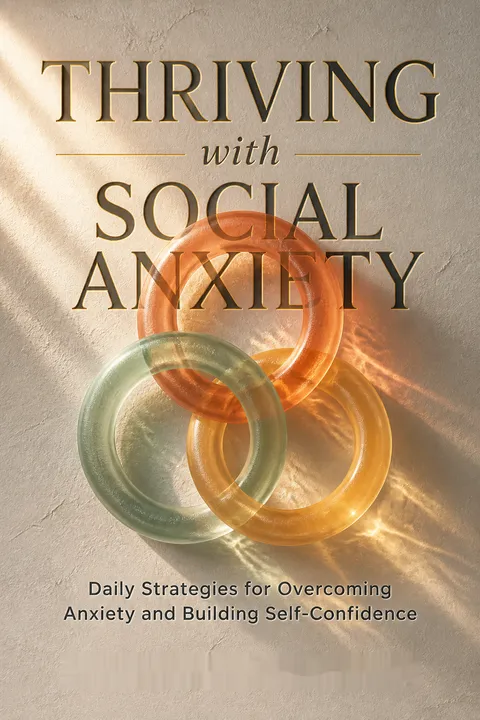


Key Takeaways
Treat social anxiety as a workable pattern, not a personality flaw
Know what you are facing. Social anxiety disorder involves intense fear of being scrutinized or judged in social situations, followed by avoidance or enduring the situation with distress. The book describes the fear as persistent, typically lasting six months or more, and disruptive to work, relationships, or other important parts of life. A clinician, not a self-test, should make the diagnosis.
Separate symptoms from temperament. Shyness may ease as a person gets familiar with a situation, and introversion describes a preference for solitude to recharge. Social anxiety can bring worry before, during, and after interactions. In the book’s networking example, the coworker’s cancellation triggers dread, physical symptoms, avoidance, and hours of replaying perceived mistakes. That pattern is more than simply preferring a quiet evening.
The distinction matters because labels shape what people think can change. Calling impairment mere shyness can delay help, while treating every preference for solitude as a disorder can pathologize temperament. The book’s focus on persistence and interference offers a useful middle ground: distress deserves attention when it repeatedly narrows a person’s choices. Its diagnostic checklist is informative, but a brief scenario cannot capture cultural context, disability, trauma, or other explanations. Self-understanding can begin with observation, while diagnosis and treatment planning remain collaborative clinical work.
Test anxious thoughts as predictions instead of treating them as reliable forecasts
Catch the mental script. Cognitive behavioral therapy, or CBT, helps people notice thoughts that shape their behavior, assess whether those thoughts fit the evidence, and develop more useful responses. The book calls the rapid, habitual thoughts that appear in stressful moments automatic thoughts. At lunch, for instance, a person might assume a new acquaintance agreed to meet only out of pity. That assumption feels convincing, but the invitation itself also fits a simpler explanation: the acquaintance wants to get to know them.
Make the test concrete. The book’s five-minute exercise asks readers to identify a specific thought, notice what triggered it, and consider a more realistic interpretation. It also names recurring distortions such as mind reading, catastrophizing, and all-or-nothing thinking. A journal can reveal when these patterns recur and which situations activate deeper beliefs about being unworthy or unlikeable.
CBT is strongest when it teaches a person to examine evidence, not merely replace a frightening thought with a cheerful one. That distinction matters: a customer-service worker may genuinely be rude, and an audience may notice a mistake. The useful question is whether the feared outcome is certain, catastrophic, or a fair measure of personal worth. The book’s method turns vague dread into a testable prediction, which also resembles scientific reasoning: form a hypothesis, look for evidence, and revise the conclusion. For some people, a therapist helps keep that inquiry balanced rather than turning it into another demand to think perfectly.
Build a fear ladder, then practice each rung without your usual escape route
Approach fear in steps. Exposure therapy means deliberately entering a feared situation, safely and repeatedly, instead of avoiding it. The book suggests ranking situations from least to most frightening on a fear ladder. Someone anxious about dating might begin by thinking about dating, then spend time in a room with someone they find attractive, and only later attempt a date. Repeated practice can teach the body that anxiety rises without proving that danger is present.
Notice the escape habits. Safety behaviors are actions meant to reduce perceived risk, such as hiding at the edge of a party, avoiding eye contact, speaking too quickly, or retreating to a phone. They may provide immediate relief while preserving the belief that the situation was dangerous. The book recommends setting a small goal, staying long enough to observe what happens, and reviewing the experience afterward. A therapist can help shape the steps.
Exposure is not a dare to overwhelm oneself. Its value lies in learning through experience: a feared prediction can be tested, and anxiety can be tolerated without the usual escape. This resembles gradual skill acquisition in rehabilitation, where challenge is calibrated rather than maximized. The safety-behavior idea is also useful, though context matters. A phone can be a crutch in one setting and a legitimate accessibility or safety tool in another. The aim is not to eliminate every coping aid, but to notice which habits prevent learning. Unsupervised flooding, the book’s term for confronting the most frightening situation immediately, is not a sensible default.
Notice thoughts without obeying them; mindfulness is not mental silence
Let thoughts pass. Mindfulness is focused awareness of the present moment, with attention to thoughts and feelings that arise without immediately judging or acting on them. Unlike CBT, which examines and reframes thoughts, mindfulness practices noticing them and returning attention to what is happening now. The book suggests a brief pause to sense the body, notice the breath, and observe a worry as if it were passing across the sky.
Use it in ordinary moments. When a person running late begins imagining an angry friend and a ruined evening, attention can shift to sounds, sensations, and the next practical step. Mindfulness does not require the worry to disappear. The book also proposes bringing deliberate attention to routine activities, such as showering or making coffee, so that the mind is less captured by rumination about the past or future.
Mindfulness offers a valuable skill called decentering: recognizing a thought as an event in the mind rather than a command or fact. That can make room for choice without requiring a person to win an argument against every anxious idea. It is not the same as passivity, however. Acceptance of a feeling can coexist with taking action, setting a boundary, or seeking help. Nor does noticing the present automatically resolve real stressors. The practice is most useful when it changes one’s relationship to distress, not when it becomes another test of whether one can achieve perfect calm.
Use breathing and meditation to meet bodily alarm with steady attention
Work with the body. The book explains that social fear can activate the fight-or-flight response, bringing a racing heart, tension, sweating, nausea, or shaking. It recommends noticing these sensations and using slow, attentive breathing as a way to steady attention. A simple practice is to sit or stand securely, observe the breath moving in and out, and gently lengthen the count if that feels comfortable.
Expect the mind to wander. Meditation is not the absence of thought. Beginners may become more aware of mental noise, then mistakenly conclude they are failing. The book instead suggests noticing a thought and returning attention to the breath, without scolding oneself. It describes five minutes as a reasonable starting point and presents longer guided imagery and self-compassion practices for people who want them.
The body is not simply an obstacle to be silenced. Paying attention to breathing can provide a stable anchor when fear makes attention jump toward imagined judgment. This is a practical form of self-regulation, not proof that every symptom is harmless or that breathing alone treats an anxiety disorder. Some people find internal focus uncomfortable, especially during panic. In that case, attending to external sounds, objects, or physical contact with the ground may be more tolerable. The book’s most helpful correction is modest: wandering attention is part of practice, not evidence that meditation is impossible.
Build confidence by taking small social actions before you feel confident
Action can come first. The book presents confidence less as loudness or fearlessness than as acting toward a goal despite uncertainty. A person who wants to approach someone at a concert, for example, might first take a calming breath, move a little closer, and make eye contact rather than demand instant boldness from themselves. Repeated actions provide evidence that discomfort can be survived.
Shrink the imagined audience. The spotlight effect is the tendency to overestimate how much other people notice one’s appearance or behavior. The book illustrates it with Jocelyn, who arrives late to class and assumes everyone is judging her. A useful check is to remember how little time most people spend scrutinizing strangers. The author also suggests open body language and practicing conversation, including follow-up questions that move beyond routine small talk.
This approach links confidence to behavioral learning: action can generate evidence that a person is more capable than anxiety predicts. It also counters the self-focused attention that makes every blush or pause feel like a public announcement. The strategy should not become a new performance rule, such as monitoring posture constantly or forcing conversation in every setting. Confidence is not a requirement to be socially expansive. A more humane measure is whether a person can choose an action that fits their values, rather than letting fear make the choice automatically.
State your needs clearly without treating disagreement as danger
Make your message specific. Assertiveness means expressing needs, opinions, and feelings while respecting the other person’s rights. The book describes several useful forms: make a direct request, acknowledge the other person’s perspective while stating your own need, clarify when an agreement has changed, or explain how someone’s behavior affects you. A sentence such as saying that interruptions make it hard to finish a thought is clearer than silently building resentment.
Practice at low stakes. People who fear conflict may routinely agree to plans they do not want or answer that any restaurant is fine. The book recommends rehearsing concise statements with a trusted person and using an “I” statement to describe feelings without turning the conversation into an accusation. It also offers a simple reframe: declining a favor can mean honoring a commitment to one’s own time, not rejecting the person who asked.
Assertiveness is a social skill, not a guarantee of approval. Its purpose is to make a person’s position available for discussion, including the possibility of compromise. That is especially important for anxious people, who may confuse another person’s disappointment with proof that they have done something wrong. Clear language can reduce ambiguity, but it cannot control how others respond. The book’s emphasis on practice is apt: direct communication often feels awkward before it feels natural. A respectful boundary is still valid when the other person dislikes hearing it.
Protect restorative solitude, but interrupt withdrawal that leaves you lonelier
Ask what the time alone does. The book distinguishes purposeful solitude, which allows rest or reflection, from isolation driven by fear, shame, or avoidance. A quiet hike, journaling, or a chosen evening alone may restore energy. By contrast, repeatedly turning down invitations and then feeling lonely can reinforce the belief that social life is inaccessible. The useful question is not simply whether one is alone, but whether the choice supports well-being or shrinks it.
Track the pattern. The book points to warning signs such as losing contact with close friends, persistent loneliness, low self-worth, and neglecting basic care. It suggests planning activities that include both solo interests and manageable contact with others. Even a small act, such as writing to someone trusted about what has been difficult, can make a private struggle more visible and invite connection.
Solitude and connection are not opposites; healthy social life requires room for both. This distinction guards against two bad assumptions: that every person should want frequent company, and that withdrawal is always restorative. The emotional result and the pattern over time offer better clues. A person can feel lonely in a crowd, too, especially when anxiety prevents self-disclosure. Reaching out need not mean joining a large gathering. A one-to-one message or shared activity may provide a more realistic bridge back to other people.
Practice gratitude to widen attention, not to deny what hurts
Look beyond the deficit. The book argues that anxiety can narrow attention toward mistakes, missing opportunities, and imagined rejection. Gratitude practice deliberately notices what is present: a safe place to live, a supportive friend, or a pleasant moment in an otherwise difficult day. The apartment example makes the point: an unfurnished room can feel like evidence of what is missing, or a reminder of shelter and possibility.
Make it relational. The book describes keeping a gratitude journal and thanking people directly. It cites a study in which 411 people wrote and delivered gratitude letters, with writers reporting increased happiness. It also suggests noticing what anxiety may have taught a person, such as empathy or careful listening. That perspective is an invitation to reduce self-attack, not a claim that anxiety itself is good.
Gratitude can broaden attention without falsifying reality. In psychology, this resembles attentional rebalancing: distress is acknowledged, while positive information that might otherwise be overlooked is allowed into view. The distinction between expansion and denial is essential. A person need not feel thankful for bullying, disability, or the disorder itself. Nor should gratitude become a moral scorecard for people who remain distressed. Its social dimension may be especially useful here: a sincere thank-you is both a shift in attention and a small, concrete act of connection.
Use food, movement, and sleep as supports, not stand-alone treatments
Start with manageable care. The book recommends regular movement, balanced meals, hydration, and adequate sleep as parts of a broader plan. It cites a public-health recommendation of 30 minutes of moderate exercise daily, while advising beginners to start with shorter, easier activity. Walking, dancing, yoga, and tai chi are offered as ways to combine movement with attention to the body. The book also notes that caffeine may intensify anxiety for some people and that alcohol can offer short relief while worsening mood or anxiety afterward.
Keep health claims in proportion. A 2010 study of about 1,000 women found an association between a diet including vegetables, fruit, meat, fish, and whole grains and a lower likelihood of anxiety or depression. Association does not establish that diet caused the difference. The book also discusses teas, oils, and supplements, but emphasizes checking with a health professional because natural products can have side effects and medication interactions.
Lifestyle habits can improve the conditions in which coping happens: a rested, nourished, active body may be easier to regulate than one under chronic strain. But these practices should not carry the burden of curing a psychiatric disorder. Food studies are especially vulnerable to confounding, since income, health, and living conditions influence both diet and mood. The book’s caution about supplements is important because natural does not mean risk-free. A realistic approach is to choose sustainable habits for general health, observe their effects, and avoid blaming oneself when they do not eliminate anxiety.
Get professional and peer support when anxiety keeps narrowing daily life
Self-help has a place. The book presents CBT exercises, exposure, mindfulness, meditation, and lifestyle changes as possible parts of a plan, not a substitute for individualized care. It advises speaking with a clinician about diagnosis and medication, including potential benefits, side effects, and interactions. A therapist can help select an approach and pace that fit the person, and it is reasonable to look for a professional with whom honest conversation feels possible.
Let other people understand. The closing story follows Samuel, a man who had spent years being seen as quiet and distant. After recognizing his experience in a description of social anxiety, he joined a support group, felt understood, and found it easier to speak with his wife. The book recommends peer groups for shared understanding, encouragement, and accountability. Progress is framed as ongoing management, not a promise of becoming permanently anxiety-free.
The story of Samuel highlights a therapeutic ingredient that self-guided exercises cannot fully provide: being accurately understood by another person. Professional care can also distinguish social anxiety from conditions that need different approaches and can help manage severe impairment. The book’s practical tone is strongest when it treats tools as options to test rather than a universal prescription. Its 2014 publication date also matters: readers should confirm current clinical guidance with qualified providers rather than rely on older medication or prevalence details. Seeking help is an active part of the work, not evidence that personal effort has failed.
Analysis
This book is a practical guide organized around a central idea: social anxiety becomes more manageable when a person understands its thought, body, and avoidance loops, then practices new responses in small, repeatable ways. Its structure moves from naming the condition to offering a toolkit, with short exercises designed for daily life. That makes the book approachable, especially for readers who feel overwhelmed by the prospect of therapy or large social challenges.
Its most coherent thread is the relationship between avoidance and learning. A feared interaction triggers predictions of humiliation; avoiding it brings immediate relief, but leaves the prediction untested. Cognitive behavioral techniques invite examination of those predictions, while exposure gives the person a chance to gather lived evidence. Mindfulness and breathing address the experience of anxiety itself, and assertiveness and social connection help translate internal work into relationships. These approaches are strongest as complements, not interchangeable techniques.
The guide also humanizes social anxiety by distinguishing it from introversion and by treating setbacks as part of practice. Its broad range is both useful and a limitation. The chapters on nutrition, supplements, meditation, and exercise sit alongside established psychological approaches, but they do not all carry the same evidential weight. Several health claims reflect the book’s 2014 context and should not be mistaken for current clinical guidance. Likewise, reframing thoughts is not a mandate for positivity, and exposure should not mean forcing oneself into unsafe or overwhelming situations.
The most durable value is therefore not a promise of cure but a way to choose the next step: observe the pattern, select a manageable practice, review what happened, and seek qualified support when daily life remains constrained. The book offers encouragement without requiring anxiety to vanish before life can expand.
Review Summary
Thriving With Social Anxiety receives mixed reviews. Many readers find it helpful, praising its practical tips, exercises, and accessible information. Some appreciate its focus on drug-free strategies and encouragement to seek professional help. However, others criticize it for being too basic, vague, or oversimplified. Some readers feel it lacks depth and specific advice for severe cases. The book's quizzes and time-based exercises are generally well-received. Overall, it's considered most beneficial for those with mild social anxiety or those new to the topic.
Glossary
Social anxiety disorder (SAD)
persistent fear of scrutinyA mental health condition involving marked fear or anxiety in social situations where a person may be judged or observed. The book emphasizes that the fear is persistent, often leads to avoidance or intense distress, and interferes with important parts of life. A health professional should assess and diagnose the condition.
Cognitive behavioral therapy (CBT)
examines thoughts and behaviorA form of therapy that helps people identify thoughts and beliefs connected to distressing behavior, assess those thoughts, and develop more helpful responses. In the book, CBT is used to notice anxious predictions, consider whether they are realistic, and practice alternative interpretations and actions.
Automatic thoughts
rapid, habitual mental responsesThoughts that appear quickly and often without deliberate effort when a situation triggers anxiety. They may involve assumptions about being disliked, embarrassment, or failure. The book encourages readers to identify these thoughts and examine them rather than treating their immediate appearance as proof.
Negative core beliefs
deep beliefs about personal worthFundamental negative assumptions about oneself, such as believing one is unworthy or unlovable. In the book’s account, these beliefs can generate recurring anxious thoughts and influence behavior, such as avoiding a job application or expecting rejection. CBT aims to identify and gradually reconsider them.
Exposure therapy
planned practice with feared situationsA therapeutic approach that helps a person face a feared situation or stimulus in a safe, deliberate way rather than continually avoiding it. The book describes graduated practice, often moving from less distressing situations toward more challenging ones, and recommends professional guidance when needed.
Safety behaviors
habits that shield against feared judgmentActions used to feel protected in social situations, such as avoiding eye contact, standing apart, speaking very softly, or retreating to a phone. The book cautions that these behaviors can preserve the sense that a situation is dangerous, even while offering short-term comfort.
Fear ladder
ranked steps for facing fearA list of anxiety-provoking situations arranged from least to most frightening, often with each item given a rating. The person begins with a manageable step and practices before moving toward harder situations. The book uses the ladder to make exposure gradual and specific.
Mindfulness
present awareness without judgmentThe practice of paying attention to present experience, including thoughts, feelings, bodily sensations, and surroundings, without immediately judging or reacting to them. In the book, mindfulness differs from CBT because it emphasizes observing and accepting thoughts rather than actively testing and reframing them.
Spotlight effect
overestimating others’ attentionThe tendency to assume that other people notice one’s appearance or behavior more than they actually do. The book uses the example of a student arriving late to class and imagining that everyone is judging her, then encourages readers to consider how little attention they typically give strangers’ minor mistakes.
Mindfulness-Based Stress Reduction (MBSR)
structured mindfulness programA structured program developed by Jon Kabat-Zinn at the University of Massachusetts Medical School in 1979. The book describes MBSR as a program that brings mindfulness practices into stress management and refers to studies of its use in health settings. It is distinct from a single meditation exercise.
Download PDF
Download EPUB
.epub digital book format is ideal for reading ebooks on phones, tablets, and e-readers.








