


Plot Summary
A Priest’s Mind Unravels
On the first Sunday of Advent, 1962, Doctor Jack Troy1 attends Mass in Faha alongside his eldest daughter Ronnie,2 enduring the rituals without faith. His wife Regina is dead of cancer, and the chemist Annie Mooney,10 whom he loved silently, has been gone four years.
Midway through the sermon, the elderly Canon, Father Tom,4 loses his words. He pauses, smiles, hums tunelessly, and at last speaks of “the birth of Jack… Christmas” before retreating. The congregation freezes in embarrassment.
Doctor Troy1 studies the priest4 with clinical detachment but does not intervene immediately, recognizing the humiliation at stake. After Mass, parishioners waylay the doctor1 with medical requests as usual. He visits Mrs Prendergast11’s post office briefly, then drives with Ronnie2 to check on the dying Aine Crowe at her farmhouse.
This opening establishes the novel’s central tensions: the collision between public ritual and private despair. Doctor Troy performs his role impeccably while inwardly hollowed by loss. His unexpressed love for Annie Mooney and his failure to declare himself create the psychological template for his later schemes. Father Tom’s mental collapse foreshadows the theme of institutional authority crumbling before human vulnerability. The scene also introduces the communal surveillance of Faha, where nothing is truly private and where dignity must be maintained through elaborate pretense.
The Blackboard Confession
At the Crowe farmhouse, Doctor Troy1 examines Aine, known as Doady, who lies paralyzed and nearly speechless after two strokes. Her husband Mossie, called Ganga, cares for her alone, deaf and undefeated. In the kitchen, the doctor1 notices a child’s blackboard with Ronnie2’s handwriting: “NOE?”
and beneath it, in Mossie’s block letters, “AMERICA.” The name strikes him like a diagnosis: Ronnie2 still thinks of Noel Crowe,7 Mossie’s grandson, who spent a summer in Faha four years earlier. The doctor1 had discouraged the young man’s7 visits with a cold manner, and Noel7 left for the States.
Now Jack Troy1 realizes his eldest daughter2 may harbor a love he himself thwarted. He secretly copies Noel7’s address from the blackboard, concealing his discovery from Ronnie2 as they drive to the hotel for Sunday dinner.
The blackboard functions as an unconscious confession, the kind of trace evidence that reveals what polite conversation conceals. Ronnie’s single word “NOE?” bears the weight of four years of unexpressed longing. The scene mirrors Doctor Troy’s own silence about Annie Mooney: both father and daughter imprison themselves in unspoken love. The moment catalyzes the doctor’s recognition that his paternal protectiveness has been a barrier, not a shield. His decision to copy the address secretly marks the beginning of his transformation from passive observer to active, if misguided, agent of his daughter’s happiness.
The Christmas Fair Foundling
Before dawn, twelve-year-old Jude Quinlan3 and his sister Mary drive their father’s cattle from the Bog Meadow to the Christmas Fair in Faha. Jude3 runs with the speed of a boy who once nearly died, the infant son3 thrown into the air by his father Pat6 at a fair and dropped on the pavement, surviving a fractured skull.
His older brother Patrick was not as lucky: killed by a cow in the milking parlor on the day electricity arrived. At the fair, Pat6 sells the cattle to Mick Lynch to pay gambling debts, leaving the family with only a lucky penny.
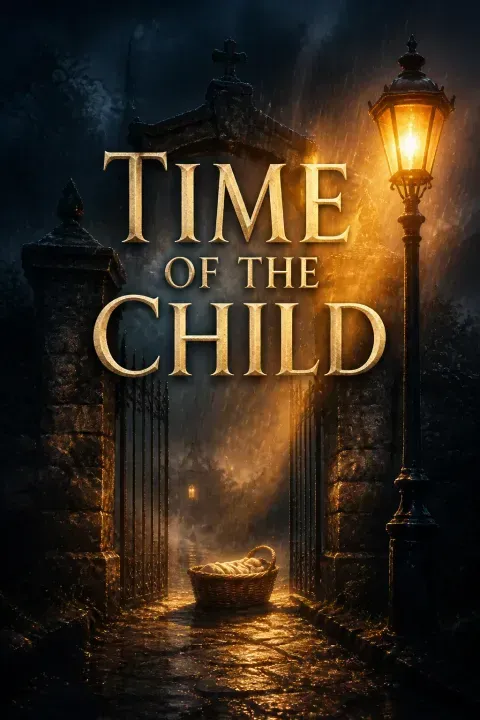
Jude3 wanders the fair, helps a trader named Moriarty, visits his brother’s grave, and bargains with the fairies at a ringfort for luck. Late that night, behind the church by the river, he finds a bundle: a newborn girl,8 cold and still.
Jude embodies the book’s central meditation on luck and providence. His survival as an infant and his brother’s death create a survivor’s guilt that shapes his every action. The fairy fort ritual reveals a boy balanced between magical thinking and harsh reality, willing to try anything to change his family’s fortunes. The Christmas Fair provides the chaotic, liminal space where normal rules suspend: animals and humans intermingle, money and debt circulate, and a child can be abandoned without witness. Jude’s discovery is both random and fated, the moment that will connect two families.
Breath Returns to the Dead
A tractor arrives at Avalon House carrying Jude Quinlan,3 the infant8 cradled in his arms, and the twin Talty brothers,9 Tim and Tom. Ronnie2 opens the door to find them standing in the porch light, rain glazing everything. Jude3 announces the baby8 is dead. Doctor Troy1 takes the child8 to his surgery. She is not breathing, has no pulse.
He removes her wet wrappings, warms her against his own chest, and breathes into her. On the third breath, life surges back, vivid and startling. He cries out involuntarily. When he carries the living infant8 into the kitchen and passes her to Ronnie,2 the Talty brothers9 and Jude3 drop to their knees on the cold floor and pray the rosary for her soul. Ronnie2 joins them, then takes the baby8 and does not let go.
The revival scene operates on the boundary between medical science and miracle. Doctor Troy insists to himself it was mere mechanics—the heart is an engine, it started again—but the experience leaves him tremoring. The rosary prayed by the brothers, Jude, and Ronnie creates a spontaneous liturgy of care, transforming the kitchen into sacred space. Ronnie’s immediate attachment to the child is instinctual and total: she has found something her life of duty and solitude had been missing. The scene establishes the conspiratorial pact among those present, binding them by shared wonder and shared secrecy.
The Kitchen Conspiracy
Through the night, Ronnie2 cares for the newborn8 with improvised tools: a syringe fitted with bicycle-tube rubber as a nipple, warmed milk, her own finger. She walks the kitchen floor until dawn, the baby8 asleep against her, discovering a maternal competence she didn’t know she possessed.
Doctor Troy1 drives to town for proper supplies, buying bottles, teats, and ointment. He also purchases Guerlain’s Vol de Nuit, the perfume Annie Mooney10 wore, for reasons he cannot explain.
They hang cloth nappies to dry on a line strung across the kitchen, tell no one, and pray the baby8’s cries will not be heard by patients in the waiting room. Ronnie2 reads to Noelle8 from The Lake, the novel Noel Crowe7 gave her. The doctor1 finds himself dancing with the infant8 to Sinatra.
The domestic conspiracy creates a temporary utopia within Avalon House, a space where the rules of Church and State are suspended. The improvised care—the bicycle-tube nipple, the hidden nappies—literalizes the idea that love must improvise its own structures when official ones fail. Ronnie’s reading from The Lake connects the baby to Noel Crowe before he even appears, as though the child is already entangled in the family’s romantic history. The doctor’s dancing reveals a softening, a capacity for joy long buried. The perfume purchase signals that his own unresolved love story is surfacing alongside his daughter’s.
A Father’s Desperate Scheme
Doctor Troy1 becomes convinced that the only way Ronnie2 can keep the baby8 is if she marries Noel Crowe.7 He visits the dying Doady and whispers his plan to her unconscious form: she must die so Noel7 will return for the funeral, see Ronnie2 with the child,8 and be moved to love and marriage. He calls it a three-part solution, with her death as the necessary first step.
He sends an anonymous letter to Noel7 in New York, enclosing dollars for a plane ticket, urging him to come home. He tells the postmistress, Mrs Prendergast,11 to redirect any Crowe mail to him. Meanwhile, Ronnie2 has not been seen in the parish for two weeks, and talk begins to circulate. The doctor1 knows the secret cannot hold much longer.
The doctor’s scheme reveals a man who has substituted plotting for faith. He attempts to engineer grace through manipulation, treating human lives like chess pieces. His whispered confession to Doady, who grips his hand but cannot speak, dramatizes the moral vacuum in which he operates: he wants a woman to die so his daughter can marry. Yet the scheme is driven by genuine love and remorse. He recognizes he obstructed Ronnie’s chance at love the first time, just as his own silence cost him Annie Mooney. The scheme is a penance, a father’s attempt to repair the damage he believes he caused.
The Curate Hears Crying
Father Coffey5 cycles to Avalon with two purposes: to verify that Ronnie2 is alive (she has vanished from parish sight) and to get Doctor Troy1 to sign a letter committing Father Tom4 to a care home. When Ronnie2 intercepts him, she invents an excuse, claiming her father1 is wrapping her Christmas present in the kitchen. But the baby8 cries, and the sound travels through the house.
In the surgery, the doctor1 refuses to sign the committal letter for Father Tom,4 arguing that the old priest4 deserves to die in his own bed. When the curate5 asks about the child,8 the doctor1 announces that Ronnie2 is engaged to Noel Crowe,7 who is coming from America. “The wedding?” the curate5 asks. “Just after Christmas,” the doctor1 replies.
The lie about the engagement is the doctor’s most audacious move yet, an attempt to rewrite reality through sheer declaration. He has moved from secret-keeping to active fabrication, enlisting the season’s sanctioned deceptions (Santa Claus, Christmas surprises) as cover. The dual crisis—the baby’s discovery and Father Tom’s fate—forces the curate into an impossible position. He is asked to choose between institutional procedure and human compassion. The scene establishes the central conflict between the official order (Church, State, propriety) and the unofficial one (love, care, community) that will govern the novel’s resolution.
The Brandy-Fueled Confession
That evening, over brandy in the surgery, Doctor Troy1 confesses the full story to Father Coffey:5 the baby8 was abandoned at the fair, thought dead, and revived. Ronnie2 has fallen in love with the child.8 The engagement to Noel Crowe7 is a desperate fiction. When the curate5 objects that the baby8 is not Noel’s,7 the doctor1 replies, “It will be.”
He then delivers an impassioned speech. Love, he argues, pre-dates all regulation, all decree, all legislation. God made human beings with the intention of love, and that intention persists despite every institutional attempt to constrain it. He is trying to be a Christian, he says, only the Church and State are in his way. The curate5 passes out drunk.
This is the novel’s theological and ethical climax, a direct confrontation between institutional religion and lived faith. The doctor articulates a radical theology of the ordinary: love is not subordinate to law but its source. His speech reverses the expected hierarchy, placing human compassion above ecclesiastical authority. The brandy enables a vulnerability that his professional reserve has long suppressed. The confession transforms the curate from antagonist to reluctant ally. The doctor’s assertion that the baby “will be” Noel’s reflects his conviction that love creates reality rather than conforming to it.
Noel Crowe Will Not Come
Doady Crowe dies at last. When Doctor Troy1 arrives at the farmhouse, the undertaker’s hearse is already there. The doctor1 uses the telephone to call Noel Crowe7 in New York. Through crackling transatlantic static, he tells the young man7 that his grandmother is dead. Noel7 reveals that someone sent him money for a ticket home, which he knows came from Clare.
But then he delivers the blow: he cannot come. The doctor1’s heart pounds as his entire scheme collapses in an instant. He erases Noel7’s name from the blackboard at the Crowe house, then drives home in a state of despair, knowing he must now tell Ronnie2 that her supposed fiancé will never arrive, and that his plan to keep the baby8 has failed.
The phone call is the moment contrivance meets reality. The doctor’s elaborate scheme, which had seemed audaciously possible in the insulated world of Avalon, disintegrates upon contact with the actual person it concerns. Noel’s refusal to come is not cruel but simply truthful: America has claimed him. The scene exposes the doctor’s fundamental error, which is treating other people as variables in an equation rather than as free agents. His erasure of the chalked name is both an admission of defeat and a small act of love: he will spare Mossie the pain of hoping for a grandson who will not come.
Ronnie Refuses Marriage Entirely
When Doctor Troy1 tells Ronnie2 that Noel Crowe7 is not coming, she reacts with fury. She hurls a soap dish at him, which shatters against the wall. She has not seen Noel7 in four years, and her father’s1 announcement of their engagement, made without consulting her, is an unbearable humiliation. The entire parish now believes she is a hopeless case, a spinster whose father must invent a fiancé for her.
But beyond the anger lies a deeper conviction. Ronnie2 tells her father,1 with absolute calm, that she will never marry anyone. Not Noel Crowe,7 not any man. The statement lands with the force of revelation. She is not a woman waiting to be completed by a husband. Her life, as it is, is sufficient.
Ronnie’s declaration is the novel’s feminist counterpoint to the doctor’s patriarchal scheming. She refuses to be a character in a plot written by someone else, even someone who loves her. Her calm certainty that she will never marry challenges the fundamental assumption of the culture: that a woman’s life requires a man to be complete. The moment echoes Annie Mooney’s similar declaration after her husband’s death, suggesting a lineage of women who choose their own terms. Ronnie’s independence is not bitterness but self-knowledge, and it forces the doctor to confront his own blindness.
Flight Toward England
In the middle of the night, Ronnie2 packs her tan suitcase, wraps the baby8 against her chest, and leaves a farewell note for her father.1 She and Noelle8 slip out the back door into a frost-clear night scattered with stars.
She walks mile after mile through the sleeping parish, past Clancy’s and Corrigan’s dark farmhouses, heading for the main road where she might catch a lift to Dublin and the ferry to England. Her plan is the familiar Irish story: exile, a bedsit, a life of anonymous labor.
She knows what she is losing. But there is no other choice she can live with. When headlamps appear, she hides in a ditch. She continues on, carrying the child8 toward a country she barely knows, sustained by the conviction that this is how her story must go.
Ronnie’s flight is both deeply traditional (the Irish woman exiled to England) and radically her own (she goes for love of a child, not shame over one). The scene recasts the familiar emigration narrative as an act of maternal courage rather than social defeat. Her journey through the cold night represents a descent into the unknown, stripped of the protections of class, family, and respectability. The note she leaves is brief and steady-handed, a testament to her clarity. This is the novel’s darkest hour, the point where love seems to demand total sacrifice rather than creative solution.
The Crash at the Gate
Doctor Troy1 wakes to find the house silent and the nappies gone from their line. He discovers Ronnie2’s note and is consumed by panic and guilt. Racing in his Morris to catch her before she reaches the main road, he hits a patch of ice on the avenue just outside his own gate. The car spins and slams into the stone wall.
His head strikes the windscreen, and he loses consciousness. Father Coffey,5 out walking his dawn prayers, finds the wrecked car with the engine still running and the headlamps aimed at the sky. He and Tim the postman carry the doctor1 inside. When Jack Troy1 opens his eyes, the curate5 asks if he knows where he is. “Faha,” the doctor1 replies, with the irritability of the saved.
The crash is a near-death experience that functions as a spiritual threshold. The doctor’s desperate pursuit of his daughter ends not in reunion but in collision, a literal encounter with the limits of his control. The image of headlamps pointing skyward suggests a prayer, a plea directed at heaven by a man who doesn’t quite believe. His survival is a second chance, mirroring the baby’s revival he facilitated. The curate’s presence at the scene, praying his morning office when disaster struck, suggests a providence the doctor cannot acknowledge but can no longer entirely dismiss.
“I Know What We Will Do”
Later that morning, as the doctor1 lies prone on his surgery floor nursing a wrecked neck, the front door opens. A baby8 cries. Ronnie2 has returned. It was her father’s1 car crash, witnessed from up the road, that turned her back.
Or perhaps the impossibility of the journey itself. Or something else entirely. She stands in the doorway, still in her running-away coat, Noelle8 bound to her chest, and announces that she knows what they must do. Her sister Charlotte,12 married to Eugene, has the conventional shape of a family.
They can apply to adopt Noelle8 legally, with Ronnie2 as the child’s8 “aunt.” The baby8 can then live at Avalon, raised by Ronnie2 in all but name. It is a scheme that requires the complicity of the church, the state, and the coming winter.
Ronnie’s return and plan represent the triumph of practical wisdom over romantic desperation. Her solution is characteristically ingenious, using the very conventions that threatened to destroy her (marriage, legitimacy, official forms) as a protective shell. The scheme acknowledges the power of institutions while subverting them from within. Charlotte, who was introduced as a frivolous foil to Ronnie’s seriousness, becomes unexpectedly crucial. The plan transforms the family’s weakness (its unconventional shape) into its strength, creating a web of care that is legal, familial, and invisible all at once.
Christmas Eve Absolution
Three days after the crash, Doctor Troy1 ventures into the crowded chaos of Bourke’s shop on Christmas Eve. The parishioners part for him not merely from medical deference but with a new knowledge in their eyes: they all know about the child.8 At the counter, he buys a lady’s giftset for Ronnie.2 Then the shopkeeper brings out the Christmas Box marked Troy.
Alongside the usual tins of biscuits and preserves are a baby’s bottle, gripe water, nappy-rash cream, three dribbler’s bibs, and a plastic rattle. The shopkeeper has blessed the family without a word. The doctor1 carries the box home feeling naked and light. He and Ronnie2 retrieve the old pram from the attic, and for the first time, Ronnie2 pushes Noelle8 outdoors in full daylight.
The Christmas Box is the community’s silent verdict. Bourke has acknowledged the child’s existence through the most Fahaean means possible: commerce as communion. No words are exchanged, no judgments rendered; the baby items are simply there, placed among the crackers and the Oxford Lunch. The scene represents a collective decision to accept the irregular as regular, to privilege care over conformity. For Doctor Troy, who has spent a lifetime guarding his privacy, the public acknowledgment is both terrifying and liberating. He is finally visible, his private love and private scheming made public and, astonishingly, accepted.
Midnight Mass of Women
On Christmas Eve, Doctor Troy1 sprays Annie Mooney10’s perfume into his bedroom and steps into the scent, carrying her memory with him. At Midnight Mass, the church blazes with candles. A living nativity stands in the churchyard with Talty’s cows and Breen’s ass.
Ronnie2 carries Noelle,8 wrapped in white crochet, into the packed church. When the baby8 cries, the sound travels through the congregation. Gertie Mohill reaches for her first, then Delia May Morrissey, then Mamie Quinlan.13
Noelle8 is passed from woman to woman across the pews, each trying to soothe her in turn. She reaches Mrs Prendergast,11 where she cries louder. Then Father Tom4 rises from his satin seat on the altar. He walks to the rails, waves with both hands, and makes goo-goo sounds. The baby8 quiets.
The passing of Noelle through the women of the congregation is a ritual without liturgy, a spontaneous sacrament of communal care. Each woman takes the child not from obligation but from instinct, the gesture as natural as breath. The scene rewrites the nativity story for Faha: instead of a stable, the church; instead of shepherds and magi, farmers’ wives and shopkeepers. Father Tom’s transformation from demented priest to childlike blesser completes the inversion. His mind has failed in ways that institutional religion cannot accommodate, but what remains is pure, ungovernable tenderness. The baby quiets not from any technique but from the sheer force of communal love.
The Scent of Annie Mooney
Sitting in the candlelit church with Noelle8 asleep in his arms while Ronnie2 takes Communion, Doctor Troy1 understands what has been happening to him. He thinks of his father’s saying that the purpose of aging is to grow into your soul, the one you have carried since childhood.
He thinks of Ronnie2’s scheme to have Charlotte12 adopt the baby8 legally. He knows it will require Father Coffey5’s complicity and the coldest winter in a century to keep the authorities away. He knows the odds are long.
But wearing the scent of Annie Mooney,10 surrounded by a community that has silently blessed his unconventional family, Jack Troy1 does something he has not done in years. He believes. Not in doctrine, but in the possibility that love might actually prevail. That a miracle, small and improbable, might come.
The novel’s final image is of suspended hope, faith without certainty. Doctor Troy’s belief in a miracle is not credulity but a hard-won openness to grace after a lifetime of skeptical reserve. The scent of Annie Mooney represents his acceptance of his own emotional history, his willingness to carry his dead loves forward rather than bury them. The convergence of so many threads—the baby, Ronnie’s plan, the community’s blessing, Father Tom’s childlike faith, the perfume—creates a density of meaning that feels both accidental and ordained. The novel does not resolve its plot but offers something rarer: the conviction that resolution is possible, that love might find a way through the institutions and the ice.
Analysis
Time of the Child is a novel about the collision between institutional order and the anarchic force of love. Set in a marginal Irish parish where “nothing happened” until something did, it dramatizes how ordinary people improvise grace when official systems fail to accommodate human reality. Doctor Jack Troy1 embodies the central paradox: a man of science who finds himself arguing for mystery, a physician who must prescribe not medicine but community, a father whose love for his daughter2 expresses itself first as control and finally as surrender.
The novel operates through a series of substitutions that together constitute its theology. The foundling child substitutes for the children Ronnie2 will never bear; the perfume substitutes for the woman10 Jack1 can no longer hold; the Christmas Box substitutes for a public blessing no institution can offer. In Faha, what matters is never stated directly. The blackboard carries a love confession in chalk. The shopkeeper’s box carries absolution in baby powder and gripe water.
The community functions as a third parent to the child,8 passing her through the pews at Midnight Mass in a spontaneous liturgy of care. This collective response to the foundling suggests that the parish itself, with all its gossip and surveillance and unspoken codes, is a more reliable guardian than either Church or State. The novel does not argue that institutions are irrelevant, only that they must be outwitted by love rather than obeyed.
Williams writes against the modern assumption that the past was simply repressive. The 1962 setting reveals a world of constraints but also of extraordinary resourcefulness. The Christmas Fair, the rosary, the unwritten codes of neighborly obligation, all provide resources for navigating crises that official channels cannot address. The novel’s ending is deliberately unresolved: we do not know if Ronnie2’s scheme will work. But Jack Troy1’s belief in a miracle is presented not as naivety but as the only rational response to a world where a dead baby8 breathed again and a community chose love over law.
Review Summary
Characters
Doctor Jack Troy
Aging country physician, widowed fatherThe doctor of Faha for decades, a compact man nearing sixty with waved silver hair, grey eyes, and a shoebrush moustache. He lost his wife Regina to cancer and his faith soon after, though he still attends Mass for form’s sake. His deepest secret is his unrequited love for Annie Mooney10, the village chemist who died four years earlier. He never declared himself, and the regret has calcified into a melancholy he wears like his German greatcoat. He raised three daughters alone, and the eldest, Ronnie2, has stayed to manage his household and surgery. He is professionally impeccable but emotionally armored, believing that privacy is the last dignity. His father was also a doctor in Faha, and Jack has inherited his practice, his philosophy of never sending invoices, and his tendency to keep the world at arm’s length.
Ronnie Troy
Doctor’s eldest daughter, secret writerAt twenty-nine, Veronica Troy has put girlhood behind her. She wears her auburn hair in a bun, dresses in prudent shoes and grey cardigans, and manages her father1’s surgery with calm efficiency. She fell into the role after her mother died and her two sisters left (one to marriage, one to nursing in England). But beneath the composed surface, Ronnie is a writer. Every night she fills notebooks with stories drawn from the lives of Faha’s residents, transforming the parish’s ordinary suffering into fiction. She loves the novels of George Moore and Edna O’Brien, and she once spent a summer walking and talking with Noel Crowe7, who gave her his copy of The Lake before leaving for America. Her green eyes are her mother’s, but without the anxiety.
Jude Quinlan
Twelve-year-old who finds the babyThin, pale, and newly tall at twelve, Jude has remarkable blue eyes and a loop of brown hair that falls across his forehead. He is known in the parish as the boy the saints saved: as an infant, his father6 threw him in the air at a fair and failed to catch him. He survived a fractured skull. His older brother Patrick was not so lucky, killed in a farming accident on the day electricity arrived in Faha. Jude lives with the weight of being the one who was spared, a survivor’s guilt his father Pat6 reinforced by smashing the Sacred Heart lamp and declaring Patrick was taken because Jude was allowed to live. He is quiet, observant, and fiercely loyal to his overwhelmed mother Mamie13. He runs with an athlete’s joy, and he still half-believes in fairies.
Father Tom
Elderly parish priest with dementiaThe Canon of Faha has served the parish for decades, hearing confessions with such forgetfulness that sinners seek out his box specifically. Once a fire-and-brimstone preacher, he is now soft-bodied, with tufts of white hair over each ear, and his mind is coming apart. He loses words in the pulpit, locks himself in the toilet with his steamer trunk believing he is sailing away, and hums tunelessly. He is terrified of being sent to a retirement home where he would be forbidden to say Mass. Doctor Troy1 treats him privately, preserving the fiction that priests have no bodies and no failings. His dementia strips away all pretense, leaving moments of childlike innocence and unexpected clarity.
Father Coffey
Earnest young curateThe junior priest assigned to Faha, Father Coffey is tall, awkward, and wears sandals and socks with his cassock. He is an idealist devoted to the revival of the Irish language, peppering his speech with phrases that come out stiff and grammatically tortured. He is burdened by a conscience that never rests. The practical care of Father Tom4 falls to him, and he is both devoted and exasperated, eventually concluding that the Canon4 must be institutionalized. His encounter with Doctor Troy1 over the foundling forces him to weigh institutional rules against human need. He plays chess and, under the influence of brandy, discovers he might have more in common with the doctor1 than he supposed.
Pat Quinlan
Jude’s father, gambler and farmerFifty-three but looking older, Pat Quinlan carries an invisible sack on his back that presses his head into his shoulders. His face is a fist, tight and sunken. He swings between wild optimism and dark despair, between lit-up gaiety in the pub and morose silence at home. He never recovered from his eldest son Patrick’s death, and his gambling has put the family in debt to Mick Lynch. At the Christmas Fair, he sells the yearlings to Lynch to cover his losses, leaving his family with only a lucky penny. He loves his children but cannot stop failing them. Doctor Troy1 gives him money and claims it was a card-game win to spare Jude’s mother13 the truth.
Noel Crowe
Ronnie’s absent love interestGrandson of Mossie and Aine Crowe, Noel spent a summer in Faha four years earlier. He had once intended to become a priest but chose a different life. During that summer he and Ronnie Troy2 walked the avenue of Avalon and talked for hours in the parlour. He gave her his copy of The Lake by George Moore, a novel about a priest and a woman. Doctor Troy1 met him at the door with a cold look that effectively sent him away. He emigrated to America and lives in New York. When Ronnie2 thinks of him, she writes only his name on a child’s blackboard followed by a question mark.
Baby Noelle
Abandoned infant, named by RonnieA newborn girl found behind the church on the night of the Christmas Fair, wrapped only in a cloth against the December rain. She was cold, still, and appeared dead when Jude Quinlan3 carried her to Doctor Troy1. After the doctor1 revived her, Ronnie2 named her Noelle and became her devoted caregiver. The infant has an infection in her eyes that requires treatment, and she cannot see clearly at first. But she responds to touch and voice, and her presence transforms everyone who holds her. Her mother is never identified; she likely came with the fair traders and left with them.
The Talty Brothers
Twin bachelor farmers, silent alliesTim and Tom Talty are indistinguishable elderly bachelors who the parish simply calls Tim-Tom. In their seventies, supple and sinewy, they wear identical suits, have the same florid complexions and soft blue eyes, and travel everywhere together on an antique Zetor tractor. They are gentlemen of an old-world kind, fiercely honest and discreet. They helped Jude Quinlan3 bring the foundling to Doctor Troy1’s house, and they keep the secret absolutely. They pray the rosary daily on their knees, and when the baby8 is brought to Avalon, they initiate the spontaneous prayer on the kitchen floor.
Annie Mooney
The doctor’s dead love, chemistThe chemist of Faha, she took over the shop after her husband died. She and Doctor Troy1 formed a confederacy of care, he visiting her at all hours with a back-door key. She had absolute self-possession, a quality that made even God seem shy, as Sonny Cooney said. In her last year, her first love Christy reappeared. She was already gravely ill but welcomed the visit as a way to say goodbye to love forever. She died four years before the story begins. Doctor Troy1 never declared his feelings, and her death left him with a love that has nowhere to go.
Mrs Prendergast
Postmistress, keeper of parish newsWidow of the former postmaster, she runs the post office with her nine children, hosts the Sunday summit of village notables, and owns Faha’s first television. She is short and stout, wears suits of tweed held by one heroic button, and has a doll’s face with a miniature mouth. She knows everything that happens in the parish, often before it happens, and is not above orchestrating events to satisfy her curiosity. Her sharpness is tempered by genuine care for the community.
Charlotte Troy
The doctor’s married middle daughterBeautiful, stylish, and somewhat self-absorbed, Charlotte married a banker named Eugene (called Huge) and lives in Limerick. She visits Avalon to deliver cast-off clothes and steal her sister’s copy of The Country Girls. She is trying to have a baby and worries constantly about her figure. Despite her frivolity, she genuinely loves her father1 and sister, and her conventional married status becomes unexpectedly vital to Ronnie2’s plan for keeping Noelle8.
Mamie Quinlan
Jude’s enduring motherA soft, kind woman with blue eyes of long hurt. She raises five children on a failing farm, managing her husband Pat6’s instability with quiet fortitude. She sends Jude3 to the fair knowing he will have to bring his father home from the pub afterwards. She knits constantly against the clock of Christmas, her needles the sound of a woman holding the world together.
Plot Devices
The Foundling Baby (Noelle)
Catalyst for love and crisisA newborn girl abandoned by the church wall on the night of the Christmas Fair, discovered by Jude Quinlan3 and brought to Doctor Troy1. She appears dead but is revived, and her presence transforms the lives of everyone who encounters her. Ronnie2 bonds with her immediately and irrevocably, setting in motion the central conflict: how to keep a child in a society that demands conventional family structures. The baby is never claimed; her mother likely came with the fair traders and left with them. She is named Noelle by Ronnie2, and her care requires the Troys to improvise, conspire, and ultimately enlist the community’s tacit support. She represents the disruptive, irreducible power of new life.
The Blackboard
Reveals hidden feelings, drives schemeA child’s blackboard in the Crowe farmhouse, used by the nearly deaf Mossie to communicate. On the Sunday after Advent, Doctor Troy1 sees Ronnie2’s handwriting on it: “NOE?” with “AMERICA” underlined beneath in Mossie’s block letters. The single word reveals that Ronnie2 still thinks of Noel Crowe7 four years after he left for America. This discovery prompts Doctor Troy1 to recognize his own guilt in blocking their relationship and begins his elaborate scheme to bring Noel7 back for a marriage that would allow Ronnie2 to keep the baby8. The blackboard reappears when Mossie lists family members to notify after Doady’s death, and the doctor1 erases Noel7’s name after learning he will not come.
The Letter and Phone Call
The scheme that collapsesDoctor Troy1 writes two communications to Noel Crowe7 in New York. The first, a letter on prescription paper telling him his grandmother is dying and that he should come home, adding that “My daughter, Veronica2, sends her greetings.” The second, an anonymous letter enclosing dollars for a plane ticket, with only the words “Come back to Faha.” He intercepts the Crowe family’s mail to watch for Noel7’s response. When Doady dies, he telephones Noel7 directly, only to hear the devastating refusal: “I can’t come.” The collapse of this plan forces Ronnie2 to declare her independence from marriage and nearly drives her to flee to England with the baby8.
Vol de Nuit Perfume
Memory of Annie Mooney, scent of graceGuerlain’s Vol de Nuit, the perfume Annie Mooney10 wore because it was Katherine Hepburn’s favorite. Doctor Troy1 buys a bottle impulsively while purchasing baby supplies in town. He hides it under the car seat, unable to explain even to himself why he bought it. On Christmas Eve, he opens the bottle and sprays it into his bedroom, stepping into the scent as though stepping into memory itself. He wears it to Midnight Mass, carrying Annie10 with him into the church where he will finally believe in the possibility of a miracle. The perfume represents the love he never declared and the emotional openness he has spent a lifetime suppressing.
The Christmas Fair
Setting that enables abandonment and discoveryThe last fair of the year in Faha, held in December 1962, transforms the village into an open-air marketplace where cattle, goods, and people circulate. Traders arrive from Cork, Kerry, and Limerick, bringing wares and leaving with money or disappointment. The fair suspends ordinary rules: animals fill the streets, pubs overflow, gambling runs late, and strangers pass through anonymously. It provides the cover for the baby8’s abandonment; the mother likely came with the fair and left with it. It also brings the Quinlans to the village, where Pat6 gambles away the cattle money and Jude3 wanders until he finds the child8. The fair is the chaotic, generative space where Faha’s fates are annually reshuffled.
About the Author
Other books by Niall Williams

Download PDF
Download EPUB
.epub digital book format is ideal for reading ebooks on phones, tablets, and e-readers.








