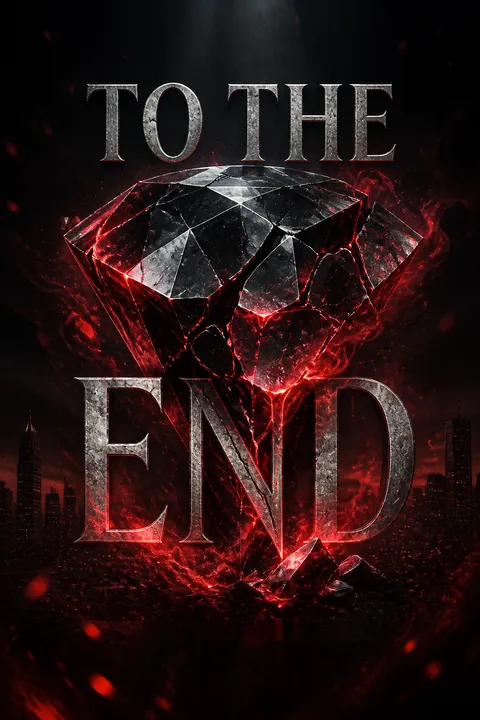


Plot Summary
Prologue
At a dinner with Joseph Beaumont Senior, Lips and her family find Joey Beaumont’s severed head in a box. Senior needles Lips with the prospect of the Devil, a powerful buyer who still wants Avery, while police surround the restaurant.
Lips’s allies escape amid a biker-made diversion, and Avery notices that the Boar, a motorcycle-club president, seems familiar. The strange delivery leaves the group with a new question: someone is killing people who have harmed Lips, but no one knows who is sending the messages.
The prologue makes protection feel as frightening as danger. Joey’s head is evidence that someone is acting on Lips’s behalf, yet the method is so intimate and brutal that gratitude cannot settle into safety. Senior’s threat toward Avery expands the danger beyond the restaurant, while Avery’s attention to the Boar plants a clue about family before Lips is ready to look for it. The scene also establishes the story’s central problem: Lips can identify enemies, but she cannot yet tell which allies are safe to trust.
The Stag Is Born
In Mounts Bay, the Wolf must attend the brutal Game that selects a replacement for the dead Vulture in the Twelve, the city’s criminal council. Lips arrives with Avery and their three boyfriends, wary of both the Irish O’Cronins and the Jackal, who watches her across the clearing. Aodhan O’Cronin wins the contest and chooses the title Stag.
When his father’s relatives taunt Harley, Aodhan shoots his father, then offers to keep the rest of his family from targeting Lips and Harley. Harley refuses to reclaim the O’Cronin business, and Lips accepts Aodhan’s offer cautiously. As the group leaves, the Jackal needles Lips about Luca, revealing that his obsession has survived their open hostility.
The Game makes power a public performance: a title is not inherited but seized before witnesses. Aodhan’s violence against his father may look like a bid for status, but it also signals a break with the family’s old loyalties. Lips, meanwhile, refuses to mistake one useful act for trust. Her caution is not indecision; it is a survival skill built in a world where alliances can change faster than names. The Jackal’s attention confirms that the political contest is personal as well as institutional.
The Auction Room
At the ranch, Lips settles into a crowded household with Avery, Ash, Harley, and Blaise, but private comfort cannot keep Mounts Bay’s war outside. Before the Twelve’s summer meeting, Avery admits that Atticus Crawford, the Crow, has forbidden her to attend. She goes anyway. At the abandoned auction house, the Jackal stages the meeting on the platform where girls were once sold, and Lips exposes his spies within the council.
She also reveals that he has invited Morningstar, the Devil, to the Bay. Viola Ayres then warns that her father is corrupt and connected to Avery’s father. Lips contacts Morningstar herself to challenge Avery’s sale, but his calm agreement to meet leaves her certain that another danger is approaching.
The auction house turns political space into a record of past violence. The Jackal does not need to attack Lips directly to threaten her; he uses the setting and the council’s silence to remind everyone what power has permitted. Lips answers by making hidden surveillance public, forcing the other leaders to consider their own vulnerability. Avery’s refusal to stay home marks her as more than the protected friend or sister in the room. Yet the ease of Morningstar’s response unsettles Lips because a promise from a powerful man is not the same thing as control over what happens next.
A Father Who Never Was
Avery investigates the mysterious packages and discovers that the man listed as Lips’s father on her birth certificate does not exist. The note accompanying Joey’s head mentioned blood, and Lips admits she has never met her father or questioned her mother’s story that he was imprisoned. Avery connects the clue to the Boar, who had described his refusal to side with the Jackal as a matter of blood.
Before they can pursue him, school resumes. A box arrives at Hannaford Prep containing the head of Lips’s third-grade teacher, Ms. Rickard. Illi recognizes the connection: detention in Rickard’s classroom was where Matteo first noticed Lips. The delivery suggests that the sender knows the private history that shaped her life.
The false birth record turns identity into an active mystery rather than a settled fact. Lips has survived by treating her past as a closed file, but the packages force her to reconsider who knows her history and why they are acting now. The teacher’s head makes the threat unusually personal: the sender is not merely targeting enemies but tracing the small events that led Lips toward Matteo and the life she now inhabits. Avery’s investigative intelligence and Lips’s instinctive suspicion work together, though neither can yet distinguish care from control.
Odie Survives the Fire
As the Jackal’s influence spreads, the senator who fathered Viola is murdered, and the news reaches the family at Hannaford. Illi then learns that the safe house holding Odie, his wife, is burning. Lips fears the worst until Diarmuid O’Cronin calls from the scene: he had been watching the house, rescued Odie, and can prove his loyalty.
Lips admits him to her circle, giving the Stag’s family a foothold among her allies. Soon after, Lips and Blaise take a Jackal spy to a remote farm. The spy reveals that the Jackal is meeting Morningstar and wants the other council leaders dead. Blaise chooses to help Lips kill him, making his loyalty a deliberate act rather than a promise.
The safe-house fire tests whether an alliance can be measured by what someone risks, not what they claim. Diarmuid’s rescue earns him a place because it protects Odie, a person Lips and Illi love, while Blaise’s first shared killing makes the costs of belonging unmistakable. These moments also expose the limits of Lips’s control: she can organize information and choose a response, but she cannot prevent every attack. Her family grows through acts of intervention, each one binding people together with a debt that is emotional as well as practical.
Ash Takes the Shot
Lips’s meeting with the Viper brings Ash into a cage fight against one of the Jackal’s men. Ash wins brutally, earning the Viper’s respect and securing help for his endangered daughter. When another Jackal man challenges Lips at the table, she kills him herself, showing the Viper that she will enforce her own authority.
Back at Hannaford, Senior threatens to sell Avery to Morningstar and promises violence against Lips. Ash tears apart the boys’ room in rage. Later, Lips takes him to kill a school spy; Ash insists on participating, shoots the captive, and calls the choice his commitment to their family. That night, he and Lips begin a sexual relationship, giving their trust a physical form without making their danger disappear.
Ash’s fight and the spy’s execution answer the same question in different registers: can he act without becoming only the violence his father cultivated? At the Viper’s, he directs his anger outward and earns strategic respect. With the spy, he chooses to share Lips’s work rather than shelter her from it. Their intimacy follows this act of agency, not as a cure for trauma but as a new agreement between them. Lips’s protection of Avery remains fierce, yet she begins to let her partners carry some of the danger beside her.
Tongues on the Fence
The Jackal escalates by leaving dozens of tongues impaled on Hannaford’s iron fence, then ensuring the police are called. Lips and Avery recognize that the stunt is meant to frighten the school and invite law enforcement into their lives. At lunch, Lips realizes the Jackal may know about their plans because someone has bugged their room.
The Crow’s men sweep the space, and the Coyote upgrades the surveillance, but the breach leaves the family unsure whom to trust. During a school assembly, Senior appears beside Police Chief Drummond, Lauren’s father, and publicly offers a reward for Joey’s return, though the Beaumont family knows Joey is dead. His appearance makes clear that the police and the family’s enemies are linked.
The fence transforms Hannaford from a refuge into a stage on which the Jackal can make private violence visible. By involving police, he blurs the boundary between criminal retaliation and civic authority, making every protective measure potentially incriminating. The discovered bug sharpens the group’s central dilemma: information keeps them alive, but collecting it exposes them to surveillance. Senior’s public performance adds another kind of threat. He uses the language of a grieving father while exploiting the institutions that should investigate him, making respectability part of his weaponry.
The Crow’s Price
At the Crow’s fortress, the Twelve gather to discuss the Jackal, whose spies and threats have driven the council toward a covert plan to kill him with a single shooter. Ash reveals that he has already identified and killed a man marked by the Jackal, then challenges the Crow’s ability to protect Avery.
Lips later hears Atticus explain that he built his influence to shield the Beaumont twins from their father and the Jackal, even when that meant treating Avery as fragile. Lips gives him her vote, and Harley does too, but Avery remains angry at his deception.
Luca returns to Hannaford with information from inside the Jackal’s organization. Meanwhile, Lips and Avery confront Imogen and Lauren after they try to intimidate them, and Avery uses evidence of Senior’s crimes to expose his corruption publicly.
This section refuses an easy division between the controlling protector and the endangered woman. Atticus’s explanation makes his motives intelligible without erasing the cost of his lies, while Avery’s anger preserves her claim to make decisions about her own safety. Lips and Harley can recognize Atticus’s work and still leave Avery room to choose. The school confrontation and public exposure of Senior show the same logic at a larger scale: protection cannot rely only on secrecy or force. It also requires institutions, evidence, and people willing to risk their positions by naming what has been hidden.
The Stag's New Code
At Christmas, Aodhan visits the ranch and asks Harley to let him rebuild the O’Cronin family rather than reclaim it. He says he has removed the relatives who abused Harley’s mother and describes another cousin, Jack, whose partner Amara died after the family attacked her.
Harley listens but does not offer instant forgiveness. The conversation makes Aodhan’s new position more than a title: he intends to change the family’s conduct and protect its younger members.
Elsewhere, Lips and Avery continue arguing about the Jackal and Senior, while Avery’s feelings for Atticus remain unresolved. When Avery later says she will not join Blaise’s tour because she will not leave Aodhan while they are both recovering, Lips realizes that the Stag has become important to her too.
Aodhan’s appeal is powerful because he does not ask Harley to forget what happened. He offers a different future while naming the damage that makes trust difficult. The family’s past is not treated as a single grievance that can be settled with one act of revenge; it has left different people carrying different losses. Avery’s decision to stay near Aodhan complicates her existing attachment to Atticus without resolving it neatly. Her choice suggests that loyalty may be built through shared vulnerability, not simply through childhood history or romantic longing.
The Boar Names Blood
Lips finally visits the Boar at his motorcycle club and asks why he sided with the Crow and spoke of blood. The Boar denies being her father but identifies her real father as a violent club president named Graves. He says she has seven half-siblings and that he has tried to watch over some of them, though he offers no clean explanation for why he left Lips alone for so long.
He also knows who is sending the boxes, but promises to stop the deliveries rather than name the person. The revelations overwhelm Lips: her identity is larger and uglier than the story her mother gave her. Back at Hannaford, she drinks with her family, then tries to keep studying as Mounts Bay’s violence worsens.
The Boar’s account gives Lips a genealogy but not the belonging she might expect from one. Her father’s identity explains the scale of the family network, yet it also threatens to turn each newly discovered sibling into another responsibility. The Boar’s protective claim remains morally incomplete because he knew enough to intervene and did not. Lips’s response, anger mixed with curiosity, resists both romanticizing blood ties and dismissing them outright. The chapter’s emotional force comes from making kinship a question of action: shared DNA may explain a connection, but it cannot substitute for care.
A Head, Then a Wound
A later package contains the decomposing head of the Lynx, marked with a tattoo that tells Lips the killer is close enough to know the Twelve’s inner circle. The Boar arrives to remove the evidence, while the Crow convenes the leaders to debate the danger. The Boar warns them not to threaten Lips; the Crow worries that an unknown ally could turn on them.
Before long, the Jackal attacks the Boar’s clubhouse, killing many of the motorcycle-club members while the council is away. The danger reaches Hannaford when Illi returns stabbed and badly wounded. Their usual doctor has been killed by the Jackal, so Avery finds another physician. Illi survives surgery, and Odie comes to the school to stay beside him as the family tightens its security.
The Lynx’s head collapses the distance between Lips’s private life and the council’s public conflict. The Boar’s intervention confirms that the sender has reach, but not that the motive is benign. Then the attack on the clubhouse strips away the assumption that allies can remain safely outside the war. Illi’s wound makes the cost immediate and bodily, while the doctor’s death shows how the Jackal targets care networks as well as armed opponents. Odie’s arrival answers violence with presence, though neither affection nor improved security can make the group invulnerable.
Avery Vanishes
While Lips and Blaise are at the pool, the Crow calls to report that Avery has disappeared from the guarded room. Diarmuid has betrayed them, taking her to the Jackal’s territory. Aodhan follows the route and alerts Lips, while the Boar says he has sent a man to watch over Avery.
Lips refuses to wait for the Crow’s full plan; she gathers Ash, Harley, Blaise, and Illi, then joins the Boar’s bikers and the Crow’s forces at the clubhouse. The alliance launches an assault on the ruined bank that houses the Jackal’s vaults. Lips knows the hidden entrance from her years working for Matteo and leads her family through a back passage, intent on reaching Avery before the Jackal can break her.
Avery’s kidnapping turns the story’s recurring fear of separation into a concrete emergency. Diarmuid’s betrayal is especially damaging because he had earned trust by protecting Odie, showing how a good deed cannot guarantee a stable allegiance. Lips responds by refusing isolation: she brings together allies whose motives do not perfectly align, because action matters more than certainty now. Her knowledge of the bank becomes both a survival tool and evidence of how deeply the Jackal shaped her past. The rescue begins with that double inheritance, expertise gained under coercion used against the man who taught it.
The Vault Goes Dark
The assault scatters the Jackal’s men through the underground vaults. Illi shields Lips when a wall collapses, but the rubble separates her from the others. Matteo captures her in his torture room and stabs her, insisting that her friends will abandon her. Ash slips into the vault and confronts him, buying time for Harley, Blaise, and Illi to reach them.
Ash shoots Matteo in the knee, then beats him in retaliation for the years of torture described in Lips’s file. Illi cuts off Matteo’s head to ensure he cannot survive. Harley carries Lips out with the knife still in her abdomen. Avery is alive, though bruised and frightened, and the family finally escapes the Jackal’s underground stronghold.
The climax makes memory both a weapon and a wound. Matteo believes his history with Lips gives him permanent ownership, while Ash turns the record of that history into a reason to punish him. Yet the victory is not clean: Lips remains physically injured, and the violence that ends Matteo’s control is still violence. Illi’s presence and Harley’s care make the rescue collective, even though Ash delivers the decisive blows. The scene dismantles the Jackal’s claim that only he understands Lips. Her family knows enough to come for her, and they do not mistake her suffering for consent.
Senior's Last Room
After the Jackal falls, Senior leaves Ash a message declaring that Avery will be sold and Ash dragged back under his control. Lips waits until her family is asleep, steals a car, and drives to the Beaumont manor alone, believing she is the expendable one. She finds the house filled with dead guards, evidence that Morningstar has already been there.
In Senior’s torture room, she refuses his demand that she submit and attacks when he lowers his weapon. Senior stabs her, but Lips cuts his throat and watches him die. She collapses beside him, badly wounded. Nathaniel Morningstar finds her, stops the bleeding, and performs CPR until help arrives, saving her life.
Lips’s decision to leave alone grows from love, but it also exposes the old logic she has never fully escaped: that her own life is the cheapest one to spend. Killing Senior removes a central threat, yet the cost nearly proves that belief right. Her refusal to submit is an act of self-determination, not a victory without consequence. Nathaniel’s intervention complicates her isolation. The family she thought she had to protect by disappearing includes a brother she did not know existed, someone who can act for her without asking her to earn his care.
A Brother at the Bedside
In hospital, Nathaniel explains that he is Lips’s half-brother and that he sent the heads to punish people who had harmed her. He says he recognized her as family and wanted to protect her, though his methods mirror the brutality she has spent her life surviving.
Lips chooses to meet him rather than reject him outright. His younger sister Poe arrives, a sharp-tongued teenager who shares Lips’s features and loves fixing cars. The family welcomes her, while Harley bonds with her over his damaged Mustang.
After healing, Lips returns to the ranch with her partners and Avery. The immediate threats are gone, but Avery chooses to stay near Aodhan, Blaise considers a music tour, and Lips finally treats the ranch as home rather than a temporary refuge.
The final revelation gives the mysterious boxes a motive without making their violence harmless. Nate’s protection comes from recognition and attachment, but Lips still has to decide whether that form of care belongs in her life. Meeting Poe offers a different possibility: kinship that can begin with jokes, shared features, and ordinary interests instead of bloodshed. The ending also shifts the meaning of home. The ranch becomes a place where Lips can unpack, recover, and imagine a future, even as Avery and Blaise make choices of their own. Safety is no longer merely escape; it is the room to choose what comes next.
Analysis
To the End treats safety as a problem of both force and interpretation. Lips can fight, plan, and read a room, but she cannot control what another person means by protection. The Jackal’s history with her is the clearest example: knowledge once offered as survival training becomes a claim of ownership. Nate’s head deliveries create a more ambiguous version of the same problem, since his desire to defend Lips arrives through violence she did not request. The story does not flatten these relationships into a simple contrast between good and bad protectors. Instead, it asks whether care can exist without control, and whether a survivor can accept help without surrendering authority over her own life.
The family Lips builds is the novel’s answer, though not a peaceful one. Avery uses information and money; Ash, Harley, and Blaise each bring different forms of loyalty; Illi and Odie offer hard-earned intimacy; allies join through concrete choices. Their bonds are imperfect and often possessive, but they are negotiated rather than inherited. That distinction matters in a book where biological families repeatedly demand obedience. Harley’s refusal to resume the O’Cronin role and Aodhan’s attempt to reform it show that blood can be a starting condition, not a moral command.
Violence remains costly even when it is necessary. Lips kills Senior, but nearly dies; the Jackal’s death ends his immediate control, but does not erase her injuries or the emotional reflexes he left behind. The ranch’s transformation from hiding place to home marks a quieter victory: Lips can unpack, recover, and consider college, music tours, and relationships without treating every future as a temporary escape. The ending does not promise a harmless world. It offers something more credible for these characters: a chosen family capable of facing danger together, while leaving room for each member to decide what kind of life they want.
Review Summary
Characters
Lips, Eclipse Anderson
The Wolf who chooses familyLips is a sharp, observant young woman who survives Mounts Bay by reading danger before it announces itself. As the Wolf, she holds authority in a criminal council, but her instincts are rooted in a childhood shaped by poverty, exploitation, and violence. She dislikes needing anyone and often treats her own safety as negotiable, yet she is fiercely loyal to Avery and to the men she loves. Her intelligence is practical: she studies people, remembers details, and turns knowledge into leverage. Beneath her hard-earned competence is a person who wants ordinary things, a secure home, time with her family, and the freedom to imagine a future beyond survival.
Avery Beaumont
The ice-cold strategistAvery is Lips’s closest friend and the Beaumont twin who can turn money, research, and social access into instruments of protection. Her composure is deliberate, not effortless: she prefers plans because unpredictability once carried consequences for the people she loved. She is ambitious, exacting, and sometimes controlling, especially when fear makes her treat safety as something she alone must manage. Her loyalty to Lips is absolute, but her own emotional life is more complicated than she lets others see. Dance, education, and the careful order of her home give her a sense of self beyond the criminal world surrounding her.
Ash Beaumont
The dangerous twinAsh is Avery’s twin and one of Lips’s partners. He is proud, competitive, and accustomed to using anger as a shield against vulnerability. His father’s control and his brother’s cruelty have left him suspicious of authority and quick to meet threats with force. Around Lips, his possessiveness can be intense, but so is his willingness to learn what she needs rather than merely decide for her. Ash’s training and athletic discipline give structure to a life otherwise marked by violence. His deepest loyalty is to Avery and Lips, and he struggles to protect them without repeating the controlling behavior he has endured.
Harley Arbour
The steadfast golden godHarley is Lips’s boyfriend, a gifted swimmer, and a member of the O’Cronin family who refuses to be defined by its demands. His physical confidence is matched by a protective tenderness that appears in small acts: helping Lips move, keeping watch, or making sure she eats. He can be jealous and stubborn, particularly when family history resurfaces, but his anger is usually anchored in a fear of losing the people he loves. Harley values loyalty as something demonstrated through action, not inheritance. His bond with Lips gives him a home outside the family that once claimed him, while his relationship with Avery remains close and deeply important.
Blaise Morrison
The rock-star heartBlaise is Lips’s partner and a musician whose teasing manner can conceal loneliness and complicated family wounds. He uses humor, music, and marijuana to soften emotions that might otherwise overwhelm him, but he does not retreat when his family faces danger. His creative life gives him a way to translate private feelings into something shared, and his loyalty is expressed through both practical help and affection. Blaise can be distractible and provocative, yet he is more perceptive than he pretends. He wants Lips to choose him openly, while also learning to accept that love in their household means sharing care rather than competing for possession.
Illi
The family’s butcherIlli is a feared enforcer who becomes one of Lips’s most dependable allies. His brutal reputation hides a dry sense of humor and a fierce capacity for attachment, especially toward his wife, Odie, and the young people he considers family. He teaches Lips and her circle practical skills without pretending that violence is harmless. Illi’s bluntness can be abrasive, but it also cuts through denial when a situation demands action. His loyalty is not based on respectability or rules; he judges people by what they do for one another. He is both a protector and a reminder that their world exacts a physical price.
Odie
Illi’s resilient wifeOdie is Illi’s wife and one of the people Lips most wants to keep safe. She carries a history of severe exploitation, yet she retains humor, affection, and a capacity to make others feel included. Her closeness with Avery gives the women space to speak honestly about fear, love, and difficult choices. Odie is not defined only by what happened to her; she has her own judgments and a strong sense of what care should look like. Her presence softens the household without making it less dangerous, and her bond with Illi shows how tenderness can coexist with a life shaped by violence.
Atticus Crawford, the Crow
The guarded information brokerAtticus is the Crow of Mounts Bay, a crime leader whose power rests on information, influence, and an elaborate network of contacts. He has known Avery for years and is deeply invested in her safety, but he tends to manage danger by withholding information and making decisions for her. That protective instinct gives him real strategic value and creates a serious emotional cost. Atticus is controlled, formal, and difficult to read, yet his composure falters around Avery. He is neither simply a romantic ideal nor merely a manipulator: he is a man trying to protect someone in a world where protection can easily become another form of control.
Matteo D’Ardo, the Jackal
The obsessive crime lordMatteo is the Jackal, a powerful criminal leader whose ambition is matched by an obsessive fixation on Lips. He once occupied the role of mentor in her life, teaching her to survive while also cultivating dependence and control. He reads other people as possessions or vulnerabilities, and he uses surveillance, spectacle, and fear to keep them within reach. His rivalry with the Crow is intensified by pride, but his pursuit of Lips is more intimate and more dangerous than a contest for territory. Matteo embodies the difficulty of separating useful knowledge from the coercive relationship in which it was learned.
Joseph Beaumont Senior
The Beaumont patriarchSenior is Ash and Avery’s father, a wealthy patriarch who treats family members as instruments of his legacy. He uses money, political influence, and intimidation to shape the people around him, while presenting himself publicly as a respectable father. His relationship with his children is built on control rather than trust, and he sees independence as disobedience. Senior’s polished manners make his threats more chilling, because he can move between elite social spaces and criminal violence without changing his sense of entitlement. He represents the danger of a family name used not as belonging, but as a claim of ownership.
Joseph Beaumont Junior, Joey
The violent older brotherJoey is Ash and Avery’s older brother, a cruel and unstable figure whose presence has left deep damage in the Beaumont family. He uses his privilege to intimidate others and is closely associated with the violence of his father’s household. His behavior helps explain why Ash is so quick to distrust power and why Avery is so determined to control her surroundings. Joey is not a source of warmth or guidance for his siblings; he is one of the forces they must learn to survive.
Luca
The embedded informantLuca is an operative whose place inside the Jackal’s organization gives the Crow’s side access to valuable intelligence. He is charming and socially confident, but his easy manner can make others question where his loyalties lie. His connection to Lips is friendly and familiar, which complicates Harley’s protectiveness and the group’s efforts to separate personal trust from useful information. Luca’s value comes from moving between worlds, but that position also means he is rarely free of suspicion.
Aodhan O’Cronin, the Stag
The reform-minded heirAodhan is an Irish crime-family heir whose place among the Twelve is earned through the Game. He is strategic and self-possessed, but he is also trying to distinguish himself from the family’s old abuses. His relationship with Harley is strained by generations of harm, so he approaches reconciliation as a task that requires proof rather than entitlement. Aodhan wants to rebuild his family’s influence while protecting its younger members, a difficult balance in a world that rewards ruthlessness. His measured manner can seem cold, but it masks a serious desire to change what inheritance means.
Diarmuid O’Cronin
The hard-to-read cousinDiarmuid is an O’Cronin relative whose actions make him difficult to place within the family’s shifting loyalties. He is capable, bold, and familiar with the criminal networks surrounding Mounts Bay. His connection to Harley’s extended family gives his choices personal weight, while his relationship with the Stag’s faction leaves the others uncertain about his intentions. Diarmuid’s presence tests Lips’s readiness to trust people whose immediate usefulness may conceal a different agenda.
The Boar, Daniel Durack
The biker-club presidentThe Boar leads the Unseen motorcycle club and commands loyalty through a mixture of blunt judgment and practical authority. He is wary of outsiders and prefers clear obligations to elaborate political language. His knowledge of Mounts Bay’s criminal families gives him influence beyond the clubhouse, and he is willing to intervene when he believes someone has crossed a line. The Boar is not sentimental about family, but blood and history matter to him in ways he does not readily explain. His guardedness makes his occasional acts of protection difficult to interpret, especially for Lips.
Nathaniel Morningstar
The feared DevilNathaniel is known in the underworld as the Devil, a figure whose controlled demeanor conceals a capacity for extreme violence. He follows a personal code centered on protecting the few people he cares about, rather than on law or conventional morality. Nathaniel is observant, cautious, and accustomed to being feared, which makes his attempts at connection awkward and hard to read. He does not offer easy comfort or polished explanations, but he takes the safety of those he claims seriously. His presence challenges Lips to decide whether a person can be both dangerous and genuinely protective.
Posey, Poe
The teenage mechanicPoe is a sharp-tongued teenager with a natural feel for cars and a strong desire to choose her own future. She dislikes being treated as fragile or confined by other people’s plans, even when those plans come from people trying to protect her. Her humor makes her immediately engaging, while her uncertainty about independence gives her a more vulnerable edge. Poe brings a new kind of energy into Lips’s life: someone younger who may need support, but who is also capable of making her own demands.
Viola Ayres
The runaway senator’s daughterViola is the daughter of a powerful senator and someone whose life has been shaped by privilege, family pressure, and the danger surrounding Mounts Bay. She is perceptive about political corruption and unwilling to accept the version of events her family presents. Her relationship with Jackson draws her toward a less polished world than the one she was raised in. Viola’s sharpness and independence make her more than a protected political pawn, even when others try to decide where she should live or whom she should trust.
Jackson, the Coyote
The digital intelligence brokerJackson is the Coyote, an information specialist whose strongest tools are computers, records, and digital surveillance. His joking, flirtatious manner can make him seem unserious, but his technical skill is essential to Lips and Avery’s plans. He is practical about danger and often works behind the scenes, tracing communications or tightening security. His affection for Viola gives him a more vulnerable side, though he hides it beneath teasing. Jackson’s role illustrates how power in Mounts Bay depends as much on access to information as on weapons.
Lauren
The uneasy schoolmateLauren is a Hannaford student and the daughter of the Mounts Bay police chief. She sees enough of the criminal world around Lips to understand that it is dangerous, but fear and family loyalty distort her judgment. Her concern for Lips can become intrusive, especially when she assumes she knows what escape should look like. Lauren’s position between school and the police makes her a reminder that ordinary institutions are entangled with the same power structures the students are trying to survive.
Imogen Ayres
The entitled school rivalImogen is Viola’s younger sister, raised in the same privileged world but less practiced at reading danger. She can be imperious and quick to judge people by class, yet grief and fear complicate her behavior. Imogen’s conflict with Lips shows how easily a protected student can mistake reputation for the whole truth. She is a minor figure whose assumptions reveal the social divisions that Hannaford’s wealth does not erase.
The Viper
The cage-fight kingpinThe Viper controls a rough gambling and fight operation and values his independence more than respectability. He is skeptical of the Crow’s cleaner public image and wants to preserve the culture that gives his business its power. Yet his concern for his daughter makes him vulnerable to the Jackal’s threats. The Viper is a transactional ally who respects demonstrated strength, not promises. His world gives Ash an arena in which to prove that wealth and privilege have not made him helpless.
The Tiger
The anxious council brokerThe Tiger is a member of the Twelve whose nervousness reflects the danger of choosing sides in Mounts Bay. He is a political intermediary rather than a frontline fighter, and his usefulness lies in understanding how the council’s decisions affect the police and legal system. He is cautious, self-interested, and aware that even the right alliance can carry a steep price.
Plot Devices
The Game and the Twelve
Power has a public ritualThe Game determines who may replace a dead member of Mounts Bay’s criminal council. Candidates fight brutally before the Twelve and their followers, then claim a title that defines their place in the underworld. The ritual supplies the story with a visible mechanism for political change: Aodhan’s victory creates the Stag, while Lips’s standing as the Wolf gives her influence in later meetings. The Twelve’s customs also create limits and expectations, but the Jackal’s growing disregard for those rules makes the institution itself unstable.
The Head Boxes
Violence becomes a messageThe unexplained deliveries of severed heads turn Lips’s private history into a sequence of threats and clues. Each victim has a connection to her past, but the deliveries are too brutal to read as straightforward kindness. The boxes keep the family guessing about the sender’s identity and motives, while forcing them to reconsider people who may be tied to Lips by blood. Their recurring presence makes protection feel morally unstable: the sender may be helping her, but does so through the same violence that defines the enemies she faces.
Diamonds and Favors
Wealth buys room to actLips’s diamonds, criminal earnings, and accumulated favors give her leverage when ordinary institutions fail. She can pay for information, medical care, protection, or silence, while Avery’s money and contacts open doors that Lips cannot reach alone. The resources never guarantee safety, but they let the family assemble a network beyond the Twelve. This device shifts wealth from a symbol of privilege into a practical tool that the characters use against people who have traditionally controlled the city’s legal and economic systems.
The Bank Vaults
The past becomes a routeThe Jackal’s headquarters occupies an old bank whose reinforced underground vaults shelter his private operations. Lips knows the layout and the combination to the deepest vault because Matteo once brought her through the building. That knowledge, acquired in a coercive relationship, later becomes essential to reaching Avery and confronting him. The vaults make the story’s psychological history physical: Lips must return to the architecture of her past, but she enters with allies and a purpose of her own.
The Wolf's Inner Circle
Loyalty is chosen, not inheritedLips gradually builds a family out of Avery, her partners, Illi and Odie, and later allies such as Jackson and Viola. The group does not share a single background or a clean moral code; it holds together through repeated acts of protection, honesty, and risk. Their informal votes and shared security decisions challenge the Twelve’s inherited hierarchies. The idea of an inner circle also raises the story’s hardest question: whether loyalty can remain freely chosen when love makes every threat feel personal.
Hannaford Prep Series

About the Author
Other books by J. Bree



Download PDF
Download EPUB
.epub digital book format is ideal for reading ebooks on phones, tablets, and e-readers.








