

Key Takeaways
Judge the tomato by its supply chain, not its red skin
Built to survive shipping. Florida supplies about one-third of America’s fresh tomatoes. In winter, most field-grown tomatoes sold across the country come from there. To endure mechanical handling and long journeys, many are bred for firmness, picked green, then exposed to ethylene gas until their skins turn red. A tomato that can bounce off a truck and remain intact may look ripe without tasting ripe.
The wrong measure of quality. In 2009, Americans spent about $5 billion on fresh tomatoes, even though consumer surveys repeatedly ranked supermarket tomatoes near the bottom for satisfaction. The book’s contrast is a fragile, misshapen Brandywine from a garden: it may split on the way indoors, but its sweetness and acidity make it worth eating promptly. Industrial success is measured in durability and appearance, not pleasure.
What's striking is how a supply chain can redefine the product it carries. When retailers reward uniform color, long shelf life, and low handling costs, those traits become the practical meaning of quality, even when customers complain about flavor. The tomato makes this tradeoff unusually visible because appearance is easy to inspect while taste is discovered only after purchase. Yet durability serves real logistical needs, especially across long distances. The problem is not that transport matters, but that its measurable requirements have crowded out qualities consumers value but cannot assess in the aisle.
Save wild tomato genes before industrial fields erase them
A narrow genetic inheritance. The wild ancestors of cultivated tomatoes grew in South American deserts and foothills. The crop was domesticated far away, in Mesoamerica, and then carried to Europe. Each separation and repeated seed-saving narrowed its genetic diversity. The cultivated varieties may look dramatically different, but the book reports that they contain less than 5 percent of the genetic material found across the tomato family.
Wild relatives are practical insurance. Researchers at the C.M. Rick Tomato Genetics Resource Center preserve thousands of seed specimens. Wild species have supplied resistance to dozens of plant diseases, and may also offer useful traits for heat, cold, drought, and nutrition. But seed vaults cannot fully replace plants growing in their native habitats. Sugarcane farming and its chemicals have already erased wild populations in parts of Peru.
The tomato’s history shows that biodiversity is not decorative variety. It is a reserve of options when disease, climate, or farming conditions change. A seed collection resembles a library whose value lies partly in books no one yet knows how to use. That makes conservation an investment in future problem-solving, not nostalgia for wild plants. The limitation is equally important: preserving seeds does not preserve an ecosystem. The surrounding habitat continues to shape populations in ways a controlled greenhouse cannot reproduce, so conservation needs both stored material and living landscapes.
Florida's winter tomato depends on rebuilding a hostile ecosystem
A crop against its setting. Florida’s sandy soil retains little water or fertility, while its humidity encourages fungi and its mild winters let pests remain active. Short winter days, sudden freezes, and hurricanes add further risks. The state grows tomatoes not because the crop naturally thrives there, but because Florida is warm when northern markets are cold.
The field becomes infrastructure. Growers flatten and irrigate the sand, form raised beds under plastic, add carefully placed fertilizer, and fumigate the soil to kill weeds, pests, and pathogens. The book describes more than 100 chemicals available to growers. An acre of Florida tomatoes receives about five times as much fungicide and six times as much pesticide as an acre of California tomatoes. This intensive system produces a marketable crop, but ties production to costly inputs and environmental risk.
Florida’s fields reveal a broader economic pattern: production can look efficient while depending on continual repair of a site poorly suited to the crop. Irrigation, plastic, fertilizer, and fumigation turn local constraints into manageable inputs, but they do not make those constraints disappear. This distinction matters when assessing productivity. High output is not the same as resilience if each season requires substantial chemical and material support. At the same time, the book’s account should not obscure growers’ real exposure to weather, disease, and price shocks. The system is both engineered and precarious.
Cheap tomatoes transfer their costs to workers and waterways
Exposure follows the crop. Florida fields are treated with chemicals that can harm people and wildlife if exposure is high enough. The book reports detectable pesticide residues in 54 percent of tomato samples tested, while noting that the measured residues were below levels considered harmful to consumers. The more immediate concern is workers who enter treated fields, sometimes without adequate warning or protection.
Evidence and uncertainty coexist. Three pregnant Ag-Mart workers said they were exposed to chemicals while working, and their babies were born with serious defects. Experts testified that exposure could be associated with the outcomes, but investigators did not establish a definitive causal link, and the company admitted no liability in its settlement. Elsewhere, agricultural runoff polluted Lake Apopka, where birds and alligators suffered pesticide-related harm. The book’s central point is that costs can fall on people and places absent from the price tag.
This is a classic externality: the price paid at checkout does not include every cost of production. The concept is useful because it shifts attention from whether a tomato is technically affordable to who bears the risks that keep it affordable. The birth-defect cases also show why caution matters. A striking cluster warrants investigation, but proximity and timing alone cannot prove a specific cause. The strongest argument does not require overstating that evidence. Worker exposure, weak reporting, contaminated ecosystems, and inadequate enforcement are serious problems even when an individual medical outcome cannot be conclusively attributed.
Treat labor abuse as a system, not a few bad bosses
Legal gaps weaken workers. Farmworkers were excluded from key New Deal labor protections, and many still lack guaranteed overtime, benefits, and union rights. Florida pickers commonly earned by the bucket, so rain, waiting time, slow crops, and unavailable trucks could leave hours unpaid. Contractors often managed crews, creating distance between farm owners and conditions in their fields.
Coercion can become slavery. Lucas Domingo arrived in Immokalee expecting paid work. Instead, a crew boss trapped him through manipulated debts, withheld wages, threats, and violence. Domingo and other workers escaped after being locked in a truck. Their case led to prosecutions, but the book describes slavery as part of a wider continuum that includes debt, intimidation, poverty, and dependence. It reports that more than 1,000 people had been freed from forced labor in Florida over the preceding fifteen years.
The continuum model explains why focusing only on chains and locked doors misses the conditions that make coercion possible. Debt, legal vulnerability, isolation, and dependence can narrow a worker’s choices long before a case meets the threshold for prosecution. This also clarifies why blaming only a violent crew boss is insufficient: the boss may be the direct perpetrator, while subcontracting and weak oversight make abuses easier to conceal. Still, structural explanation should not erase individual responsibility. Accountability needs to reach both those who use force and the institutions that can prevent or tolerate it.
Organize buyers where growers cannot ignore the money
Change the point of leverage. Florida growers said they could not raise wages because they faced tight margins and competition. The Coalition of Immokalee Workers instead targeted the fast-food companies buying their tomatoes. Its Campaign for Fair Food asked corporate buyers to pay one extra penny per pound and support improved labor standards.
A small demand gained scale. The campaign used student groups, religious organizations, public demonstrations, and shareholder pressure to make labor conditions a concern for powerful brands. Taco Bell’s parent company agreed in 2005, followed by McDonald’s and Burger King. In 2010, the Florida Tomato Growers Exchange joined the effort, helping establish a path for the extra money to reach workers. The strategy reframed the issue: buyers could not claim helplessness when their purchasing decisions helped shape the supply chain.
The campaign illustrates how organizing can alter bargaining power without starting at the weakest link. A scattered workforce has little leverage against large farms, but a buyer with a public brand has something to lose when customers connect its product to abuse. The penny-per-pound request was effective partly because it translated an abstract injustice into a manageable commercial commitment. This approach depends on monitoring and enforcement, however. A signed pledge is only a beginning if workers cannot verify payments, report violations safely, or obtain remedies when standards are breached.
Breed flavor back by changing what agriculture rewards
Taste is complex, not mysterious. Tomato flavor depends on a balance of sugars, acids, and many aromatic compounds. Breeding for size, firmness, yield, and shelf life has often pushed taste aside because growers are paid for pounds and appearance, not flavor. A tomato can also lose flavor after exposure to cold temperatures, even if it began with good genetics.
Different priorities can produce different fruit. University of Florida breeder Jay Scott developed Tasti-Lee by crossing a sweeter but awkwardly shaped tomato with a firmer variety. Harry Klee’s team used tasting panels and chemical analysis to identify traits associated with preferred flavor. Meanwhile, Florida’s Tomato Committee enforced cosmetic standards that blocked the export of some misshapen varieties, including UglyRipe. Together, these cases show that breeding and market rules determine which tomatoes reach shoppers.
The breeding story is also a story about incentives. When growers are paid by weight and punished by rejection for irregular shape, choosing flavor is economically risky, however much consumers say they want it. Taste panels help make a subjective preference more legible to breeders, while varieties such as Tasti-Lee show that quality traits can sometimes be combined rather than traded off absolutely. But better genetics cannot fix every part of the chain. Harvest timing, storage temperature, and retailer standards can still erase gains made in the field.
Buy for season and provenance, not year-round uniformity
A different business is possible. Pennsylvania farmer Tim Stark grew more than 100 tomato varieties for taste, harvested them ripe, and sold directly to New York customers and chefs. His operation paid workers hourly, provided housing, and avoided routine chemical use. It succeeded through premium quality and direct relationships, not by competing with commodity tomatoes on uniformity or volume.
There is no single substitute. Florida organic grower Tom Beddard used compost, cover crops, and crop rotation to manage poor soil and pests, accepting lower yields in exchange for the premium his produce could earn. These farms show alternatives, not an easy replacement for industrial supply. For consumers, a practical response is to seek tomatoes whose season and production method fit their standards, and to support businesses that disclose how food is grown and who harvests it.
The contrast between large commodity farms and smaller direct-market growers is not simply a contest between bad and good farming. Each serves different customers and faces different constraints. The valuable insight is that distribution channels shape what farms can afford to prioritize: local buyers can reward flavor and relationships in ways anonymous commodity markets often cannot. These models remain limited by season, labor needs, geography, and price. Consumer choice matters, but it cannot substitute for enforceable labor protections or responsible purchasing by the largest buyers.
Analysis
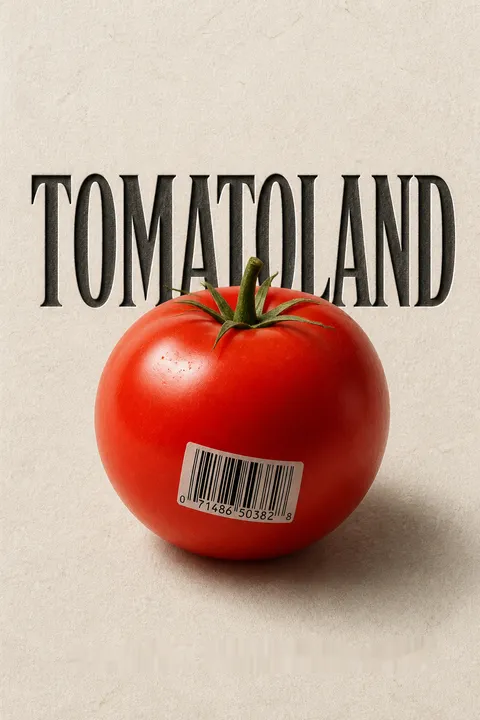
Tomatoland is an investigative food history organized around a deceptively ordinary object: the winter tomato. Its route from wild South American plants to supermarket produce links domestication, genetic narrowing, Florida’s difficult growing conditions, chemical-intensive production, labor exploitation, and consumer expectations. The tomato is not merely a symbol of industrial agriculture. Its physical demands make the system unusually legible: a fruit bred to survive rough handling can travel far, while taste, nutrition, worker safety, and ecological health become less visible measures of success.
The book’s strongest analytic move is connecting decisions that are usually treated separately. Breeders respond to grower incentives; growers respond to retailers and commodity prices; labor arrangements help control costs; consumers encounter the polished result without seeing the field. The result is a supply chain in which responsibility is distributed so widely that each participant can claim limited control. The Coalition of Immokalee Workers challenges that arrangement by targeting major buyers, showing that leverage can be shifted toward institutions with reputational and purchasing power.
Its reporting also resists a simplistic solution. Industrial farms face weather disasters, international competition, and unstable prices, while smaller farms face labor, scale, and market-access limits. Organic production and direct sales demonstrate viable alternatives in particular contexts, not universal replacements. The book is most persuasive when it shows how incentives produce outcomes, and when it distinguishes documented abuses from disputed causal claims. For example, the Immokalee birth-defect cases raised urgent questions but did not establish a definitive pesticide cause. That qualification strengthens rather than weakens the broader case for monitoring, transparency, and worker protection.
Published in 2011, the book is a historical investigation of the system and reforms described in its reporting, not a current audit of every practice or policy. Its lasting contribution is a way of reading food: ask what qualities the market rewards, what costs the price omits, and who has the power to change the rules. A tomato’s appearance can reveal the supply chain, but only attention to its production can explain it.
Review Summary
Tomatoland receives mostly positive reviews for exposing the dark side of industrial tomato farming in Florida, including labor exploitation and environmental damage. Readers appreciate the eye-opening information about pesticide use, modern-day slavery, and the loss of flavor in commercial tomatoes. While some find the book repetitive or narrowly focused on Florida, many praise Estabrook's investigative journalism and compelling storytelling. The book inspires readers to reconsider their tomato consumption and support more ethical farming practices.
Glossary
mature green
Harvested before visible ripeningA tomato harvested when it is firm and still green, but developed enough to respond to ethylene gas. Florida growers favor this stage because the fruit is easier to handle and ship than a soft, vine-ripened tomato. Immature green tomatoes may also turn red after gassing, but they do not develop the same flavor.
degreening
Ethylene-induced color changeThe tomato industry’s term for exposing harvested green tomatoes to ethylene gas so their skins develop a red color. Ethylene is also produced naturally by plants as fruit ripens. Degreening improves appearance and helps coordinate delivery, but it cannot make an immature tomato flavorful or reproduce all the qualities of vine ripening.
bottleneck effect
Loss of genetic varietyA reduction in genetic diversity that occurs when a new population is founded by only a small sample of a larger one. In the book’s account, tomatoes passed through several such reductions as they moved from South America to Mesoamerica and then to Europe. Repeated seed-saving and self-pollination narrowed the cultivated crop’s genetic range further.
restricted-entry intervals (REIs)
Required waiting periods after sprayingThe legally required periods that must pass after certain pesticides are applied before workers may enter a field. These intervals are intended to reduce exposure to chemicals. The book describes allegations that workers entered fields before the required time had elapsed, and emphasizes that weak training and enforcement can make written protections ineffective.
piece basis
Pay for each container pickedA wage arrangement in which workers receive a set amount for each bucket or other container of produce they harvest. The book describes Florida tomato pickers working under this system, with earnings depending on crop conditions, field assignments, and the speed of their work. Waiting for transport, rain, or dew can reduce pay because that time may go uncompensated.
Campaign for Fair Food
Buyer-backed farmworker labor campaignA campaign organized by the Coalition of Immokalee Workers to improve conditions for Florida tomato pickers by pressuring large food buyers. Participating companies agreed to pay an additional penny per pound of tomatoes and support stronger labor standards. The campaign used public organizing and brand pressure to encourage buyers and growers to participate.
popular education
Participatory learning for collective actionAn educational approach that invites participants to interpret their own social and economic conditions rather than relying on a traditional teacher-centered classroom. The Coalition of Immokalee Workers used meetings, theater, visual symbols, and demonstrations to help workers understand their shared position and build confidence to act together.
artisanal economics
Competing through distinctive productsAn economic approach described in the book in which producers avoid competing solely on the low price of interchangeable commodities. Instead, they sell distinctive goods whose quality and variation matter to particular customers. Tim Stark’s farm illustrates this approach by marketing flavorful, varied tomatoes directly to consumers and chefs rather than competing with industrial tomatoes on uniformity and volume.
Download PDF
Download EPUB
.epub digital book format is ideal for reading ebooks on phones, tablets, and e-readers.








