Plot Summary
1. Flight from Northaven
Lark, her wounded mother Curl, Heron Mikane, and Kingfisher flee Northaven by boat, pursued by the Brethren's forces after a failed attempt at peace with Ayland. Lark's brother Piper, torn between loyalty and indoctrination, is left behind, and her friend Rye is presumed dead, a victim of the Chrysalid House. The family's escape is fraught with danger, grief, and the shattering of trust—especially after Lark's brother nearly exposes her as a Torch, a person with forbidden songlight powers. As they seek shelter and medical help for Curl, Lark's memories of a once-whole family haunt her, and the trauma of recent violence shapes her resolve to survive and protect those she loves.
2. Celestis Above the World
High above, Petra, a privileged eximian girl, travels with her parents and the airship Celestis on a mission to map and reclaim the world after the Great Extinction. Petra's diary reveals her isolation, her forbidden love for a sapien boy, and her growing awareness of the injustices in her society. The eximians' technological superiority and genetic "purity" contrast with the suffering of the sapiens below, whom they treat as servants or inferiors. Petra's journey is one of awakening, as she questions her place in a system built on separation, control, and the erasure of history.
3. Songlight and Betrayal
Lark's songlight—her telepathic, empathic gift—connects her to Nightingale, a captive Torch in the Brethren's palace. Their secret communion is a lifeline, but also a risk, as Sirens (Torches forced to hunt their own) and Inquisitors close in. Betrayal is everywhere: Piper's guilt over Rye's fate, Lark's fear of her own heart, and the ever-present threat of exposure. The Brethren's new leader, Kite, consolidates power through violence and manipulation, while Nightingale and Lark cling to hope, determined to free each other and change their world.
4. The Chrysalid House
The Chrysalid House is where Torches are sent to be broken—stripped of their songlight, their will, and their identity. Rye's journey through this system is one of survival and trauma, as he witnesses the fate of those who resist. Nightingale, too, is haunted by the memory of Cassandra, a friend turned chrysalid. The House is a symbol of the regime's cruelty, a warning to all who would defy the order of things. Yet even here, the seeds of resistance and solidarity are sown, as the oppressed find ways to reach each other through songlight and memory.
5. Allies and Enemies
As Lark and her companions seek refuge, they encounter old friends and new threats. Kizzy, Curl's childhood friend, risks everything to help them, while Heron and Kingfisher's skills and courage become essential. Meanwhile, Rye, presumed dead, escapes the Chrysalid House and forms a bond with Wren, a Third Wife on the run. Their journey across the sea is a testament to resilience and the power of connection, even as the world seems determined to crush them. Trust is hard-won, and betrayal always a possibility.
6. The Siren's Dilemma
Bel Plover, a Siren, embodies the tragedy of those forced to betray their own. Her story—of motherhood, loss, and coerced complicity—mirrors the larger system's cruelty. Nightingale's compassion for Bel, and Kingfisher's insistence on seeing her humanity, challenge Lark's suspicion and anger. The Siren's dilemma is the heart of the regime's power: divide the Torches, make them instruments of their own oppression. Yet, through empathy and shared suffering, the possibility of redemption and solidarity emerges.
7. Across the Southern Sea
Rye and Wren's perilous crossing of the Southern Sea is both a physical and existential journey. Starving, desperate, and hunted, they confront their own mortality and the truth of who they are. Wren reveals his trans identity, and Rye, freed from his lead band by eximian explorers, discovers the breadth of his songlight. Their bond is forged in adversity, and their arrival in the badlands brings them into contact with the eximians—setting the stage for a collision of worlds and values.
8. The Gathering Storm
In the Greensward, Lark, Kingfisher, and their allies join the militia, preparing for revolt against Kite's regime. Heron Mikane, once broken by war, is called to lead again. Nightingale, trapped in the palace, becomes a conduit for information and hope, risking everything to warn her friends and the Aylish of impending attacks. The eximians, meanwhile, debate whether to intervene or remain aloof, their own prejudices and ambitions complicating the prospect of true alliance.
9. The Burning of Sherlham
Kite's air fleet, with Piper as an unwilling participant, firebombs the Greensward encampment at Sherlham, killing countless innocents. The horror of modern warfare is laid bare, and the survivors—Lark, Kingfisher, Ma, Heron, and others—are left to pick up the pieces. The attack galvanizes resistance, but also exposes the deep wounds and divisions within Brightland. Piper, wracked with guilt, resolves to act, even as his love for Finch and his loyalty to his family pull him in different directions.
10. The Palace of Power
In Brightlinghelm, the palace becomes a battleground of wills. Swan, once a tool of the regime, maneuvers for her own survival and influence, torn between guilt, ambition, and a longing for love. Nightingale, ever the conscience of the story, risks exposure to warn Reem of the coming attack. Lark, disguised as a chrysalid, infiltrates the palace to rescue Nightingale and confront Kite. The lines between friend and foe blur, as everyone is forced to choose a side.
11. The Rescue of Nightingale
In a climactic confrontation, Lark and Nightingale face Kite and Ruppell. Nightingale unleashes the full force of her songlight, incapacitating Kite and saving Lark. Swan, seizing the moment, claims the ring of state and positions herself as the new leader. The cost is high—lives lost, innocence shattered—but the possibility of change is real. The rescue is not just of Nightingale, but of hope itself.
12. The Fall of Kite
Kite's reign ends not with a grand battle, but with the quiet, devastating power of Nightingale's torchfire. His Ministers scramble for power, and Swan, ever the survivor, steps into the vacuum. The city is in chaos—executions, uprisings, and the threat of annihilation from above. Yet, in the midst of it all, the seeds of a new order are sown, as old enemies become allies and the oppressed find their voice.
13. The Price of Peace
As the dust settles, the survivors must reckon with what has been lost and what has been gained. Swan's ambition is tempered by guilt and the need for legitimacy. Lark and Kingfisher, separated by duty and circumstance, struggle with the cost of their choices. Piper, haunted by his role in the destruction, risks everything to warn Reem and atone for his actions. The promise of peace is real, but fragile, and the price is written in blood and memory.
14. The New Order Rising
With Kite gone, the struggle for power intensifies. Swan, Nightingale, and their allies work to prevent a new tyranny from taking root. The eximians, confronted with the reality of their own prejudices, must decide whether to help or hinder the birth of a new world. The survivors of the Greensward, the chrysalids, and the Torches all demand justice and a place in the future. The work of healing and rebuilding begins, fraught with danger and possibility.
15. The Fate of the Torches
The Torches—once hunted, now essential—face an uncertain future. Nightingale's power is both a blessing and a curse, and Lark's leadership is tested by loss and longing. The chrysalids, long thought lost, begin to awaken, and the Sirens, once tools of oppression, seek redemption. The question of who gets to belong, who gets to love, and who gets to lead is at the heart of the new order.
16. The Eximian Dilemma
The eximians, led by Xalvas and Petra, must confront the legacy of their own system—its violence, its hierarchies, its blindness to suffering. Petra's rebellion, her rescue of Wren and Suki, and her alliance with Rye force a reckoning. The promise of technological salvation is weighed against the need for justice and humility. The future depends on whether the eximians can learn to see the sapiens—and themselves—as fully human.
17. The Last Flight
Piper, unable to bear the weight of his complicity, breaks from the air fleet and warns Reem of the coming attack. His reunion with Rye is a moment of grace in a world torn by violence. The air battle that follows is both a climax and a reckoning, as the old order dies and the possibility of peace is born in fire and forgiveness.
18. The Promise of Tomorrow
In the aftermath, the survivors—Lark, Nightingale, Kingfisher, Petra, Rye, Wren, and the rest—stand at the threshold of a new era. The work of healing, justice, and reconciliation is only beginning. The scars of the past remain, but so does the hope of something better. The story ends not with triumph, but with the promise that, together, they can build a world where all are free to sing their songlight.
Characters
Lark (Elsa Crane)
Lark is defined by her fierce loyalty, her capacity for love, and her struggle to reconcile her songlight powers with the violence and betrayal that surround her. Torn between her love for Rye and her growing bond with Kingfisher, she is haunted by guilt, loss, and the burden of leadership. Her journey is one of transformation—from a girl fleeing persecution to a symbol of hope and change. Lark's relationships—with her family, her friends, and her enemies—are marked by complexity, longing, and the ever-present threat of loss. Her psychological depth lies in her refusal to give up, even when hope seems impossible.
Nightingale (Kaira Kasey)
Nightingale's extraordinary songlight makes her both powerful and vulnerable. Trapped in the palace, she is the story's moral center, risking everything to help her friends and warn the world of impending catastrophe. Her compassion for others—especially the broken, the lost, and the outcast—drives her to acts of great courage and self-sacrifice. Nightingale's relationship with Swan is fraught with love, betrayal, and the longing for acceptance. Her psychological struggle is with the burden of her power and the fear of losing herself in the process of saving others.
Swan (Zara Swan)
Swan is a study in contradictions: both victim and perpetrator, both vulnerable and ruthless. Her beauty and charisma mask a deep well of trauma, ambition, and self-loathing. She is shaped by years of abuse and manipulation at the hands of Kite and the Brethren, yet she is also capable of genuine love and acts of courage. Swan's relationship with Nightingale is central to her development, as is her rivalry and attraction to Kingfisher. Her psychological arc is one of self-discovery, as she moves from being a tool of power to a wielder of it—at great personal cost.
Kingfisher (Yan Zeru)
Kingfisher is marked by his grace, skill, and the reserve that hides deep wounds. A survivor of the Aylish prison camps, he is both a symbol of hope and a reminder of the cost of resistance. His mission—to turn Swan against Kite—puts him at odds with his own heart, especially as his love for Lark deepens. Kingfisher's psychological struggle is with loyalty, desire, and the fear of losing himself in the games of power. His empathy for others, especially the Sirens and the wounded, sets him apart as a healer in a world of violence.
Rye Tern
Rye's journey from the Chrysalid House to the eximian airship is one of trauma, resilience, and transformation. His bond with Wren, his longing for Lark, and his eventual alliance with Petra mark him as a connector—a character who bridges the divides of class, power, and identity. Rye's psychological depth lies in his struggle to reclaim his humanity after being dehumanized, and in his willingness to risk everything for love and justice.
Piper Crane
Piper is defined by his internal conflict—between the indoctrination of the Brethren and his love for his family and friends. His complicity in the regime's violence, especially the bombing of Sherlham, haunts him, and his eventual act of defiance is both an atonement and a declaration of selfhood. Piper's relationship with Finch, his grief for Rye, and his longing for forgiveness drive his psychological arc, as he moves from follower to agent of change.
Petra
Petra's journey is one of awakening to the injustices of her own society. Her forbidden love for a sapien, her rescue of Wren and Suki, and her alliance with Rye mark her as a catalyst for change within the eximian world. Petra's psychological struggle is with the weight of expectation, the fear of disappointing her family, and the courage to act on her convictions. Her empathy and willingness to risk everything for others set her apart as a true revolutionary.
Heron Mikane
Heron is marked by loss, trauma, and the burden of leadership. Once a legend, now broken by war, he is called to lead again by the needs of those around him. His relationship with Curl, his care for Lark, and his willingness to sacrifice himself for the cause define his arc. Heron's psychological depth lies in his struggle to forgive himself, to find purpose in the face of despair, and to inspire others to fight for a better world.
Bel Plover
Bel's story is one of tragedy and the possibility of forgiveness. Forced to betray her own as a Siren, she is haunted by guilt and loss. Her rescue by Lark and Kingfisher, and her eventual role in the resistance, mark her as a symbol of the regime's cruelty and the power of empathy. Bel's psychological struggle is with self-worth, the longing for her lost child, and the hope of being seen as more than her role.
Swan's Ministers (Kite, Ruppell, Greylag, Drake, Ouzel)
Each Minister represents a facet of the regime's violence—Kite's ambition, Ruppell's sadism, Greylag's fanaticism, Drake's opportunism, Ouzel's militarism. Their relationships with Swan, Nightingale, and each other are marked by rivalry, mistrust, and the constant jockeying for power. Psychologically, they are defined by their inability to see the humanity of those they oppress, and by the fear that their own power is always under threat.
Plot Devices
Songlight and Truevoice
Songlight is the central speculative device—a form of telepathy/empathy that marks Torches as both powerful and persecuted. It enables secret communication, healing, and resistance, but also makes its bearers targets for the regime. The narrative uses songlight to explore themes of connection, isolation, and the cost of being different. Truevoice, the eximian equivalent, is both a tool of control and a potential bridge between worlds. The interplay of songlight and truevoice structures the novel's emotional and political arcs, allowing for moments of intimacy, betrayal, and collective action.
Multiple Perspectives and Diaries
The story is told through a mosaic of voices—Lark, Petra, Nightingale, Piper, Swan, Rye, and others—each with their own style, biases, and limitations. Petra's diary, in particular, offers a window into the eximian world and the process of awakening. The shifting perspectives allow for dramatic irony, foreshadowing, and the gradual revelation of secrets. The use of diaries, letters, and songlight harmonies blurs the line between private and public, thought and action.
The Chrysalid House and Sirens
The Chrysalid House is both a literal place and a symbol of the regime's violence—the erasure of identity, the breaking of will, the creation of living ghosts. Sirens, forced to hunt their own, embody the tragedy of complicity and the possibility of redemption. These devices allow the narrative to explore the psychology of oppression, the mechanisms of power, and the ways in which victims can become agents of change.
Foreshadowing and Parallelism
The novel is rich in foreshadowing—dreams, prophecies, and the repetition of key images (boats, birds, fire, song). The journeys of Lark and Nightingale, Rye and Wren, Petra and Suki, Swan and Kingfisher, all mirror and echo each other, highlighting the interconnectedness of fate and the possibility of transformation. The burning of Sherlham foreshadows the threatened destruction of Reem, and the fall of Kite echoes the earlier betrayals and uprisings. The narrative structure is both linear and recursive, building towards moments of crisis and catharsis.
The Promise of Tomorrow
The novel ends not with a neat resolution, but with the promise of ongoing struggle and the hope of a better world. The survivors are left with scars, questions, and the need to rebuild. The future is uncertain, but the possibility of change—personal, political, and collective—remains. The open ending invites the reader to imagine what comes next, and to see themselves as part of the ongoing work of justice and healing.
Analysis
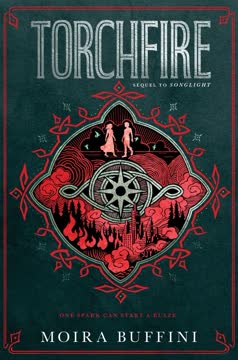
Torchfire is a sweeping, emotionally charged dystopian epic that interrogates the nature of power, identity, and resistance. At its core, the novel is about the struggle to be fully human in a world determined to divide, control, and erase. Through its rich cast of characters and intricate plot, it explores the psychological cost of survival, the trauma of betrayal, and the redemptive power of empathy and solidarity. The speculative device of songlight serves as both a metaphor and a mechanism for connection, allowing the oppressed to find each other and to imagine a world beyond violence. The novel is unflinching in its depiction of cruelty—whether in the Chrysalid House, the firebombing of Sherlham, or the machinations of the palace—but it is equally committed to the possibility of change. The ending, with its open questions and fragile hope, insists that the work of justice is never finished, and that the promise of tomorrow depends on the courage to love, to resist, and to begin again. Torchfire is a story for our time: a call to see the humanity in every other, to break the cycles of violence, and to build a world where all can sing their songlight.
Last updated:
Review Summary
Torchfire, the second book in Moira Buffini's Torch trilogy, receives overwhelmingly positive reviews with a 4.58/5 rating. Readers praise its unique magic system, complex characters, and multiple POVs that weave together seamlessly. The book avoids "second book syndrome" with fast pacing, compelling plot twists, and strong world-building. Reviewers highlight thoughtful representation of LGBTQ characters and themes of oppression. The 550-page dystopian fantasy continues immediately after Songlight's cliffhanger, introducing new perspectives while deepening existing character arcs. Most readers found it gripping and emotionally resonant, though some felt it was too long or contained confusing character names.