


Plot Summary
The Palace of Salvation
By spring CE 1003, Marosa Vetalda, heir to Yscalin, has spent years confined in Cárscaro’s sweltering blackstone palace by her controlling father, King Sigoso. Repeated tremors shake the city, while the unending river of lava, the Tundana, has burned away lavender fields and hidden the stars.
Marosa studies Mentish history and politics in secret, hoping marriage to her betrothed, Prince Aubrecht, will carry her beyond her father’s reach. She also dreams of a more tolerant Yscalin, shaped by the compassion her mother, Sahar, quietly taught her.
A letter from Queen Sabran of Inys asks after Marosa and urges progress on the marriage. When the Inysh ambassador Wilstan Fynch asks how long she has been imprisoned, Marosa cannot conceal the truth: she has not left the palace in years.
Marosa’s confinement is political as well as physical. Sigoso denies her access to the court that she will one day inherit, leaving her to build an education without authority and a future without permission. Her marriage plan is both a practical escape route and a fragile act of hope. The hidden pendant associated with Sahar’s faith gives that hope an ethical direction: Marosa wants more than freedom for herself. The tremors and lava make the palace’s permanence feel increasingly false, while her practiced calm reveals how survival has taught her to hide fear even from trusted allies.
The Starving Culler
In Afelayanda Forest, Estina Melaugo is so hungry that a village offers her meals and a ram in exchange for killing a lindworm. She enters its cave in protective gear, but her crossbow shot misses and the creature batters her against the stone.
Near exhaustion, she drives her rapier into its mouth, finds the weak spot beneath a missing scale, and kills it. The villagers leave bread for her while they make sure she has not caught the Draconic plague. Their visitor, Captain Gian Harlowe, soon finds her and offers work aboard his ship.
Estina has become an outlaw after shooting a customs officer to save Liyat, a relic dealer and smuggler. Her parents had been jailed for evading Sigoso’s wine tax, and she has spent her life fearing hunger will return.
Estina’s fight is a test of bodily limits, but its reward is strikingly modest: food, shelter, and a place in a community that first left her to starve. Her past explains why survival and dignity are so tightly entangled for her. She protects Liyat at great personal cost, yet struggles to accept care without treating it as debt or pity. Culling offers a livelihood, but it also exposes her to a law that condemns the people it depends on. Harlowe’s offer proposes a different kind of belonging, one based on earned trust rather than charity.
A Choice in Triyenas
Liyat reaches Estina’s tree shelter after Harlowe tells her where to find her. She is relieved to see Estina alive, then angered by how close hunger and exhaustion have brought her to death. Estina admits she started culling in hopes of earning enough to clear her name and return to their life in Perunta. Liyat offers to take her to safety, first in Ortégardes and eventually in Lasia, where Yscali law cannot reach them.
Estina resists leaving the country she calls home and fears that Liyat wants to end their relationship. She finally tells Liyat she wants a shared life, not only brief comfort. Liyat cannot promise certainty, but she kisses Estina and agrees to face the next stage with her. Estina leaves the forest with Liyat.
This decision turns Estina’s survival story into a relationship story without making love a cure for poverty or fear. Estina names the pattern that has kept her isolated: she expects rejection, so she withdraws first and calls the retreat self-respect. Liyat’s offer is not simply rescue; it asks Estina to risk a future she cannot control. Their intimacy becomes possible only when Estina states what she wants plainly, while Liyat admits that safety and routine have also become forms of confinement. Leaving Triyenas is a first movement toward chosen attachment.
The Wyverns of Cárscaro
Sigoso finally sets Marosa’s wedding to Aubrecht for autumn and says she must return to Yscalin once she bears a child. Before dawn, violent tremors loosen a vast rockslide on Mount Fruma, exposing a cave. Wyverns pour out, regain their fire, destroy Cárscaro’s defenses, and ignite the Great Yscali Plain.
Their master, Fýredel, demands the king. Sigoso sends Orentico Feyalda, a relative chosen as his decoy, but the wyrm sees through the deception and returns the man’s charred body. Sigoso then leaves the palace to face Fýredel himself.
He survives the meeting, but returns with grey eyes and announces that Yscalin has rejected the Saint and sworn itself to the Nameless One. The city is trapped beneath its own mountain, and Marosa’s expected escape has become an occupation.
Marosa’s wedding date briefly gives her future a shape, but Sigoso’s insistence that she return after childbirth exposes the limit of that freedom. The catastrophe then turns a private family prison into a national one. Cárscaro’s old defensive design, built to protect against invasion from outside, cannot answer an enemy emerging from the mountain itself. Sigoso’s transformation collapses the distinction between political surrender and personal corruption: the king who controlled Marosa’s life now becomes the instrument through which a wyrm controls the kingdom. The failed decoy shows that ceremonial substitution cannot fool an enemy with deeper knowledge.
The Burning Road West
In Ortégardes, Estina finally tells Liyat she wants a future together, but the Knights Defendant soon summon the city’s people and announce Sigoso’s allegiance to Fýredel. A wyvern lands on the Great Sanctuary, then others sweep over the square.
The city gates have been chained shut, trapping thousands as the creatures rain fire on the crowd. Estina and Liyat escape through a smugglers’ drain and ride for Oryzon, where the harbour is already burning. Harlowe’s ship, the Rose Eternal, lies offshore.
Liyat signals it with a small mirror, and the women swim out as wyverns destroy the ships around them. The crew hauls them aboard and drives off a pursuing wyvern with cannon and chainshot. Harlowe is sailing to warn Queen Sabran. Estina accepts his offer to join the crew, and Liyat joins too.
Estina’s escape is built from skills and loyalties formed in the very criminal world that Yscalin punishes. Liyat knows the drain, Estina reads danger as a culler, and Harlowe’s ship offers a refuge that neither woman could reach alone. The destruction of Oryzon forces Estina to leave the home she insisted she would defend, but it also strips away the assumption that she must survive by herself. Their relationship advances through coordinated action before it settles into promises. The Rose’s weapons offer a first concrete sign that human ingenuity may still resist the Draconic army.
Aubrecht’s Failed Road
In Brygstad, Aubrecht Lievelyn learns that Yscalin has declared for the Nameless One. His relatives debate whether Sigoso is coerced, while Aubrecht connects the news to the tremors and reports of waking Draconic sleepers. He resolves to reach Marosa through the old Pass of the Imperator, despite his aunt Liuthe’s warning that the route is perilous.
Over the following months, he sends successive groups of mercenaries toward Cárscaro; they vanish, turn back, or are killed by Draconic creatures. The last survivor returns with a charred skull and reports that rockfall has blocked the pass.
Aubrecht accepts that another attempt would waste more lives. With Mentendon needing an alliance and Marosa’s kingdom apparently serving the wyrms, he asks Queen Sabran to annul their betrothal. He sends the request with grief, not certainty that Marosa has betrayed him.
Aubrecht’s failure is not caused by indifference but by the collision between private loyalty and public responsibility. He tries to act as Marosa’s rescuer, yet each failed expedition makes courage indistinguishable from the willingness to spend other people’s lives. His aunt’s warnings carry the weight of a family already diminished by disease and loss. The annulment therefore becomes an act of political survival that he experiences as personal betrayal. The contrast with Marosa is deliberate: she remains trapped inside Yscalin, while Aubrecht has the freedom to choose and must live with choosing restraint.
The Poisoned Gown
A year into the occupation, Marosa attempts to send armed subjects from Cárscaro to seek help, but the wyverns catch them and leave their bodies at the city gate. Fynch then confesses that he once suspected Sigoso of murdering Queen Rosarian of Inys.
With Priessa’s help, Marosa enters the sealed Privy Sanctuary and finds coded letters, a destroyed portrait, and a vial of basilisk venom. She confronts her father, who admits that he arranged Rosarian’s death with a gown lined in poison.
Sahar discovered the evidence and tried to escape with Marosa to the Ersyr. Sigoso imprisoned and killed her, while Sahar wounded him in the struggle. Marosa understands that her father’s cruelty began long before Fýredel claimed him, and that her mother’s final actions were meant to protect her.
The evidence changes the meaning of Marosa’s childhood. What she had been taught to remember as a mother’s betrayal becomes an attempted escape from a murderous household, and Sigoso’s authority loses its claim to moral legitimacy. The poison is significant because it turns courtly luxury into a covert weapon: a gown, a royal wardrobe, and a vial conceal violence beneath the signs of ceremony. Marosa’s discovery also complicates the fantasy of a clean rescue. Fýredel is an external enemy, but Yscalin’s vulnerability was prepared by a ruler whose piety already served his ambition.
The Iron King’s Audience
On the second anniversary of Cárscaro’s fall, Fýredel summons Marosa to his lair. She enters wearing armor beneath her mourning veil, follows a culebreya past human bones, and sees captives forced to repair wyverns and clear space for more Draconic creatures.
At the edge of the wyrm’s cavern, she risks touching his snout with Sahar’s mirror pendant and asks why he is attacking humankind. Fýredel gives no explanation she can use. He orders her to kill a red-cloaked prisoner, gives her a wyrm-shaped iron helm, and says she must rule in Sigoso’s place when he weakens.
In the dungeon, the prisoner, Jondu, identifies herself as a protector of the South and asks Marosa to send her seized iron box to the Ersyri ambassador Chassar uq-Ispad. Marosa gives Jondu basilisk venom to escape.
Marosa’s audience makes her proximity to power more dangerous, not less. She sees that the occupation recruits its victims into maintaining the machinery that threatens them, turning survival into forced collaboration. Touching Fýredel with the mirror is a small, deliberate challenge to the idea that enemy and human are beyond one another’s recognition, though it does not soften the wyrm’s demands. Jondu’s box introduces a possible route toward resistance, but the price is immediate: Marosa must choose between a captive’s suffering and an order that would make her complicit. Her decision places mercy above obedience.
The Gate of Niunda
Jondu melts her cell bars with the venom, but a guard cuts her throat during her escape. Days later, Sigoso takes Marosa to the Gate of Niunda and shows her the cost of disobedience: Ermendo, the ambassador Robrecht, the Duchess of Ortégardes, other prisoners, and Jondu hang dead there.
Yscabel is still alive when cockatrices begin tearing at her. Marosa cannot intervene, and Sigoso blames her for the deaths. Priessa later reveals that Ruzio has fled with Bartian through the hidden passage Marosa found.
Their note says they intend to reach Aubrecht, but Marosa fears the mountains will kill them. She grieves the people she could not save, then refuses to surrender to despair. Her mother’s memory gives her a reason to keep living and to search for a way to free Yscalin.
Sigoso turns punishment into a public lesson, forcing Marosa to watch rather than merely hear that resistance has consequences. The scene attacks her most persistent defense, the belief that staying calm can protect the people around her. Her guilt is real, but it is also manipulated: the deaths arise from the regime’s violence, not from her attempt to show mercy. Ruzio’s departure offers a narrow counterpoint to helplessness, though it may cost another life. Marosa’s choice to continue is not optimism; it is an ethical refusal to let the king’s interpretation of events become the only one.
The Pass Takes Its Price
Marosa asks Fynch to escape through the lava tunnel beneath the palace, carry Jondu’s box to Chassar, and seek a cure for the Draconic plague. To pass the creatures, Fynch plans to contract the illness by touching Sigoso, but Marosa drugs the king’s wine so Fýredel cannot watch through him.
Fynch leaves without becoming infected. Marosa follows his footprints into the Spindles and finds his body, killed by an amphiptere. She also sees that Ruzio and Bartian died on the same route.
The box is still there, so she retrieves it and retreats to Cárscaro, the only survivor of the attempted journey. The expedition has cost her trusted allies without delivering the promised cure or weapon. She returns to the palace with the box and no safe way to send it onward.
The plan depends on a dangerous misunderstanding: Marosa believes the plague can shield a messenger from the Draconic creatures, while Fynch’s death reveals that the route remains lethal even when the theory is sound. Her use of dwale protects him from Fýredel’s attention but also prevents the deliberate exposure on which the mission depends. This is not a simple failure of courage. It is a failure produced by surveillance, incomplete knowledge, and the impossibility of testing either safely. The abandoned box becomes a material reminder that hope can survive an expedition even when its bearer does not.
The Glassbearer’s Throne
News reaches Cárscaro that Aubrecht’s betrothal to Marosa has been annulled. The city has meanwhile swollen with recruits for the Cult of the Iron King, and Sigoso’s court has joined them. Marosa pretends to share their reverence for Oderica, using her ancestry to preserve her influence and buy time.
When Fýredel announces that he will travel to Inys and kill Sabran, he orders Marosa to rule Yscalin in his absence. She watches him rise over the burning plain, then learns that the Inysh ambassadors Arteloth Beck and Kitston Glade have arrived.
With Priessa’s help, she prepares to send them toward Chassar and the box. Marosa puts on Fýredel’s iron helm and takes the obsidian throne before the court, welcoming the envoys as ruler of the Draconic Kingdom while concealing her continuing resistance.
Marosa’s final performance is a survival tactic, not a conversion. By borrowing the cult’s language and symbols, she protects what remains of her authority and creates a narrow opening for action. The helm makes that bargain visible: it grants her the appearance of power by making her resemble the force that controls the city. Aubrecht’s annulment closes the future she once imagined, but the ending does not replace it with a simple triumph. Marosa remains captive, and Fýredel is airborne. Her welcome to the envoys is a calculated beginning, grounded in the belief that endurance can preserve a chance for resistance.
Analysis
Among the Burning Flowers places political captivity beside literal imprisonment. Marosa is the heir to a kingdom but denied the experience and authority required to rule it; Estina is an outlaw whose labor protects communities that condemn her. Their different circumstances expose a shared problem: institutions claim moral authority while making vulnerable people carry the cost of their failures. Sigoso’s religious control and Fýredel’s occupation are not identical, but the former has already weakened the relationships and public trust needed to resist the latter.
The novel also treats survival as an ethical practice rather than a simple victory. Marosa repeatedly chooses mercy when obedience would be safer, most consequentially when she helps Jondu. Estina must learn that accepting support does not erase her independence, while Aubrecht must recognize that courage can require refusing a rescue that would sacrifice more lives. Each character confronts a different form of responsibility: Marosa’s to a captive population, Estina’s to those she loves, Aubrecht’s to a country that cannot be risked for private hope.
Faith is presented as both a source of solidarity and a political instrument. The Virtues offer Marosa a language for courage and fellowship, yet Sigoso uses their institutions to justify control. Sahar’s hidden faith gives Marosa a competing moral inheritance, one expressed through the mirror pendant and the demand to recognize another’s suffering. The ending refuses an easy liberation. Marosa takes the throne while wearing the image of her enemy, and the arrival of the Inysh envoys offers only a narrow opportunity. Her apparent submission is an act of strategic endurance, leaving the story poised between performance and resistance.
Review Summary
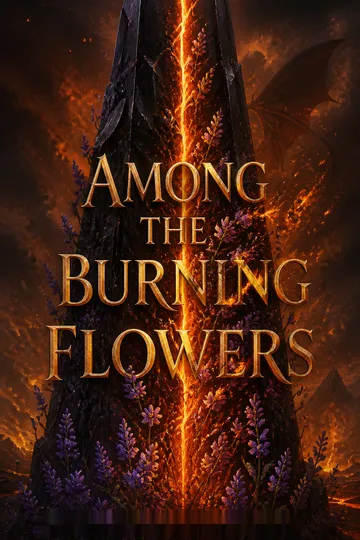
Among the Burning Flowers is a prequel novella to The Priory of the Orange Tree, offering readers a glimpse into the fall of Yscalin. Many reviewers praise Shannon's lyrical prose, atmospheric worldbuilding, and character development. While some found it accessible as an entry point to the series, others felt prior knowledge enhanced the experience. The book's shorter length compared to previous installments was noted, with mixed opinions on its standalone quality. Overall, fans of the series eagerly welcomed this addition, appreciating the deeper insights into familiar characters and events.
People Also Read







Characters
Marosa Vetalda
The caged Yscali heirMarosa is the only child of King Sigoso and Queen Sahar, raised as heir to Yscalin but kept apart from the court she is meant to lead. She is observant, disciplined, and deeply educated, using books and private conversations to learn what her father refuses to teach her openly. Sahar’s influence gives her an instinct for mercy and tolerance that sits uneasily beside Yscalin’s rigid religious order. Marosa wants to escape her father’s control, but her ambitions are not only personal: she hopes to make her country safer for people whose beliefs differ from the state’s. Her restraint is not passivity. It is a practiced way of protecting herself while she studies the people and systems around her.
Estina Melaugo
The starving outlaw cullerEstina is a winemakers’ daughter who becomes an orphan, street thief, smuggler, and culler of Draconic beasts. Years of poverty make her fiercely protective of her independence and sensitive to any hint that she is being treated as a burden. She acts quickly when someone she loves is threatened, even when her choices make her an outlaw. Her sharp wit and defiance often protect her from showing fear, while her willingness to fight monsters reveals a courage she does not readily claim for herself. Estina wants both a home and the freedom to leave one; learning to accept care without surrendering her dignity is central to her emotional life.
Aubrecht Lievelyn
The grieving Mentish heirAubrecht is the heir to Mentendon, a thoughtful ruler-in-waiting whose responsibilities have grown from caring for his younger sisters to considering the safety of an entire country. He carries grief from the deaths of much of his family and fears that those he loves will be taken from him. That fear can make him cautious, but his instinct is still to protect others, including the woman he is promised to marry. Aubrecht is attentive to history and political alliances, and he understands that personal loyalty cannot always dictate public policy. His challenge is to distinguish courage from a gesture that would put other lives at risk.
Sigoso Vetalda
The devout, controlling kingSigoso rules Yscalin with a tight grip and expects obedience from his court, especially from his daughter and heir. He presents himself as a devout guardian of the Six Virtues, but his religious certainty is entangled with dynastic ambition and a deep need to control how others remember the past. He is watchful, formal, and difficult to read, making even ordinary conversations feel like tests. His authority shapes Marosa’s education, movement, and marriage prospects, while his refusal to share power leaves the kingdom dangerously dependent on his judgment.
Fýredel
The ancient fire wyrmFýredel is one of the High Western wyrms who led the Draconic Army during the Grief of Ages. The legends describe him as an immense, intelligent enemy whose forces can use wyverns and other creatures to devastate human settlements. He is patient enough to observe defenses and political behavior, then exploit what he learns. His presence joins the old catastrophe to the present, forcing characters to confront how little of the past was truly resolved. Fýredel’s motives are difficult for humans to understand, which makes negotiation as uncertain as combat.
Sahar Taumargam
Marosa’s Ersyri motherSahar is an Ersyri princess who became queen consort of Yscalin and raised Marosa within the Palace of Salvation. She values learning and compassion, and quietly preserves the Faith of Dwyn despite the dominance of the Virtues of Knighthood. Her warmth and openness stand in contrast to Sigoso’s control, shaping the kind of ruler Marosa hopes to become. Sahar also connects Marosa to her Ersyri family and to a broader world beyond Yscalin’s religious boundaries.
Liyat
The relic hunter and smugglerLiyat is an independent relic dealer who secretly recovers forbidden books and objects for an Ersyri patron. Her work gives her a strong sense of purpose, but the security of her shop and familiar routines can make major changes frightening. She is perceptive, resourceful, and protective, though she tends to guard her feelings until someone forces a direct reckoning. Her relationship with Estina asks her to imagine a shared life without giving up the work that defines her.
Gian Harlowe
The smuggler captain and mentorHarlowe is an Inysh naval captain who commands the Rose Eternal and has spent years moving goods through Yscalin’s illegal coastal networks. He once arranged an apprenticeship for Estina and continues to see abilities in her that she struggles to recognize. His stern manner conceals a durable loyalty to people the law dismisses or hunts. Harlowe offers Estina work aboard his ship, challenging her to imagine that survival can mean more than staying alive from one meal to the next.
Priessa Yelarigas
Marosa’s trusted companionPriessa is Marosa’s first lady of the bedchamber and her closest confidante inside the palace. As the daughter of a powerful court official, she knows how to move through the household without attracting unnecessary attention. Her loyalty is practical as well as emotional: she helps Marosa gather information, evade surveillance, and preserve hope without pretending that their danger is small. Priessa’s steadiness gives Marosa a rare place to speak without performing obedience.
Ermendo Vuleydres
The steadfast palace guardErmendo is Marosa’s personal guard, a disciplined soldier who has served her since childhood. He provides protection in a palace where few people can be trusted, but his loyalty extends beyond following orders: he helps her assess risks and preserves her ability to act. His quiet composure often steadies Marosa when the palace becomes dangerous, while his military training gives her a connection to the practical realities of defense.
Wilستان Fynch
The grieving Inysh envoyWilstan Fynch is the Dowager Prince of Inys and Queen Sabran’s father. He serves as an ambassador in Yscalin, where his patience and concern for Marosa make him one of the few outsiders she can trust. He is shaped by long grief and by the discipline of a diplomat who must work through access, evidence, and careful timing rather than command. His interest in the truth behind Yscalin’s court links Marosa’s private history to the wider political world.
Jondu
The captured southern operativeJondu is a skilled fighter whose weapons and bearing set her apart from the people of Cárscaro. She is connected to the Ersyri court and to the people who protect it, but guards her mission closely. Even when injured and imprisoned, she remains focused on the larger danger facing humankind. Her directness unsettles Marosa, who is accustomed to others treating her as a sheltered princess rather than a person capable of consequential choices.
Gastaldo Yelarigas
The king’s courtly secretaryGastaldo is Sigoso’s Secretary of State, a senior courtier whose influence reaches into the palace guard, the Privy Council, and the administration of Yscalin. His daughter Priessa gives him a personal connection to Marosa, though his public service places him close to the king’s power. He is composed and politically practiced, with a keen understanding of the dangers that follow from openly resisting authority.
Ruzio Afleytan
The loyal courtier and sisterRuzio is one of Marosa’s trusted ladies and the elder sister of Yscabel. She is practical, observant, and protective, often helping maintain ordinary routines when fear threatens to overwhelm the household. Her closeness with her sister gives her a private emotional life beyond court service, while her loyalty to Marosa makes her part of the small circle the princess relies upon.
Yscabel Afleytan
The youngest palace companionYscabel is Ruzio’s younger sister and a young lady in Marosa’s household. She is quieter and more easily frightened than the older women around her, but she seeks their company rather than withdrawing into silence. Her presence reminds Marosa that the people inside the palace are not only political allies; they are young and vulnerable people trying to live through an extraordinary danger.
Ermuna Lievelyn
Aubrecht’s strategic elder sisterErmuna is Aubrecht’s eldest sister and a capable political thinker who helps manage Mentendon’s interests. She understands the value of dynastic alliances and is willing to consider personal sacrifice when she believes it could secure the country. Her directness can seem hard beside Aubrecht’s emotional openness, but it comes from a serious sense of responsibility to her family and people.
Sabran IX
The Queen of InysSabran is Queen of Inys and the daughter of Rosarian and Wilstan Fynch. Her position places her at the center of Virtudom’s religious and political order, while her correspondence with Marosa shows personal concern beneath royal formality. She must weigh the safety of her people against the obligations owed to neighboring realms, particularly as Yscalin’s choices threaten the unity of Virtudom.
Chassar uq-Ispad
The Ersyri court ambassadorChassar is an Ersyri ambassador and a trusted representative of King Jantar. His connections in the South make him an important potential recipient of information and objects that cannot safely travel through Yscalin’s occupied institutions. Marosa remembers him as a warm and approachable figure from an earlier visit beyond her palace.
Plot Devices
The Draconic sleepers
The buried catastropheAfter the Grief of Ages, Draconic creatures withdrew into caves and mines and slept for centuries. As tremors increase, the sleepers begin waking, first threatening isolated communities and then joining the wyverns in a renewed assault. Their return gives the story its expanding scale: a local danger to Estina becomes evidence of a continental crisis. The associated plague makes every encounter a risk beyond immediate violence, shaping how cullers protect themselves and how Marosa considers movement through occupied territory.
The Tundana
A city turned inwardThe lava that flows through Cárscaro was once treated as a problem Sigoso could solve by diverting it through canals. Instead, it reshapes the city, destroys the lavender plain, and contributes to the capital’s isolation. The blackstone Palace of Salvation intensifies that enclosure by holding heat and offering little sense of escape. Together, palace and lava make the city both a fortress and a trap, while their continuing fires provide the setting against which Marosa measures the loss of her former world.
Sahar’s mirror pendant
A test of compassionSahar’s small mirror pendant represents the Faith of Dwyn and the principle that people should extend to others the grace they hope to receive. Marosa keeps it hidden because that faith is forbidden in Yscalin. She later carries it into a dangerous encounter with Fýredel, using the mirror and its teaching to approach him rather than simply threaten him. The pendant links Marosa’s private inheritance from her mother to the choices she makes when authority demands cruelty.
Fýredel’s iron helm
The mask of imposed ruleThe wyrm-shaped helm is made by a captive smith and given to Marosa by Fýredel. Heavy, hot, and difficult to see through, it makes the wearer resemble the power occupying Cárscaro. Marosa’s decision to wear it before the court turns an imposed symbol into a disguise for continued resistance. The helm embodies the story’s central political danger: under occupation, a ruler may need to perform loyalty convincingly in order to protect the people she serves.
Jondu’s iron box
A hope without instructionsJondu carries a small engraved iron box that she describes as the key to a weapon capable of helping defeat the wyrms. Marosa takes responsibility for getting it to Chassar uq-Ispad, but neither she nor her allies can open it or confirm what it contains. The box gives their resistance a concrete objective while preserving uncertainty about how much it can actually change. After an expedition fails, it returns to Marosa’s hands, awaiting another chance to leave Cárscaro.
The Roots of Chaos Series

About the Author
Other books by Samantha Shannon


Download PDF
Download EPUB
.epub digital book format is ideal for reading ebooks on phones, tablets, and e-readers.








